Introduction to Physics + Module 1 Forces and Motion Chp 1: Movement and Position
 Call Kai
 Learn
Learn Practice Test
 Spaced Repetition
 Match
Match Flashcards
 Knowt Play
1/45

There's no tags or description
Looks like no tags are added yet.
Name | Mastery | Learn | Test | Matching | Spaced | Call with Kai |
|---|
No analytics yet
Send a link to your students to track their progress
46 Terms
What is Physics?
It is the study of energy, matter & natural phenomena. Physics is the collection of Laws & Principles which govern the behavior of nature.
What is meant by Physical quantity?
A quantity that we can measure.
What is the formula for a physical quantity’s structure?
Q=Nu
Q=physical quantity, N=number, u= unit
What are 3 systems of Physical quantity?
F.P.S (Foot/feet, Pound, Second)
C.G.S (Centimetre, Gram, Second)
M.K.S (Metre, Kilogram, Second)
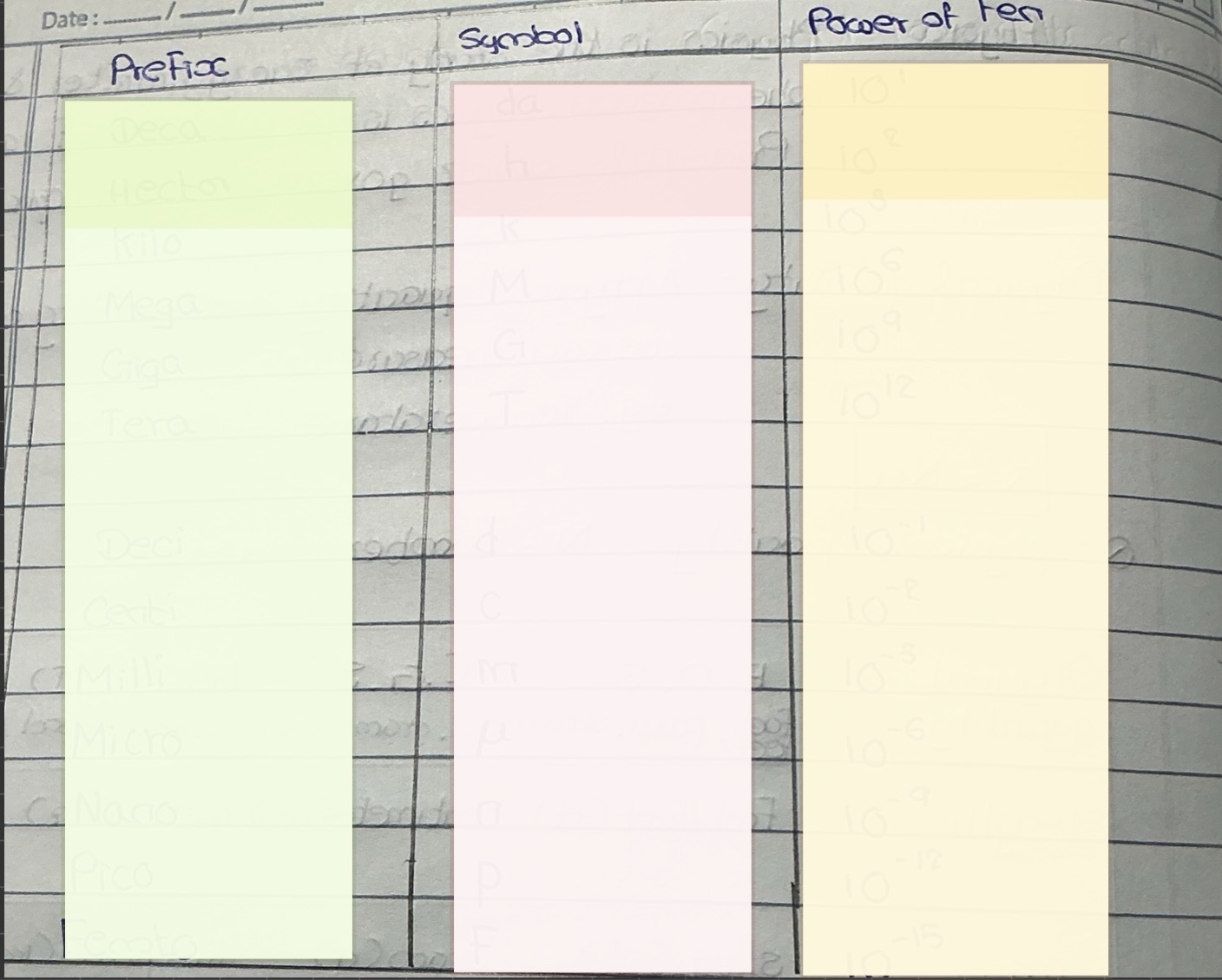
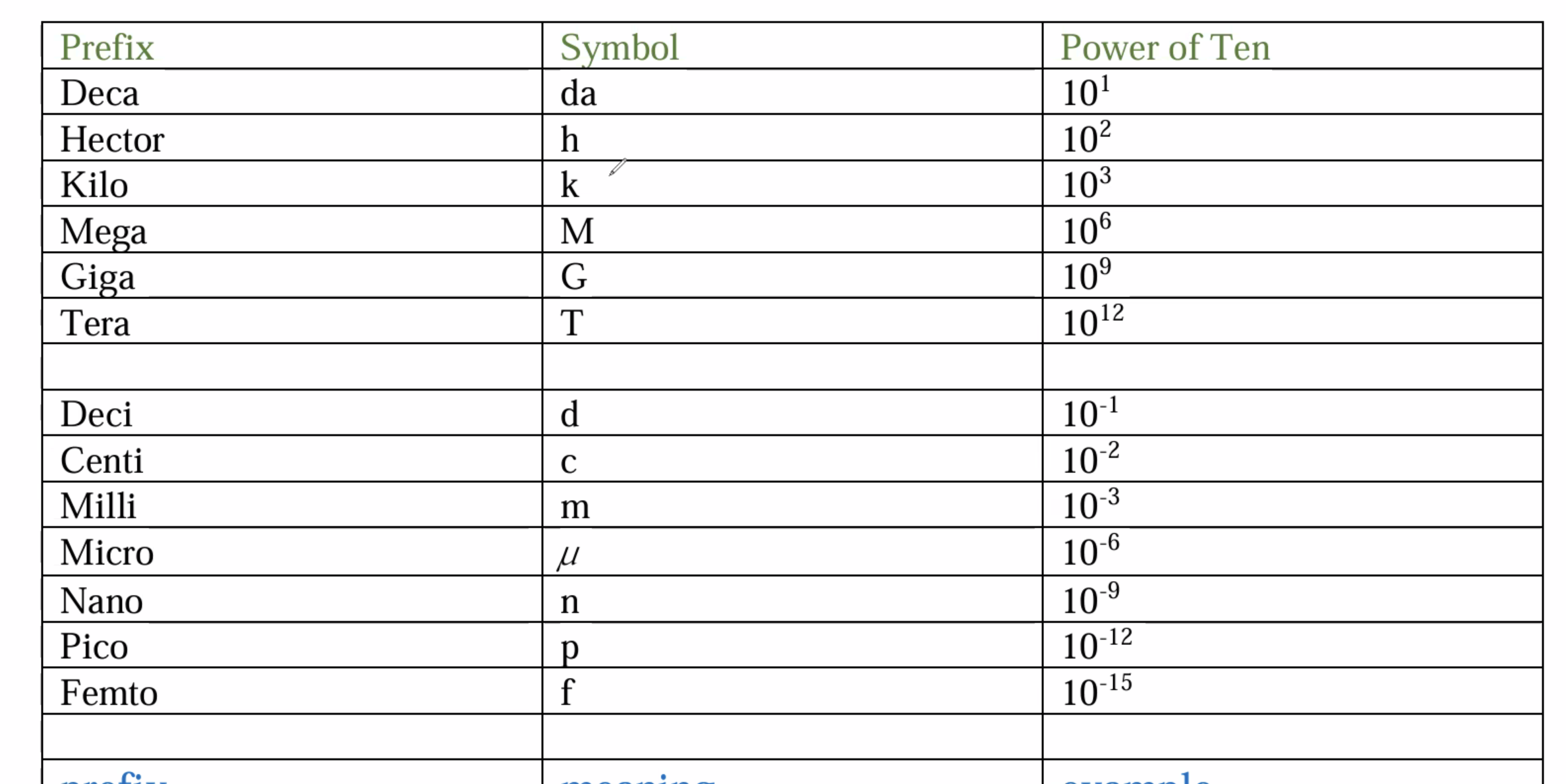
Fill in the prefix, symbol, power of ten
Just yap this lol :)
What is Scientific notation/Standard form?
In standard form, numbers are expressed using powers of 10 and it has only 1 digit before the decimal point.
What are 2 subdivisions of physical quantity?
Scalar and Vector
What is a scalar quantity?
A quantity that has only magnitude. EXAMPLE: mass, length, temperature, energy, speed.
What is a vector quantity?
A quantity that has both magnitude & direction. EXAMPLE: velocity, acceleration, force, weight.
What does Vector Symbol mean?
A vector can be represented by an arrow. The length of an arrow is proportional to the magnitude of a vector. Direction of the arrow represents the direction of the vector.
How is the arrow for the "weight"?
The arrow will always face downward because the Earth pulls objects to the center.
What are 3 vector addition rules?
Opposite directions: (+) and (-)
EXAMPLE: east and west
Same direction: (+) and (+)
EXAMPLE: east and east
Perpendicular direction: Pythagorean theorem
EXAMPLE: east and north
What is the difference between distance and displacement?
Distance is a scalar quantity and adds up to all total travel. Displacement is a vector quantity, and it only takes the straight-line distance between the starting point and finishing point.
What is speed?
Distance traveled per unit time.
OBJQ
What is the formula of speed?
Speed = Distance/time or v = s/t, or v = d/t
What is velocity?
Distance traveled per unit time in a given direction.
What is the velocity formula?
Velocity = displacement/time or v=s/t
What are 2 types of speed?
Instantaneous speed and average speed
OBJQ
What are the formulas of average speed and average velocity?
Average speed = total distance / total time taken
Average velocity = total displacement / total time taken
What is acceleration?
Rate of change of velocity
OBJQ
What is the formula of acceleration?
Acceleration = change in velocity / time
What is the change in velocity formula?
Change in velocity = Final velocity - initial velocity
v-u
What are 3 scenarios where acceleration occurs?
Change in speed, change in direction, and change in both speed and direction.
What is uniform acceleration or constant speed?
Uniform acceleration is a type of motion where an object's velocity changes at a constant rate over time.
What is non-uniform acceleration?
Non-uniform acceleration occurs when an object's velocity changes by unequal rate in equal intervals of time.
What is the another way to call ‘negative acceleration'?
Deceleration
What is the final velocity formula?
Final velocity = initial velocity + acceleration x time
V = u + a x t
OBJQ
What is the final velocity / speed squared formula?
Kinematic equation
Final speed / velocity squared = initial speed / velocity squared + 2 x acceleration x distance or displacement
V squared = u squared + 2as
What is the distance/displacement formula?
Distance / displacement = initial velocity/speed x time + ½ x acceleration x time taken squared
S = ut + ½ at squared
OBJQ
What is the formula of gradient?
Gradient = rise / run = distance / time
OBJQ
What is the relation of a straight-line graph and a gradient?
If the graph is a straight line, the gradient will be the same for every point.
OBJQ
What is the gradient of a distance-time graph giving an idea about?
The gradient of a distance-time graph gives the speed of moving objects.
OBJQ
What is the relationship of a straight-line graph and the speed of an object?
If a graph is a straight line, an object moves with a constant/steady speed.
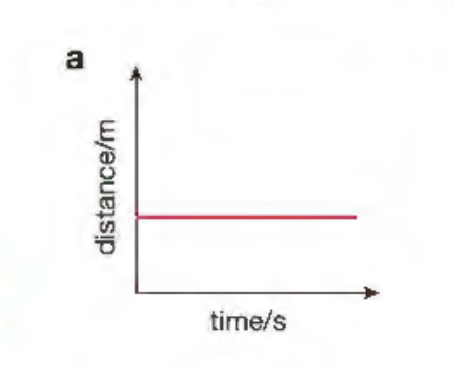
Observe this graph (d-t)
Graph is horizontal
Gradient = 0
Object is at rest or stationary
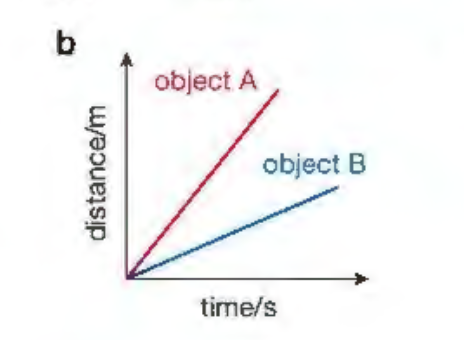
Observe this graph (d-t)
Both A and B travel with constant speed
Object A moves faster than B because gradient A is steeper than B
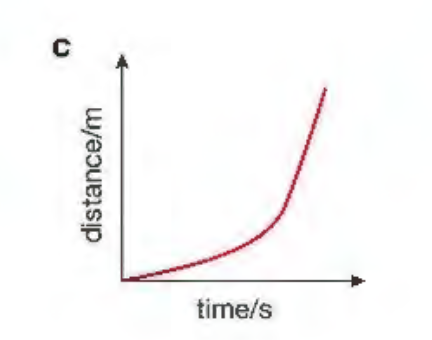
Observe this graph (d-t)
Object moves increasing speed because increasing the gradient
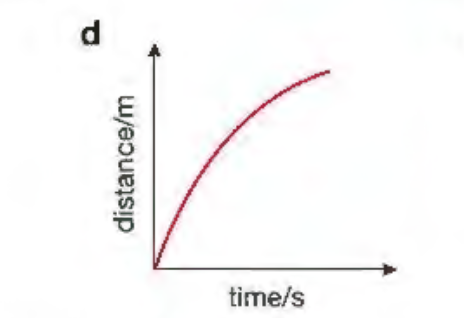
Observe this graph (d-t)
Decreasing speed because decreasing the gradient
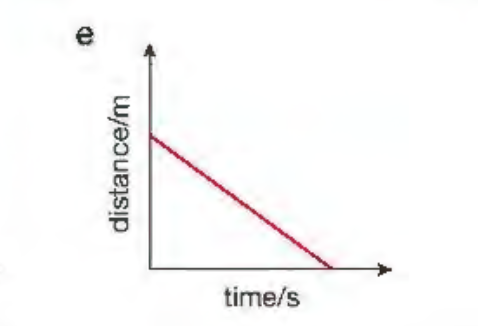
Observe this graph (d-t)
Constant deceleration
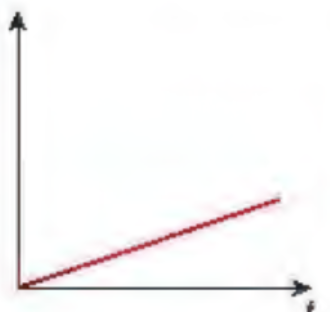
Observe this graph (d-t)
Graph is straight line
Object moves with constant/steady speed
Because gradient is same for every point of graph
What does a velocity-time graph give an idea about?
The gradient of the velocity-time graph gives the acceleration of moving object
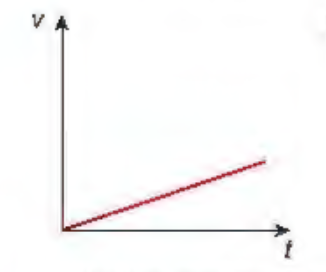
Observe this graph (v-t)
Graph is straight line
Constant acceleration
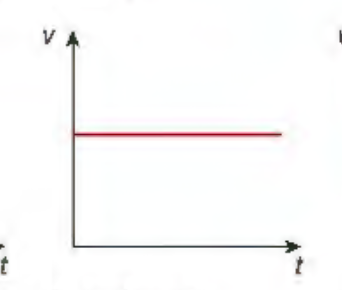
Observe this graph (v-t)
Graph is horizontal.
Object move with constant velocity.
There is no acceleration
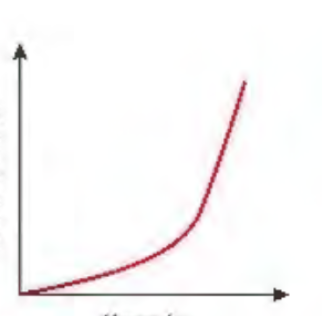
Observe this graph. (v-t)
Increasing acceleration because increasing the gradient
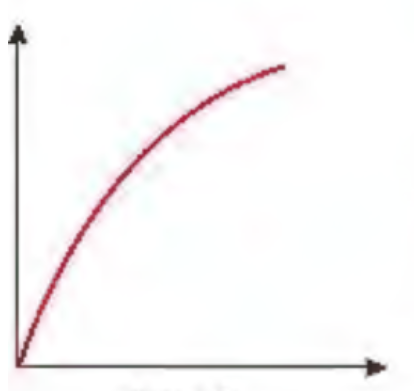
Observe this graph (v-t)
Decreasing acceleration (increasing acceleration with decreasing rate)
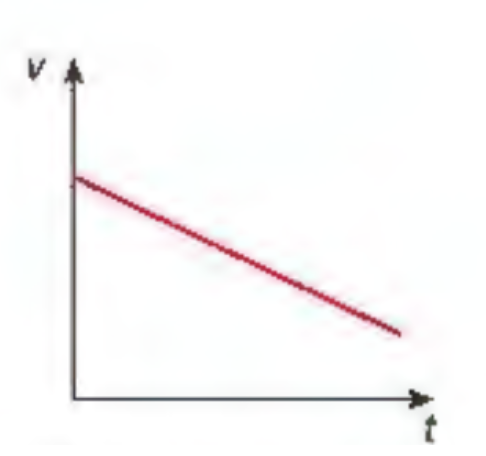
Observe this graph (v-t)
Constant deceleration (negative gradient)
What is Area under v-t? And how to find the distance via the area under the graph?
The area under the velocity-time graph gives the distance traveled by the moving object.
By figuring out what the area of shape under that graph is and finding the area of that shape, we get distance.
Eg. The shape under v-t graph: Trapezium
Distance = Area of trapezium
= A = ½ (a + b) h