stats 210 - general terms, variables, sampling, & bias
 Call Kai
 Learn
Learn Practice Test
 Spaced Repetition
 Match
Match Flashcards
 Knowt Play
1/30

Earn XP
Description and Tags
test/exam 1
Name | Mastery | Learn | Test | Matching | Spaced | Call with Kai | Chat |
|---|
No analytics yet
Send a link to your students to track their progress
31 Terms
parameter
the characteristic/trait of a population that the researcher wants determine — uses Greek letters as symbols:
μ (mew) → mean
η (eta) → median
σ (sigma) → variance
σ² (sigma squared) → standard deviation
π (pi) → proportion of successes
ρ (rho) → correlation b/w 2 variables
mnemonic: Mew eta 3 sigmas on pie row
ex. The parameter of interest is π = proportion of all visitors to the Bahamas in 2019 that spent some time at Atlantis Paradise Island
must include greek symbol, population, & parameter!
population
the entire subject group that the researcher wants to investigate
keyword: ALL
ex. “The population is all visitors to the Bahamas in 2019”
sample
a subset or smaller portion of the target population selected in order to gather the necessary data to make inferences/statements about the pop. & parameter of interest
representative & randomized!!
statistic
a measure/value determined from data from the sample — uses English letters as symbols
x̄ (x-bar) → mean
M → median
s → variance
s² → standard deviation
p̂ (p-hat) → sample proportion
r → correlation b/w 2 variables
n → # of subjects in a sample
X-men saw 2 snakes wearing hats running nowhere
statistical hypothesis
a testable guess/statement about what the value of the population parameter could be — uses PARAMETER SYMBOLS (greek letters)
ex. “In this scenario, the hypothesis we want to test is μ =32.4 years.”
parameter vs. statistic
parameter — value the researcher wants to find, derived from a population, uses Greek letters as symbols
statistic — value derived from data gathered from a sample, uses Eng letters as symbols
statistical inference
the process of making a broad conclusion/guess/statement about the pop. parameter using data & statistics from the sample — uses tools such as confidence intervals
replication
taking repeated data on the same subject
repetition
taking repeated data on multiple different subjects
constant
characteristic/trait whose measurements don’t change over time or trials
ex. “days in march”
define variable & its types
qualitative/categorical
quantitative
discrete
continuous
quantitative variables
trait/value that varies from subject to subject that can be ranked or arranged in order of degree/magnitude (greatest to smallest, better or worse) — 2 types:
discrete variable
continuous variable
usually involves mean
qualitative/categorical variables
trait/value that varies from subject to subject that can be ranked or arranged in order of degree/magnitude (greatest to smallest, better or worse)
ex. location, hair color, gender, enjoyed/not enjoyed movie, success/failure
ex. “how many people enjoyed spiderman: brand new day?”
usually involves proportion of successes
discrete variable
a quantitative variable whose measurements can be counted & can’t be a decimal
ex. # of students in a class, votes received by a candidate

continuous variable
a quantitative variable whose measurements has to be calculated or measured & can be a decimal
measured ex. height, time
calculated ex. average, rate, %, ratio
ex. % of dogs to cats at the shelter

list all sampling methods
simple random sampling
stratified random sampling
multistage random sampling
haphazard sampling
volunteer response sampling
simple random sampling
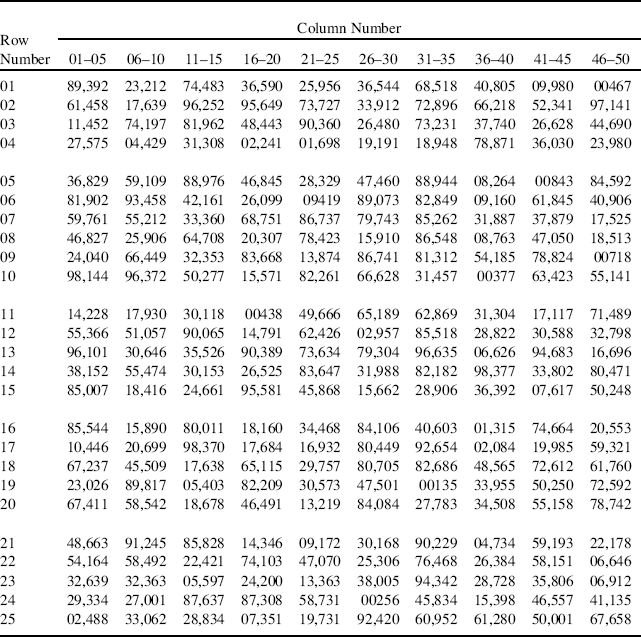
method of sampling where you list & assign all of the possible subjects in the target population a # & randomly choose n of the subjects
ex. 67420 ppl in population → assign each person a 5-digit number: 00001, 00002, 00003… until 67420 → Table of Random Digits (select a line) → break the numbers up in groups of how many digits of population (ex. 5) w/o duplicates & within the range
go to next line if needed
most random & easiest, but doesn’t guarantee representation
stratified random sampling
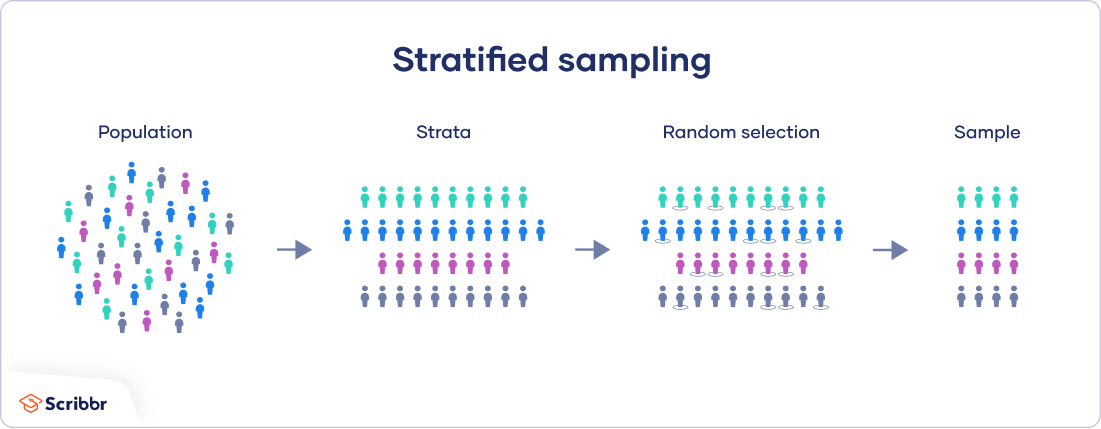
method of sampling where the population is divided into two or more groups according to a similarity, then through simple random sampling from every group, a sample is taken
ex. population is split b/w male, female, & nonbinary → simple random sample each group → sample!
most representative, but loses randomization & is time/cost consuming due to complexity
multistage random sampling
method of sampling where through multiple stages, the population is progressively broken down into smaller groups and then randomly sampled at each stage.
ex. university population is divided into groups according to major & a random sample is chosen → selected groups are divided into smaller groups & randomly sampled → sample of individuals selected!
at least 2 randomization stages
doesn’t select from ALL groups, only a few
most time/cost efficient & doesn’t need a complete list for a large population, but not very random/representative

haphazard sampling
an informal, non-statistical method of sampling where a person attempts to randomly choose subjects w/o a plan
data easily acquired, but lacks representation, randomization, or absence of human bias
ex. surveys @ malls, campuses

what type of sampling is surveys?
haphazard sampling
what type of sampling is polls?
volunteer response sampling
volunteer response sampling
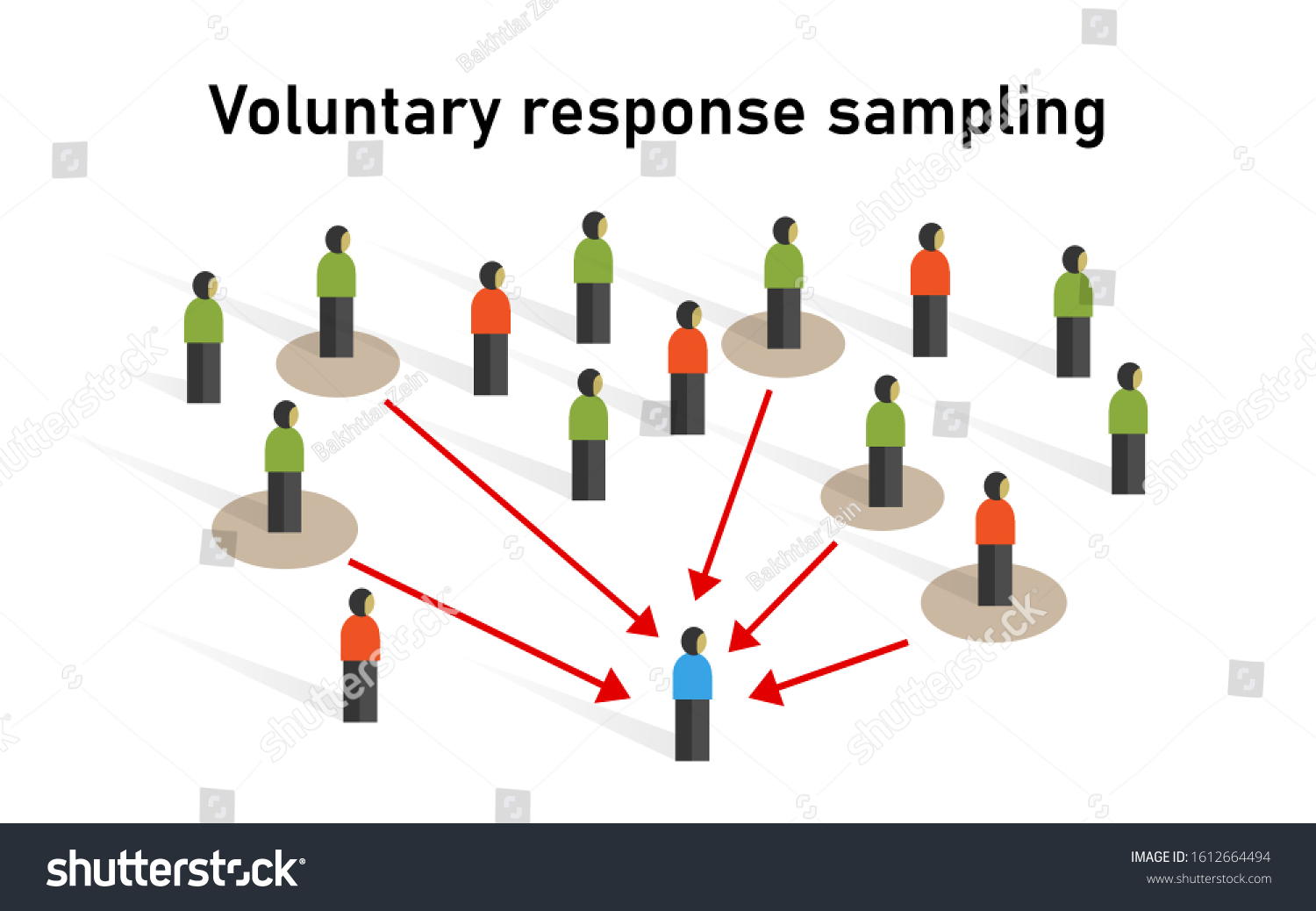
method of sampling where participants voluntarily choose to be part of study
neither randomized or representative b/c
unlikely to be seen by most ppl
ppl who feel strongly abt topic will most likely answer → over representative & biased
2 types of experiment
controlled experiment
observational experiment
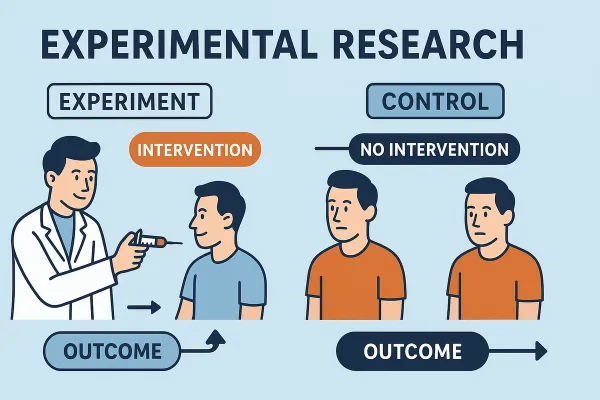
controlled experiment
researcher randomly assigns individuals into groups to selectively assign treatments
ex. group A is given medicine 1, group B is given medicine 2, group C is given a placebo
randomized & highly controlled so decreases risk of bias/confounding variables
can prove cause and effect
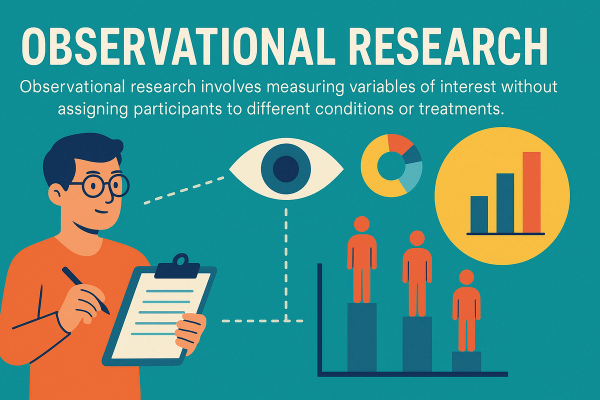
observational experiment
researcher observes groups w/o interence & patients themselves choose treatments
prone to confounding variables & not randomized
done to find correlations/associations
ex. ppl are divided into 3 groups according to political party (not randomized) → asked on their stance with abortion law
types of biases
selection bias
nonresponse bias
response/wording-of-question bias
experimental bias
selection bias
systematically excluding one or more types of subjects when selecting a sample
ex. gathering data from athletes on whether gym facilities should be upgraded or not
nonresponse bias
individuals chosen for the sample cannot be contacted, fail, or refuse to respond
prevalent in surveys or polls
ex. a company sends a survey on workload to employees → those who are overworked/stressed overlook email, while employees w/ free time reply

response/wording-of-question bias
subjects do give a response, but it is untrustworthy/false
could be due to social norms, who’s asking, or wording of question
ex. “would you return someone’s wallet?” vs.
“Would you do the right thing to return someone’s wallet?”
experimental bias
where confounding variables skew the response results — more prevalent w/ observational experiments