LAB - L3:T1-T2 (Antiarrythmic&Antianginal / D.A.Blood Coag)
 Call Kai
 Learn
Learn Practice Test
 Spaced Repetition
 Match
Match Flashcards
 Knowt Play
1/69

There's no tags or description
Looks like no tags are added yet.
Name | Mastery | Learn | Test | Matching | Spaced | Call with Kai | Chat |
|---|
No analytics yet
Send a link to your students to track their progress
70 Terms
What is hemostasis?
The stopping of blood flow, essential for protecting the body from injury.
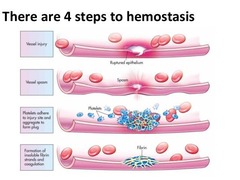
What can happen without efficient hemostasis?
Bleeding from wounds or internal injuries could lead to shock and death.
What is the process of clot removal called?
Fibrinolysis.
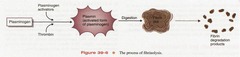
How long after clot formation does fibrinolysis begin?
Within 24 to 48 hours.
What are the two main categories of coagulation disorders?
Thromboembolic disorders and hemorrhagic disorders.
What are the three major groups of drugs used for coagulation disorders?
Anticoagulants, antiplatelet drugs, and thrombolytics.
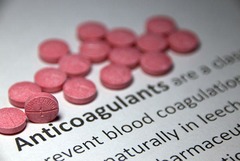
What is the primary function of anticoagulants?
To prolong bleeding time and prevent blood clots from forming.
What are anticoagulants commonly referred to as?
Blood thinners.
Do anticoagulants dissolve existing clots?
No, they prevent new clots from forming but do not dissolve existing ones.
What are some conditions that anticoagulants are used for?
Venous thrombosis, pulmonary embolism, and coronary thrombosis.
What are common side effects of anticoagulants?
Hemorrhage, hematuria, epistaxis, ecchymosis, bleeding gums, and thrombocytopenia.
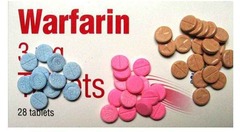
What is warfarin (Coumadin) used for?
To interfere with the formation of vitamin K-dependent clotting factors in the liver.
What is the normal range for Prothrombin Time (PT)?
11 - 12.5 seconds.
What does a longer than normal PT indicate?
A lack of or low level of one or more blood clotting factors, or issues like liver disease.
What is dabigatran (Pradaxa) used for?
To directly inhibit thrombin and reduce the risk of stroke in patients with atrial fibrillation.
What is rivaroxaban (Xarelto) and its purpose?
A factor Xa inhibitor used to prevent deep vein thrombosis in patients undergoing knee or hip replacement surgery.
What is heparin's mechanism of action?
It inhibits the conversion of prothrombin to thrombin, blocking the conversion of fibrinogen to fibrin.
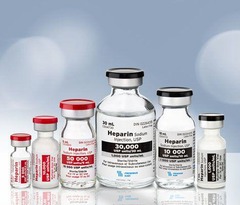
How is heparin administered?
Injected IV or subcutaneously.
What is the antidote for heparin overdose?
Protamine sulfate.
What is the normal range for Activated Partial Thromboplastin Time (aPTT)?
30 - 40 seconds.
What does aPTT measure?
The time it takes for a clot to form in a blood sample.
What does aPTT assess?
The amount and function of coagulation or clotting factors in the blood.
What is the therapeutic range for prothrombin time (PT) when evaluating warfarin?
1.5 to 2.5 times the control value or an INR of 2 to 3.
What is the therapeutic range for activated partial thromboplastin time (aPTT) when evaluating heparin?
1.5 to 3 times the control value.
What are signs of blood loss to evaluate in patients on anticoagulants?
Petechiae, bleeding gums, bruises, dark-colored stools, dark-colored urine.
What safety measures should be taken for patients on anticoagulants?
Use an electric razor and avoid contact sports.
What is the goal of thrombolytic therapy?
To quickly restore blood flow to the tissue served by the blocked vessel.
What are thrombolytic medications used for?
Disorders with formed intravascular clots such as myocardial infarction, pulmonary embolism, and deep vein thrombosis.
What is the time limitation for administering thrombolytic therapy in myocardial infarction?
Within 4 to 6 hours of the onset of the infarct.
What are contraindications for thrombolytic therapy?
Active internal bleeding, history of CVA, intracranial problems, trauma within the previous 2 months.
What is the effect of alteplase if administered within 3 hours of ischemic stroke onset?
It significantly improves clinical outcomes, especially daily living activities.
What are the adverse effects of thrombolytic medications?
Bleeding complications including GI and cerebral hemorrhages.
What is the administration protocol for streptokinase?
Therapy is instituted within 4 hours of myocardial infarction and infused for one hour.
What is fondaparinux (Arixtra) used for?
Prevention of venous thromboembolic events in patients undergoing hip or knee surgery.
What is the antidote for fondaparinux?
Aminocaproic acid (Amicar).
What is the definition of a thrombus?
A clot that adheres to the vessel wall.
What is the definition of an embolus?
A clot that floats in the blood.
What is thrombosis?
The formation of unwanted clots within blood vessels, leading to life-threatening conditions.
What are common antiplatelet medications?
Clopidogrel (Plavix), cilostazol (Pletaal), and acetylsalicylic acid (Aspirin).
What are the side effects of antiplatelet medications?
GI bleeding, bruising, hematuria, and tarry stools.
What is the most common adverse effect of aspirin?
Bleeding, often seen as increased bruising and bleeding while brushing teeth.
What nursing interventions should be taken for patients on anticoagulants?
Suggest safety measures, provide increased precautions during invasive procedures, and offer small frequent meals to relieve GI discomfort.
What are the adverse effects of aspirin specifically?
Nausea, dyspepsia, heartburn, GI bleeding, and tinnitus.
What is an arrhythmia?
A problem with the rate or rhythm of the heartbeat, which can be too fast (tachycardia), too slow (bradycardia), or irregular.
What is tachycardia?
A condition where the heart beats faster than normal.
What is bradycardia?
A condition where the heart beats slower than normal.
What is the most common type of arrhythmia?
Atrial fibrillation, which causes an irregular and fast heartbeat.
What do antiarrhythmic drugs do?
They affect the action potential of cardiac cells, altering their automaticity, conductivity, or both.
What is a major risk of antiarrhythmic drugs?
They can cause arrhythmia.
What is the classification of antiarrhythmics based on mechanisms of action?
Class I (Na+ channel blockers), Class II (β-adrenergic blockers), Class III (K+ channel blockers), Class IV (Ca2+ channel blockers).
What is the function of Class I antiarrhythmics?
They block fast Na+ channels and can be subdivided into IA, IB, and IC based on their effects on action potential duration.
Name a drug from Class IA antiarrhythmics.
Quinidine.
What is the effect of Class IB antiarrhythmics?
They shorten depolarization and decrease action potential duration.
What is a common Class IB antiarrhythmic used in emergencies?
Lidocaine.
What is the role of Class II antiarrhythmics?
They are β-adrenergic blockers that slow the SA node and ectopic pacemaking.
Name a drug from Class II antiarrhythmics.
Propranolol.
What do Class III antiarrhythmics do?
They block potassium channels and prolong the action potential.
What is the drug of choice for treating ventricular fibrillation?
Amiodarone.
What is the function of Class IV antiarrhythmics?
They block calcium channels, decreasing excitability and contractility of the myocardium.
Name a drug from Class IV antiarrhythmics.
Verapamil.
What is angina?
A condition characterized by chest pain due to myocardial ischemia, often related to coronary artery disease (CAD).

What is the most common etiology of coronary artery disease (CAD)?
Atherosclerosis, which is the buildup of plaque in the coronary arteries.
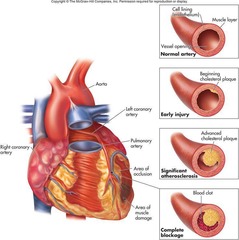
What are the two ways antianginal drugs improve blood delivery to the heart?
By dilating blood vessels (increasing oxygen supply) and decreasing the work of the heart (decreasing oxygen demand).
What is the usual protocol for administering nitroglycerin tablets for chest pain?
Administer one tablet every 5 minutes as needed for chest pain, for a total of three tablets.
What should patients do before taking sublingual nitroglycerin?
Offer sips of water to prevent dryness, which may inhibit drug absorption.
What is the purpose of a transdermal patch for antianginal drugs?
To provide a continuous release of medication, typically worn for 12 to 14 hours a day.
What is a pharmacological vacation in the context of transdermal patches?
A nitrate-free period of 10 to 12 hours to prevent tolerance to nitrates.
What are common adverse effects of antianginal drugs?
CNS effects like headache and dizziness, GI effects like nausea, and cardiovascular effects like hypotension.
What should be monitored when initiating or changing doses of antiarrhythmic drugs?
Cardiac rhythm to detect potentially serious adverse effects.
What nursing intervention should be taken for patients with renal or hepatic dysfunction receiving antiarrhythmics?
Consult with the prescriber to reduce the dose to avoid toxic effects.