Chapter 4 - Eukaryotic Cell & Microorganisms, Fungi, Protozoa, & Helminths
 Call Kai
 Learn
Learn Practice Test
 Spaced Repetition
 Match
Match Flashcards
 Knowt Play
1/19

There's no tags or description
Looks like no tags are added yet.
Name | Mastery | Learn | Test | Matching | Spaced | Call with Kai | Chat |
|---|
No analytics yet
Send a link to your students to track their progress
20 Terms
Fungi, Protozoa, & Helminths
All are Eukaryotic cells
Fungi - Types/Anatomy
3 types of fungi:
1. Yeasts
Round or oval shape
Engage in asexual reproduction (ex. budding)
2. Hyphae
Long, threadlike cells found in bodies of filamentous fungi (ex. molds)
3. Dimorphic
Some fungal cells that can take either form, depending on growth conditions/environment (human pathogens)
So can shift b/w yeast & hyphae shapes
Fungi - Disease
3 types of fungal disease (Myocosis) in humans:
1. Community-acquired infections: caused by environmental pathogens
2. Hospital-associated infections: caused by fungal pathogens in clinical settings (HAIs, invasive devices)
3. Opportunistic infections: caused by low-virulence species infecting already-weakened individuals
Fungi - Affecting Human Health
1. Harmless spores can cause opportunistic infections in immunocompromised patients (like those w/ AIDs)
2. Fungal cell walls give off chemical substances that can trigger allergies
3. Toxins produced by poisonous mushrooms can induce neurological disturbances & even death
4. Aspergillus flavus synthesizes a poison called aflatoxin, potentially lethal to animals who eat contaminated grain
Fungi - Agricultural Impact
A number of species are pathogenic to corn & grain
Reduces crop production
Can cause disease in domestic animals consuming contaminated feed crops
Fungi rot fresh produce during shipping & storage (spoilage)
40% of yearly fruit crop is consumed by fungi
Fungi - Benefits
1. Play an essential role in decomposing organic matter & returning minerals to the soil
2. Form stable associations w/ plant roots & increase their ability to absorb water & nutrients
3. Fungi have been engineered to produce large quantities of antibiotics, alcohol, organic acids, & vitamins
4. Some fungi are eaten or used to provide flavoring to food (ex. mushrooms)
Fungi - Nutrition
Heterotrophic: acquire nutrients from a wide variety of organic substrates
Saprobic: these substrates are from the remnants of dead plants & animals in soil or aquatic habitats
Parasitic: grow on the bodies of living animals or plants, although very few require a living host
Fungi penetrate the substrate & secrete enzymes that reduces it to small molecules that can be absorbed by the cells
Can grow on wood, feathers, rubber, cellulose, & petroleum products
Fungi - Reproductive Strategies
2 types of strategies:
1. Most can propagate by the outward growth of existing hyphae or by fragmentation (only hyphae can participate in fragmentation!)
2. Spores: primary reproductive mode of fungi
2 types of spores = asexual & sexual
Can be dispersed through the environment by air, water, & living things
Will germinate upon finding a favorable substrate & produce a new fungus colony in a short time
Fungal spores vs. Bacterial spores
Fungal spores = for reproduction
Bacterial spores = for survival
Protozoa - Anatomy
Single-celled/unicellular eukaryotes
Most are harmless, free-living inhabitants of water & soil
A few species are pathogens responsible for hundreds of millions of infections each year
Cytoplasm divided into 2 parts:
Ectoplasm: clear, outer layer involved in locomotion (movement), feeding, & protection
Endoplasm: granular, inner region housing the nucleus, mitochondria, & food/contractile vacuoles
Protozoa - Characteristics
Can move through fluids by means of pseudopods (false feet), cilia, & flagella
Cell membrane regulates food, wastes, & secretions; do not possess cell walls
Cell shape can remain constant (most ciliates), or change constantly (ameobas)
Predominant habitats are fresh & marine water, soil, plants, & animals
Protozoa - Life Cycles
Trophozoite: motile feeding (active) stage requiring ample food & moisture to stay active
Cyst: dormant, resting stage when conditions in the environment become unfavorable
Resistant to heat, drying, & chemicals
Can be dispersed by air currents
Important factor in the spread of disease
Protozoa - Life Cycles & Transmission
Some protozoan groups exist only in the trophozoite phase (where they can be easily killed)
Ex. Trichomonas vaginalis, a common STD, does not form cysts & must be transmitted by intimate contact
Many alternate b/w the trophozoite & cyst stage, depending on habitat
Ex. Entamoeba histolytica & Giardia lamblia form cysts & are readily transmitted in contaminated water & foods
Protozoa - Types
1. Aboeboid Protozoa (2 types)
2. Ciliated Protozoa (1 type)
3. Flagellated Protozoa (2 types)
4. Apicomplexan Protozoa (2 types)

Helminths - Types
Flatworms (tapeworms, flukes) & Roundworms
Adult specimens are usually large enough to be seen w/ the naked eye
Not all flatworms & roundworms are parasites; many live free in soil & water
Disease-causing helminths spend part of their lives in the gastrointestinal tract
Helminths - Flatworms
Very thin, often segmented body plan
Divided into cestodes
2 types:
1. Tapeworms
2. Flukes

Helminths - Roundworms
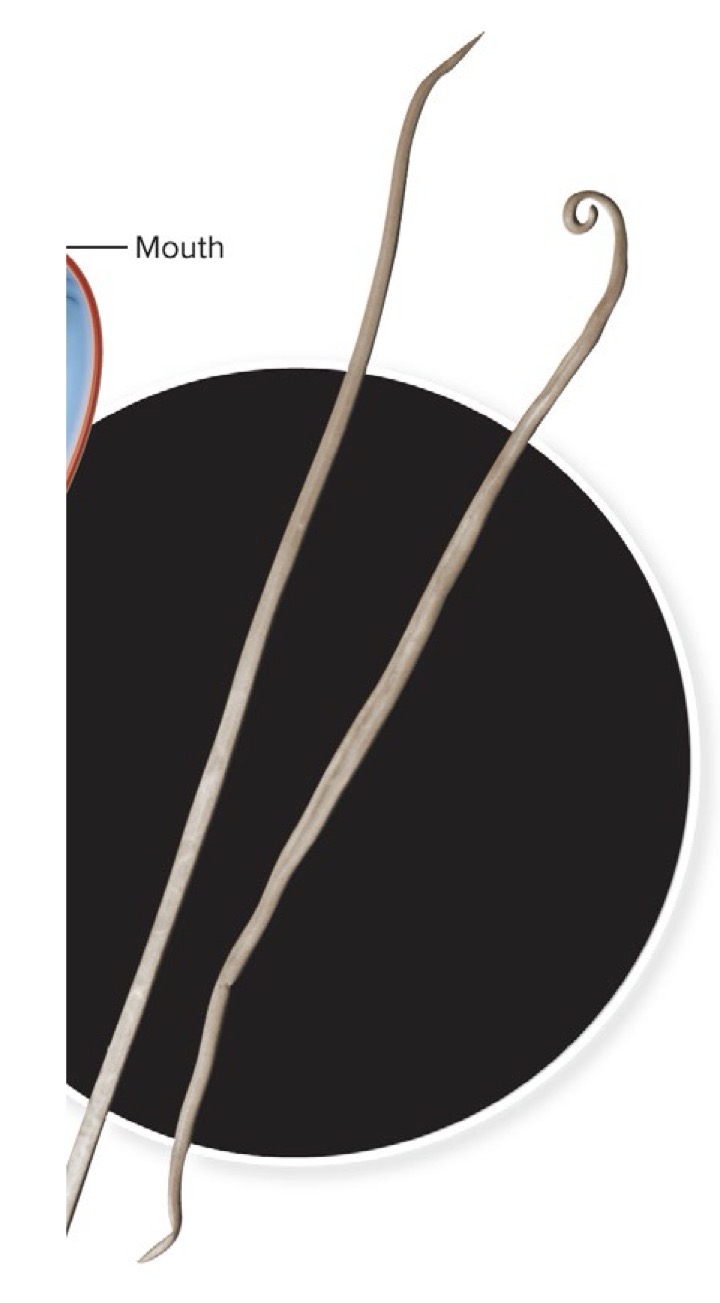
Also called nematodes
Elongated, cylindrical, unsegmented body
Reproduction of Helminths
Complete life cycles includes the fertilized egg, larval, & adult stages
Adults derive nutrients & reproduce sexually in a host’s body
1. Nematodes (roundworms): sexes are separate & different in appearance
2. Flukes: sexes can be separate or hermaphroditic (both male & female)
3. Tapeworm: generally hermaphroditic (both male & female)
Life Cycle of Helminths
Must transmit an infective form (egg or larva) to the body of another host
Sources for human infection are contaminated food, soil, & water or infected animals
Life Cycle of Helminths - Pinworm (Roundworm)
1. Microscopic eggs are swallowed - picked up from another infected person or objects they have touched (ex. kids getting infections from toys)
2. Eggs hatch in the intestine
3. Larvae mature into adults within 1 month
4. Male & female worms mate
5. Female migrates to the anus to deposit eggs
6. Intense itching ensues
7. Scratching spreads the eggs
