L23 - Nitrogen Metabolism - Applications to Health and Disease
 Call Kai
 Learn
Learn Practice Test
 Spaced Repetition
 Match
Match Flashcards
 Knowt Play
1/15

There's no tags or description
Looks like no tags are added yet.
Name | Mastery | Learn | Test | Matching | Spaced | Call with Kai | Chat |
|---|
No analytics yet
Send a link to your students to track their progress
16 Terms
Protein Dietary Requirements
Recommended Dietary Allowance (RDA) for protein 0.8g of protein per kg of body weight (0.36g per lb).
RDA is the amount to achieve a zero nitrogen balance.
The US protein requirement was informed by a series of nitrogen-balance studies systematically reviewed, which incorporated trials focused mainly on animal proteins.
Recent studies show a different RDA may be needed for vegetarians/vegans
Nitrogen balance
Nitrogen consumption equals nitrogen excretion (Zero nitrogen balance). Protein turnover also excretes excess nitrogen metabolites
In “Negative nitrogen balance”, more nitrogen is excreted than ingested. (Common in diseased/starvation state/diet deficient in essential AAs)
In “Positive nitrogen balance”, less nitrogen is excreted than consumed. (Common in growing children/pregnant individuals/refeeding after starvation period)
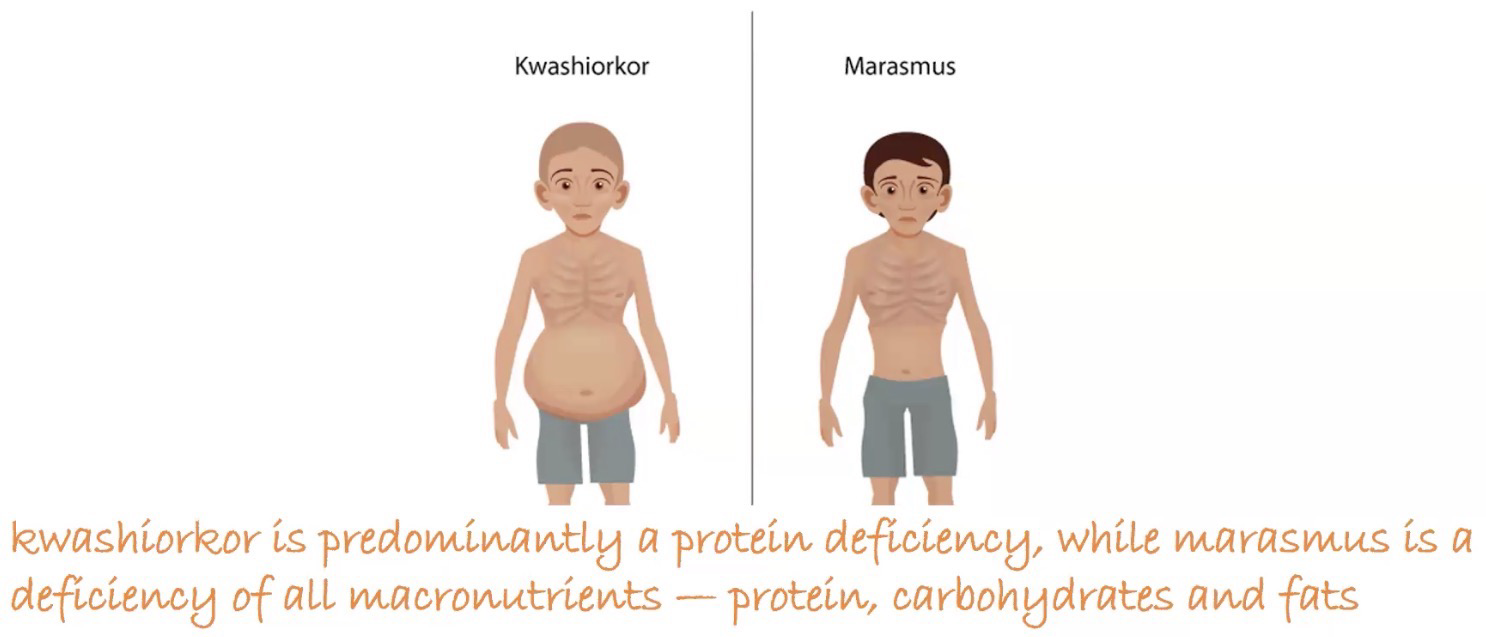
Difference between Kwashiorkor and Marasmus
Marasmus: Lack of all macronutrients; Excessive tissue/muscle wasting, little swelling/edema, loose skin
Kwashiorkor: Lack of protein intake; Irritability, big bellies, large liver, edemas/swelling due to osmotic imbalance
Selenocysteine
The 21st Amino Acid. Same structure as Cysteine except it has a Se group (Selenium) instead of an SH group.
The only AA with selenium; Can be incorporated into protein and is encoded by UGA (Stop) codon; When selenium is present, it can interact with a selenocystein insertion sequence that is present in the mRNA; Selenocysteine is then incorporated into the final functional protein.
Selenocysteine will cause translation to continue beyond the stop codon.
Also important proteins, such as
Iodothyronine Deiodinases: Converts T4 to T3 thyroxine, inportant thyroid hormone
Glutathion Peroxidase: Important in removing reactive oxygen species
Thioredoxin Reductase: Provides reducing equivalents for ribose to deoxyribose conversion

Porphyrins
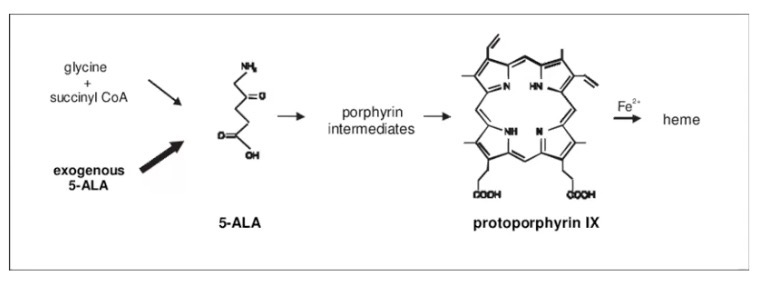
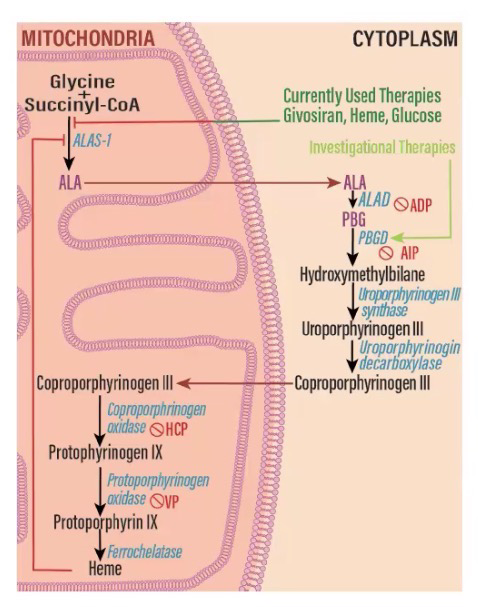
Constructed from four molecules of the monopyrrole derivative porphobilinogen (Derived from 2 molecules of δ-aminolevulinate)
Make up the porphyrin nucleus in heme proteins
Glycine reacts with succinyl-CoA in the first step to yield α-amino-β-ketoadipate, which is then decarboxylated to δ-aminolevulinate (ALA)
Maple Syrup Disease (MSUD)
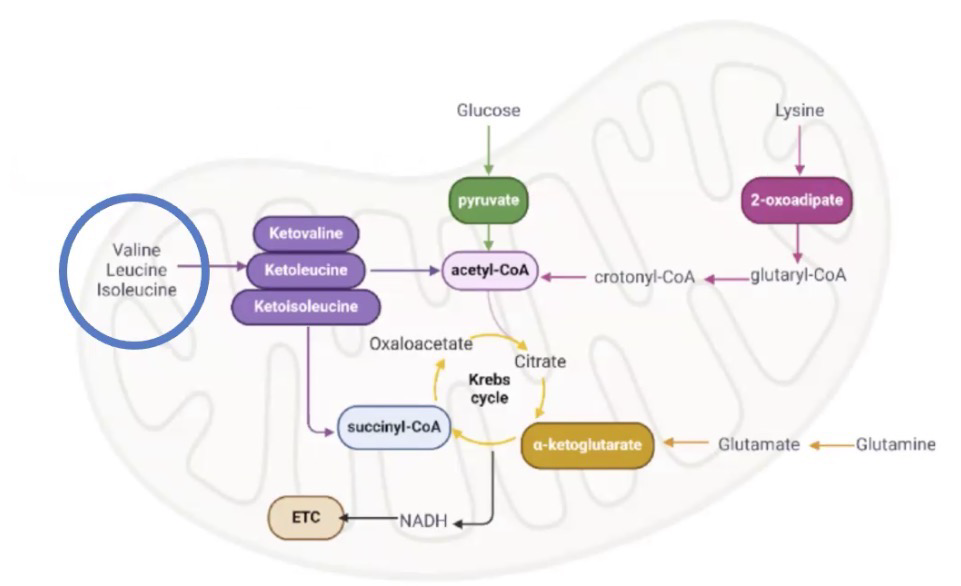
Genetic order that affects branched-chain AA metabolism (V, L, I). These AAs are typically used for energy production or protein synthesis in the brain. Disruption in metabolism causes accumulation.
Can quickly lead to irreversible neurological injury, brain damage, seizure, coma, or central respiratory failure within 7-10 days after birth.
Infants with this have sweet-smelling urine, hence the name. Also have poor feeding, difficulty breathing, and refusing to eat or vomiting, developmental delays, lethargy, irritability, seizures, and muscle weakness.
Treatment requires very early administration of management, after which lifelong dietary restriction and monitoring are required.
Homocystinuria
Build-up of homocysteines (Methionine cycle)
Body lacks enzyme needed for homocysteine breakdown.
Treatment: Vitamin B6 treatment (Helps PLP production, which is needed in homocysteine catabolism)

Porphyria
Build of porphyrin; May have no symptom or be lethal
One types affects the skin, the other affects the central nervous system
Heme degradation and Bilirubin Accumulation
Degradation of iron-porphyrin (heme) generates bilirubin, which is converted to bile pigments; At low-levels, it’s protective for the body; At high-levels, it can be toxic (because it’s lipophilic and can disrupt membranes)
This breakdown pathway protects cells from oxidative damage.
During development, the mother clears bilirubin, after birth, may take a while for the liver to begin processing the bilirubin, which is why some children develop jaundice.
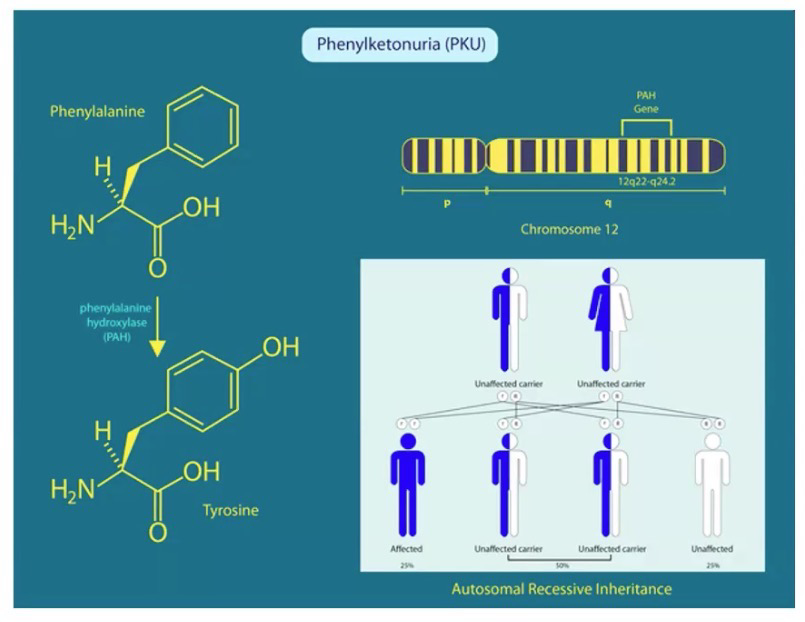
PKU
Deficiency of phenylalanine hydroxylase; causing higher levels of phenylalanine that can damage nerve function, cause delayed mental and social skill development, lower head size, hyperactivity, jerking movements of arms and legs, seizures, pale skin, tremors.
Orotic Aciduria
Associated with UCD: Accompanied by hyperammonemia
Associated with pyrimidine biosynthesis: Accompanied by severe megablastic anemia and normal B12 serum; Caused by deficiency in orotic phosphoribosyl transferase or orotidine-5-phosphate decarboxylase
Thymidylate Synthase and Folic Acid
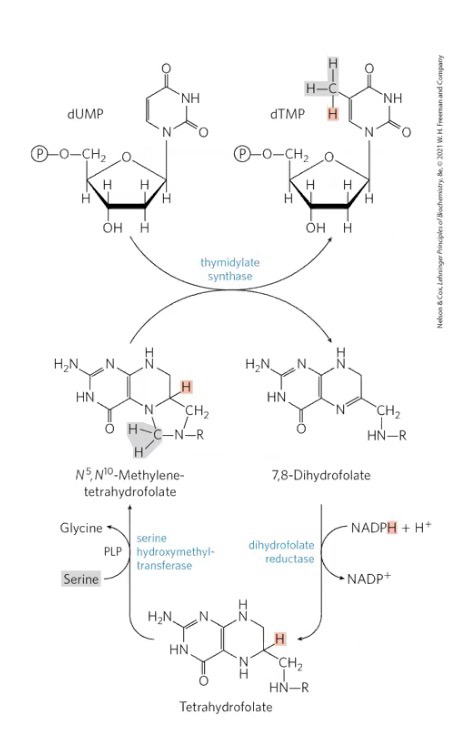
Thymidylate synthase is important to convert DUMP to DUTP
Requires folic acid derivative N5,N10-Methylenetetrahydrofolate (Part of folic acid cycle)
Folic acid deficiency occurs in ~10% of opopulation (50% in impoverished communities). Reduced thymidylate synthesis causes U to be incorporated into DNA. Attempt to fix this causes strand breaks that affect DNA structure and function.
Thymidylate Synthase and Dihydrofolate Reductase as a Target for Chemotherapy
5-Fluorouracil (5FU): Inhibitor of thymidylate synthase; Prodrug that must be metabolized and bioactivated. Activates into 5FdUMP and blocks methyl transfer from methylene tetrahydrofolate
Methotrexate: Inhibitor of dihydrofolate reductase; Inhibits production of N5,N10-Methylenetetrahydrofolate

Lesch-Mylan Syndrome
Symptoms: Poor coordination, intellectual deficit, hostility, and compulsive self-destructive tendencies
Caused by a genetic lack of hypoxanthine-guanine phosphoribosyltransferase (HGPRT) activity

Gout
Consistent high level of uric acid in the blood.
Pain in big toe, joints, etc.
Maybe due to overproduction or under-secretion of uric acid
Allopurinol: An inhibitor of xanthine oxidase that is used to treat gout
Allopurinol is converted to oxypurinol, a strong competitive inhibitor that remains tightly bound to the enzyme.

Megaloblastic Anemia
Two pathways that can lead to megaloblastic anemia:
Orotic Aciduria: Genetic defect caused by a deficiency in orotic phosphoribosyl transferase or orotidine-5-phosphate decarboxylase. Physically stops DNA (Pyrimidines) synthesis. B12 treatment will not work here.
Folate/Methionine deficiency: Vitamin B12/Folate deficiency stops N5,N10-Methylenetetrahydrofolate production, inhibiting thymidylate synthase function. In this case, Vitamin B12 supplements can help.
Causes decline in the production of mature erythrocytes
Appearance of immature precursor cells, or megaloblasts, in the bone marrow
Replacement of erythrocytes with a smaller number of abnormally large erythrocytes (Macrocytes)
