MicroBio Mod. 4
 Call Kai
 Learn
Learn Practice Test
 Spaced Repetition
 Match
Match Flashcards
 Knowt Play
1/39

Earn XP
Description and Tags
Genetics and Application
Name | Mastery | Learn | Test | Matching | Spaced | Call with Kai | Chat |
|---|
No analytics yet
Send a link to your students to track their progress
40 Terms
Replication
Makes possible the flow of genetic information from one generation to the next.
vertical gene transfer
the DNA of a cell replicates before cell division so that each offspring cell receives a chromosome identical to the parent’s.
happens before transcription and translation
Transcription
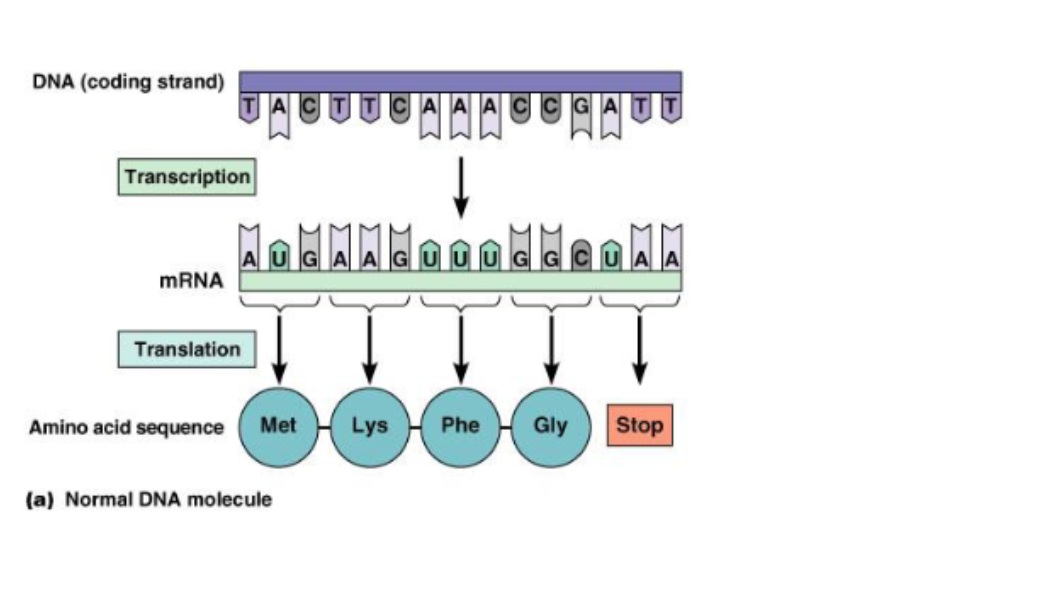
DNA is transcribed to make RNA (mRNA, tRNA, and rRNA)
genetic information in DNA is copied, or transcribed, into a complementary base sequence of RNA
Adenine pairs with uracil in the RNA sequence instead of thymine.
requires RNA polymerase
begins when RNA polymerase binds to the DNA at a site called the promoter.
RNA polymerase unwinds the DNA and begins copying at the start point on only one of the two strands.
transcription stops at a site called the terminator.
Translation
Involves decoding the “language” of nucleic acids and converting it into the “language” of proteins.
the ribosome attaches to the mRNA sequence and starts translating it into codons (groups of 3 nucleotides)
each codon corresponds to one amino acid, but an amino acid can code for more than one codon (64 codons but 24 amino acids)
the amino acids form into a long chain to make a protein
start codon: AUG
stop codons: UAG, UAA, UGA (aka nonsense codons)
Shine Dalgarno sequence
A flag for a ribosome to sit at a specific location and start transcribing
tRNA (transfer RNA)
A small RNA molecule that acts as the physical link between the genetic code in messenger RNA (mRNA) and the amino acids that make up proteins
Mutation
Change in the genetic material
may be neutral, beneficial, or harmful
Mutagen: Agent that causes mutations
Spontaneous mutations: Occur in the absence of a
mutagen
Mutation: Base Substitution (Point Mutation)
A change in one base
Mutation: Silent Mutation
A change in codon but no change to the amino acid (because each amino acid has multiple codons that code for it)
neutral
Mutation: Missense Mutation
A type of point mutation
results in a change in amino acid from a change in nucleotide
could be positive or negative
Mutation: Nonsense Mutation
Results in a stop codon before there should be
“nonsense” because the protein hasn’t been fully created - it means nothing
Mutation: Frameshift Mutation
Insertion or deletion of one or more nucleotide pairs
catastrophic disruption to protein
results in completely different proteins because there are completely different amino acids in the sequence
Causes of mutations
Ionizing radiation (x-rays and gamma rays) - cause the formation of ions that can react with nucleotides and the deoxyribose phosphate backbone
disrupts DNA by causing adjacent thymine bases to become crosslinked (thymine dimer) and disrupt normal base pairing
Repairing mutations
Nucleotide expression:
an enzyme cuts out the damaged DNA and DNA polymerase fills the gap by synthesizing new DNA using the intact strand as a template
DNA ligase seals the remaining gap by joining the old and new strands
Plasmid
An independent piece of DNA not associated with the bacterial chromosome (circular and smaller)
carries genes just like bacterial chromosome does
Conjugative Plasmid
Carries genes for s*x pili and transfer of the plasmid
Dissimilation plasmids
Encode enzymes for catabolism of unusual compounds
R factors
Encode antibiotic resistance
Transposon
“Jumping genes”
segments of DNA that can move from one region of DNA to another
mediated through an enzyme called transposase
Targets a sequence of DNA and cuts it, allowing for the incorporation of DNA into a different region
It reseals the DNA after
Plasmids, Transposons, and antibiotic resistance
Plasmids and Transposons act as the primary delivery system and "cut-and-paste" machinery for antibiotic resistance genes. Together, they allow bacteria to rapidly acquire, accumulate, and share resistance to drugs.
Transposons physically "cut and paste" antibiotic resistance genes from the main bacterial chromosome and insert them directly into plasmids. Plasmids then transport these genes between different bacteria
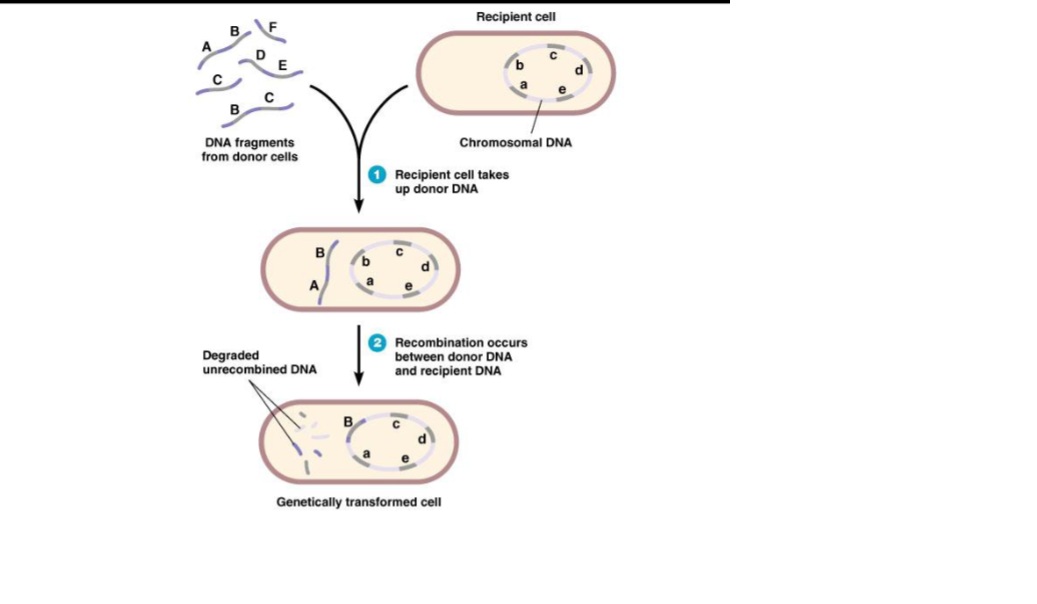
Recombination
Exchange of DNA and incorporation of it into the host chromosome/genome
Bacterial DNA structure
Polymer of nucleotides: adenine, thymine, cytosine, guanine
Double helix associated with proteins
"Backbone" is deoxyribose-phosphate
(sugar-phosphate)
Strands held together by hydrogen bonds between AT and CG
Strands are antiparallel
5’ and 3’ at opposite ends
Transformation
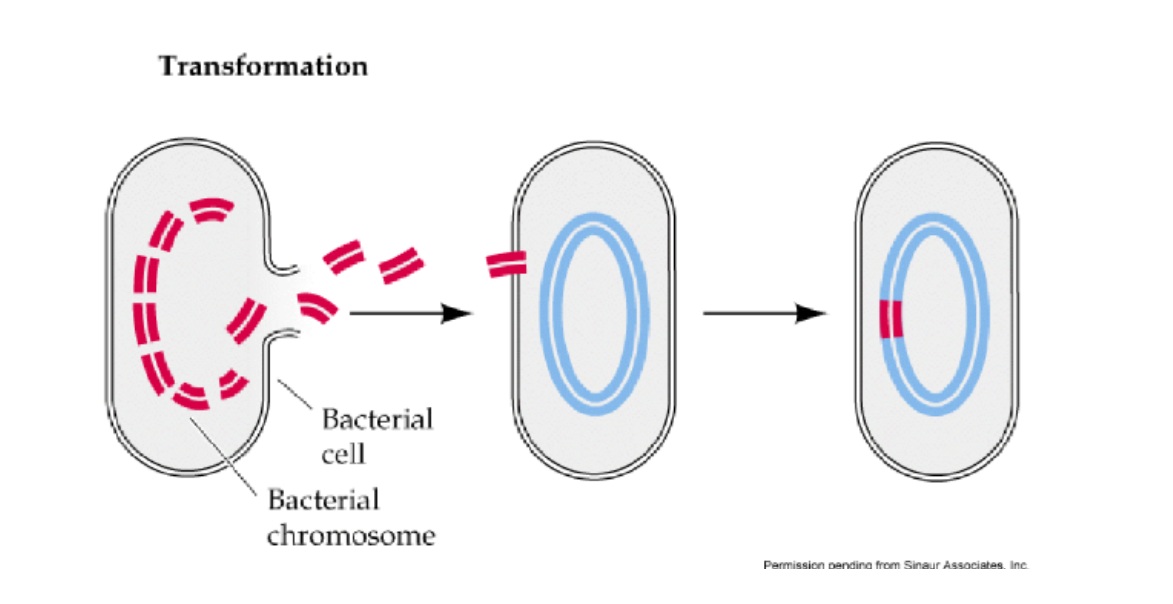
Cell incorporates a piece of external DNA into the cell.
movement of “naked” DNA between cells
Requires receptors for DNA incorporation (some bacteria have it)
called a “competent” bacteria if it has these receptors
natural setting
Holes in the cell membrane can induce cells to allow DNA in
laboratory setting through heat, electric shock, chemicals, etc
Conjugation
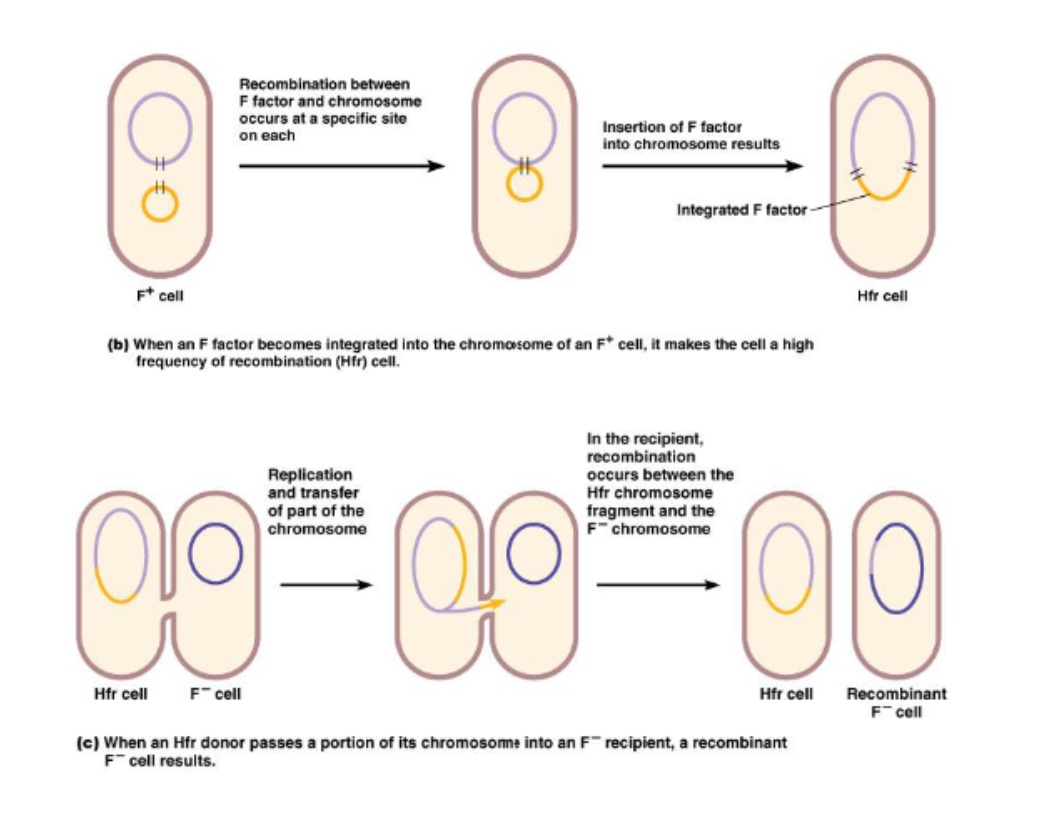
Requires direct contact between cells
the cells have to be of opposing mating type (one carries the plasmid and the other doesn’t)
Requires pilis - allows for transfer of material
coded for by genes on plasmid (small pieces of circular DNA w/ nonessential genes on them)
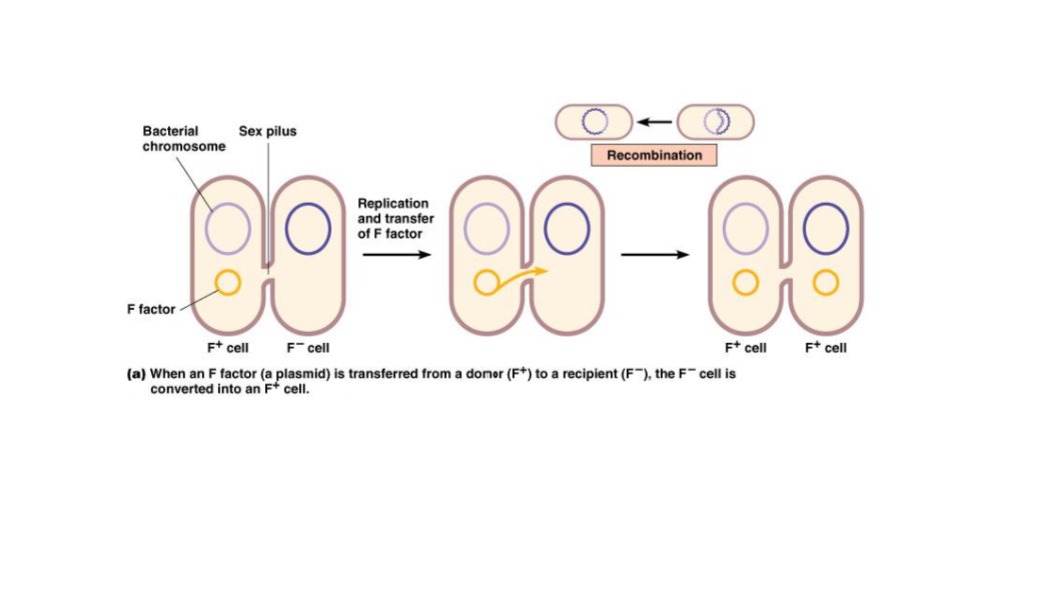
plasmid called “F factor” because genes lie on it, meaning it can engage in conjugation
So, cells carrying plasmid are F+ (F positive) and cells w/out plasmid are F- (F minus)
F+ cell
A cell carrying a plasmid for conjugation
F- cell
A cell without a plasmid
the plasmid is transferred to the recipient F- cell during conjugation, turning it into an F+ cell.
High frequency recombinant (Hfr) cell
Occurs when the F factor (plasmid) becomes integrated into the chromosome
Transduction
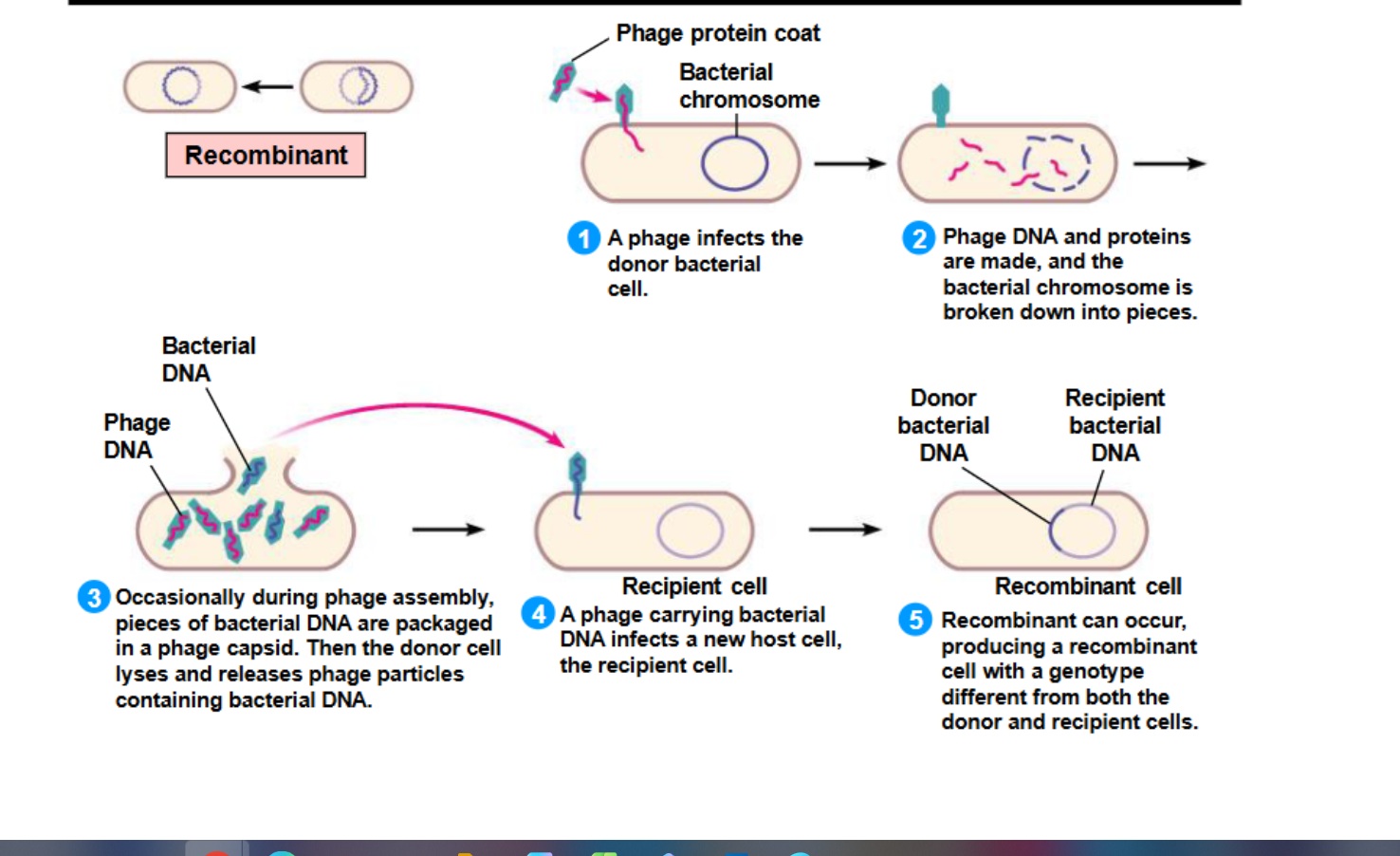
Utilizes a virus as the means to transfer DNA between cells
no cell to cell contact required
the infection process in a cell is required
Bacteriophage - a virus that targets only bacteria
Delivers its own genetic material into the cell
Codes for proteins that break the host chromosome down
Occasionally during phage assembly, pieces of bacterial DNA are packaged in a phase capsid.
the donor cell lyses and releases phage particles containing bacterial DNA
A phage carrying bacterial DNA infects a new host cell, the recipient cell.
Recombination can occur
produces a recombinant cell w/ genotype different from both the donor and recipient cells.
Can occur naturally or intentionally in a lab.
Ames Test
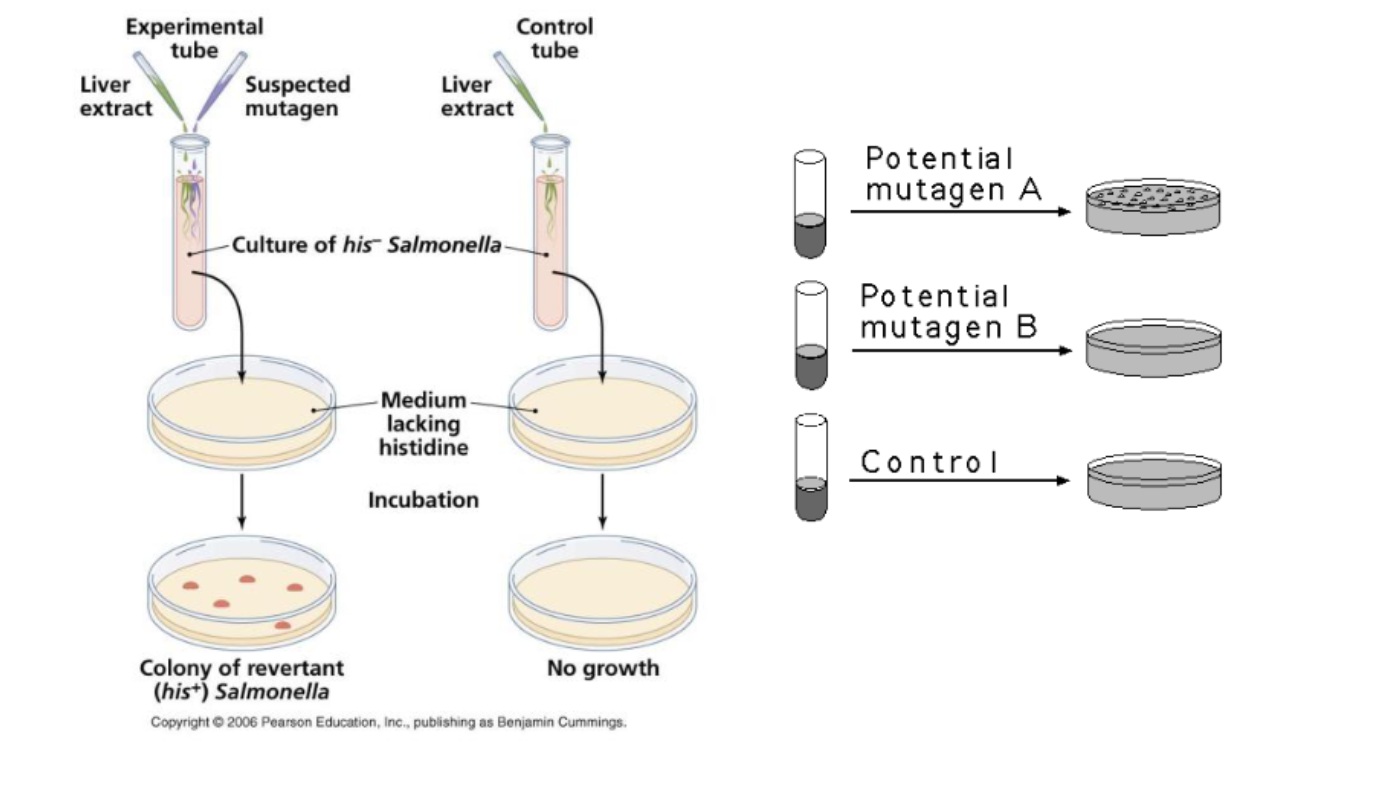
Identifies chemical carcinogens
Takes mutated salmonella that can’t product amino acid histidine
mix it w/ mutagen that made it so it could not produce histidine
put it on a medium w/out amino acid histidine
growth/colonies suggests the chemical the bacteria was exposed to had mutagenic properties strong enough to undo the mutation and revert it back to its natural state (where it can produce its own histidine)
Used to test how carcinogenic/mutagenic certain chemicals are
Genome
All of the genetic material in a cell
Genotype
Genes of an organism
Allele
Variant of a gene (e.g. eye color)
Phenotype
Expression of the genes
Gene
Segment of DNA that encodes a functional product, usually a protein
Vertical gene transfer
Gene transfer within a cell or between generations of cells
replication for mitosis
transcription and translation
Horizontal gene transfer
Gene transfer between cells of the same generation
recombination
Restriction enzymes
Used to insert foreign genes into a plasmid artificially
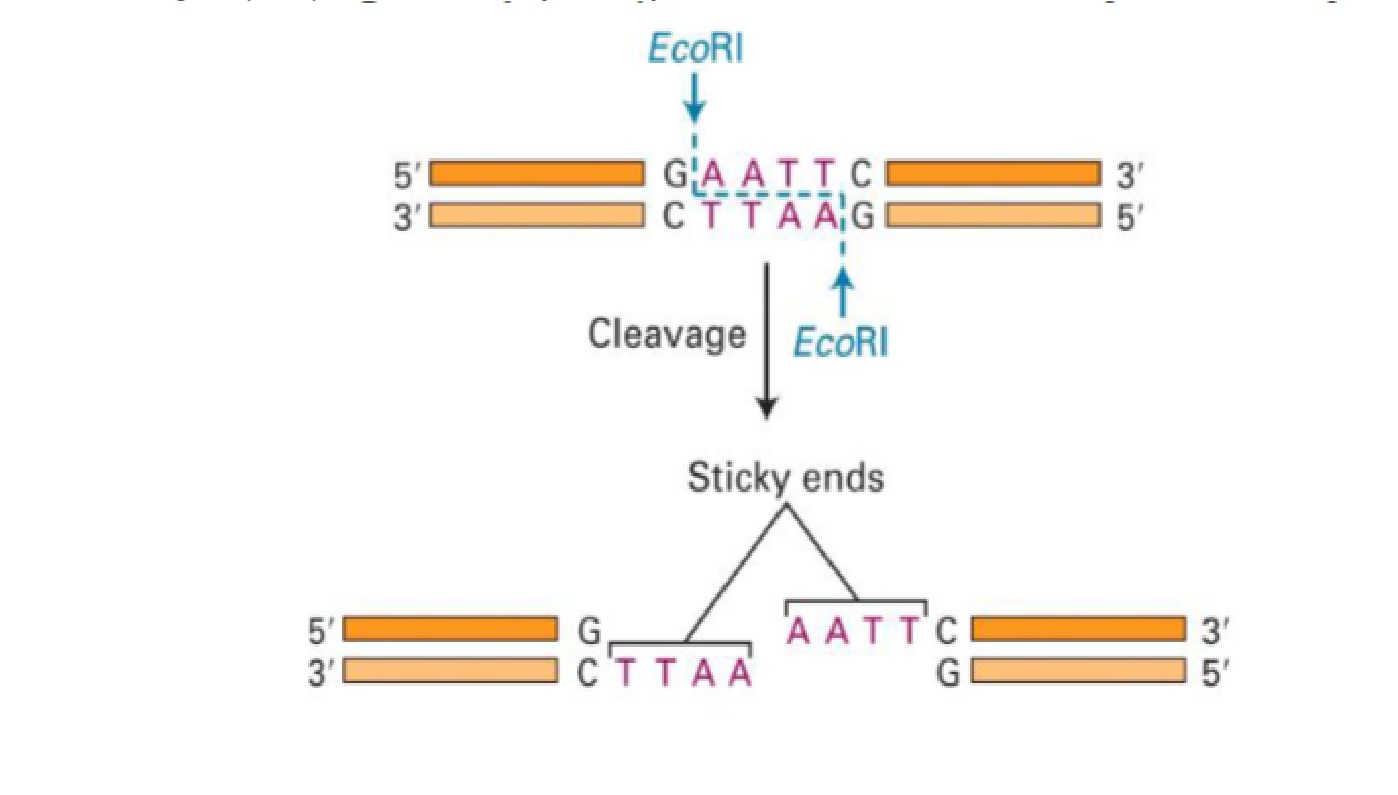
cut specific sequences of DNA
produces overhanging single stranded DNA ends called sticky ends
Sticky ends:
complementary
can pair back up and hydrogen bond
can take any piece of DNA cut w/ the same enzyme and put them together because they’ll have the same overhang. (ligase will seal them back together)
Destroy bacteriophage DNA in bacterial cells
Cannot digest (host) DNA w/ methylated cytosines
Basically:
restriction enzyme cuts double-stranded DNA at its particular recognition sites
produces a DNA fragment w/ two sticky ends
meets w/ DNA from another source cut by the same restriction enzyme (DNA might be a plasmid)
they join by base pairing
form either linear or circular molecules
DNA ligase unites the backbones, producing a recombinant DNA molecule
Bacterial gene expression
Constitutive enzymes are expressed at a fixed rate
Other enzymes are expressed only as needed
repressible enzymes - silenced at certain points
inducible enzymes - turned on when needed to build a protein
Operon
How enzymes are turned on and off.
A group of genes that are transcribed together and controlled by one promoter
inducible operon, transcription must be turned on
repressible operon, transcription is usually on and must be turned off.
Consists of the promotor and operator as parts of the control region and structural genes that code for the protein.
regulated by the product of the regulatory gene.
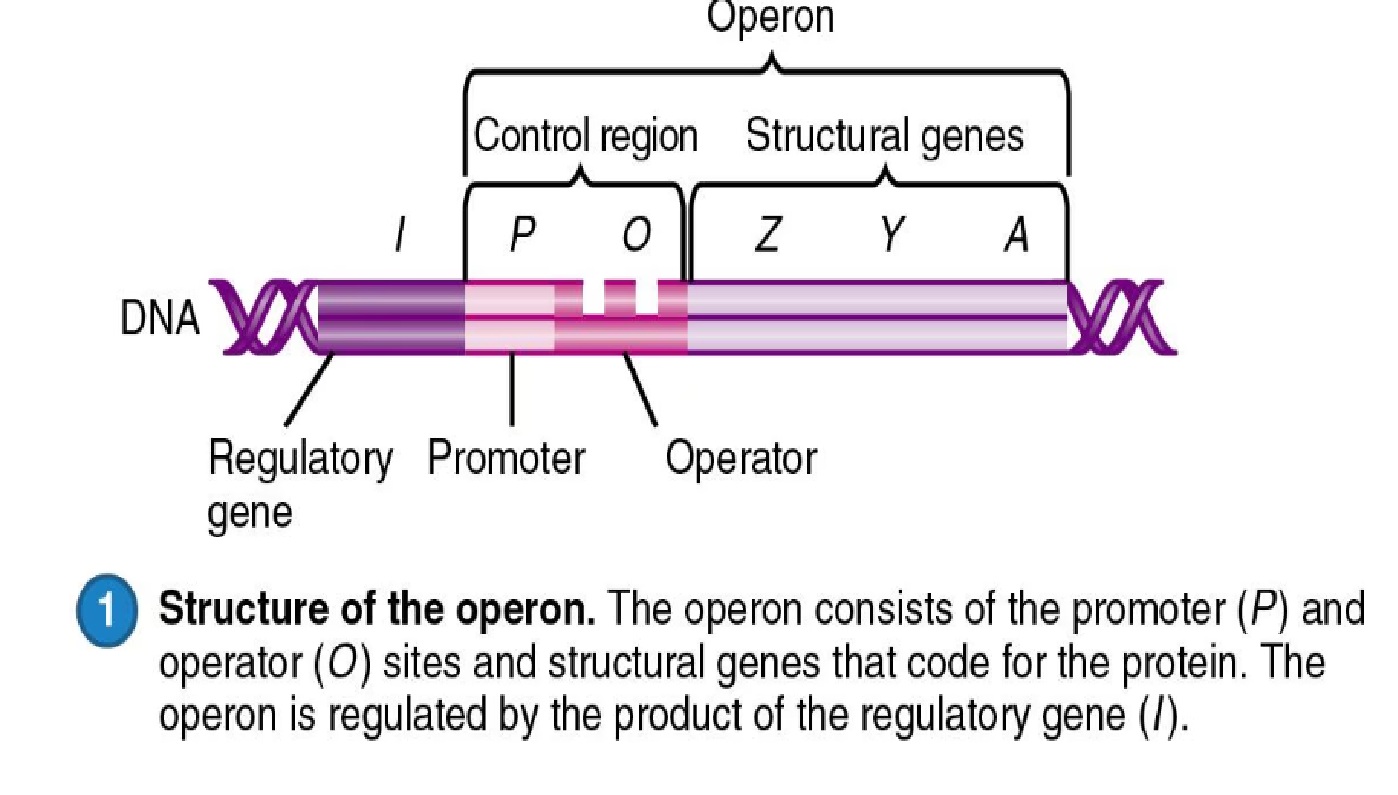
Promotor
A specific DNA sequence located just upstream of a gene.
acts as a crucial landing pad for RNA polymerase, directing the enzyme to the exact start site to initiate transcription (the process of copying DNA into RNA
Basically, where the assembly of transcription enzymes happens
is part of the control region
Operator
The operator acts as the on/off switch of an operon.
is a specific segment of DNA where regulatory proteins (like repressors) bind.
By interacting with these proteins, the operator controls whether RNA polymerase can transcribe the operon's genes
Binding site for the regulatory protein/gene