CH 14: Flatworms, Mesozoans, and Ribbon Worms
 Call Kai
 Learn
Learn Practice Test
 Spaced Repetition
 Match
Match Flashcards
 Knowt Play
1/34

Earn XP
Description and Tags
UTA Zoology, Exam specific question info
Name | Mastery | Learn | Test | Matching | Spaced | Call with Kai | Chat |
|---|
No analytics yet
Send a link to your students to track their progress
35 Terms
Triploblastic
Organisms possessing three germ “tissue” layers: ectoderm, mesoderm, and endoderm, which contribute to their body structure and development.
Includes Flatworm, Mesozoans, and Ribbon Worms.
Flatworm, Mesozoans, and Ribbon Worms have __________ symmetry.
bilateral
Protostomia (mollusks, annelids, arthropods)
embryonic blastopore forms the mouth first, then the anus later
Deuterostomia (echinoderms, chordates)
embryonic blastopore forms the anus first, then the mouth later
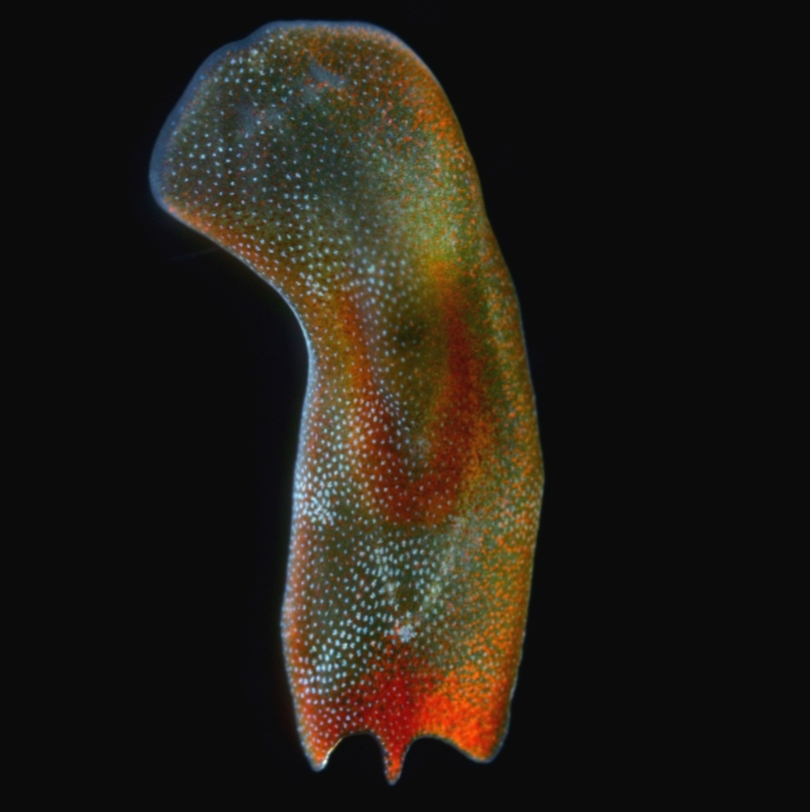
Phylum Acoelomorpha are small, flat worms that live in _______ sediments, a few _____
marine, pelagic
Acoelomorpha characteristics
Rootlets of epidermal cilia form interconnecting network
Most free living, some commensal, some parasitic
Bilateral symmetry, body flattened dorsoventrally, anterior concentration of nerve cells
Epidermis cellular
Gut absent or incomplete and saclike
Mesodermal muscle cells: longitudinal, circular, diagonal
Radially arranged nerve cords
Asexual reproduction by fragmentation
Monoecious sexual reproduction via internal fertilization
No excretory or respiratory system
Syncytial tegument
Specialized, multinucleated external covering characteristic of parasitic flatworms (phylum Platyhelminthes) that is resistant to the hos t immune system.
Particularly classes Trematoda (flukes) and Cestoda (tapeworms)
Parasitic worms have no digestive systems. Instead, they rely on the _____ to break down food. may have _____ intestine.
Host, Bind-ended
Protonephridia
the simple waste excretion and osmoregulation organ (nitrogenous wastes)
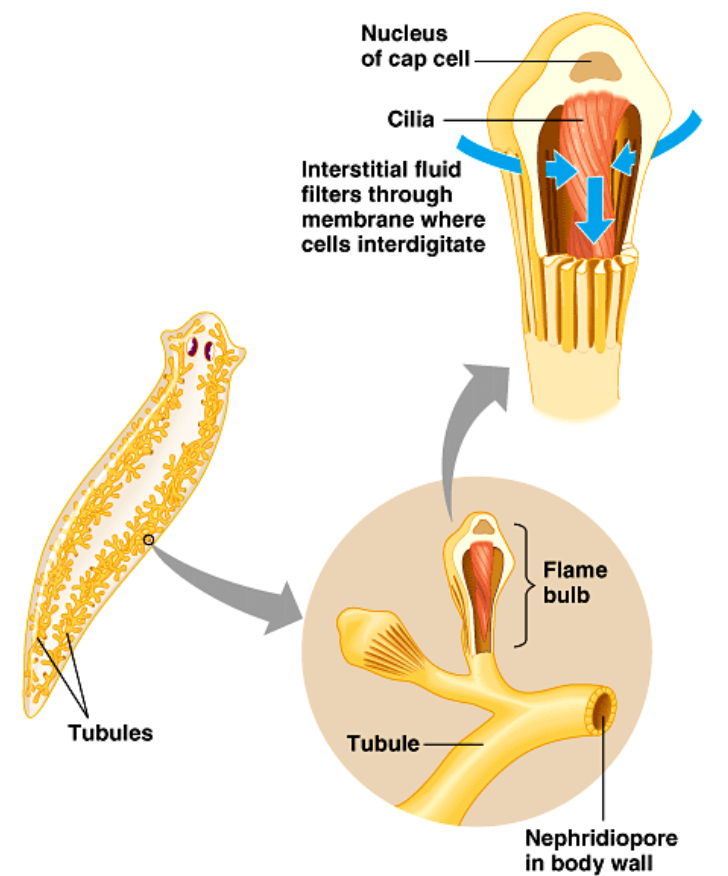
Flame cell
Unique cell in the protonephridia that is shaped like a cup with a tuft of flagella
Flagella in flame cells draw fluid through the ____, which acts as a collecting net for particles
weir
Flatworm, Mesozoans, and Ribbon Worms have ______________ nerve cords
longitudinal
Nerves are organized into 3 distinct types:
Sensory, motor, association
Ocelli
photosensitive eyespots
Statocysts
senses equilibrium
Rheoreceptors
sense water currents
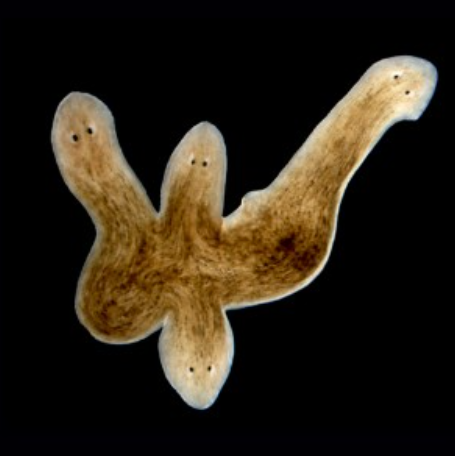
Asexual reproduction is through ___________ and ________
Fission, Fragmentation
Sexual reproduction is _________ with ______ ______ larve
Monoecious, free-swimming
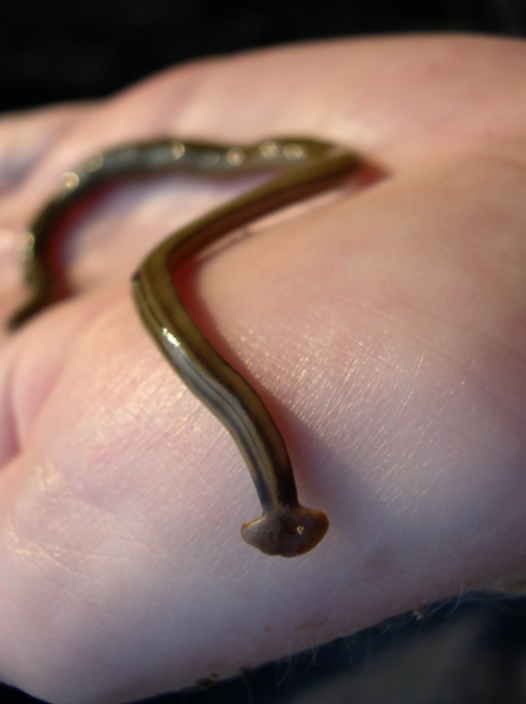
Class Turbellaria are
free living worms that use muscles and cilia to move
Class Trematoda, subclass Digenea are all ______ ______
parasitic flukes
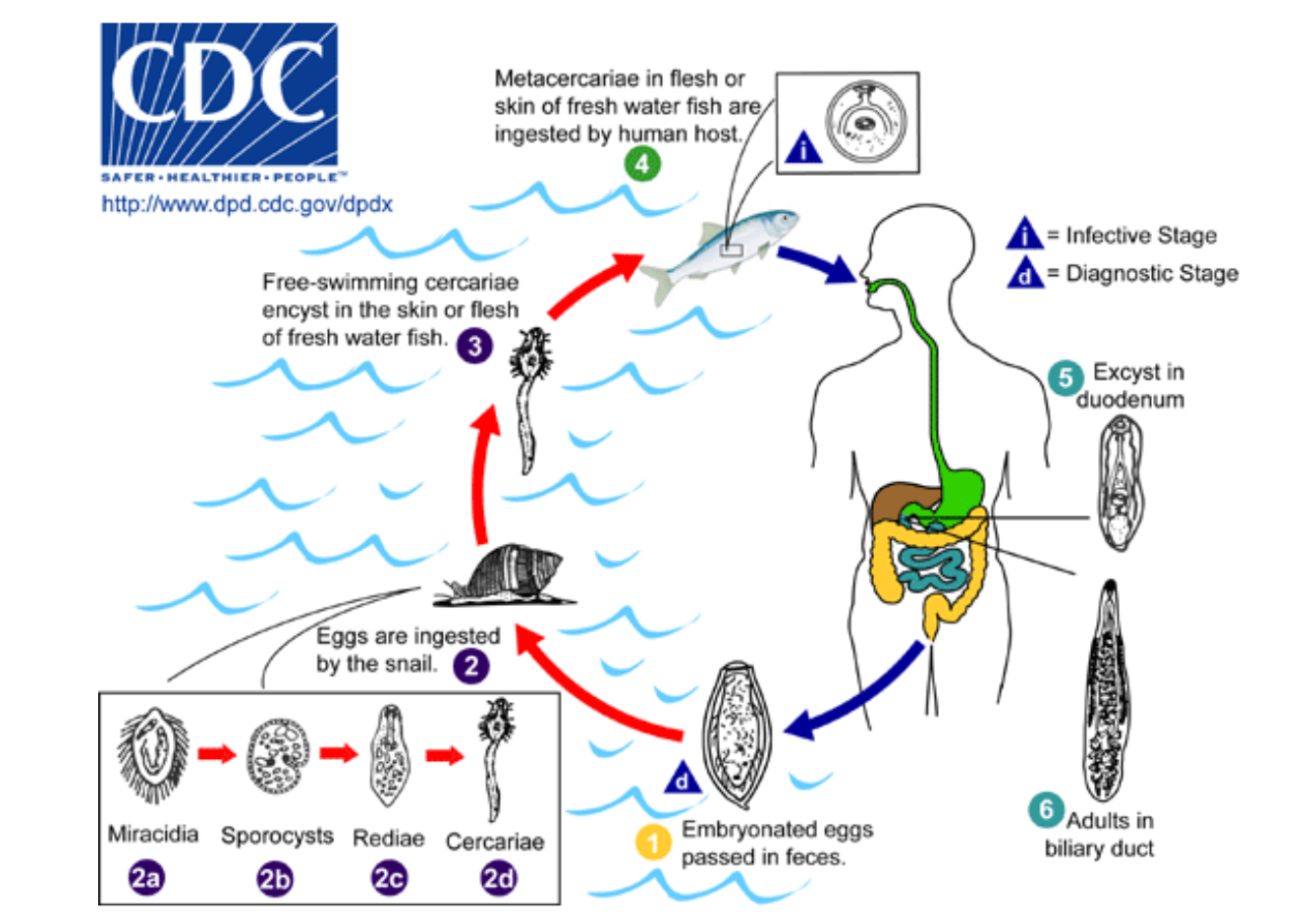
Digenean reproduction - Clonorchis sinensis (human liver fluke)
Shelled embryos/larvae are excreted in water and penetrate a mollusk. Leave snail and embed in a fish. Juveniles eaten by a human host mature and repeat cycle.
WE EAT FISH AND GET INFECTED
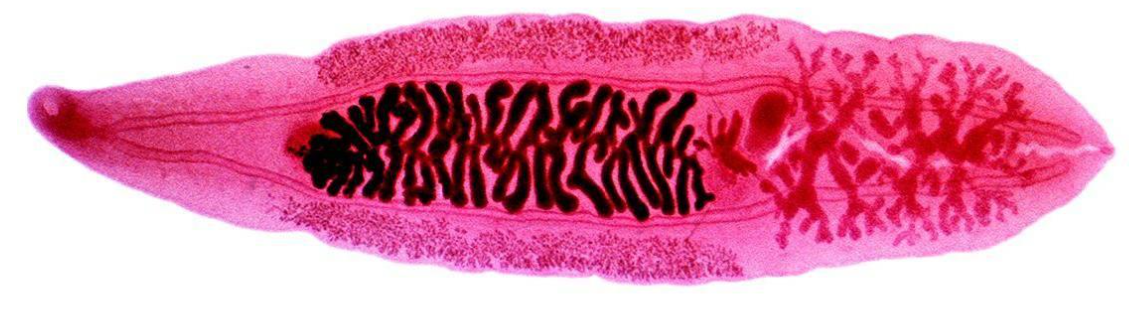
Rediae Stage (liver fluke)
a larval stage of digenetic trematode parasites (flukes) that develops within an intermediate snail host, acting as a site for asexual reproduction to exponentially increase the number of parasites
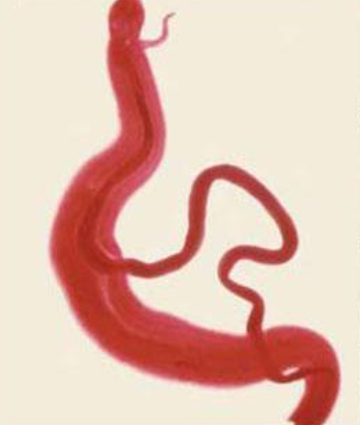
Digenean reproduction - Schistosoma (blood fluke) What is the GYNECOPHORAL CANAL?
The VENTRAL GROOVE ON SCHISTOSOME = GYNECOPHORAL CANAL!!!
(No rediae stage)
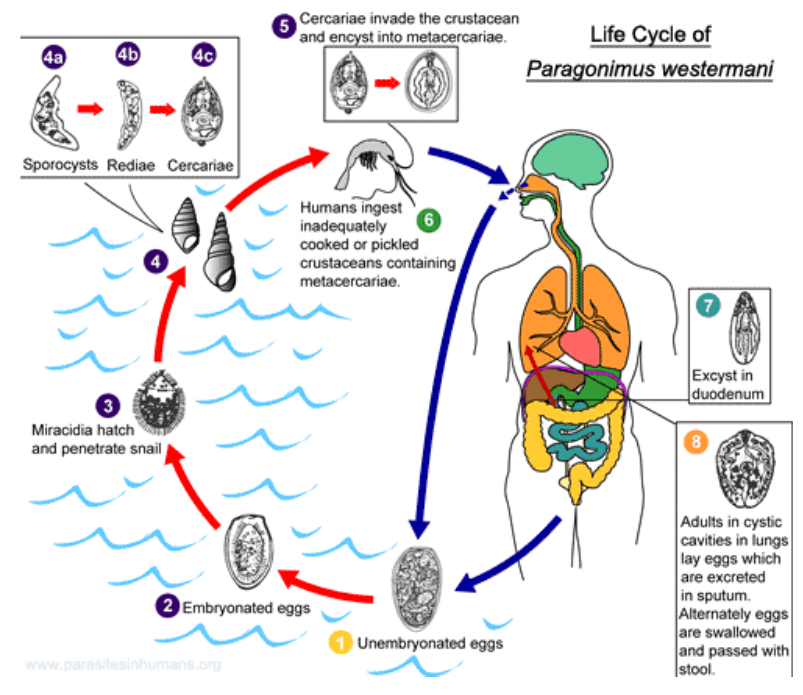
Paragonimus (lung fluke) Cercariae shed into _____ or ingested by ____ eating snails
water, crabs
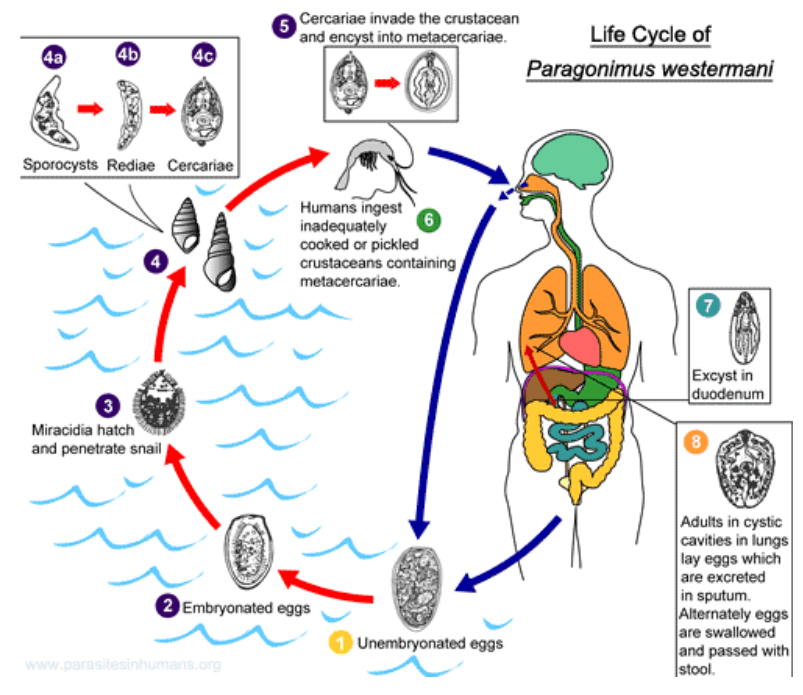
Where do the Metacercaria in Paragonimus (lung fluke) develop?
Inside of crabs
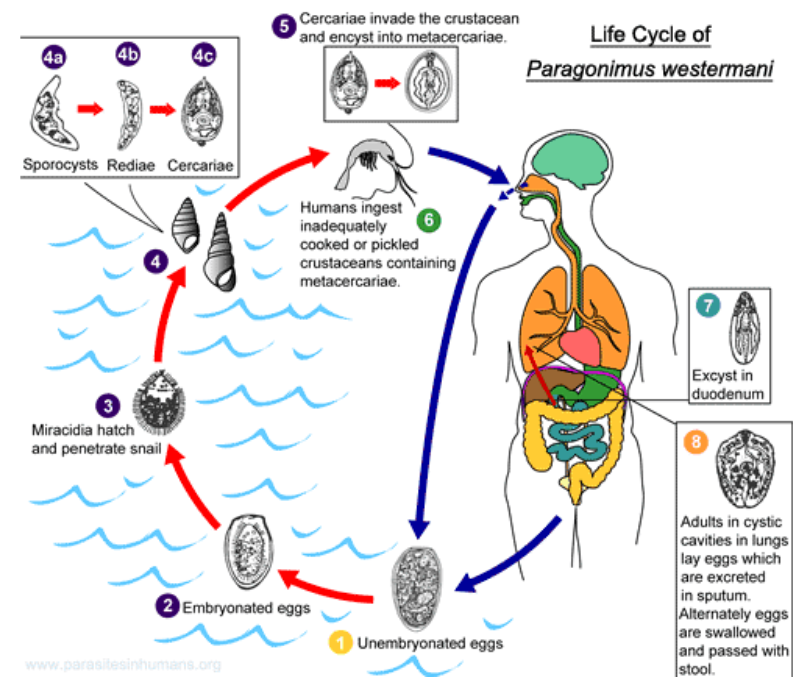
Paragonimus (lung fluke) can be contracted by consuming ________ ____
undercooked crab
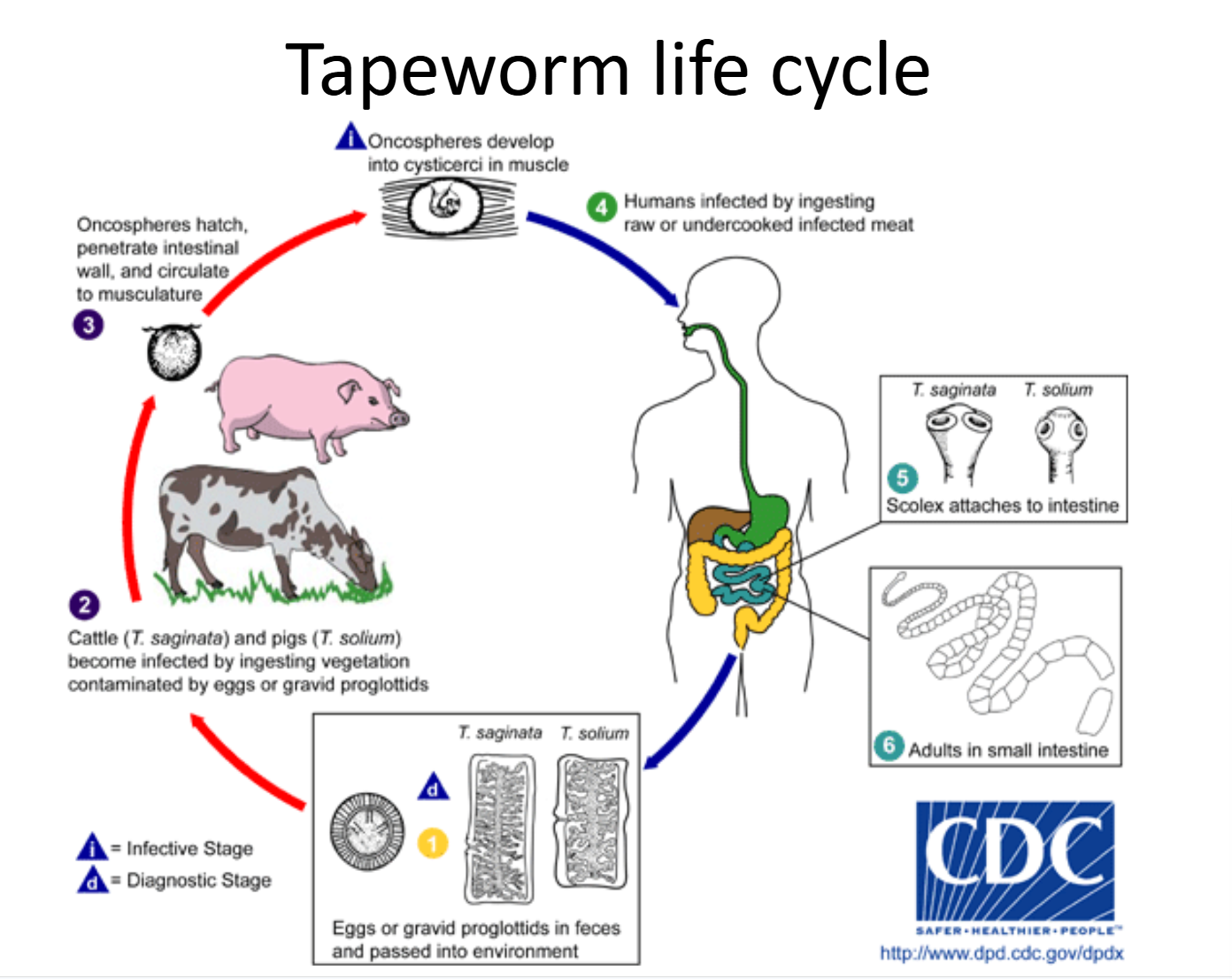
Class Cestoda (Tapeworms) have a ______ on their front end with hook for attachment
scolex
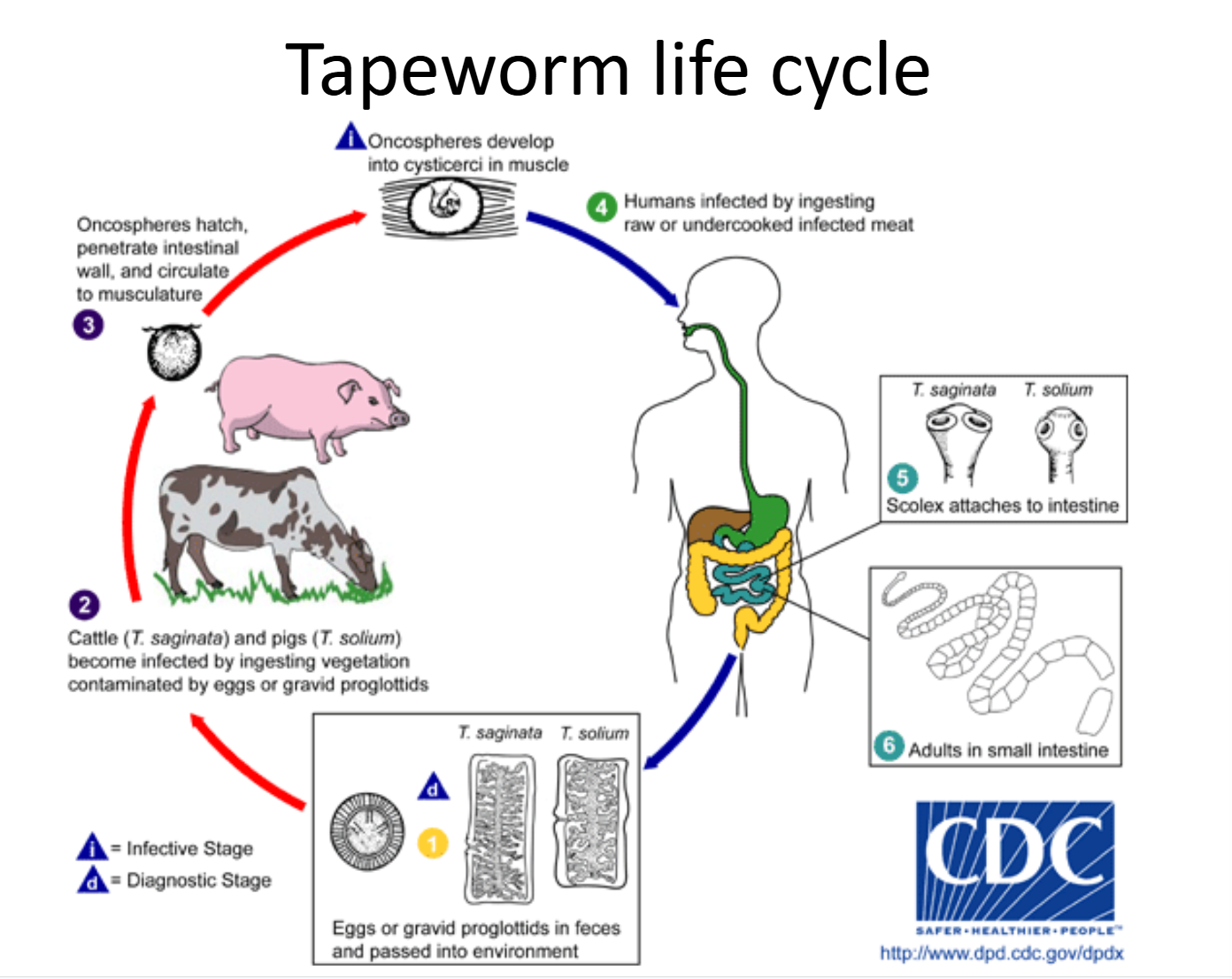
Class Cestoda (Tapeworms) have reproductive segments called _____, a chain of these is called a _____
proglottids, strobila
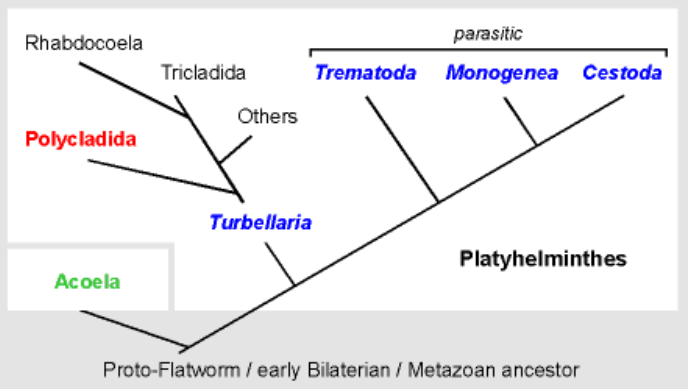
Turbellaria is _________ in current form.
paraphyletic
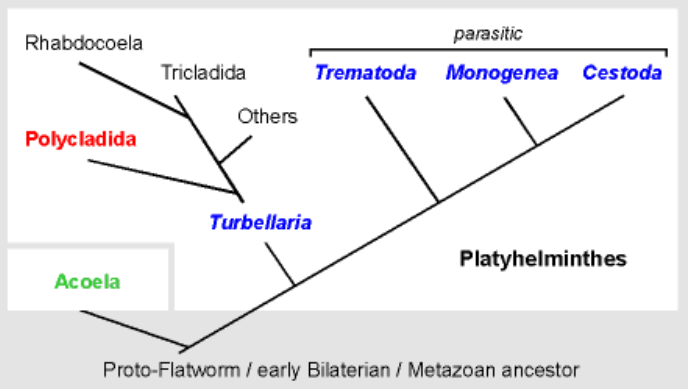
Platyhelminths may not be __________ but are generally considered to be so.
monophyletic
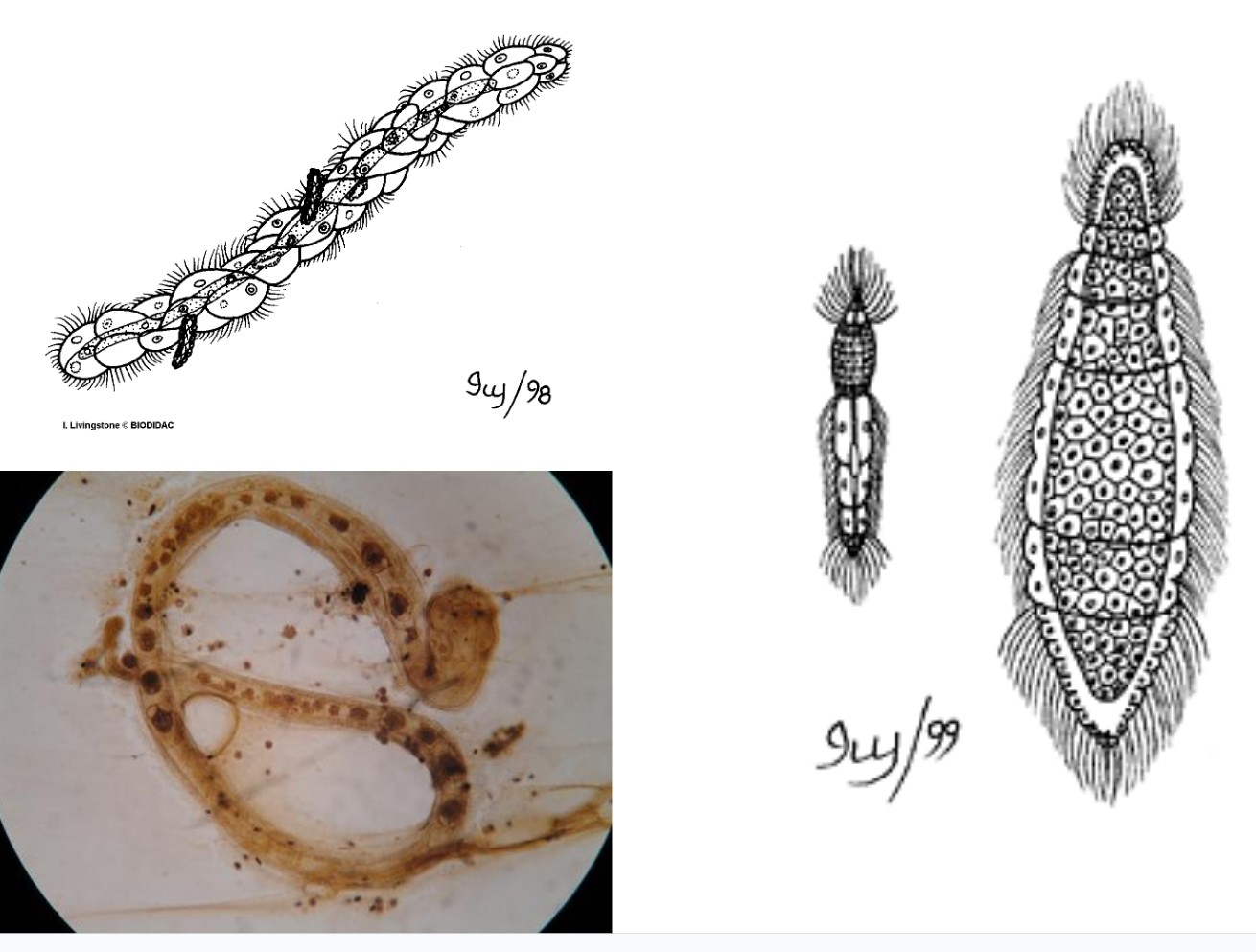
Phylum Mesozoa is the _______ between protozoa and metazoa and are all _____ or _____
missing link, parasitic, symbionts
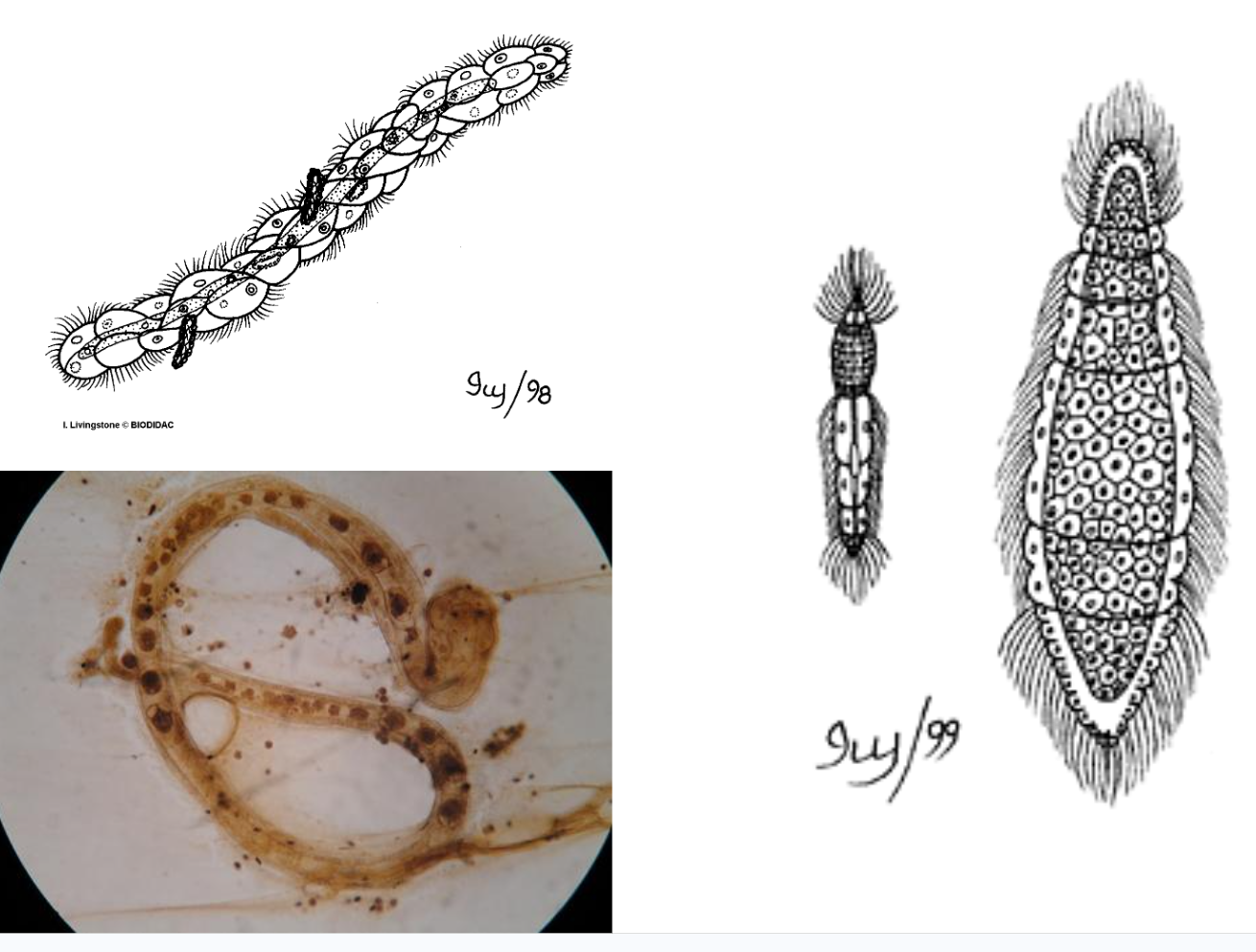
Phylum Mesozoa mainly consist of ______ cells in _____ layers
20-30, two
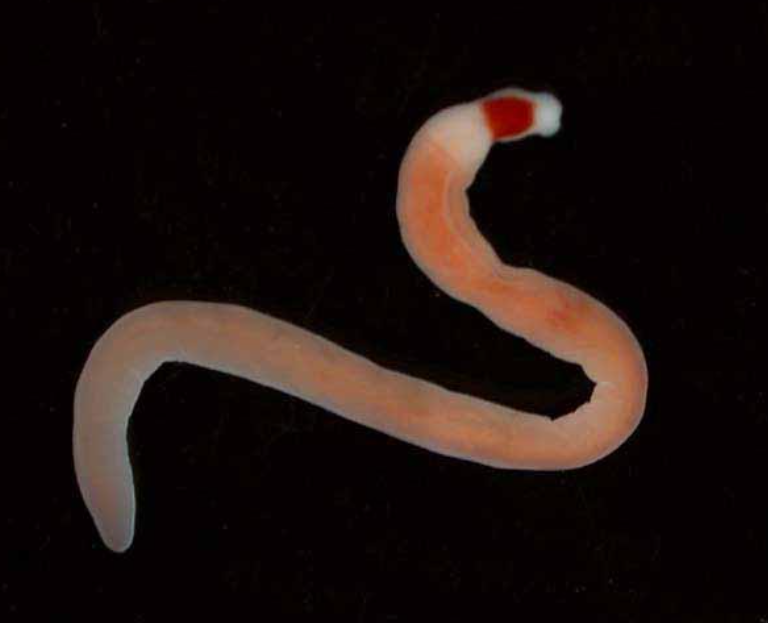
Phylum Nemertea (ribbon worms): the Greek Nemertes means
one of the Nereids, unerring one
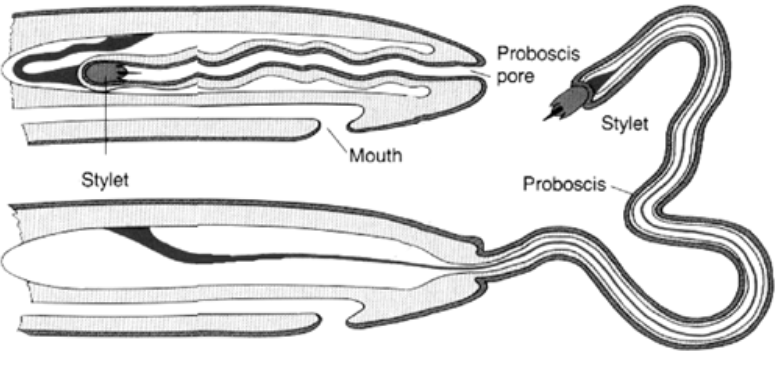
Nemertes refers to the sharp aim of the ________
proboscis
Nemertean characteristics
Eversible proboscis, unique to Nemerteans, PREDATORY
Mostly free living, a few parasitic
Bilateral symmetry, cylindrical anteriorly and flattened posteriorly
True coelomic cavity called a rhyncocoel
Complete digestive system
Four lobed brain
Sensory ciliated head slits
Asexual reproduction by fragmentation
Sexes separate, pilidium larvae
Flame cells
Blood vascular system
No respiratory system