Axial Skeletom (pt.1)
 Call Kai
 Learn
Learn Practice Test
 Spaced Repetition
 Match
Match Flashcards
 Knowt Play
1/59

Earn XP
Description and Tags
introduction & cranial bones
Name | Mastery | Learn | Test | Matching | Spaced | Call with Kai | Chat |
|---|
No analytics yet
Send a link to your students to track their progress
60 Terms
Skeletal System: Functions
creates a framework for our body
supports weight
esential for movement (supports structures and attachments for muscles/tendons)
protection of soft tissues/organs
Musculoskeletal System: made up of
bones, joints, muscles
Orthopedics
branch of medical science dealing with prevention and correction of disorders of the musculoskeletal system
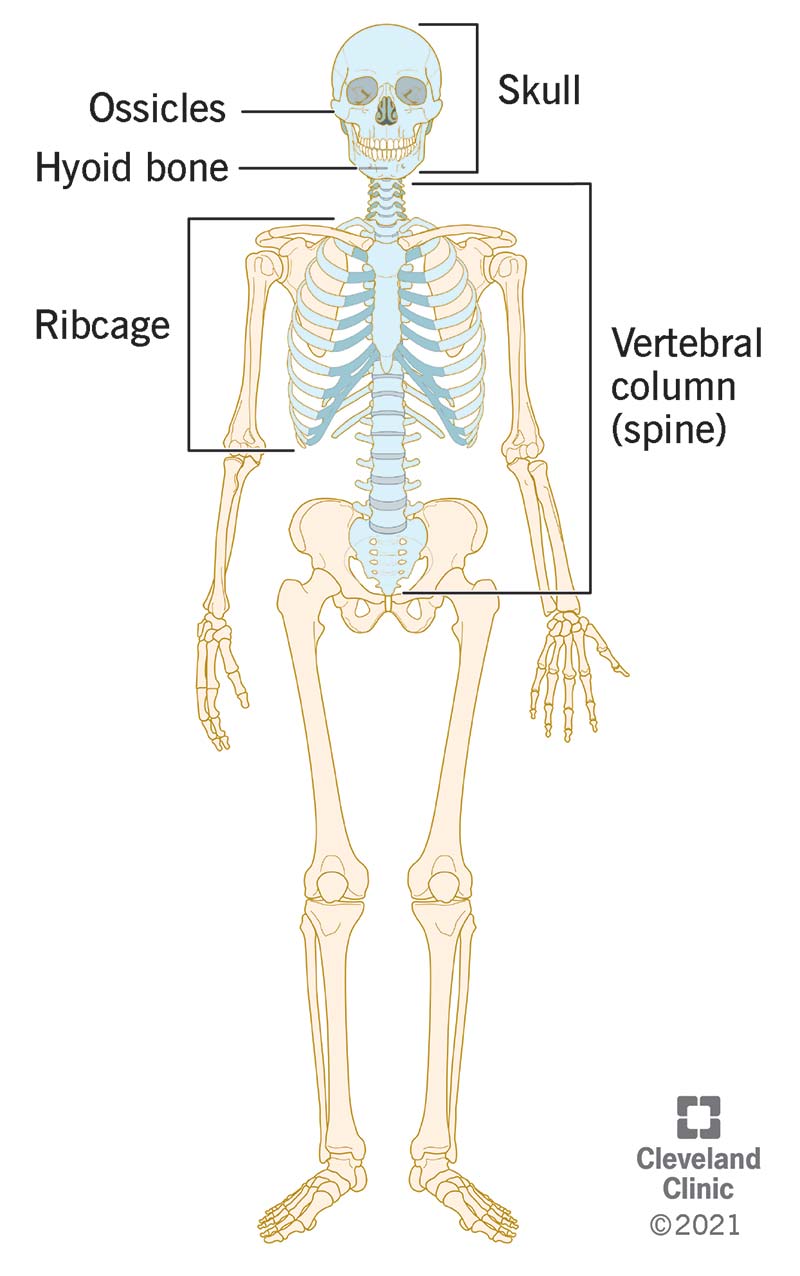
Axial Skeleton
longitudinal axis of the body
~80 bones
Skull
Auditory ossicles
Hyoid bone
Vertebral column (vertebrae, sacrum)
Thorax (ribs, sternum)
Appendic-
-to hang on to

Appendicular Skeleton
~126 bones
Pectoral girdle
Upper extremities
Pelvic girdle
Lower extremities

Long bones
bones that are longer than they are wide; consists of a shaft and two ends (epiphysis)
ex: humerus

Short bones
cube-shaped bones roughly equal in length and width
ex: trapezoid, wrist bone

Flat bones
thin, flattened, and typically slightly curved bones
ex: sternum
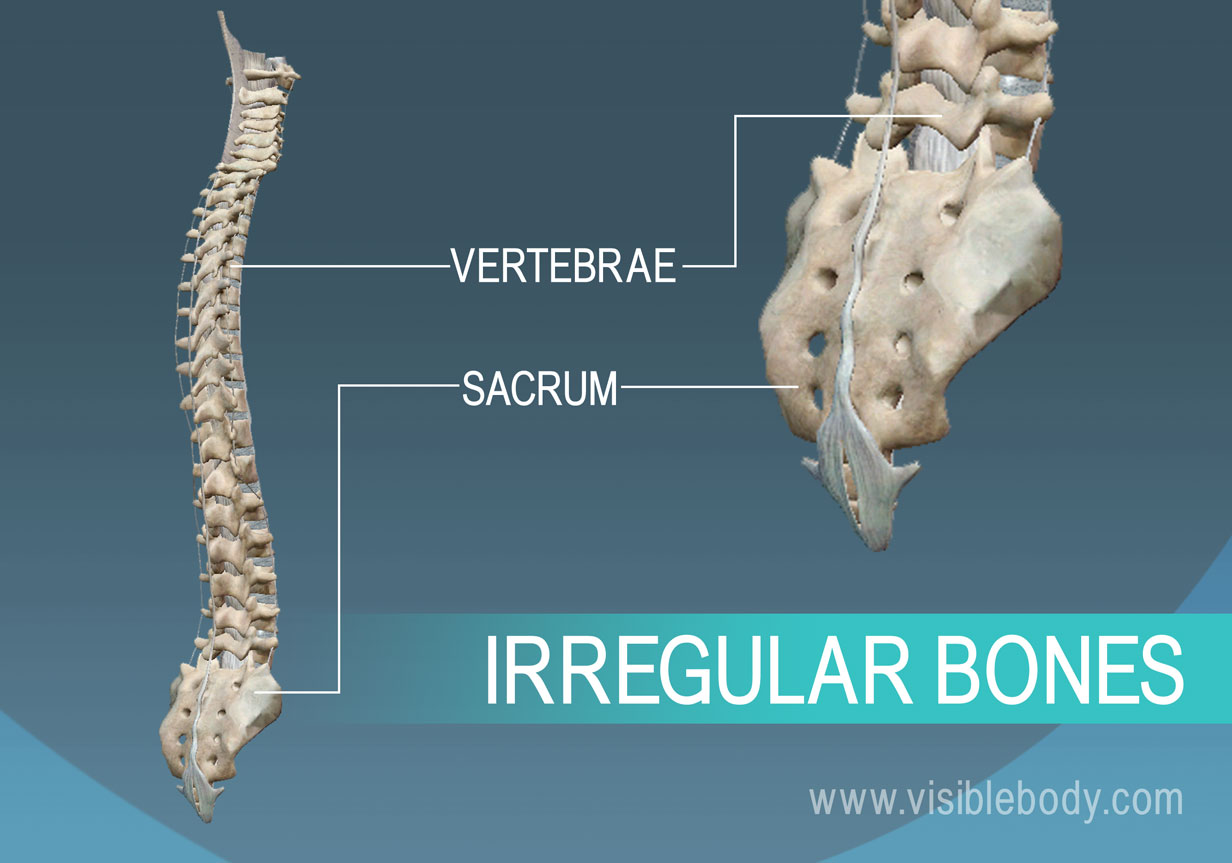
Irregular bones
bones with complex shapes that do not fit into other categories
ex: vertebrae

Sesamoid bones
small, round bones embedded within tendon
ex: patella

Sutural bones
tiny, irregularly shaped bones found within the sutures of cranial bones

Skull: Cranial Cavity Bones
8 bones form the cranial cavity
Frontal (single)
2 Parietal (paired)
2 Temporal (paired)
Occipital (single)
Sphenoid (single)
Ethmoid (single)
floor of cavity = cranial base

Skull: Facial Bones
bones that surround the mouth, nose, nasal cavity, most of the orbits
14 facial bones
2 Nasal (paired)
2 Maxillae (paired)
2 zygomatic bones (paired)
Mandible (single)
2 Lacrimal bones (paired)
2 Palatine bones (paired)
2 Inferior nasal concha (paired)
Vomer (single)

Cranial cavity - Skull
houses the brain

Nasal cavity
large, air-filled space above and behind the nose that warms, moistens, and filters inhaled air
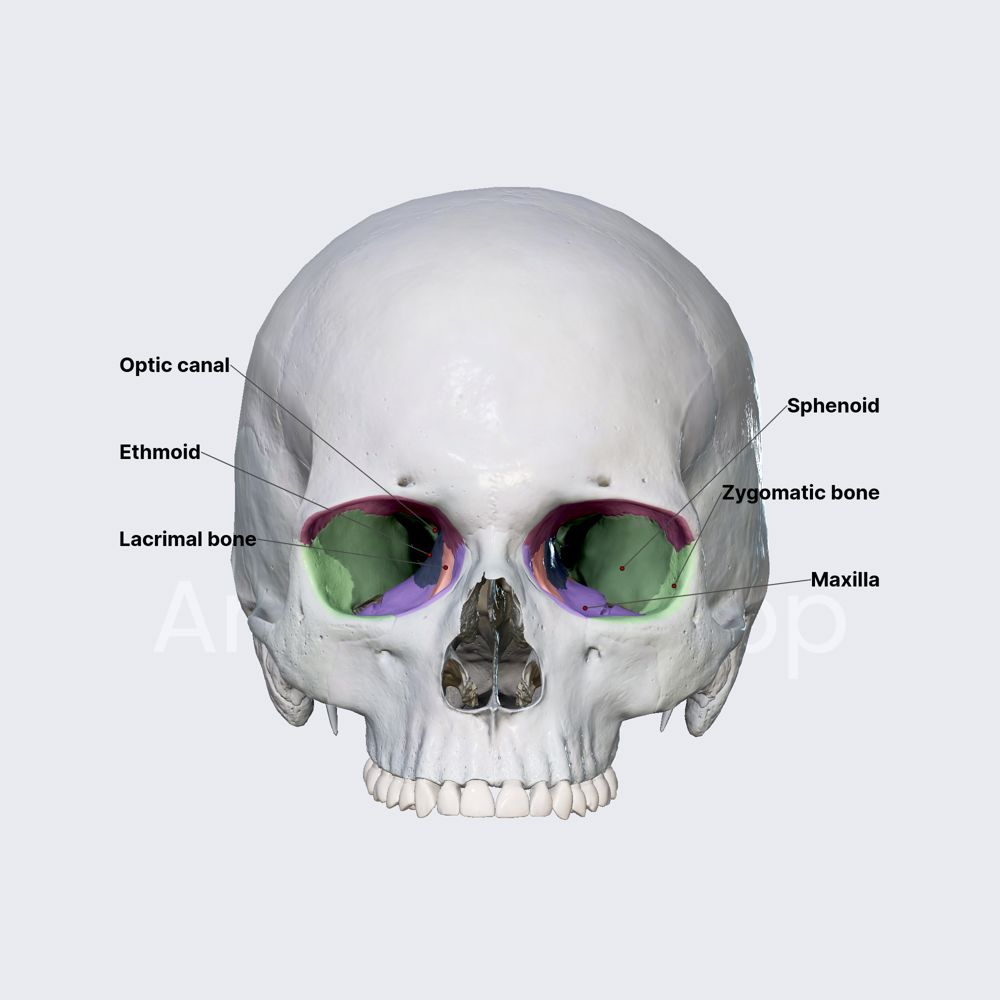
Orbits
the bony cavities in the skull that house and protect the eyes and their associated structures
Paranasal cavities
sinuses — frontal, maxillary, sphenoid, ethmoid
Middle-ear cavities
located within temporal bones that house auditory ossicles that function in hearing
Inner-ear cavities
located within temporal bones that house structures for sensing sound and equilibrium
Cranial cavity - Bones
movable bones of the skull
auditory ossicles
mandible
all other bones are fixed (joints = sutures)
skull = many surface markings
Functions - Skull
protect and stabilize the brain
stabilize blood vessels, lymphatic vessels, nerves, etc
attachment point for muscles

Meninges
membrane that lines the inner surface of the cranial cavity
Where do meninges attach?
attach above structures as they enter the cranial cavity and stabilize them
Purpose of outer surface of cranium and facial bones:
serve as attachment points for muscle for movement of the head, mastication, and for facial expression
What do cranial and facial bones protect?
special sense organs
ex: vision, taste, smell, hearing, equilibrium

Frontal bone
anterior portion of skull
anterior portion of cranial base
Supraorbital foramen/notch
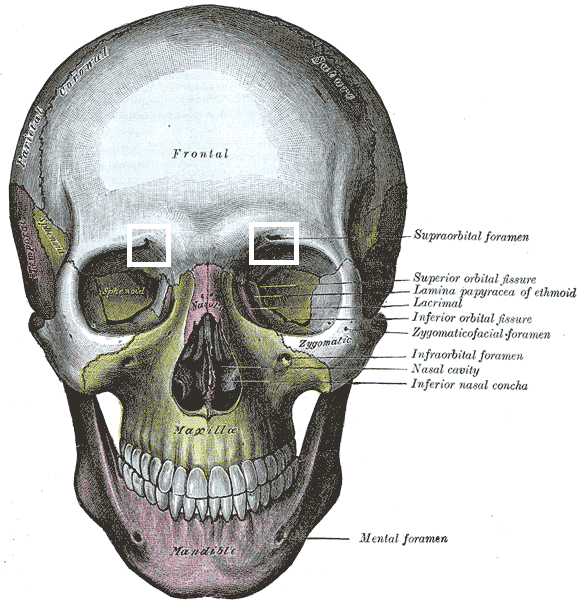
Supraorbital foramen/notch
Frontal bone;
supraorbital nerve and blood vessels run within the foramen/notch

Parietal bones
two
forms the majority of the roof and sides of the cranial cavity
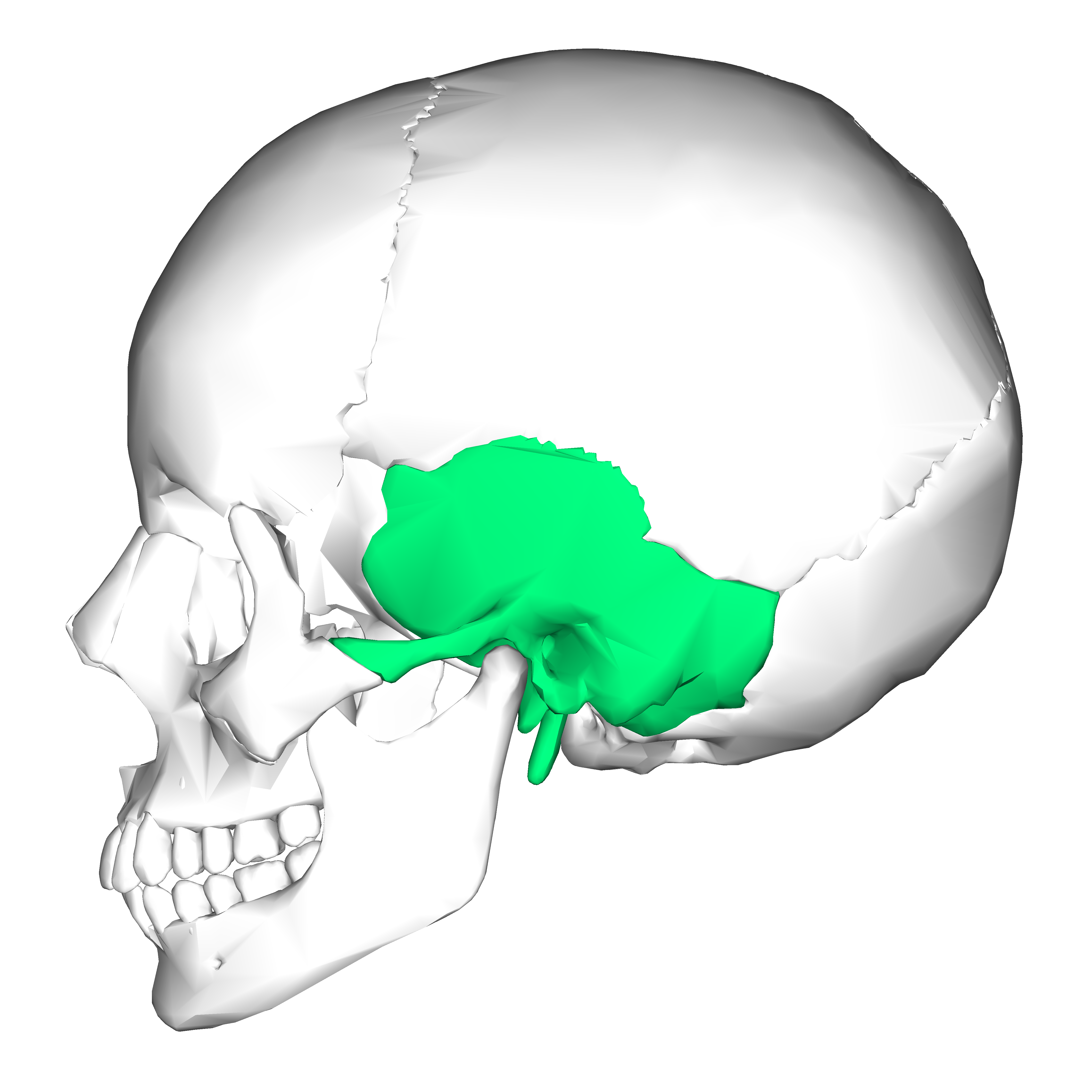
Temporal bone
forms in inferior/lateral cranium and cranial base
Zygomatic arch
Madibular fossa
Ear structures
Internal acoustic meatus
Styloid process
Stylomastoid foramen
Carotid canal
Jugular foramen
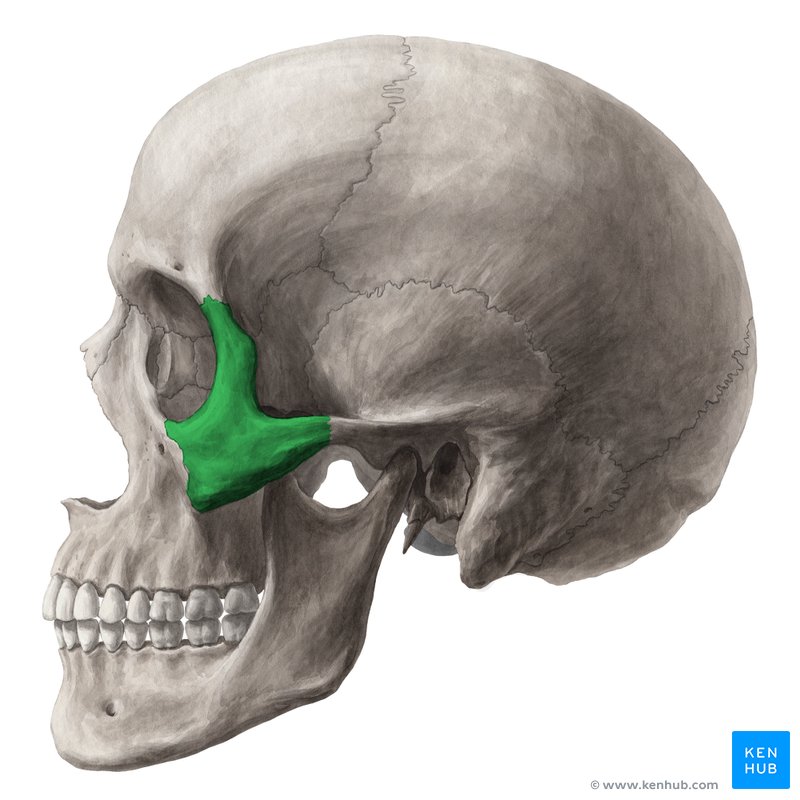
Zygomatic arch
Temporal bone;
formed partly by the temporal bone
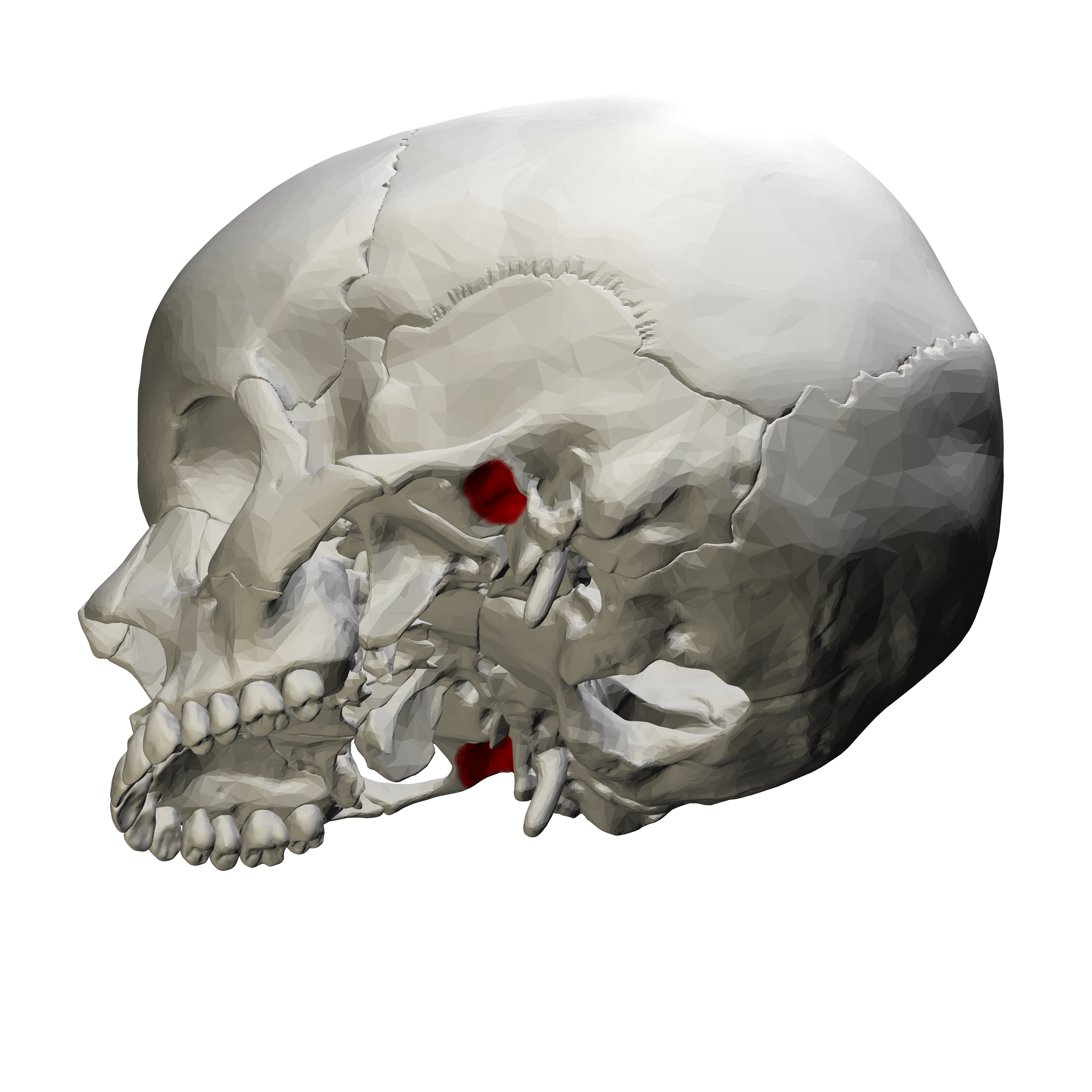
Mandibular fossa
Temporal bone;
forms the superior component of the temporomandibular joint (TMJ)
Ear structures
Temporal bone;
houses middle and internal ear (hearing/equilibrium)
contains external acoustic meatus (ear canal)

Internal acoustic meatus
Temporal bone;
passageway for CN VII (facial) and CN VIII (vestibulocochlear) nerves

Styloid process
Temporal bone;
muscle attachment site for tongue and neck
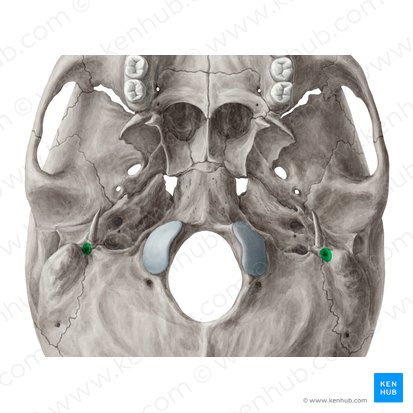
Stylomastoid foramen
Temporal bone;
passageway for CN VII and stylomastoid blood vessels

Carotid canal
Temporal bone;
passageway for the internal carotid artery

Jugular foramen
Temporal bone;
forms the anterior aspect
passageway for the jugular vein

Occipital bone
posterior cranial cavity and large portion of the cranial base
Foramen magnum
Occipital condyles
Hypoglossal canal
Posterior external portion
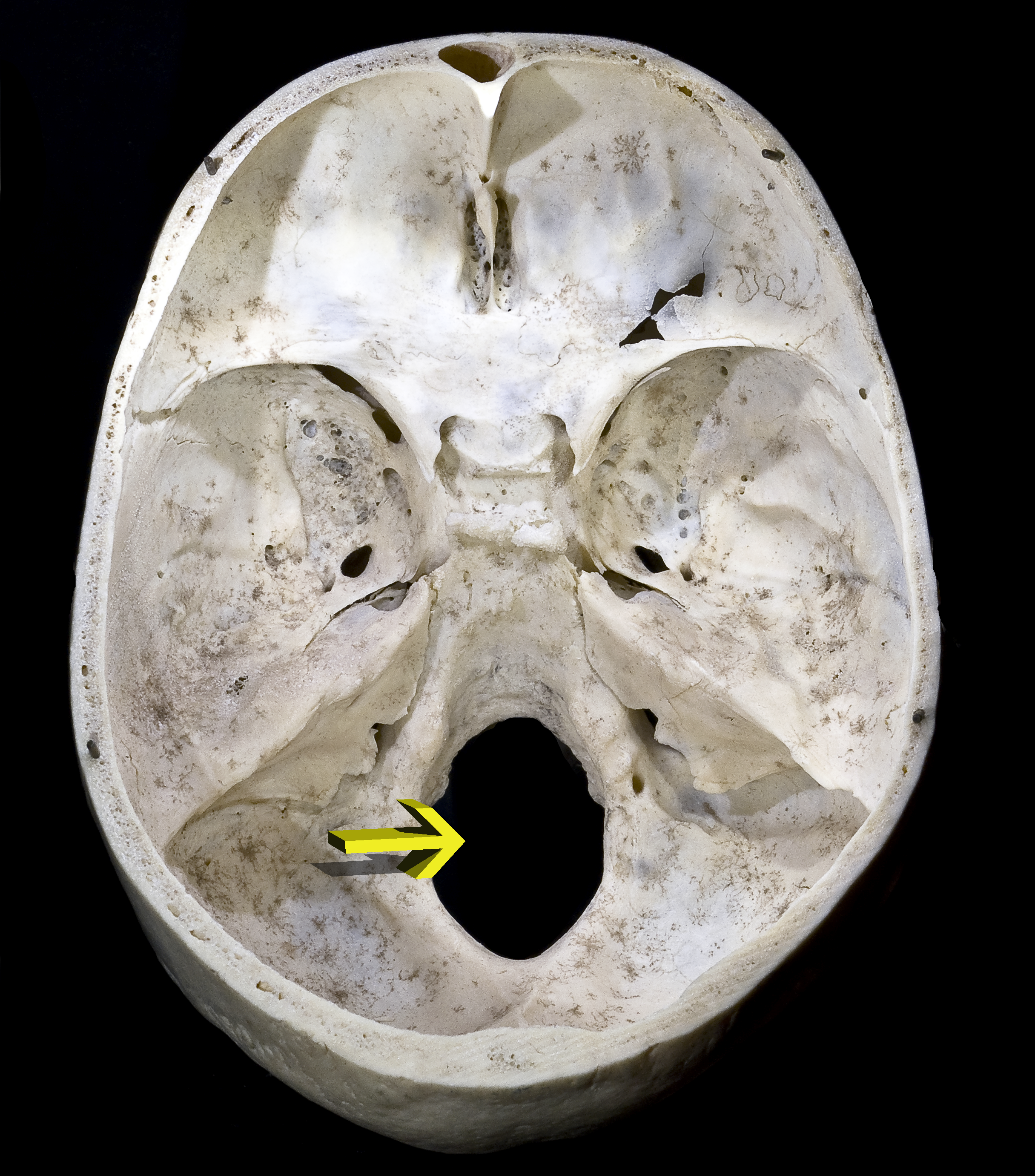
Foramen magnum
Occipital bone;
passageway for medulla/spinal cord transition, vertebral/spinal arteries, and CN XI
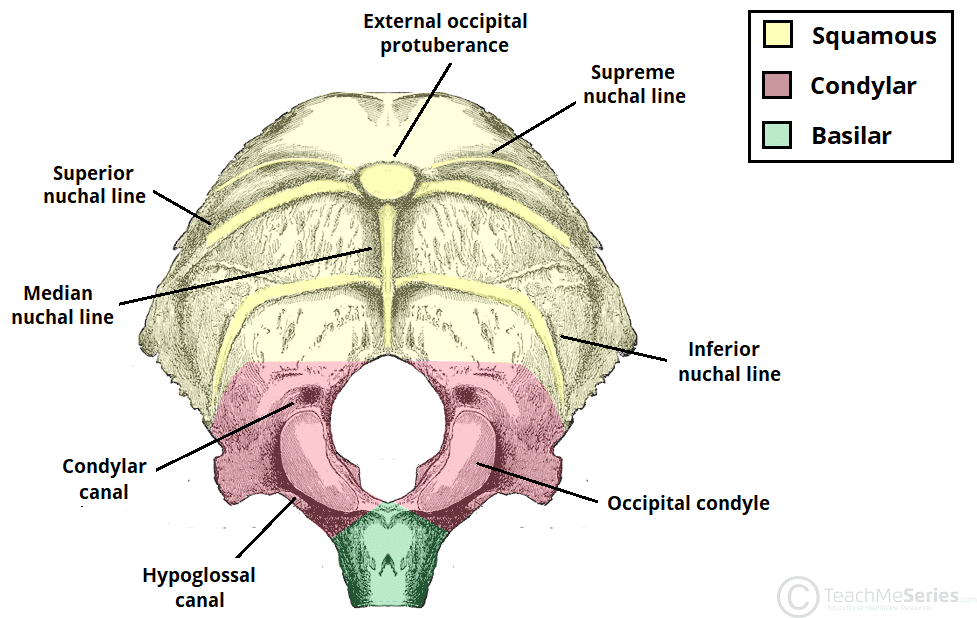
Occipital condyles
Occipital bone;
articulate with C1 (atlas) to form the atlanto-occipital joint (allows nodding)

Hypoglossal canal
Occipital bone;
passageway for CN XII

Posterior external portion
Occipital bone;
attachment site for neck ligaments and muscles

Sphenoid bone
bat and butterfly-shaped; centrally located in the cranial base
forms part of the orbital cavity wall; articulates with/holds together all other cranial base bones
Sphenoid sinus
Sella turcica/superior aspect
Pterygoid processes/inferior
Optic canal
Superior orbital fissure
Foramen rotundum
Foramen ovale
Foramen spinosum
Foramen lacerum

Sphenoid sinus
Sphenoid bone;
located in the middle portion of the bone

Sella turcica/superior aspect
Sphenoid bone;
houses the pituitary gland

Pterygoid processes/inferior aspect
Sphenoid bone;
muscle attachment sites for the mandible

Optic canal
Sphenoid bone;
passageway for CN II (optic nerve) and optic blood vessels into the orbit

Superior orbital fissure
Sphenoid bone;
passageway for blood vessels and multiple cranial nerves

Foramen rotundum
Sphenoid bone;
passageway for the maxillary branch of CN V (trigeminal nerve)

Foramen ovale
Sphenoid bone;
passageway for the mandibular branch of CN V and blood vessels

Foramen spinosum
Sphenoid bone;
passageway for blood vessels
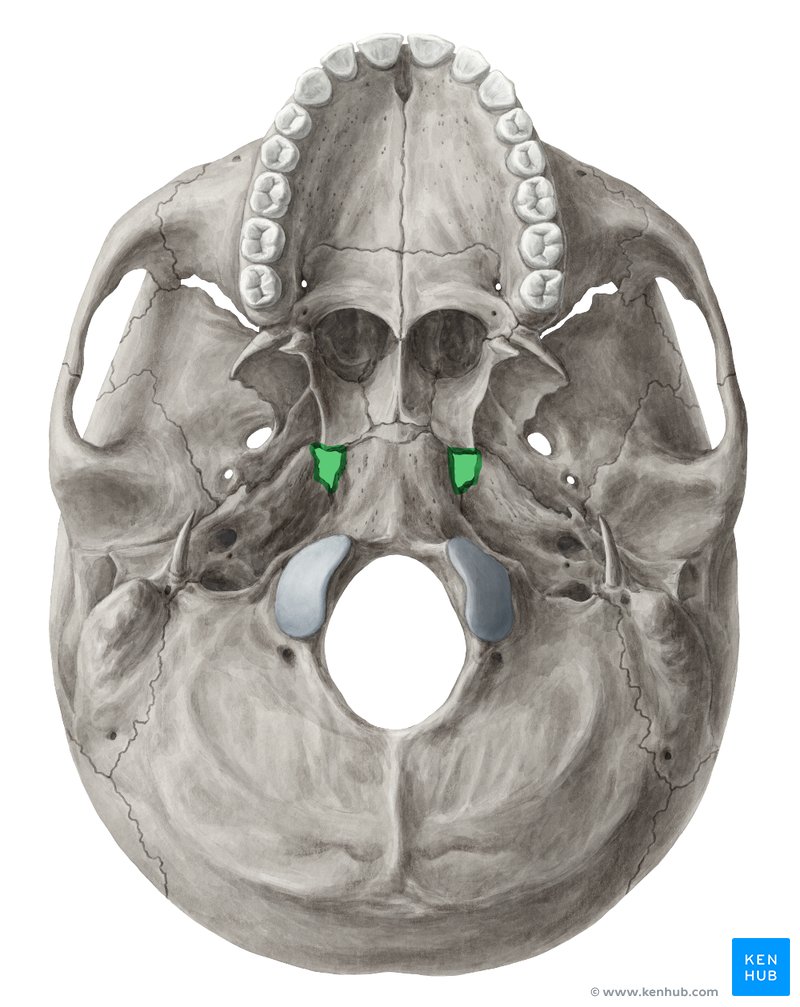
Foramen lacerum
Sphenoid bone;
passageway for the ascending pharyngeal artery
Ethmoid bone
delicate, sponge-like bone
forms anterior cranial base, medial orbital walls, superior nasal cavity sidewalls, and superior nasal septum
Ethmoid labyrinth (air cells)
Superior & middle nasal conchae (turbinates)
Cribriform plate
Cribriform foramina
Crista galli
Perpendicular plate

Ethmoid labyrinth
Ethmoid bone;
function as paranasal sinuses

Superior & middle nasal conchae (turbinates)
Ethmoid bone;
swirl inhaled air to trap foreign particles in mucus and warm/moisten the air
the superior concha also increases surface area for olfactory/smell nerve endings

Cribiform plate
Ethmoid bone;
forms the roof of the nasal cavity and the anterior cranial base

Cribriform foramina
Ethmoid bone;
multiple openings within the cribiform plate for olfactory nerves (CN I) to pass through
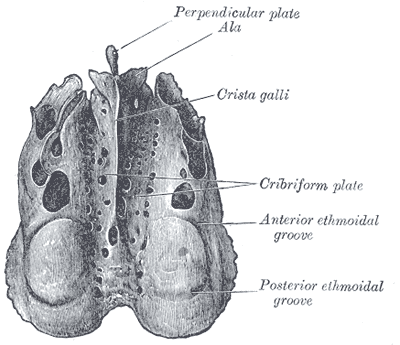
Crista galli
Ethmoid bone;
attachment point for the falx cerebri (meningeal membrane that separates the two brain hemispheres)

Perpendicular plate
Ethmoid bone;
forms the superior portion of the nasal septum