A-Level PE key words paper 1
0.0(0)
Studied by 3 people Call Kai
 Learn
Learn Practice Test
 Spaced Repetition
 Match
Match Flashcards
 Knowt Play
Card Sorting
1/104

Earn XP
Last updated 7:59 AM on 1/19/23
Name | Mastery | Learn | Test | Matching | Spaced | Call with Kai | Chat |
|---|
No analytics yet
Send a link to your students to track their progress
105 Terms
1
New cards
Myogenic
The capacity of the heart to generate its own impulses
2
New cards
Sinoatrial node (SA node)
A small mass of cardiac muscle found in the wall of the right atrium that generates the heartbeat. AKA pacemaker
3
New cards
Atrioventricular node (AV node)
This node relays the impulse between the upper and lower sections of the heart
4
New cards
Systole
When the heart contracts
5
New cards
Bundle of his
A collection of heart muscle cells that transmit the impulses from the AVN via the bundle branches to the ventricles
6
New cards
Purkinje fibres
Muscle fibres that conduct impulses in the walls of the ventricles
7
New cards
Sympathetic system
a part of the autonomic nervous system that speeds up heart rate
8
New cards
Parasympathetic system
A part of the autonomic nervous system that decreases heart rate
9
New cards
Medulla oblongata
The most important part of the brain as it regulates processes that keep us alive such as breathing and heart rate
10
New cards
Chemoreceptors
Tiny structures in the carotid arteries and aortic arch that detect changes in blood acidity caused by an increase or decrease in carbon dioxide concentration
11
New cards
Baroreceptors
Special sensors in the tissues in the aortic arch, carotid sinus, heart and pulmonary vessels that respond to changes in blood pressure to either increase or decrease heart rate
12
New cards
Proprioceptors
Sensory nerve endings in the muscles, tendons, and joints, that detects changes in muscle movement
13
New cards
Adrenaline
A stress hormone that is released by the sympathetic nerves and cardiac nerve during exercise which causes an increase in heart rate
14
New cards
Stroke volume
The volume of blood pumped out by the heart ventricles in each contraction
15
New cards
Diastole phase
When the heart relaxes to fill with blood
16
New cards
Ejection fraction
The percentage of blood pumped out by the left ventricle per beat
17
New cards
Cardiac output
The volume of blood pumped out by the heart per minute
18
New cards
Cardiac hypertrophy
The thickening of the muscular wall of the heart so that it becomes stronger and bigger; also can mean a larger ventricular activity
19
New cards
Bradycardia
A decrease in resting heart rate to below 60 BPM
20
New cards
Heart rate
The number of times the heart beats per minute -average = 72BPM
21
New cards
Fine skill
A skill that uses smaller muscle groups e.g., table tennis
22
New cards
Gross skill
A skill that uses larger muscle groups e.g., shoulder muscles in rugby tackle
23
New cards
Open skill
A skill that is performed in an unpredictable environment e.g., netball position of teammates/ opposition
24
New cards
Closed skill
A skill that is performed in a predictable environment e.g., gymnastics flick in floor routine
25
New cards
Self paced skill
Where the performer controls the pace and start of the skill e.g., penalty in football
26
New cards
Externally paced skill
Where the performer has no control over the pace and the start of the skill e.g., sailing
27
New cards
Discrete skill
a skill that has a clear beginning and end e.g., tennis serve
28
New cards
Continuous skill
A skill that has no clear beginning and end and often the end of one part of the skill is the start of the next part e.g., cycling
29
New cards
Serial skill
A skill that contains several discrete skills to make a more integrated movement e.g., gymnastics routine
30
New cards
Highly organised skill
A skill that is not easy to breakdown into parts e.g., a volley
31
New cards
Low organised skill
A skill that is easy to break down into parts
32
New cards
Simple skill
A skill that requires few decisions to be made e.g., a forwards roll
33
New cards
Complex skill
A skill that requires decision making using lots of information when being performed e.g., hockey dribble
34
New cards
Transfer
The effect of the learning and performance of one skill on the learning and performance of another
35
New cards
Positive transfer
When the learning of one skill helps the learning of another e.g., netball pass and basketball pass
36
New cards
Negative transfer
When the learning of one skill hinders the learning of another e.g., tennis serve and badminton serve
37
New cards
Zero transfer
Where the learning of one skill has no impact on the learning of another e.g., swimming stoke and rock climbing
38
New cards
Bilateral transfer
When the learning of one skill is passed across the body from limb to limb
39
New cards
Whole practice
Practicing a skill in its entirety
40
New cards
Whole-part-whole practice
Assessing the skill, identifying a weakness to practise, then putting the skill back together
41
New cards
Progressive part practice
Practicing the first part of the skill then adding parts gradually (sometimes called chaining)
42
New cards
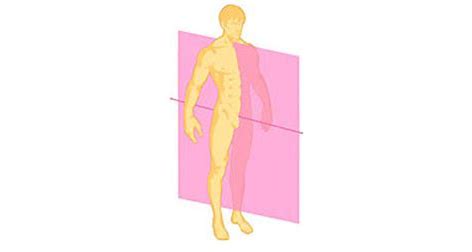
Sagittal plane
A vertical plane that divides the body into left and right halves (flexion/ extension)
43
New cards
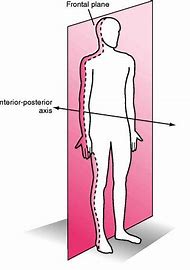
Frontal plane
A vertical plane that divides the body into front and back halves (abduction/ adduction)
44
New cards
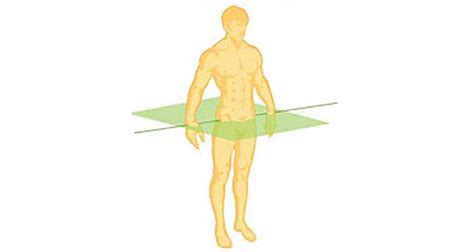
Transverse plane
Divides the body into upper and lower halves (rotation)
45
New cards
Transverse axis
Runs from side to side across the body
46
New cards
Sagittal axis
Runs from front to back of the body
47
New cards
Longitudinal axis
Runs from top to bottom of the body
48
New cards
Flexion
Decreasing the angle between the bones of a joint
49
New cards
Extension
Increasing the angle between the bones of a joint
50
New cards
Plantar-flexion
Pointing the toes/ pushing up onto your toes
51
New cards
Hyper extension
Increasing the angle beyond 180 between the bones of a joint
52
New cards
Dorsi-flexion
Pulling up the toes to the shin
53
New cards
Agonist
The muscle that is responsible for the movement that is ocurring
54
New cards
Antagonist
The muscle that works in opposition to the agonist (to help produce a co-ordinated movement
55
New cards
Abduction
movement away from the midline of the body
56
New cards
Adduction
Movement towards the midline of the body
57
New cards
Horizontal adduction
movement of the arm forwards across the body at a 90 degree angle. Motion = shoulder abduction, and horizontal adduction
58
New cards
Horizontal abduction
Movement of the arm backwards across the body to shoulder abduction
59
New cards
Muscle spindles
These detect how far and fast a muscle is being stretched and produce the stretch reflex
60
New cards
Golgi tendon organs
These are activated when the is tension in a muscle
61
New cards
Isometric contraction
Where the is tension in a muscle but no visible movement
62
New cards
Autogenic inhibition
Where there is a sudden relaxation of the muscle in response to high tension. The receptions involved in this process are Golgi tendon organs
63
New cards
Motor unit
A motor neurone and it muscle fibres
64
New cards
Motor neurones
Nerve cells which transmit the brains instructions as electrical impulses to the muscles
65
New cards
Neuromuscular junction
Where the motor neurone and the muscle fibre meet
66
New cards
All or none law
Where a sequence of impulses has to be of sufficient intensity to stimulate all of the muscle fibres in a motor unit in order for them to contract. If not, none of them contract
67
New cards
Wave summation
Where there is a repeated nerve impulse with no time to relax so a smooth sustained contraction occurs rather than twitches
68
New cards
Tetanic contraction
a sustained contraction caused by a series of fast repeating stimuli
69
New cards
Spatial summation
When the strength of a contraction changes by altering the number and size of the muscles motor units
70
New cards
Learning
A permanent change in behaviour as a result of practice
71
New cards
Perfomance
A temporary occurrence that can change from time to time because of many external and internal influences
72
New cards
cognitive stage of learning
The first stage of learning used by a novice. Understanding and sub-routines are explored by trial and error
73
New cards
Associative stage of learning
The second stage of learning as motor programmes are developed and performance is smoother
74
New cards
Autonomous stage of learning
The final stage of learning used by an expert when movement is detailed and specific
75
New cards
Feedback
Information to gain error correction
76
New cards
Positive feedback
Encouragement
77
New cards
Negative feedback
Error correction
78
New cards
Extrinsic feedback
From an outside source
79
New cards
Intrinsic feedback
From within
80
New cards
Knowledge of results
Concerns the outcome
81
New cards
Knowledge of performance
About the technique
82
New cards
Plateau
A period of no improvement in performance
83
New cards
Drive reduction
An end-of-task periods when performance may get worse
84
New cards
amateur
A person who plays sport for the love of it and receives no financial gain
85
New cards
professional
A person who plays sport for financial gain
86
New cards
Glycolysis
A process in which glucose is converted to pyurvate to produce energy
87
New cards
Sarcoplasm
The fluid that surrounds the nucleus of a muscle fibre and is the site where anaerobic respiration takes place
88
New cards
Krebs cycle
A series of cyclical chemical reactions that take place using oxygen in the matrix of the mitochondria
89
New cards
Electron transport chain
Involves a series of chemical reactions in the cristae of the mitochondria where hydrogen is oxidised to water and 34 ATP are produced
90
New cards
Phosphocreatine
An energy rich phosphate compound found in the sarcoplasm of the muscles
91
New cards
Coupled reaction
When energy required by one process is supplied by another process e.g., in ATP-PC system
92
New cards
Anaerobic glycolytic energy system
Produces high powered energy for high intensity effort in events such as the 400m
93
New cards
Oxygen consumption
the amount of oxygen we use to produce ATP
94
New cards
VO2 max
The maximum volume of oxygen that can be taken up by the muscles per minute
95
New cards
Sub-maximal oxygen deficit
When there is not enough oxygen available at the start of exercise to provide all of the energy (ATP) aerobically
96
New cards
EPOC (Excess post-exercise oxygen consumption)
The amount of oxygen consumed during recovery above that which would have been consumed at rest during the same time
97
New cards
Fast component
The restoration of ATP and phosphocreatine stores and the re-saturation of myoglobin with oxygen
98
New cards
The cori cycle
The process where lactic acid is transported in the blood to the liver where it is converted to blood glucose and glycogen
99
New cards
Lactate threshold
The point during exercise at which lactic acid quickly accumulates in the blood
100
New cards
OBLA
The point at which lactate levels go above 4 millimoles per litre