Sci Bio
 Call Kai
 Learn
Learn Practice Test
 Spaced Repetition
 Match
Match Flashcards
 Knowt Play
1/59

There's no tags or description
Looks like no tags are added yet.
Name | Mastery | Learn | Test | Matching | Spaced | Call with Kai | Chat |
|---|
No analytics yet
Send a link to your students to track their progress
60 Terms
Peripheral Nervous System
Made up of dual pathways: Afferent Pathway (sensory) and Efferent Pathway that branch off into two subdivisions: Somatic nervous system and Autonomic Nervous System. Carry information between the body and the central nervous system (CNS).
Somatic Nervous System
Contains nerves that carry sensory signals from the body to the central nervous system (CNS) and that carry motor signals from the CNS to skeletal muscles. Associated with voluntary movement and involuntary reflexes. Eg picking up a pencil.
Autonomic Nervous System
Sometimes called the involuntary nervous system and regulates the internal environment of the body. It carries signals from internal organs to the CNS and from the CNS to the internal organs. Can also be split into two subdivisions of nerve fibres: Sympathetic and Parasympathetic.
Sympathetic Nervous System
Stimulates and moblisies energy resources (Increases energy) Often known as fight or flight responses
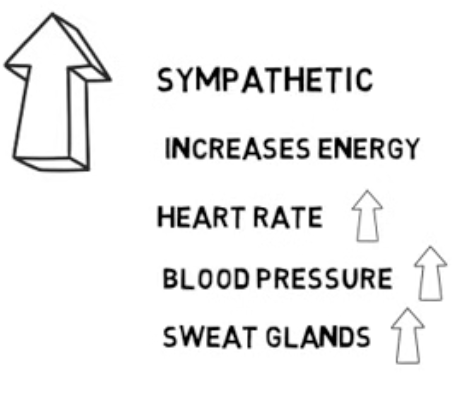
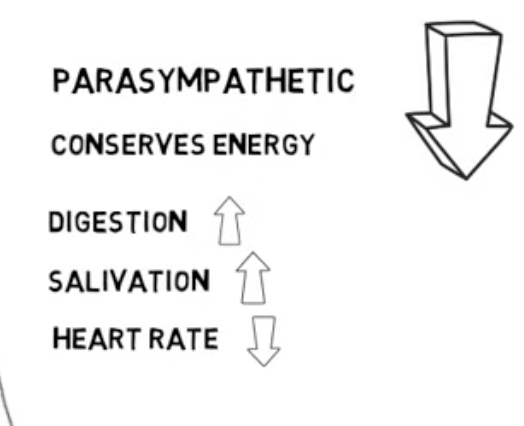
Parasympathetic Nervous System
A network of nerves that calms your body (Conserves energy) often described as being involved in rest and digest reponses
Afferent pathway (sensory)
Carries sensory information toward the CNS from receptors in the body. These receptors detect changes like touch, temperature, pain, light and sound Eg touching a hot surface sends sensory signals to the CNS.
body → CNS (incoming information)
Efferent pathway (motor)
Carries motor commands away from the CNS (brain and Spinal cord) to muscles and glands. It allows the body to actually act on the information it received
CNS → body (outgoing commands)
Brain
Controls and regulates all body functions. Has 100 Billion neurons and is large relative to body size
Cerebrum
The main part of the brain, making up 80% of its area. Divided into left and right hemispheres, each responsible for different cognitive functions. Its folds increase surface area by 3x controls thinking, voluntary movement, and the five senses

Cerebellum
Found at the base of the brain (hindbrain). Responsible for gross and fine motor skills, hand eye coordination, balance and posture. Contains more than 50% of the body’s neurons despite being less than 10% of brain space
Brain Stem
The stalk like part connecting the brain to the spinal cord. Made up of three parts
Midbrain: Controls eye movements
Pons: Controls facial movements, hearing and balance
Medulla Oblongata: Controls breathing, heart rhythm, swallowing, and blood pressure
Spinal cord
Continues from the brain stem. Conducts electrical impulses between the brain and body, transmits sensory messages (touch, pressure, pain), and handles motor reflex responses independently of the brain. Has 31 nerve pairs divided into different segments.
Neuron
A specialised cell that carries electrochemical messages (nerve impulses) between body parts at high speed and in one direction
Nerve Impulse
An electrochemical message carried by neurons
Sensory Neuron
Carries signals from sense organs (eyes, ears, tongue, skin,
organs within the body) to the CNS. Receptors that detect various stimuli
such as touch, pressure, temperature, light, or chemicals. Also called afferent neurons
Motor Neuron
Carries signals from the CNS to muscles and glands, and puts those signals into action (muscle contraction, movement, physiological response). Also called efferent neurons
Interneuron
Connects sensory and motor neurons within the CNS. Recieves messages from sensory neurons and sends them out via motor neurons
Cell Body
Contain the nucleus, which acts as the control centre of the neuron
Dendrites
Branch like extensions from the cell body that receive messages from other neurons
Axon
A long thin fibre that carries nerve impulses away from the cell body
Myelin sheath
A layer of fat and protein that coats the axon. Insulates the neuron; electrical impulses travel quickly and efficiently between one nerve cell and the next, and maintain signal strength
Schwann cell
Provides structural support for nerve cells and produces the myelin sheath
Node of Ranvier
Exposed gaps between sections of myelin sheath. Electrial pulses jump between nodes, which speeds up transmission
Axon terminal
The nerve ending at the tip of the axon that passes the message on to the next neuron
nerve
A bundle of neurons whose cell body is either in the CNS or the PNS. The workhouse of the PNS
Synapse
The junction (gap) between two connecting neurons where chemical communication occurs
Presynaptic Cell
The sending neuron, its axon terminal releases neurotransmitters into the synapse
Postsynaptic cell
the receiving neuron, its dendrites receive the neurotransmitters across the synapse to the next neuron
Dopamine
Neurotransmitter that controls movement, learning and feelings of pleasure
Serotonin
Neurotransmitter that helps control mood and sleep. Low levels are linked to sadness and fatigue
Adrenaline
Neurotransmitter that prepares the body for flight or flight. Increases heart rate when you’re scared or excited
Acetylcholine
Neurotransmitter that triggers muscle contraction and movement. (helps muscles move) eg when lift hand acetylcholine tells your muscles to contract
Receptor (postsynaptic)
A protein on the dendrite of the receiving neuron that neurotransmitters bind to
Reabsorption
When the presynaptic neuron reabsorbs neurotransmitters from the synapse for reuse eg dopamine after normal release
Neurotransmitter
A chemical messenger released by the axon terminal of the presynaptic neuron into the synapse, which carries the signal across to receptors on the postsynaptic neuron, converts the electrical signal into a chemical one
Stimulus
Change in the environment detected by receptors on sensory neurons and activate the cells to send a message to the CNS

Mechanorecptors
A receptor sensitive to touch/pressure/vibration or when muscles are being stretched (skin,ears)
Photorecptors
A receptor sensitive to different intensities of light (eyes)
Thermorecptors
A receptor that responds to changes in temperature (Skin)
Chemorecptors
A receptor sensitive to chemical smell (nose) or taste (tounge)
Vasodilation
Widening of blood vessels near the skin to increase heat loss when the body is too hot
Vasoconstriction
Narrowing of blood vessels near the skin to conserve heat when the body is too cold
Thermoregulation
The process of maintaining a stable internal body temperature using nervous system responses
Reflex action
An automatic, involuntary response to a stimulus that does not involve conscious though or the brain in decision making
Reflex arc
The pathway of a reflex: stimulus → sensory neuron → interneuron (spinal cord) → motor neuron → effector → response. Bypasses the brain.
Endocrine system
Chemical messaging system that uses hormones secreted by glands, travelling through the bloodstream to target cells/organs to maintain homeostasis
Hormone
Chemical signalling molecule secreted by specialised glands/cells in small amounts; travels through the bloodstream to act on a specific target cell or organ to regulate physiological
Endocrine gland (ductless)
releases hormones directly into extracellular fluid, diffuse (pass) into bloodstream, attach to specific cells/organs by receptors
Coordinate and regulate physiological processes to maintain homeostasis
Pineal gland
Small gland in the centre of the brain; it produces melatonin to regulate sleep-wake cycles and the internal body clock.
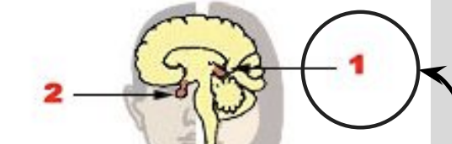
Pituitary gland
Known as the master gland and is located at the base of the brain, coordinates the entire endocrine system by responding to hypothalamus signals and releasing hormones that control other endocrine glands

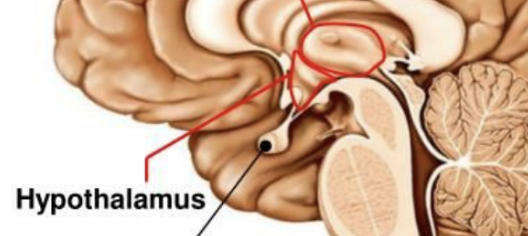
Hypothalamus
Links the nervous and endocrine systems, receives messages from the brain/body about its internal state, secretes regulatory hormones to control the pituitary glands, and maintains homeostasis
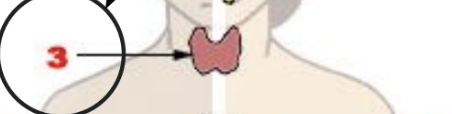
Thyroid gland
located in the neck, produces thyroxin (T4) and triiodothyronine (T3) to regulate metabolism, weight, energy levels internal temperature and skin/hair/nail growth
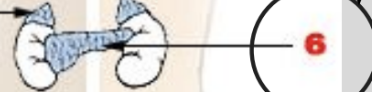
Pancreas
Elongated gland behind the stomach with both exocrine and endocrine functions
Endocrine function produces insulin (when blood sugar is high) and glucagon (when blood sugar is low) to regulate blood glucose homeostasis
Exocrine function releases digestive enzymes helps small intestine digest carbohydrates, fats and proteins
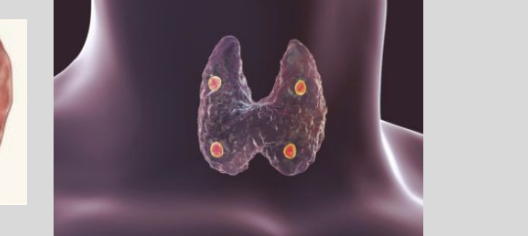
Parathyroid gland
located in the neck region (near thyroid) produces PTH (parathyroid hormone) to regulate blood calcium and phosphate levels
Thymus
Located above the heart, produces thymosin which stimulates immune cell production, especially in T-cells

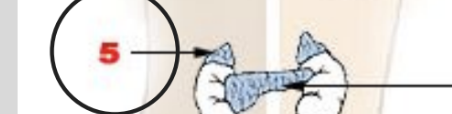
Adrenal glands
Located on top of each kidney, produces adrenaline and cortisol in response to stress, and noradrenaline for the flight or flight response
Ovaries
Female sex organs, produces oestrogen and progesterone to drive growth and development of female reproductive organs and secondary sexual characteristics

Testes
Male sex organs, produces androgens including testosterone to drive growth and development of male reproductive organs and secondary sexual characteristics.

Exocrine (ducted)
Release secretions (mucous, sweat, saliva) through ducts (tubes) into body cavity or onto body surface
Maintains bodily functions like surface lubrication (preventing drying), temperature regulation (evaporative cooling) and digestion (swallowing).
Nervous System
A system that gathers, processes and responds to information internally and externally in the body using nerve impulses that travel in one direction throughout the body