Lymphatic and Immune System: Structures, Functions, and Key Concepts
 Call Kai
 Learn
Learn Practice Test
 Spaced Repetition
 Match
Match Flashcards
 Knowt Play
1/20

There's no tags or description
Looks like no tags are added yet.
Name | Mastery | Learn | Test | Matching | Spaced | Call with Kai | Chat |
|---|
No analytics yet
Send a link to your students to track their progress
21 Terms
What is the lymphatic system?
A network of vessels and organs that collects and filters lymph fluid, returning proteins to the blood and recycling body fluids.
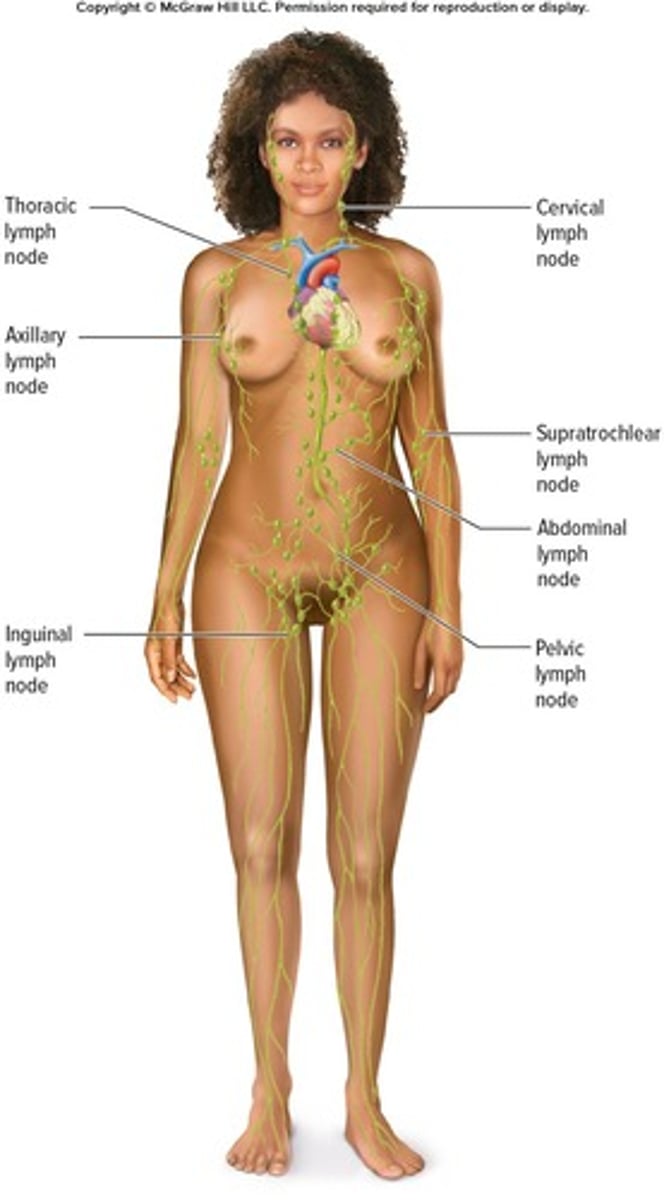
What are the main functions of the lymphatic system?
The lymphatic system reduces edema, returns proteins to the blood, traps and filters cellular debris, recycles body fluids, circulates lymphocytes, and moves fat from the gastrointestinal tract to the blood.
What is the immune system?
The body's defense system against foreign body invasions, which fights infections and produces antibodies (immunoglobulins).
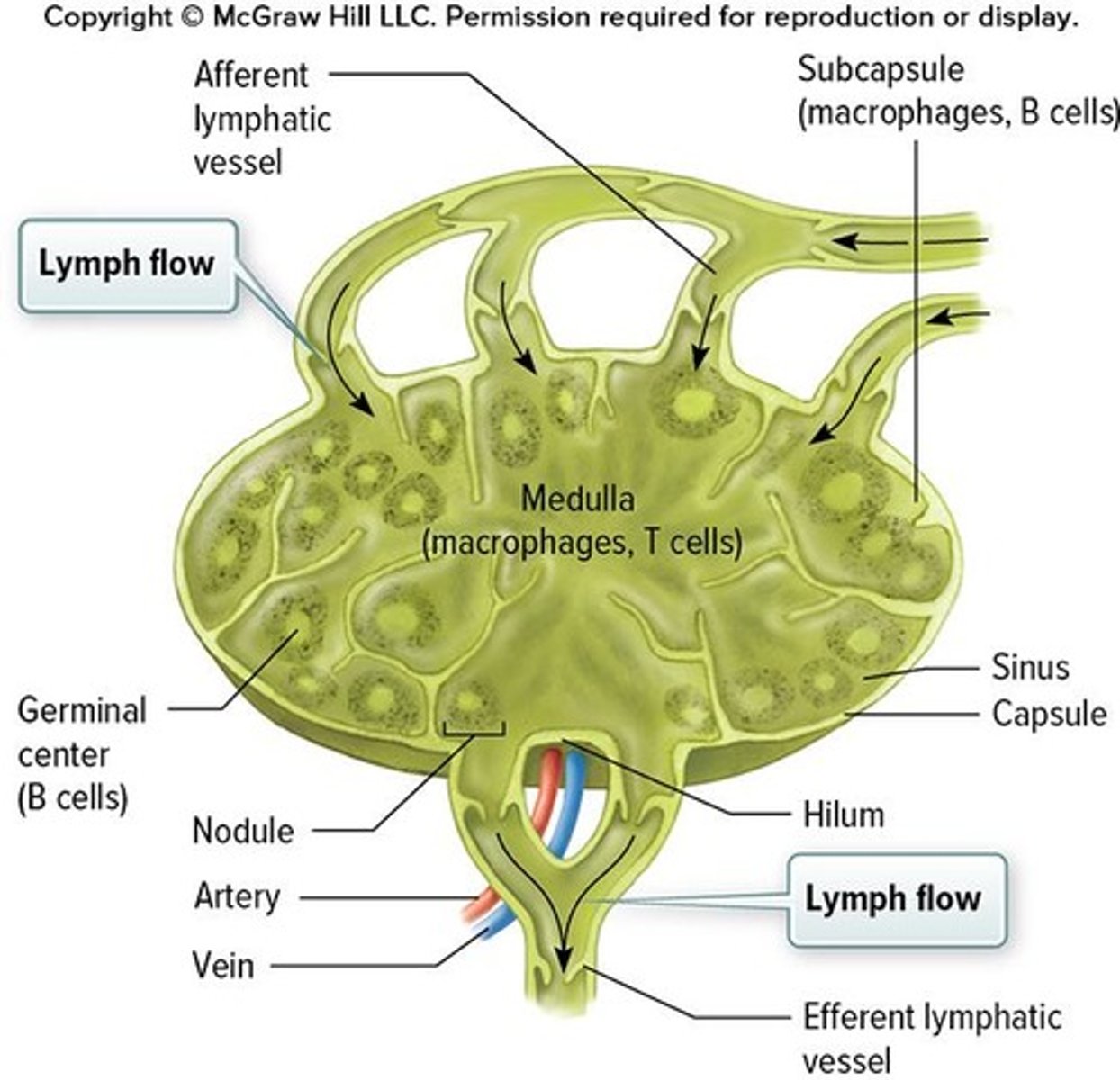
What is the role of lymph nodes?
Lymph nodes filter harmful substances from lymph fluid and produce immune cells to fight infections.
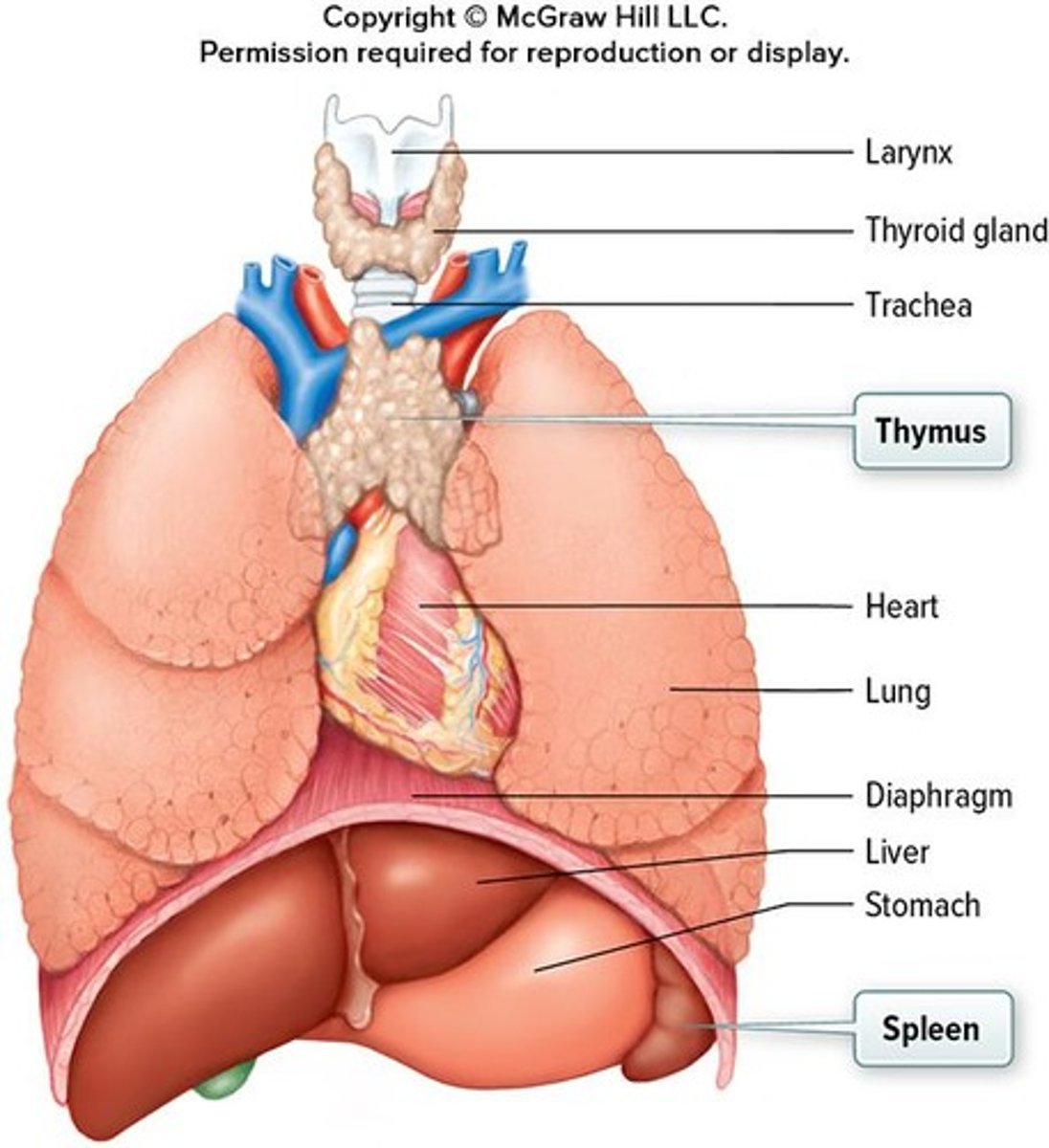
Where is the spleen located?
The spleen is located under the ribcage and above the stomach in the left upper quadrant of the abdomen.
Where is the thymus gland located?
The thymus gland is located behind the sternum and between the lungs.
What is the hematopoietic system?
The system responsible for the production of blood cells, including erythrocytes (red blood cells), leukocytes (white blood cells), and thrombocytes (platelets).
What is the phagocytic system?
The immune system's defense mechanism that involves cells that engulf and digest foreign particles and pathogens.
What are T-cells?
A type of lymphocyte that plays a central role in cell-mediated immunity.
What are B-cells?
A type of lymphocyte that produces antibodies to neutralize pathogens.
What is lymph?
A clear fluid that circulates through the lymphatic system, containing white blood cells and waste products.
What are the functions of the immune system?
To protect the body against infections and foreign substances by identifying and destroying pathogens.
What is the reticuloendothelial system?
A network of cells and tissues involved in the immune response, including macrophages and other phagocytic cells.
What is an antibody?
A protein produced by B-cells that binds to specific antigens to neutralize or destroy them.
What is the role of the spleen in the immune system?
The spleen filters blood, removes old or damaged blood cells, and helps produce immune responses.
What are common abbreviations used in the lymphatic and immune systems?
AB (antibiotic), EIA (enzyme immunoassay), Ig (immunoglobulin), PCP (Pneumocystis carinii pneumonia), PMN (polymorphonucleated cells), RES (reticuloendothelial system).
What causes allergies?
Allergies are often caused by antigens that trigger an immune response, leading to symptoms.
How is the HIV virus transmitted?
The HIV virus is transmitted through blood and other body fluids.
What is the function of lymphatic vessels?
Lymphatic vessels transport lymph fluid throughout the body and connect lymph nodes.
What is thymosin?
A hormone produced by the thymus gland that is involved in the development and differentiation of T-cells.
What is the significance of interstitial fluid?
Interstitial fluid provides nutrients during fluid exchange and is involved in the drainage system of the lymphatic system.