Fundamentals
 Call Kai
 Learn
Learn Practice Test
 Spaced Repetition
 Match
Match Flashcards
 Knowt Play
1/35

There's no tags or description
Looks like no tags are added yet.
Name | Mastery | Learn | Test | Matching | Spaced | Call with Kai | Chat |
|---|
No analytics yet
Send a link to your students to track their progress
36 Terms
What are the components of the PCMM?
Examination, evaluation, diagnosis, prognosis, intervention, and outcomes
What is the definition of the examination?
the systemic process of obtaining data about the patient, their CC, and other data that will contribute to development of their POC
What is the purpose of the examination?
establish rapport and therapeutic alliance, est baseline, problem ID and hypothesis development, collect info to create goals and POC and determine if PT is appropriate for the patient.
How do the different settings influence the approach of the examination?
in outpatient have a general referral and medical diagnosis, also direct access. In inpatient and post op have known pt medical condition and access to full medical records, treatment protocol, and interprofessional team
what are the components of the examination?
history, systems review, and test and measures
what are components to review in the history?
medications, secondary medical conditions, other non-MSK conditions, consider health literacy, education level, social determinants of health, begins categorizing PT problems and impairments based on prevalence and risk factors
What things should you ask about symptom behavior?
location
quality-description
severity/intensity
aggravating and easing factors
temporal factors
duration of symptoms
improving/degrading
what are the components of the medical history?
referring medical diagnosis(es), medical history and systems screening (family history and surgical history), medications review (prescription. OTC, and supplements and adherence), diagnostic testing for this condition (imaging, labs, electrodiagnositics)
what things that should be asked when assessing function?
previous level of function, CLOF, ADLs and IADLs (imperative ADLs), occupation and work status, hobbies and physical level, hobbies and physical level, social history, hand dominance, sensory impairments/devices, pt specific goals
what is the patient specific functional scale?
A tool used to assess a patient's perceived ability to perform specific functional activities. It typically consists of a series of questions that evaluate limitations in function as reported by the patient (pt picks 3-5 activities that they currently have trouble with performing, rates them on 0-10 with 0 being unable to perform, then add the scores and divide by the number of activities)
what is a review of systems?
tests and measures to looking at a patient's overall health by evaluating different organ systems for symptoms or issues that may not be immediately apparent (non-MSK secondary conditions that may be contributing to the condition). helps to screen red flags
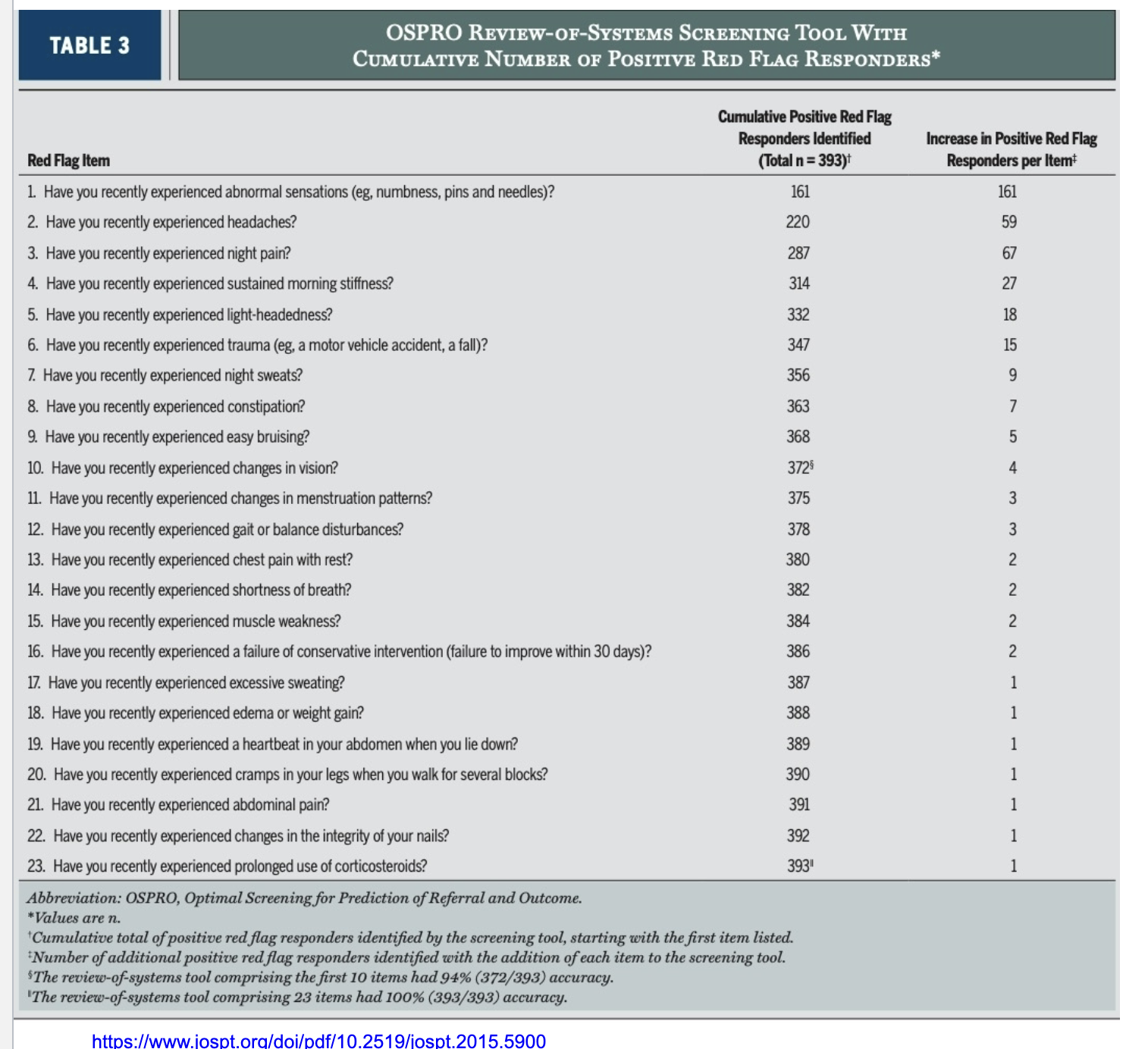
what is the difference between the review of systems and the systems review?
The review of systems focuses on evaluating a patient's overall health by assessing different organ systems for hidden symptoms, while the systems review pertains specifically to evaluating a patient's musculoskeletal and functional abilities during the physical examination (when an issue has already been identified)
what are the SINSS?
Severity
Intensity
Nature
Stage
Stability
what are some examples of phrases to describe the nature of a condition?
MSK, neurological, systemic
mechanical
traumatic
overuse or rep motion (microtraumatic motion)
degenerative
post-surgical
describe the healing timeframes
acute: 0-2 weeks (area red, swollen, painful without movement)
subacute: 2-6 weeks (pain with movement/activity)
chronic 6-8+ weeks (pain after movement/activity)
can also have acute and subacute on chronic
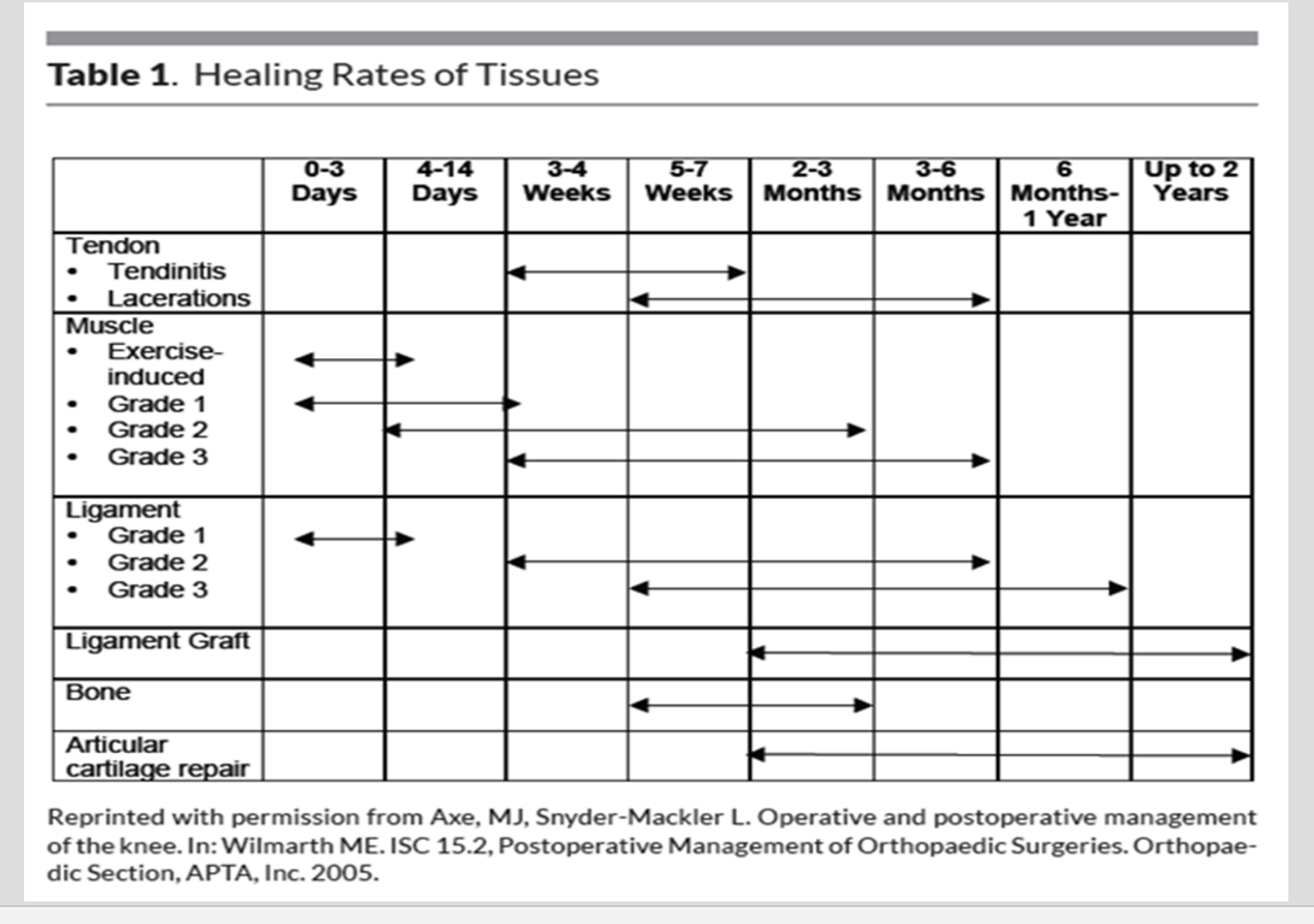
describes the healing rates of tissues
muscle tends to heal the fastest but depends on the grade of strain or injury; tendons heal more slowly than muscle, while ligaments heal the slowest (and cartilage)
What are components that should be evaluated in the tests and measures?
observation/inspection
posture
neuromuscular screen
palpation
ROM
muscle length
strength
edema measures
structure specific tests
functional movements/motor control
gait
balance
outcome measures
what things would you look at in the observation/inspection?
first visualization of the person, behaviors during the examination, poor posture, structural deformities, swelling, bruising
what things should be noted while assessing posture?
body type, alignment, atrophy (side to side comparison), hyptertrophy/tone symmetry, 3 views (ant, post, lateral)
what is the purpose of the neuroscreen?
detect a pattern of neurological deficits associated with a spinal nerve root (derm sensory disturbance, myotomal pattern of weakness, diminished deep tendon reflexes) vs peripheral pattern of deficits
how is light touch sensation used?
is used to screen out UE or LE dermatome test points, map out the full extent of sensory loss and see if matches a dermatomal distribution or peripheral distribution
What is babinski’s sign?
when the big toe and other toes splay/extend when the sole of the foot is stroked, indicates possible UMM lesion (is normal in babies/children under 2 y/o)
what is hoffmans reflex?
Hoffman's reflex is a neurological test where a quick flick of the distal phalanx of the middle finger elicits a thumb flexion and/or adduction response, which can indicate UMN lesion or corticospinal tract dysfunction if present.
what needs to be assessed when doing palpation?
therapeutic touch, superficial to deep, structure specific, scar mobility, temperature, tone/guarding, swelling
how should ROM be assessed?
AROM then PROM, overpressure if AROM is full or to assess end range feeling, screen joints above and below and measure if impairment is identified, norms are a moving target, must assess contralateral limb for best estimate of a person’s normal values
describes the scoring for tenderness to palpation
Tenderness scoring typically involves a scale from 0 to 3, where 0 indicates no tenderness, 1 indicates mild tenderness that is reported by the patient, 2 indicates moderate tenderness that causes the patient to wince, and 3 indicates a jump sign due to pain, 4 indicates that the patient does not allow you to palpate them due to pain
describe the MMT grading
Muscle strength grading ranges from 0 to 5, where 0 indicates no contraction, 1 indicates trace contraction, 2 indicates active movement with no gravity, 2+ full range without gravity with minimal resistance or partial range against gravity (50%), 3 indicates active movement against gravity, 4 indicates active movement against gravity with some resistance, and 5 indicates full strength against maximal resistance.
what should be assessed when looking at edema or wounds?
size, pitting (scale)/non-pitting, skin quality, drainage/exudate, skin temp and color, circumferential measurements
what things can be assessed during the functional assessment?
gait/balance
reaching
Y balance, UE Y balance
seated shot put test
grip strength
step down/eccentric lowering
box drop
TUG/DGI
Noyes Hop Test
why should patient reported outcomes be used?
they are standardized, reliable, demonstrate change over time, function, symptoms, and aggregate data for quality improvement and validation of care
what might a strong and painful MMT suggest?
a muscle lesion or injury, such as a tendonitis or strain, indicating that pain may be present while muscle strength is relatively preserved.
what might a weak and painful MMT suggest?
more severe MSK issue (possible fracture, larger tear of muscle/tendon)
what might a weak and painless MMT suggest?
nerve root/peripheral nerve or complete rupture of tendon/muscle
what is the problem with using patient reported outcomes?
could be a ceiling effect
what is the MDC?
minimal detectable change or the minimal change in score that would reflect a TRUE change so outside 1.96 SD or 95%
what is the MCID?
the minimally clinically important difference, the smallest change in score b/n 2 time points that is perceived as functionally/purposefully beneficial to the population in question