2CHEM reaction map 2
 Call Kai
 Learn
Learn Practice Test
 Spaced Repetition
 Match
Match Flashcards
 Knowt Play
1/13

There's no tags or description
Looks like no tags are added yet.
Name | Mastery | Learn | Test | Matching | Spaced | Call with Kai | Chat |
|---|
No analytics yet
Send a link to your students to track their progress
14 Terms

Reaction
Reagent
Conditions
Substitution
Concentrated NH3 (alc)
None

Reaction
Reagent
Conditions
Oxidation for 1o and 2o alcohols
MnO4-/H+ (purple to colourless)
CrO72- /H+ (orange to green)
Heat

Reaction
Reagent
Conditions
Substitution
Br2 (aq) or Cl2(aq) Form one product.
UV light. Br water slowly declourises from brown to colourless.

Reaction
Reagent
Conditions
Substituion
KOH(aq) or NaOH(aq)
No conditions needed
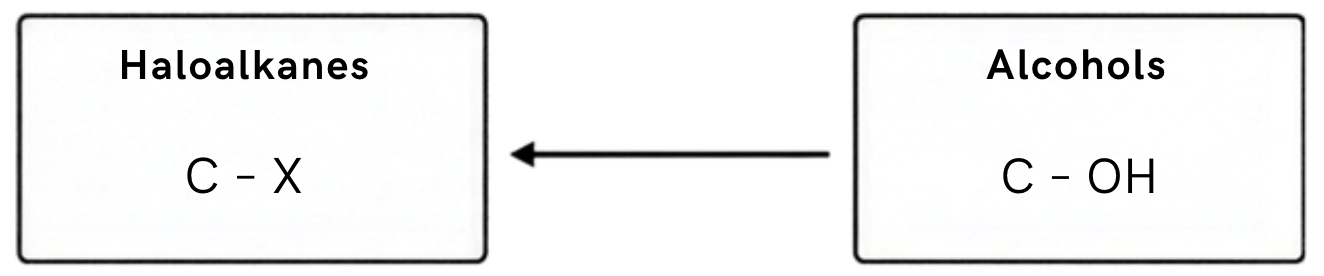
Reaction
Reagent
Conditions
Substituion
PCl3 PCl5 SoCl2 HBr or HCl (slow heat, for 3o alcohol)

Reaction
Reagent
Conditions
Elimination
Concentrated KOH(alc) NaOH(alc)
Heat

Reaction
Reagent
Conditions
Addition
HBr HCl —> can form two products
No condition
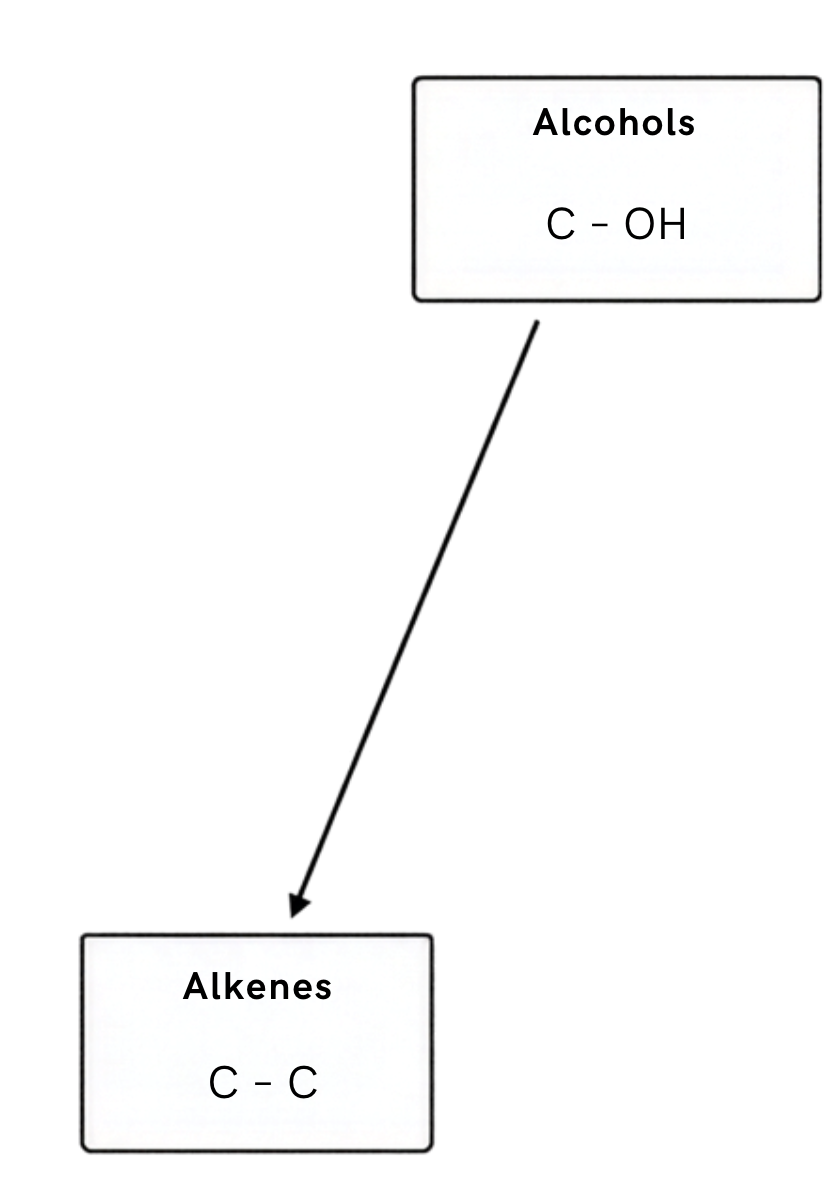
Reaction
Reagent
Conditions
Elimination
Concentrated H2SO4
No condition
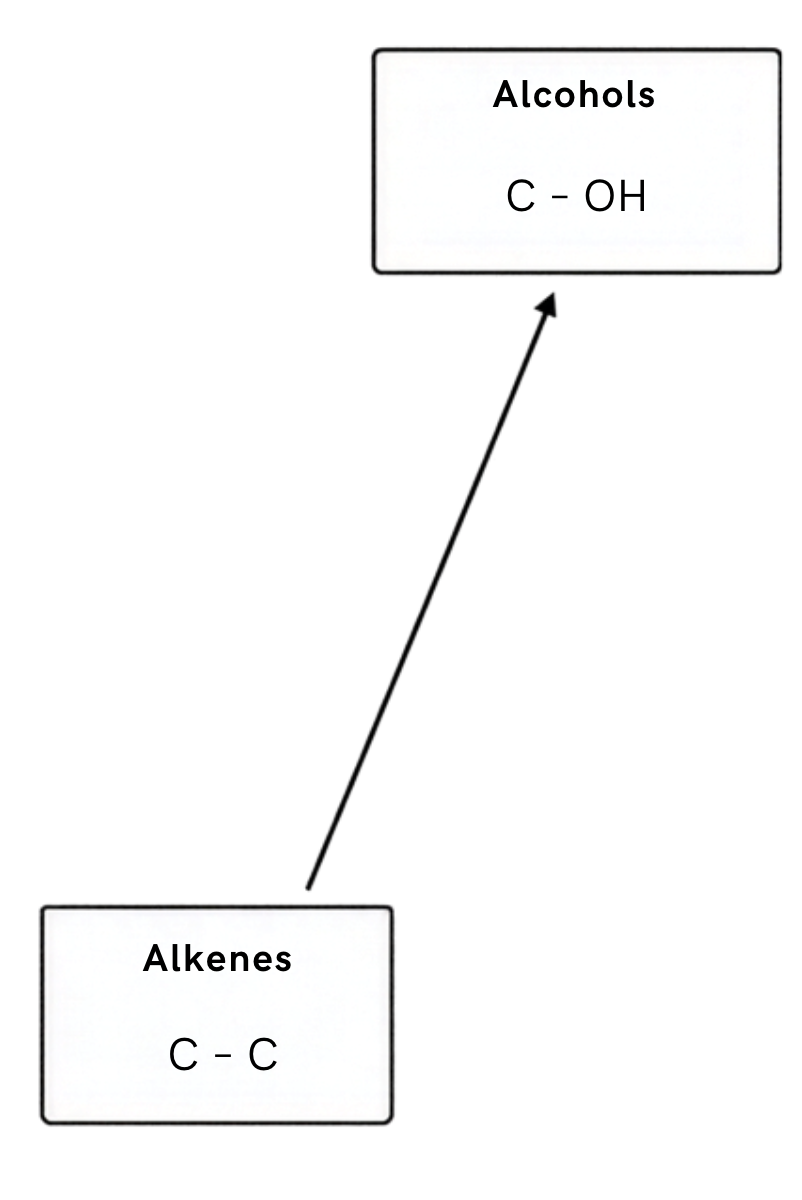
Reaction
Reagent
Conditions
Addition
H2O/H+ or diluted H2SO4 —→ can form 2 product.
Heat

Reaction
Reagent
Conditions
Addition
H2 (g) or Pt (catalyst)
Heat
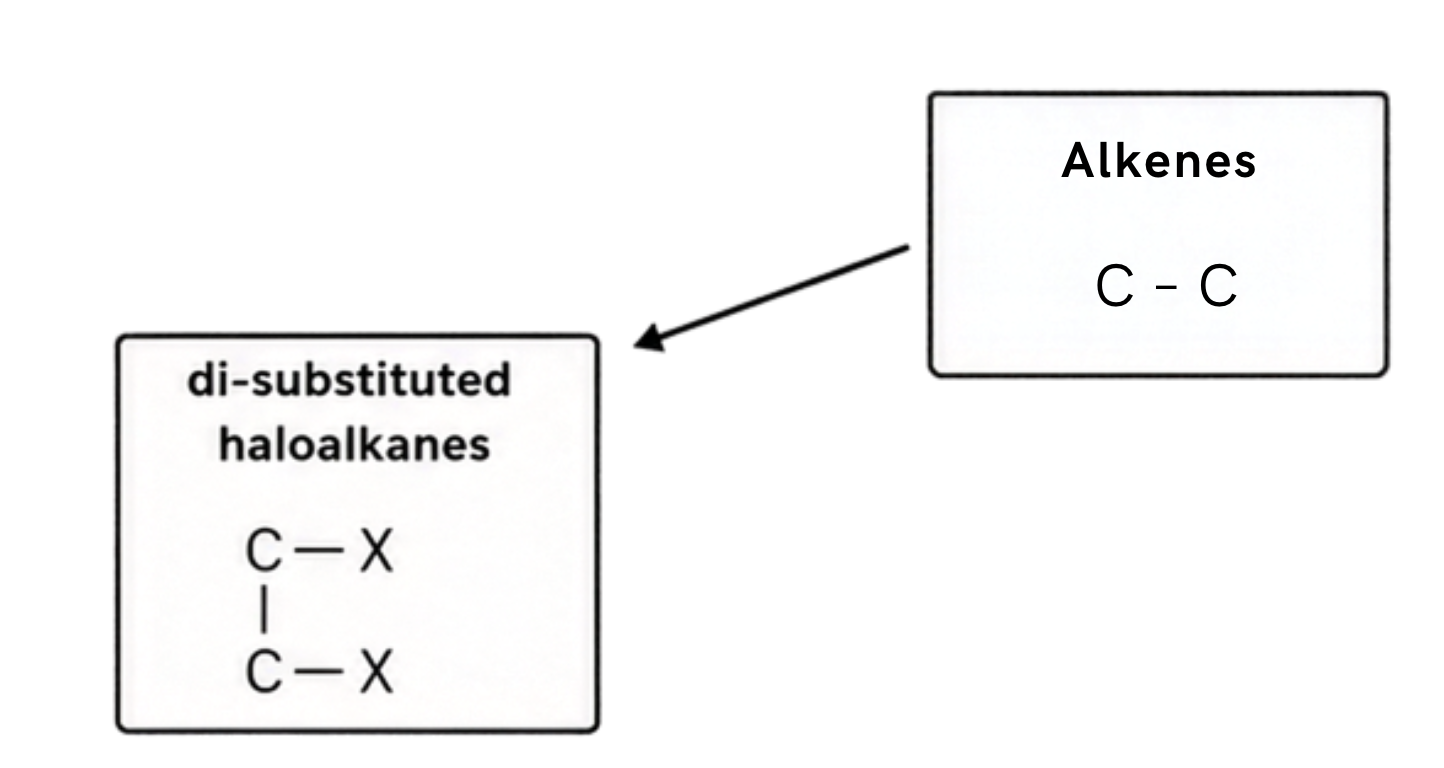
Reaction
Reagent
Conditions
Addition
Br(aq) (rapidly decolourise) or Cl2 (g)
No conditions needed
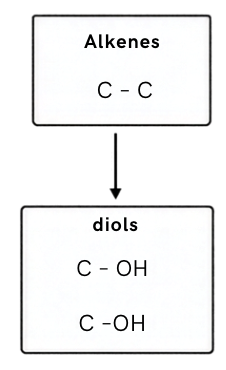
Reaction
Reagent
Conditions
Oxidation
MnO4- /H+ 2 layers will form purple to brown solid
MnO4- purple to colourless
No conditions needed

The major product (the product made in the largest amount) is the one where the H atom was added to the C=C carbon atom that had the most H atoms attached to it at the beginning. The minor product (the one produced in the smaller amount) is the other one where the H atom was added to the C=C carbon atom which had the least H atoms attached to it at the beginning.

The major product forms when the H is removed from the neighbouring carbon that has the fewest H atoms. If the alcohol/haloalkane is asymmetric, both neighbouring carbons have the same number of H atoms, both products form in equal amounts. Therefore, there is no major or minor product.