Hesi rn n404 maternity and pediatrics proctored exam
 Call Kai
 Learn
Learn Practice Test
 Spaced Repetition
 Match
Match Flashcards
 Knowt Play
1/60

There's no tags or description
Looks like no tags are added yet.
Name | Mastery | Learn | Test | Matching | Spaced | Call with Kai | Chat |
|---|
No analytics yet
Send a link to your students to track their progress
61 Terms
A client who is in labor states, "I think my water just broke?" The nurse notes that the umbilical cord is on the perineum. Which action should the nurse perform first?
A. Notify the operating room team.
B. Administer a fluid bolus of 500 mL.
C. Place the client in Trendelenburg.
D. Administer oxygen via face mask.
C.
Place the client in Trendelenburg: Placing the client in Trendelenburg (head down, hips elevated) helps relieve pressure of the presenting fetal part on the prolapsed cord, improving fetal oxygenation. This is the priority emergency action to prevent hypoxia.
A primigravida client at 32-weeks gestation presents to the clinic with a report of a pounding headache. The client demonstrates hyperreflexia. The nurse should recognize the client's symptoms may be caused by which condition?
A. Cerebral edema.
B. Severe anxiety.
C. Intravascular coagulation.
D. Retinal arteriolar spasms.
D.
Retinal arteriolar spasms: Retinal arteriolar spasms occur in preeclampsia and contribute to symptoms such as pounding headache, visual disturbances, and hyperreflexia. These vascular changes are indicative of increased systemic vascular resistance and elevated blood pressure, explaining the client's current presentation.
Patient Data
Exhibits
The nurse has mixed the formula with enteral nutritional formula powder to increase the caloric content to 24 calories per ounce (24 cal/30 mL).Which nursing intervention(s) should the nurse include from the plan of care to help meet the client's nutritional needs? Select all that apply.
A. Slowly increase caloric content using enteral nutritional formula powder.
B. Feed the infant on demand.
C. Make sure the infant is well rested before feeds.
D. Wake the infant up to eat.
E. Stroke the cheek to encourage sucking.
F. Initiate a three-hour feeding schedule.
G. Feed for one-hour duration.
H. Give gavage feedings via percutaneous endoscopic gastrostomy (PEG) tube.
A,C,D,E,F
A 14-year-old female client comes into the clinic for an annual exam and expresses concern about not starting her menstrual cycle. Which finding should the nurse recognize as potential cause of delayed menstration?Reference Range: Hemoglobin [10 to 15.5 g/dL (100 to 155 g/L)]
A. Family history of breast cancer.
B. Tanner stage 2 of breast development.
C. Hemoglobin of 10 g/dL (100 g/L).
D. Low body mass index (BMI).
D
Low body mass index (BMI): A low BMI can result in insufficient body fat necessary for the hormonal regulation of menstruation. Adolescents with low BMI may experience delayed menarche due to decreased estrogen production and energy availability required for the onset of ovulatory cycles.
The nurse is caring for an infant with tetralogy of Fallot. During a blood draw the nurse observes the infant becoming pale and lethargic with circumoral cyanosis and diminished peripheral pulses. Which action should the nurse take next?
A. Situate in knee-chest position.
B. Perform chest physiotherapy.
C. Reduce flow rate of intravenous fluid replacement.
D. Administer prescribed morphine subcutaneously.
Correct Answer : A
Situate in knee-chest position: Placing the infant in a knee-chest position increases systemic vascular resistance, which helps reduce right-to-left shunting and improves pulmonary blood flow during a hypercyanotic ("Tet") spell to improve oxygenation and prevent hypoxic injury.
The nurse is developing a teaching plan for a school-aged child with AIDS. Which instruction should the nurse include in the teaching plan for the family of a school-aged child with AIDS?
A. Obtain a booster for all immunizations as soon as possible.
B. Obtain an injection of penicillin G 1000 units weekly.
C. Keep the child away from other children and begin a home school program.
D. Avoid exposure to chickenpox.
D.
Avoid exposure to chickenpox: Children with AIDS are immunocompromised and at high risk for severe complications from varicella infection. Teaching the family to avoid exposure to chickenpox and other infectious diseases is essential to protect the child's health.
How many mL of urine output should the nurse document for an infant's wet diaper weight of 85 grams compared to the dry diaper weight of 50 grams? (Enter numeric value only.)
Correct Answer (mL) : 35
Solution
Calculation:
Calculate the difference in weight between the wet and dry diaper.
Weight difference (grams) = Wet diaper weight (grams) - Dry diaper weight (grams)
= 85 grams - 50 grams
= 35 grams.
Convert the weight difference in grams to milliliters (mL).
Conversion factor: 1 gram = 1 mL
Urine output (mL) = Weight difference (grams) x 1 mL/gram
= 35 grams x 1 mL/gram
= 35 mL.
The nurse is caring for a multiparous client who is in labor and observes a fetal heart rate (FHR) that decreases with the peak of a contraction and returns to baseline in 30 seconds. Which action should the nurse implement?
A. Turn the client to her side.
B. Perform a sterile vaginal exam.
C. Administer oxygen via facemask
D. Call the healthcare provider (HCP)
B.
Perform a sterile vaginal exam: Early decelerations often occur when the fetal head is descending into the birth canal, indicating progress in labor. Performing a sterile vaginal exam helps assess cervical dilation and fetal station to determine labor progression, which is the most appropriate next action.
When inspecting the ears of a toddler without the use of an otoscope, which action should the nurse take?
A. Note location of the pinna in relation to the eye.
B. Pull the pinna up and back during visualization.
C. Examine the tympanic membrane for swelling.
D. Observe color and appearance of ear drum
A.
Note location of the pinna in relation to the eye: Observing the external ear for proper placement and symmetry provides important information about possible congenital abnormalities. This can be done without an otoscope and is a safe initial assessment.
A laboring client's membranes rupture spontaneously. The nurse notices that the amniotic fluid is greenish brown. Which intervention should the nurse implement first?
A. Contact the healthcare provider.
B. Assess the fetal heart rate (FHR).
C. Check the cervical dilation.
D. Turn the client to her left side.
B.
Assess the fetal heart rate (FHR): The presence of greenish-brown amniotic fluid indicates possible meconium-stained fluid, which can signal fetal distress. Assessing the FHR first allows the nurse to determine if the fetus is currently compromised and requires urgent intervention.
A woman who delivered a 9 pound (4082 gram) baby boy by cesarean section (C-section) under spinal anesthesia is recovering in the postanesthesia care unit (PACU). Her fundus is firm, at the umbilicus, and a continuous trickle of bright red blood with no clots from the vagina is observed by the nurse. Which action should the nurse implement?
A. Let the infant breast feed.
B. Assess her blood pressure.
C. Massage the fundus vigorously.
D. Apply ice pack to perineum.
B,
Assess her blood pressure: Monitoring blood pressure is a priority when continuous bright red vaginal bleeding occurs after delivery. Assessing vital signs allows the nurse to determine the hemodynamic stability of the client and identify early signs of hypovolemic shock, guiding urgent interventions.
When obtaining an adolescent's health history, which intervention is most important of the nurse to implement?
A. Assess for the use of illicit drugs.
B. Evaluate vital signs and lab findings.
C. Ask the parents to leave the room.
D. Obtain a smoking history first.
C.
Ask the parents to leave the room: Ensuring privacy by having parents step out is essential to build trust, encourage open communication, and allow the adolescent to share sensitive information freely, including sexual activity, substance use, or mental health concerns.
At 6-weeks gestation, the rubella titer of a client indicates she is nonimmune. When is the best time to administer a rubella vaccine to this client?
A. Immediately, at 6-weeks gestation, to protect this fetus.
B. After the client reaches 20-weeks gestation.
C. After the client stops breastfeeding.
D. Early postpartum, within 72 hours of delivery.
D.
Early postpartum, within 72 hours of delivery: The optimal time to vaccinate a nonimmune mother is immediately after delivery, ideally within 72 hours, to provide immunity for future pregnancies and prevent congenital rubella syndrome in subsequent pregnancies.
4-month-old infant brought to the emergency department for fever, pulling at ear, and general fussiness over the last week. Mother reports she switched the infant to formula at 3 weeks of age due to difficulty with latching during breastfeeding Mother has noticed the infant coughing periodically during feedings and at times the formula will come out of the infant's nostrils. The mother believes this is due to congestion. Infant was full-term, weighed 3.7 kg (8.2 lb), and delivery was uneventful. No comorbidities. The mother reports she last administered children's acetaminophen at 0600. Infant is lying on the mother's lap sucking a pacifier. Appears calm but lethargic; becomes restless and fussy during physical exam. Skin is warm to the touch and pale. Moderate bulging of bilateral tympanic membranes visualized with erythema and limited mobility. No fluid observed draining from the ear.
....
1 of 6
Patient Data
The nurse is reviewing the client's admission information. Which signs or symptoms warrant immediate follow-up by the nurse? Select all that apply.
A. Bulging tympanic membranes
B. Pain rating of 5 using FLACC scale
C. Refusal of bottle
D. Temperature: 101° F (38.3° C)
E. Agitation while collecting vital signs
F. Use of pacifier
G. Heart rate of 188 beats/minute
H. Respirations: 56 breaths/minute
I. Warm, pale skin
Correct Answer: A,C,G,H,I
2 of 6
0955:
Infant and mother escorted to room. Vital signs and measurements recorded. Straight catheterization performed using steri technique. Blood work collected and sent to laboratory. Infant is agitated but refuses bottle when offered. Easily consoled with pacifier dipped in sucrose.
1030:
Acetaminophen administered.
1115:
Infant and mother transported to radiology for head computed tomography (CT).
Patient Data
Exhibits
The nurse is considering the client's acute condition while performing the admission assessment.
Choose the most likely options for the information missing from the statement by selecting from the lists of options provided.
The nurse determines that the client's symptoms are most likely caused by_______ resulting in _________ and ________.
Correct Answer:
Dropdown Group 1: Cleft palate
Dropdown Group 2: Otitis media
Dropdown Group 3: Occluded eustachian tubes
Solution
Rationale for Correct Choices:
Cleft palate: The infant's CT shows a V-shaped bony defect of the hard palate, bifid uvula, and a translucent midline zone in the soft palate, indicating a submucous cleft palate. These structural defects explain feeding difficulties, formula regurgitation through the nose, and associated complications.
Otitis media: Infants with cleft palate frequently develop middle ear infections due to impaired Eustachian tube function. The moderate bulging and erythema of the tympanic membranes, along with fussiness and ear-pulling, support otitis media as a current manifestation.
Occluded eustachian tubes: The palatal defect disrupts normal Eustachian tube drainage, leading to fluid accumulation and recurrent middle ear infections. This obstruction contributes to hearing issues and may worsen if untreated.
3 of 6
Patient Data
Exhibits
The nurse is prioritizing care for the client. Select the 3 highest priority findings for the nurse to address.
A. Temperature
B. Refusing bottle
C. Signs of pain
D. Cough during feeding
E. Oxygen saturation
F. Formula coming from nares
Correct Answer: B,D,E
B. Refusing bottle: Feeding refusal places the infant at high risk for dehydration and inadequate nutrition, especially in the presence of a submucous cleft palate. This requires prompt intervention to maintain hydration and caloric intake.
D. Cough during feeding: This suggests possible aspiration risk, especially in the context of a submucous cleft palate. It may lead to respiratory complications and requires immediate evaluation.
E. Oxygen saturation: Oxygen desaturation to 91% during feeding indicates potential airway compromise or aspiration, which requires immediate attention to prevent hypoxia.
4 of 6
The nurse is planning care for the client. Drag from Word Choices to complete the sentence.
The nurse is planning interventions to reduce the client's risk of _____, _______, and ________.
Correct Answer:
Dropdown Group 1: Aspiration
Dropdown Group 2: Pneumonia
Dropdown Group 3: Hearing loss
Solution
Rationale for Correct Choices
Aspiration: The submucous cleft palate and bifid uvula increase the risk of formula or saliva entering the airway during feeding. Interventions such as proper positioning and thickened feeds help reduce aspiration risk.
Pneumonia: Repeated aspiration or impaired clearance of secretions can lead to lower respiratory tract infections, including pneumonia. Monitoring respiratory status and providing prompt interventions are essential.
Hearing loss: Infants with cleft palate often have occluded Eustachian tubes, which can cause recurrent otitis media and subsequent conductive hearing loss. Early identification and referral to audiology are recommended.
5 of 6
The nurse is considering appropriate education for the client's new diagnosis.
Choose the most likely option for the information missing from the statement by selecting from the list of options provided. The nurse teaches the parents about decreasing the risk of aspiration when feeding by
Correct Answer:
Dropdown Group 1: Interrupting feeding if the infant raises their eyebrows
Solution
Rationale for Correct Choice
Interrupting feeding if the infant raises their eyebrows: Infants with a submucous cleft palate are at increased risk for aspiration due to abnormal palate structure. Observing subtle cues, such as raising eyebrows or coughing, and pausing the feeding helps prevent formula or saliva from entering the airway.
6 of 6
Exhibits
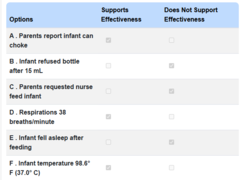
The nurse is evaluating the infant's progress and the parents' understanding of the condition. For each finding, click to indicate if it supports the interventions were effective or does not support the interventions were effective.
Options
A . Parents report infant can choke
B . Infant refused bottle after 15 mL
C . Parents requested nurse feed infant
D . Respirations 38 breaths/minute
E . Infant fell asleep after feeding
F . Infant temperature 98.6° F (37.0° C)
Rationale:
Parents report infant can choke: Parents' recognition of choking risk indicates they understood the teaching about feeding precautions and are observing the infant's cues, which is a desired outcome of education.
Infant refused bottle after 15 mL: Refusal to finish a bottle indicates ongoing feeding difficulties, suggesting interventions have not fully addressed the infant's feeding challenges.
Parents requested nurse feed infant: Reliance on the nurse to feed the infant shows parents are not yet fully confident or comfortable applying the feeding techniques independently, indicating partial effectiveness.
Respirations 38 breaths/minute: Normalization of respiratory rate post-feeding reflects that the infant is tolerating feeding better and maintaining adequate oxygenation.
Infant fell asleep after feeding: Falling asleep after such a small intake, especially after crying and refusing the bottle, suggests that the infant is fatigued and exhausted from the effort of feeding. This indicates that the feeding was not successful.
Infant temperature 98.6° F (37.0° C): Reduction of fever indicates effective management of infection, supporting that interventions like acetaminophen and antibiotics are working.
The healthcare provider (HCP) prescribes amoxicillin 500 mg PO every 8 hours for a child who weighs 77 pounds. The available suspension is labeled, "Amoxicillin Suspension 250 mg/5 mL. The recommended maximum dose is 50 mg/kg/24 hour. How many mL should the nurse administer in a single dose based on the child's weight? (Enter the numerical value only. If rounding is required, round to the whole number.)
Explanation
Correct Answer (mL) : 10
Solution
Calculation:
Desired dose = 500 mg.
Available concentration = 250 mg / 5 mL
= 50 mg/mL.
Calculate the volume to administer in milliliters (mL).
Volume to administer (mL) = Desired dose (mg) / Available concentration (mg/mL)
= 500 mg / 50 mg/mL
= 10 mL.
The mother of a 3-week-old reports to the nurse that her child cries frequently and seems to always be hungry. She further reports that her child breastfeeds well and has 7 to 8 wet diapers daily. The nurse determines that the child's weight is the same as the birth weight. Which information is most important for the nurse to obtain?
A. Interest in enrolling in breast feeding classes.
B. Herbal supplements the mother is taking.
C. Types of foods the mother is eating.
D. Length of time the infant nurses at each breast.
D.
Length of time the infant nurses at each breast: Assessing how long the infant feeds at each breast provides crucial information about milk transfer and effectiveness of breastfeeding. Despite frequent nursing and normal diaper output, inadequate time at the breast may explain why the infant has not regained birth weight.
The nurse is caring for an infant who was recently diagnosed with a congenital heart defect. Which assessment finding is most important for the nurse to report to the healthcare provider (HCP)?
A. Weight gain of 2.2 lbs (1 kg) in last 48 hours.
B. Poor oral intake and suckling effort.
C. Audible heart murmur.
D. Heart rate of 162 beats/minute.
B.
Poor oral intake and suckling effort: Poor oral intake and weak suckling are critical indicators of insufficient cardiac output and fatigue from the heart working harder. In infants with congenital heart defects, this can quickly lead to failure to thrive, dehydration, and worsening heart failure, making it the most urgent finding to report.
The nurse is caring for a preschooler with spina bifida admitted with a febrile urinary tract infection. Which action should the nurse prioritize to minimize complications of vesicoureteral reflux?
A. Encourage adequate oral fluid intake.
B. Evaluate elimination hygiene habits.
C. Complete post void bladder scans.
D. Implement a frequent voiding schedule
D.
Implement a frequent voiding schedule: In children with vesicoureteral reflux (VUR), urine flows backward from the bladder to the kidneys, increasing the risk of kidney infections and damage. Frequent voiding helps reduce bladder pressure and prevent urine stasis, which minimizes the likelihood of reflux and recurrent infections.
A clinic nurse is assessing infants and toddlers for fine and gross motor development. Which child should the nurse refer to a healthcare provider (HCP) for further evaluation?
A. 3-year-old preferring to walk on the tip toes.
B. 5-month-old with use of whole hand grasp.
C. 1%-year-old attempting to scribble on paper.
D. 3%-month-old with diminished Moro reflex
D.
3-month-old with diminished Moro reflex: A diminished or absent Moro reflex at 3 months is abnormal because the reflex should be present until about 4-6 months. This may indicate neurological impairment or developmental delay, making referral essential.
1 of 4
A 24-month-old, male toddler is brought to the urgent care clinic for head and nasal congestion. The parents report his last temperature as 100.1° F (37.8° C) axillary. The parents were instructed by the on-call pediatrician to present to the urgent care clinic.
Patient Data
Exhibits
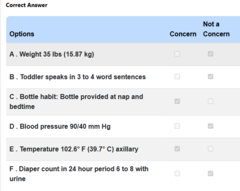
The nurse is performing an assessment on the toddler. For each assessment finding, click to indicate whether the findings from the assessment should be a concern or not a concern to the nurse. Each row must have only one response option selected.
Options
A . Weight 35 lbs (15.87 kg)
B . Toddler speaks in 3 to 4 word sentences
C . Bottle habit: Bottle provided at nap and bedtime
D . Blood pressure 90/40 mm Hg
E . Temperature 102.6° F (39.7° C) axillary
F . Diaper count in 24 hour period 6 to 8 with urine
Rationale:
Parents report infant can choke: Parents' recognition of choking risk indicates they understood the teaching about feeding precautions and are observing the infant's cues, which is a desired outcome of education.
Infant refused bottle after 15 mL: Refusal to finish a bottle indicates ongoing feeding difficulties, suggesting interventions have not fully addressed the infant's feeding challenges.
Parents requested nurse feed infant: Reliance on the nurse to feed the infant shows parents are not yet fully confident or comfortable applying the feeding techniques independently, indicating partial effectiveness.
Respirations 38 breaths/minute: Normalization of respiratory rate post-feeding reflects that the infant is tolerating feeding better and maintaining adequate oxygenation.
Infant fell asleep after feeding: Falling asleep after such a small intake, especially after crying and refusing the bottle, suggests that the infant is fatigued and exhausted from the effort of feeding. This indicates that the feeding was not successful.
Infant temperature 98.6° F (37.0° C): Reduction of fever indicates effective management of infection, supporting that interventions like acetaminophen and antibiotics are working.
2 of 4
Patient Data
Exhibits
Select the 4 topics the nurse will teach the parents to care for the toddler correctly.
A. Medications
B. Pain control
C. Cool humidified oxygen
D. Ear care
E. Coughing and deep breathing
F. Potential health issues
Correct Answer: A,B,D,F
3 of 4
Patient Data
Exhibits
Which findings indicate an improvement in the client's condition?
A. Cool and dry skin
B. Temperature
C. Behavioural characteristic
D. Pain assessment
E. Increased irritability
Correct Answer: A,B,C,D
Rationale:
A. Cool and dry skin: The toddler's skin was previously flushed and warm due to fever. The change to cool, dry skin reflects that the fever has subsided and perfusion has stabilized, indicating overall improvement in the child's condition.
B. Temperature: The axillary temperature decreased from 102.6° F to 99.1° F after administration of antipyretics, showing that the inflammatory response is resolving and the child is responding to treatment for infection.
C. Behavioral characteristic: Earlier, the toddler was fussy, irritable, and had poor sleep. Now he is playing with a stuffed animal and interacting appropriately, which demonstrates increased comfort, energy, and improved neurological and emotional status.
D. Pain assessment: The FLACC pain score decreased from 4/10 to 0/10, indicating effective analgesia from the lidocaine ear drops and ibuprofen, as well as relief from discomfort associated with the ear infection.
4 of 4
Patient Data
Exhibits
The nurse assesses parent's understanding of teaching.Select the 3 statements that indicate that the parents understand discharge instructions.
A. Our child will quit pulling his ears when he is feeling better.
B. We will place a cold pack on the ear.
C. We will place the medication dropper deep into the ear canal.
D. We will smoke outside.
E. We will stop giving the antibiotic when he feels better.
F. Our child can suck on a bottle when sitting upright.
Correct Answer: A,D,F
Rationale:
A. Our child will quit pulling his ears when he is feeling better: This indicates that the parents understand the expected outcome of pain relief after treatment with medications, including ibuprofen and lidocaine ear drops.
D. We will smoke outside: This shows that the parents understand the importance of avoiding secondhand smoke exposure, which can exacerbate respiratory and ear infections in toddlers.
F. Our child can suck on a bottle when sitting upright: This demonstrates understanding of safe feeding practices to prevent aspiration, particularly given the toddler's upper respiratory symptoms and recent illness.
During the initial newborn assessment, the nurse finds that a newborn's heart rate is irregular. Which intervention should the nurse implement?
A. Document the finding in the infant's record.
B. Teach the parents about congenital heart defects
C. Apply oxygen per nasal cannula at 3 L/min.
D. Notify the pediatrician immediately.
D.
Notify the pediatrician immediately: Immediate notification of the pediatrician is essential because an irregular heart rate may signal arrhythmias, congenital heart defects, or other serious cardiac conditions. Prompt evaluation ensures timely intervention to prevent complications.
A 3-month-old with myelomeningocele and atonic bladder is catheterized every 4 hours to prevent urinary retention. The home health nurse notes that the child has developed episodes of sneezing, urticaria, watery eyes, and a rash in the diaper area. Which action is most important for the nurse to take?
A. Apply zinc oxide to perineum with each diaper change.
B. Auscultate the lungs for respiratory pneumonia.
C. Change to latex-free gloves when handling infant.
D. Draw blood to analyze for streptococcal infection.
C.
Change to latex-free gloves when handling infant: The symptoms are indicative of a latex allergy, which is common in children with myelomeningocele who have frequent catheterizations and medical device exposure. Switching to latex-free gloves is the most important intervention to prevent further allergic reactions and potential anaphylaxis.
The nurse is performing a newborn assessment. Which symptom, if present in a newborn, would indicate respiratory distress?
A. Shallow and irregular respirations.
B. Abdominal breathing with synchronous chest movement.
C. Flaring of the nares.
D. Respiratory rate of 50 breaths/minute.
C.
Flaring of the nares: Flaring of the nares occurs when the newborn is attempting to increase airflow due to difficulty breathing. It is a classic early sign of respiratory distress and indicates that the infant is using accessory muscles to breathe, requiring prompt evaluation.
The nurse is caring for a school-age child with Kawasaki disease who has experienced a history of a fever for 6 days. Which intervention should the nurse prioritize during the initial treatment phase of the illness?
A. Obtain temperature assessment prior to aspirin administration.
B. Maintain meticulous oral hygiene and lubrication of lips.
C. Provide passive range of motion exercises.
D. Monitor fluid intake and output and daily weight.
D.
Monitor fluid intake and output and daily weight: Monitoring intake, output, and weight is crucial because Kawasaki disease can cause systemic inflammation, edema, and potential cardiac complications like myocarditis or heart failure. Accurate fluid balance assessment helps prevent worsening cardiac function and guides clinical management in the acute phase.
Gestational Hypertension
A 38-year-old, G2P1001 client presents to labor and delivery and reports being nauseated all day with two episodes of vomiting. She reports that she is not sure if it is food poisoning or exposure to a gastrointestinal bug that a couple of family members have. She has not eaten since last night and has not consumed any water or other liquids since 1800 yesterday. She reports having mild mid-epigastric pain that is burning in nature. She informs that she has had heartburn throughout the pregnancy that is easily relieved with over-the-counter calcium carbonate tablets; when she has this pain, it is a 2 on the 0 to 10 scale. She reports that fetal movements are different and that she has noticed five fetal movements in two-hour period. She also reports increased swelling in her face, hands, bilateral lower extremities. She denies any vaginal bleeding, uterine contractions, or leaking of fluid.
...
Client's chart is reviewed.
Exhibits
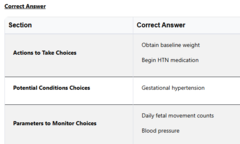
Complete the diagram by dragging from the choice area to specify which condition the client is most likely experiencing, two actions the nurse should take to address that condition, and two parameters the nurse should monitor to assess the client's progress.
Rationale for Correct Choices
Gestational hypertension: Gestational hypertension is defined as new-onset hypertension after 20 weeks of gestation without proteinuria or other systemic findings of preeclampsia. While her other symptoms like epigastric pain can be associated with preeclampsia, they are also common pregnancy complaints or could be attributed to other factors. Normal lab findings also rule out preeclampsia.
Obtain baseline weight: Tracking weight helps assess fluid retention, which can indicate worsening disease. Accurate baseline measurements guide ongoing monitoring and treatment decisions.
Begin HTN medication: Elevated blood pressure poses a risk for maternal complications such as stroke or organ damage. Initiating antihypertensive therapy is essential to manage blood pressure and prevent severe complications.
Blood pressure: Continuous monitoring of blood pressure is critical to evaluate the effectiveness of interventions and detect rapid increases that could indicate progression to severe preeclampsia or eclampsia.
Daily fetal movement counts: Reduced fetal movements may indicate fetal compromise. Monitoring daily fetal activity helps assess fetal well-being and guides decisions about possible early delivery.
A 4-month-old has been admitted to the pediatric medical unit with respiratory syncytial virus (RSV). The infant demonstrates poor feeding and begins coughing frequently. Which additional finding should alert the nurse that the child is experiencing respiratory distress?
A. Flaring of the nares.
B. Diaphragmatic respirations.
C. Resting respiratory rate of 35 breaths/minute.
D. Bilateral bronchial breath sounds.
Correct Answer : A
Flaring of the nares: Flaring of the nares occurs when the infant is working harder to breathe and indicates increased respiratory effort. In the context of RSV with poor feeding and frequent coughing, this is a key sign of respiratory distress that requires prompt attention.
A newborn infant diagnosed with developmental dysplasia of the hip must wear a Pavlik harness 23 hours a day. Which behavior by the mother best indicates that discharge teaching was effective?
A. The mother reports that she has no questions about the care of the harness.
B. The nurse observes the mother removing and replacing the Pavlike harness.
C. The nurse demonstrates removing the harness and the mother watches closely.
D. The mother describes problems that may occur while using the harness.
B.
The nurse observes the mother removing and replacing the Pavlik harness: Observing the mother correctly remove and replace the harness demonstrates that she has learned and can safely manage the device, indicating that discharge teaching was effective.
The parents of a 14-month-old child who is hospitalized due to febrile seizures tell the nurse that they fear their child will have lifelong seizures. Which information should the nurse convey to these parents?
A. Ibuprofen should be used prophylactically to prevent febrile seizures.
B. Reassure the parents that febrile seizures decrease as the child grows older.
C. Avoid excessive visual stimuli because it can precipitate seizure activity.
D. Provide the child with a sponge bath for temperatures over 100.6° F (38.1° C).
B.
Reassure the parents that febrile seizures decrease as the child grows older: Febrile seizures are typically benign, occur between 6 months and 5 years of age, and most children outgrow them. Conveying this information reduces parental anxiety and provides reassurance
Which action should the nurse take if an infant, who was born yesterday weighing 7.5 lbs. (3,402 grams), weighs 7 lbs (3,175 grams) today?
A. Monitor the stool and urine output of the neonate for the last 24 hours.
B. Inform and assure the mother that this is a normal weight loss.
C. After verifying the accuracy of the weight, notify the healthcare provider.
D. Encourage the mother to increase frequency of breastfeeding.
B.
Inform and assure the mother that this is a normal weight loss: Newborns typically lose 5-10% of their birth weight during the first 3-5 days due to fluid shifts and limited initial intake. The nurse's priority is to reassure the mother, explain that this is expected, and continue supporting regular feeding.
The nurse is assessing a client at 29-weeks gestation. Which assessment method would provide the most accurate determination of fetal position?
A. Ultrasound.
B. Doppler.
C. Leopold's maneuvers.
D. Vaginal examination.
Correct Answer : A
Ultrasound: Ultrasound provides the most accurate assessment of fetal position at 29 weeks, as it allows visualization of the fetus, placenta, and amniotic fluid. It is especially useful when Leopold's maneuvers are inconclusive due to maternal obesity, uterine shape, or fetal movement.
26-year-old female gravida (2), para (1), term (1), living (1) was admitted to labor and delivery (L&D). Cervix is 4 cm dilated, 70% effacement, -1 station. Pregnancy uncomplicated.
Patient Data
Exhibits
The nurse reviews the client data. Drag the Word Choices to complete the sentence.
Abnormal FHR patterns can result in ______, _______, and _______.
Correct Answer:
Dropdown Group 1: Acidemia
Dropdown Group 2: Hypoxia
Dropdown Group 3: Hypoxemia
Solution
Rationale for Correct Choices
Acidemia: Persistent fetal heart rate decelerations can reduce oxygen delivery to fetal tissues, leading to anaerobic metabolism and accumulation of acids in the fetal blood. This condition, if uncorrected, increases the risk of fetal distress and long-term complications.
Hypoxia: Repeated or prolonged decelerations indicate insufficient oxygenation of fetal tissues. Hypoxia can impair organ function and, if severe, necessitate urgent interventions such as intrauterine resuscitation or delivery.
Hypoxemia: Decreased oxygen saturation in the fetal blood can result from impaired placental perfusion or maternal oxygenation. Hypoxemia is a direct consequence of abnormal FHR patterns and requires prompt recognition and management.
In assessing a 1-day-old male newborn, the nurse observes that the scrotal sac is large, swollen, smooth, and taut. Which assessment technique should the nurse perform to determine if the newborn has a hydrocele?
A. Grasp high on the sac and gently palpate downward to feel each testis present.
B. Observe daily for the resolution of scrotal edema influenced by placental hormones.
C. Palpate for a soft, mushy structure that is nontender and distinct from a normal testis.
D. Perform transillumination of the scrotal sac to visualize a red glow of fluid around the testes.
D.
Perform transillumination of the scrotal sac to visualize a red glow of fluid around the testes: Transillumination is the most effective technique to confirm a hydrocele. A hydrocele allows light to pass through the fluid-filled sac, producing a red glow, which differentiate it from solid masses or other scrotal abnormalities.
The nurse is assessing a primigravida at 39 weeks gestation during a weekly prenatal visit. Which finding is most important for the nurse to report to the healthcare provider (HCP)?Reference Range:Hemoglobin in pregnancy [greater than 11 g/dL (110 g/L)]
A. Troubled by early morning heartburn.
B. Fetal heart rate (FHR) of 200 beats/minute.
C. Maternal hemoglobin of 11.0 g/dL (110 g/L).
D. Reports intermittent low back pain.
B.
Fetal heart rate (FHR) of 200 beats/minute: A FHR of 200 bpm is significantly above the normal range (110-160 bpm) and may indicate fetal tachycardia, which can result from infection, maternal fever, or fetal distress. This requires immediate notification of the HCP.
One day after vaginal delivery of a full-term baby, a postpartum client's white blood cell (WBC) count is 15,000/mm3 (15x 10/L). Which action should the nurse take first?Reference Range: White Blood Cell 5,000 to 10,000/mm3 (5 to 10 10/L)]
A. Assess the client's perineal area for signs of a perineal hematoma.
B. Check the differential, since the WBC is normal for this client.
C. Assess the client's temperature, heart rate, and respirations every 4 hours.
D. Notify the healthcare provider (HCP), since this finding is indicative of infection.
Correct Answer : A
Assess the client's perineal area for signs of a perineal hematoma: WBC can be elevated postpartum due to normal physiologic changes, but an elevated WBC may also indicate infection or tissue trauma. Assessing the perineum directly identifies potential sources of infection or hematoma and is the priority action.
The nurse is preparing to administer magnesium sulfate to a laboring client whose blood pressure has increased from 110/60 mm Hg to 140/90 mm Hg. Which nursing protocol has the highest priority?
A. Assess deep tendon reflexes (DTRS) every 4 hours.
B. Provide a quiet environment with subdued lighting.
C. Have calcium gluconate immediately available.
D. Insert an indwelling urinary catheter with a urimeter to monitor hourly output.
C.
Have calcium gluconate immediately available: Calcium gluconate is the antidote for magnesium sulfate toxicity. Having it readily available is the highest priority because magnesium toxicity can rapidly depress neuromuscular and respiratory function, requiring immediate intervention.
The nurse is teaching a class on child care to new parents. Which instruction should be included about the prevention of rotavirus infection in infants who are starting to eat foods?
A. Keep house pets away from the food preparation area.
B. Use only lactose-free formulas.
C. Avoid feeding infants fresh fruits.
D. Wash hands before any food preparation.
D.
Wash hands before any food preparation: Rotavirus is highly contagious and spreads via the fecal-oral route. Proper handwashing before preparing or feeding food is a key preventive measure to reduce the risk of infection in infants.
A 38-week primigravida client who is positive for group A Streptococcus (GAS) receives a prescription for cefazolin 2 grams IV to be infused over 30 minutes. The medication is available in "Cefazolin 2 grams/100 mL normal saline." The nurse should program the infusion pump to deliver how many mL/hour? (Enter numeric value only.)
Explanation
Correct Answer (mL/hr) : 200
Solution
Calculation:
Total volume = 100 mL.
Total infusion time and convert to hours.
Infusion time = 30 minutes
Infusion time = 30 minutes / 60 minutes/hour
= 0.5 hours.
Calculate the infusion rate in milliliters per hour (mL/hr).
Infusion rate (mL/hr) = Total volume (mL) / Infusion time (hr)
= 100 mL / 0.5 hr
= 200 mL/hr.
A client who is at 10-weeks gestation calls the clinic because she has been vomiting for the past 24 hours. The nurse determines that the client has no fever. Which instruction should the nurse give to this client?
A. Make an appointment at the clinic if a fever occurs.
B. Take nothing by mouth until there is no more nausea.
C. Come to the clinic to be seen by a healthcare provider (HCP).
D. Remain on clear liquids until the vomiting subsides.
Correct Answer : A
Make an appointment at the clinic if a fever occurs: Since the client is 10 weeks pregnant, has had vomiting for 24 hours, and has no fever, this is likely mild morning sickness. The nurse should instruct the client to monitor for warning signs such as fever, dehydration, or inability to retain fluids, and seek care if these occur.
The nurse is preparing to administer oxytocin IV to a client after the delivery of her infant. Which outcome should the nurse expect from the administration of oxytocin?
A. Return of the uterus to prepregnancy size.
B. Expulsion of the placenta.
C. Activation of the let down reflex.
D. Stimulation of uterine contractions.
D.
Stimulation of uterine contractions: Oxytocin directly stimulates smooth muscle of the uterus, promoting strong contractions. This helps control postpartum bleeding and supports the uterus in returning to a contracted state, which is the expected outcome after delivery.
Albumin 25% IV is prescribed for a child with nephrotic syndrome. Which assessment finding indicates to the nurse that the medication is having the desired effect?
A. Reduction of fever.
B. Reduction of edema.
C. Improved caloric intake.
D. Weight gain.
B.
Reduction of edema: Albumin 25% IV increases plasma oncotic pressure, drawing fluid from the interstitial spaces back into the intravascular compartment. A decrease in edema demonstrates that the medication is effectively restoring fluid balance.
A client in her third trimester reports abdominal pain. She is restless and has a small amount of dark red vaginal bleeding. Which actions should the nurse implement first?
A. Obtain a urine specimen and determine blood type.
B. Palpate the fundus and check the fetal heart rate.
C. Complete a vaginal exam and test for ruptured membranes.
D. Start IV fluid bolus and obtain a complete blood count.
B.
Palpate the fundus and check the fetal heart rate: Assessing the uterine fundus and fetal heart rate is the highest priority because it provides critical information about maternal bleeding, uterine tone, and fetal well-being. These assessments help determine if the client is experiencing placental abruption or another emergent complication.
The client is 24 weeks pregnant and has a history of type 1 diabetes mellitus. She is currently 28-years-old, and she was diagnosed at age 12 with type 1 diabetes mellitus. She is gravida 2 para 1.
She came to the clinic saying that her blood glucose had been running high for the past few days even with her usual dosage of insulin. Currently, she is experiencing nausea and abdominal pain. She is flushed and reports that she has also been experiencing polyuria and polydipsia since this morning.
Patient Data
Exhibits
The nurse identifies that the client is experiencing _______ as evidenced by _________.
Correct Answer:
Dropdown Group 1: Diabetic ketoacidosis (DKA)
Dropdown Group 2: Blood glucose 224 mg/dL, acetone odor on breath
Solution
Rationale for Correct Choices
Diabetic ketoacidosis (DKA): The client exhibits classic signs of DKA, including nausea, abdominal pain, polyuria, polydipsia, and extreme fatigue. DKA is a serious complication of type 1 diabetes caused by insulin deficiency and requires urgent management.
Blood glucose 224 mg/dL, acetone odor on breath: Hyperglycemia combined with ketone production leads to acetone breath, deep rapid respirations (Kussmaul respirations), and dehydration. These laboratory and physical findings support the diagnosis of DKA.
Report Wrong Answer
Following an amniocentesis, a client verbalizes several concerns. Which reported finding indicates to the nurse that the client is experiencing a complication from the amniocentesis?
A. Low back pain with pelvic cramping.
B. Increased fetal movement.
C. Epigastric pain.
D. Headache and blurred vision.
Correct Answer : A
Low back pain with pelvic cramping: Low back pain accompanied by pelvic cramping after amniocentesis may indicate uterine irritation or potential complications such as infection, leakage of amniotic fluid, or initiation of preterm labor. This finding requires prompt assessment and intervention to ensure maternal and fetal safety.
A client presents to labor and delivery at 36-weeks gestation reporting bright red vaginal bleeding without contractions. Which result should the nurse review first in the client's medical record?
A. ABO blood group and Rh status.
B. Ultrasound report to confirm gestational age.
C. Hemoglobin and hematocrit drawn at 28-weeks.
D. Location of placenta on ultrasound report.
D.
Location of placenta on ultrasound report: The location of the placenta is critical to determine if the client may have placenta previa, which is a leading cause of painless, bright red vaginal bleeding in the third trimester.
The nurse is caring for a client following an emergency cesarean delivery under general anesthesia. Which assessment finding. occurring in the first 8 hours after delivery, is most critical and requires immediate intervention?
A. Mild nausea and anorexia.
B. Uterine atony.
C. Respiratory rate of 12 breaths/minute.
D. positive test for deep vein thrombosis.
B.
Uterine atony: Uterine atony occurs when the uterus fails to contract effectively after delivery, leading to significant postpartum hemorrhage. This is a life-threatening complication requiring immediate intervention, including uterine massage and administration of uterotonic medications to prevent hypovolemic shock.
A client with diet controlled gestational diabetes mellitus arrives for a routine appointment at the prenatal clinic. The client's glycosylated hemoglobin (HbA1C) is 5%. Which action should the nurse take?Reference Range: Glycosylated hemoglobin (HbA1C) [4% to 5.9% ]
A. Continue with the current diabetic plan of care.
B. Refer the client to the diabetic educator.
C. Administer prescribed subcutaneous insulin.
D. Obtain a 24 hour urine collection for total protein.
Correct Answer : A
Continue with the current diabetic plan of care: A glycosylated hemoglobin (HbA1C) of 5% is within the normal reference range for pregnant clients and indicates good blood glucose control. Maintaining the current diet-controlled management plan is appropriate, with ongoing monitoring to ensure continued stability.
The nurse knows that a shunt procedure is the therapy of choice in almost all cases of hydrocephalus. Which is the most common reason for revision of a child's ventriculoperitoneal shunt?
A. Peritonitis.
B. Hydrocephalus has increased.
C. Malfunction of the valves.
D. Child has grown since placement.
C.
Malfunction of the valves: Valve malfunction is the most frequent reason for VP shunt revision. Obstruction, blockage, or mechanical failure of the shunt valves can prevent proper cerebrospinal fluid drainage, necessitating surgical correction to restore normal intracranial pressure.
The nurse is teaching a new mother about breastfeeding. The client tells the nurse that her sister became very uncomfortable when she tried to breastfeed because she had too much milk. Which suggestion should the nurse provide to help this client deal with the discomfort associated with engorged breasts?
A. Wear a supportive bra at all times.
B. Take two acetaminophen to relieve the discomfort.
C. Use breast cream to help prevent discomfort.
D. Put a heating pad on the breasts while they are engorged.
Correct Answer : A
Wear a supportive bra at all times: Wearing a well-fitting, supportive bra helps relieve pressure on engorged breasts and provides comfort while maintaining proper breast support. It can reduce swelling, prevent tissue damage, and make breastfeeding or pumping more manageable during periods of overfull breasts.
A nurse in the transition nursery is assigned to care for four recently delivered infants. Which infant should the nurse assess first?Reference Range: Blood glucose/neonate [30 to 60 mg/dL (1.7 to 3.3 mmol/L)]
A. A full-term infant who has a 98.2° F (36.8° C) axillary temperature and needs a bath.
B. An infant with tachypnea, tachycardia, and a meconium stained cord,
C. A 38-week gestation infant whose mother wants to breastfeed now.
D. Infant of a diabetic mother who has a blood glucose level of 60 mg/dL (3.3 mmol/L).
B.
An infant with tachypnea, tachycardia, and a meconium stained cord: Respiratory distress in the presence of meconium raises concern for meconium aspiration syndrome, which can rapidly compromise oxygenation. This infant is at the greatest risk for airway obstruction and requires prompt assessment and intervention.
Which action should the nurse take if an infant, who was born yesterday weighing 7.5 lbs. (3,402 grams), weighs 7 lbs (3.175 grams) today?
A. Encourage the mother to increase frequency of breastfeeding.
B. Monitor the stool and urine output of the neonate for the last 24 hours.
C. After verifying the accuracy of the weight, notify the healthcare provider.
D. Inform and assure the mother that this is a normal weight loss.
D.
Inform and assure the mother that this is a normal weight loss: Normal neonatal physiology includes losing 5-10% of birth weight in the first 3-5 days due to fluid shifts, limited intake, and initial adaptation. The nurse should reassure the mother, explain that this is expected, and continue to encourage routine feeding and monitoring.
A child who has been vomiting for 3 days is admitted for correction of fluid and electrolyte imbalances. Which acid-base imbalance is this child likely to exhibit?
A. Respiratory acidosis.
B. Metabolic alkalosis
C. Metabolic acidosis.
D. Respiratory alkalosis.
B.
Metabolic alkalosis: Metabolic alkalosis occurs when prolonged vomiting leads to the loss of gastric hydrochloric acid, reducing hydrogen ion concentration in the blood. This loss of acid causes a relative excess of bicarbonate, making it the most likely imbalance for a child vomiting for 3 days.