Small Ruminants 3+4: Sudden Death
 Studied by 0 people
 Call Kai
 Learn
Learn Practice Test
 Spaced Repetition
 Match
Match Flashcards
 Knowt Play
1/15

There's no tags or description
Looks like no tags are added yet.
Name | Mastery | Learn | Test | Matching | Spaced |
|---|
No study sessions yet.
16 Terms
What are the 6 Principles of Sudden Death Investigations
1. History
2. Examination of Environment
3. Examination of Animals
4. Use of ancillary aids
5. Data analysis + decision making
6. Reporting & further monitoring
Describe Clostridial Diseases in terms of:
1. Bacteria Characteristics
2. Precipitating Factors of Disease
3. Course of Disease
4. Control
1. Caused by Clostridium spp., Toxin forming, obligate anaerobic, spore-forming, toxin producing organisms
2. Trigger factors
3. Very rapid - sudden death
4. Good control via vaccination, most cases occur if flocks are not fully vaccinated
Describe Enterotoxemia (Pulpy Kidney) in terms of:
1. Definition of Disease
2. Sheep Most Susceptible
3. Outbreaks in Sheep vs Outbreaks in Goats
4. Trigger Factors
5. Pathophysiology
6. Clinical Signs
1. Acute fatal toxaemia caused by an overgrowth of the normal gut inhabitant Clostridium perfringens Type D, releasing the necrotising, highly lethal epsilon toxin into the small intestine
2. Seen mostly in the biggest lambs/weaners on lush pasture/sheep fed grain rich diet
3. Outbreak in sheep, 1-2 cases in goats
4. Highly Fermentable diets (Sudden diet change/increase in plane of nutrition)
5. Epsilon toxin damages vascular endothelial cells → increased vascular permeability in intestines + tissue damage
6. Develops rapidly, sheep found dead. Signs of colic + diarrhoea, Glycosuria, paddling movements, convulsions, opisthotonus, abdominal pain.

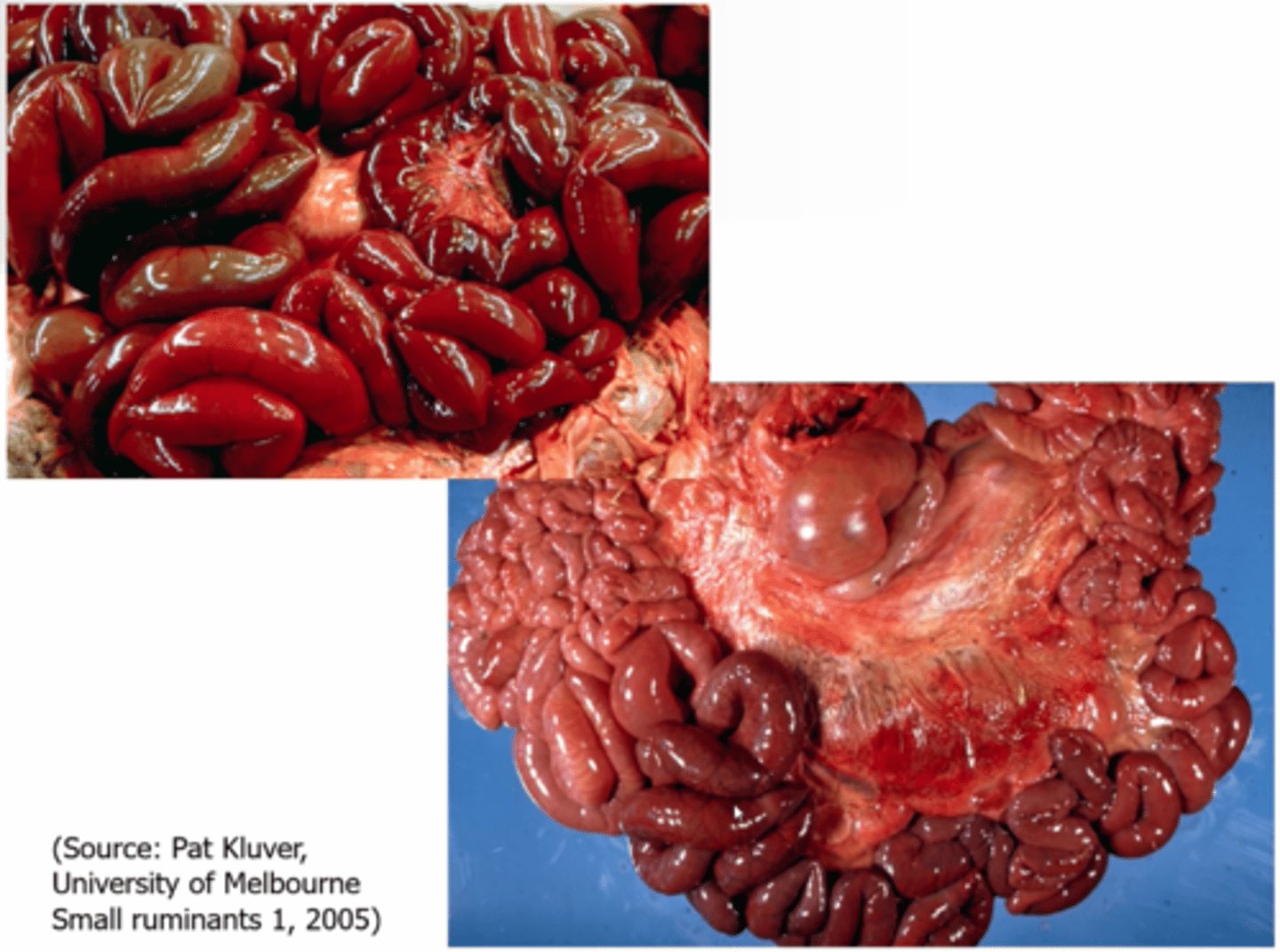
Describe Post Mortem Findings of Enterotoxemia (Pulpy Kidney)
- Carcass decomposes rapidly
- froth at the mouth
- large, single lambs
- Haemorrhages
- Pulpy kidneys
- Glycosuria
Describe Enterotoxemia (Pulpy Kidney) in terms of:
1. Diagnosis
2. Treatment
3. Prevention
1. History (age, vaccination, diet change), post mortem, brain histo, epsilon toxin demonstration
2. Not often successful, Remove highly digestible diet, increase roughage
3. Routine Vaccination (e.g 5-in-1), Primary dose at lamb marking → secondary dose 4-6 weeks after → then yearly booster. pre-lambing to pass passive immunity.
Describes Black Disease in terms of:
1. Definition of Disease
2. Pathophysiology
3. Clinical Signs
4. Post Mortem
5. Diagnosis
6. Treatment
7. Control
1. Fatal, peracute toxaemia caused by proliferation of Clostridium novyi Type B in liver
2. C. novyi Type B present in soil + liver of healthy sheep → If liver damaged and blood supply restricted → spores germinate + proliferate → produce lethal toxins → hepatic necrosis + systemic toxaemia
3. Sudden death, no signs of struggle, sheep >2 years old,
4. Rapid Decomposition, congestion of Subcut blood vessels → dark skin, dark liver with areas of necrosis, Evidence of fluke migration
5. History (Vaccination, fluke prevalence), clinical signs, post mortem, Identification of C. novyi Type B, Toxins
6. None
7. Vaccination (e.g 5-in-1), Control of liver fluke
Describe Malignant Oedema/Big Head in terms of:
1. Definition of Disease
2. Causes of Infection
3. Clinical Signs
4. Diagnosis
5. Treatment
6. Prevention
1. Acute, rapidly fatal disease following contamination of wounds with Clostridial spores (Most common C. Septicum) from faecal material. Proliferate under anaerobic conditions and release exotoxins
2. Infection of Wounds (Crow picks, dehorning, ram fighting, shearing,
3. Dead 1-4 days after wounding, Oedematous local swelling + fluid accumulation, generalised toxaemia, little cremitus
4. History, CS (Swelled head), Post mortem
5. Often to late, euthanize
6. Vaccination, Hygiene at marking, ram management to reduce fighting

Describe Blackleg + Post-Parturient Gangrene in terms of
1. Definition of Disease
2. Cause of Disease in Sheep
3. Clinical Signs
4. Post parturient gangrene
5. Post Mortem
6. Diagnosis
7. Treatment
8. Prevention
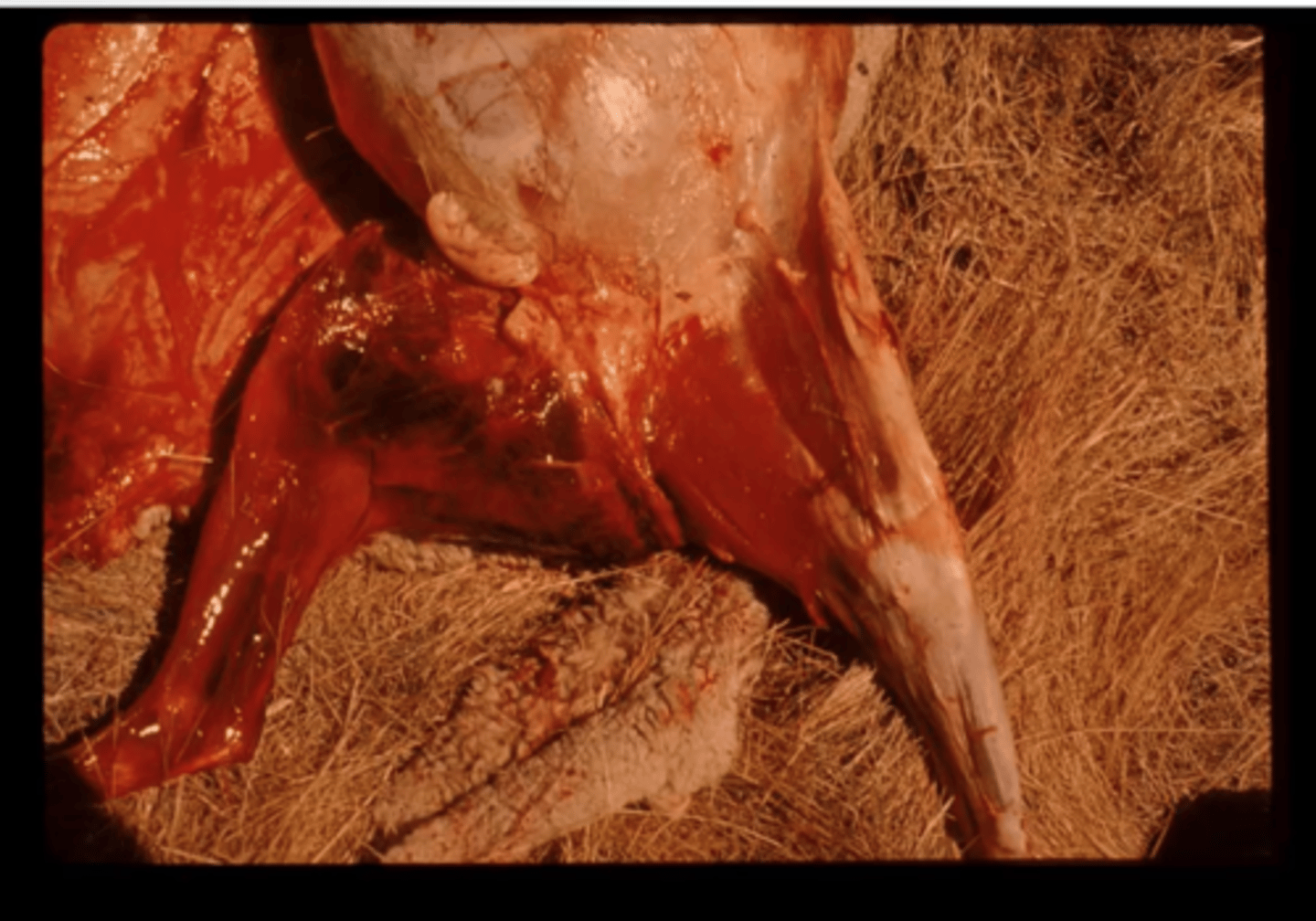
1. Mostly in cattle, necrotising myelitis of skeletal muscles followed by toxaemia and death → caused by C. chauvoei spores under anaerobic conditions
2. Wounds contamination (tail docking, castration, bites, shearing)
3. Develops rapidly, Local signs depend on site of infection.
4. Swelling of vaginal mucosa + perineum, fetal discharge
5. Rapid decomposition, characteristic blackleg lesion (Dark black - crepitant- areas of myonecrosis)
6. History, clinical signs, post mortem
7. Usually to late
8. Vaccination (5-in-1), good hygiene at marking, shearing
Describe Anthrax in terms of:
1. Causative Bacteria
2. Zoonosis
3. Pathophysiology
4. Clinical Signs
5. Post-Mortem Considerations
6. Diagnosis
7. Treatment
8. Control + Prevention
1. Bacillus anthracis
2. Highly contagious Resp + alimentary form cause high mortalities, cutaneous form through abraded skin most common but mild
3. Survive in soil for years. Infection occurs through ingestion or wounds → enter the body, germinate and multiply → toxins prevent blood from clotting and cause extensive damage to blood vessels → Sudden death
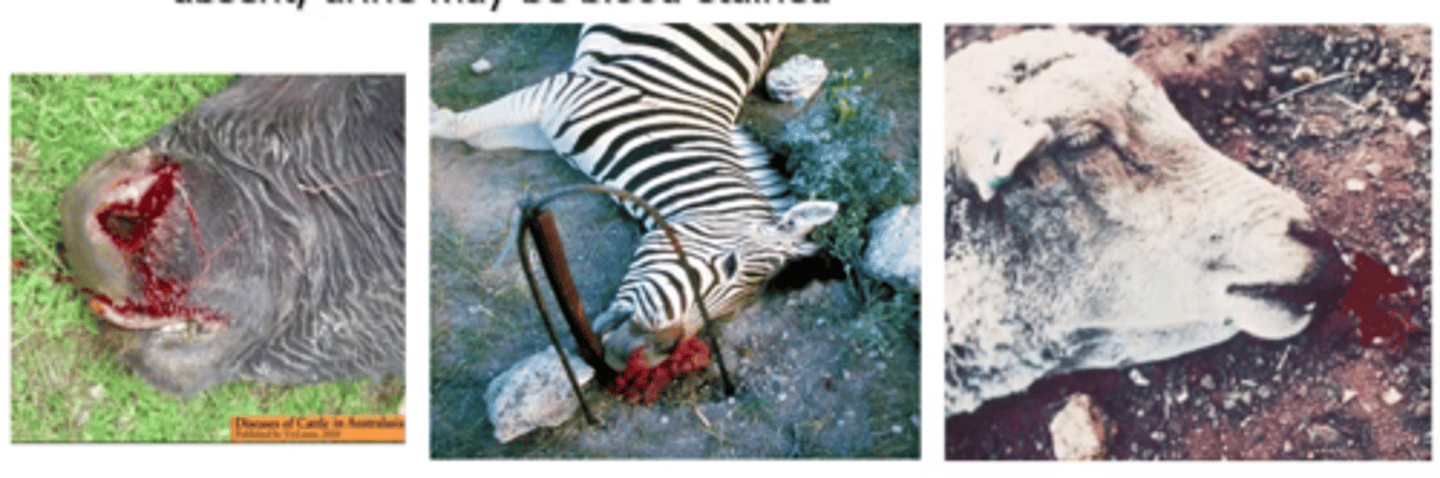
4. 4-7 day incubation, Rapid decomposition, bloody discharge from orifices, Rigor mortis absent
5. DON'T PM
6. ICT rapid field test, air dried blood smear, culture
7. None
8. Vaccination (Lasts 6-10 months)
Describe Systemic Salmonellosis in terms of:
1. Causative Bacteria
2. Pathophysiology
3. Causes of Outbreaks
4. Clinical Signs
5. Post-Mortem
6. Treatment
7. Dealing With Outbreaks
1. Salmonella Enterica
2. Produced enterotoxins, cause severe acute enteritis
3. Outbreaks associated with stress (overcrowding, transport ect.)
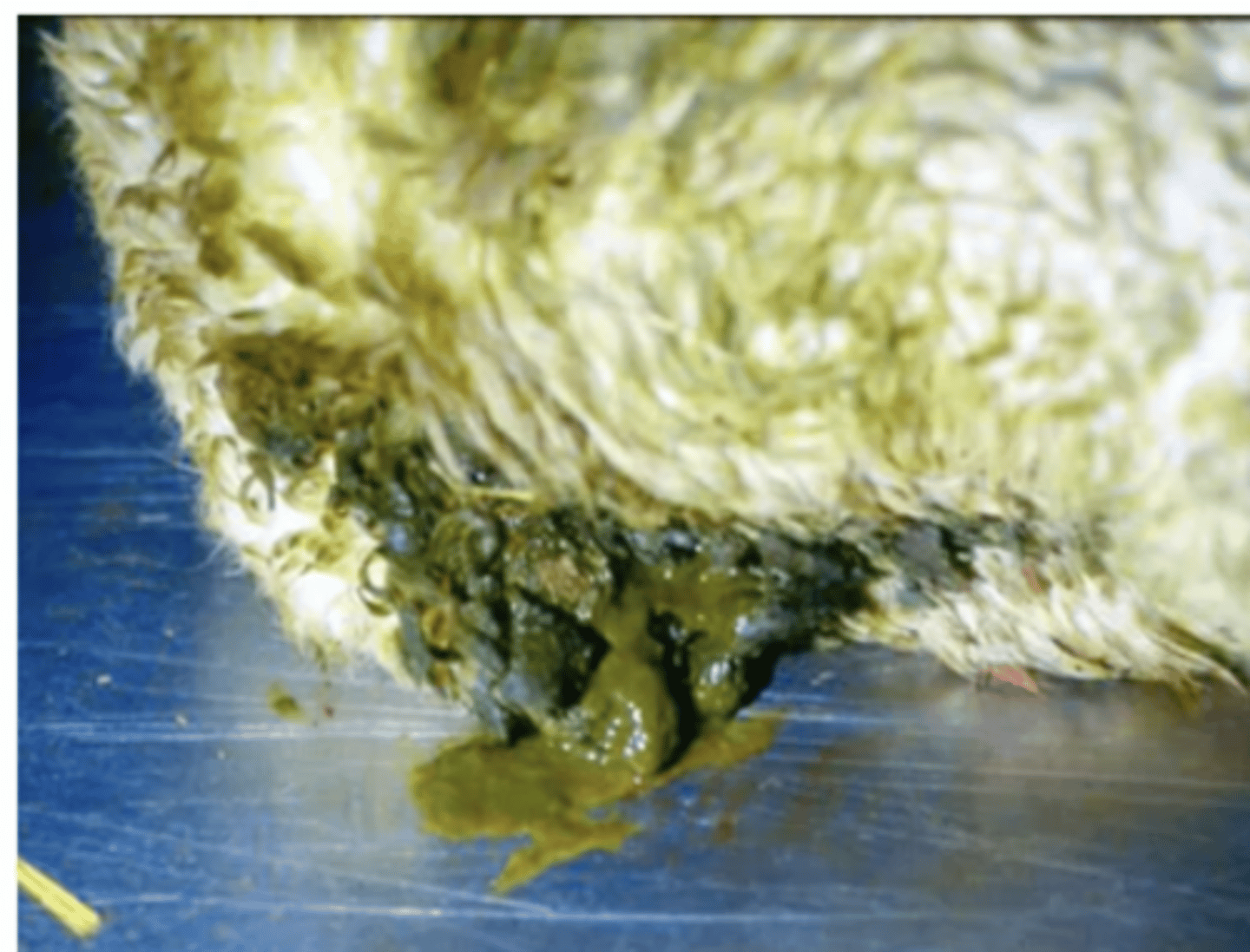
4. Found dead (Often near water source), Acute ill, fever, dull, profuse diarrhoea (with mucous + blood flecks
5. HAemorrhagic enteritis, Swollen liver/gall bladder
6. Oxytetracycline, Trimethoprim-sulfonamide, Neomycin
7. Spred flock out, provide good water, isolate sick animals, avoid stress
Describe Phalaris Sudden Death in terms of:
1. Phalaris Definition
2. 2 Types of Sudden Death
3. PEM Form Pathophysiology
4. PEM Form Clinical signs
5. Cardiac Form
6. Diagnosis
7. Prevention
1. Improved Pasture Species
2. PEM + Cardiac Form →Staggers common presentation
3. Sudden death. In rotational grazing/unadapted animals → Plant is high in nitrogen and Hampered ability to metabolise nitrogen → resulting in high ammonia levels → brain damage
4. Occurs within hours of introducing sheep to lush phalaris pasture. Rapid onset of Neuro SIgns (Star gaze, Tremours, coma)
5. Uncommon, Affected animals drop behind and collapse when mustered, die from cardiac arrest
6. History of Phalaris feed
7. Do not put hungry stock on fresh phalaris, test paddock with small mob, once deaths have occured leave sheep on pasture

Describe Nitrate/Nitrite Poisoning in terms of:
1. Sources of High Nitrate Levels in Pasture
2. Pathophysiology
3. Clinical Signs
4. Diagnosis
5. Treatment
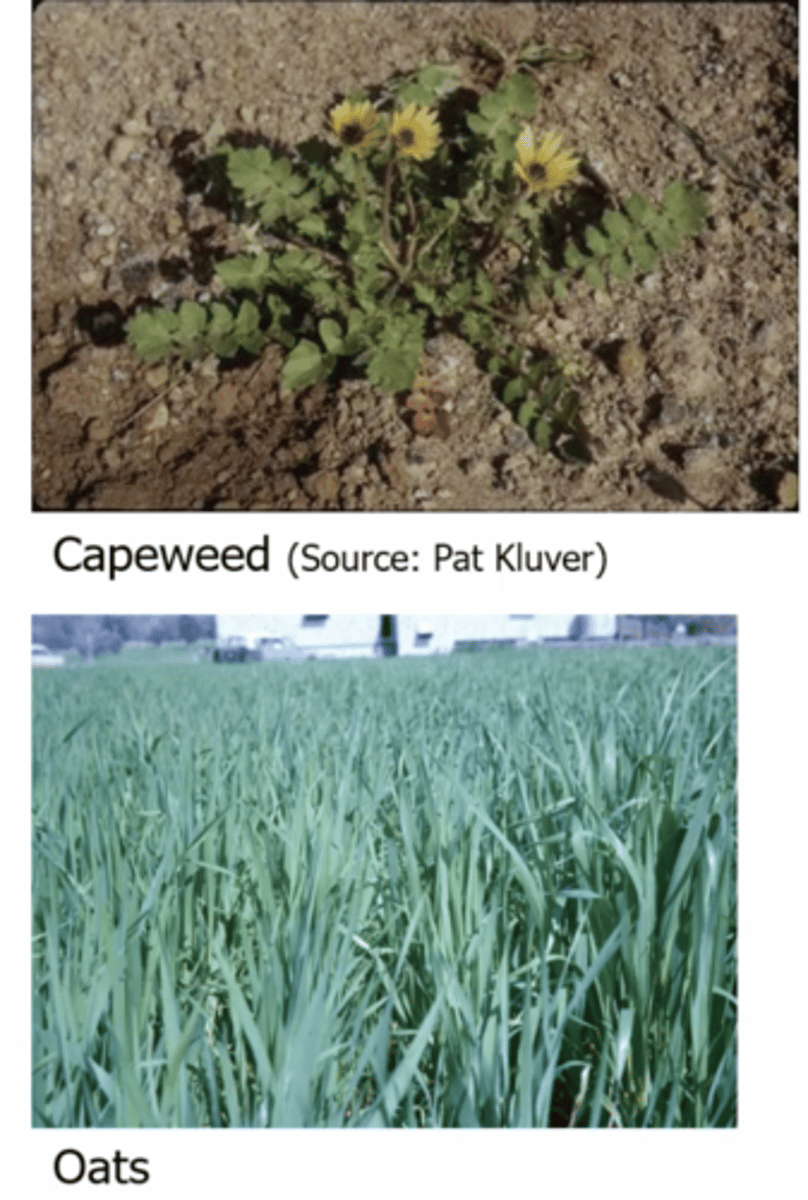
1. Certain toxic Plants after drought, fertilizers, overcast mornings
2. Nitrates → Oxidises Haemoglobin → Methahaemoglobin → ↓O2 carrying capacity
3. Dyspnoea, tachycardia, cyanotic, sudden death. Chocolate brown discolouration of blood
4. Nitrate/Nitrite conc. in serum/urine/aqueous humour
5. IV Methylene Blue. Remove animals from pasture (Feed CHO rich diet)
Describe Cyanogenic Glycoside Poisoning in terms of:
1. Sources of High Glycosides
2. Clinical signs
3. Treatment
4. Prevention
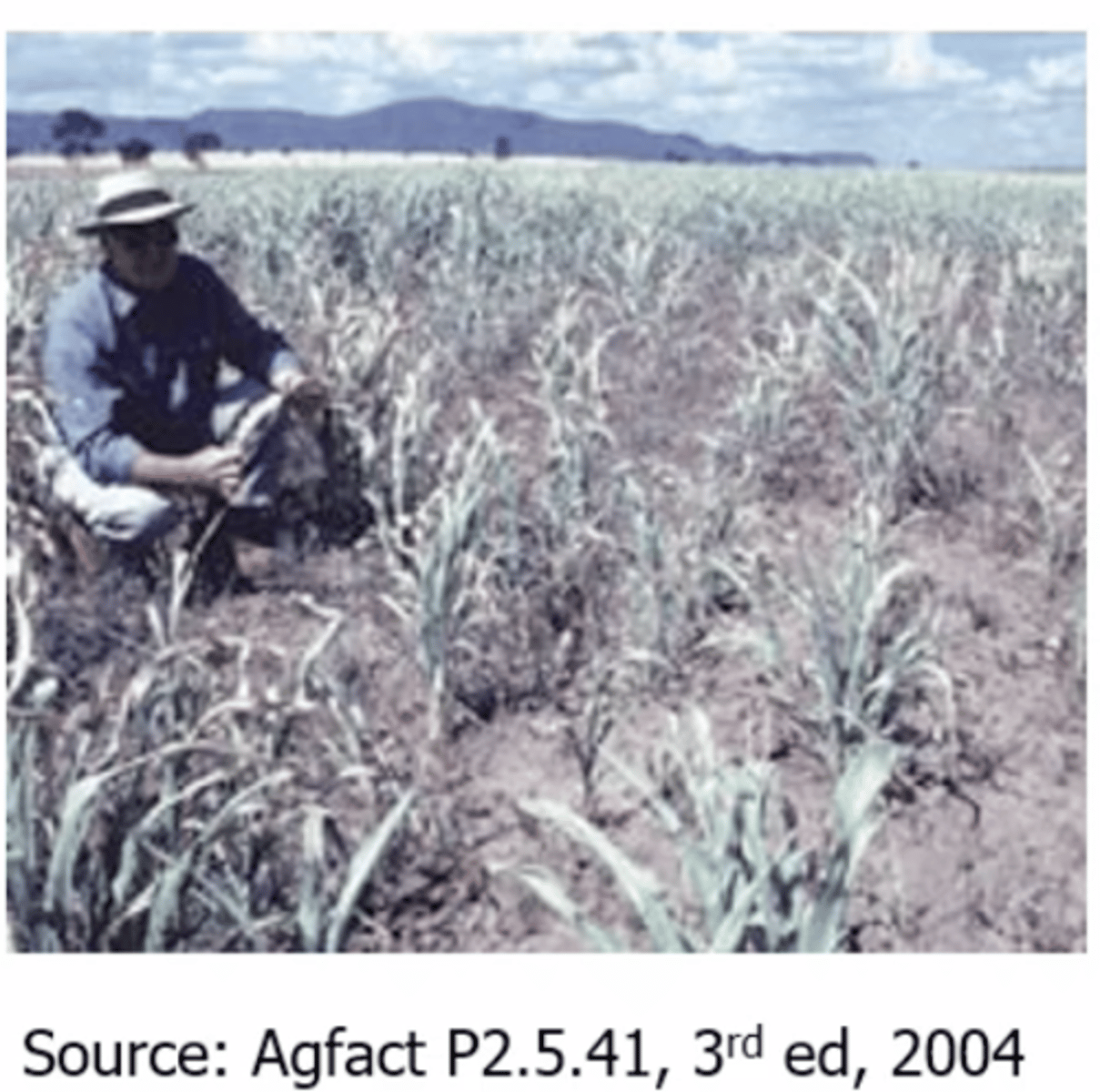
1. Cyanogenic plants (e.g sourgen) eaten by hungry stock
2. Peracute Deaths, Blood is bright red
3. Sodium Thiosulphate
4. Avoid Feeding Dangerous Crops
Describe Blue-Green Algae Toxicity in terms of:
1. Prevalence/Occurrence
2. Pathophysiology
3. Clinical Signs
4. Diagnosis
5. Treatment/PRevention
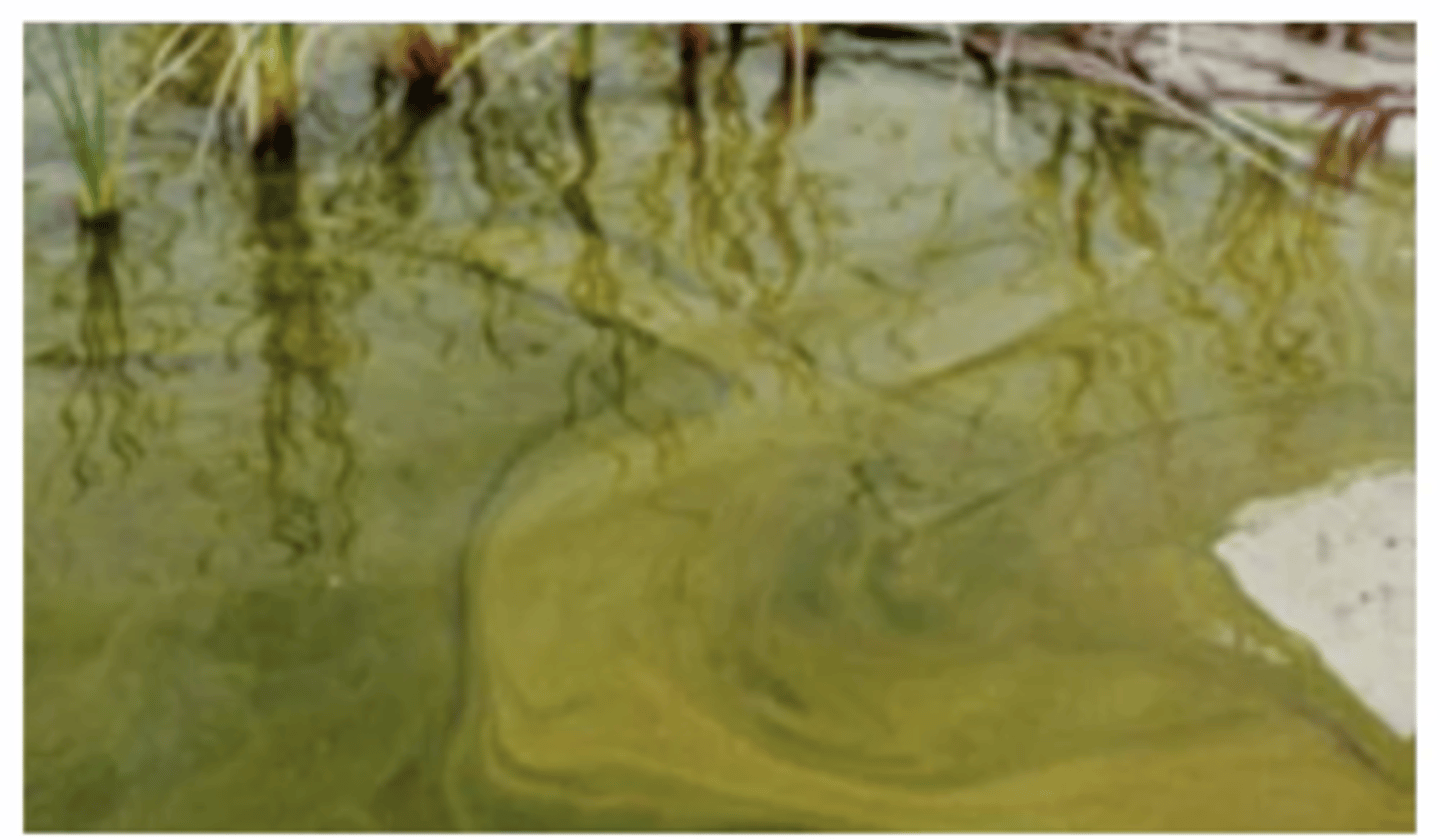
1. Occurs in water sources in Summer in energy rich water supplies (faeces contaminated). Usually avoided by sheep
2. Blue-Green algae can produce neurotoxins + hepatotoxins
3. High mortalities, Sheep develop tremors → go down with convulsions. Most die but survivors develop liver damage (Jaundice)
4. History (Access to contaminated water)
5. Remove sheep from toxic water source, Recognise toxic water sources, DO NOT treat with algae treamtments, cause destruction of bacteria and release of toxins
Describe Redgut in terms of:
1. Definition
2. Clinical Signs
3. Post-Mortem
4. DDx
5. Prevention
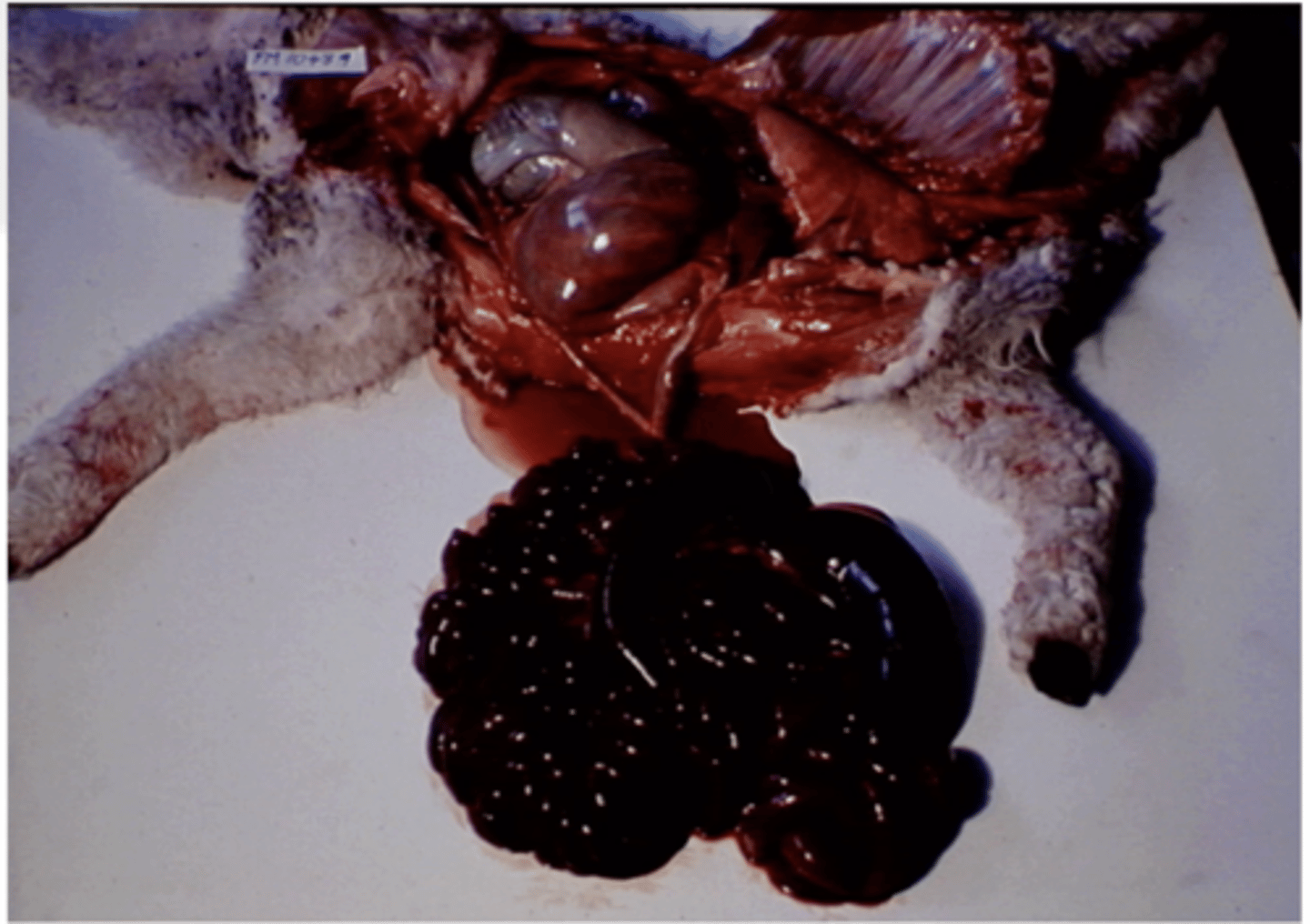
1. Fatal condition of mainly weaner sheep grazing very lush legume dominated pastures associated with torsion of the intestinal mass. 25% Mortality rates
2. Sudden Death
3. Intestinal mass spins clockwise, Intestines distended and reddened due to congestion + haemorrhage
4. Enterotoxaemia
5. Risk is lower in mixed pastures, controlled grazing
Describe the Following Causes of Sudden Death in Sheep:
1. Lightning Strike
2. Exposure/Hypothermia after shearing
3. Heat Stroke
4. Anaphylaxis
1. History of storms
2. low temp, rain, and strong winds after shearing
3. Very hot weather and restricted water/shade, Risk after tranquilizing
4. After Vaccine Injection