Here are a few strong title options depending on tone: p53, pRb, and Oncogenes: Key Mechanisms of Cell Cycle Control and Cancer Development
 Call Kai
 Learn
Learn Practice Test
 Spaced Repetition
 Match
Match Flashcards
 Knowt Play
1/15

There's no tags or description
Looks like no tags are added yet.
Name | Mastery | Learn | Test | Matching | Spaced | Call with Kai |
|---|
No analytics yet
Send a link to your students to track their progress
16 Terms
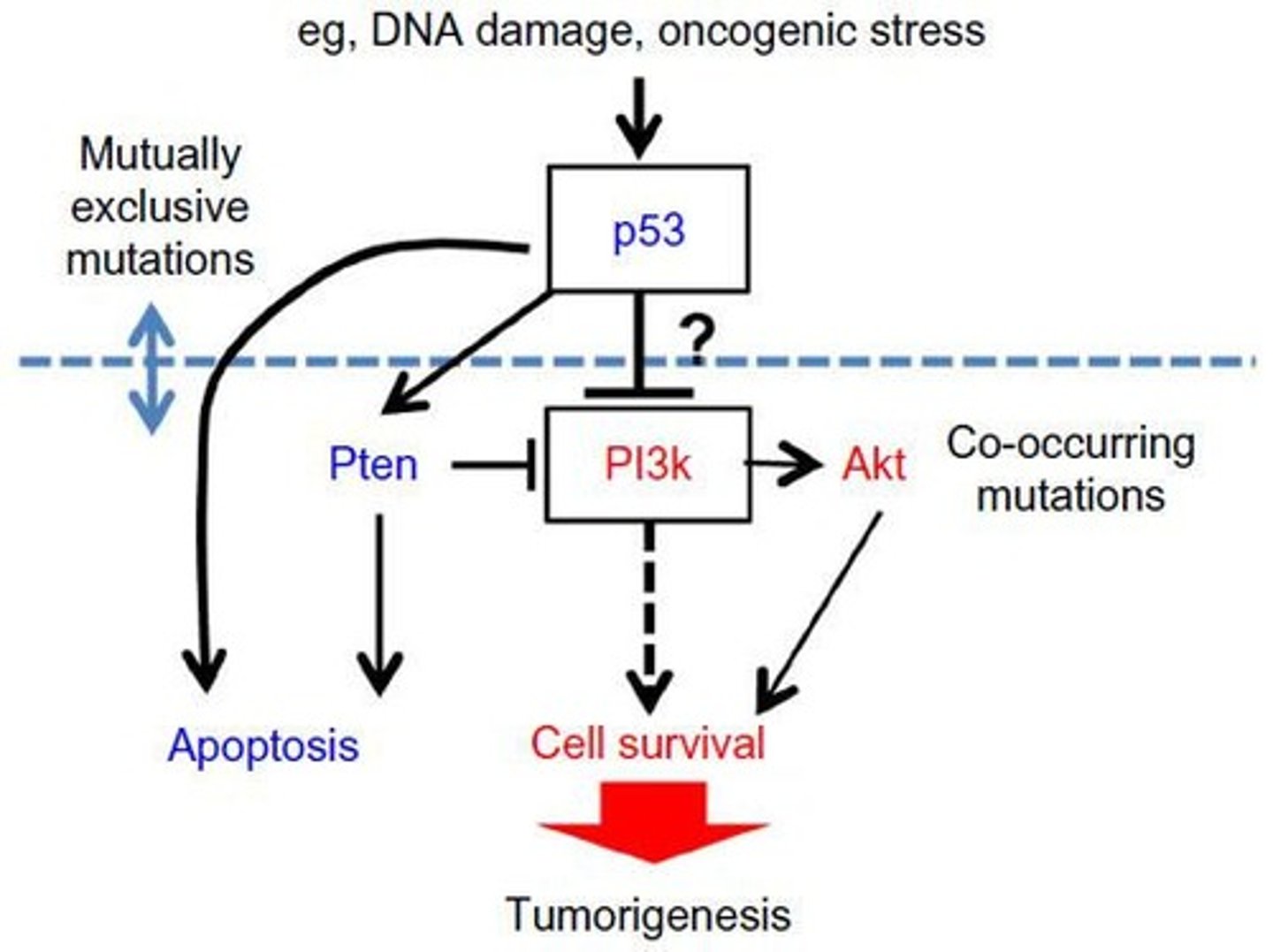
What is the primary role of p53?
p53 is the 'Guardian of the Genome'. It detects DNA damage and decides whether the cell should arrest, repair, or undergo apoptosis.
How does p53 detect DNA damage?
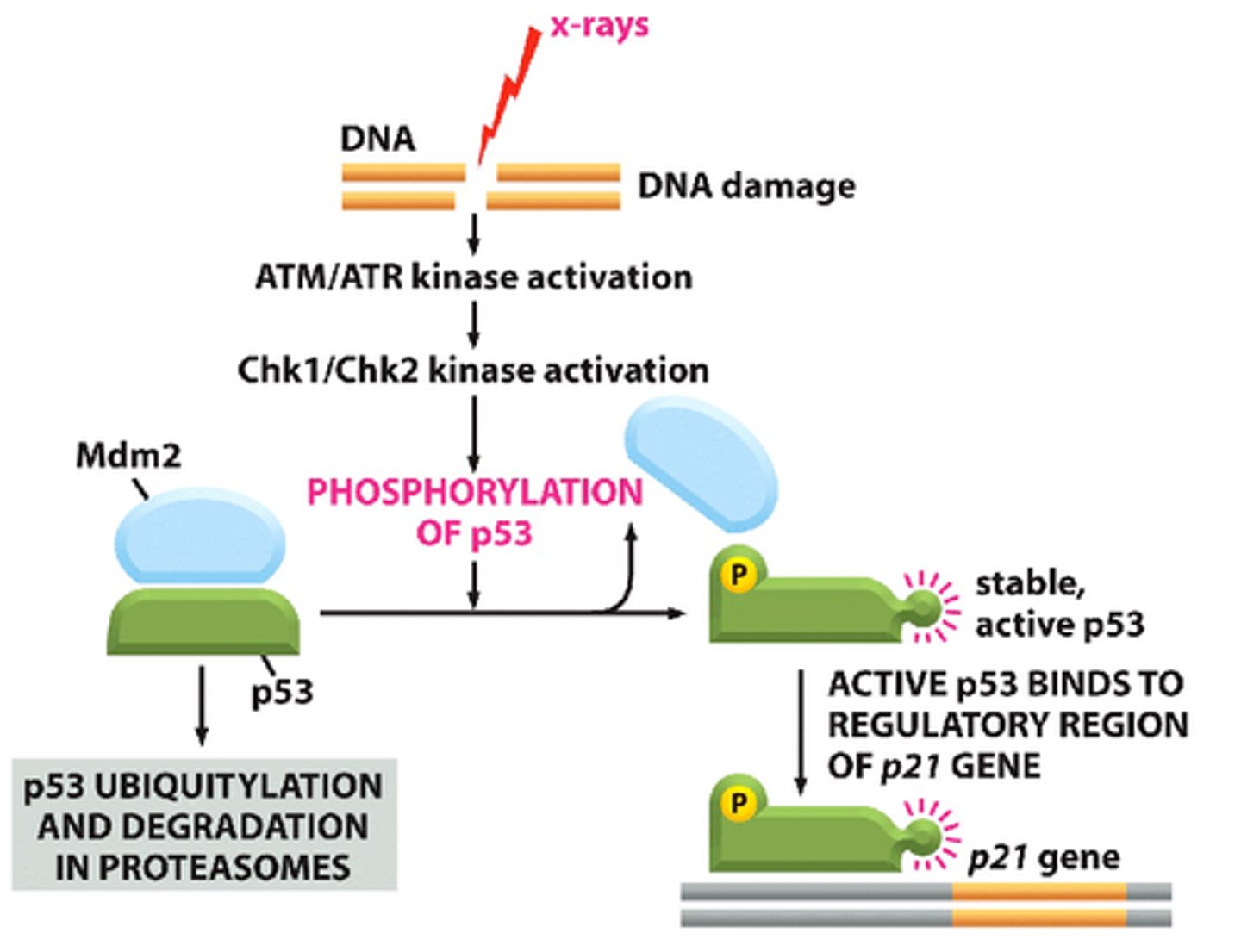
DNA damage activates ATM/ATR and Chk1/Chk2 kinases, which phosphorylate p53, preventing MDM2 binding and stabilizing active p53.
How does p53 control cell fate?
Activated p53 induces p21 for cell cycle arrest, DNA repair genes, and Bax/PUMA for apoptosis if damage is irreparable.
How is p53 usually regulated in healthy cells?
p53 induces MDM2, which binds p53, ubiquitinates it, and targets it for proteasomal degradation, creating a negative feedback loop.
How can the p53 pathway be lost in cancer?
Loss can occur due to TP53 mutation/deletion, MDM2 over-expression, ATM/Chk defects, or HPV E6-mediated degradation of p53.
What is the role of pRb?
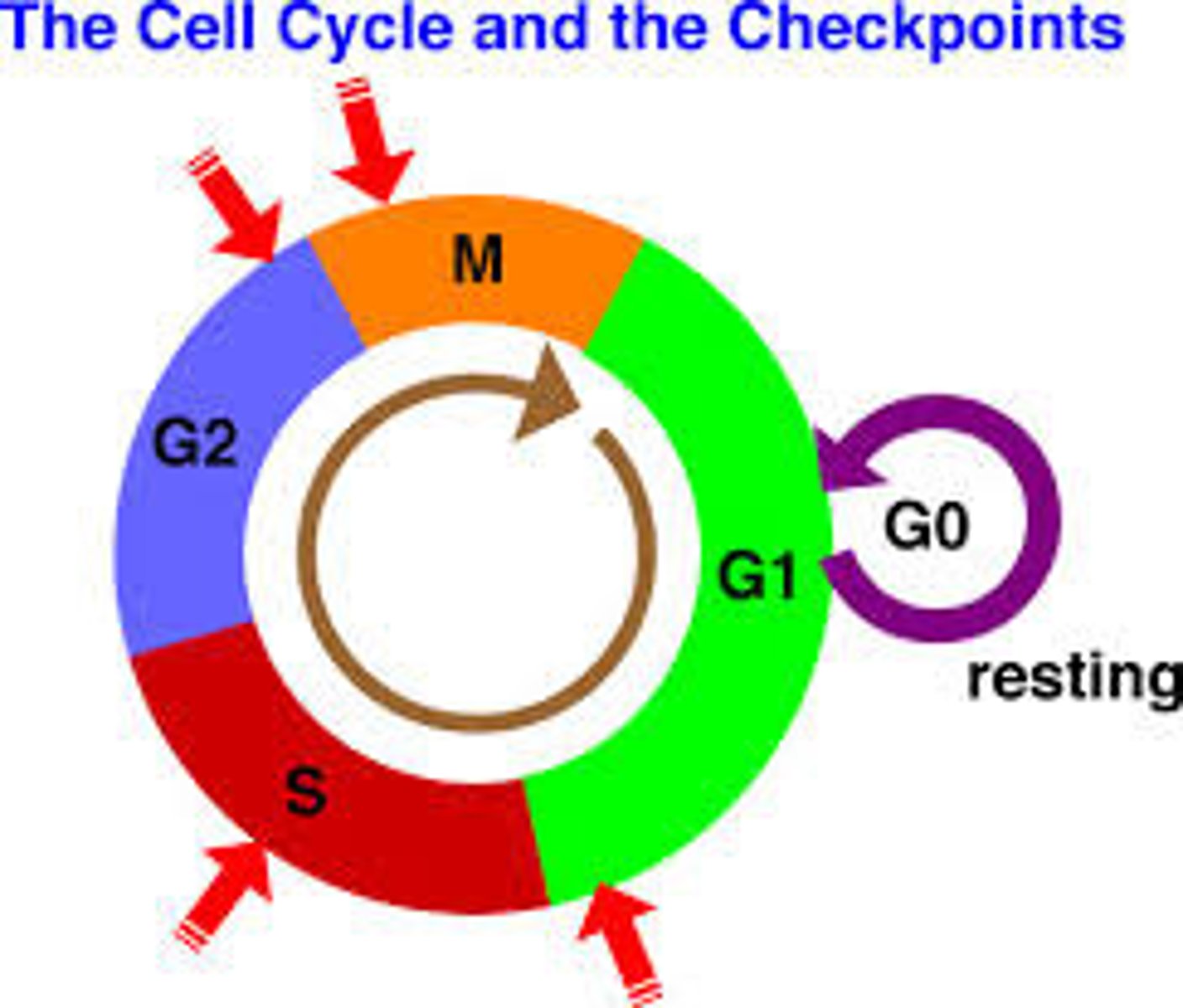
pRb controls passage through the Restriction Point (R-point) at the G1 to S transition of the cell cycle.
How does pRb control the R-point?
Hypophosphorylated pRb binds E2F, blocking S-phase genes; phosphorylated pRb releases E2F, allowing DNA replication to begin.
How is pRb inactivated in cancer?
Inactivation can occur due to RB1 mutation/deletion, Cyclin D/CDK4 over-activity, or HPV E7 binding and inactivation of pRb.
Why are some tumour suppressor mutations dominantly acting?
Proteins like p53 function as tetramers, so a single mutant subunit can inactivate the whole complex, leading to a dominant-negative effect.
Why does HPV target both p53 and pRb?
HPV inactivation of p53 and pRb removes cell-cycle control and induces apoptosis, preventing division of damaged cells.
What do the HPV oncoproteins do?
E6 degrades p53, E7 inactivates pRb, and E5 increases growth signaling via EGFR, leading to persistent E6/E7 expression.
What is an oncogene?
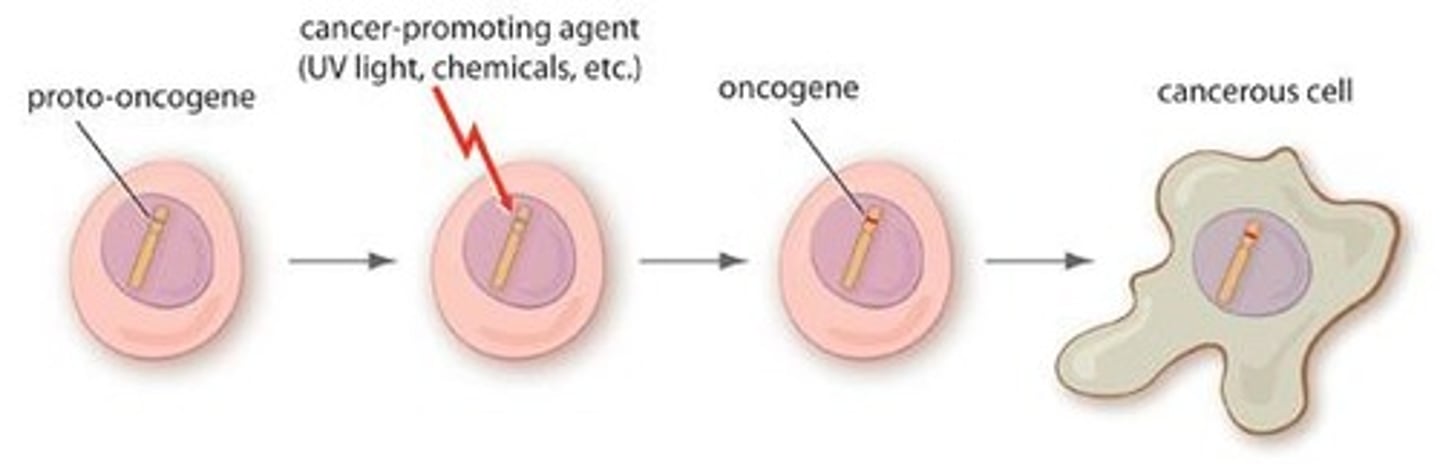
An oncogene is a gain-of-function version of a proto-oncogene that drives constitutive proliferative signaling.
What are the main mechanisms of oncogene activation?
Activation can occur via point mutation (e.g., Ras), gene amplification (e.g., HER2), translocation with active promoter (e.g., MYC-IgH), or fusion genes (e.g., BCR-ABL).
Why is BCR-ABL constitutively active?
The fusion protein lacks standard regulatory control, leaving the Abl tyrosine kinase permanently activated, driving the progression of CML.
How does HPV E5 promote oncogenesis?
HPV E5 prevents EGFR degradation, causing its recycling and accumulation at the cell surface, leading to persistent growth signaling.
Compare HPV-driven cancer with sporadic colon cancer.
HPV cancer involves viral proteins inactivating p53/pRb (E6/E7), while colon cancer involves mutations in APC (Wnt), KRAS, and TP53.