AP GOPO - Waples Textbook's Unit 2 (Chapters 4- 7)
 Studied by 0 people
 Call Kai
 Learn
Learn Practice Test
 Spaced Repetition
 Match
Match Flashcards
 Knowt Play
1/108

There's no tags or description
Looks like no tags are added yet.
Name | Mastery | Learn | Test | Matching | Spaced |
|---|
No study sessions yet.
109 Terms
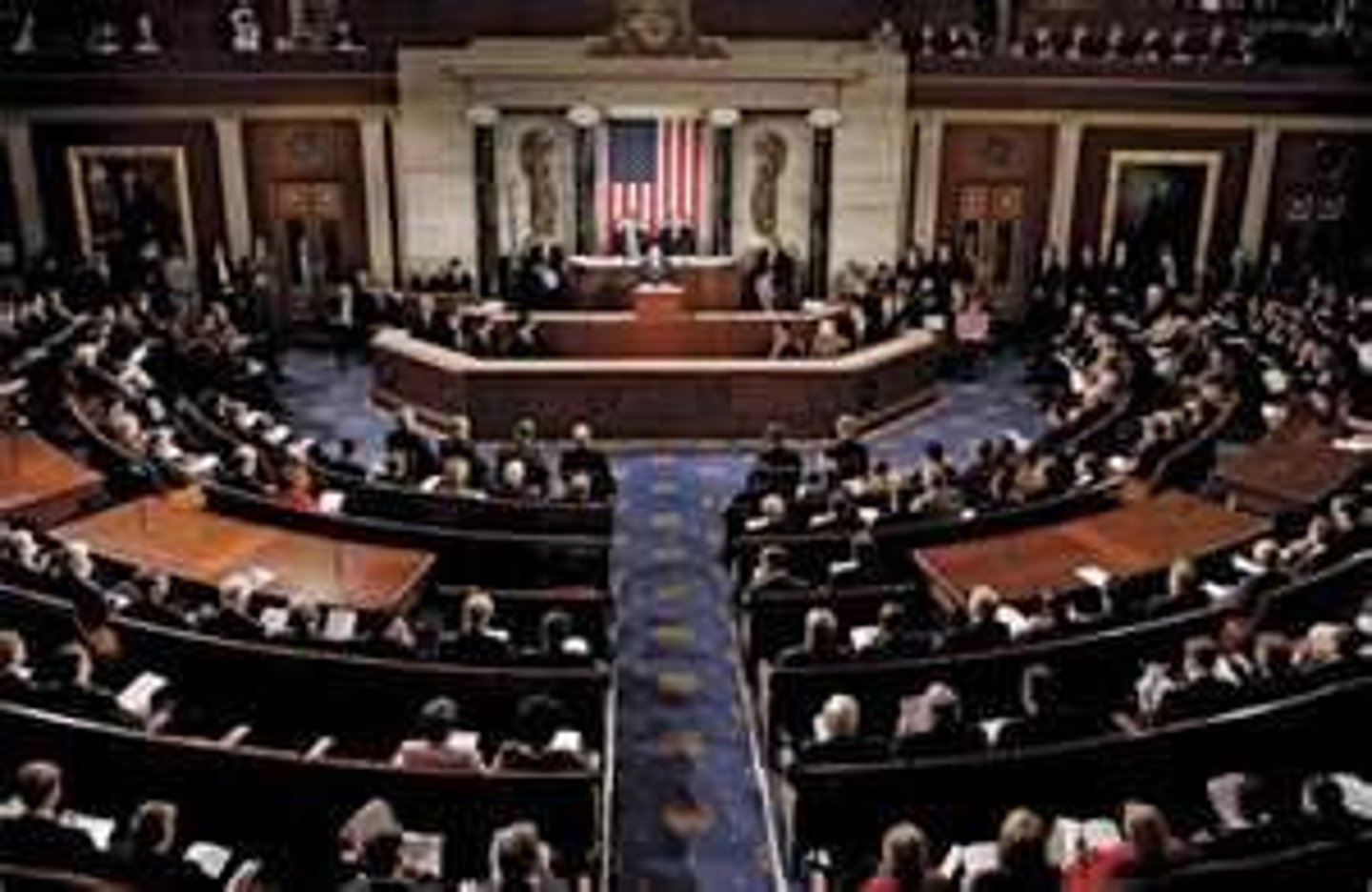
Legislative Branch
The branch of government that makes laws; the U.S. Congress.
Constituencies
The groups of voters represented by elected officials.
Chambers/Bicameral
A legislative body composed of two chambers, typically the House of Representatives and the Senate.
House of Representatives’ Powers
The lower house of Congress, primarily creates and passes federal laws with the Senate, controls federal spending by originating revenue bills, investigates government activities, and holds the power to impeach federal officials, representing their states' populations in the legislative branch of the U.S. government. They also have unique powers, like electing the President if the Electoral College is tied.
House of Representatives Members
Made up of 435 voting members, representing districts within the 50 states based on population, plus 6 non-voting members from D.C. and U.S. territories, totaling 441 members, all elected to two-year terms.
The Senate’s Powers
The upper house of Congress, shares legislative power with the House of Representatives, passing federal laws, but also holds unique powers like confirming presidential nominations (judges, cabinet, ambassadors) and ratifying treaties, acting as a check on the executive branch, and holding impeachment trials for officials.
The Senate Members
Provides equal representation for each state (two senators each) and serves to balance the population-based representation in the House. Made up of 100 members in total.
Enumerated/Expressed Powers
Powers specifically granted to Congress by the Constitution.
Implied Powers
Powers not explicitly stated in the Constitution but inferred from the enumerated powers.
Speaker of the House
The presiding officer of the House of Representatives, responsible for overseeing House proceedings.
President of the Senate
The Vice President of the United States, who presides over Senate sessions.
Majority Leader
The head of the majority party in either the House or Senate, responsible for setting the legislative agenda.
Minority Leader
The head of the minority party in either the House or Senate, responsible for representing minority party interests.
Majority Whip
An official in a political party whose primary purpose is to ensure party discipline in votes.
Minority Whip
An official in the minority party who assists the minority leader in managing party strategy.
Trustee
A member of Congress who acts according to their own judgment and conscience, rather than strictly following constituents' wishes.
Delegate
A member of Congress who acts according to the wishes of their constituents.
Bill
A proposed piece of legislation that must be approved by both houses of Congress and signed by the president to become law.
Filibuster
A tactic used in the Senate to delay or block legislative action by extending debate.
Cloture
A procedure used in the Senate to end a filibuster and bring a bill to a vote.
Discretionary Spending
Government spending that is not mandated by existing law and can be adjusted through the budget process.
Mandatory Spending
Government spending that is required by existing law, such as entitlement programs.
Entitlement Programs
Government programs that provide benefits to individuals who meet certain eligibility requirements, such as Social Security.
Budget Deficit
The financial situation that occurs when government expenditures exceed revenues.
Discharge Petition
A means by which members of the House can force a bill out of committee and onto the floor for consideration.
Gerrymandering
The practice of drawing district boundaries in a way that gives one political party an advantage over others.
Redistricting
The process of redrawing electoral district boundaries, typically after a census.
Public Policy
The principles and actions adopted or proposed by a government to address issues affecting the public.
Committees
Subgroups within Congress that handle specific areas of legislation and oversight.
Rules Committee
A committee in the House of Representatives that determines the rules for debate on a bill.
Standing Committee
A permanent committee in Congress that meets regularly to consider legislation.
Joint Committee
A committee composed of members from both the House and Senate, typically for specific purposes.
Committee of the Whole
A device used in the House of Representatives to allow all members to consider legislation as a single group.
Select Committee
A temporary committee established for a specific purpose, often to investigate a particular issue.
Subcommittee
A smaller division of a committee that focuses on a specific area of legislation.
Coalitions
Temporary alliances formed between different groups or parties to achieve a common goal.
Executive Branch
The branch of government that carries out laws.
Veto
The constitutional right of the president to reject a bill passed by Congress.
Pocket Veto
A special type of veto that occurs when the president does not sign a bill into law within ten days while Congress is adjourned.
Executive Orders
Directives issued by the president to manage the operations of the federal government.
Signing Statements
Written comments issued by the president when signing a bill into law, often outlining their interpretation of the legislation.
Policy agenda
A set of issues, problems, or subjects that are viewed as important by policymakers and the public.
Formal powers
The powers explicitly granted to the president by the Constitution.
Informal powers
Powers not explicitly stated in the Constitution but are implied through the president's role.
Bargaining & Persuasion
Informal tool used by the president to persuade members of Congress to support his policy initiatives.
State of the Union Address
An annual address delivered by the president to Congress, outlining the nation's condition and the legislative agenda.
Foreign policy powers
The powers of the president to direct the country's foreign affairs and relations.
Bully pulpit
The president's use of their platform to advocate for policies and influence public opinion.
Executive agreements
International agreements made by the president without the need for Senate approval.
Confirmation process
The procedure by which the Senate approves presidential appointments to the executive and judicial branches.
22nd Amendment (1951)
An amendment to the U.S. Constitution that limits the president to two terms in office.
Judicial Branch
Branch of government that decides if laws are carried out and enforced fairly.
Classification of Judicial Branch
The "Least Dangerous" Branch
Federalist #78
An essay by Alexander Hamilton that discusses the role of the judiciary and the principle of judicial review.
Marbury v. Madison (1803)
A landmark Supreme Court case that established the principle of judicial review.
Judicial review
The power of the courts to assess whether a law is in compliance with the Constitution.
Precedent
A legal decision or form of case law that serves as an example for future cases.
Writ of Certiorari
A document issued by the Supreme Court to review a lower court's decision.
Per Curiam decision
A ruling issued by an appellate court that does not identify any specific judge as the author.
Litigants
Individuals or parties involved in a lawsuit.
Standing to sue
The legal right to bring a lawsuit in court.
Class action lawsuit
A lawsuit filed by one or more plaintiffs on behalf of a larger group.
Amicus Curiae briefs
Documents submitted by non-parties to a case, offering information or arguments for the court's consideration.
Stare decisis
The legal principle of determining points in litigation according to precedent.
Judicial activism
The philosophy that courts should interpret the Constitution and laws broadly to promote social change.
Judicial restraint
The philosophy that courts should limit their own power and defer to the decisions of the legislative and executive branches.
Majority opinion
The official statement of the court's decision, reflecting the views of the majority of justices.
Dissenting opinion
An opinion written by a justice who disagrees with the majority decision.
Concurring opinion
An opinion that agrees with the majority decision but for different reasons.
Civil law
The body of law dealing with private rights and obligations.
Criminal law
The body of law that relates to crime and the punishment of those who violate laws.
Common law
Law derived from judicial decisions instead of statutes.
Strict constructionism
An approach to constitutional interpretation that emphasizes a literal reading of the text.
Loose constructionism
An approach to constitutional interpretation that allows for broader readings of the text.
Jurisdiction
The official power to make legal decisions and judgments.
Original jurisdiction
The authority of a court to hear a case for the first time.
Appellate jurisdiction
The authority of a court to review and revise the decision of a lower court.
Concurrent jurisdiction
The authority of more than one court to hear the same case.
Solicitor general
The lawyer who represents the federal government before the Supreme Court.
Senatorial courtesy
The tradition of allowing senators to block nominations in their home state.
Docket
A list of cases scheduled to be heard by a court.
Original intent
The concept of interpreting the Constitution based on the intentions of its framers.
Bureaucracy
A system of managing government through departments run by appointed officials. Part of executive branch.
Departments
Major administrative units of the federal government responsible for specific areas of public policy.
Agencies
Organizations within the federal government responsible for specific functions and services.
Commissions
Bodies created by Congress or the president to oversee specific areas of public policy or regulation.
Government corporations
Government-owned entities that operate like private businesses, providing services and generating revenue.
Regulations
Rules or directives made and maintained by an authority to regulate conduct.
Compliance Monitoring challenges...
policy implementation.
Iron triangles
Stable, mutually beneficial relationships between interest groups, congressional committees, and bureaucratic agencies.
Law vs Policy
The distinction between legal statutes and the broader goals and strategies for addressing issues.
Examples of Government Corporations
AMTRAK & U.S Postal Service
Issue Networks
Complex systems of relationships among groups that influence policy, including elected leaders, interest groups, specialists, consultants, and research institutes
Political patronage
The practice of giving government jobs and appointments to supporters and friends.
Spoils System
The practice of a successful political party giving public office to its supporters.
Political Machine
A party organization that recruits voter loyalty with tangible incentives and is characterized by a high degree of control over member activity.
Civil service system
A system that ensures government jobs are awarded based on merit and qualifications.
Merit system
A system of hiring and promoting based on individual ability or achievement.
An Independent Executive Agency Example
NASA
National Security Council (NSC)
An agency in the Executive Office of the President that advises the president on national security.