Characteristics of the atmosphere and atmospheric heating
 Call Kai
 Learn
Learn Practice Test
 Spaced Repetition
 Match
Match Flashcards
 Knowt Play
1/29

There's no tags or description
Looks like no tags are added yet.
Name | Mastery | Learn | Test | Matching | Spaced | Call with Kai | Chat |
|---|
No analytics yet
Send a link to your students to track their progress
30 Terms
atmosphere
A mixture of gases, solids, and liquids that surrounds a planet or moon.

troposphere
Bottom layer in the atmosphere - where we live, breathe . It is also where all the weather occurs; densest layer

Stratosphere
This layer has thin air with little moisture, contains the ozone layer

Mesophere
coldest layer of atmosphere, between stratosphere and thermosphere in which tempurature decreases as altitude increases

Thermosphere
one of the hottest layers of the atmosphere, above mesosphere

auroras
bands of shimmering lights caused by electrically charged particles (ions) in the ionosphere

ions
electrically charged particles
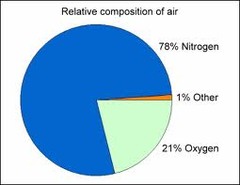
What gases are in the Earth's atmosphere
Nitrogen 78%
Oxygen 21%
Other 1%
Why are some layers in the atmosphere hotter and some are colder?
Some layers have gases that absorb solar energy from the sun and that causes them to heat up.
Layers of the atmosphere in order from bottom up
Troposphere, Stratosphere, Mesophere, Thermosphere, Exosphere

Ozone layer
Layer within the stratosphere with a high concentration of ozone; absorbs most of the Sun's harmful ultraviolet radiation

Ionosphere
Located in the Thermosphere

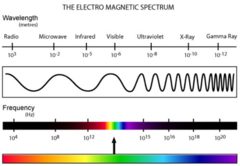
Radiation
energy transferred as electromagnetic waves
Thermal conduction
energy transferred as heat through a material because of direct contact (touching)

convection
thermal energy transferred by circulation of a liquid or gas due to differences in density or temperature

Greenhouse effect
the process by which gases in the atmosphere absorb thermal energy and radiate it back to Earth

global warming
Gradual warming of the earth and its atmosphere that may be caused in part by pollution and an increase in the greenhouse effect.

What would happen if Earth had no atmosphere?
The days would be hot and the nights would be cold.
Does all energy from the sun get absorbed by Earth's surfaces?
No, some energy is reflected back out into space.
When molecules heat up, what happens to their speed and spacing?
They spread apart and move faster.
Wind is formed when
air flows from areas of high pressure towards areas of low pressure
Wind is formed because of differences in
air pressure, density, or temperature. This causes convection.
Winds are named for
the direction they come from
Lakeville is in this global wind belt
Westerlies, 30-60 N latitude
Just north and south of the equator, these wind belts are found
NE and SE Trade Winds
Wind (and other fluids) can't travel in a straight line due to
the rotation of the Earth
The Effect that explains why winds (and other fluids) can't travel in a straight line
Coriolis
Local breezes are caused by
local geographic features
This is a land breeze.
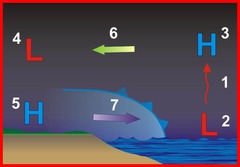
This is a sea breeze.
