Integumentary System Vocabulary
 Call Kai
 Learn
Learn Practice Test
 Spaced Repetition
 Match
Match Flashcards
 Knowt Play
1/47

Earn XP
Description and Tags
Vocabulary flashcards covering skin layers, cellular components, accessory structures, sensory receptors, thermal regulation, and common skin disorders from Chapter 6: Integumentary System.
Name | Mastery | Learn | Test | Matching | Spaced | Call with Kai | Chat |
|---|
No analytics yet
Send a link to your students to track their progress
48 Terms
Organ
A body structure composed of two or more different tissue types that perform specific functions.

Epidermis
The outer layer of skin composed of stratified squamous epithelium that lacks blood vessels.

Dermis
The inner layer of skin composed of connective tissue, collagen, and elastic fibers, containing blood vessels, nerve fibers, sensory fibers, hair follicles, sebaceous glands, and sweat glands.

Hypodermis
The subcutaneous layer beneath the dermis composed of loose connective tissue and insulating adipose tissue that binds skin to underlying organs.
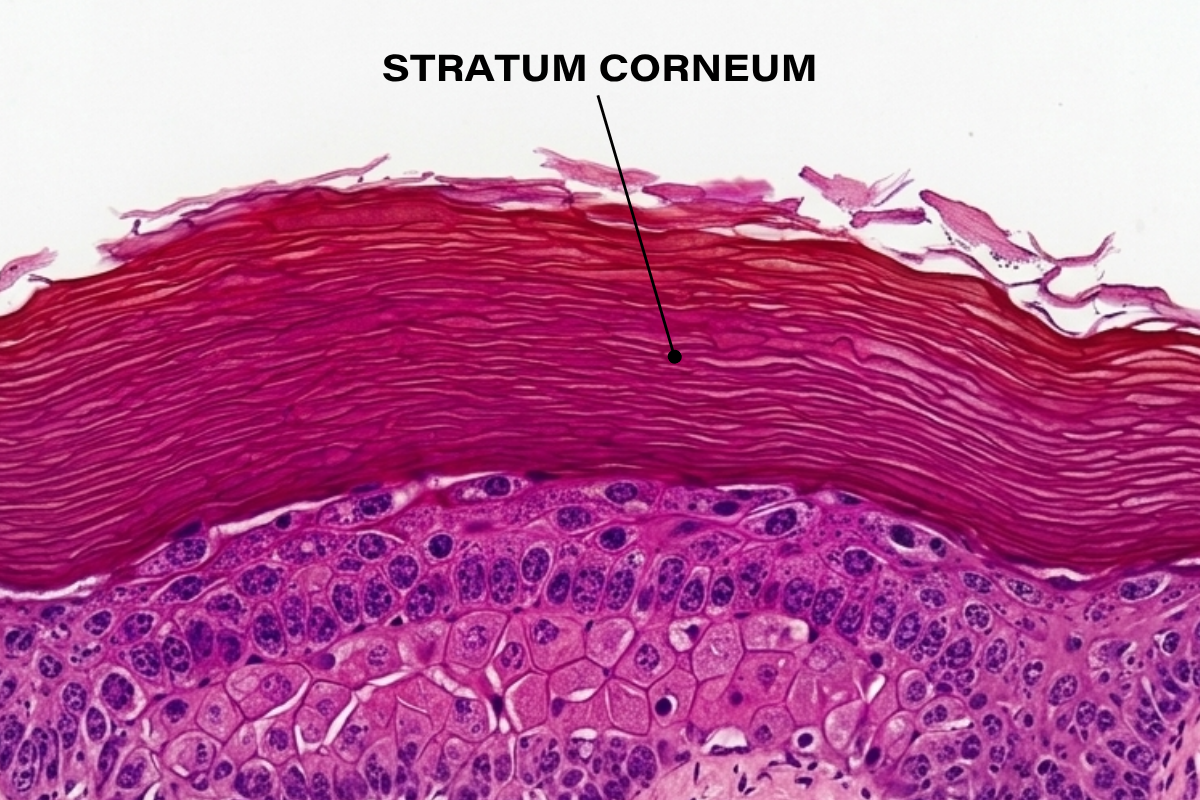
Stratum Corneum
The outermost layer of the epidermis consisting of dead, fully keratinized cells.

Stratum Lucidum
A clear epidermal layer found between the stratum corneum and stratum granulosum, present in thick skin.

Stratum Granulosum
A granular layer of the epidermis located beneath the stratum lucidum (or stratum corneum) and above the stratum spinosum.
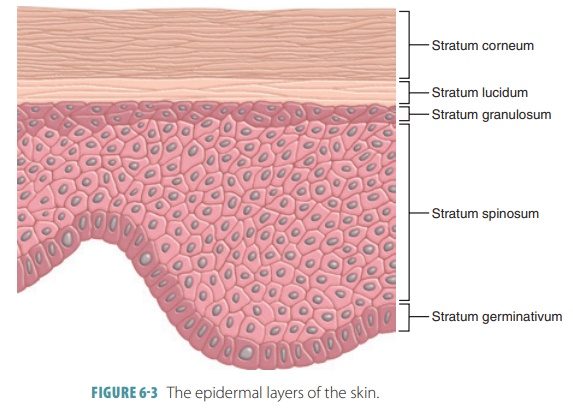
Stratum Spinosum
The layer of the epidermis situated between the stratum granulosum and the stratum basale.

Stratum Basale
The deepest layer of the epidermis, sitting directly on the basement membrane, where cell division occurs and melanocytes reside.

Melanocytes
Specialized cells in the stratum basale of the epidermis that produce melanin pigment.
Dermal Papillae
Projections of the papillary region of the dermis extending into the epidermis that form fingerprints.

Meissner's Corpuscle
A sensory receptor located in the papillary region of the dermis that functions as a touch receptor.
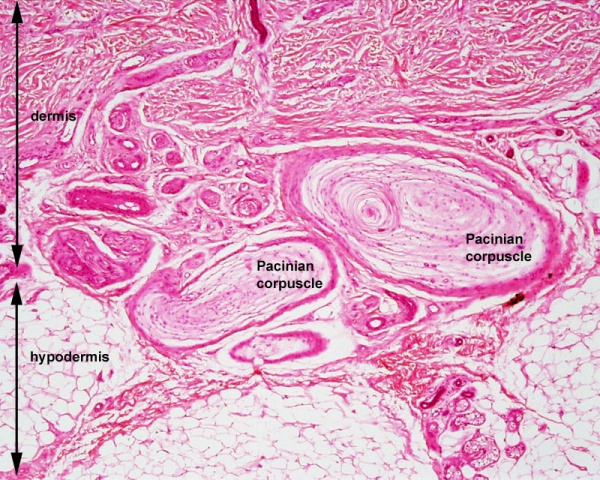
Pacinian Corpuscle
A sensory receptor located in the reticular region of the dermis that functions as a pressure receptor.

Free Nerve Endings
Sensory nerve fiber extensions in the dermal and epidermal tissue that detect touch and pain sensations.

Lunula
The whitish, half-moon-shaped region at the base of the nail plate that lacks melanocytes and covers the area of most active nail growth.

Arrector Pili Muscle
A smooth muscle attached to a hair follicle that contracts to pull the hair upright.

Sebaceous Glands
Holocrine glands associated with hair follicles that secrete an oily mixture called sebum to keep hair and skin soft and waterproof.

Eccrine Glands
Merocrine sweat glands that respond to elevated body temperature to help regulate body temperature.

Apocrine Glands
Sweat glands that secrete in response to emotional stress or sexual arousal.

Ceruminous Glands
Modified sweat glands located in the ear canal that secrete ear wax.
Mammary Glands
Modified sweat glands that secrete milk.
Hyperthermia
A state of abnormally elevated body temperature resulting from excessive heat.
Hypothermia
A state of abnormally low body temperature resulting from excessive cooling.

Granulation Tissue
Tissue formed during deep wound healing consisting of new blood vessel growth, fibroblasts, and macrophages.
Acne
Disease of the sebaceous glands that produces blackheads and pimples.
Alopecia
Hair loss, usually sudden.
Athlete's Foot
Fungus (Tinea pedis) infection usually in the skin of the toes and soles.
Birthmark
Congenital blemish or spot on the skin, visible at birth or soon after.

Boil
Bacterial infection (furuncle) of the skin, produced when bacteria enter a hair follicle.

Keloid
Elevated, enlarging fibrous scar usually initiated by an injury.

Mole
Benign skin tumor (nevus) that is usually pigmented; colors range from brown to black.

Pediculosis
Disease produced by an infestation of lice.
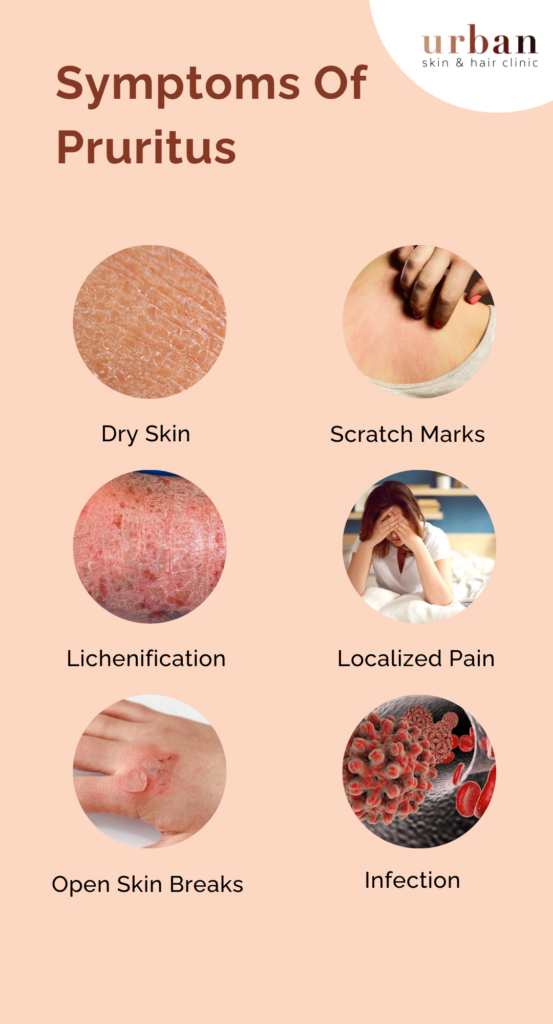
Pruritus
Itching of the skin.

Psoriasis
Chronic skin disease characterized by red patches covered with silvery scales.

Carbuncle
Bacterial infection, similar to a boil, that spreads into the subcutaneous tissues.

Cyst
Liquid-filled sac or capsule.

Dermatitis
Inflammation of the skin.

Eczema
Noncontagious skin rash that produces itching, blistering, and scaling.

Erythema
Reddening of the skin due to dilation of dermal blood vessels in response to injury or inflammation.

Herpes
Infectious disease of the skin, caused by the herpes simplex virus and characterized by recurring formations of small clusters of vesicles.
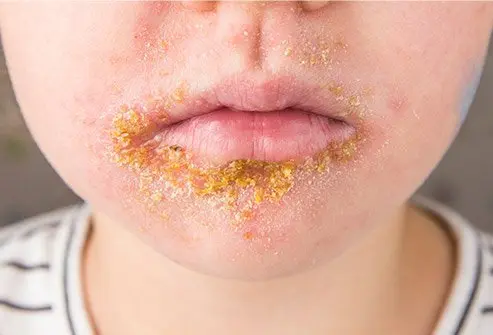
Impetigo
Contagious disease of bacterial origin, characterized by pustules that rupture and become covered with loosely held crusts.

Pustule
Elevated, pus-filled area on the skin.

Scabies
Disease resulting from an infestation of mites.

Seborrhea
Hyperactivity of the sebaceous glands, causing greasy skin and dandruff.

Ulcer
Open sore.

Urticaria
Allergic reaction of the skin that produces reddish, elevated patches (hives).

Vitiligo
Loss of melanocytes in parts of the epidermis, producing whitened areas of skin.
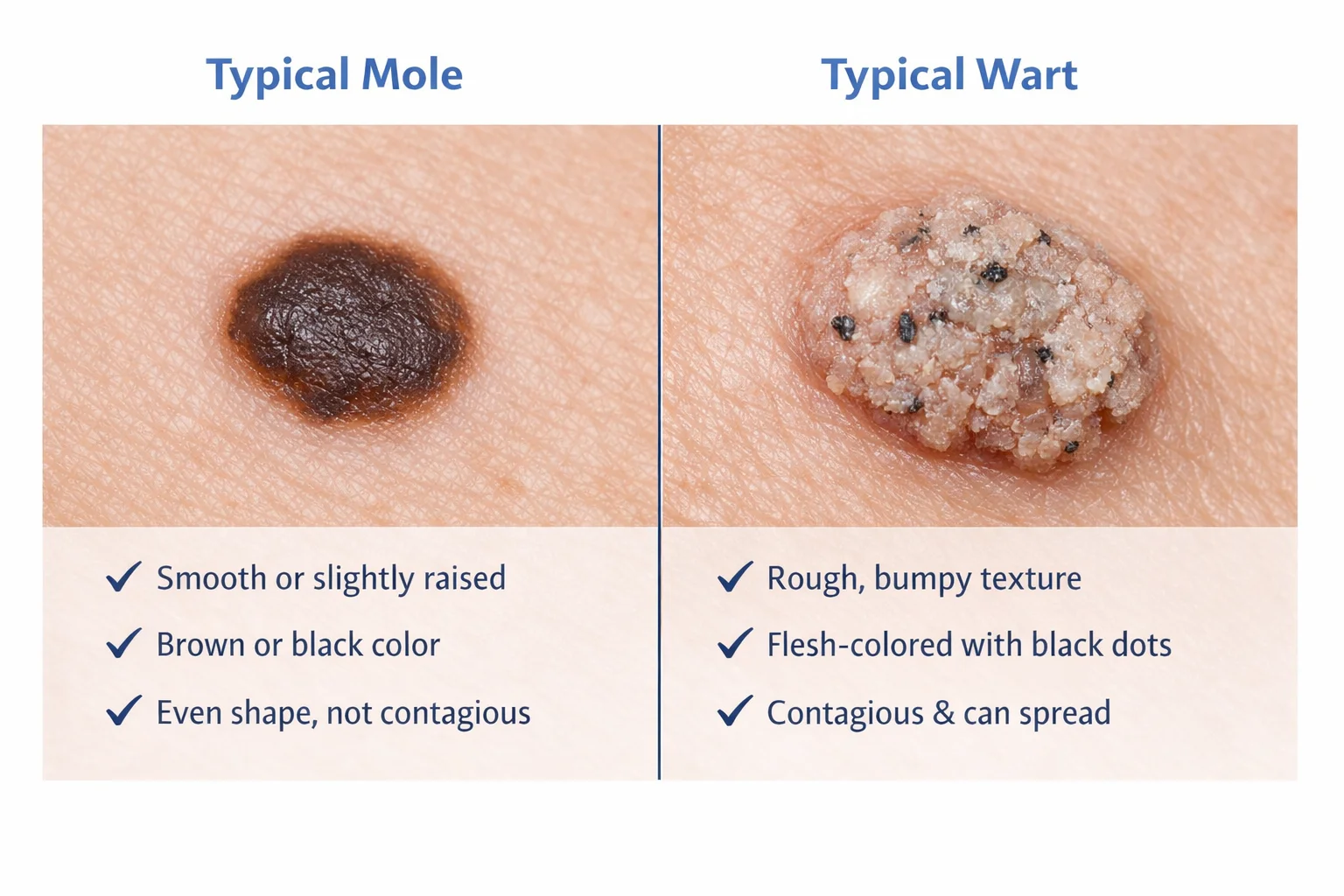
Wart
Flesh-colored, raised area caused by a viral infection.