Human skeleton
0.0(0)
Studied by 4 people View linked note
 Call Kai
 Learn
Learn Practice Test
 Spaced Repetition
 Match
Match Flashcards
 Knowt Play
Card Sorting
1/6

There's no tags or description
Looks like no tags are added yet.
Last updated 10:23 AM on 7/1/23
Name | Mastery | Learn | Test | Matching | Spaced | Call with Kai | Chat |
|---|
No analytics yet
Send a link to your students to track their progress
7 Terms
1
New cards
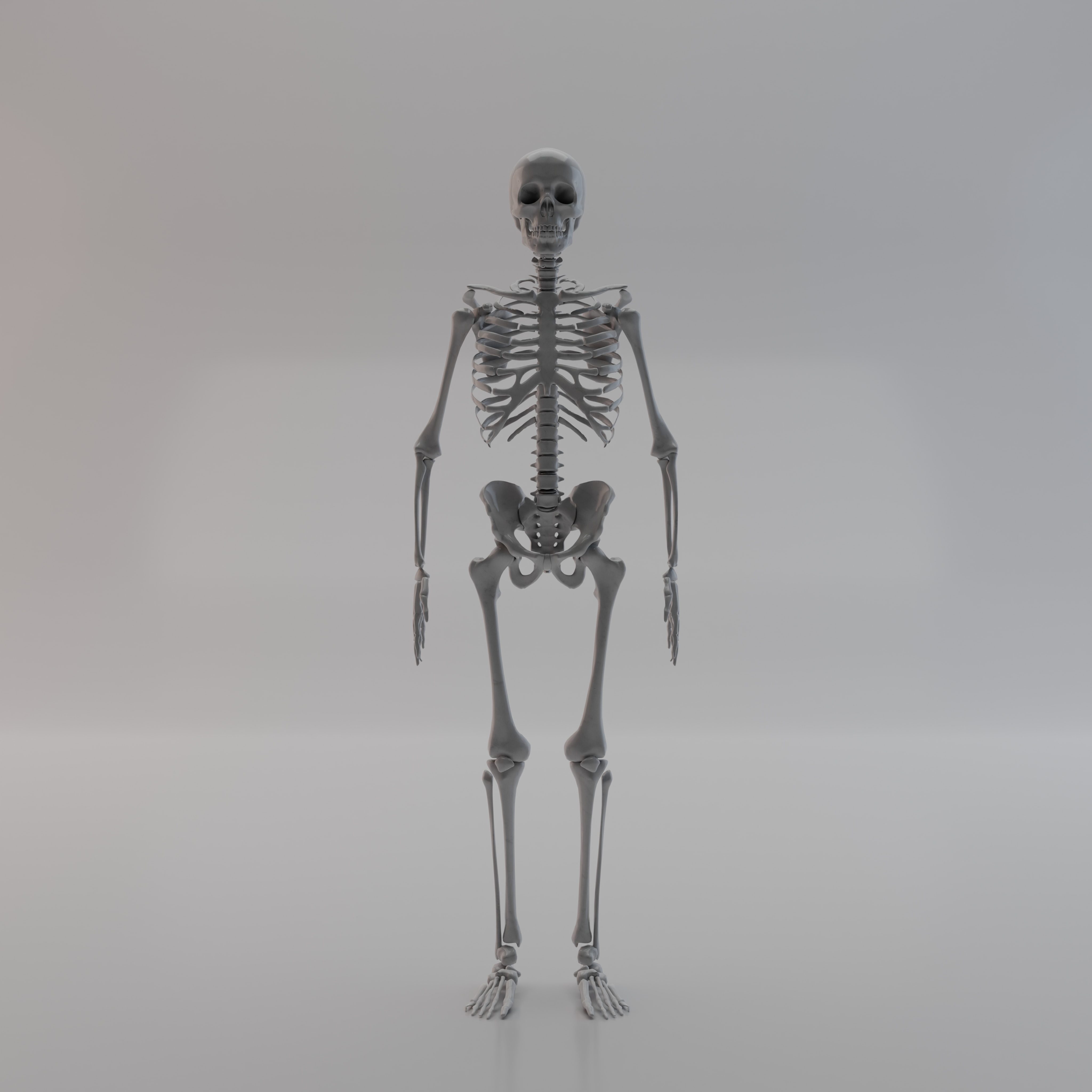
Human Skeleton
The internal framework of the human body, composed of bones, cartilage, ligaments, and tendons, providing structure, support, and protection to organs, enabling movement, and serving as a reservoir for minerals.
2
New cards
Axial Skeleton
The part of the human skeleton that includes the skull, vertebral column (spine), and ribcage (ribs and sternum), providing protection for vital organs and supporting the body's weight.
3
New cards
Appendicular Skeleton
The part of the human skeleton that consists of the bones of the limbs (arms and legs) and their girdles (shoulder and pelvic), facilitating movement, balance, and coordination.
4
New cards
Functions of the Skeleton
The roles of the human skeleton include support, protection, movement, blood cell production, and mineral storage.
5
New cards
Bone Structure
Bones are composed of compact bone (dense outer layer) and cancellous or trabecular bone (spongy inner layer), with a medullary cavity containing bone marrow. Bones are made up of living cells, including osteoblasts and osteoclasts.
6
New cards
Joints
Connections between bones that allow for movement and flexibility, classified as fibrous joints (immovable), cartilaginous joints (partially movable), and synovial joints (freely movable).
7
New cards
Bone Development and Growth
Bones initially form as cartilage models during fetal development and gradually ossify into bone through ossification. Bone growth occurs during childhood and adolescence through bone remodeling influenced by genetics, nutrition, and physical activity.