3.8 Investment Appraisals
 Call Kai
 Learn
Learn Practice Test
 Spaced Repetition
 Match
Match Flashcards
 Knowt Play
1/13

There's no tags or description
Looks like no tags are added yet.
Name | Mastery | Learn | Test | Matching | Spaced | Call with Kai | Chat |
|---|
No analytics yet
Send a link to your students to track their progress
14 Terms
Investment Appraisals
A scientific approach to investment decision making which investigates the expected financial consequences of an investment in order to assist the company in its choices.
It is a quantitative tool in the decision making process. Any investment decisions should also take qualitative focus.
The quality of decision depends on the quality of the data used (“garbage in, garbage out”)
Reasons for investment/capital investment
Investment refers to the process of purchasing non-current (fixed assets) such as buildings, plant machinery or office equipment.
Capital investment takes place to:
Replace or renew any assets that have worn out (depreciated) or become obsolete (out of date)
Introduce additional new assets in order to increase capacity and meet increased demand.
Methods on Investment Appraisals
Payback Method
Average rate of return (ARR) or annual rate of return or annual average rate of return
Net Present Value
What do the 3 methods of IA base their recommendations on?
The initial cost of Investment
The net return (revenue-costs) per annum
The lifetime of the investment
Payback Formula
This method of appraisal is very important when a company has weak cashflow
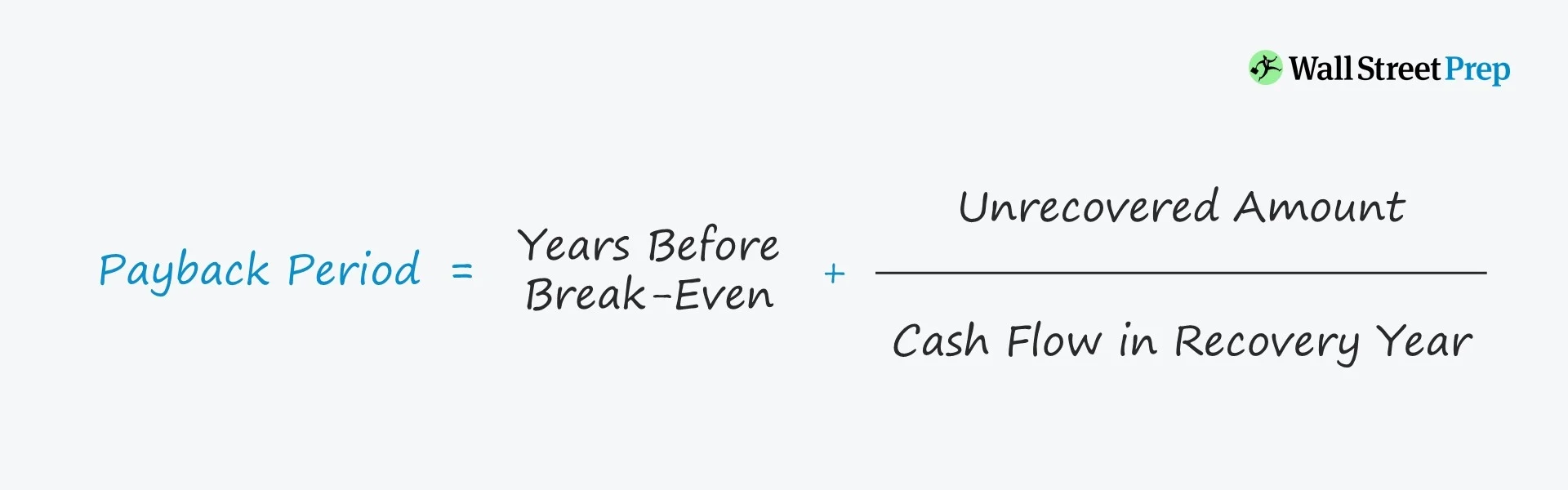
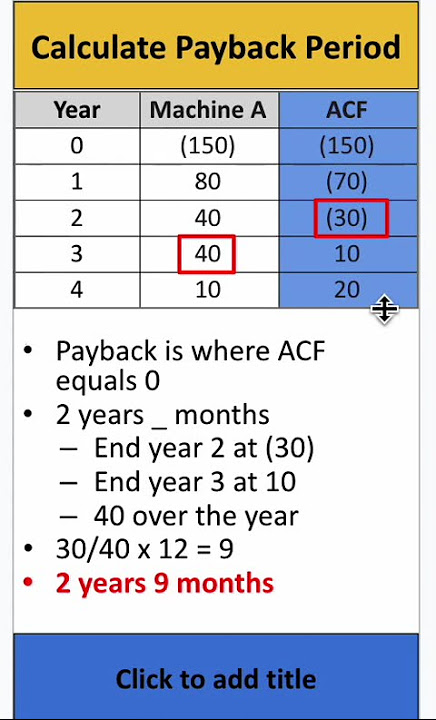
How do you calculate payback period
Payback is when cumulative return = 0
Year column shows when investment is made
Cumulative return is a running total
Annual return is the amount made from investment
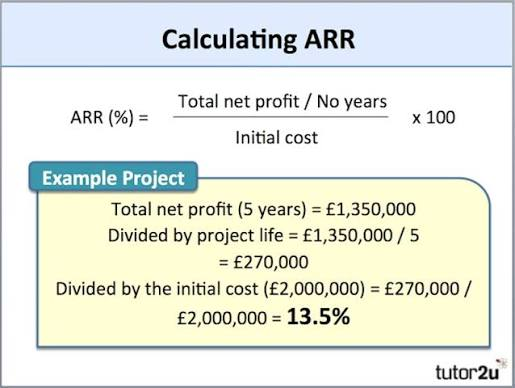
ARR Formula
Payback +-s
+ Easy for non-accountants to understand and simple to calculate.
+ Emphasis on cash flow rather than profit, so its important where there are cashflow problems.
+ Emphasis on speed of return is useful for fast changing markets e.g. fashion, software.
- Payback ignores any cashflow that occurs after the payback period.
- Focus on payback may encourage short-termism and therefore the business will fail to look at the long term consequences of an investment.
- Values future costs and revenues at the same value as current costs and revenues.
ARR +-s
+ Shows the profitability ( as a %) of the investment or project and can be compared with alternative investments
+ Easy to understand
- Values future costs and revenues at the same value as current costs and revenues
NPV Formula
Annual return × Discount factor
NPV does not use cumulative return
NPV +-s
An important aspect is that NPV recognises that a higher value is placed on money paid/received now than in the future.
+ NPV is the only method that considers the time value of money. For this reason alone, NPV is usually preferred to Payback and ARR.
+ Cash flows that come from far into the future are discounted more heavily, this reduces the influence of long term estimates (which are more reliable).
+ NPV gives a precise answer: a positive NPV means that, on financial grounds, an investment should be undertaken. A negative NPV means that the project should be rejected.
- NPV is time consuming and more difficult to calculate and understand (so decision makers may distrust it).
- The results of the calculations heavily depend on discount rates and the choice of discount rate may be made quite arbitrarily.
How do you comment on Investment appraisals?
Comment on the amount they can afford
Info on the cashflows - new company?, risk?, research?, Weakness in cashflow —> payback
Info on objectives
Info into NPV
Limitations of quantitative investment appraisals
Results depend on accurate forecasts and data.
Future interest rates may change.
Not all costs and benefits can be measured numerically.
Ethical and strategic considerations may be ignored.
Qualitative factors affecting investment decisions
Projections - Managers expectations about the future, such as economic conditions and interest rates.
Objectives - Different organisations have different goals. Profit may not be the only objective.
Risk Profile - Risk-averse firms may prefer safer investments with more certain returns.
State of the Economy - Business confidence, economic growth, and interest rates affect investment decisions
Corporate Image - The impact on how an investment project will affect their reputation and public perception.
Human Relations - Effects on employees, morale, productivity, and possible redundancies.
External Shocks - Unexpected events such as natural disasters, economic crises or supply disruptions.