Economics terms quiz #1
 Call Kai
 Learn
Learn Practice Test
 Spaced Repetition
 Match
Match Flashcards
 Knowt Play
1/29

There's no tags or description
Looks like no tags are added yet.
Name | Mastery | Learn | Test | Matching | Spaced | Call with Kai | Chat |
|---|
No analytics yet
Send a link to your students to track their progress
30 Terms
Opportunity Cost
what you give up in order to get something else
Economic Resources/ Factors of Production
land, labor, capital goods, entrepreneurial ability
Production Possibilities Curve
graphic representation of opportunity cost
Consumer Goods
goods purchased by individuals for personal use rather than for producing other goods
Capital Goods
manufactured aids used in producing goods and services
Increasing Opportunity Cost
the more of a product that is produced, the greater its opportunity cost
Constant Opportunity Cost
an economic situation where the trade-off between producing two goods remains the exact same, no matter how much of either good you produce
Scarcity
the basic economic problem of having limited resources to meet unlimited human wants and needs
Land
all gifts of nature (fish, minerals, trees, etc.), not limitless
Labor
all physical and mental talents
Capital
durable, man-made assets used as inputs to produce other goods and services or generate income
Absolute Advantage
the ability to produce more of something with a given amount of time and reasources
Comparative Advantage
the ability to produce something at a lower opportunity cost than someone else (not the same as absolute advantage)
Gains from Trade
dividing tasks (specializing) and trading benefits both parties
Law of Demand
when the price of a product increases (decreases), the quantity demanded decreases (increases)
Determinats of Demand
consumer taste, number of buyers in the market, income, price of selated goods, expectations
Change in demand
caused by change in determinats, something other than price
Change in quantity demanded
caused by a change in price
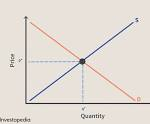
Equilibrium quantity
specific amount of a good or service that is bought and sold in a market when the quantity demanded by consumers equals the quantity supplied by producers
Price floor
government-set minimum legal price for a good, service, or resource, designed to keep prices from falling too low
Law of supply
as price rises, quantity supplied goes up
Determinants of supply
price of inputs (raw resources & labor), change in technology, taxes & subsidies
Change in supply
caused by change in determinants
Change in quantity supplied
caused by change in price
Equilibrium price
specific market price where the quantity of a good demanded by consumers equals the quantity supplied by producers
Substitute good
a product or service that consumers can use in place of another because they serve the same basic purpose
Complimentary good
goods that are used together
Surplus
an amount that remains when a use, need, or requirement has been satisfied
Shortage
an economic and physical condition where the demand for a product, service, or resource is greater than the supply available at the current market price
Price ceiling
legal maximum price set by the government or another authority on a good or service