Microbiome (ALL POST MIDTERM CONTENT)
 Call Kai
 Learn
Learn Practice Test
 Spaced Repetition
 Match
Match Flashcards
 Knowt Play
1/399

There's no tags or description
Looks like no tags are added yet.
Name | Mastery | Learn | Test | Matching | Spaced | Call with Kai | Chat |
|---|
No analytics yet
Send a link to your students to track their progress
400 Terms
Mucosal Surfaces
- Soft tissue
- Lips
- cheek
- palate
- tounge
Hard/non shedding surfaces
- teeth
- bones
Epithial cells
Slough off
Supra-gingival plaque
Above the gum surface
Sub gingival plaque
- below the gum surface
- need a probe to get to it
Approximal plaque
-between the teeth
- hard to reach areas
Buffering salts
-important to mainting saliva ph
2 oral fluids
- Saliva
- GCF
Main parts of saliva
- Lysozyme
- Albumin
- buffering salts
- rich in nutrients
- lots of proteins and antibodies
GCF
- gingival cervical fluid
- from gingival surfaces
- derived from human serum
- fluid from gingiva
- goes through the gums to feed bacteria below the gums
Resting Saliva
- test tube
- whatever you have in your saliva in your mouth
Stimulated saliva
- saliva after smelling and tasting food
- chewing gum
- larger volume and more liquid in it
- the less salts and proteins, the more liquid there is
Saliva Specific Buffering Salts
- sodium
- potassium
- calcium
- Magnesium
- phosphate
- bicarbonate
Factors affecting microbial growth in oral cavity
- Temperature
- Redox potential
- pH
- Nutrients
- Host defenses
- host genetics
- Antimicrobial agents
- Inhibitors
Factors affecting microbial growth in oral cavity (tempurature)
35-36 degrees
- can increase to 39 degrees celcius in periodontal pockets with inflammation
- change can regulate gene expression in bacteria for gene encoding ezymes and fimbriae
Gene encoding enzymes
- Proteases
- SOD
what can make bacteria in oral cavity more virulent
Changes in host tempurature
Factors affecting microbial growth in oral cavity (Redox potential/anaerobiosis)
- oxidative saturation in the oral cavity can vary from pocket to pocket
- oxygen tension on tongue varies from 12-16%
- oxygen content varies by location
- most oral organisms are facultative or obligate anaerobes
Early colonizers
Aerotolerant
Late colonizers
Anaerobic
Anaerobiosis *example
- 100 bacteria colonize an oral cavity
- they scavenge for the oxygen
- they then use up all the oxygen
- once all the oxygen is gone, the anerobic bacteria come in and they can survive because there is less oxygen
Factors affecting microbial growth in oral cavity (pH)
- 6.75-7.25
- regulated by saliva
- variation between location
- variation in disease
Upper palate pH
7.34
Buccal Mucosa pH
6.3
Gingival cervice pH
6.9
Oral cavity disease pH
7.4+
how does consumption of sugar affect oral cavity ph?
- the ph gets lower with sugar
- the sugar is fermented to acid
- the acid lowers the ph
- the carries causing strep mutants like the low ph and the sugar and they cause the carries
Ph change after eating
- Leads to bacterial changes
- Saliva stays at a relativly stable pH to go back to normal after eating
Factors affecting microbial growth in oral cavity (Nutrients)
- endogenous (already present in your mouth)
- Saliva (amino acids, peptides, proteins)
- GCF (Albumin, protein)
- Bacterial Products (micro and macronutrients)
- Exogenous
- dietary (fermentable carbs, metals)
Factors affecting microbial growth in oral cavity (Host defences)
The immune system
Factors affecting microbial growth in oral cavity (Host genetics)
- genetically prone to more diseases
- deflect in immune responses
- can infect the neutrophils
- less neutrophils (more prone to fungal infection)
Factors affecting microbial growth in oral cavity (Antimicrobial agents and inhibitors)
- antibiotics
- toothpaste and mouthwash
*listerine= antimicrobial agent
Saliva Flow
- Physical removal of microorganisms
- takes microbes with out when you swallow
- non specific defense factor
Mucin/agglutinins
- Physical removal of microorganisms
- sticky carbohydrates
- grabs bacteria as you swallow
- non specific defense factor
Lysozyme-protease- anion
- degrades cell wall
- cell lysis
- non specific defense factor
Lactoferrin
- iron binding protein in low iron saliva
- iron sequestration
- non specific defense factor
Apo- Lactoferrin
- cell killing
- non specific defense factor
Sialoperoxidase System
- hypothiocyanite production (neutral pH)
- hypocyanous acid production (low pH)
- non specific defense factor
Histatins
*most antifungal protein in the human body
- some antibacterial activity
- non specific defense factor
Defensins
- (a and b)
- more broad
- antimicrobial
- immunomodulatory activity
- non specific defense factor
Cytstatins, SLPI and TIMP
- cystenine, serine and metallo protease inhibitors
- non specific defense factor
Chitinase and Chromogranin
- non specific defense factor
- kills fungi
- antifungal
Cathelicidin and Calprotectin
- non specific defense factor
- antimicrobials
- saliva has a huge amount of antimicrobial peptides
Intra-epithial lymphocytes and langerhans cells
- specific defense factor
- cellular barrier to penetrating bacteria and/or antigens
Sgla
- secretory
- primary in saliva
- prevents microbial adhesion and metabolism
- specific defense factor
IgG, IgA, IgM
- prevents microbial adhesion and metabolism
- opsonins
- complement activator
- specific defense factor
Complement
- activates neutrophils
- specific defense factor
Neutrophils/macrophages
- phagocytosis
- specific defense factor
Acquired pellicle
- Initiates within seconds of any clean surface being introduced in the oral cavity
- Bacteria rarely come into direct contact with the tooth enamel
- teeth are also being flushed with saliva
- same protectors are applied (flow rate and IgA)
Constraints on bacteria (Colonization)
- adherance properties
- synergistic bacteria
- nutritional substrates
- temp and moisture
Constraints on bacteria (Expulsion or Death)
- agglutination
- antimicrobial properties of saliva
- mechanical shearing
- antagonistic bacteria
Antimicrobial agents
- flouride
- chlorohexidine
- Antibiotics
Biofilms (definition)
matrix enclosed microbial accretions that adhere to biological or non biological surfaces
3 steps of biofilm development
1. surface attachment
2. microcolonies
3. macro colonies
Surface attachment (biofilm development)
- initally reversible
- free floating bacteria (planktonic) bacteria attach to conditioning film
- the film is on an abiotic/biotic surface
- the now sessile bacteria attach to the conditioning film
- it wants to stay on the tissue
Conditioning film
Sticky protein and sugar
Abiotic/biotic surface
Tounge tissue
Microcolonies (biofilm development)
- cell proliferation
- coaggregation
- creates an EPS matrix
- basic first layer
Macrocolonies/maturation (biofilm development)
- mushroom and tower like structures
- 3D structure
- cell detachment
- cells will die or escape when the tower gets to be too much
Dispersal (biofilm development)
- introduction of dispersing signals
Growth curve
a predictable pattern of a bacterial population growth in a closed system
- S curve, lag phase, log (exponential) phase, stationary phase, death phase
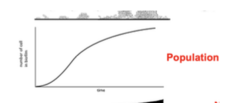
Growth dynamics in a biofilm (populations)
Increase in population= more need for nutrients and oxygen
Bigger biofim= harder for oxygen to get in
- s curve
Growth dynamics in a biofilm (Individual cell)
Increase in population= increase in limitations (nutrients/oxygen)= Increase in cell death
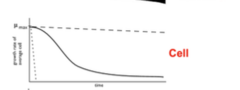
Growth dynamics in a biofilm (Majority of cells in core)
- increae in cells attached to the biofilm matrix (no longer in contact with the base)
- decrease in cells in contact with bulk liquid and substratum surface (so tightly packed)
- as it grows, most cells come into contact with the matrix, but only one layer touches the base
Intercellular
between 2 or more cells
quorum sensing
intercellular signaling as a regulatory mechanism that plays a significant role in coordinating various stages of biofilm formation
quorum sensing (Uses)
- responds to population density
- controls genes expression
- capable of auto induction
- self recognized secreted molecules (autoinducers)
Autoinducers
- the signaling molecules produced and used for quorum sensing
- the cell that is secreting it can also be induced by it
quorum sensing (response to population density)
-When a critical mass of a population is reached, bacteria see the lack of nutrients
- some die
- some send signals to other bacteria to also die
Autoinducers (examples)
- AHL (serum)
- AI-2 (salmonella)
- Peptides (staph. aureus, strep mutans- carries inducing bacteria)
- Fungal QS molecules- secreted by candida
Quorum sensing controls population size
- population density is the key factor
- critical mass of the population must be reached before the process kicks in
- only when the microcolony is mature enough, the quorum sensing can kick in
Dental Biofilms
- plaque
- a complex microbial community on the surface of teeth
Stages of dental plaque formation (association)
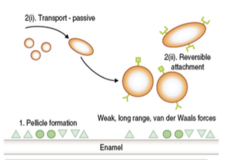
1. pellice formation on the surface of teeth (made of antigens with specific shapes
2. Passive transport
3. reversible attachment (weak van der waals forces)
* this is passive, just when the bacteria comes in contact with your teeth, but can still be washed away
Stages of dental plaque formation (Adhesion)
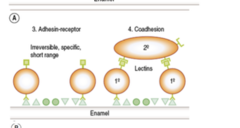
4. Adhesion- receptor (the receptors lock with the ligand)- permanent, irreversible and short range
5. coadhesion (binds with the lectins)
*these are the late colonizers
Acquired Enamel Pellicle
- Bacteria dont directly come in contact with your enamel, the bacteria sit on the pellice and secrete acids
Acquired Enamel Pellicle (salivary proteins and glycoproteins)
- sialic acid
- proline rich proteins
- mucins
- agglutinin
- amylase (digestion of sugars)
Acquired Enamel Pellicle (Bacterial Components)
- glucan
- glucosyltransferases (enzymes that can move glucagon molecules from one protein to another)
Pellicle Formation
- Initiated within seconds of any clean surface being introduced to the oral cavity
- spontaneous
- can even occur on crowns
Association attachment
- weak, reversible attachment
- least intimate form of surface interaction
Adhesion attachment
- more intimate form of attachment than association
- stable, irreversible attachment
- surface components (adhesions) interacting with complementary molecules (pellice or cell receptor) on the host surface
Invasion attachment
Penetration of the mucosal border by bacteria
Receptors
- pilli or fimbriae
- afimbrial adhesins
- receptors can be either on the fimbriae or directly on the surface of the bacteria
Coaggregation/coadhestion
- interbacterial interaction
- inital bacteria layer forms
- other bacteria then come into contact with that bacteria
- 2 binding bacteria will agglutinate or precipitate out of a solution
Stages of dental plaque formation (Maturation)
- each bacteria would consume nutrients and undergo fermentation
- metabolic interactions
- environment interactions
- gradient (oxygen and nutrients)
- matrix (proteins)
*after this they detach
Sucession of microbes in the oral community
- Closer to receptors = earlier
colonizers
- Ones at bottom = irreversible
attachment since on receptors
- Ones on top = just attached to
each other, reversible
Green Ys = ligands
- All the bacteria interact with the
receptors through the ligands
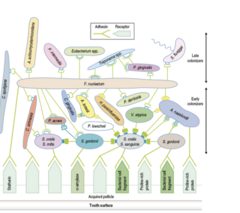
Co-Adhesion
late colonizer binds to
another (early) bacteria
Bacteriocins
- peptide antibiotics
- One bacteria makes it to kill other bacteria
Organic acids
Can lower pH which kills other bacteria
Microbial Plaque interactions (beneficial)
- enzyme complementation (bacteria lending enzymes another bacteria needs
- food chains and webs (bacteria producing food that is eaten by another bacteria)
- coadhesion (can bind bacteria instead of something else)
- cell-cell signalling
- gene transfer (within the microbial community)
Microbial Plaque interactions (Harmful)
- bacteriocins (produced by bacteria, to kill bacteria)
- hydrogen peroxide (kills other by producing oxidative stress)
- organic acids
- low pH
- nutrient competition
Microbial interactions in a plaque
- in the sugar, bacteria A knocks off the triangle, B knocks off the star and they work together to break it off of the protein backbone
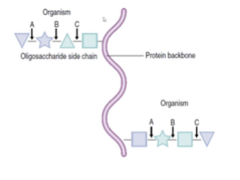
Microbial sucession
- as dental plaque develops, local enviroment changes
Food Chain
bacteria consume the metabolic byproducts or waste of other microbes for food
Food Chain (dental plaque)
Fuels the progression of oral diseases like cavities and gum disease
The superorganism
- 100 trillion bacteria colonzing the human body
- our microbes and our metabolism
10 bacteria
1 human cell
100 bacterial genes
1 human gene
The holobiont
The host organism and all its symbiotic microbial residents
Microbiome
All microorganisms in a particular habitat and their collective genomes
Human Microbiome
Gut, skin and all other human microbiomes