Energy (bio test 3)
 Call Kai
 Learn
Learn Practice Test
 Spaced Repetition
 Match
Match Flashcards
 Knowt Play
1/18

There's no tags or description
Looks like no tags are added yet.
Name | Mastery | Learn | Test | Matching | Spaced | Call with Kai | Chat |
|---|
No analytics yet
Send a link to your students to track their progress
19 Terms
Energy
the capacity to do work/cause change
kinetic energy
the energy of motion
potential energy
energy stored in the location of structure of matter
this energy can be converted into motion or other forms
1st law of thermodynamics
energy can be transferred or transformed, but cannot be created or destroyed
2nd law of thermodynamics
energy transfers or transformations increase disorder, or entropy, with some energy being lost as heat
entropy
increase in disorder
some energy being lost as heat
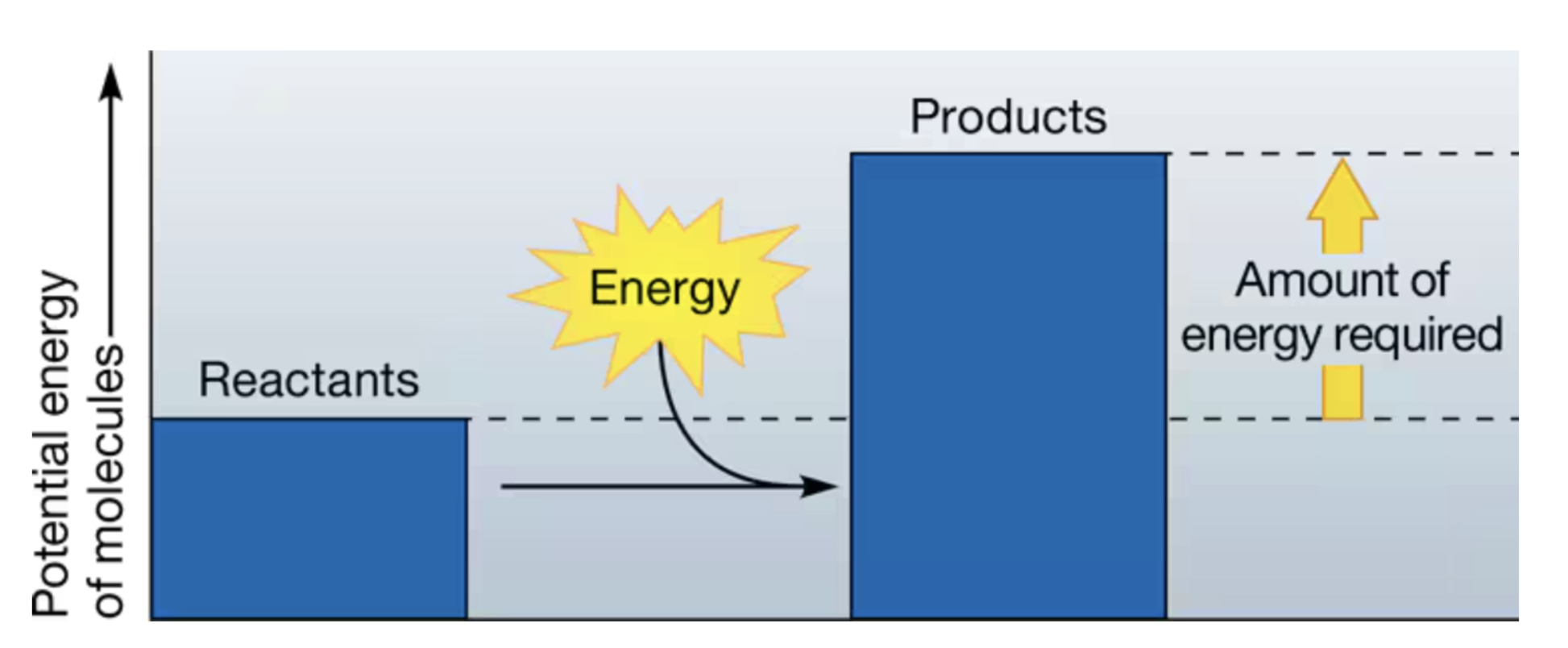
endergonic reactions
require energy; products with higher potential energy
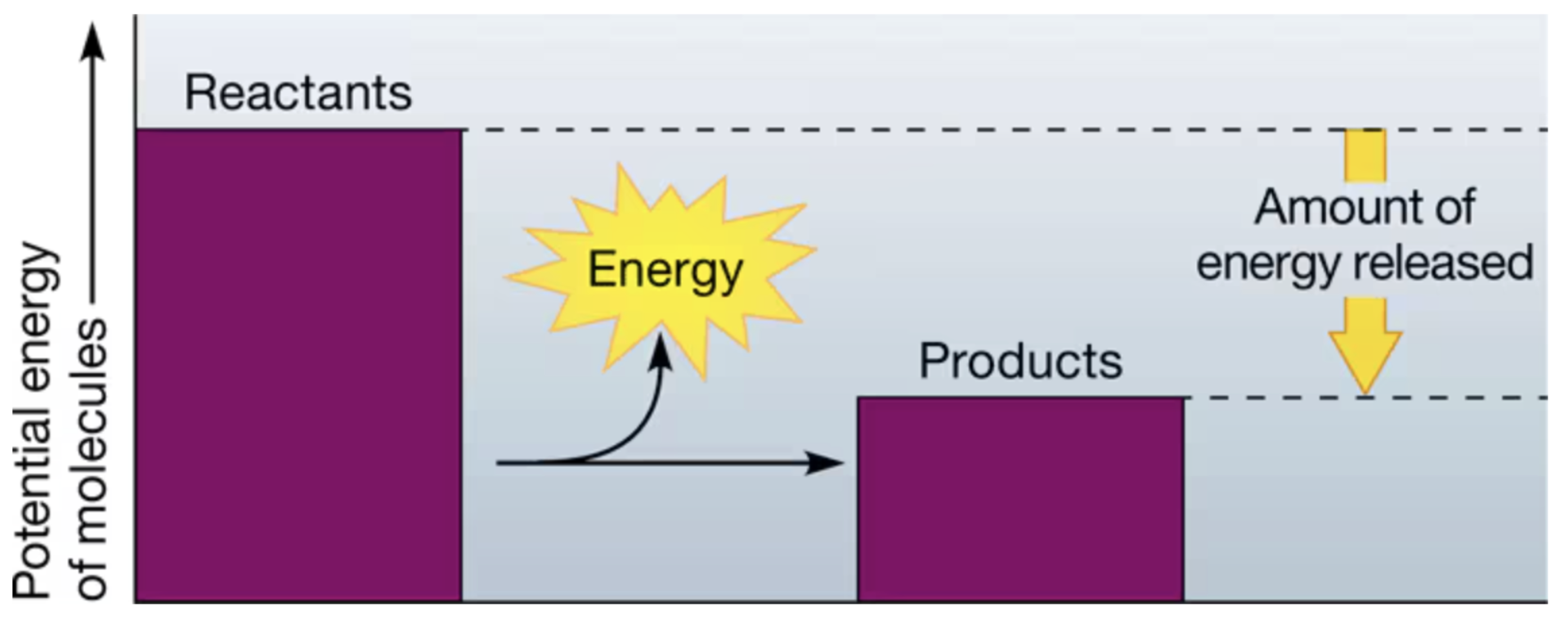
exergonic reactions
release energy; products with lower potential energy
comparison of photosynthesis and cellular respiration
opposite reactions
photosynthesis - energy is required (through sunlight, light energy)
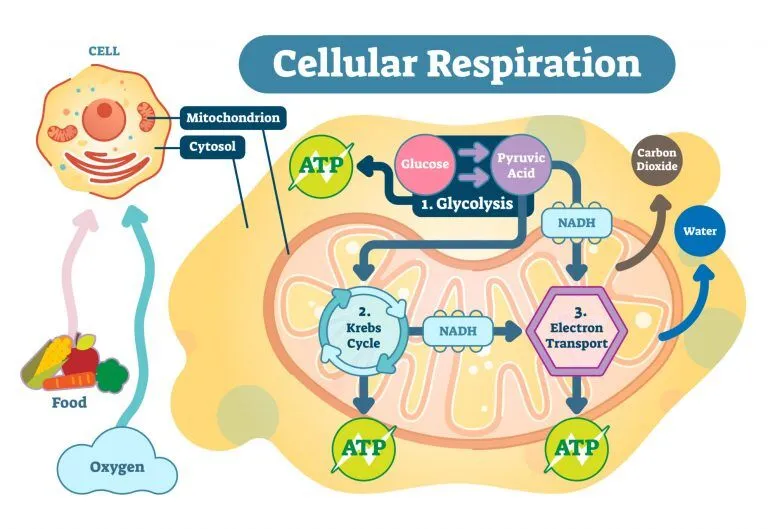
cellular respiration - energy is produced
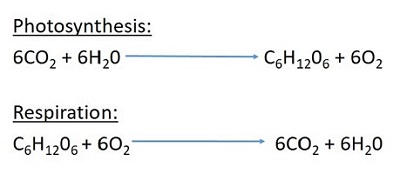
cellular respiration is an example of:
an exergonic reaction
photosynthesis is an example of:
an endergonic reaction
How does ATP produce energy?
3 negatively charged phosphates (triphosphate) that repel each other ➡ very unstable because it requires a lot of energy to repel ➡ easily broken
a phosphate is broken off by hydrolysis (the addition of water)
ATP (adenosine triphosphate) ➡ ADP (adenosine diphosphate) and P (phosphate)
this process releases energy (when ADP and P)
(ENDERGONIC)

transport work
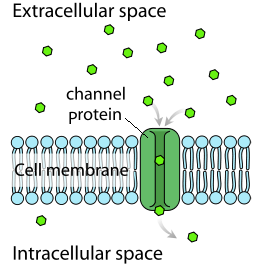
mechanical work
chemical work
chemical energy
potential energy available for release in chemical reactions
potential energy stored in chemical bonds that cells can transform to do work
thermal energy
a form of kinetic energy associated with the random movement of atoms or molecules
kinetic energy transferred from one object to another
light energy
kinetic energy harnessed to power photosynthesis
cellular respiration
the metabolic process cells use to convert nutrients — primarily glucose — into ATP