history of our planet: week 7
 Studied by 0 people
 Call Kai
 Learn
Learn Practice Test
 Spaced Repetition
 Match
Match Flashcards
 Knowt Play
1/40

Earn XP
Description and Tags
the quaternary
Name | Mastery | Learn | Test | Matching | Spaced |
|---|
No study sessions yet.
41 Terms
What is the quaternary:
Ice age
Glacial-inter-glacial cycle (cyclic growth and decay of continental ice sheets – particularly in northern hemisphere)
Current interglacial – Holocene
2.6 million years ago to present day
Holocene – current interglacial period (11.5 thousand years)
Pleistocene – 2.6Ma to 11.5 Kyr
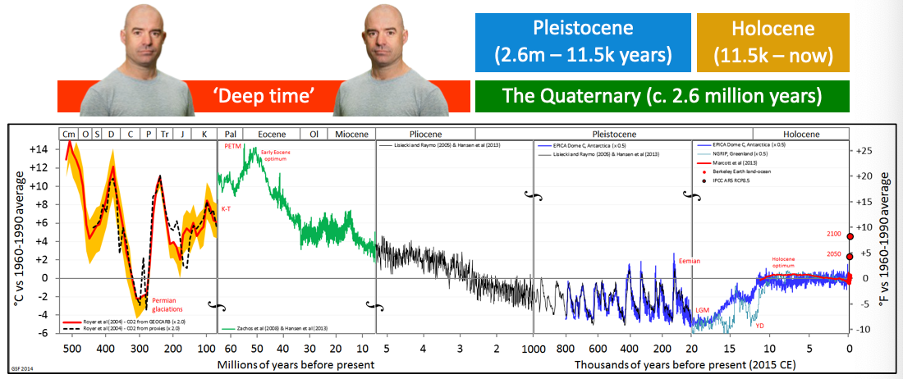
Why study the quaternary: 1
Putting Anthropogenic climate change in context
Atmospheric CO2 passed 400ppm in 2016
Marker was once a target for stabilisation
Polar ice sheets (Greenland, antarctica), annual layers of snow, trap air bubbles
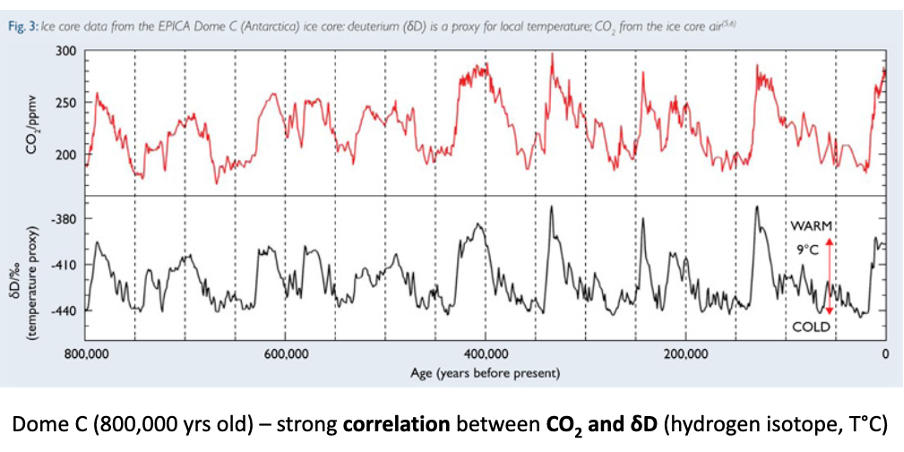
800,000 year record of carbon dioxide and methane concentrations from EPICA ice-core, antarctica
IPCC CO2 and CH4 projections for 2100 AD
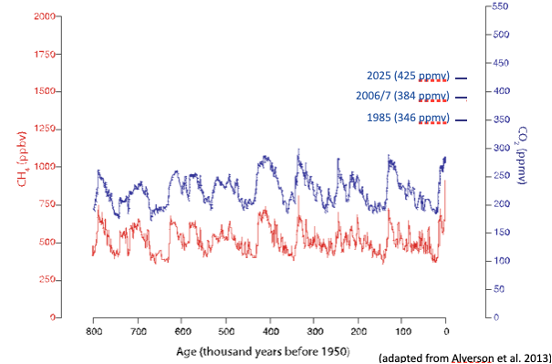
Anthropogenic climate change:
Anthropogenic composition, temperature, sea level rise
By 2100, global average temperatures will probably be 5 to 12 standard deviations above the Holocene temperature mean…
Are we entering the Anthropocene
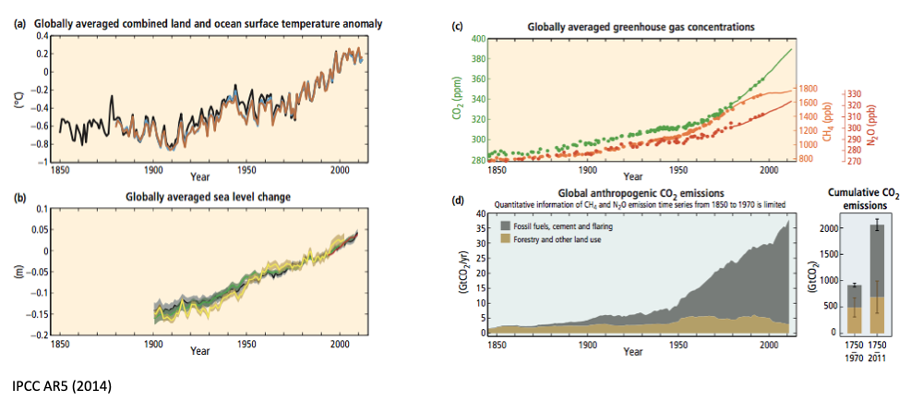
Why study the quaternary: 2
Geologically recent:
Distribution off continents and oceans comparable
Wealth of geological archives to provide records of past climate and environmental change
Coincides with the evolution of hominids and the birth of ‘modern society’
Provides longer term context for understanding of the earth system:
Improve predictions of future climate and environment
Improve ability to mitigate and adapt to future change
Ice sheets, mammoths, extinctions, human evolution, volcanoes, meteorite impacts and mega floods
Still have lots of archaeological records as it is fairly recent
Where is the evidence: for quaternary
quaternary:
Multiple glacial and interglacial periods occurring over the 2.6 million years
Growth and decay of vast continental ice sheets covering much of the north hemisphere (and glaciation elsewhere)
Origins of the quaternary science:
The church vs. new science of geology
Differing interpretation of geomorphological features in the landscape:
Erratics – rock that differs in size and type (geology) from those in the area, often very large
E.g. Yeager rock, Waterville plateau, Washington – 400 tonnes
Till – unsorted sediments; variety of rock types and sizes, found across northern hemisphere
Glanllynnau, north Wales
Other large scale geomorphological features
U-shaped valleys and the ‘parallel roads’ of glen roy, scotland
Catastrophism (religion/ church??):
Rocks and sediments covering landscape – product of biblical flood
Earth’s surface the result of succession of catastrophes
Features form during individual events
Uniformitarianism (science):
Physical, chemical, biological laws that operate today also operated in the past
Earth history dominated by small-scale events and processes, ‘gradualism’
Catastrophes happen but are rare
Scottish enlightenment produced modern geologists:
James Hutton. 1726-97. ‘the past is the key to the future’
Charles Lyell. 1797-1875. ‘the present is the key to the past’
Lyell went to Switzerland 1780-90s:
Glaciers observed in Switzerland ‘dumping’ erratics
Parallel roads of glen Roy:
Charles Darwin (1809-82): 1839: ‘shorelines are raised beaches of marine origin’
Louis Agassiz (1807-1873): 1840: ‘shorelines were cut by freeze-thaw processes of an ice-damned loch, created by a glacier during a period of extensive glaciation in the past’
Louis Agassiz:
Hugely influential geologist: glacial lake Agassiz; ‘mount agassiz’ x 5; Agassiz x 2, even crater Agassiz on mars
Creationist, polygenist, believed in inferiority of black slaves he encountered in the US
Views fed into ‘scientific racism’ which gave racism ‘validity’ by association
1837: lectured on ‘ice ages’ at Swiss society of natural sciences
Most scientists though the earth had cooled gradually from molten state
1840: wrote book ‘study on glaciers’ and lectured with Lyell on cyclic ‘ice age theory’ at the geological society, London
Lack of plausible mechanism to explain climatic changes required to drive ice sheet formation
Drivers of the ice ages:
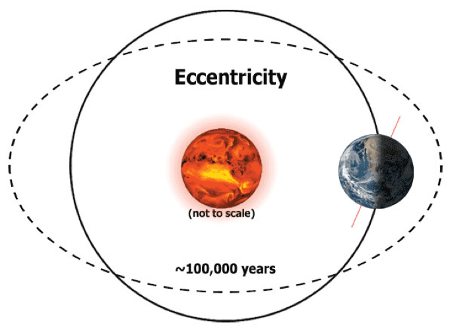
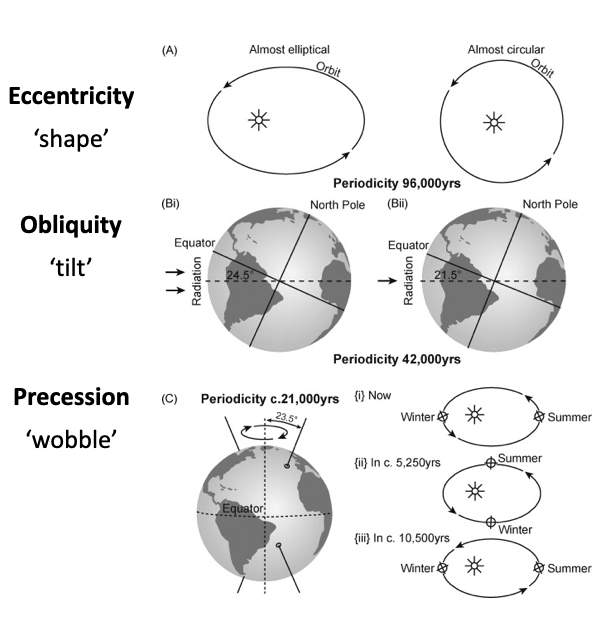
1842: joseph Adhemar introduced concept of orbital ‘eccentricity’
Shape of the earths elliptical orbit oscillates from more to less circular
Variations in eccentricity affect seasonality (i.e. mild winters, cool summers; cold winters, hot summers)
1864: James Croll wrote a paper suggesting that variations in eccentricity could drive cyclic ice ages (i.e. cool summers - year round ice – glaciers/ ice sheets)
Insolation = solar radiation that reaches earth’s surface
Milutin milankovic (1879-1958)
Developed mathematical explanation for climate change
1920 – published calculations of heat changes at different latitudes and periodicities of these changes
Identified 65*North as place where biggest insolation changes occur
From theory to fact:
Some evidence: glacial geomorphology and erratics ice age theory
Mechanism: Milankovitch cycle theory
Detail?
How many glacials-interglacials
Was there a periodicity/ cyclicity
What were the wider effects on the earth system
Answer: paleoclimatic and paleoenvironmental reconstruction
Dawn of palaeoclimatology:
marine records: WW2: technology and data boom, Oceanography was revolutionised, Tectonic theory: deep-ocean sediments were shallower than expected, Magnetic signals stored in marine sediments were mirrored in different areas, 1960s: concerted and coordinated international effort to examine marine sediments, 1970s: chemical composition of the sediments and the biological remains preserved in them
Ice core records
Dawn of palaeoclimatology:
Marine records:
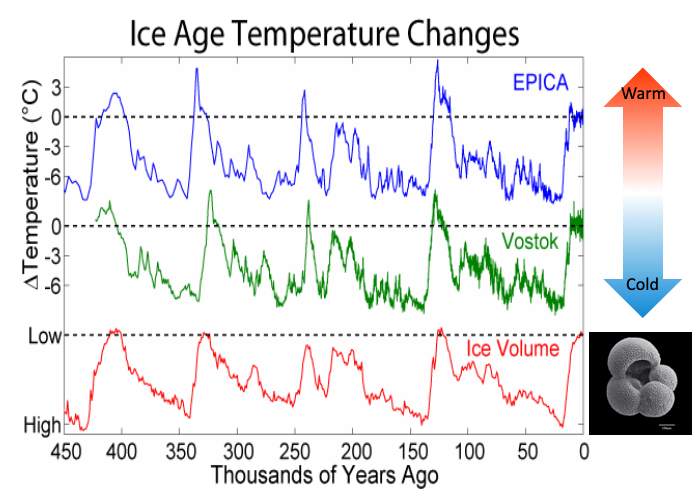
Chemical composition (δ18O) of foram shells (‘tests’) reflected composition of ocean water
Chemical composition (δ18O) of ocean water reflects global ice volume and temperature
foram tests are preserved in marine sediments over time
analysing preserved foram (δ18O) reveals changes in global ice volume and temperature over time
Dawn of palaeoclimatology: ice core records: 1
were still in the ‘ice age’ – two major ice sheets – Greenland and Antarctica
multiple other glaciated areas (including tropics and high altitude areas)
high resolution, annual snow bands often preserved
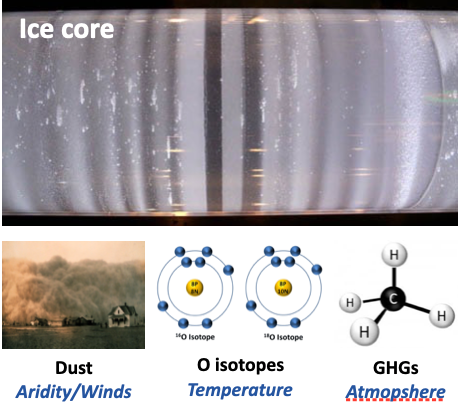
analyses of both the ice, and the air bubbles trapped inside
provides records of precipitation chemical composition (δ18O) – temperature
greenhouse gas concentrations (co2 and ch4) – global atmospheric composition
insight into how the earth system operates over time
critically: across both hemispheres
dawn of palaeoclimatology: ice core records: Antarctic ice sheet, c. 4.5km thick
Preserves record of snowfall through quaternary
Formed 35 million years ago
dawn of palaeoclimatology: ice core records: Greenland ice sheet
c. 3km thick
Formed 18 million years ago
dawn of palaeoclimatology: ice core records: Oldest continuous ice core:
Greenland: 130,000 years (NGRIP)
Antarctica: 800,000 years (dome C)
Potentially older ice in other parts of antarctica (e.g. 2.7 million years old, near Taylor dome, but continuous? Glaciers in Himalaya?)
using ice core records
10cm diameter but up to 3km long
Can be cored by hand, up to 40m
Any deeper requires machinery
Ice age: from theory to fact:
Correlations exist between ice cores (EPICA, Vostok)
Correlations extend to marine core records of global ice volume
Multiple archives, multiple lines of evidence, thus showing that glacial-interglacial cycle exists
ice age and milankovic cycles
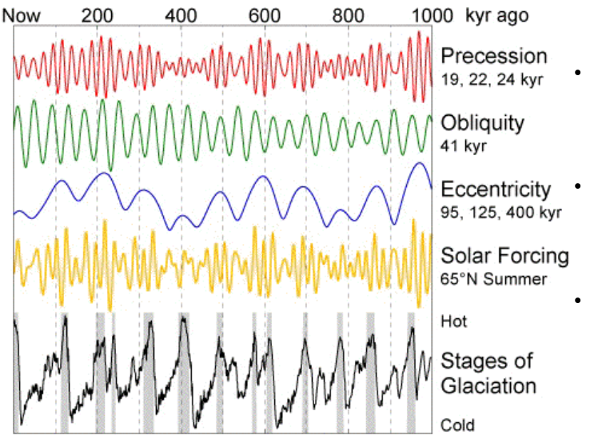
Evidence that solar facing (i.e. Milinkovic cycle) can explain the timing of glacial-interglacial cycle
Milankovic was right. They explain the timing of the cycle (but not the magnitude)
But earth climate system is extremely complex, more detail is needed
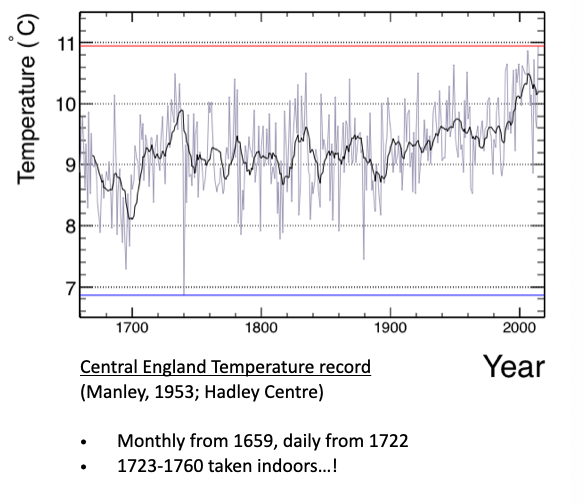
Instrumental records:
Max out at 100-150 years if that:
Meteorology
Remote sensing
Instrumental records: Historical records:
Weather observations
Ship logs
Books and stories
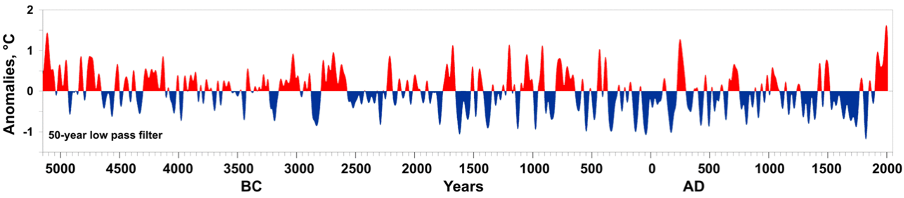
Longer term perspectives required to improve understanding and validate methods
Climate proxy records:
Longer-term perspective provided by proxy data from range of palaeoenvironmental archives
Proxy – a substitute or deputy
Physical, biological, and chemical properties of archives act as a substitute for direct measurement of variety of environmental parameters:
Temperature, Precipitation, Atmospheric circulation, Ecological change
Choice of archive and proxy technique depends very much on question to be
answered (timing, location etc)
lake cores
Chemical and biological techniques
Proxies often specific to each archive
Each proxy provides different information

ice core
Biological proxy records:
Plants and animals can be sensitive environmental indicators
E.g. temperature, salinity, moisture availability
Their remains are deposited and often preserved in sedimentary sequences
E.g. peatlands, lakes, marine sediments, caves, river terrace deposits
Limited evolutionary change in quaternary period, so taxonomy is strong – same species
Environmental reconstructions based on fossil assemblages using knowledge of current distribution, ecological preferences etc.
‘present is the key to the past’
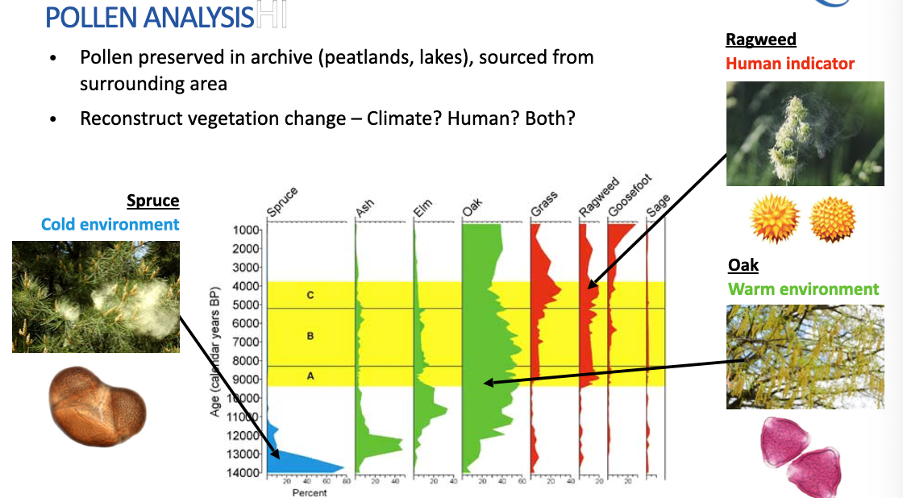
Pollen analysis:
Pollen preserved in archive (peatlands, lakes), sourced from surrounding area
Reconstruct vegetation change – climate/human/both
Chironomid analysis:
Diverse group of non-biting midges
C. 1200 palaeoarctic species
Specific ecological requirements: Mainly temperature, Nutrient and oxygen conditions, ph
Ubiquitous, well preserved and identifiable as fossils
1360m depth in lake Baikal, Russia
Dendroclimatology
Climate information in tree rings
Annual resolution (early vs late wood)
Absolute dating (i.e. age control)
Spatially extensive, often fossilised
Factors affecting growth (stress from):
Temperature
Moisture availability
Fire, volcanic eruptions etc
Ring width: narrow tree ring events
Exceptionally high resolution climate records – annual, sometimes seasonal
tree rings have very important role in radiocarbon dating – method providing age estimates for sediments deposited over last 50,000 yrs
Geochronology (science of what happened when)
Before advanced dating techniques were available, reliance on basic geological laws
Law of superposition
Sediments higher in sequence were younger than those below
Rapid advances in palaeoclimatology and paleoenvironmental science is enabled by development of new dating techniques – otherwise dating is meaningless
geochronology provides a framework to estimate:
timing – when events happened
Duration - how long event lasted
Rate – how quickly the change occurred
Cause and effect – how events related to one another (spatial variance, inter-site comparison, explanatory mechanisms)
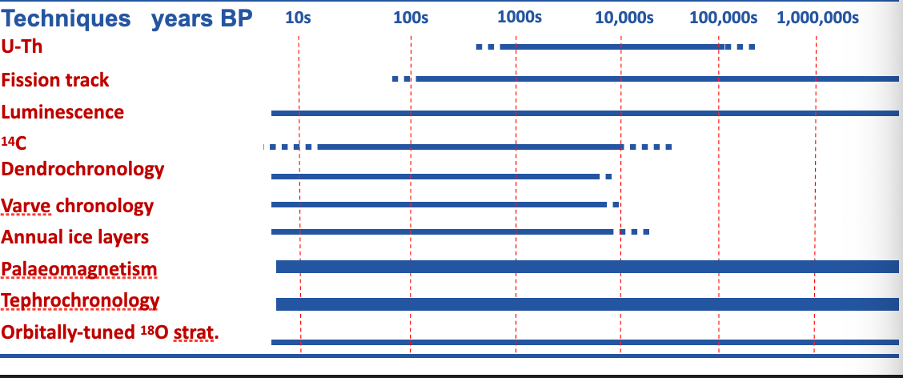
dating techniques
Most dating techniques are only suitable in specific environments or on specific materials
All dating techniques have specific time intervals over which they operate
Each dating technique operates over a different time scale
All techniques can very in terms of their precision, accuracy = uncertainty
Error associated with analysis, sampling, and archive = uncertainty
Precision: Reproducibility of a results, Uncertainty (+- error margin), E.g. 10,000 +- 200 cal. Year BP, 10,000 +- 1200 cal year BP
Accuracy: Relationship between age estimate and true age of sample
Dencrochronology:
Patterns of tree ring widths can be matched between trees to produce dendrochronologies
Can include live, dead, foddil trees
Absolute dating tool extending back 1000s years
Dendrochronologies are crucial tools in accurate radiocarbon dating
Tree rings and 14^C dating
Radiocarbon (14^C) is an unstable isotope, decays over time at a known rate
Decay = parent nuclide into daughter nuclide
Rate of decay = half life (i.e. time taken for quantity of parent nuclide to reduce by 50%) = 5730+- 30 years
All living things absorb radiocarbon
Death stops process, radiocarbon begins to decay
Measuring amount of radiocarbon remaining in organic (living) sample determine time of death, based on understanding half life
Radiocarbon dating is principle dating technique in paleoenvironmental science, up to c. 50,000 years ago – samples must be organic
But as solar activity has varied over time, atmospheric 14^C has not remained constant
14^C measurements must be calibrated (converted) to reveal calendar age
Can count tree rings absolutely
Compare 14^C measurement from tree rings of ‘known age’ and see what he offset is – radiocarbon calibration curve
Tree rings and 14^C dating - Complicating factors result in uncertainty
2354 +- 80 cal. Yr BP
2314 – 2394 cal. Yr BP
Tree rings and 14^C dating - in literature
14^C year bp = uncalibrated
Cal. Years bp = calibrated