Spartan Army: Sparta at War in 5th Century: Classical Civilization: GCSE (9:1)
 Call Kai
 Learn
Learn Practice Test
 Spaced Repetition
 Match
Match Flashcards
 Knowt Play
1/20

There's no tags or description
Looks like no tags are added yet.
Name | Mastery | Learn | Test | Matching | Spaced | Call with Kai | Chat |
|---|
No analytics yet
Send a link to your students to track their progress
21 Terms
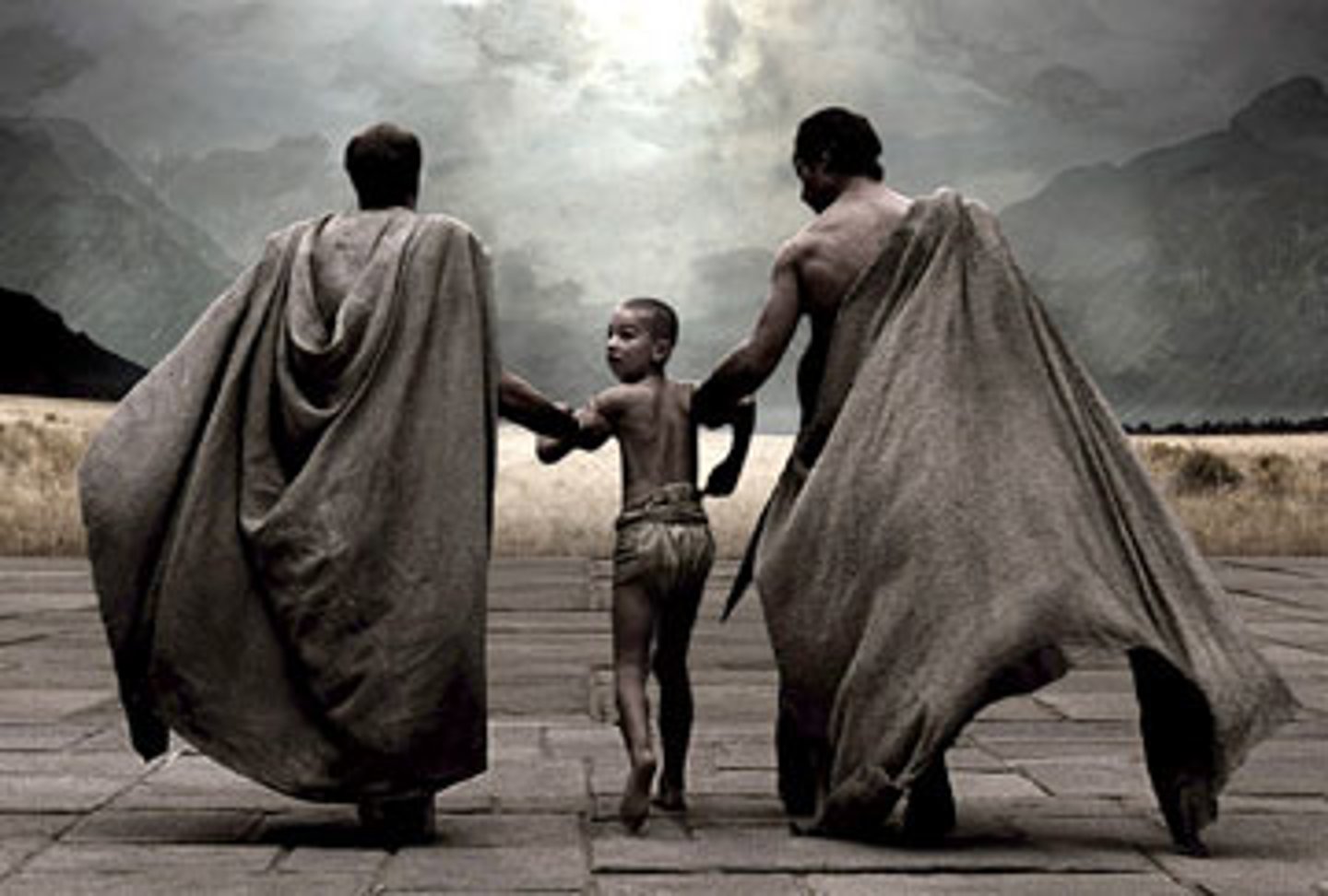
agoge
This was a rigorous education and training regime, mandated for all male Spartan citizens. This was used to create a strong citizen army.
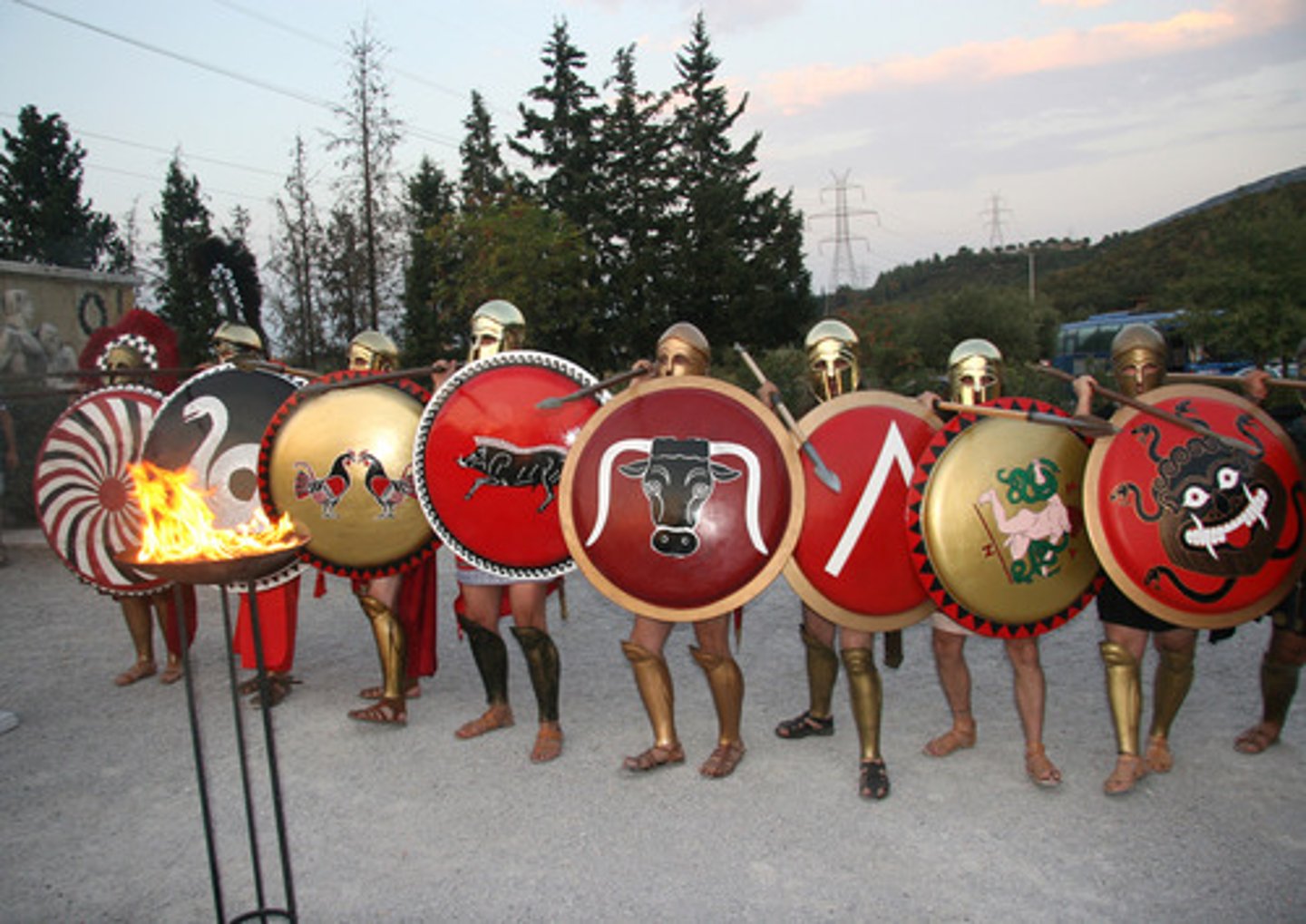
hoplon
A heavy wooden shield used by hoplite infantry. Made of wood and shaped into a deep-dished shaped shield. It was generally faced with bronze.
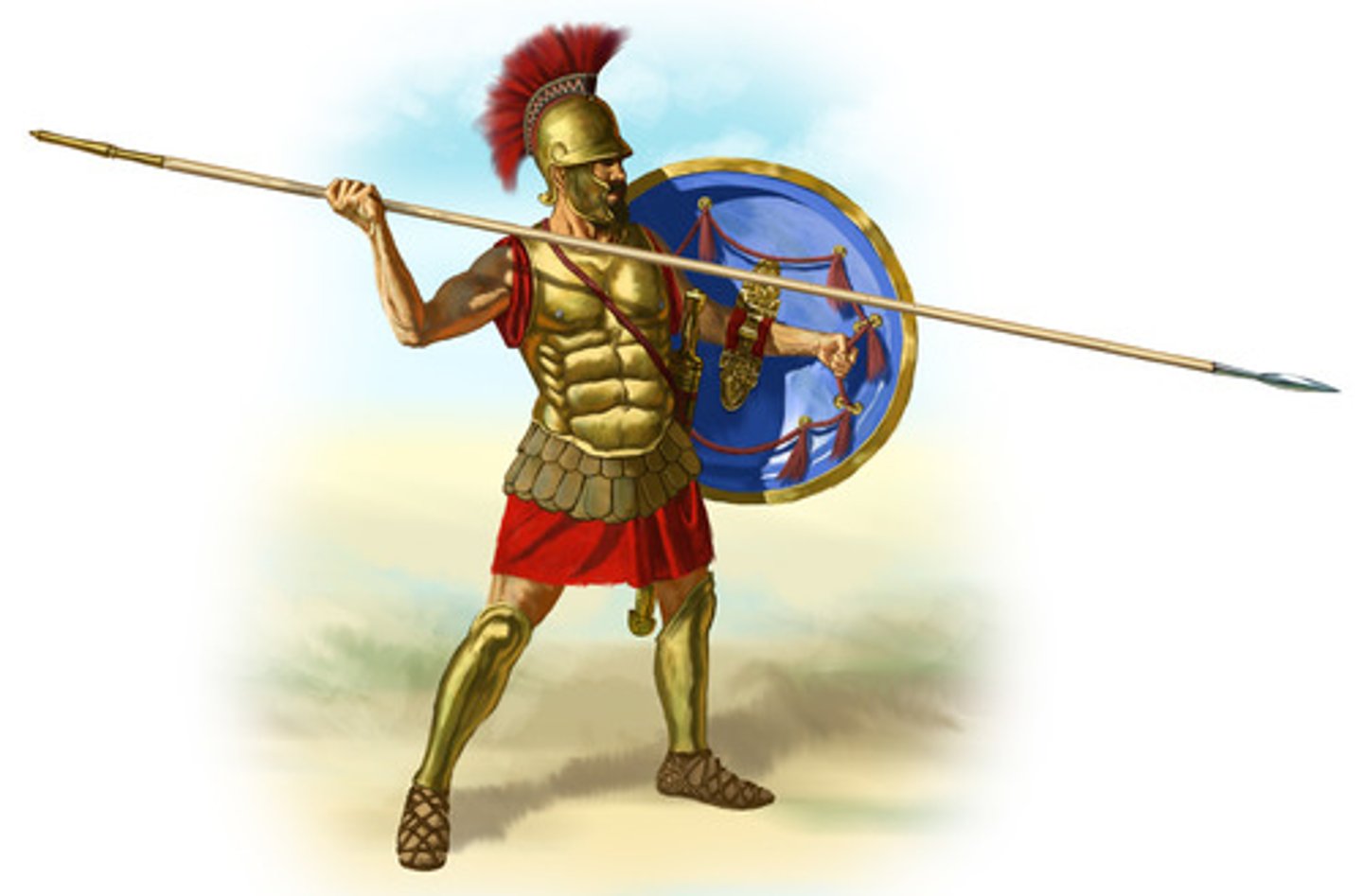
hoplite
The Basic infantry type used in southern Greece in the 7th to 4th century BC. The infantryman was heavily protected in bronze armour and used spears, swords and knifes as there main armaments. These infantry were fought mainly in the phalanx formation, which had a huge defensive and offensive ability in combat. The disadvantage of being a hoplite was you were slow moving, so you were vulnerable to missile and flanking cavalry attacks.
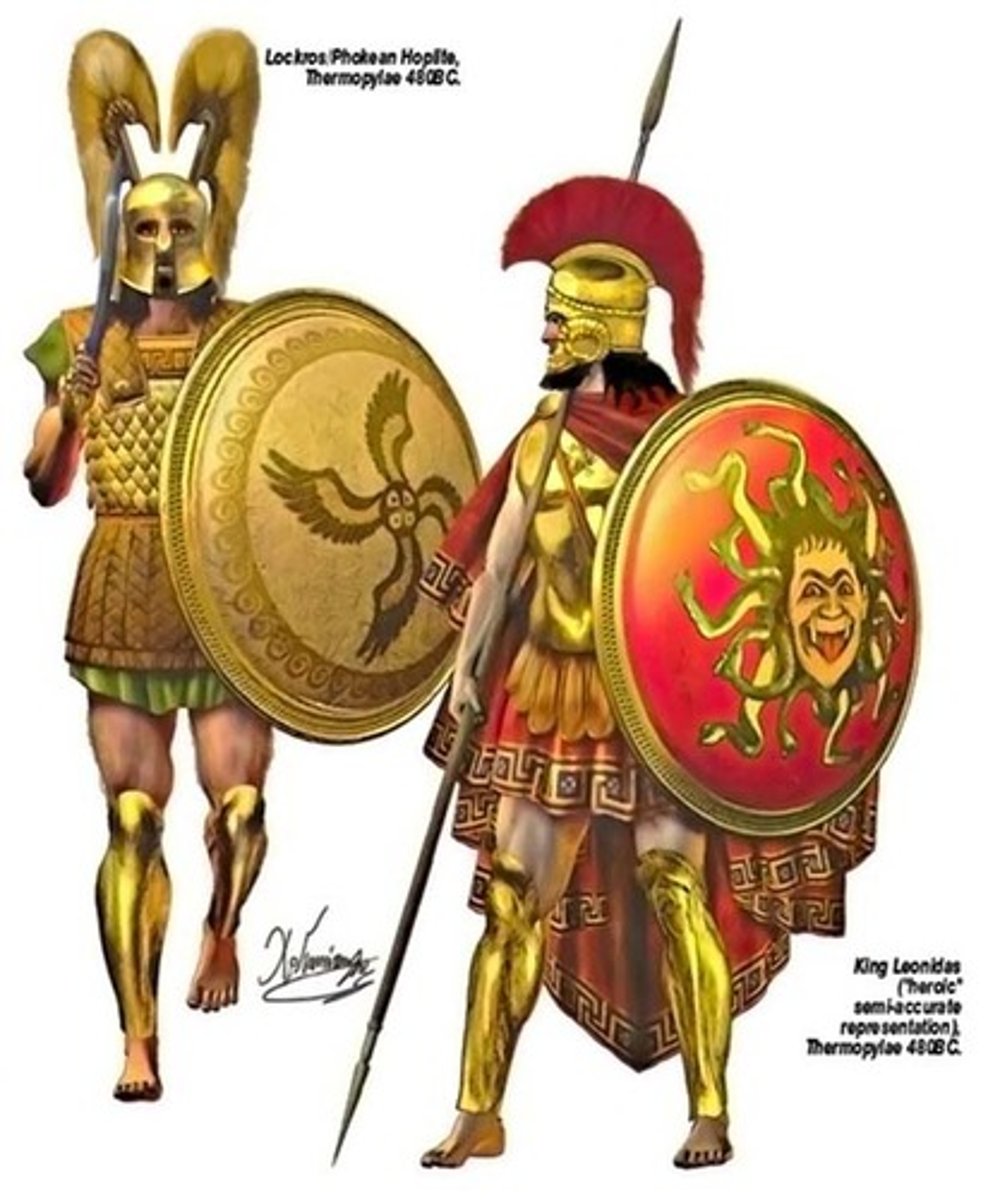
panoply
A full set of armour for a hoplite.
xiphos
A double-edged sword used by ancient Greek hoplites. It was originally (for Spartans) 30 cm in length, during the Greco-Persian Wars. The Xiphos was the standard sword form for most hoplites, but Spartans preferred to use an even shorter sword.
dory spear
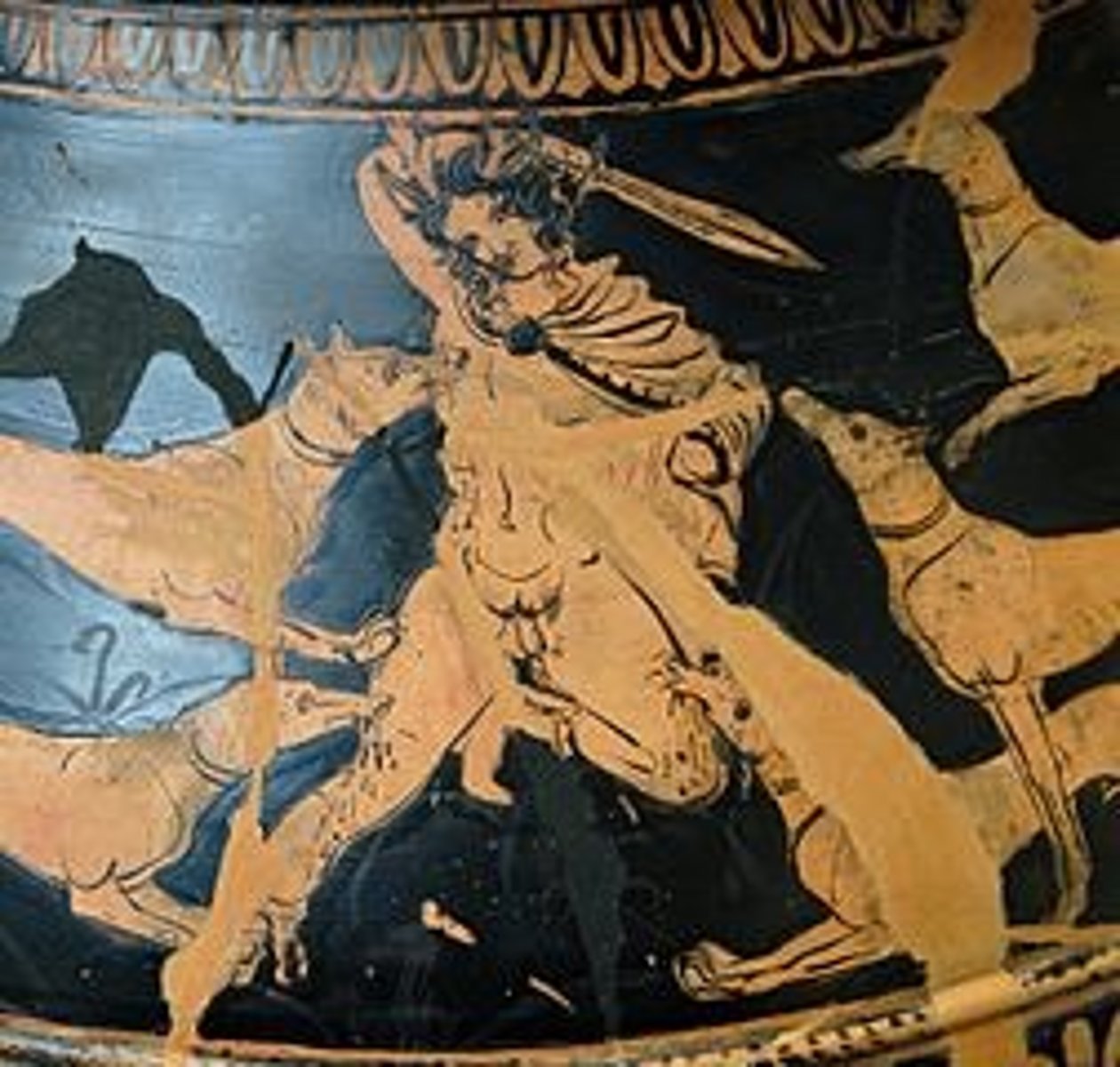
A spear that was the main armament of a hoplite. It was 2.5 to 3 meters in length and had an iron spear point and a bronze butt-spike called a saunter or lizard killer.
kopis
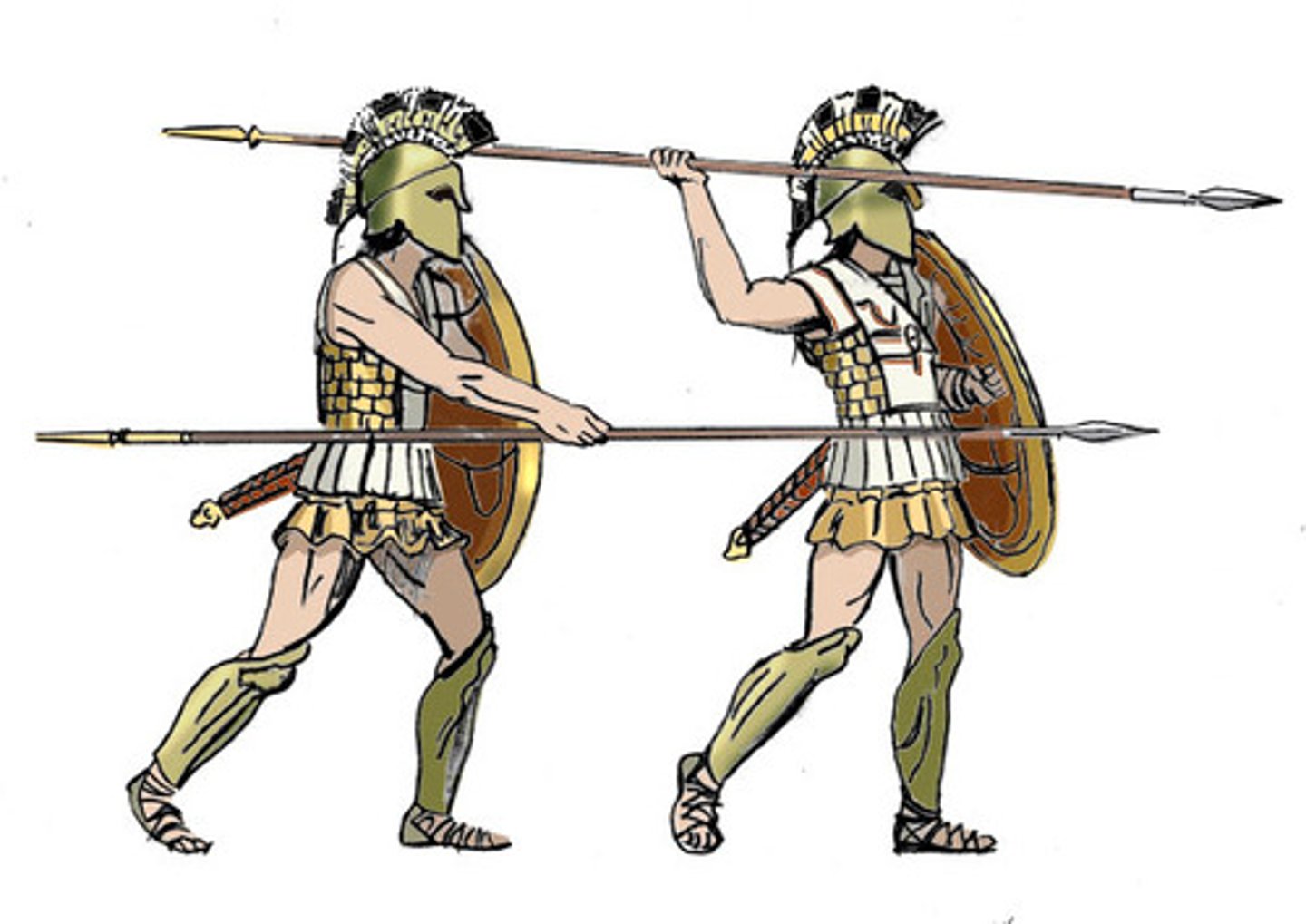
A heavy knife with a forward-curving blade used in open combat, as a type of 'anti-armour' weapon. Used mainly in rocky or broken terrain where a phalanx wouldn't work.
cuirass
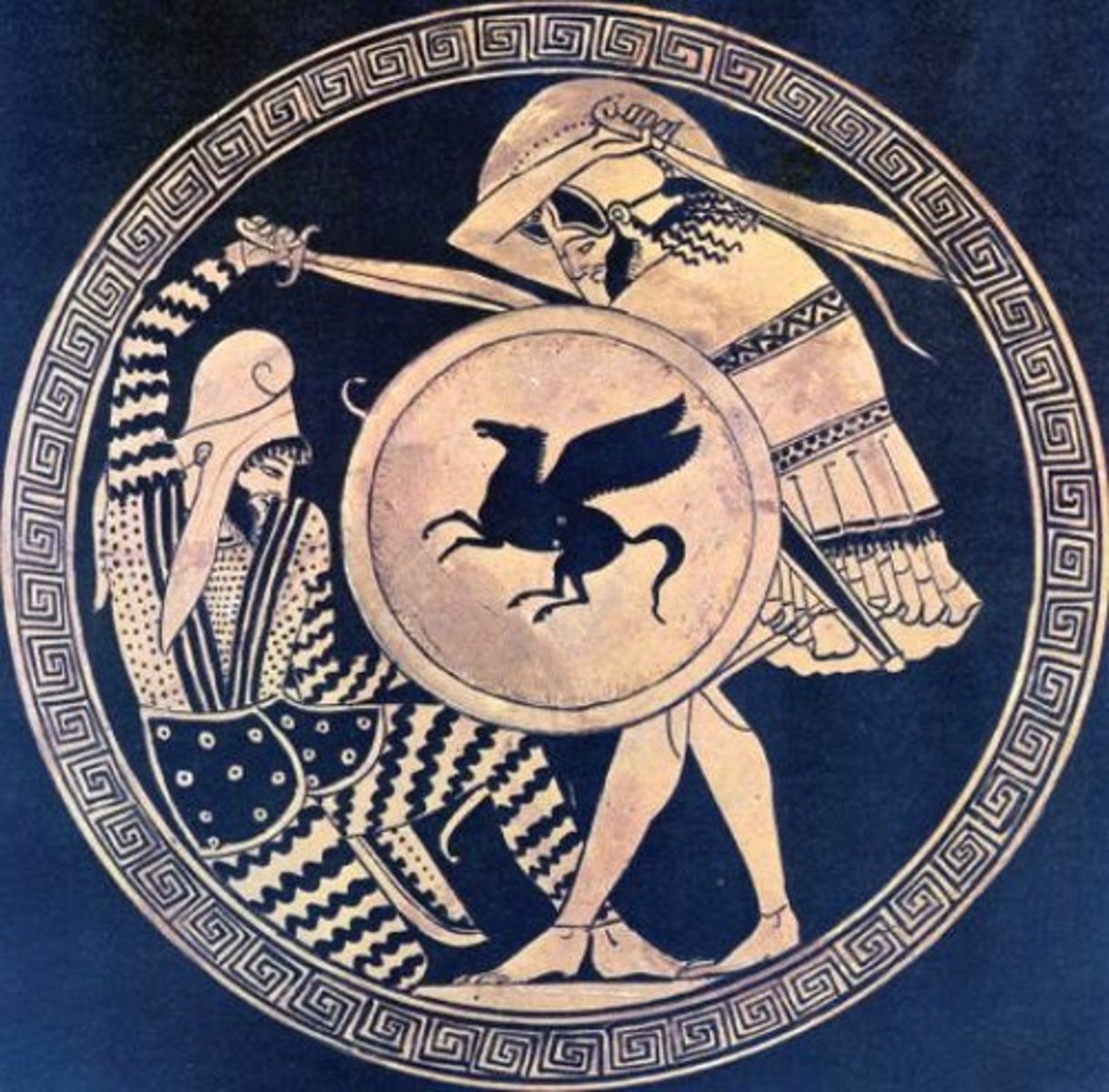
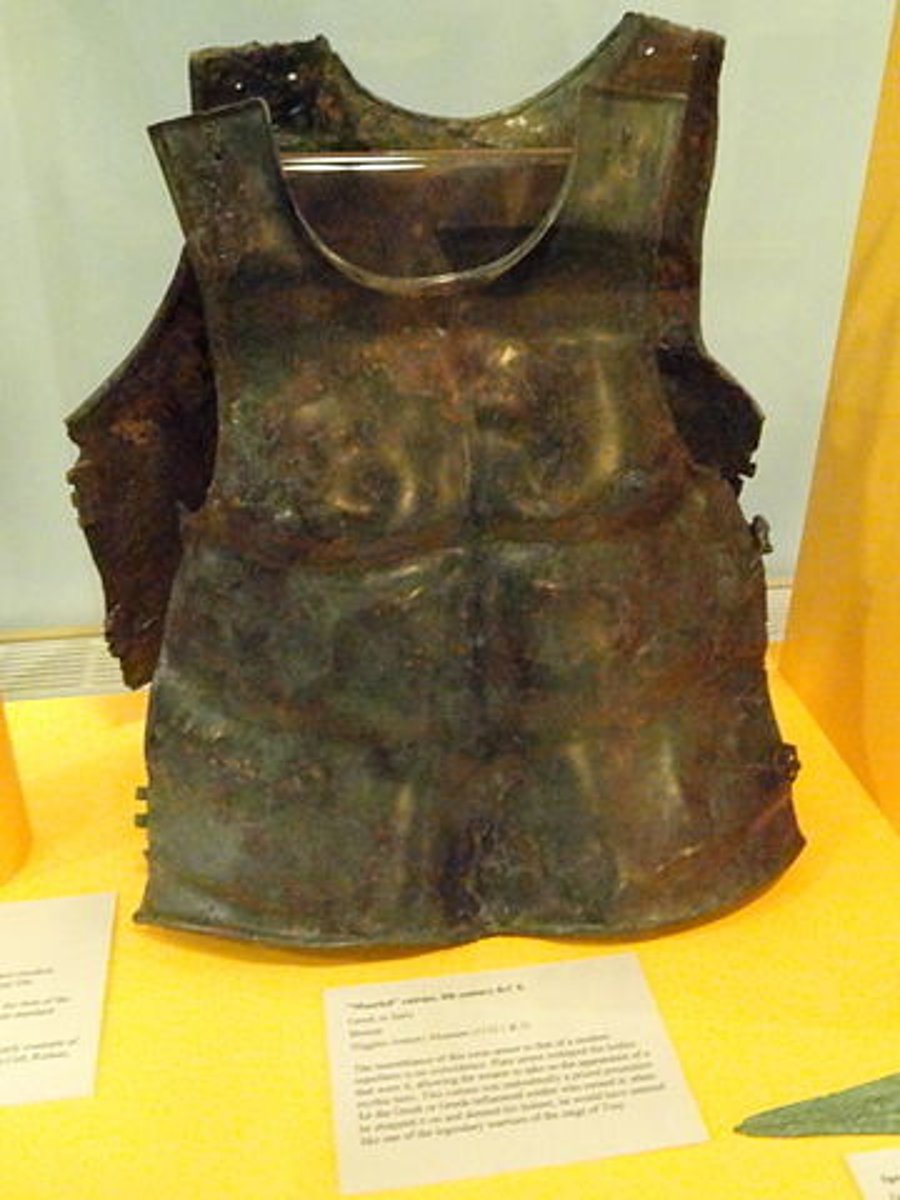
A type of body armour that was cast to fit the wearer's torso and designed to mimic an idealised human physique. This armour was made of bronze and used by all men in the Spartan army. The upper classes would have more intricate designs.
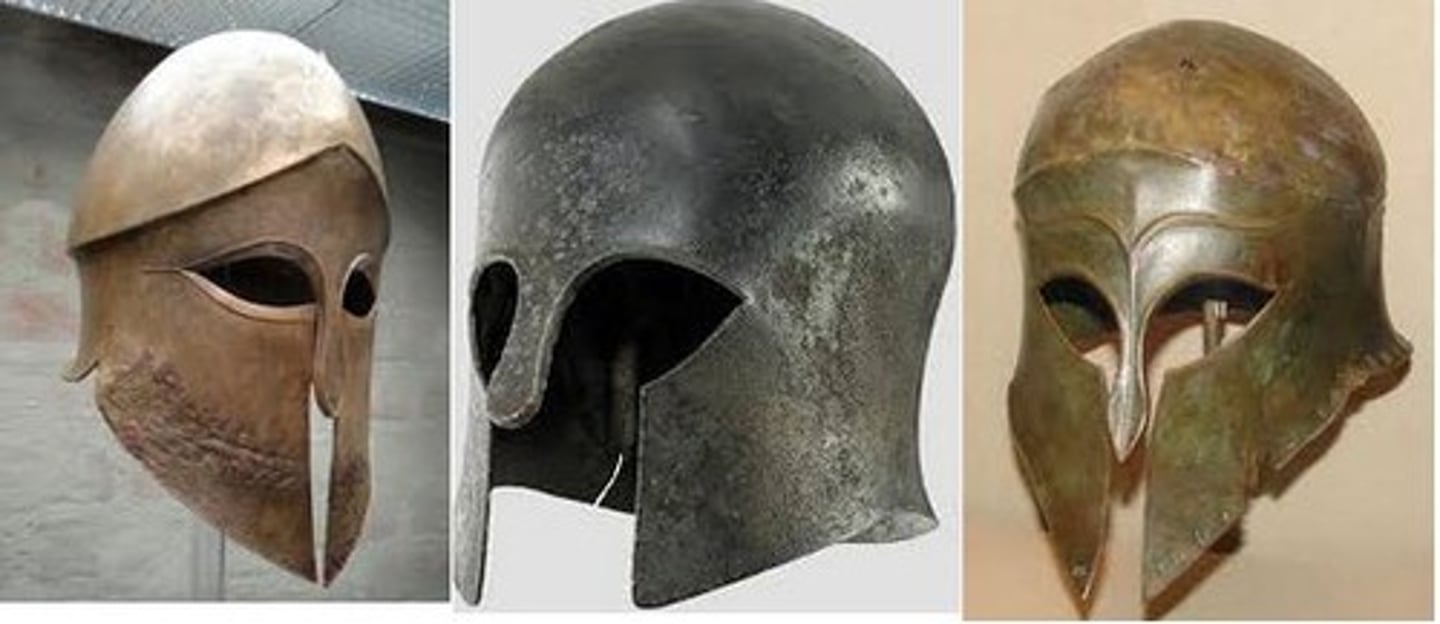
Corinthian Helmet
A helmet preferred by the Spartans. It was made of solid bronze and was designed to intimidate the enemy and give nearly complete protection of the head
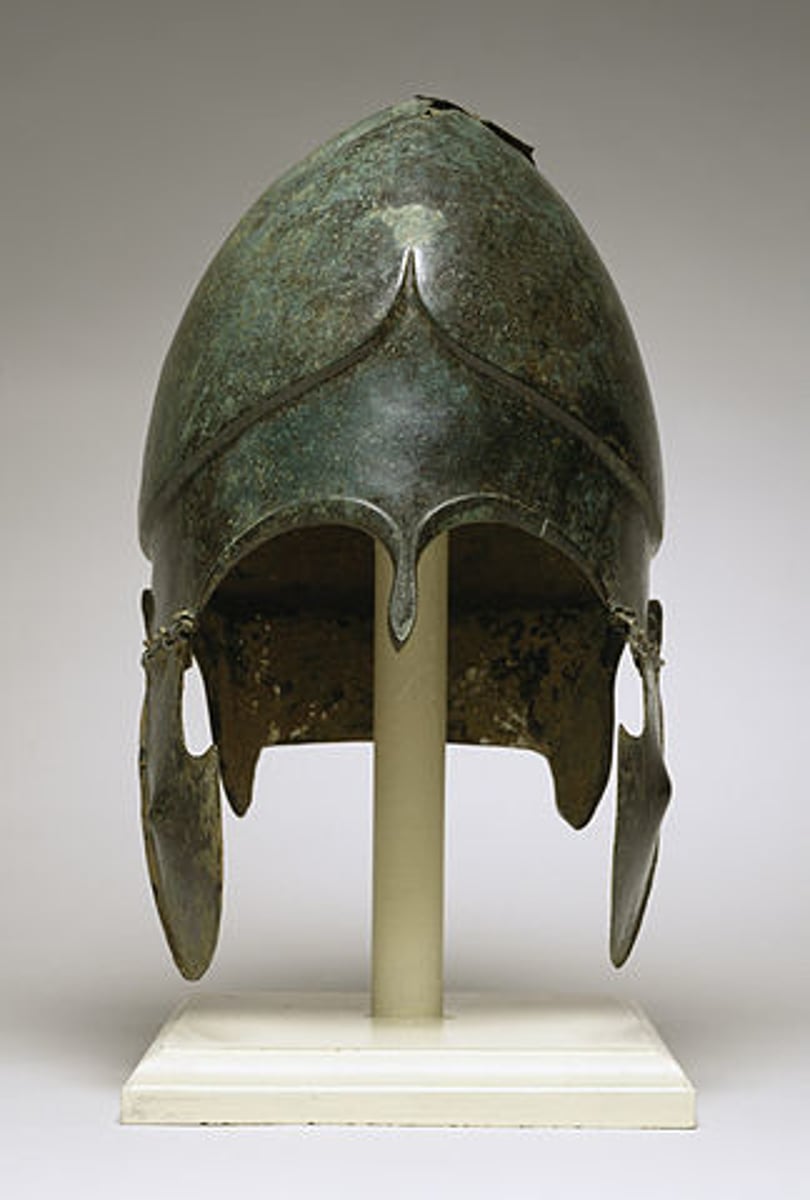
Chalcidian helmet
This was an evolution of the Corinthian helmet. The Spartan's used it by the battle of Leuctra
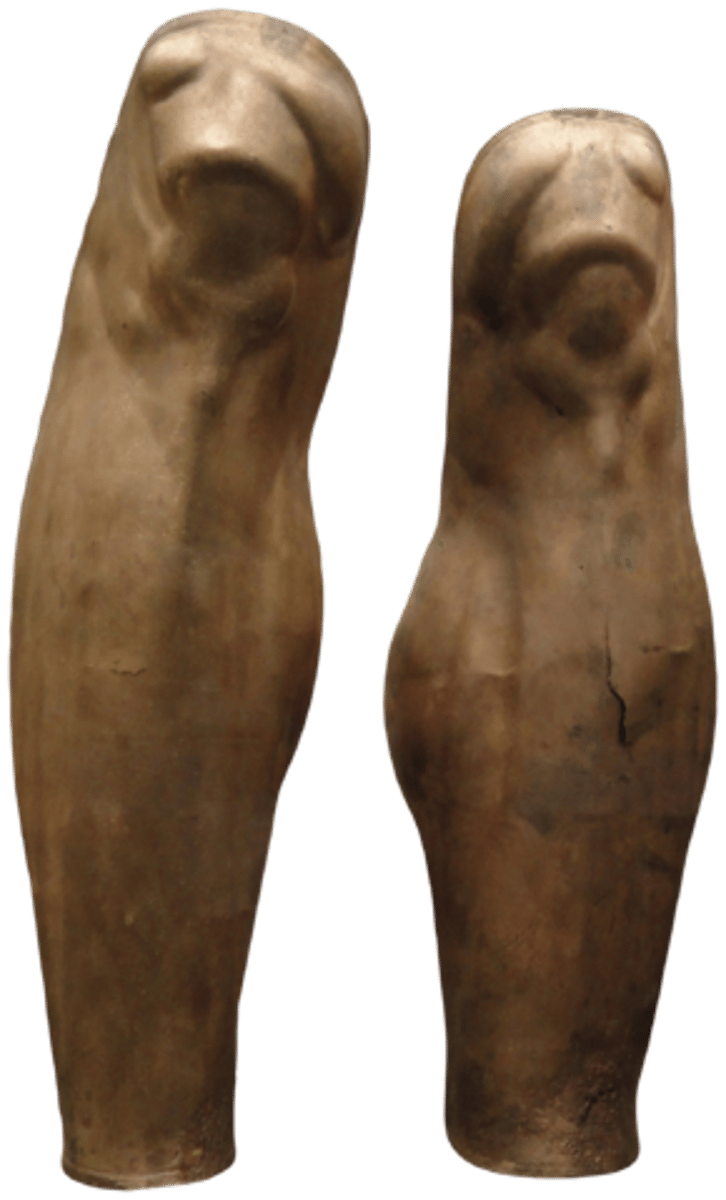
greaves
A sheet of bronze shaped and used to protect the lower leg. It was mainly intended to protect the tibia from being broken during battle. Felt or leather was used as padding to give further protection to the wearer. Most Hoplites only wore a greave on their left leg, but the Spartan state provided its soldiers with 2 for added protection.
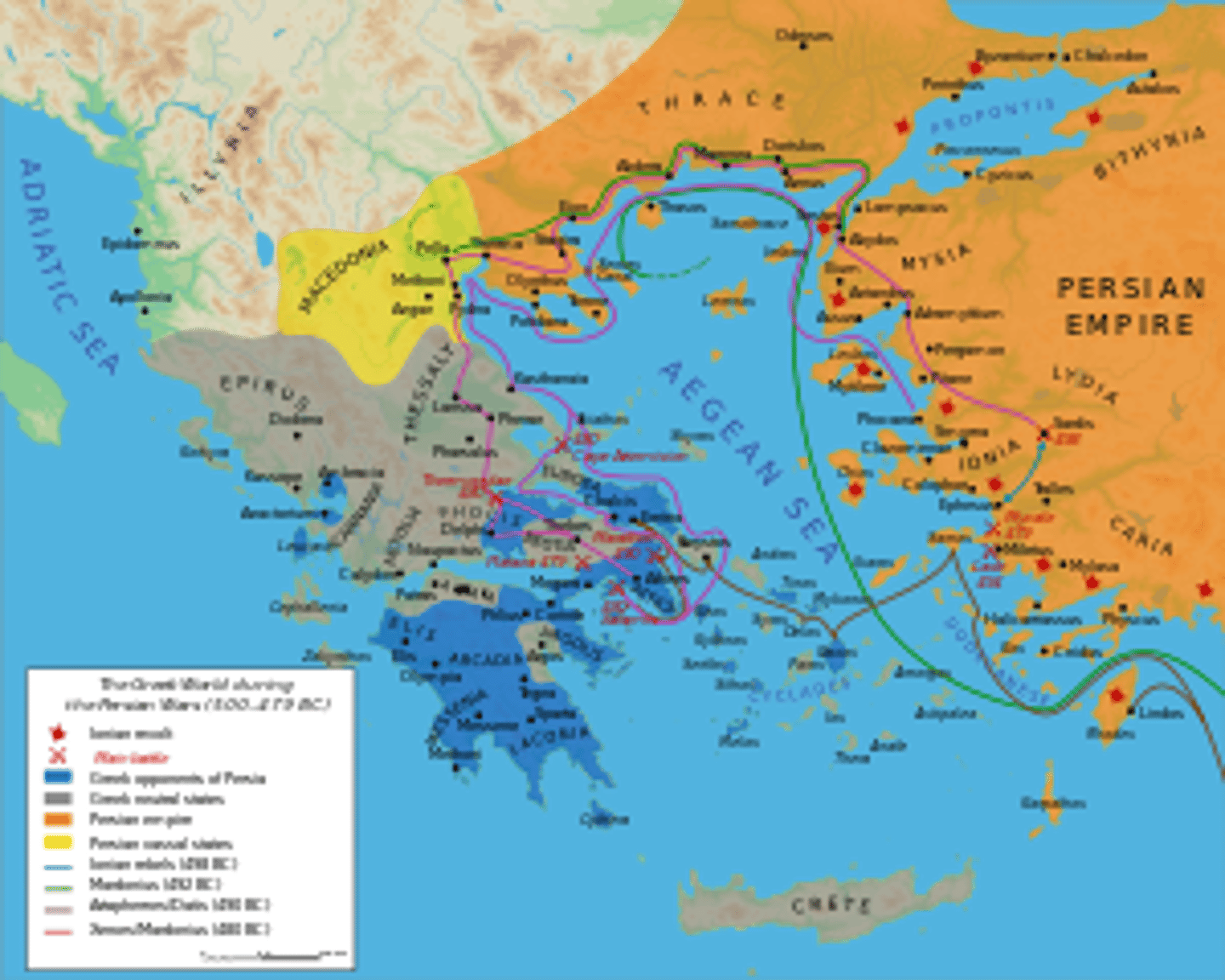
Greco-Persian wars
A series of conflicts between the Achaemenid empire of Persia and the city-states of the Hellenic world. During the second conflict, the Spartans were the leaders of the combined land and seas defence of Greece. The Spartans were the main contributor of manpower on land during the war
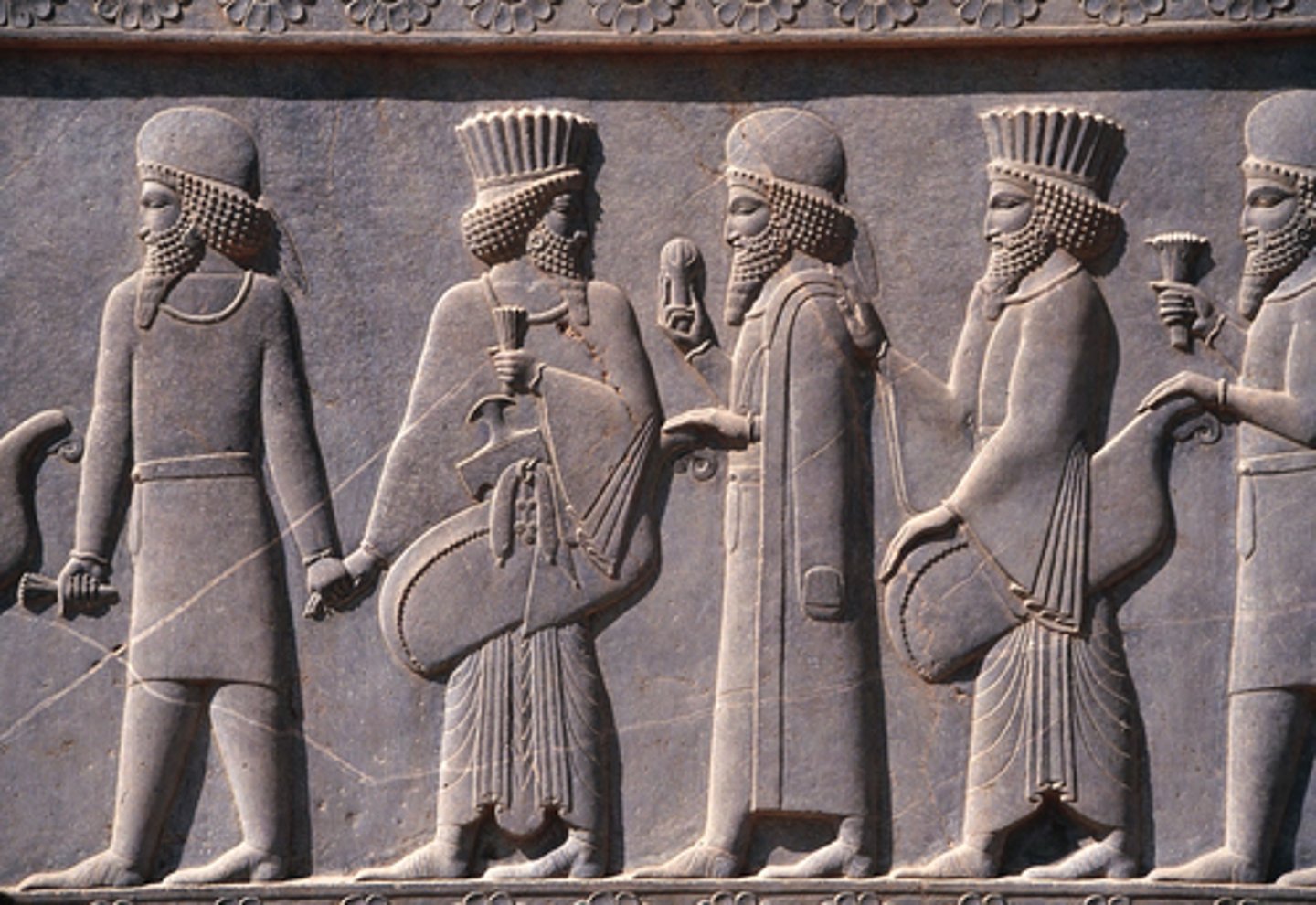
Medes
A term often used by Herodotus to describe the Persians during the Greco-Persian wars.
Oligarchy
A small group of people having control of a country, organization, or institution.
hegemony
Leadership or dominance by one government or social group over others.
Hypomeiones
A Spartan social class, denoting an 'Inferior' - one who had undergone training in the agoge, but was unable to meet their citizenship obligations by paying their syssitia dues.
perioikoi
Free, but non-citizens of Sparta. Referred to as the 'dwellers around' - lived on Sparta's outskirts. Many perioikoi fought in the Spartan phalanx and also played a significant role by crafting the armour and weapons.
helot
Enslaved people of Messenia. Served as servants and lightly armed skirmishers in battle.
Spartiate
A full Spartan citizen
Sciritai
A people subject to Sparta, with similar rights to the periokoi. They lived in Skiritis, a mountainous region located in northern Laconia on the border with Arcadia, between the Oenus and the Eurotas rivers. In war the Sciritae formed an elite corps of light infantry, a lochos (battalion) of about 600 men, which were used as a complement to the civic army. According to Thucydides (v. 67), they fought on the extreme-left wing in the battle-line, the most threatening position for the hoplite phalanx: "In this battle the left wing was composed of the Sciritae, who in a Lacedaemonian army have always that post to themselves alone".
polemarch
Military leader.