Module 2 - Organisation of living things
 Call Kai
 Learn
Learn Practice Test
 Spaced Repetition
 Match
Match Flashcards
 Knowt Play
1/73

There's no tags or description
Looks like no tags are added yet.
Name | Mastery | Learn | Test | Matching | Spaced | Call with Kai | Chat |
|---|
No analytics yet
Send a link to your students to track their progress
74 Terms
unicellular organism
An organism made up of one cell.
colonial organism
collection of identical cells that live together in a connected group
multi-cellular organism
An organism that consists of more than one cell.
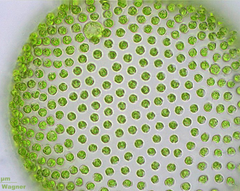
volvox
Colonial green algae held together in a secretion of gelatinous material, resembling hollow ball

cyanobacteria
single celled photosynthetic bacteria

hierarchical structure of organisation
cells --> tissue --> organ --> organ system --> organism
cell specialisation and differentiation
When a stem cell turns into another sort of cell to do a certain job (such as a muscle cell).
specialised cell
A cell that is adapted for a certain specific function (job).
tissue
A group of similar cells that perform the same function.
connective tissue
Tissue that functions mainly to bind and support other tissues.
epithelial tissue
A body tissue that covers the surfaces of the body, inside and out
muscle tissue
A body tissue that contracts or shortens, making body parts move.
vascular tissue
specialized tissue in plants that carries water and nutrients
the leaf
organ that produces sugar for a plant
the heart
organ that helps pump blood around the body

organ
group of tissues that work together to perform closely related functions
organ system
A group of organs that work together in performing vital body functions.
organism
a living thing
gas exchange
the process of obtaining oxygen from the environment and releasing carbon dioxide
oxygen
A gas that is brought into the body by the respiratory system.
carbon dioxide
A gas that is expelled from the body by the respiratory system.
photosynthesis
Conversion of light energy from the sun into chemical energy.

cellular respiration
the process by which cells use oxygen to produce energy from food

Mammalian respiratory system
contains lungs, which contain alveoli

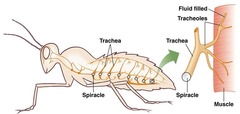
Insect respiratory system
contain spiracles and tracheae
Fish respiratory system
contains gills

Lungs
Main organs of the respiratory system
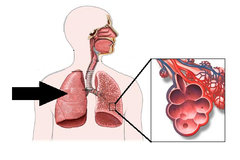
Alveoli
tiny sacs of lung tissue specialized for the movement of gases between air and blood

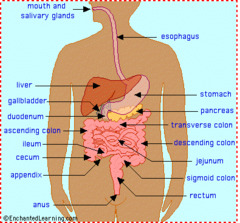
Digestive system
Breaks down food into absorbable units that enter the blood for distribution to body cells.
physical digestion
The mechanical breakdown of large food particles into smaller ones

chemical digestion
Enzymes break down food into smaller molecules

amino acids
building blocks of proteins
absorption
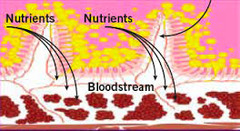
The process by which nutrient molecules pass through the wall of the digestive system into the blood
small intestine and large intestine
stomach
large muscular sac that continues the mechanical and chemical digestion of food
teeth
structure of the digestive system that begins mechanical digestion
small intestine
Digestive organ where most chemical digestion and absorption of food takes place
large intestine
Absorbs water and forms feces
pancrease
a large gland behind the stomach that secretes digestive enzymes into the duodenum

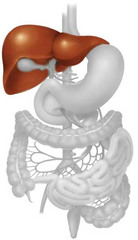
liver
organ that produces bile and stores nutrients
villi
tiny, finger-like structures that protrude from the wall of the intestine

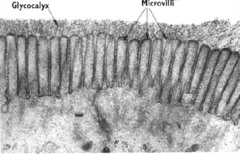
microvilli
projections that increase the cell's surface area for maximum absorption of nutrients
rectum
The last part of the digestive tract, through which feces are eliminated
roots
Absorbs water and minerals from the ground. Anchors plant in ground.
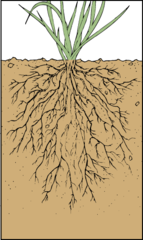
root hair
small hairs on a root that produce a large surface area through which water and minerals can enter
osmosis
movement of water from an area of low solute to an area of high solute through a semi-permeable membrane
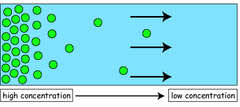
diffusion
Movement of molecules from an area of higher concentration to an area of lower concentration.
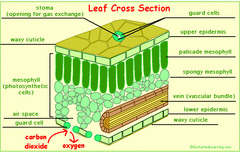
stomata
Small openings on the underside of a leaf through which oxygen and carbon dioxide can move
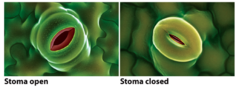
guard cells
control the opening and closing of stomata

spongy mesophyll
Loose tissue beneath the palisade layer of a leaf; has many air spaces between its cells

epidermis
protective layer of a leaf
cuticle
the waxy, waterproof layer that covers the leaves and stems of most plants

palisade mesophyll
layer of closely packed mesophyll cells under the epidermis that absorb light that enters the leaf
Whole blood
Connective tissue made of plasma, red blood cells, white blood cells, and platelets.

red blood cells
Blood cells that carry oxygen from the lungs to the body cells.

plateletes
cell fragments that help blood to clot after an injury.
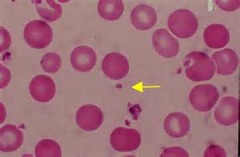
white blood cells
diease fighting cells in blood

plasma
liquid portion of blood

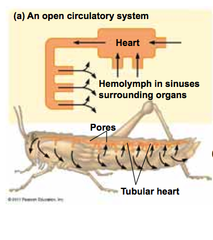
hemolymph
In invertebrates with an open circulatory system, the body fluid that bathes tissues.

open circulatory system
system in which blood is not always contained within a network of blood vessels
closed circulatory system
A circulatory system in which the oxygen-carrying blood cells never leave the blood vessels

Aorta
the main artery of the body, supplying oxygenated blood to the circulatory system

Pulmonary artery
Carries deoxygentated blood from the heart to the lungs

Atrium
A heart chamber that receives blood.

Ventricle
Pumps blood out of the heart
valves
prevent back flow of blood
blood vessel
a tubular structure carrying blood through the tissues and organs; a vein, artery, or capillary.
capillaries
Microscopic vessel through which exchanges take place between the blood and cells of the body
veins
blood vessels that carry blood back to the heart
arteries
carry blood away from the heart
vascular bundle
plant stem structure that contains xylem and phloem tissue

xylem
transports water and minerals

phloem
Living vascular tissue that carries sugar and organic substances throughout a plant

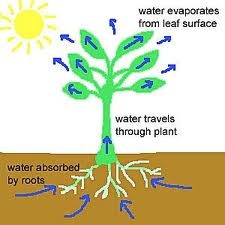
transpiration cohesion adhesion theory
how water travels in xylem
translocation
how sugar and other organic nutrients travels in phloem
