ESCI 203 Sedimentary Rocks
 Call Kai
 Learn
Learn Practice Test
 Spaced Repetition
 Match
Match Flashcards
 Knowt Play
1/49

There's no tags or description
Looks like no tags are added yet.
Name | Mastery | Learn | Test | Matching | Spaced | Call with Kai | Chat |
|---|
No analytics yet
Send a link to your students to track their progress
50 Terms
Weathering
Exposure of pre-existing rocks to physical and chemical weather conditions; water, wind and ice.
Erosion
The movement of weathered rock from its original location.
Physical Weathering
Physical disintegration; results in exposure of ever increasing number of surface area to weathering.
Chemical Weathering
Changes in chemical composition; new mineral formation through addition or subtraction of elements or further chemical decomposition of minerals.
Dominating agent of physical and chemical weathering
Water; introduces elements and physically erodes.
Diagenesis
Processes used to lithify sediment. Deposition, burial, compaction, cementation.
What does weathering produce in water?
Sediment and ions
Ions in water can…
Used in cementing sediment, used as nutrients in life, or precipitated to form new rock.
Detrial
Clastic
How are clastic sedimentary rocks classified?
Grain size, composition, and shape (rounded, angular)
What environments create inorganic chemical sedimentary rock?
Ones where temperature, pressure, solute concentration, or dissolved gas change causes minerals to crystalize.
Formation of biochemical sedimentary rock
Living creatures use aqueous chemicals to create shells or other body parts from calcite or silica
What organisms create calcite shells?
A wide variety of sea life
What organisms create elaborate silica skeletons?
Radiolarian, single-celled microorganisms
Organic sedimentary rock
Remnants of organic material that has undergone lithification. Coal, oil, methane natural gas
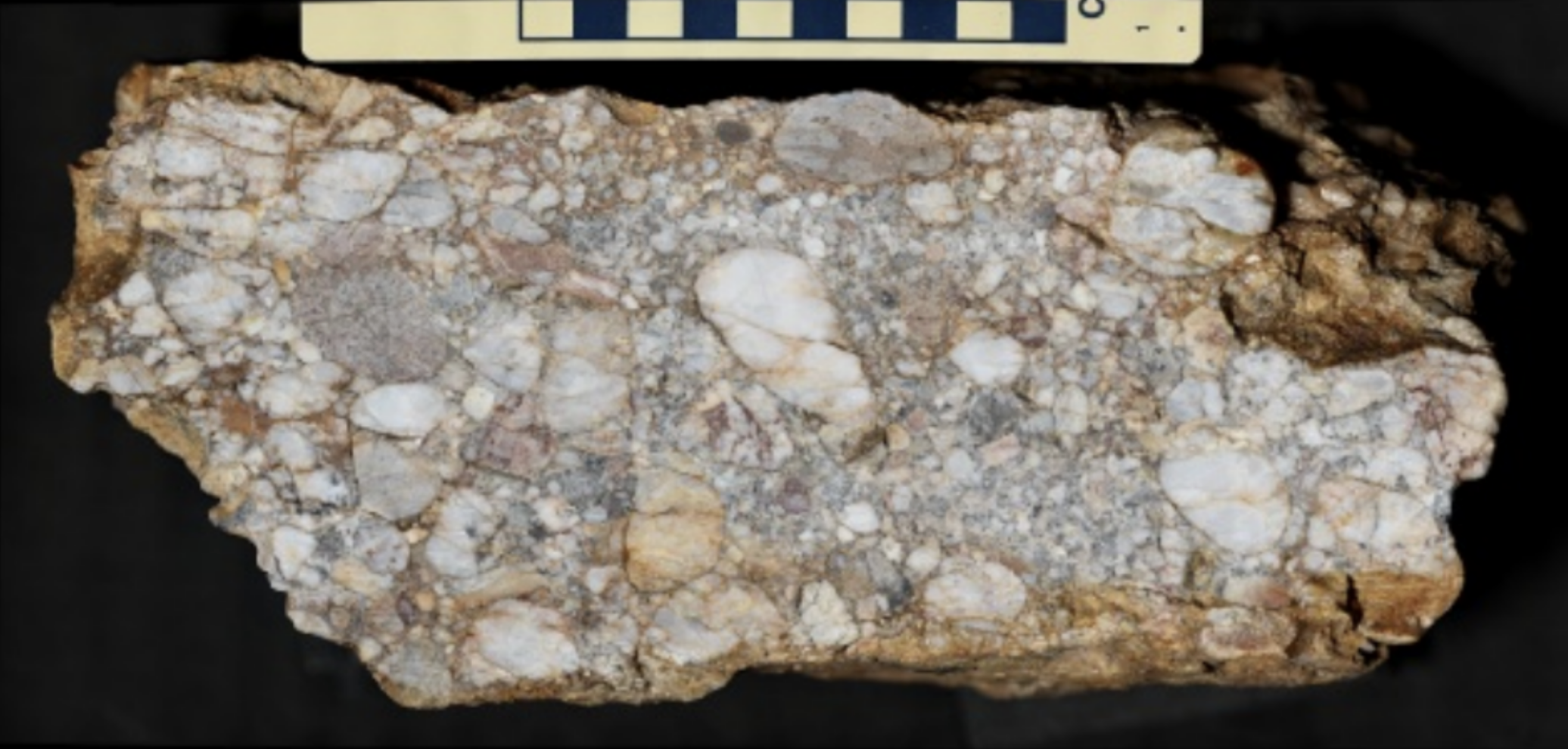
Conglomerate
Poorly sorted, rounded clasts >2mm in diameter. Finer-grain sediments constitute the matrix.
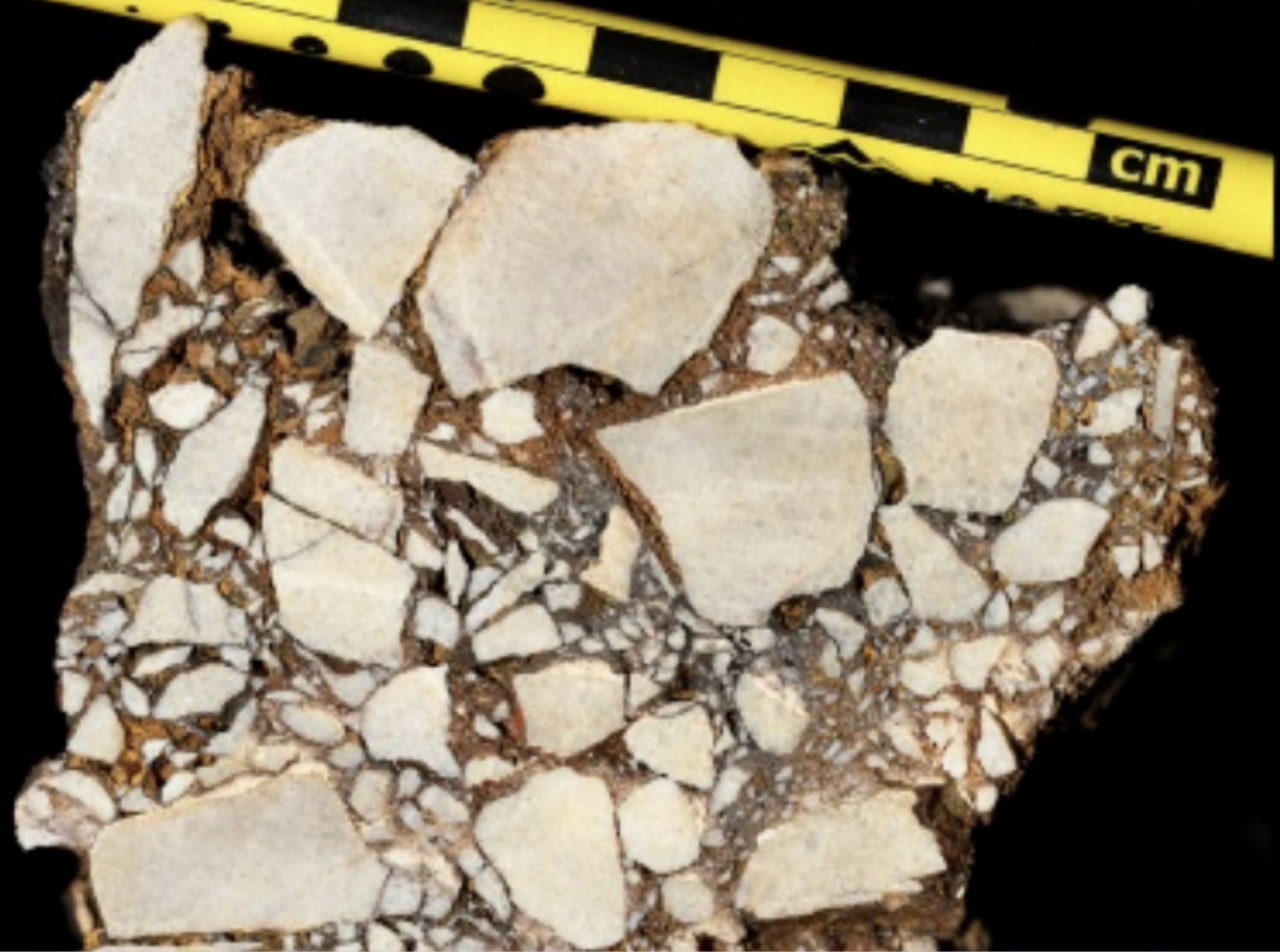
Breccia
Poorly sorted, angular clasts >2mm in diameter. Finer-grain sediments constitute the matrix.
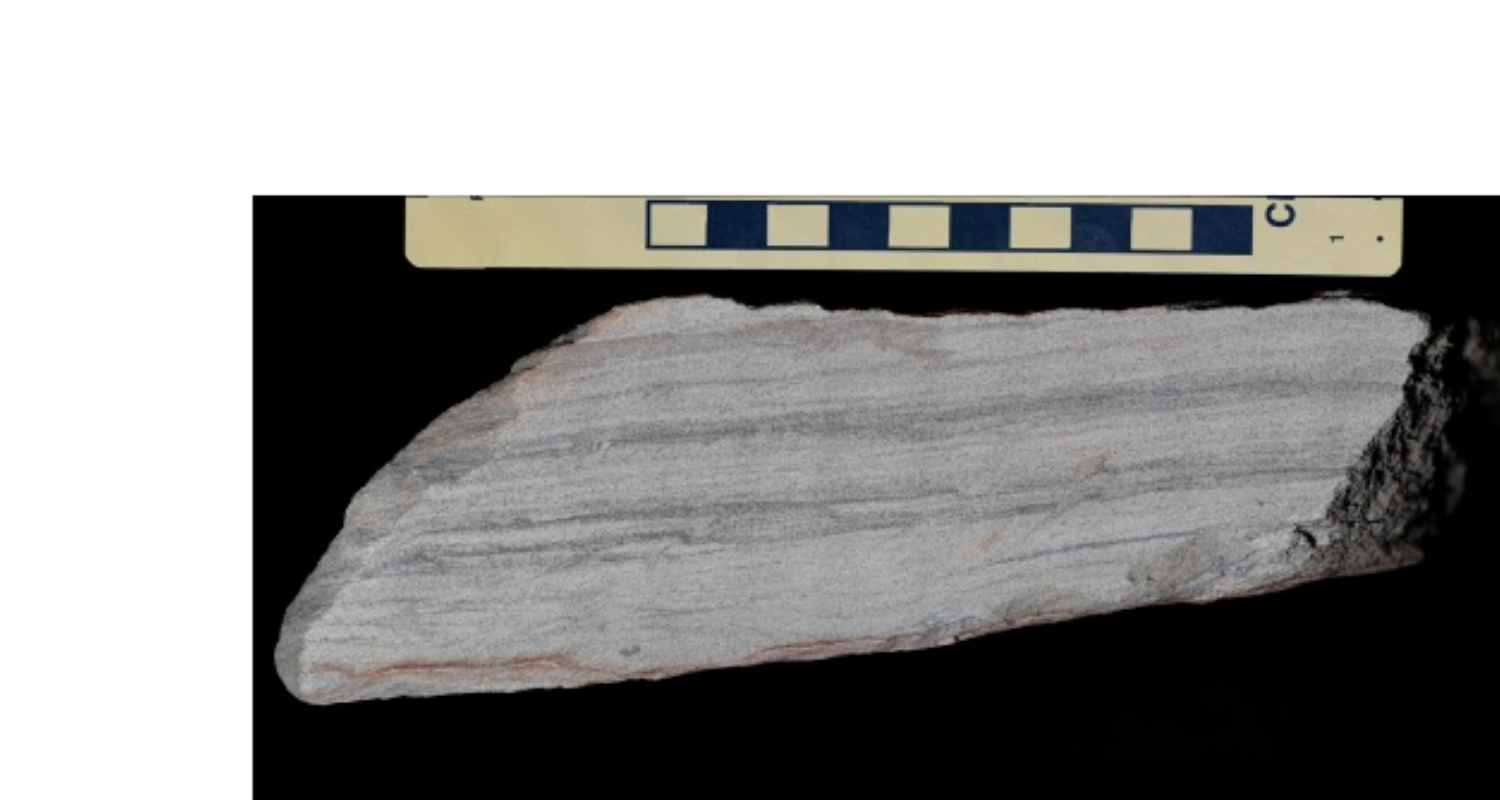
Quartz Sandstone
Variably sorted, variably rounded sand-sized (0.06-2mm) clasts of mostly quartz.
Arkose Sandstone
Variably sorted, mostly angular sand-sized (0.06-2mm) clasts of mostly feldspar. Typically pink (potassium feldspar) and white (plagioclase feldspar).

Graywacke
Sand-sized (0.06-2mm) quartz, feldspar, and small rock fragments set in a fine-grain clay matrix. A variety of sandstone often characterized by its dark grey colour.

Siltstone
Primarily composed of silt-sized particles (<0.06mm), and smaller pore space compared to sandstone. Often confused with Shale, but lacks fissility and lamination.
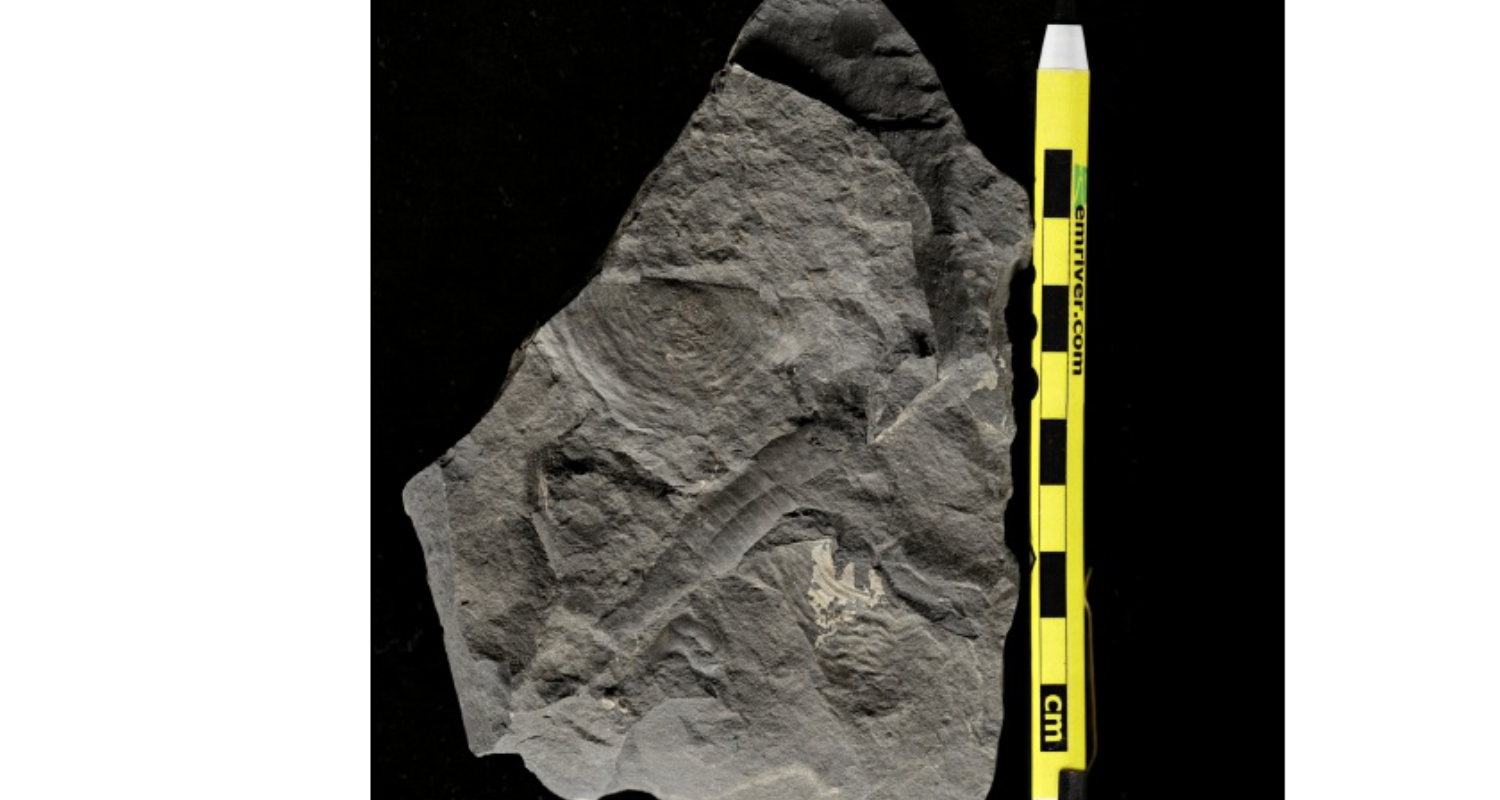
Fissility
Easy separation along bedding planes (layers).
Shale
Silt-sized particles (<0.06mm) embedded in clay matrix, characterized by breaks along parallel layering or bedding <1cm thick. Most common sedimentary rock.
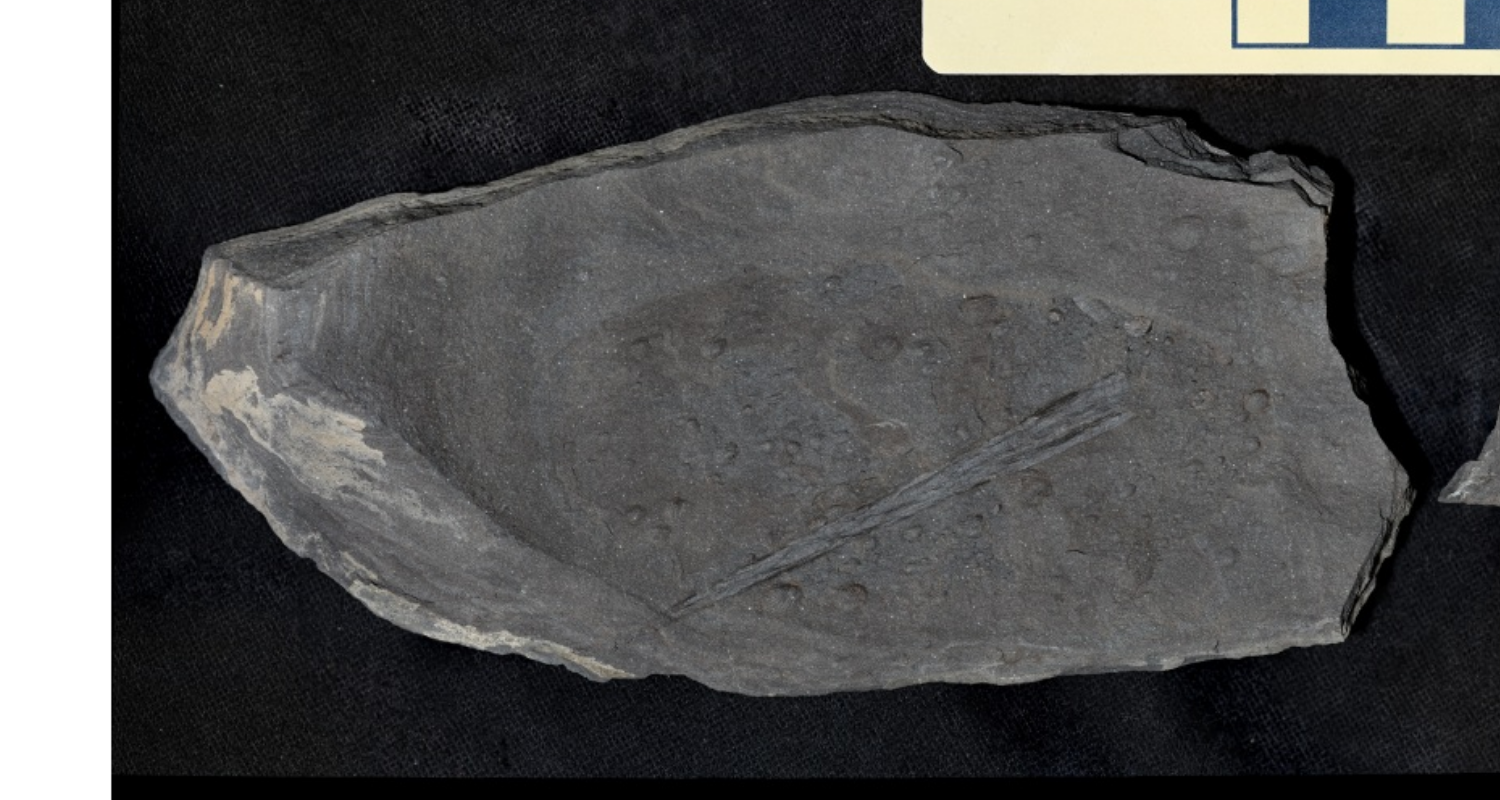
Claystone
Clay particles that cannot be seen with the naked eye (<0.004mm). Non-fissile (cannot be broken into easy layers).

Fossiliferous Limestone
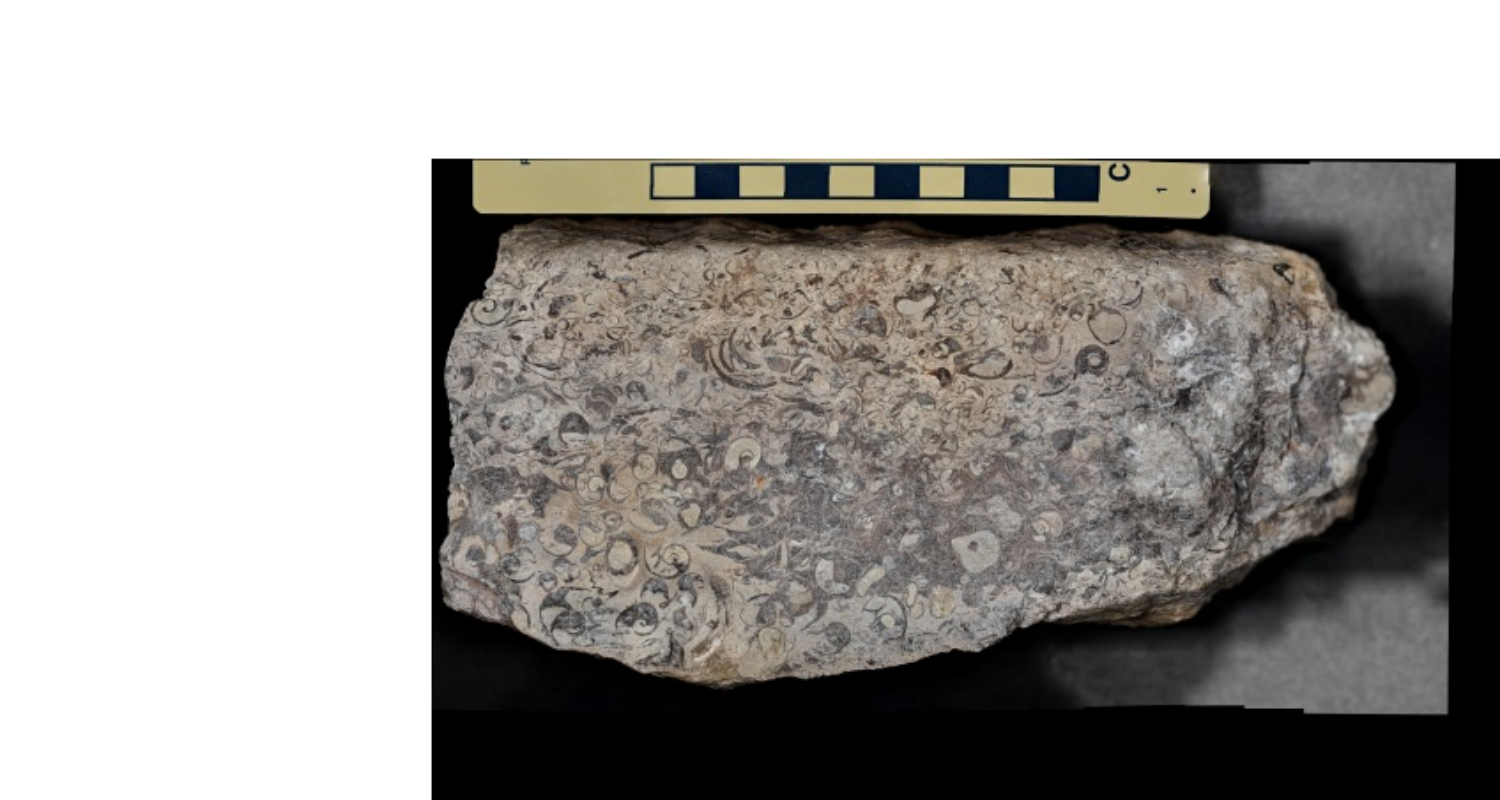
Ooltic Limestone
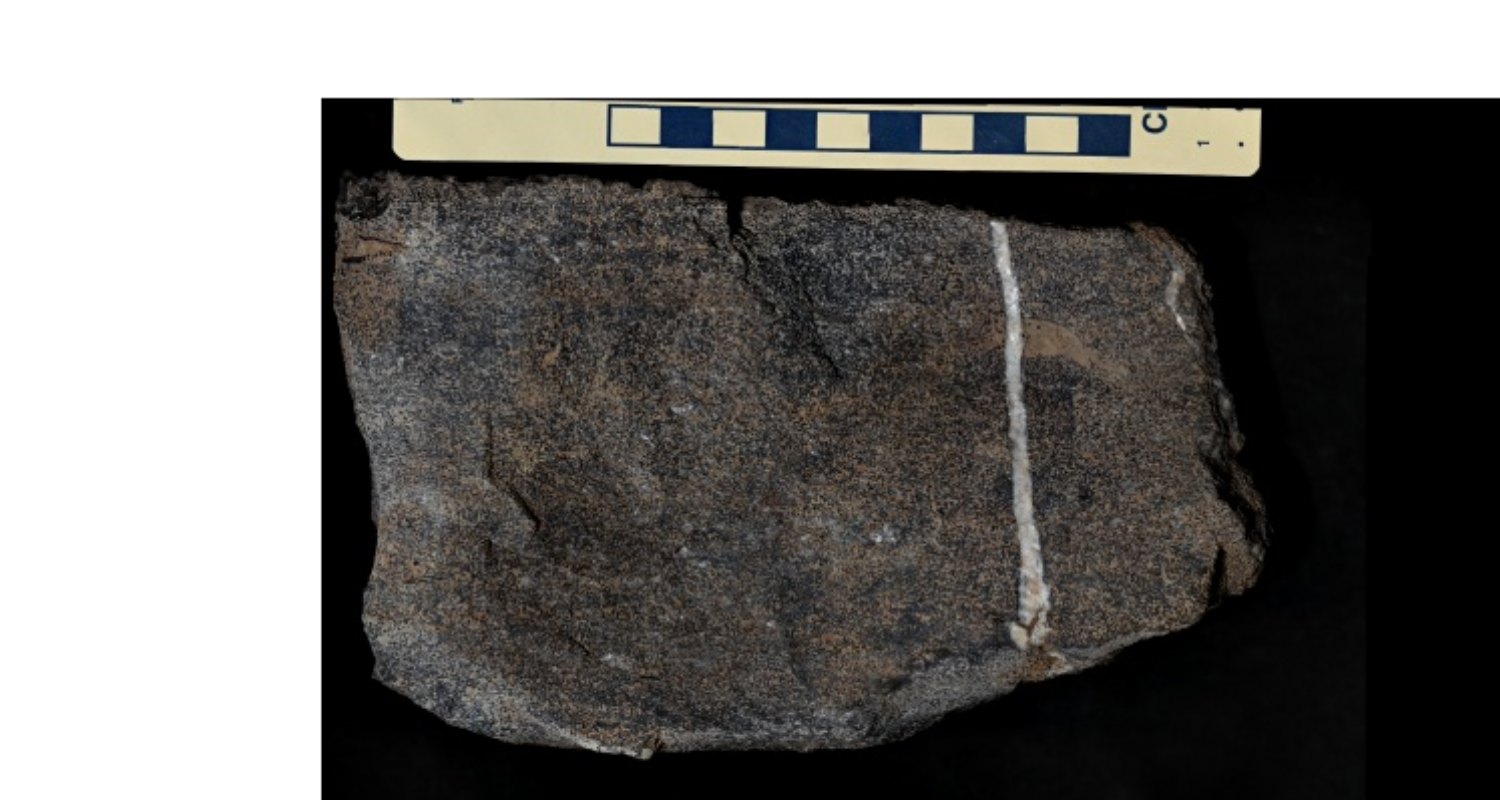
What creates beds?
Movement of Sediment; bedload transport, suspended particle accumulation, surface waves, flow regime
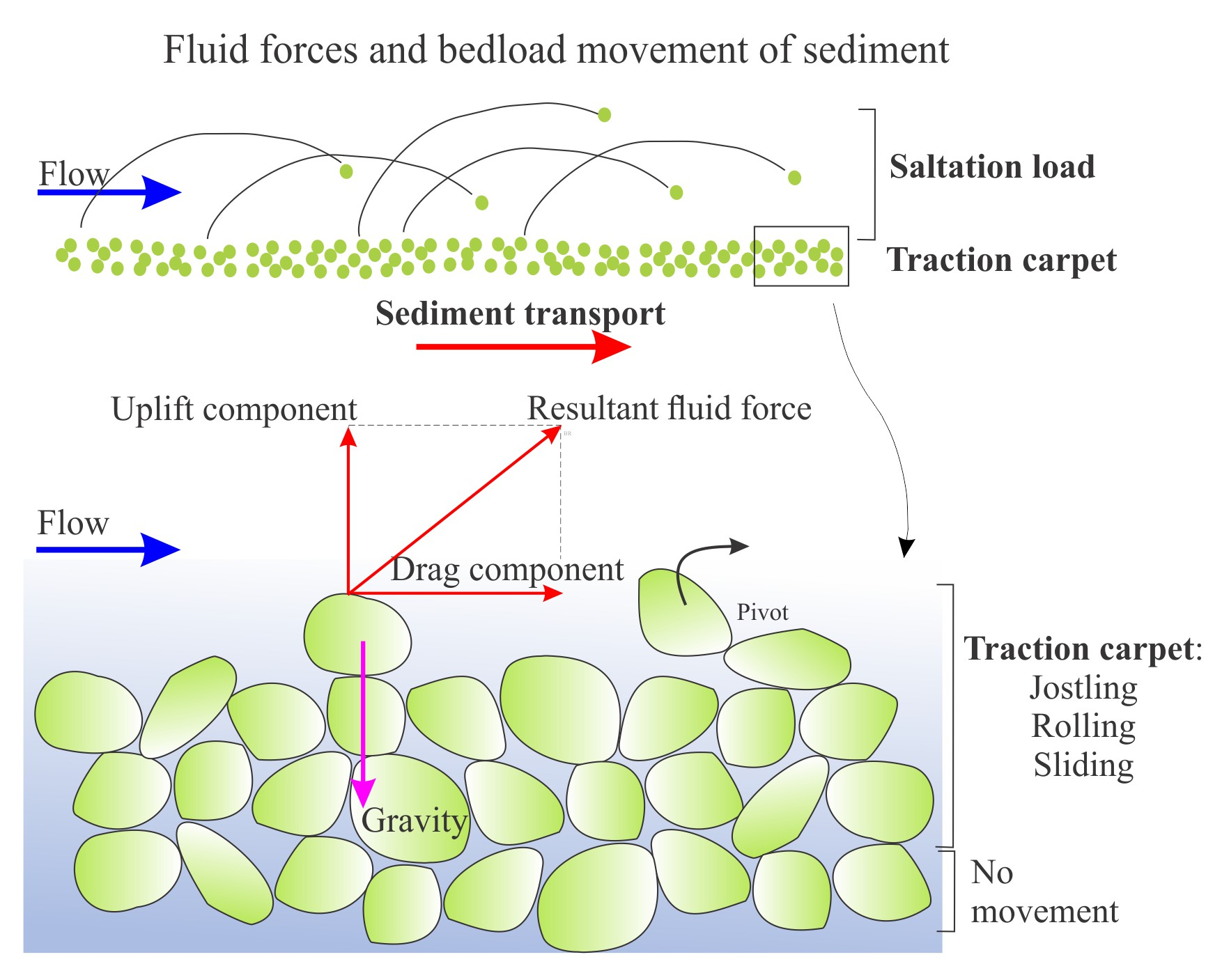
Bedload transport
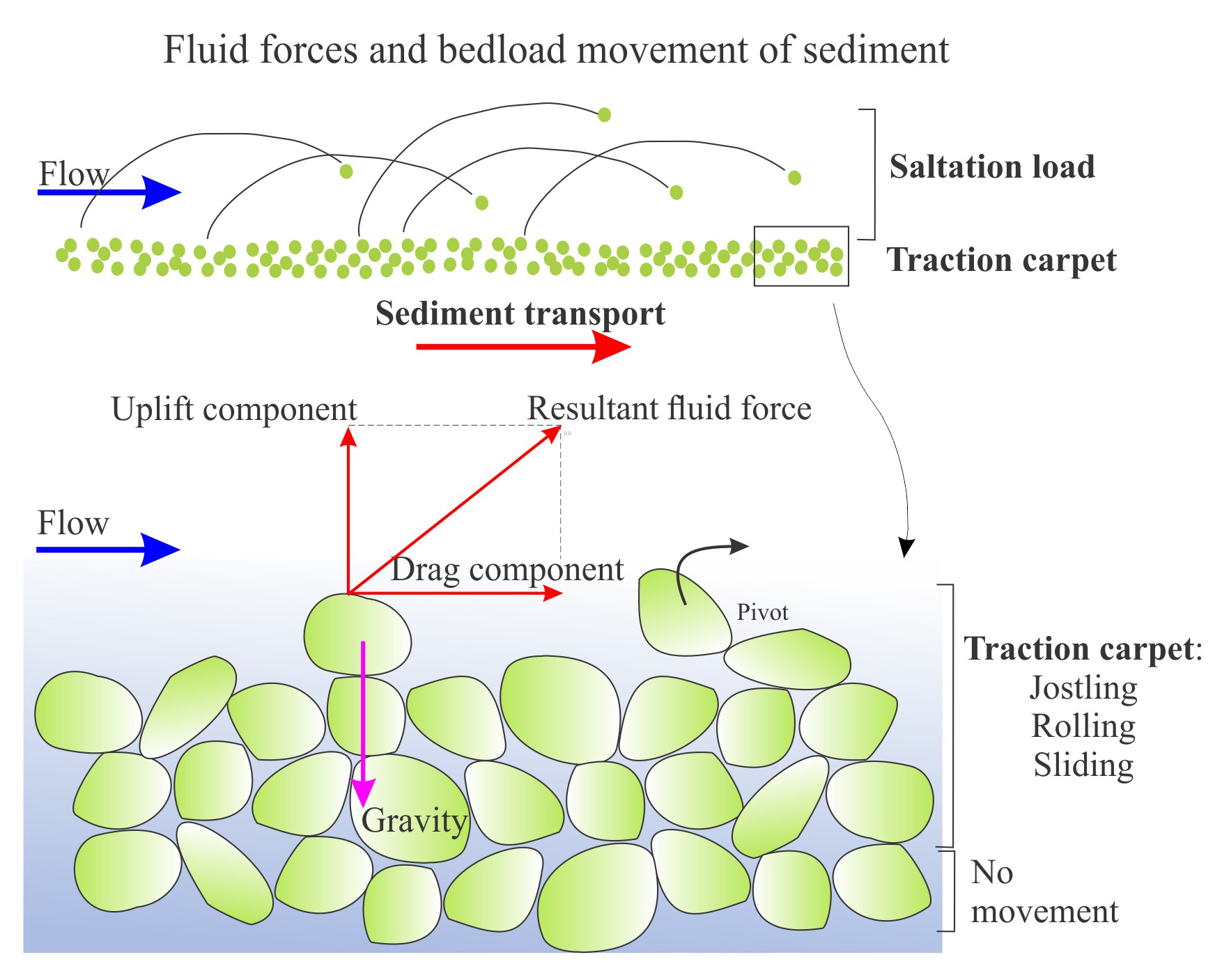
Fluid interacts with beds of loose sand/sediment. It moves them if the fluid velocity overcomes the threshold velocity.
Traction Carpet
Movement of the upper sediment layers of a bed across one another, produced by the sheer stresses of fluid flow (drag and lift); they do not leave the bed, but instead roll, slide, and jostle along the bed.
Saltation Load
Sediment in bedload transport that leaves the bed and is moved directly by the fluid. Less dense sediments are winnowed.
Platy Grain
A sediment grain that is elongated in one direction, instead of being equal in all dimensions.
Threshold Velocity
Velocity needed to overcome gravity and inter-sediment friction.

Hjulström Curve
Describes the flow speeds (y-axis) at which sediment particles of a certain size (x-axis) will be eroded, transported, or deposited. The yellow highlight indicates sand sediment.
Why does the Hjulström Curve neglect grain friction/cohesion?
Grain cohesion is only relevant in clay particles; in larger particles, it is negligible.
What is suspension load?
The portion of sediment suspended by turbulence (eddies, boils) in fluids. Sediment accumulates when turbulence decreases significantly.
Settling Velocity
The rate at which particles settle, when buoyancy and drag created by fluid velocity caused by turbulence can no longer overcome gravity.
Surface Waves
Created by energy transfer from wind; water particles below the waves move in elliptic orbitals, and if those orbitals extend to the sediment floor, the sediment moves as well.

Wave Base
The depth to which elliptic movement generated by surface waves extends, typically ½ wavelength.
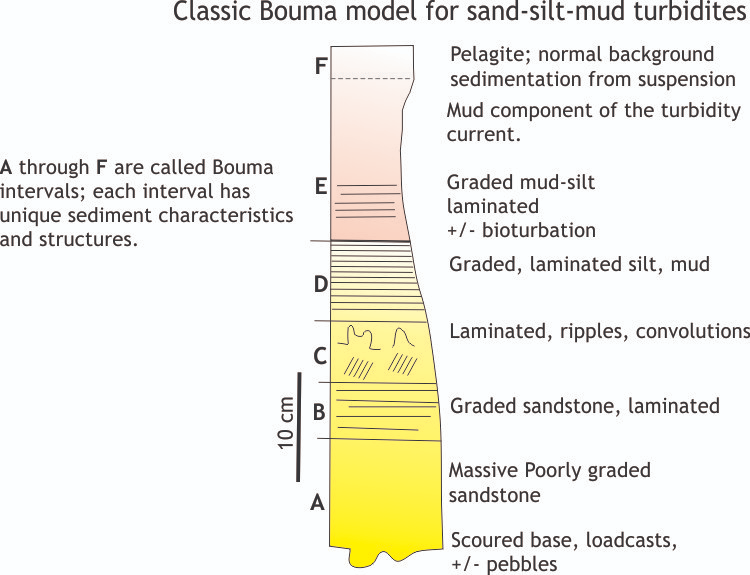
What does the Bouma Model describe?
Graded sediment bedding
Larger particles are found towards the bottom, and finer particles towards the top.


Lenticular Bedding
Alternating layers of mud and sand, associated with fluvial deposits (rivers, streams, flooding).
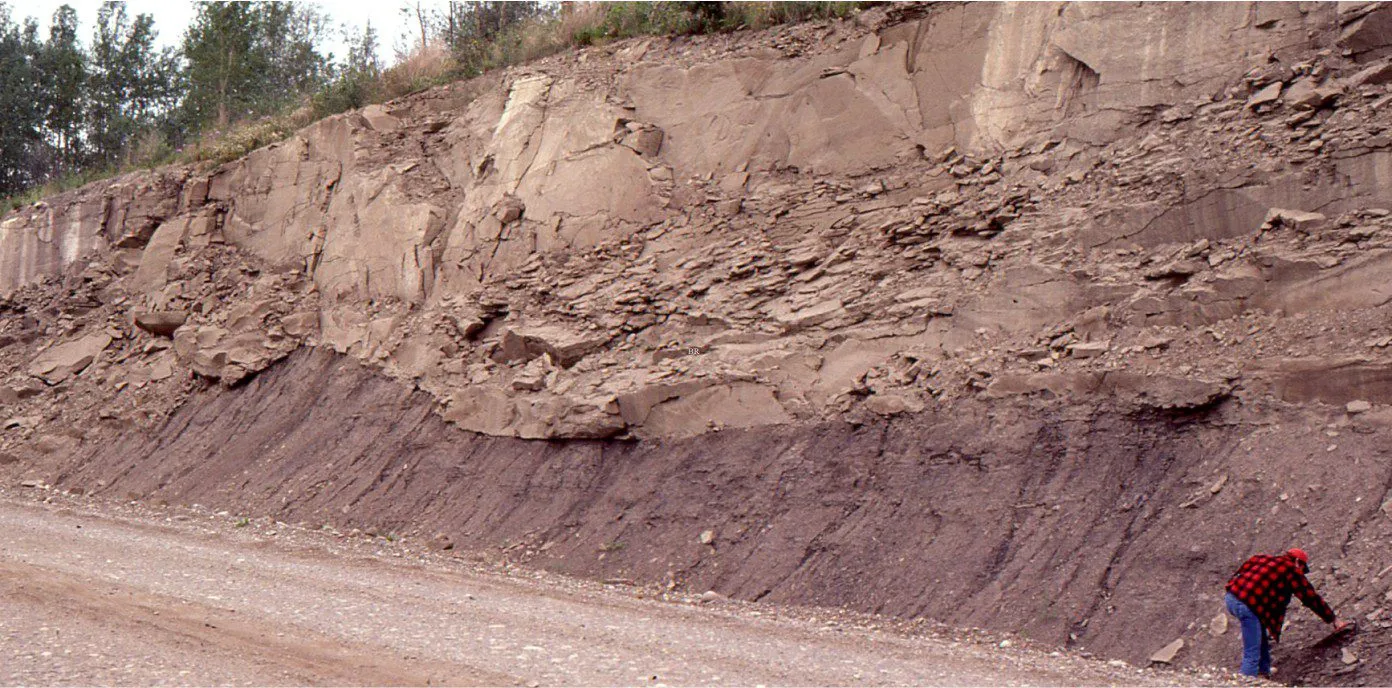
Channelized Bedding
Concave upward bedding planes indicating previous channel in which sediment settled.
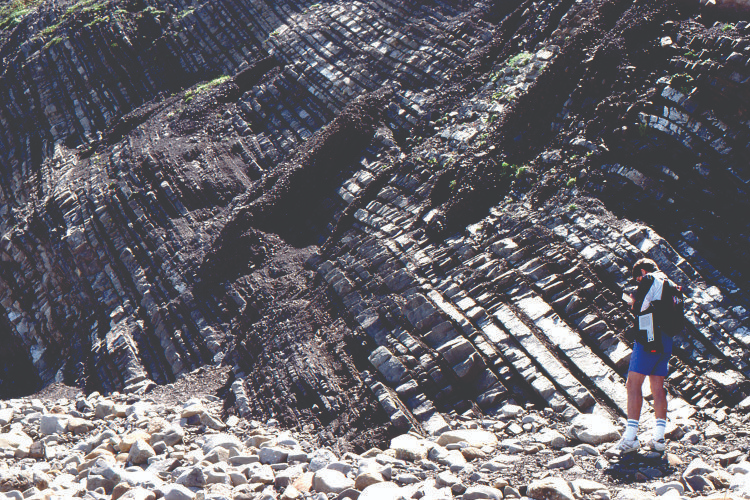
Tabular Bedding
Parallel beds, can form in any environment in any stone.
Herringbone Crossbeds
Indicate alternating left/right paleoflow in rock beds. Indicates tidal flats.
Structures indicated by tabular beds
Energy of flow, braided or meandering rivers, but can be attributed to a variety of environments.
Trough Crossbeds
Concave-up “troughs” associated with channelized flow. Tidal, estuarial, fluvial, alluvial.
Alluvial
Deposits made by flowing water
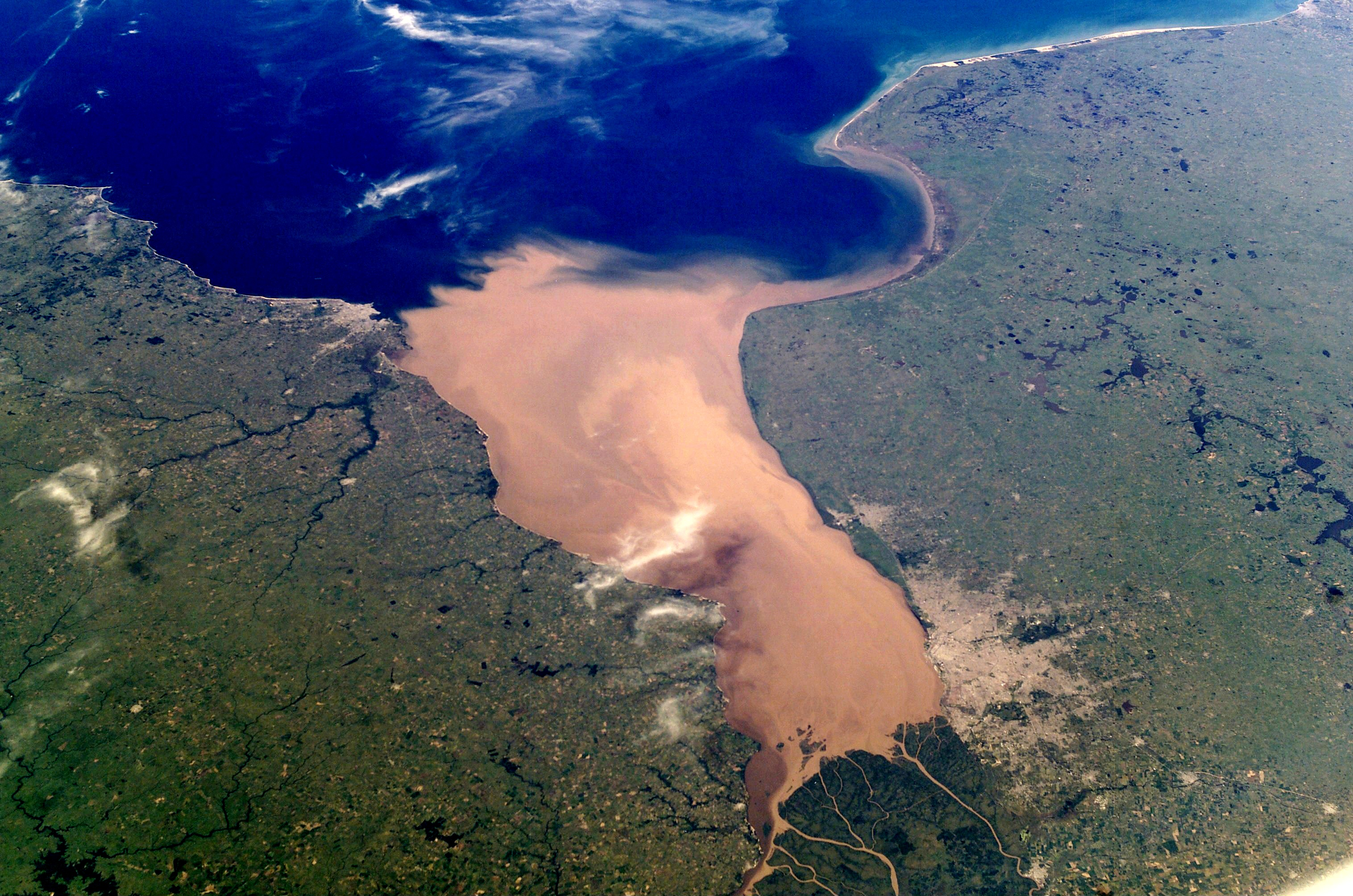
Estuary
Enclosed coastal body of brackish water; transition zones between marine and freshwater environments.
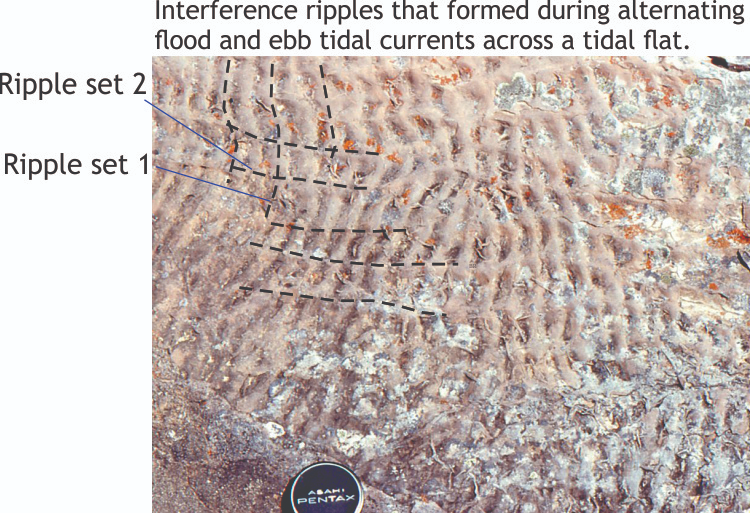
Interference Ripples
Common on tidal flats, indicating ebb and flood flows.

Hummocky Cross-Stratification
Forms at storm wave-base (intense wind; increased wavelength and thus orbital penetration). Upper layers are typically reworked by fair-weather orbitals.
