Vascular plants- Angiosperms
 Call Kai
 Learn
Learn Practice Test
 Spaced Repetition
 Match
Match Flashcards
 Knowt Play
1/56

Earn XP
Description and Tags
Exam 1- set 7
Name | Mastery | Learn | Test | Matching | Spaced | Call with Kai | Chat |
|---|
No analytics yet
Send a link to your students to track their progress
57 Terms
What are the 4 main lineages of angiosperms?
Basal grade angiosperms
Magnoliids
Monocots
Dicots (eudicots)
What are basal grade angiosperms?
The earliest-diverging lineages of flowering plants.

What are some characteristics of Basal Grade Angiosperms?
They often have many floral parts, with parts arranged in a less specialized/spiral pattern.
What are magnoliids?
A major lineage of angiosperms that includes plants such as magnolias and laurels.

Common characteristics of magnoliids
Often have many floral parts, frequently arranged in spirals, and many have aromatic oils.
How many cotyledons do monocots have?
1 cotyledon
How many cotyledons do dicots have?
2 cotyledons
What type of leaf venation do monocots have?
Parallel veins
What type of leaf venation do dicots have?
Netlike/branching veins
How are vascular bundles arranged in monocots?
Scattered throughout the stem.
How are vascular bundles arranged in dicots?
Arranged in a ring.
What type of root system do monocots usually have?
Fibrous root system
What are the usual numbers of floral parts in monocots?
Multiples of 3
Example: 3 or 6 petals.
What are the usual numbers of floral parts in dicots?
Multiples of 4 or 5
Example: 4 or 5 petals.
What type of pollen opening do monocots usually have?
One opening
What type of pollen opening do dicots usually have?
Usually three openings
What is the perianth?
The non-reproductive parts of a flower, consisting of the calyx and corolla.

What is the calyx?
The collective term for the sepals.
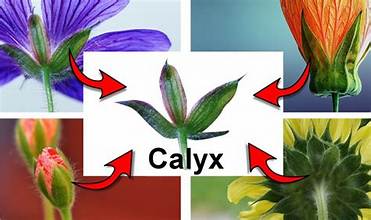
What do sepals do?
Protect the developing flower bud.

What is the corolla?
The collective term for the petals.

What is the function of petals?
Often attract pollinators.

What is the gynoecium?
The female reproductive structure of a flower.
What is a carpel?
A unit of the gynoecium consisting of a stigma, style, and ovary

What is inside the ovule?
The developing female gametophyte (embryo sac).
What are the three parts of a carpel?
Stigma → Style → Ovary
Stigma — receives pollen
Style — connects stigma to ovary
Ovary — contains the ovules
What is the androecium?
The male reproductive structure of a flower

What is a stamen?
The basic unit of the androecium.

What are the two parts of a stamen?
Anther & Filament
What does the anther do?
Produces and releases pollen.
What does the filament do?
Supports the anther.
What is microsporogenesis?
The formation of microspores through meiosis.
What is microgametogenesis?
The development of the microspore into the male gametophyte (pollen grain).
Remember: ⭐ Micro = male
⭐ Microspore → pollen grain
2n microsporocyte
⬇ MEIOSIS
1n microspores
⬇ MITOSIS/development
1n pollen grain = male gametophyte
What is megasporogenesis?
The formation of megaspores through meiosis.
What is megagametogenesis?
The development of the megaspore into the female gametophyte (embryo sac).
Remember: ⭐ Mega = female
⭐ Megaspore → embryo sac
2n megasporocyte
⬇ MEIOSIS
1n megaspores
⬇ MITOSIS/development
1n embryo sac = female gametophyte
What is pollination?
The transfer of pollen from the anther to the stigma.
What are the two types of pollination?
Self-pollination: pollen goes to the stigma of the same flower or plant.
Cross-pollination: pollen moves between different plants of the same species.
What is double fertilization?
A process unique to angiosperms where two sperm cells participate in fertilization.
What does the first sperm fertilize in double fertilization?
The egg → diploid (2n) zygote.
What does the second sperm fertilize in double fertilization?
The two polar nuclei → triploid (3n) endosperm.
What is a major trend in floral evolution?
Flowers have evolved to become increasingly specialized for particular pollinators.
Why did floral specialization evolve?
To improve the efficiency of pollen transfer and attract specific pollinators.
What are some general trends in floral evolution?
More specialized flower shapes
Greater specialization for particular pollinators
Changes in color, scent, nectar, and floral structure
Increased efficiency of pollen transfer
What floral traits attract beetles?
Large, open flowers
Strong or fruity/musty odors
Often white, cream, or dull-colored
Lots of pollen
Accessible flowers
⭐ Beetles often eat pollen and floral tissues.
What floral traits attract flies?
Often dull-colored
Strong odors
Some smell like decaying material
Open or accessible flowers
⭐ Fly pollination = rotten/decaying smell is a good clue.
What floral traits attract bees?
Bright yellow, blue, or purple
Nectar
Sweet scents
Landing platforms
UV patterns that guide bees to nectar
⭐ Bees are especially attracted to yellow/blue/purple + nectar.
What floral traits are associated with butterflies?
Brightly colored flowers
Often red, orange, pink, or purple
Nectar
Usually flowers with a landing platform
What floral traits are associated with moths?
Often white or pale-colored
Strong fragrance
Nectar
Frequently open or fragrant at night
⭐ Moths = pale + fragrant + nighttime
What floral traits attract birds?
Red, orange, or yellow
Tubular flowers
Lots of nectar
Little/no strong fragrance
⭐ Birds = red + tubular + lots of nectar
What floral traits attract bats?
Large flowers
Pale/white colors
Strong or musky odors
Lots of nectar
Flowers often open at night
⭐ Bats = large + pale + strong smell + nighttime
What are wind-pollinated flowers like?
Small and inconspicuous
Little/no scent
Little/no nectar
Produce large amounts of pollen
Often have exposed anthers
Stigmas may be feathery to catch pollen
⭐ Wind = lots of pollen, no need to attract animals
What traits are associated with self-dispersal?
Fruits may split open or release seeds near the parent plant.
⭐ Self = stays close to parent
What fruit/seed traits help with wind dispersal?
Lightweight
Wings
Hairs/tufts
Parachute-like structures
Dry fruits that release seeds
⭐ Wind = light + winged/hairy
What fruit/seed traits help with water dispersal?
Buoyant/floating
Waterproof or water-resistant coverings
Able to survive being transported by water
⭐ Water = floats
What fruit traits attract animals for dispersal?
Fleshy
Sweet
Colorful
Often aromatic
Contains seeds that can survive passage through an animal's digestive system
How do animals disperse fruits/seeds?
They may eat fruits and transport the seeds, or seeds may attach to their bodies.