Lab 10: OCM & Sensory Testing
 Call Kai
 Learn
Learn Practice Test
 Spaced Repetition
 Match
Match Flashcards
 Knowt Play
1/61

There's no tags or description
Looks like no tags are added yet.
Name | Mastery | Learn | Test | Matching | Spaced | Call with Kai | Chat |
|---|
No analytics yet
Send a link to your students to track their progress
62 Terms
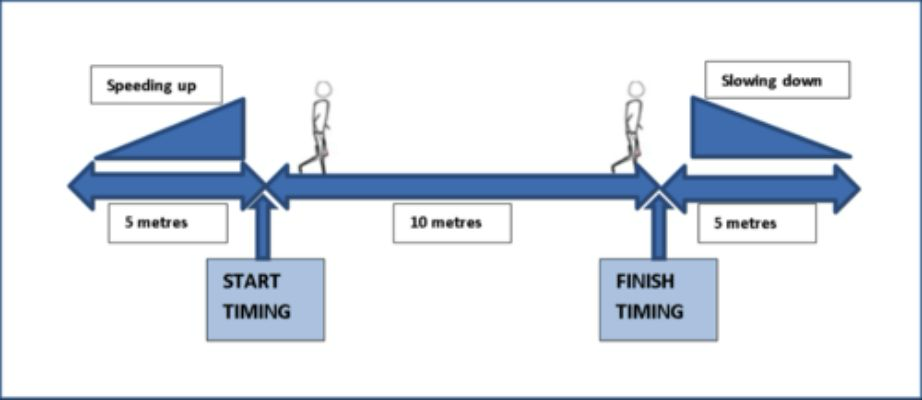
What does the 10-Meter Walk Test measure?
Gait Speed
What is a Non-Functional Score for the 10-Meter Walk Test?
What is a Household Ambulator Score for the 10-Meter Walk Test?
What is the Limited Community Ambulator Score for the 10-Meter Walk Test?
What is the Community Ambulator Score (aka -- "Safe to Cross the Street") for the 10-Meter Walk Test?
What "section" of the 10-Meter Walk Test do we measure / record?
(the first and last 2 meters are not recorded as part of the time)
What is the MDC/MCID for the 10-Meter Walk Test?
(fast = 0.25 m/s)
What does the 6-Minute Walk Test measure?
Endurance
What is the MDC/MCID for the 6-Minute Walk Test?
What population is the 6-Minute Walk Test good for?
Community Ambulators
Higher Level Function Patients
Cardio Patients
What other test could you perform with a patient if they are unable to complete the 6-Minute Walk Test?
What does the Berg Balance Scale (BBS) measure?
What Berg Balance Scale Score is indicative of a patient being considered a fall risk?
What is the MDC/MCID for the Berg Balance Scale?
What patients is the Berg Balance Scale good to use for?
What does the Functional Gait Assessment measure?
What Functional Gait Assessment Score is indicative of a Fall Risk?
What is the MDC/MCID of the Functional Gait Assessment?
What type of patient is the Functional Gait Assessment good to utilize?
What does the Activities Balance Confidence Scale measure?
(gets an understanding of how confident the patient is in performing certain tasks; also helps us understand if a patient is over-confident in their ability)
What Activities Balance Confidence Scale Score is indicative of a Fall Risk?
What is the MDC/MCID of the Activities Balance Confidence Scale?
What does the 5x Sit to Stand measure?
What 5x Sit to Stand Score is indicative of a Fall Risk?
What are the parameters for the 5x Sit to Stand?
Chair should be ~17-18 inches
Legs should not touch the back of the chair
** If patient is unable to complete task, you can modify the height of the chair or have the patient utilize the arms of the chair (however -- this makes the cut off scores no longer applicable)
What does the Postural Assessment Scale for Stroke (PASS) measure?
Patients completes 12 balance tasks and is scores on a scale of 0-3
How is the Postural Assessment Scale for Stroke (PASS) scored?
(we want a 36/36)
What population is the Postural Assessment Scale for Stroke (PASS) best for?
Patients who have suffered a stroke (within 3 months) and are unstable
(Inpt / SNF population)
What does the Trunk Impairment Scale measure?
(good for seated postural stability; compares affected vs unaffected sides)
How is the Trunk Impairment Scale scored?
Scored on a scale of 0-23
If a patient scores a 0 on the first item, their total score = 0 (which is the lowest possible score)
Each item can be performed 3 times and the highest score counts for each item
What does the Modified Ashworth Scale (MAS) measure?
When utilizing the Modified Ashworth Scale (MAS), what parameter is very important to consider?
(because spasticity = velocity dependent; if testing slow = examining rigidity / tone)
How is the Modified Ashworth Scale (MAS) scored?
0 = no spasticity
4 = high / lots of spasticity
What population can the Modified Ashworth Scale (MAS) be used for?
Can be used on any population with spasticity
What does the Agitated Behavioral Scale (ABS) measure?
Measures the behavioral aspects of agitation
(e.g., disinhibition, ability to pay attention, etc.)
Great for determining what environment is best and how to go about treatment! (what stimulus sets them off? what is okay?)
What is the cut-off / normative data for the Agitated Behavior Scale (ABS)?
22 - 28 = Mild
29 - 35 = Moderate
> 35 = Severe
What population is the Agitated Behavioral Scale best for?
What does the High Level Mobility Tool (HiMAT) measure?
High level motor performance
What is the MDC/MCID for the HiMAT?
What population is the HiMAT utilized for?
For high level patients (e.g., athletes who have suffered from a brain injury)
What is the minimum mobility required to use the High Level Mobiltiy Tool (HiMAT) on a patient?
Patient must be able to walk 20 meters without gait aids
(orthotics are permitted, but better without)
What does the Community Balance and Mobility Scale measure?
What is the MDC/MCID for the Community Mobility and Balance Scale?
What is the total / highest score a patient can get on the Community Mobility and Balance Scale?
(higher score = better)
What is the purpose of Sensory Testing?
Allows us to identify:
Deficits present (and what they are)
Severity of impairment
Impact of impairment on function
Risk factors for secondary issues in the future
Also allows us to provide education to the patient
What are Peripheral Sensory Tests?
Detects of light touch, light touch threshold (monofilament), vibration, and temperature
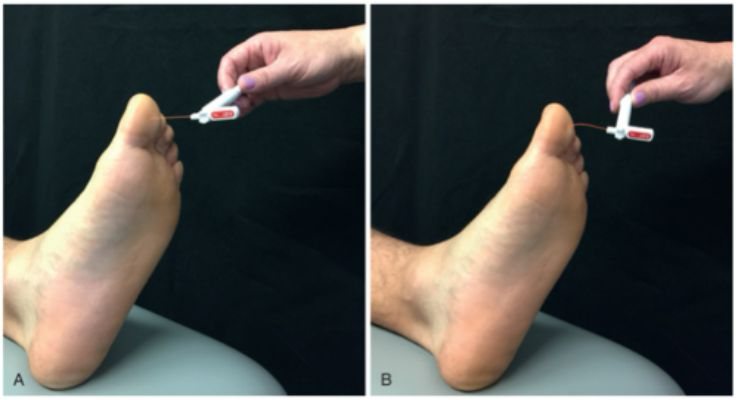
What is the Light Touch Threshold Test?
"
Monofilament Testing
Done with a 5.07 monofilament (differing for different areas of the body)
Mostly done on the feet
Because the feet are very important with gait and balance
You put the monofilament on different spots on the foot as see if they detect pressure
Pressure should be applied enough to bend the filament
Five trials should be completed at each site (the order DOES NOT matter)
4/5 is adequate (or 2/3 if you do not have enough time to perform 5 trials)
Commonly used for Diabetic Neuropathy
We can often be the first person to catch someone developing diabetes
Patients often report changes in sensation (N&T)
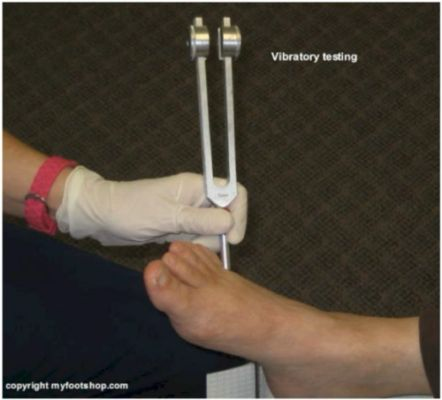
What is Vibration Testing?
Tuning fork is placed on a bony prominence
Ask the patient if they can feel the vibration
Not often really used
What is Temperature Testing?
Typically short on time in the clinic, so we just ask the patient if they have been difficulty with differentiating hot vs cold
However, if you want to test it, you can utilize an ice cup
What are the different types of Central Testing?
Light Touch Test, Sharp/Dull Test, Two Point Discrimination Test
(all are looking at discrimination of touch)
What is the Light Touch Test (Central Test)?
Can utilize a cotton swab, tissue, or finger
Ask the patient if they can feel it
Then ask patient where they feel it (have them point to the location)
This is the discrimination part we are looking for
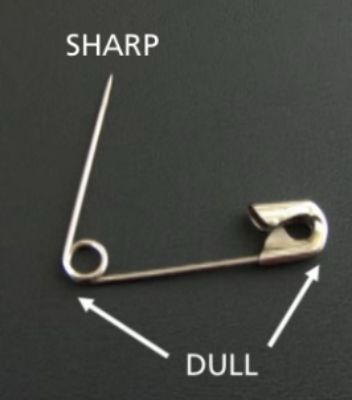
What is Sharp / Dull Testing?
Assessing if a patient can tell sharp vs dull apart
First -- test the unaffected side (want to make sure they can tell the difference)
Then test the affected side and see if they are able to discriminate between sharp and dull
Want them to be ~90% accurate
Often used on the Lower Extremity
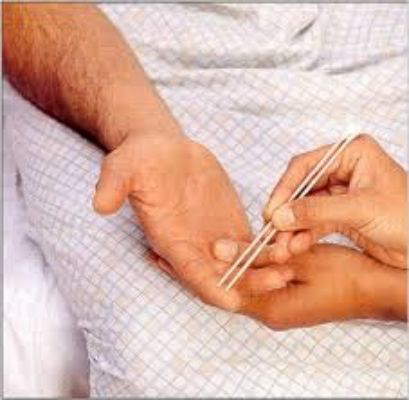
What is the Two Point Discrimination Test?
Assessing if the patient identify between one vs two points
Either will place 1 point or 2 points on the hand at the same time
We are looking for 80% accuracy (or about 5 correct responses)
Usually is used on the hand
What are the Proprioception Tests?
Which Direction Test (Static or Dynamic), Match It Test, Find the Thumb Test, and the Bilateral Simultaneous Extension Test (aka, Double Simultaneous Stimulation)
What is the Which Direction Test?
Patient's eyes should be closed for this test
Move the patients foot (either up or down / into dorsiflexion or plantarflexion)
Make sure you are grabbing the sites of the foot (not on the dorsal or plantar surface)
Then ask the patient what direction their foot is in
** You could also have the patient reporting the direction their foot is in while you are actively moving them through their ROM
What is the Match It Test?
Patient should have their eyes closed during this test
Move the patient's affected foot into a certain position (up or down)
Once again -- grab the sides of the foot (not dorsal or plantar surface)
Then ask the patient to match the position with their opposite / un-affected foot
What is the Find the Thumb Test?
Patient should have their eyes closed for this patient
Move the patient's arm around into a certain position
The PT will then have the patient "find their thumb" by placing their non-affected hand on their affected hand
What is the Bilateral Simultaneous Extension Test?
Good for patients with attentional neglect or inattention
Patient should have their eyes closed
Also make sure that the patient knows their right and lefts!
Can perform this test on either the arms or the legs
Touch the patient at the same time on both legs and then one at a time
After that, keep mixing it up!
Positive = if the patient is able to feel you touch each side separately, but then only feels you touching the unaffected limb when you are touching bil / both sides
What is Object Discrimination / Property Matching?
Have the patient put their hands in two bags or boxes (so they cannot see inside them)
In each box/bag, there should be objects that are similar, but still have differences (e.g., different texture, shape, sizes, weights, etc.)
You do not want to make sure they are not too different
Easiest: varying 1-2 properties at a time (2 markers)
Hardest: changing multiple properties (find me not just a coin, but a quarter)
We want the patient to be able to match object properties
6 Object Properties
Size
Shape
Texture
Weight
Surface Compliance
Temperature
What is the Stereognosis Test?
Can be used with any brain injury patient
Have two objects in a box (where the patients cannot see what is in the box) and instruct the patient to "go find the object"
If the patient has aphasia of some sort, use pictures to instruct the patient on what you want them to grab
When testing, acknowledge and observe ALL mechanics
Watch shoulder movements, synergy patterns, flaccid, etc.
You can utilize facilitation of the shoulder if needed (if used for treatment -- must have facilitation)
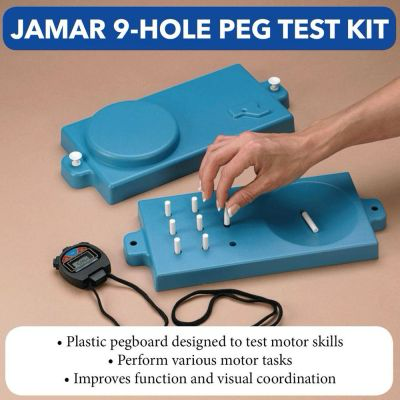
What is the Nine Hole Peg Test?
A good test to assess finger dexterity
Time the patient on how many seconds it takes them to remove and replace the pegs for the affected and unaffected limbs
There are normative values for this test (do not need to memorize)
What is the best way to measure dexterity?
Make it specific to the patient!
For example, if a patient wants to button a shirt, then test that by timing how long it takes them to perform this task