The Brain - Physiology of deterioration
 Call Kai
 Learn
Learn Practice Test
 Spaced Repetition
 Match
Match Flashcards
 Knowt Play
1/32

There's no tags or description
Looks like no tags are added yet.
Name | Mastery | Learn | Test | Matching | Spaced | Call with Kai | Chat |
|---|
No analytics yet
Send a link to your students to track their progress
33 Terms
Two causes of altered consciousness
Structural and Metabolic
Structural causes
Trauma, Vascular disease, Infection and Neoplasms
Trauma casuses
concussion
cerebral contusion
diffuse axonal injury
haematomas (subdural/extradural),
intracranial haemorrhages,
cerebral oedema
cerebral laceration
What is a concussion?
Mild traumatic brain injury caused by a bump, blow or jolt to the head.
What is a cerebral contusion?
Bruise on the brain tissue. It involves bleeding and swelling (edema) inside the brain caused by a direct, forceful impact to the head. It is a serious form of a TBI.
What is a diffuse axonal brain injury (DAI)?
It is a severe type of brain injury that occurs when the brain rapidly shifts and rotates inside the skull. This violent motion causes the brain's long, connecting nerve fibers (axons) to stretch and tear, destroying communication between different areas of the brain. Because the damage is widespread rather than localized to one spot, DAI is one of the most devastating forms of head trauma and is a primary cause of prolonged comas and vegetative states
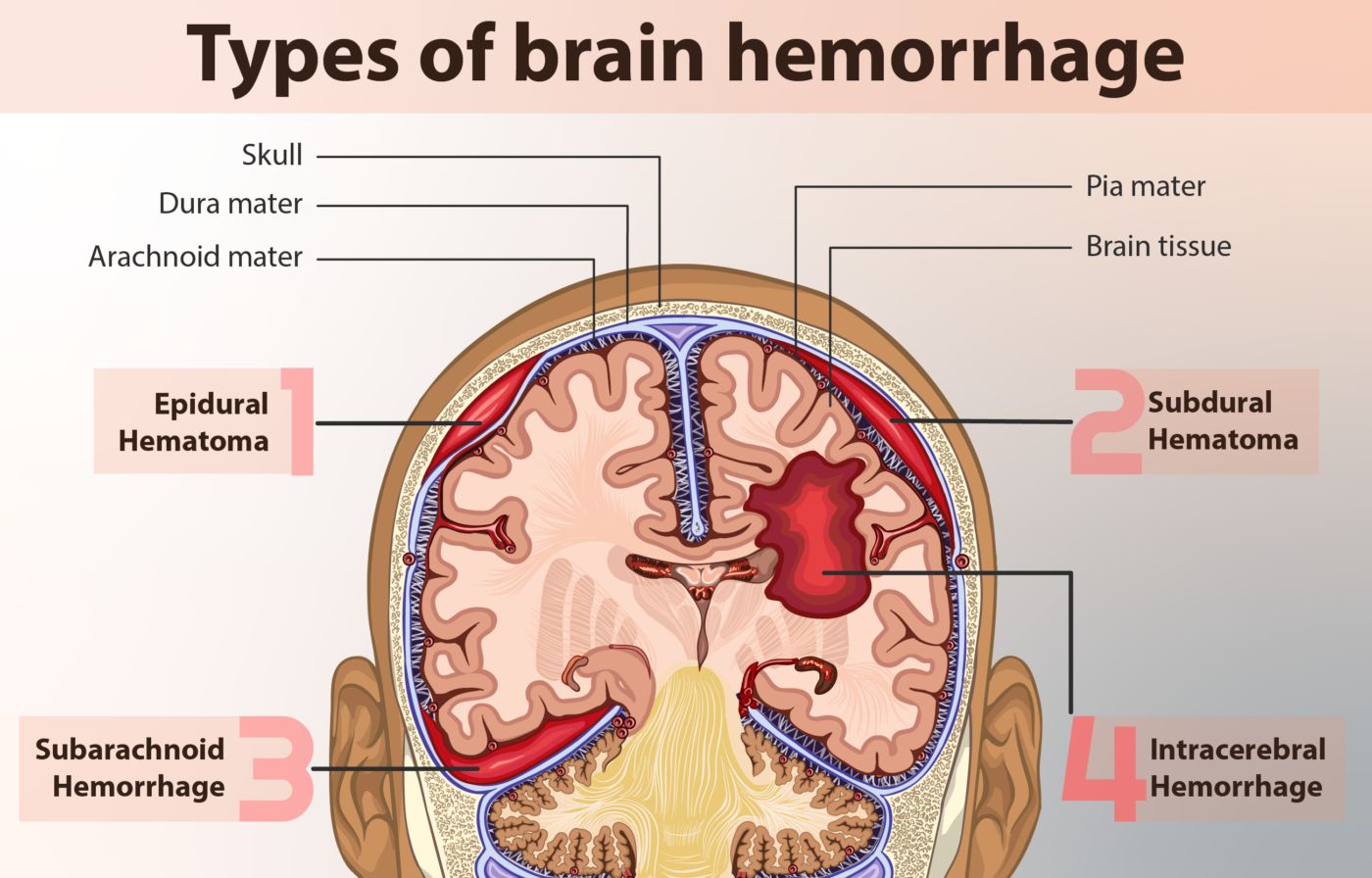
What is a hematoma (subdural/extradural)?
Localized collection of blood outside blood vessels, usually caused by trauma. Subdural and extradural hematomas refer to dangerous pools of blood that form in different layers of the surrounding brain.
Extradural Hematoma (EDH) → blood pools between the skull and dura mater (epidural space)
Subdural Hematoma (SDH) → Blood pools deeper, between the dura mater and the arachnoid mater (subdural space)
What is an intracranial hemorrhage?
Often called a brain bleed. Is any bleeding that occurs inside the skull. It is a life-threatening medical emergency that happens when a blood vessel ruptures or leaks, causing blood to pool in the skull and put dangerous pressure on the brain tissue. Because the brain requires a constant supply of oxygen to function, an intracranial bleed can quickly cause brain cells to die.
What are the 4 types of Intracranial Hemorrhages?
Intracerebral Hemorrhage: Bleeding directly inside the brain tissue itself.
Subarachnoid Hemorrhage: Bleeding in the area between the brain and the tissues covering it (the subarachnoid space).
Subdural Hemorrhage: Bleeding that pools between the brain and the outermost layer of tissue (the dura mater).
Epidural Hemorrhage: Bleeding that occurs between the skull bone and the dura mater.
What is cerebral edema?
Cerebral edema, commonly known as brain swelling, is the dangerous and potentially threatening buildup of excess fluid inside or outside the brain cells. Because the rigid, bony skull cannot expand to accommodate the swelling, this trapped fluid severely increases the pressure inside the head, restricting blood flow and oxygen
What is cerebral laceration?
A cerebral laceration is a severe type of TBI where the actual tissue of the brain is mechanically cut or torn. It is distinct from a brain contusion (a bruise) because it involves tearing both the brain tissue and the surrounding protective membranes (pia-arachnoid). Because tearing the brain causes direct bleeding and nerve damage, cerebral lacerations are treated as serious medical emergencies. [1]
Vascular causes
cerebral infarction
intracerebral haemorrhage
subarachnoid haemorrhage
What is a cerebral infarction?
A cerebral infarction is a medical term for an ischemic stroke. It occurs when blood flow to an area of the brain is blocked or significantly reduced, depriving brain tissue of oxygen and vital nutrients. Without immediate blood supply, the affected brain cells die. Primary causes → thrombosis, embolism
What is a intracerebral haemorrhage?
An intracerebral hemorrhage (ICH) is a type of stroke that occurs when a diseased blood vessel bursts within the brain tissue. This medical emergency allows blood to leak into the brain, building up pressure and causing rapid damage to brain cells.
Primary causes → chronic hypertension, cerebral amyloid angopathy, other causes (blood thinners, tumors, head trauma, illicit stimulants.
What is a subarachnoid haemorrhage?
A subarachnoid hemorrhage is a life-threatening type of stroke caused by sudden bleeding into the subarachnoid space — the area between the brain and the tissues covering it. It requires immediate emergency medical attention.
Primary causes → ruptured aneurysm, head trauma, other vascular issues
Infection causes
meningitis
encephalitis
subdural empyema (abscess).
What is meningitis?
The dangerous swelling of the membranes (meninges) that surround the brain and spinal cord. It is usually caused by viral or bacterial infections, though fungi and parasites can also be responsible. Bacterial cases are medical emergencies that require immediate treatment
What is encephalitis?
Encephalitis is a serious medical condition characterised by the inflammation of the brain tissue (the parenchyma). It is typically caused by viral infections or an autoimmune response where the body's immune system mistakenly attacks the brain. The swelling can lead to brain damage and life-threatening complications.
What is subdural empyema (abscess)?
A subdural empyema is a life-threatening, rapidly expanding collection of pus located in the space between the dura mater (the outer membrane of the brain) and the arachnoid mater (the middle membrane). It is considered a medical emergency requiring urgent neurosurgical drainage and heavy intravenous antibiotics.
Neoplasm causes
primary brain tumours (e.g. meningiomas, gliomas, pituitary adenomas)
metastatic tumours (originating outside the CNS)
What is a brain tumor?
A brain tumor is an abnormal mass or growth of cells in the brain or skull. These growths can be malignant (cancerous) or benign (non-cancerous). Because the brain is enclosed in a rigid skull, even benign tumors can cause dangerous pressure as they grow, impacting bodily functions, memory, and behavior.
What is a metastatic tumor?
A metastatic tumor is a cancerous growth that has spread from the part of the body where is first developed (the primary site) to a distant organ or tissue. It is also commonly referred to as Stage IV cancer.
Metabolic causes
Systemic metabolic disorders
Hypoxic encephalopathies
Toxicity
Body temperature extremes
Seizures
Systemic metabolic disorder casues
hypoglycaemia
diabetic ketoacidosis
electrolyte imbalances (e.g. hypo/hypercalcaemia, hypo/hyponatraemia)
metabolised end products from cardiac, renal, respiratory and hepatic failure.
Hypoxic encephalopathies causes
hypertensive crisis
severe hypotension (leading to decreased cerebral perfusion)
cardiac failure (e.g. following hypovolaemia, MI or arrhythmias)
respiratory failure
carbon-monoxide poisoning.
Toxicity causes
poisons
drug overdose
alcohol intoxication.
Body temperature extreme causes
heat stroke
hypo and hyperthermia
Seizure causes
epilepsy
non-epileptic seizures caused by physiological or psychological conditions