W1 - Practical Pharmacology, Antimicrobial Drugs
 Call Kai
 Learn
Learn Practice Test
 Spaced Repetition
 Match
Match Flashcards
 Knowt Play
1/92

There's no tags or description
Looks like no tags are added yet.
Name | Mastery | Learn | Test | Matching | Spaced | Call with Kai | Chat |
|---|
No analytics yet
Send a link to your students to track their progress
93 Terms
what is pharmacology?
study of how chemical agents (natural and synthetic drugs) affect biological systems
what are the five rights of medication administration?
right…drug, amount, time, patient, route (DA-TPR)
what is pharmacokinetics?
study of what the body does to a drug
what are the four steps of pharmacokinetics?
absorption, distribution, metabolism, excretion (ADME)
what is absorption in pharmacokinetics?
movement from site of administration to bloodstream
what is distribution in pharmacokinetics?
movement from bloodstream to tissues
what is the most (and least) bioavailable route for absorption?
IV (and enteral/oral)
how does distribution work?
drug crosses through cell membranes and matches up with receptors
what are some exceptions in terms of cell membranes that a drug can cross?
blood-brain barrier, sometimes other tissues (eye, prostate, placenta, etc)
what organs receive drugs first?
high blood flow organs (brain, heart, liver, kidneys)
what is an agonist?
a drug that causes cell reaction
what is an antagonist?
a drug that prevents cell reaction
what is metabolism also known as?
biotransformation
what is the main organ responsible for metabolism of drugs?
liver
name the 4 ways drugs can be converted
from active to inactive metabolite, from one active to another active, from inactive to active, from active to toxic
what is metabolism in pharmacokinetics?
how body uses the drug and modifies it
what is excretion in pharmacokinetics?
removal of drug and its metabolites from the body
what organ excretes most drugs?
kidneys
what is withdrawal time?
for food animals: the amount of time that must pass between the last dose of a medication being administered until drug residues are low enough to be safe for human consumption
what is T1/2?
the time it takes for the concentration to decrease by half
what does TI stand for?
therapeutic index
what is TI?
drug dosage that produces the desired affect with minimal or no signs of toxicity
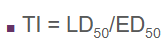
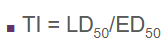
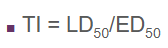
what is the equation to calculate TI?
this
what does LD50 stand for?
lethal dose
what does ED50 stand for?
effective dose
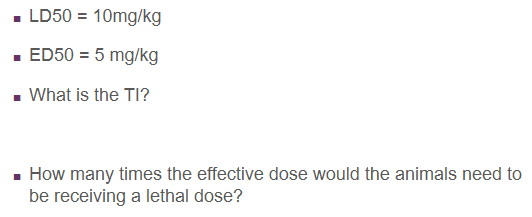
question
TI = 2x effective dose to be lethal
what does a higher TI entail?
safer drug (ex: antibiotics)
what does a lower TI entail?
less safe drug (ex: anesthetics)
what is pharmacodynamics?
study of what a drug does to a body
what does the FDA regulate drug-wise?
development and sale of drugs
what does the EPA regulate drug-wise?
topical pesticides
what does the USDA regulate drug-wise?
biologics (therapeutic agents derived from living organisms)
what does the FARAD (Food Animal Residue Avoidance Databank) do drug-wise?
provides database to provide livestock producers and veterinary professionals with information on how to avoid drug residue in meat, eggs, and milk
what does the DEA regulate drug-wise?
enforces the Controlled Substances Act of 1970
what is an antimicrobial drug?
kills or inhibits the growth of microorganisms
what is an antibacterial drug?
kills or inhibits the growth of bacteria
what is an antibiotic?
antibacterial compounds produced naturally by other microorganisms
what is an antifungal?
kills or inhibits the growth of fungi
what is an antiprotozoal?
kills or inhibits the growth of protozoa
name three mechanisms of action for antibiotics
inhibiting cell wall synthesis; increasing cell membrane permeability; interfering with protein synthesis, nucleic acid metabolism, and other metabolic processes
what is a bacteriostatic drug?
antibiotic that inhibits growth and reproduction of bacteria
what is a bactericidal drug?
antibiotic that kills bacteria
how do beta-lactam antibiotics work?
inhibit enzymes involved in cell wall production
how does beta-lactamase work?
enzyme inhibits beta-lactamase antibiotics
name three notable penicillins
Penicillin-G, Ampicillin, and Amoxicillin
what does MOA stand for?
mechanism of action
what are Penicillins’ MOA?
stopping cell wall synthesis (bactericidal)
what are some side effects of Penicillins and Cephalosporins?
GI malfunction (diarrhea), hypersensitivity, and allergic reactions
what does it mean for a drug to be potentiated?
made stronger by adding another compound
how can Amoxicillin be potentiated?
adding clavulanic acid
what do Cephalosporins’ names typically start with?
“Cef” or “Ceph”
name three 1st gen Cephalosporins
cefazolin, cephalexin, and cefadroxil
name two 3rd gen Cephalsporins
cefpodoxime and ceftiofur
what organisms do 1st gen Cephalosporins target?
gram+ aerobes and beta-lactamase producing Staphylococcus
what are Cephalosporins’ MOA?
stop cell wall synthesis (bactericidal)
name three notable Aminoglycosides
Gentamicin inj, Amikacin inj, and Neomycin
what are some side effects of Aminoglycosides?
kidney toxicity (nephrotoxic) (make sure patients are hydrated before giving!), ear toxicity (ototoxic), and poor GI absorption (used parenterally)
what is the MOA of Aminoglycosides?
stop bacteria protein synthesis (bactericidal)
how does the name of Sulfonamides start?
“Sulfa”
name three notable Sulfonamides
Sulfadiazine, Sulfamethoxazole, Sulfadimethoxine
what is the MOA of Sulfonamides?
inhibit bacterial production of folic acid (bacteriostatic if not potentiated)
what are some side effects of Sulfonamides?
GI malfunction (diarrhea), dry eye, bone marrow suppression, teratogenic, hypersensitivity reactions
what can Sulfadiazine be potentiated with?
trimethoprim
what can Sulfamethoxazole be potentiated with?
trimethoprim
what can Sulfadimethoxine be potentiated with?
ormetoprim
what is the MOA of potentiated sulfonamides?
same as “regular” sulfonamides, but added compound makes potentiated sulfonamides bactericidal
what is notable about the names of Fluoroquinolones?
ends with “-floxacin”
name three notable fluoroquinolones
enrofloxacin, ciprofloxacin, orbifloxacin
what are side effects of Fluoroquinolones?
cartilage damage in young animals (<6 mo old) (don’t use in pregnant animals), blindness (in cats), seizures (in patients with history of seizures)
name a notable Amphenicol
Chloramphenicol
what is the MOA of Amphenicols?
stop bacteria protein synthesis (bacteriostatic)
what are some side effects of Amphenicols?
diarrhea, bone marrow suppression (wear gloves when handling) (illegal in food animals)
name three Macrolides
erythromycin, azithromycin, tylosin
what is the MOA of Macrolides?
stop bacteria protein synthesis (bacteriostatic)
what are the side effects of Macrolides?
GI upset (diarrhea, which may be fatal in foals)
name a notable Lincosamide
Clindamycin
do Lincosamides target aerobes or anaerobes?
obligate anaerobes
what are Lincosamides used for?
dental disease and cat abscesses
what is notable about the names of Tetracyclines?
ends in “-cycline”
name three notable Tetracyclines
tetracycline, oxytetracycline, doxycycline
what are notable side effects of Tetracyclines?
diarrhea, esophageal strictures in cats, yellow discoloration of enamel
name a notable Nitroimidazole
Metronidazole
name some side effects of Nitroimidazoles
dose related neurotoxicity (tremors, seizures) (illegal in food animals)
name five notable anti-fungal drugs
Amphotericin B, ketoconazole, fluconazole, itraconazole, miconazole
what fungi do anti-fungal drugs typically treat?
systemic fungal infections, yeast infections, and dermatophytes
name five notable species involved in systemic fungal infections
Histoplasma, Blastomyces, Cryptococcus, Coccidioides, Aspergillus
name two notable species involved in yeast infections
Candida and Malassezia
name two notable Dermatophytes species
Microsporum and Trichophyton
name a side effect of Amphotericin B
hepatotoxic (liver toxicity)
name a side effect of the “-conazoles”
nephrotoxic (kidney toxicity)
what do 3rd gen cephalosporins target?
gram negative bacteria
the clavulanic acid in Clavamox makes amoxicillin stronger by:
preventing breakdown by beta-lactamase producing bacteria
name five mechanisms in which antibiotics eliminate and destroy bacteria
inhibition of cell wall synthesis, damage to cell membrane, inhibition of protein synthesis, interference of metabolism, and impairment of nucleic acids