Praxis Vocabulary and Definitions for English Language Development
 Call Kai
 Learn
Learn Practice Test
 Spaced Repetition
 Match
Match Flashcards
 Knowt Play
1/119

There's no tags or description
Looks like no tags are added yet.
Name | Mastery | Learn | Test | Matching | Spaced | Call with Kai | Chat |
|---|
No analytics yet
Send a link to your students to track their progress
120 Terms
Hawthorne effect
in a study - change in behavior because you know you are being studied
yale swallow study
CTE
chronic traumatic encephalopathy
chronic traumatic encephalopathy
multiple head traumas- cognitive decline/memory defecits, + parkinsonian symptoms
intellectual disability
a condition of limited mental ability
developmental disability
Insufficient development of the brain, resulting in some level of dysfunction or impairment.
prelocutionary stage
birth-8 months,
nonverbal and unintentional communication
Illocutionary stage
8-12 months
gestures
add vocalization
request, reuse, comment, communication games
intent is there, but no mouth words
Locutionary stage
12-18 months
use words to communicate with intent
preliterate
not developed reading, writing ,or spelling skills
nonliuterate
not expected to develop or regain reading, writing, or spelling skills
literate
has reading, writing, and spelling skills
emerging literacy
early experiences, such as being read and talked to, naming objects, and identifying letters, that prepare a child for later reading, writing, and language development
oral language
understand and use language through listening, speaking, and acquiring new vocabulary
print knowledge
children understand the functions of printed symbols and of printed text and how it relates to meaning
book knowledge
alphabet knowledge
children's knowledge about the letters of the alphabet and their sounds
phonological awareness
the ability to hear the distinctive sounds of letters
awareness of sound structure
Reading order for a child to develop literacy skills:
1. orienting the book correctly
2. listening to a story
3. phonological awareness
4. read words
prereading stage 0
pre k
literacy socialization - get used to the idea of reading
decoding stage of reading development 1
grade 1-2
phonological awareness
automaticity stage of reading development 2
grades 2-4
fluent reading
able to comprehend more
reading to learn stage of reading development 3
grades 4-8
more complex comprehension
read faster
reading for ideas stage of reading development 4
grades 8-12
theory of mind
inferencing
critical reading stage of reading development 5
college
synthesis of new knowledge, critical thinking
early literacy socialziation
learning about books and the style of literate language
William syndrome impacts what chromosome
deletion in chromosome 7
William syndrome prevalence
1 in 7500 live births
physical features of Williams syndrome
-facial dysmorphology
-cardiovascular heart disease
-growth deficiency
-connective tissue abnormalities
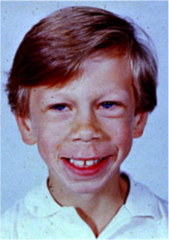
Behavioral characteristics of Williams syndrome
over friendly
overly social without worry of consequences
anxiety
Cognitive characteristics of Williams syndrome
global DD
mild to moderate ID
Language characteristics of Williams syndrome
speech/language delay
difficulty with relational or conceptual language
ASD prevalence
1:36
palatal fronting
su for shoe
assimilation
making two sounds in a word more alike
daddi for doggy
metathesis
switching of the order of two sounds, each taking the place of the other
epenthesis
adding of a sound in a word
usually uh
coalescence
when two phonemes are substituted with a different phoneme that has similar features
foon for spoon
reduplication
baba for bottle
3 years
cross sectional
look at different groups at a certain time to compare
no variable manipulation, collect the data and go home
longitudinal study
Looks at one group over a long period of time
Semi-longitudinal
•Cross between cross-section and longitudinal
Historical study
archival or library research
Case Study
"simulation to treat this patient" -Barry 2023
Secondary Analysis
the analysis of data that have been collected by other researchers
Evaluation Research
research that describes or identifies the impact of social policies and programs
Exploratory Research
want to see IF there is a relationship between two variables
Correlational Research
want to predict an outcome based on changes from a different outcomes
ex: the longer Barry talks the more I yawn
Case-control Studies
compare case subjects to control subjects
Cohort Studies
the study of a group of people who share a common characteristic and move forward in time as a unit
Experimental Research
Designed to find directional, causal relationships between multiple variables.
Randomized Control Trials
The experimental group receives the treatment and control group receives none.
Quasi-experimental
an experimental design that lacks random assignment
Sequential Clinical Trials
as you collect the data you analyze it
Single Subject Designs
ABAB
Survey research
the most popular technique for gathering primary data, in which a researcher interacts with people to obtain facts, opinions, and attitudes
internal validity
independent variable was responsible for any change in the dependent variable
external validity
the extent to which the results of a study can be generalized to other situations and to other people
content validity
does each question and item of the questionnaire relates to diagnosing depression
Criterion-related validity
The extent to which the test or measurement tool predicts or correlated with external criteria that are already established
Construct validity
Looking at the general construct of the test, not the subitems
generally speaking, is it measuring what it is supposed to
Intra-rater reliability
Results are consistent with the same person rating the test more than once
inter-rater reliability
measure of agreement among observers on how they record and classify a particular event
Test-retest reliability
using the same test on two occasions to measure consistency
reliability
consistency of measurement
validity
The ability of a test to measure what it is intended to measure
class 1 malocclusion
jaw is positoned normally but the teeth are not meaning the teeth are malpostioned or rotated, etc.
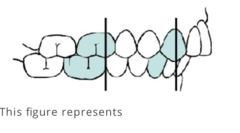
Class 2 malocclusion
the mandible is too far behind the maxilla
the buccal groove is behind the cusp
common in Pierre Robin sequence
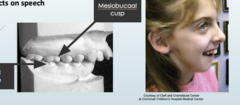
class 2 malocclusion sounds impacted
sounds in the front of the mouth will be hard (sibilants and lingual-alveolar sounds)
class 3 malocclusion
lower jaw is large and/or the upper jaw is small
the buccal groove is ahead of the cusp
common in cleft lip and palates due to post surgical scarring
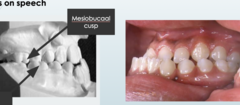
sounds impacted in class 3 malocclusion
labiodentals
sibilants
lingual alveolar sounds
cleft palate sounds to start with
stimulable
impact on intelligibility
anterior sounds
sounds that do not require movement or planning
voiced stops
muscles involved in hyolaryngeal excursion
suprahyoid
flaccid dysarthria
LMN damage. Results from damage to motor units of cranial or spinal nerves that supply speech muscles
Possible etiology for flaccid dysarthria 6
1. physical trauma
2. cutting a nerve during surgery
3. brainstem stroke
4. tumor in LMN or brainstem
5. Myasthenia Gravis
6. Guillain Barré
Lesion site for flaccid dysarthria
final common pathway - LMN
motor signs for flaccid dysarthria
flaccidity
atrophy of muscles
fasciculations
reduced or absent reflexes
Flaccid dysarthria - pharyngeal branch of CN X (vagus) speech deficits
hypernasality on vowel prolongations
nasal emissions
shortened phrases
weak pressure consonants
flaccid dysarthria - laryngeal branch of vagus nerve speech deficits
continuous breathiness of speech inhalatory stridor
harsh vocal quality
Flaccid dysarthria - CN vagus, facial, and hypoglossal
imprecise consonants
flaccid dysarthria and stress test
cannot last a minute fatigue fast
tongue deviated from left to right
Injury to hypoglossal XII
tongue spastic
UMN involved
chin up
extend their neck during swallowing
widens oropharynx
helps with poor oral transit
increase PES pressure
chin tuck
chin to chest
Chin tuck can reduce the distance between
hyoid and larynx
chin tuck can narrow the
airway
chin tuck may facilitate
airway protection increased lingual pressure
chin tuck pushes the
base of tongue and PPW together
chin tuck increases the
distance between the LPW → makes a weaker pharyngeal contraction
chin tuck is good for those with
weaker airway protection
chin tuck is bad for those with
Pharyngeal weakness
PES dysfunction
Multiple swallow deficits
head rotation/turn
compensatory strategy that diverts bolus to intact side
head rotation/turn reduces contralateral
PES pressure
head rotation/turn helps facilitate
PES opening
head turn / rotation reduces
residue
supraglottic swallow
patient takes a breath and holds it, then swallows, then coughs
Super Supraglottic Swallow (SSGS)
patient breaths, holds breath with extra effort/tension, swallow, cough, swallow
Supraglottic and Super Supraglottic SwallowMay be best suited for patients who demonstrate...
Reduced airway protection from reduced glottal closure - unilateral VF paralysis
Swallowing incoordination
Reduced laryngeal movement
when can Supraglottic and Super Supraglottic Swallow be used for prevention?
reduced aspiration in some cases