L34 - Digestive System
 Call Kai
 Learn
Learn Practice Test
 Spaced Repetition
 Match
Match Flashcards
 Knowt Play
1/61

There's no tags or description
Looks like no tags are added yet.
Name | Mastery | Learn | Test | Matching | Spaced | Call with Kai | Chat |
|---|
No analytics yet
Send a link to your students to track their progress
62 Terms
What is the general path of food through the GIT?
Oral cavity
Esophagus
Stomach
Small intestine
Cecum
Large intestine
Rectum
Anus
What is the main function of the esophagus?
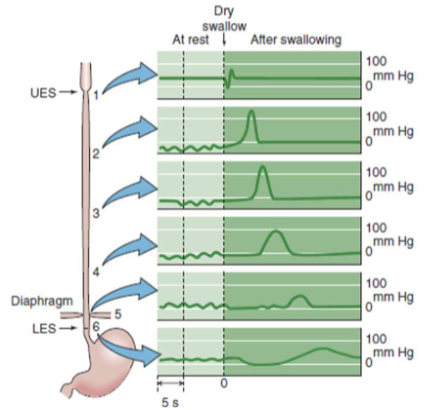
Transport the food bolus from the oral cavity to the stomach
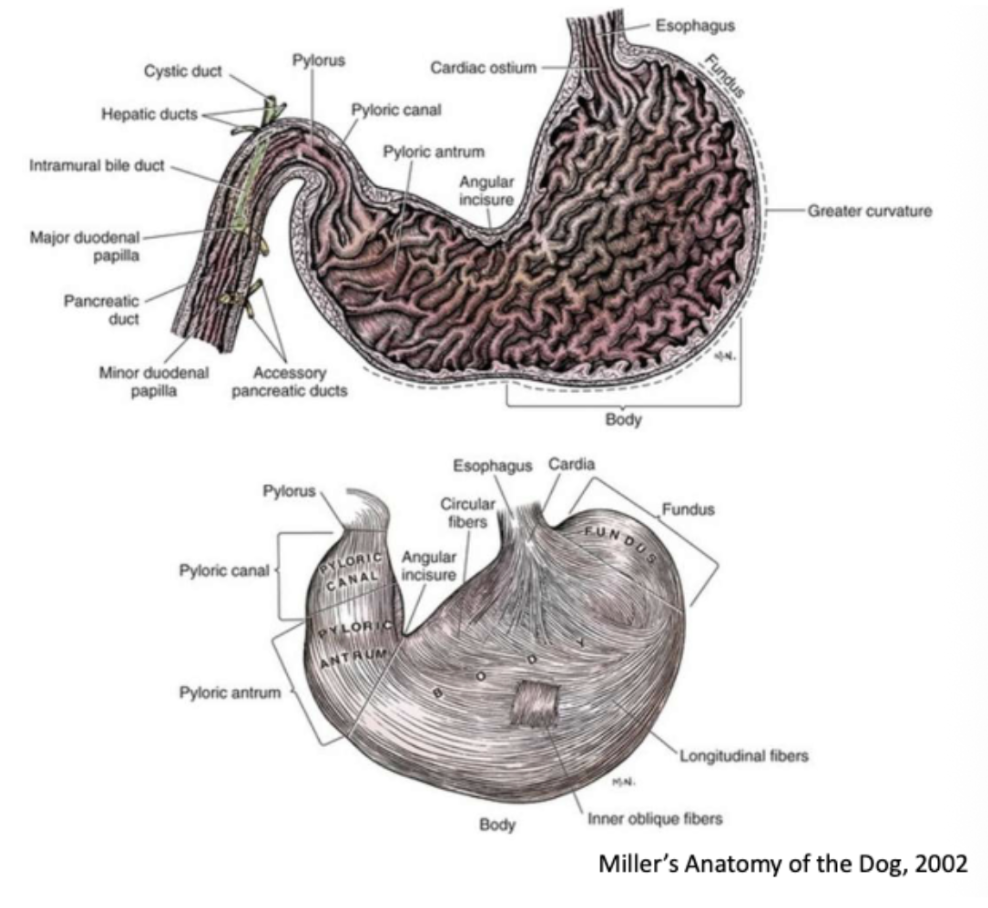
What are the three major anatomical regions of the stomach?
Cardia → fundus/body → pylorus
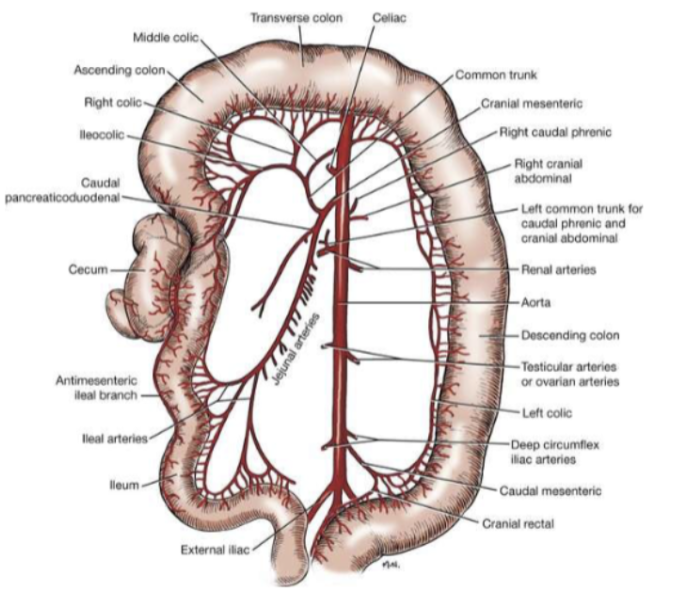
What are the three regions of the small intestine?
Duodenum → jejunum → ileum
What is the major overall function of the small intestine?
Complete digestion and absorption
What is the major function of the cecum?
Bacterial fermentation
It marks the transition from small to large intestine
What are the three regions of the colon?
Ascending
Transverse
Descending colon
What are the four basic layers of the GI tract wall?
Tunica mucosa
Submucosa
Muscularis
Serosa

What are the three layers of the tunica mucosa?
Lamina epithelialis
Lamina propria
Lamina muscularis mucosae

What is the main role of the lamina epithelialis?
Lines the GI lumen and contains absorptive and secretory cells
What does the lamina propria contain?
Blood vessels
Nerves
Immune cells
What does the tunica submucosa contain?
Loose CT,
Larger blood vessels
Lymphatics
Nerve plexus
Ganglion cells
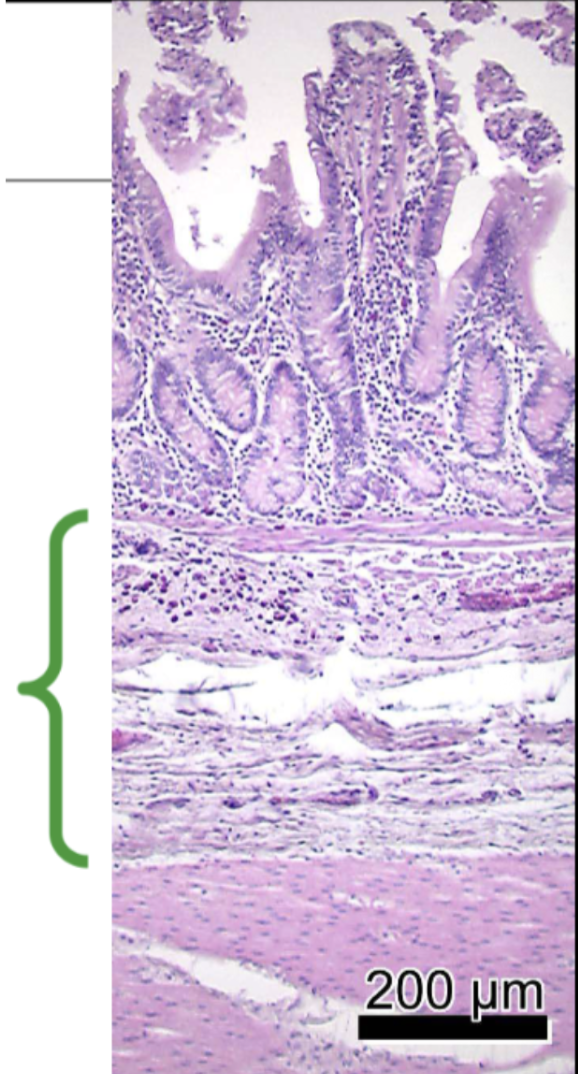
Which enteric nerve plexus is found in the submucosa?
Submucosal plexus
What are the two smooth muscle layers of the tunica muscularis?
Circular smooth muscle
Longitudinal smooth muscle
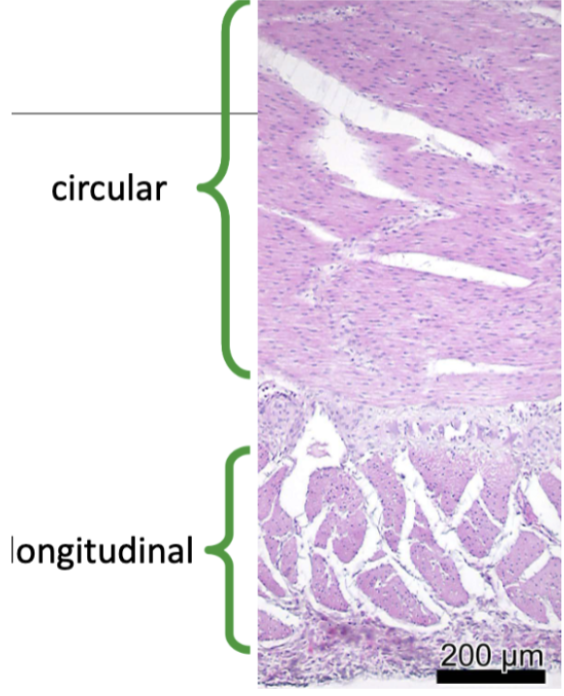
Where is the myenteric plexus located?
Between the circular and longitudinal muscle layers
What is the tunica serosa?
The outermost connective tissue layer of the GIT

Why do GI histologic features change along the tract?
Each region is structurally specialized to perform a different function
What are the three major regulators of GI function?
Endocrine
Paracrine
Neural
What is endocrine regulation in the GIT?
A hormone travels through the blood to a distant target cell
What is paracrine regulation in the GIT?
Local communication with neighboring cells
What are enteroendocrine cells (EECs)?
Cells in the lamina epithelialis that produce gut hormones
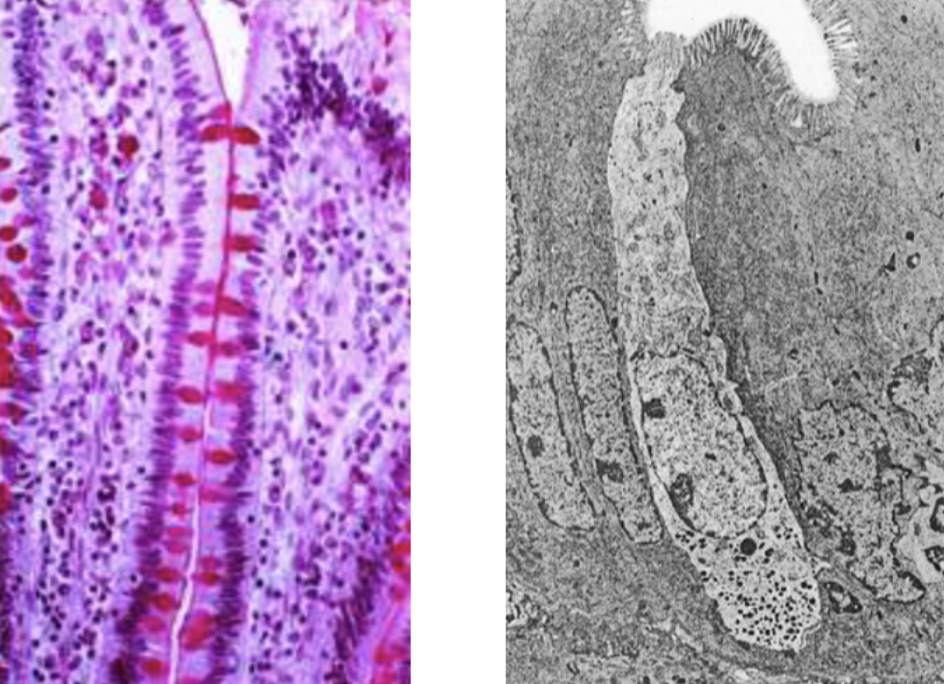
What do enteroendocrine cells respond to?
Changes in the luminal environment, such as stretching
What defines a gut hormone?
Made by EECs, released after a stimulus, and travels in blood to a distant target

What are the two nervous systems involved in neural GI regulation?
Extrinsic nervous system (ANS)
Intrinsic nervous system (ENS)
Where are ANS vs. ENS cell bodies located?
ANS = outside the gut wall
ENS = within the gut wall

What are the two major plexuses of the ENS?
Submucosal plexuses
Myenteric plexuses

What changes do GI sensory neurons monitor?
Luminal distention
Chemistry
Mechanical stimulation
What major functions does the ENS regulate?
Motor activity
Secretory activity
Vascular tone
Can the ENS function independently of the CNS?
Yes
It can act as a complete reflex circuit.
How does the ENS produce peristalsis around a bolus?
Contracts smooth muscle proximal to the bolus and relaxes muscle distal to it

What epithelium lines the esophagus?
Stratified squamous epithelium

How does esophageal epithelium support its function?
Multiple cell layers provide protection during food transport
What is the function of esophageal submucosal mucous glands?
Secrete mucus to help move the food bolus
What is the function of the lower esophageal sphincter (LES)?
Coordinates bolus entry into the stomach and prevents gastric reflux
What are the major functions of the stomach?
Storage
Secretion
Protection
Mixing
Controlled delivery of chyme

What are rugae?
Folds of the mucosa + submucosa that allow the stomach to stretch

What type of epithelium lines the stomach?
Simple columnar epithelium.

What are the major cell types of gastric glands?
Mucous
Parietal
Chief
Enteroendocrine
Sem cells
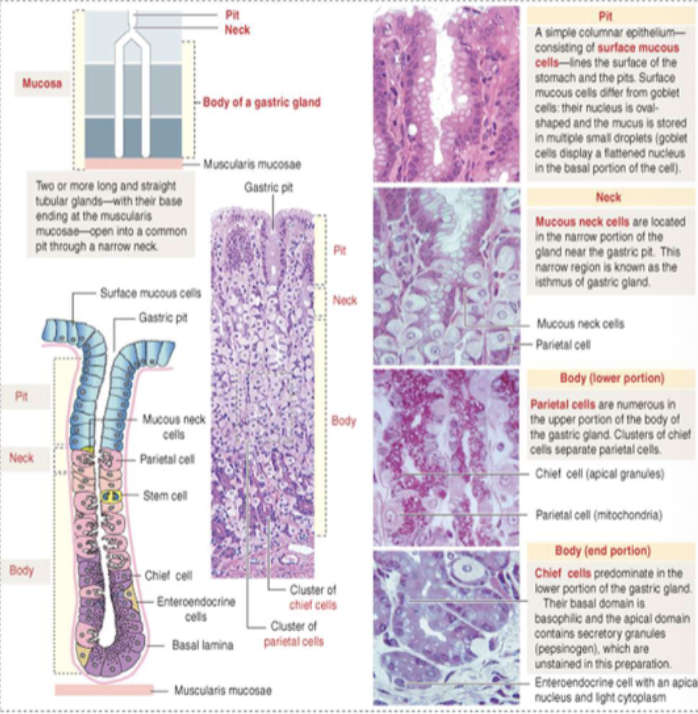
What do gastric mucous cells secrete?
Mucus
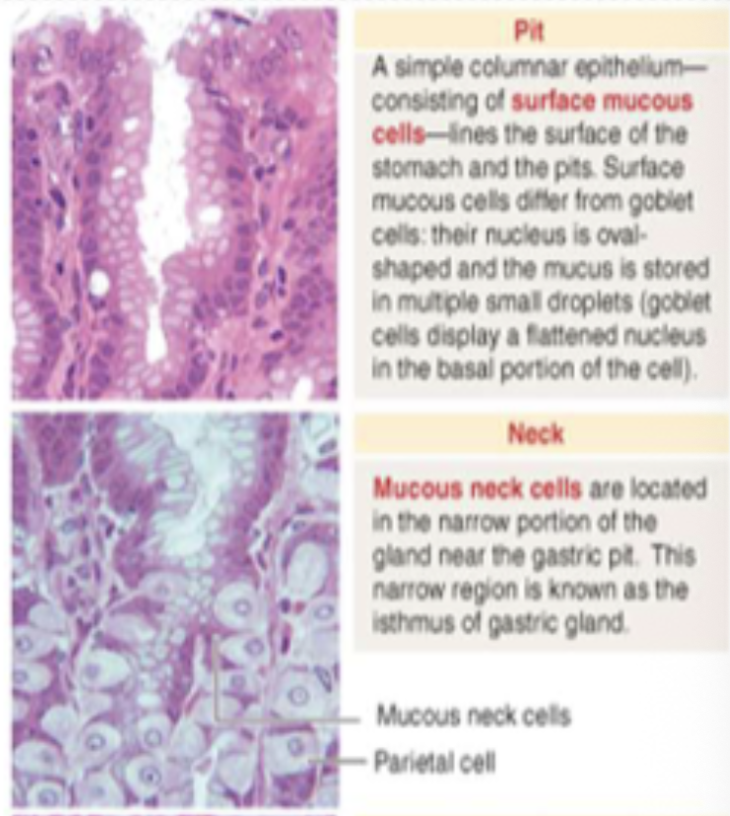
What do parietal cells secrete?
Acid (H⁺) and intrinsic factor

What do chief cells secrete?
Pepsinoge
Lipase

What do gastric G cells secrete?
Gastrin
Where are gastric stem cells located?
Neck region of gastric glands

What is the major function of the duodenum?
Bicarbonate secretion and coordination of digestion through hormones/reflexes
What is the major function of the jejunum?
Digestion and absorption of ions, nutrients, and water
What is the major function of the ileum?
Absorption of residual nutrients, vitamin B12, and bile acids
What is the function of intestinal villi?
Increase absorptive surface area

How do villi change moving distally through the small intestine?
They decrease in number and height
How do goblet cells and lymphatic tissue change distally?
They increase
What are Peyer’s patches?
Lymphatic nodules in the ileum that help protect against invasive microbes
Where do new intestinal epithelial cells originate?
Stem cells at the base of intestinal crypts
What are the two absorption routes within intestinal villi?
Vascular capillaries
Lymphatic central lacteals
What are the major functions of the large intestine?
Water/electrolyte absorption
Bacterial fermentation
Waste storage/elimination
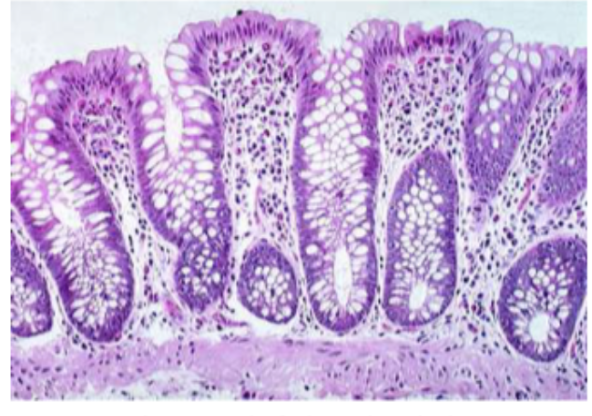
Does the colon contain villi?
No
It lacks villi
How does the colon increase surface area without villi?
Crypts and microvilli
What cell type becomes more abundant in the large intestine?
Goblet cells
GIT Regions + Function SUMMARY
GIT Region | Main Function |
Oral cavity | Food intake |
Esophagus | Transport bolus to stomach |
Stomach | Storage, mechanical digestion, secretion & mixing |
Duodenum | Bicarbonate secretion; coordinates digestion |
Jejunum | Digestion + absorption of nutrients, ions & water |
Ileum | Absorbs residual nutrients, B12 & bile acids |
Cecum | Bacterial fermentation |
Large intestine | Water/electrolyte absorption, fermentation, waste storage |
Rectum → anus | Storage/elimination of waste |
Four Layers of the GIT Wall SUMMARY
Layer | Major Components / Features | Key Role |
Tunica mucosa | Epithelium + lamina propria + muscularis mucosae | Absorption, secretion, protection |
↳ Lamina epithelialis | Absorptive + secretory cells | Interfaces with lumen |
↳ Lamina propria | Blood vessels, nerves, immune cells | Support |
↳ Muscularis mucosae | Muscle | Part of mucosa |
Tunica submucosa | Loose CT, vessels, lymphatics, submucosal plexus | Support + neural regulation |
Tunica muscularis | Circular + longitudinal smooth muscle; myenteric plexus between them | GI motility |
Tunica serosa | Outermost CT layer | Outer covering |
GI Regulation SUMMARY
Regulation | Major Components / Features | Key Role |
Endocrine | Hormone → blood → distant target | EECs produce gut hormones |
Paracrine | Signal acts on neighboring cells | Local communication |
Neural | ENS + extrinsic ANS | Controls GI responses |
Intrinsic vs. Extrinsic Neural Regulation SUMMARY
Feature | Intrinsic — ENS | Extrinsic — ANS |
Cell bodies | Within gut wall | Outside gut wall |
Can act independently? | Yes | Provides external influence |
Major ENS plexuses | Submucosal + myenteric | — |
ENS controls | Motor activity, secretion, vascular tone | Influences ENS/GI activity |
Regional Histology → Function SUMMARY
Region | Key Histologic/Anatomic Feature | How It Supports Function |
Esophagus | Stratified squamous epithelium | Multiple layers → protection |
Submucosal mucous glands | Lubricate → bolus movement | |
Stomach | Rugae | Allow expansion/storage |
Gastric glands | Specialized secretion | |
Small intestine | Villi | ↑ surface area → absorption |
Distal SI | ↓ villi, ↑ goblet cells & lymphatic tissue | Increasing protection distally |
Ileum | Peyer’s patches | Immune protection |
Large intestine | No villi; crypts + microvilli | Supports absorption |
↑ goblet cells | Mucus production |
Gastric Gland Cells SUMMARY
Cell | Secretion |
Mucous cell | Mucus |
Parietal cell | H⁺ + intrinsic factor |
Chief cell | Pepsinogen + lipase |
G cell | Gastrin |
Stem cell | Replaces cells; located in neck |