fized prosth 2 final
 Call Kai
 Learn
Learn Practice Test
 Spaced Repetition
 Match
Match Flashcards
 Knowt Play
1/252

There's no tags or description
Looks like no tags are added yet.
Name | Mastery | Learn | Test | Matching | Spaced | Call with Kai | Chat |
|---|
No analytics yet
Send a link to your students to track their progress
253 Terms
too subgingival finishline
contraindication for digital impression
traditional impression (PVS)
best method of impression for deep subgingival finish line
scan, CAD design, model, CAM mill, crystalize/sintering, stain/glaze
steps of digital workup for crown
0.3mm
MINIMUM thickness of ZIRCONIA COPING (3Y zirconia)
fracture strength greatly decreases (3000 down to 100)
what happens once feldspathic porcelain is layered on top of coping (zirconia)
monolithic zirconia
for POSTERIOR teeth the most common material utilized with digital workflow is:
restricted CAM options, limited choices of restorative materials
DISADVANTAGES of DIGITAL SCANNING with E4D Dentist system or CEREC (CAD/CAM both done in office)
complete systems and efficiency
ADVANTAGES of DIGITAL SCANNING with E4D Dentist system or CEREC
non-restricted CAM options, more choices of restorative materials
ADVANTAGES of DIGITAL SCANNING with TRIOS/open system
TRIOS/open system
Designed for digital impression-taking and integration with dental lab workflows, lab does the designing and crown production
true
T/F ZIRCONIA restorations based on DIGITAL IMPRESSIONS are comparable to the conventional impression with regard to the marginal fit
true
T/F NO statistical sig. was observed between digital and conventional impressions regarding the marginal discrepancy of SINGLE UNIT CERAMIC crowns
triple tray
impression tray used for SINGLE CROWN
most distal abutment
when is a TRIPLE TRAY CONTRAINDICATED (NOT ALLOWED)
making provisional
what method can serve as a last check of proper reduction prior to taking final impression
immediately check clearance, patient comfort, time, efficiancy
ADVANTAGES of digital workflow
Wet milling
MILLING METHOD needed for LITHIUM DISILICATE and TITANIUM
Dry milling
MILLING METHOD for ZIRCONIA
wet milling
milling method that provides superior, smoother finishes on delicate materials
dry milling
milling method that is faster, cleaner, and better for high-production, opaque restorations
wet milling
Use water or specialized coolant to manage heat, preventing material damage during the milling of sensitive materials like glass-ceramics, hybrid composites, and titanium
dry milling
Use compressed air or suction to remove debris, designed for softer materials like pre-sintered zirconia, PMMA, and wax.
sinter
zirconia at 1,500 degrees for 8.5hrs
60 to 1,200
SINTERING of zirconia after milling increase the strength from ____ to ____ MPa
crystalize
lithium disilicate at 850 degrees for 60min after milling
true
T/F LITHIUM DISILICATE is used for same day crown delivery due to the quickness of the crystalization stage
150 to 360
crystalization of LITHIUM DISILICATE after milling increases the strength from ____ to ___ MPa
pre sintering it is very soft (60MPa)
why can zirconia be milled by DRY MILLING?
work to be performed, materials to use, accurate impressions, casts, occlusal reg.,
what information/materials should the dentist provide the lab with
crown margins, post palatal seal, denture borders, design of removable partial dentures
what is under the responsability of the DENTIST to identify prior to sending work to the lab
true
T/F the dentist should furnish instruction regarding preferred materials, coloration, and description of prosthetic teeth to be utilized for fixed or removable prosthesis
true
T/F the dentist needs to provide verbal or written approval to proceed with a laboratory procedure, or make any appropriate changes to the written instructions as the dentist deems necessary
true
T/F anything sent to the lab should be disinfected
return to lab
what should the dentist do if fit or shade selection is incorrect
true
T/F the lab technician should follow the guidelines set by the dentist's written instructions when fabricating a restoration
diagnostic cast
replicas or models of a patients dental structures for diagnosis and treatment planning
arbitrary hinge axis
facebow that approximates the HORIZONTAL transverse axis and rely on anatomic average values
earbow and kois dento-facial analyzer
examples of arbitrary hinge axis facebows
kois dento-facial analyzer
an average axis facebow that relates maxillary incisal edge position, maxillary occlusal plane, dental midline, and facial midline to the HORIZON
horizon
what does the KOIS DENTO-FACIAL analyzer use as a reference plane
diagnostic waxing
a waxing of intended restorative contours on dental casts for the purpose fo evaluation and planning restorations
duplicate cast, matrices, stents, and reduction guides
tools made from diagnostic casting that are necessary for a number of surgical and restorative procedures
clear finishline and soft tissue contour
criteria for a good MASTER CAST
false
T/F if the prepped tooth is on #15 (the most distal tooth) it is satisfactory to use a triple tray to take the impression
alginate in stock metal tray
If a full arch impression is needed, what material is used for the OPPOSING tray
PVS in plastic tray
If a full arch impression is needed what meterial is used for the PREP tray
bite/occlusal clearance is not accurate
why can triple tray not be used for prep on most distal abutment?
monolithic
which type of restoration is STAINED?
laminated
which type of restorations is LAYERED?
lithium disilicate and zirconia (monolithic materials)
which materials can be used for MILLING?
diagnostic waxing and interim restorations
the lab determines restoration contour from?
working casts, material selection, restoration contour, occlusal scheme, shade
what should the dentist provide to the lab for restoration fabrication
true (remains in MIP ideally)
T/F for a single posterior crown patients occlusal scheme is NOT changed
fully balanced
bilateral, simultaneous, anterior and posterior occlusal contact of teeth in centric and eccentric postitions
fully balanced
which occlusal/guidance scheme has the primary purpose of stabilizing mucosal supported removable prostheses
mutually protected occlusion
posterior teeth prevent excessive contact of anterior in MIP. anterior disengage posterior in all mandibular excursive movements
mutually protected occlusion (MPO)
what occlusal scheme is the goal
before preparation
when should shade be selected?
natural light
ideal lighting for shade selection
neutral color
ideal surrounding when selecting shade
hue
color, ex: red, green yellow, determined by wavelength of light
chroma
saturation, intensity/strength of hue (from white base)
value
lightness or darkness of a color (brightness)
A
VITA hue category that is REDDISH BROWN
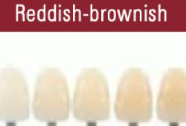
B
VITA hue category that is REDDISH YELLOW
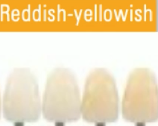
C
VITA hue category that is GRAYISH
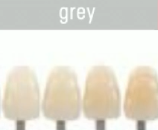
D
VITA hue category that is REDDISH-GRAY
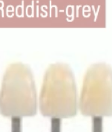
true
T/F the clinical success of a crown or bridge depends on how we deliver the definitive prosthesis
true
T/F ceramic material can be used for every indirect restoration
retention
cements with HIGH COMPRESSION and TENSILE STRENGTH have stronger ______
high compression and tensile strength
components of cement that provide stronger retention
luting
cementation with little to no chemical adehesion, relies on MECHANICAL retention
bonding
cementation forms chemical and/or micromechanical bond to tooth
bonding
which type of cement have improved retention and strength of restoration
true
T/F tooth preparation design will influence the choice of cement
3-4
an increase wall height of _____ mm was associated with sig. increase in fracture resistance and can compensate for missing interproximal wall
true
T/F retentive features in crown preparations are for METAL substrates ONLY
rounded
ZIRCONIA preparations must always be _____ to account for milling burs
negative error (too much material taken away)
OVERMILLING to account for sharpness of a preparation is considered
true
T/F restorative materials will influence the choice of cement
sandblast, rinse/dry, prime with adhesive (20sec), air dry (5 sec)
pretreatment for metal and ceramo-metal restorations
true
T/F regardless of their applications or fabrications technique, after firing, dental porcelains are composed of at least 2 phases
glassy, crystalline
dental porcelains have a ______ phase surrounding a _____ phase
60
FELSPATHIC porcelain is ___% vol glass
35
LITHIUM DISILICATE is ____ %vol glass
<5
ZIRCONIA is ____ vol% glass
hydrofluoric acid
silica contaning CERAMICs are able to be ETCHED by
9.5% hydrofluoric acid gel for 1 min
what is used to etch FELDSPATHIC PORCELAIN and LEUCITE-REINFORCED glass ceramic
fluorosilicate (must be rinsed off, inhibits bonding)
what is formed when felspathic porcelain is etched?
4.5% hydroflouric acid for 20 sec
what is used to etch LITHIUM DISILICATE
feldspathic and leucite have higher glassy (silica) matrix content
why do FELDSPATHIC porcelain and leucite reinforced glass ceramic require a HIGHER concentration of hydrofluoric acid for a longer period of time than lithium disilicate
true
T/F acid conditioning of ceramic with hydrofluoric acid reduces stress concentrators and increases overall strength
1
after etching with HF, ceramic surface should be rinsed with water for ___ min
extraorally
HYDROFLUORIC acid etching (of the prosthetic) should be done ____
false
T/F hydroflouric acid etching is reccommended for ZIRCONIA
silane coupling agent
After etching dental glass-ceramics (like lithium disilicate or feldspathic porcelain) with hydrofluoric acid (HF), a ________is the primary, gold-standard priming material used to create a chemical bond
small amount of glass matrix and dense crystal network
why is etching zirconia with HF (hydroflouric acid) not recommended?
sandblasting with 50 micron aluminum oxide for 10-20sec
how is ZIRCONIA prepped for cementation?
true
T/F clinicians should use airborne particle abrasion to clean and rough zirconia INTAGLIO surfaces to provide micromechanical retention
false
T/F clinicians should use airborne partical abrasion to clean and roughen lithium disilicate based ceramic INTAGLIO surfaces to provide micromechanical retention