A&P II Lab Practical 1
 Call Kai
 Learn
Learn Practice Test
 Spaced Repetition
 Match
Match Flashcards
 Knowt Play
 Podcast
1/94

There's no tags or description
Looks like no tags are added yet.
Name | Mastery | Learn | Test | Matching | Spaced | Call with Kai | Chat |
|---|
No analytics yet
Send a link to your students to track their progress
95 Terms
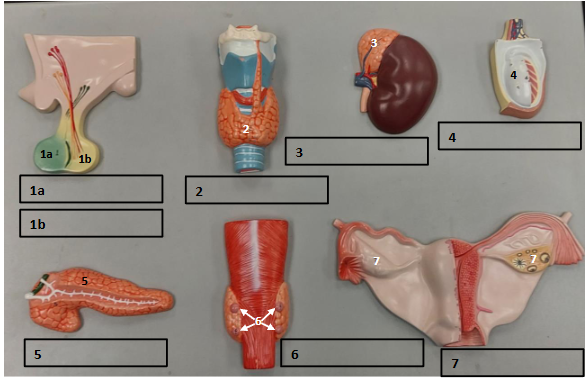
Label everything seen in this image.
1a: anterior pituitary, 1b. posterior pituitary, 2. thyroid gland, 3. adrenal gland, 4. testis, 5. pancreas, 6. parathyroid gland, 7. ovary
Where is the infundibulum?
Above the pituitary, linked anatomically
What does the tip of the pancreas point to?
The spleen
What does the hypothalamus do?
Works with the ANS to regulate hormones and homeostasis, helps anterior pituitary gland
What does the hypothalamus produce?
Two of its own hormones (ADH and OXY), stored and released by the posterior pituitary
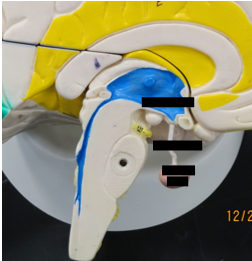
Label the structures in this image from top to bottom.
Hypothalamus, infundibulum, pituitary gland
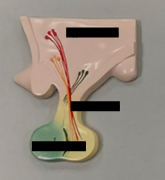
Label the structures in this image from top to bottom.
Hypothalamus, infundibulum, pituitary gland
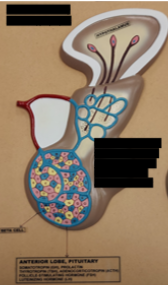
Label this image from top to bottom.
Anterior Pituitary Adenohypophysis, Hypophyseal Portal System (connects hypothalamus via blood supply to anterior pituitary)
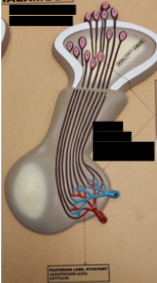
Label this image from top to bottom.
Posterior Pituitary Neurohypophysis, Neurons connecting hypothalamus to posterior pituitary
What does the anterior pituitary do?
Synthesize and secrete hypophysiotropic hormones
What are the hypophisiotropic hormones?
Gonadotropins (follicle stimulating and luteinizing), prolactin, adrenocorticotropic, thyroid stimulating, growth hormone
What is the posterior pituitary and what does it do?
Extension of the hypothalamus, contains neurons and secretes antidiuretic hormons and oxytocin
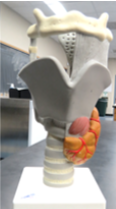
What is this and what does it do?
Thyroid Gland, secretes thyroxine (T4) and triiodothryonine (T3)
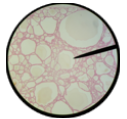
What is this?
Thyroid gland. Large pink cells are the thyroid follicle cells; they create and secreate T3 and T4.
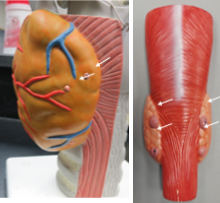
What is this? What does it do?
Parathyroid Glands, secretes parathyroid hormone (opposite of calcitonin).
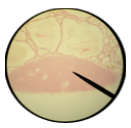
What is this?
Parathyroid endocrine organ, located on the posterior side of thyroid. The parathyroid glands create and secrete parathyroid hormone (works to control blood calcium levels).
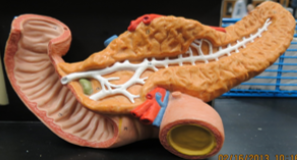
What is this? What does it do?
Pancreas gland, secretes insulin and glucagon.
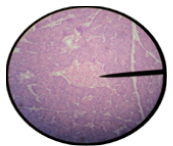
What is this?
Pancreatic islet (Islet of Langerhans), the endocrine tissue of the pancreas.
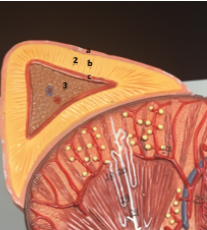
Label this image.
2.adrenal cortex, 2a. mineral corticoid secreting area, 2b. gulocorticoid secreting area, 2c. androgen secreting area, 3. adrenal medulla
What does the mineral corticoid secreting area secrete?
Aldosterone (electrolyte balance)
What does the glucocorticoid secreting area secrete?
Cortisol (stress)
What does the androgen secreting area secrete?
Testosterone (male secondary sex characteristics)
What does the adrenal medulla secrete?
Epinephrine and norepinephrine (fight or flight)
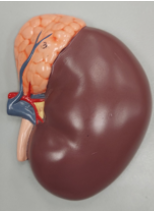
What is 3 referring to?
Adrenal Gland
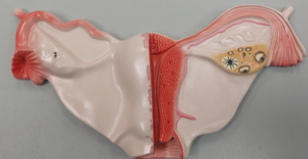
What is this and what does it do?
Ovary, produces progesterone and estrogen
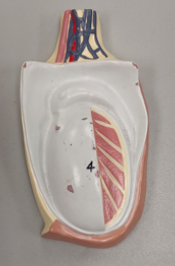
What is this and what does it do?
Testes, leydig cells produce testosterone
What hormone promotes development of sperm and egg and works with Sertoli cells to promote survival factors for sperm development?
Follicle Stimulating Hormone (FSH); produced by the anterior pituitary; targets ovarian and testicular follicles.
What hormone promotes ovulation of the secondary oocyte and testosterone production by Leydig cells?
Luteinizing Hormone (LH); produced by the anterior pituitary; targets ovaries and testes.
What hormone promotes milk production?
Prolactin; produced by the anterior pituitary; targets breast tissue.
What hormone promotes production of adrenal cortex hormones (cortisol and androgens)?
Adrenocorticotropin (ACTH); produced by the anterior pituitary; targets the adrenal cortex.
What hormone promotes production of thyroid hormones?
Thyroid Stimulating Hormone (TSH); produced by the anterior pituitary; targets the thyroid gland.
What hormone promotes growth and regulation of body tissues?
Growth Hormone (GH); produced by the anterior pituitary; targets body tissues.
What hormone causes milk letdown and helps with contractions during labor?
Oxytocin; released by the posterior pituitary; targets breast/milk duct smooth muscle and uterine smooth muscle.
What hormone inserts aquaporin channels into collecting ducts to increase water reabsorption?
Antidiuretic Hormone (ADH); released by the posterior pituitary; targets kidney collecting ducts.
What hormones regulate metabolism and body homeostasis?
Triiodothyronine (T3) and Tetraiodothyronine/Thyroxine (T4); produced by the thyroid; target body cells.
What hormone increases blood calcium levels through effects on bone, kidneys, and intestines?
Parathyroid Hormone (PTH); produced by the parathyroid gland; targets kidneys, bones, and intestines.
What hormone mediates inflammatory and stress responses and breaks down tissues for energy?
Cortisol; produced by the adrenal cortex; targets body tissues.
What hormone helps develop secondary sexual characteristics?
Androgen; produced by the adrenal cortex; targets body tissues.
What hormone helps retain sodium and water for blood volume and blood pressure maintenance?
Aldosterone; produced by the adrenal cortex; targets kidneys.
What hormones assist with the fight-or-flight response?
Epinephrine and Norepinephrine; produced by the adrenal medulla; target most body cells.
What hormone helps regulate the menstrual cycle and secondary sexual characteristics?
Estrogen; produced by the ovaries; targets ovaries and body cells.
What hormone regulates the menstrual cycle, maintains early pregnancy, and provides negative feedback to the pituitary?
Progesterone; produced by the ovaries; targets ovaries, uterus, and anterior pituitary.
What hormone helps with sperm production and secondary sexual characteristics?
Testosterone; produced by the testes; targets testes and body cells.
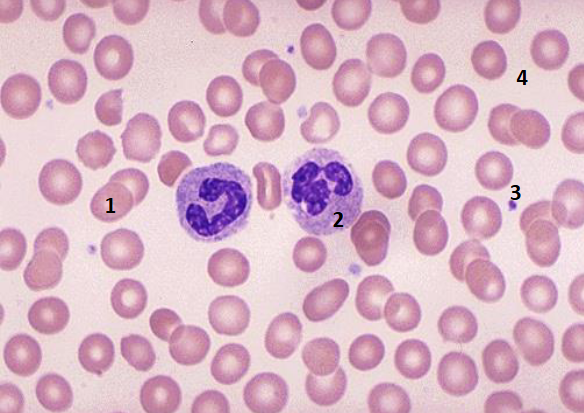
Label this image.
1.erythrocyte, 2. leukocyte, 3. thrombocyte, 4. plasma
What is the composition of blood?
44% erythrocytes (4-6 million), <1% leukocytes, ~1% thrombocytes (platelets), 55% plasma
What are erythrocytes?
Red blood cells, contain hemoglobin to help carry oxygen (4 hemes, 4 irons). Lifespan = 120 days.
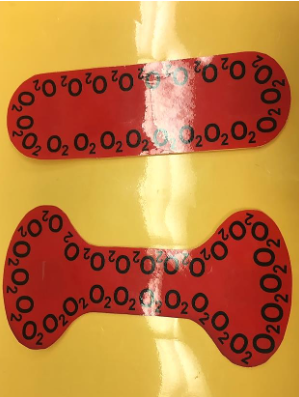
What does this image show?
Bioconcave shape of RBC that allows for more efficient oxygen carrying.
What are the formed elements of blood?
Platelets, leukocytes, erythrocytes
What is a differential white blood cell count?
A blood test where you determine the percentages of the different types of WBCs
What are examples of granuloctyes?
Neutrophils, eosinophils, basophils
What are examples of agranulocytes?
Lymphocytes and monocytes
What is the order and percentages of WBCs from highest to lowest?
Neutrophils (54-62%), lymphocytes (25-38%), monocytes (3-7%), eosinophils (1-3%), basophils (0-1%)
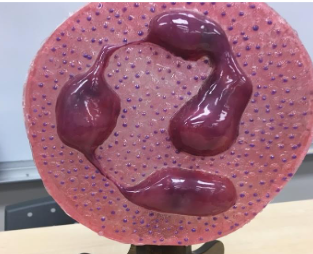
What is this?
Neutrophil, main job is phagocytosis
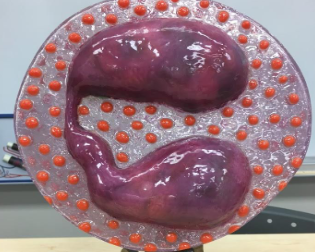
What is this?
Eosinophil, main job is to destroy parasites (involved in allergic inflammatory reactions)
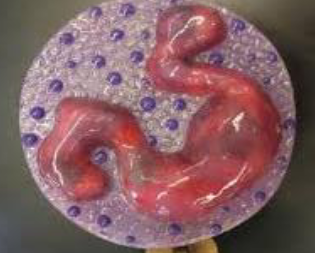
What is this?
Basophil, main job is in allergic inflammatory reactions (release histamine, a vasodilator, and heparin, an anticoagulant)
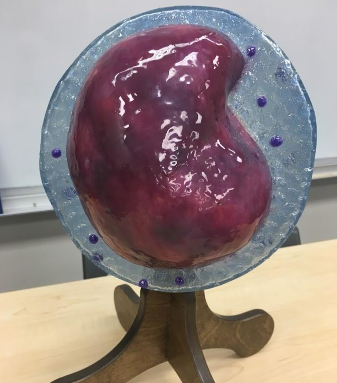
What is this?
Lymphocyte, main job is specific immune response (contains T, B, and NK cells)
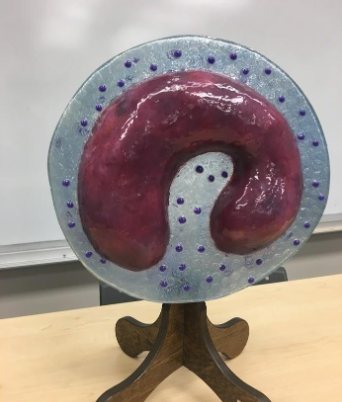
What is this?
Monocyte, main job is phagocytosis
Agglutination vs Coagulation?
Agglutination is clumping, and coagulation is clotting
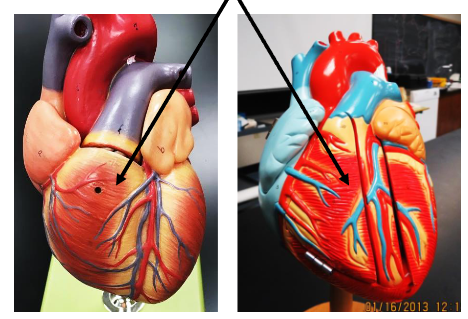
What is this?
Epicardium and visceral pericardium. The outermost heart layer is the epicardium and the serous membrane lining the surface is the VP, but they’re so tight together they are indistinguishable.
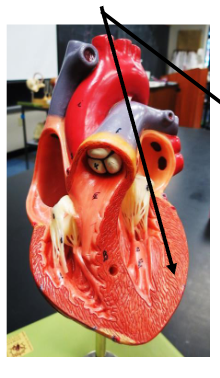
What is this?
Myocardium; middle layer made up of cardiac muscle tissue
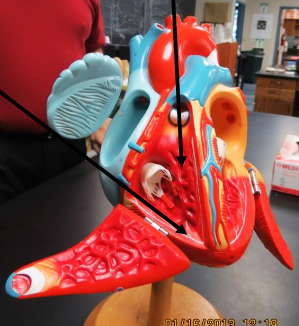
What is this?
Arrow coming from the left is myocardium, but the straight down arrow is endocardium (inner layer made up of endothelial cells)
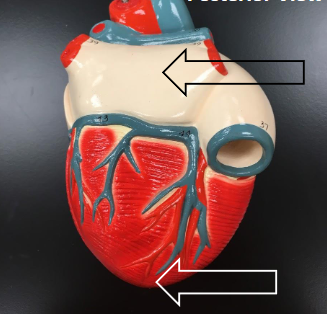
What is this?
Posterior view of the heart; top arrow is the base, bottom arrow is the apex.
What does the heart apex consist of?
Two ventricles, points to the left hip
What does the base of the heart consist of?
Area between atria and ventricles with AV and semilunar valves made of connective tissue
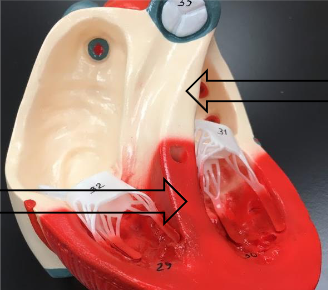
What is this?
Anterior view of the heart, top arrow is the interatrial septum between R and L atrium, bototm arrow is the interventricular septume between R and L ventricles
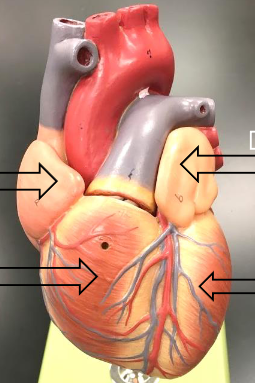
Label this image from top to bottom, right and then left side.
Top right: right atrium, bottom right: right ventricle, top left: left atrium, bottom left: left ventricle
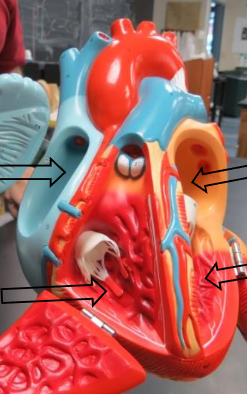
Label this image from top to bottom, right and then left side.
Top right: right atrium, bottom right: right ventricle, top left: left atrium, bottom left: left ventricle
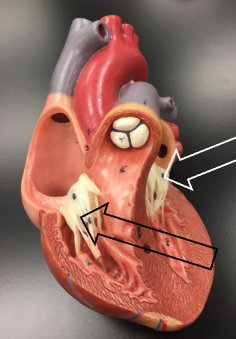
Label this image.
Left arrow: right atrioventricular (AV) valve/tricuspid valve, right arrow: left atrioventricular (AV) valve/bicuspid valve/mitral valve
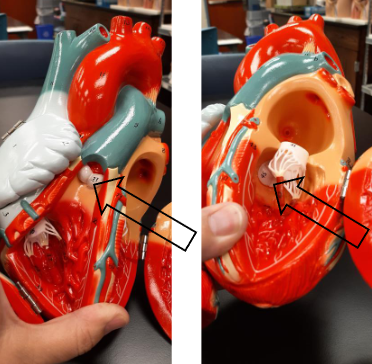
Label this image.
Left arrow: pulmonary semilunar valve, right arrow: aortic semilunar valve
What are the white, thread-like “fingers,” attached to the heart valves, and what do they do?
Chordae tendinae, attached to muscular papillae, open and close valves, prevent AV valves from retracting into the atria
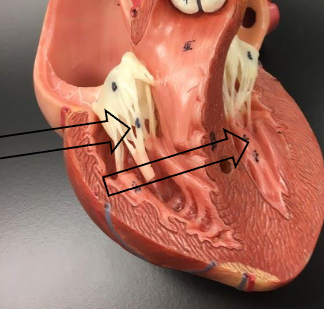
Label this image.
Left arrow: chordae tendinae, right arrow: papillary muscles
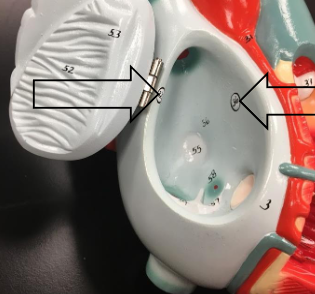
Label this image.
Left arrow: Sinoatrial node (SA, pacemaker of heart), right arrow: atrioventricular node (AV)
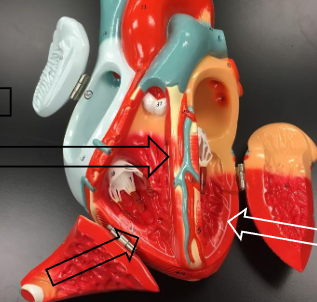
Label this image.
Top left arrow: right bundle branch, bottom left arrow: purkinje fibers (amall branches), bottom right arrow: left bundle branch
List the heart conduction system in order.
Sinoatrial Node to Atrioventricular Node to Atrioventricular Bundle (Bundle of His) to Right and Left Bundle Branches to Purkinje Fibers
Why does the fetal heart have cardiac shunts?
In utero, the fetus does not need to send blood to the lungs for oxygenation because oxygenated blood comes from the mother via the placenta. Cardiac shunts redirect blood to systemic circulation.
What are the two fetal cardiac shunts?
Foramen ovale (between the right and left atria), Ductus arteriosus (between the pulmonary trunk and aorta)
What does the foramen ovale do in the fetus?
Allows blood to bypass the lungs by moving blood from the right atrium to the left atrium.
What does the ductus arteriosus do in the fetus?
Allows blood to bypass the lungs by moving blood from the pulmonary trunk to the aorta.
What fetal structures become adult structures after birth?
Foramen ovale = Fossa ovalis, ductus arteriosus = Ligamentum arteriosum
What happens to fetal cardiac shunts after birth?
The shunts stop functioning and eventually become adult structures.
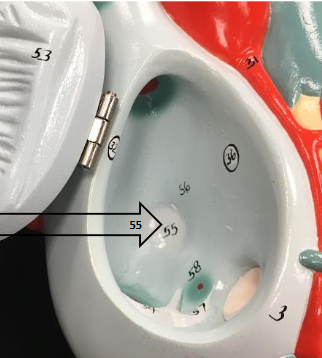
What is this?
Fossa ovalis (adult) or foramen ovale (fetus)
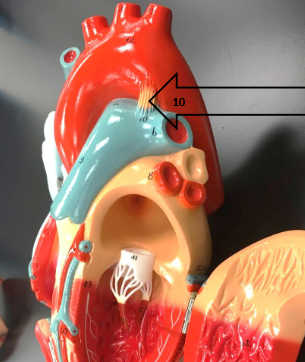
What is this?
Ligamentum arteriosum (adult) or ductus arteriosus (fetus)
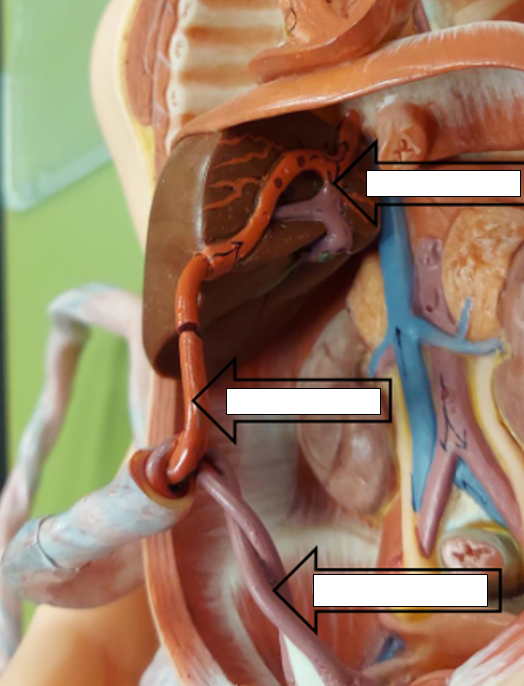
Label this image.
Top arrow: ductus venosus, middle arrow: umbilical vein, bottom arrow: umbilical arteries
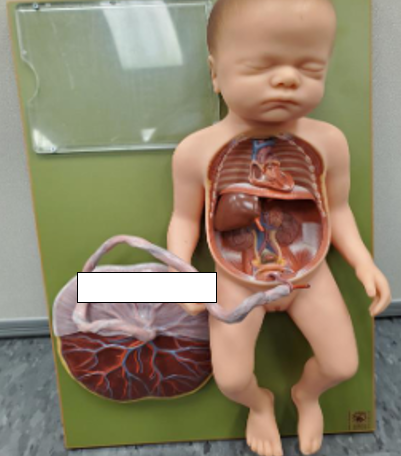
What is this?
Placenta
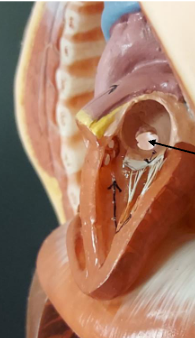
What is this?
Foramen ovale
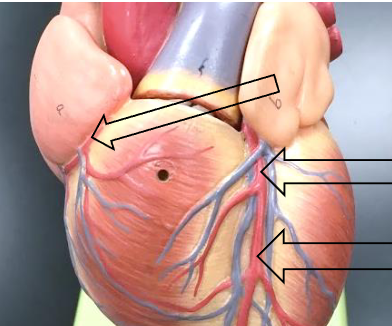
Label this image.
Top left arrow: right coronary artery, top right arrow: left coronary artery, bottom right arrow: left anterior descending artery
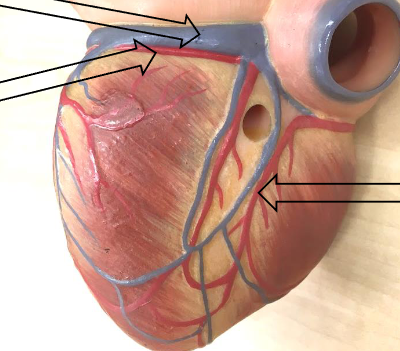
Label this image.
Top middle arrow: coronary sinus (vein), top left arrow: circumflex artery, bottom right arrow: posterior interventricular artery
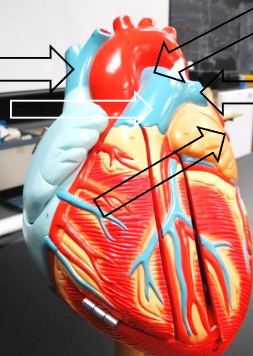
Label this image from top to bottom, right side and then left.
Superior vena cava, pulmonary trunk, pulmonary veins, right pulmonary artery, left pulmonary artery
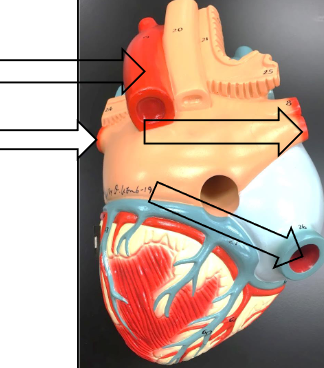
Label this image from top to bottom, right side and then left.
Descending aorta, left pulmonary vein, right pulmonary vein, inferior vena cava
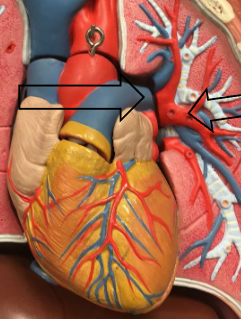
Label this image.
Left arrow: left pulmonary artery, right arrow: left pulmonary vein
What do arteries carry?
Deoxygenated blood (blue) away from the heart
What do veins carry?
Oxygenated blood (red) back to the heart
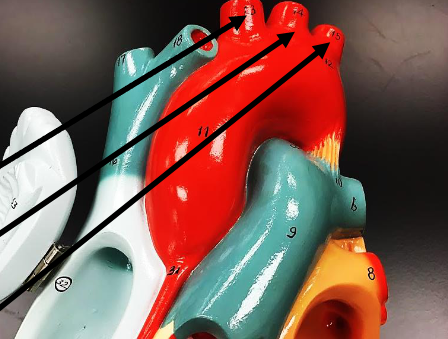
What is this image?
Ascending aorta with aortic arch vessels
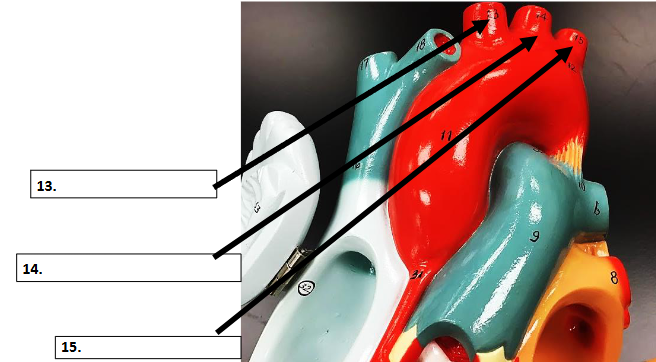
Label this image.
13.brachiocephalic artery, 14. left common carotid artery, 15. left subclavian artery
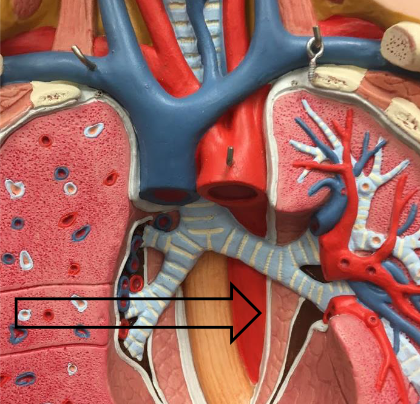
What is this?
Descending aorta into abdominal aorta (technically DA becomes AA after passing through the diaphragm)