PED- Ethics: Equality and diversity
 Studied by 0 people
 Call Kai
 Learn
Learn Practice Test
 Spaced Repetition
 Match
Match Flashcards
 Knowt Play
1/19

There's no tags or description
Looks like no tags are added yet.
Name | Mastery | Learn | Test | Matching | Spaced |
|---|
No study sessions yet.
20 Terms
What is equality ?
Giving everyone equal opportunities - Treating everyone fairly or the same?
What is diversity ?
- Having different individuals within a group
- multiple identities or types of people
What is inclusion ?
- Creating an environment where everyone feels welcome and valued
What is discrimination ?
- Treating a person unfairly because of who they are or because they possess
certain characteristics
What is the difference between equality and equity ?
equality - sameness
equity - fairness
Why should you care ?
EDI and discrimination can affect you personally, professionally and morally
it includes the workplace / colleagues as well as the patient
it can be a 2 way street
What are the benefits of good EDI practice ?
better workforce reputation
fewer complaints
better staff morale
better access to services
better recruitment and retention of staff
lower sickness rates
improved productivity
better patient experience
an inclusive society
How do professional standards relate to EDI ?
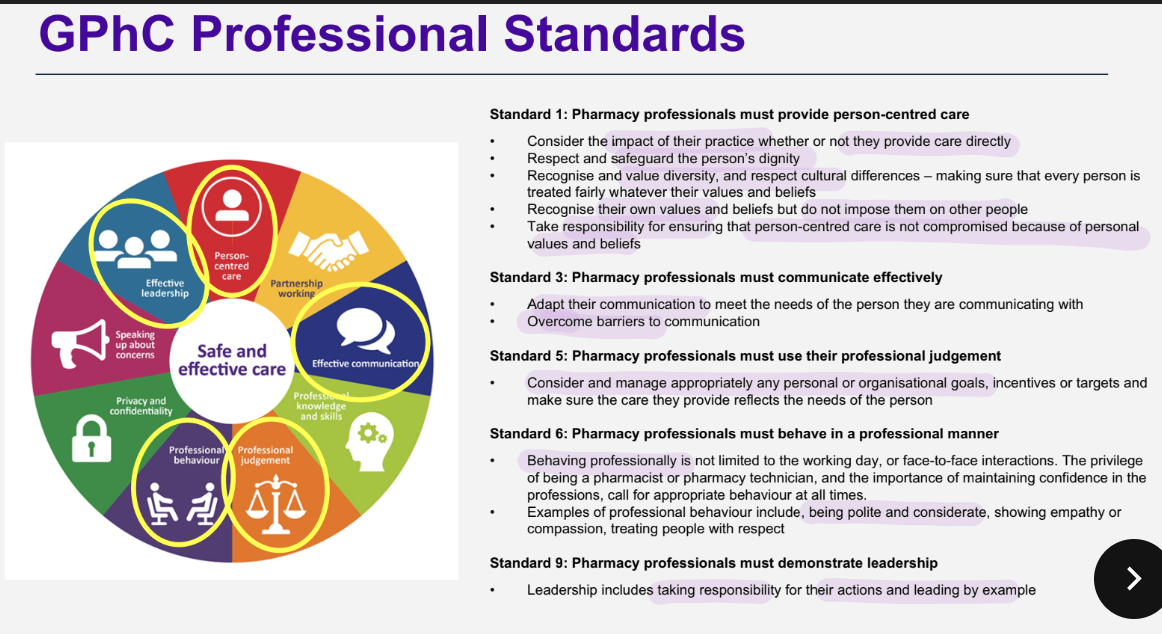
What is the equality act 2010 ?
uses 116 seperate pieces
provides a legal framework to protect the rights of individuals and advance equality of opportunity for all
it provides britain with a discrimination law - protects individuals from unfair treatment
What are the protected characteristics ?
age
gender reassignment
being married or in a civil partnership
being pregnant or maternity leave
disability
race including colour, nationality , ethnic or national origin
religion or belief
sex
sexual orientation
Where are people protected ?
You’re protected from discrimination:
• At work
• In education
• As a consumer
• When using public services
• When buying or renting property
• As a member or guest of a private club or association
You’re also protected from discrimination if:
• You’re associated with someone who has a protected characteristic, for
example a family member or friend
• You’ve complained about discrimination or supported someone else’s claim
What characteristics aren’t covered in the equality act
Some possible answers may have included:
• Educational level
• Addictions
• Neurodiversity*
• Sight impairment*
• Social class/status
• Economic status
• Attractiveness
• Weight
• Height
• Medical diagnosis’*
• Being a caregiver
What is intersectionality ?
The overlap of various social identities, such as race, gender, sexual orientation, and disability, which allow us to recognise the multiple types of oppression and discrimination experienced by people, and understand the complexity of the prejudices they face
What is the link between intersectionality and identity ?
everyone has multiple aspects to their identity
some of those change through our lives but other ar ethe same
Why does intersectionality matter ?
acknowledge the diversity of human experience
What are the types of discrimination ?
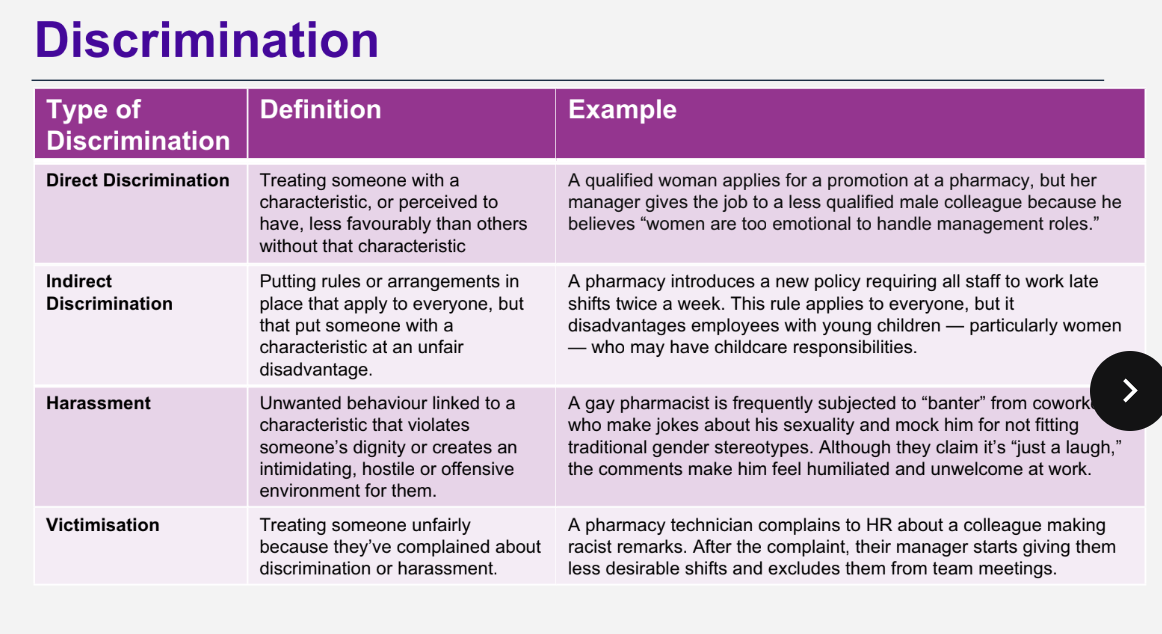
What is positive action ?
Positive action
• Is lawful
• Actions made to encourage or support people that does not discriminate against others
• Helps a disadvantaged group overcome barriers and puts them level
What is the positive discrimination?
Positive Discrimination
• Is not lawful
• Actions are made that discriminate based on characteristics
• Preferential treatment or advantages given to one over another which leads
to unequal footing
If any party is deliberately put at an advantage over another, it is
discrimination.
What influences our stereotypes ?
culture
society
statistics
politics
media
experience
friends
education
personal beliefs
family
What is unconscious bias ?
Just because many of our stereotypes and biases are formed
unconsciously, does not mean we can not identify and challenge them.