physics II midterm 2 equations
 Call Kai
 Learn
Learn Practice Test
 Spaced Repetition
 Match
Match Flashcards
 Knowt Play
1/23

There's no tags or description
Looks like no tags are added yet.
Name | Mastery | Learn | Test | Matching | Spaced | Call with Kai | Chat |
|---|
No analytics yet
Send a link to your students to track their progress
24 Terms
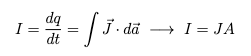
steady charge = density x area of cross section
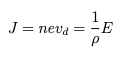
current density = 1/resistance x electric field

power = current x potential

power absorbed/emitted by emf = current/work on unit charge required to maintain potential difference
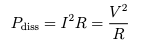
and which one to use when
power at which energy is transformed into thermal energy
V2/R: when voltage is constant
I2R: when current is constant?
series circuit
SCAV (same current, add voltage)
Req = R1+ R2 ….
parallel circuit
SVAC (same voltage, add current)
Req = (1/R1 +1/R2 …)-1
series capacitors
SQAV (same charge, add voltage)
Ceq = (1/C1 + 1/C2 + …)-1
parallel capacitors
SVAQ (same voltage, add charge)
Ceq = C1 + C2 +….
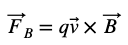
force of magnetic field = q (V x B)
direction: sweep hands from place of velocity to magnetic field), thumb points direction of force
Fc = FB = (mv2)/r
force of magnetic field in uniform circular motion

radius of circular motion
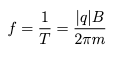
frequency = 1/period
p = V//T
pitch of helix is parallel velocity (to B) x period

direction?
magnetic field of coil
right hand rule → curl around current, thumb is magnetic field
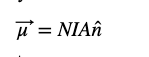
magnetic dipole moment

magnetic field of magnetic dipole
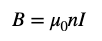
magnetic field of a solenoid
n = number of turns

potential energy of magnetic dipole
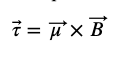
torque on a coil due to magnetic dipole
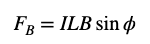
force of magnetic field on an angled wire
θ = angle between B and L
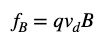
force of single charge carrier in a wire perpendicular to magnetic field

number of charges in the wire of length L in wire perpendicular to magnetic field
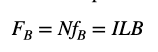
net force of wire perpendicular to magnetic field