Edible and poisonous mushrooms
 Studied by 1 person
 Call with Kai
 Learn
Learn Practice Test
 Spaced Repetition
 Match
Match Flashcards
 Knowt Play
1/93

There's no tags or description
Looks like no tags are added yet.
Name | Mastery | Learn | Test | Matching | Spaced | Call with Kai |
|---|
No study sessions yet.
94 Terms
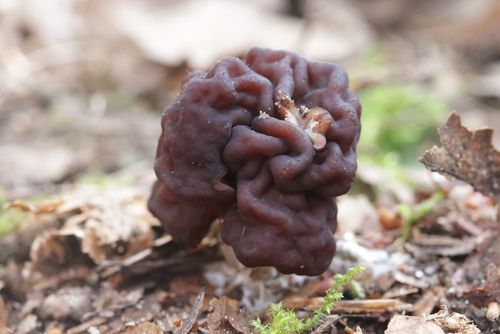
Gyromitra esculenta
o Brain-like head
o Reddish brown
o Under Pinus spp., on soil
o Wax-like flesh
o In spring
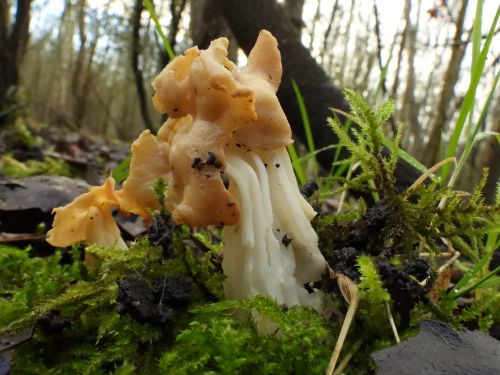
Helvella crispa
o Greyish head
o Irregularly lobed, often saddle-shaped
o Longitudinally grooved stem
o In autumn
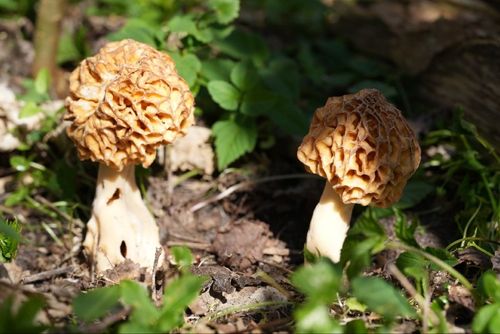
Morchella esculenta
o Head ochraceous yellow, yellowish brown, honeycomb-like cells; globose to oval shape
o Hollow stem
o Deciduous forests
o In spring
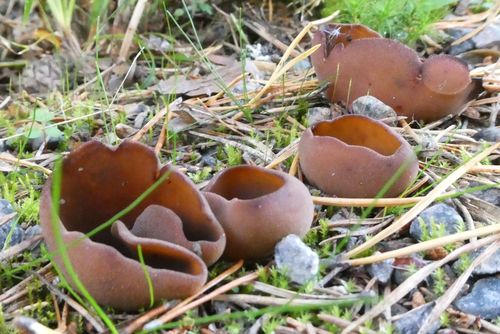
Peziza badia
o Cup-shaped sporocarp of 3-8 cm diameter; sessile, red brown to purple brown with white basal hairs
o Outer surface (excipulum) of cup is lighter in colour
o Flesh ragile
o From spring to autumn
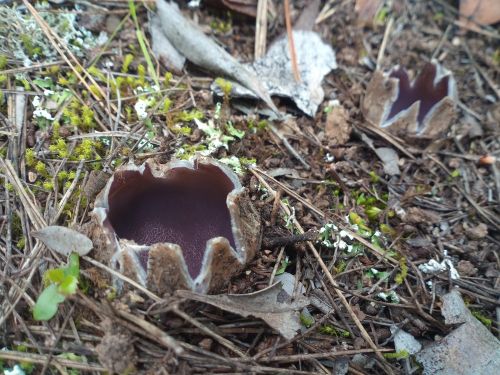
Sarcosphaeria coronaria
o Cup 5-15 cm in diameter; initially closed, merged in the soil with stellate opening at maturity
o Hymenium greyish violet to purple
o Coniferous forests on calcareous soil

Aleuria aurantia
o 2-6 cm diameter sporocarp with undulating margin; crowded
o Hymenium vivid orange red to yellow
o Excipulum lighter in colour and with white floccules
o Flesh thin, fragile, wax-like
o From spring to autumn
o On soil close to woody debris
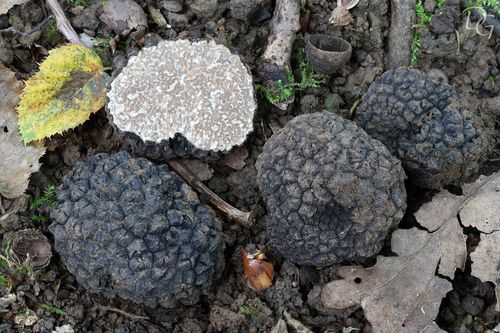
Tuber aestivum
o Clod-shaped; brownish black
o Peridium with coarse pyramidal warts
o Flesh marbled/veined
o Smells like boiled corn
o In calcareous soil
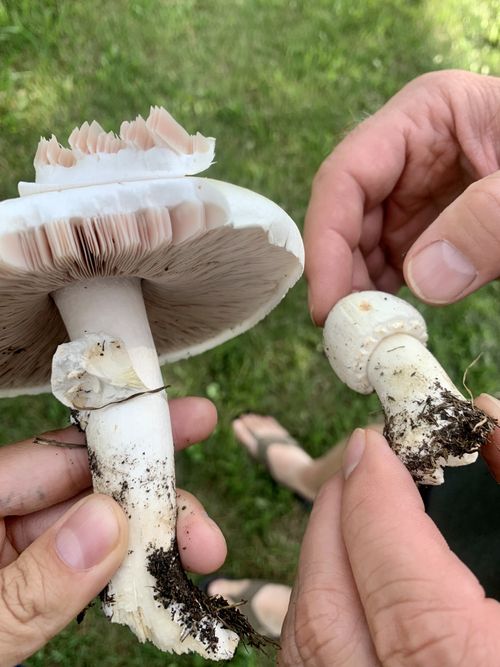
Agaricus arvensis
o Cap whitish becoming cream-coloured, slowly yellowing when touched
o Gills free; crowded, whitish when young, later becoming greyish flesh-coloured
o Stem with a slightly bulbous base and a white, upwards-sheathing cogwheel ring
o Smells like aniseed
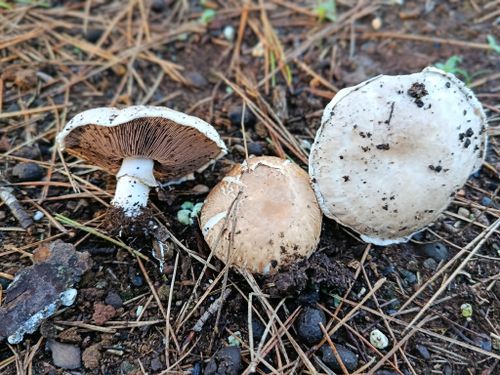
Agaricus bisporus
o Cap whitish, dirty brown to dark brown, with radially fibrillose, appressed scales
o Gills pinkish when young, becoming blackish brown; edge whitish
o Ring sheathing both upwards and downwards
o Flesh white, can be finely reddening
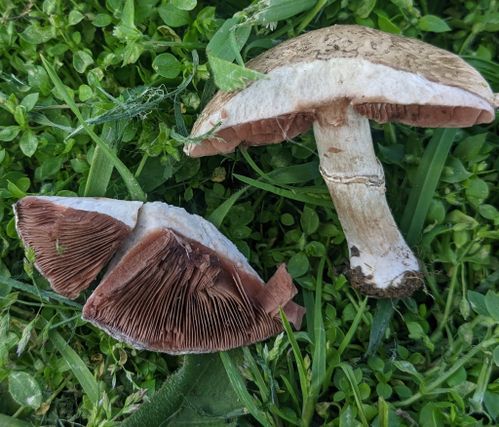
Agaricus campestris
o Cap whitish to ochraceous, finely fibrillose or with fine white or brownish scales
o Gills pinkish when young, flesh-coloured, becoming dark red brown
o Stem tapers towards the base and has a narrow ring that disappears quickly
o Flesh smells slightly acidulous, sometimes finely reddening
o In grasslands
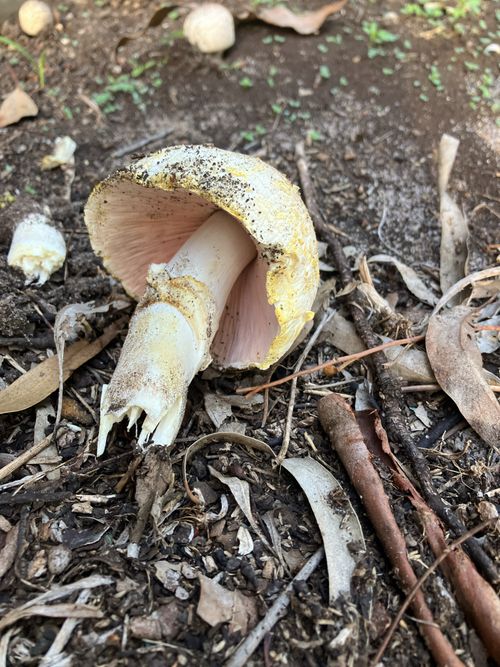
Agaricus xanthodermus
o Cap whitish to centrally pale brownish grey, strongly yellowing when touched
o Gills are whitish when young, later vivid rose, finally blackish brown
o Ring hanging, with a cogwheel-like ornamentation on the underside
o Flesh in the stem base instantly turns bright yellow when cut
o Smell is ink-like
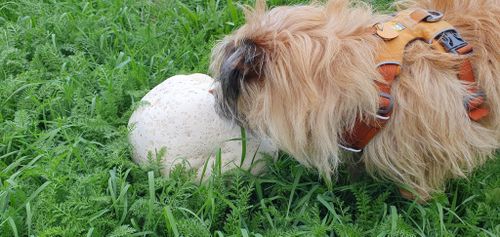
Calvatia gigantea
o Sporocarp large 10-50 cm in diameter, spherical, without stem
o With cords at the base
o Exoperidium leathery, whitish, fragile, becoming ochraceous greyish brown with age
o Both in forests and grasslands, on N enriched soils
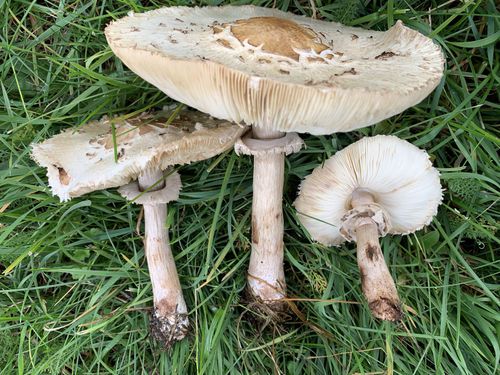
Chlorophyllum rachodes
o Cap 6-15 cm in diameter, whitish to pale brown with large, coarse, darker brown scales; with a central, brown umbo
o Gills crowded, whitish cream, free, connected to a collarium, reddening when bruised
o Stem with a basal bulb, whitish, becoming reddish brown, with a loose, muff-luke double ring that has a felty, greyish underside and can be moved along the stem o Flesh white, stains orange red when cut
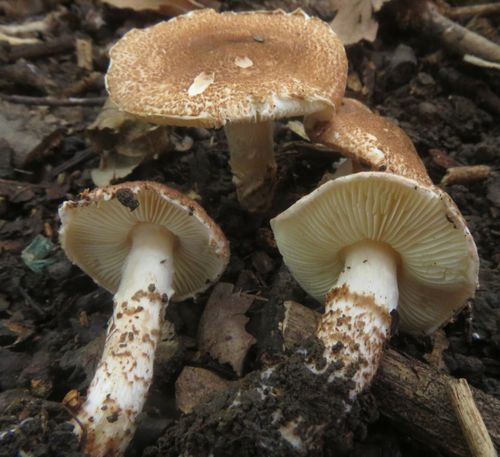
Lepiota brunneoincarnata
o Cap 2-5 cm in diameter, umbonate, whitish with pinkish brown, imbricate, fine scales
o Gills crowded, free, become spotted with vinaceous brown
o Stem whiteish pink, towards the base brownish with a vinaceous tinge; wooly ring zone and belts of purplish grey scales
o On sandy soils in deciduous forests
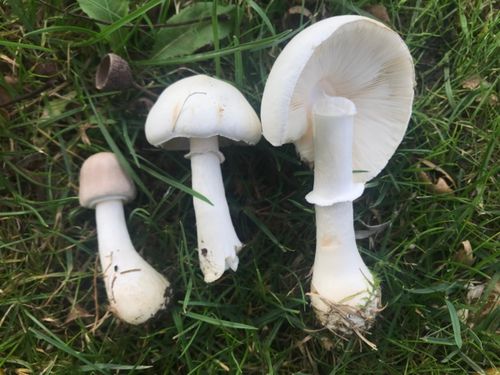
Leucoagaricus leucothites
o Cap first white, later ochraceous, matte
o Gills crowded, free, white, becoming pinkish
o Ring is muff-like, with an upper and lower rim
o Flesh is white, does not change colour
o In grasslands, forest edges, gardens
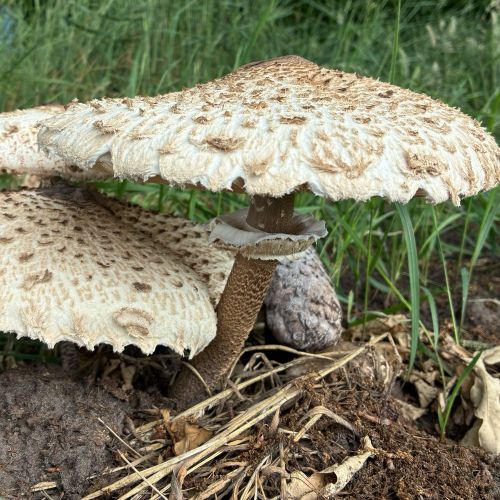
Macrolepiota procera
o Cap 10-50 cm in diameter, whitish to pale brown with removable, recurved, dark brown, fibrillose scales; with central dark brown umbo
o Gills crowded, whitish, free, connected to a collarium
o Stem with a large basal bulb, a distinct brown snakeskin pattern, and a loose, double ring that can be moved along the stem
o Flesh tastes like hazelnuts
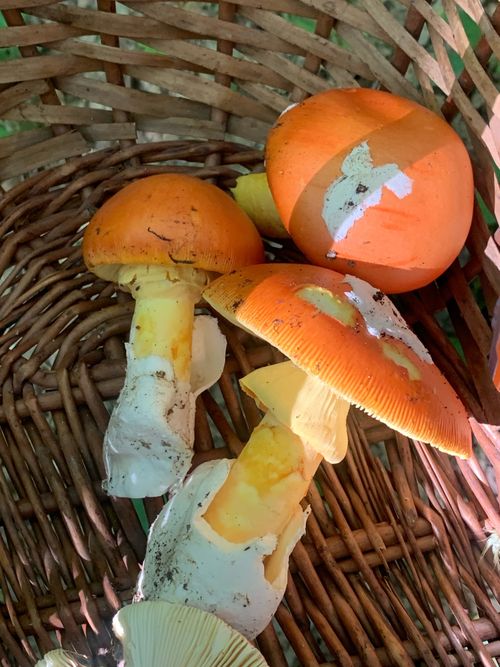
Amanita caesarea
o Cap vivid orange
o Gills free, crowded, yellowish
o Stem yellowish, with membranous, yellowish ring
o Volva white, well developed
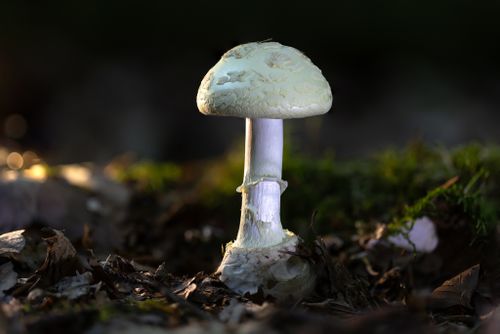
Amanita citrina
o Cap pale yellowish; covered by whitish brownish yellow remnants of velum universal
o Gills crowded, free, whitish to yellowish white
o Stem pale yellow with yellowish hanging, membranous striate ring
o Membranous volva absent; stem base with a sharply delimited bulb
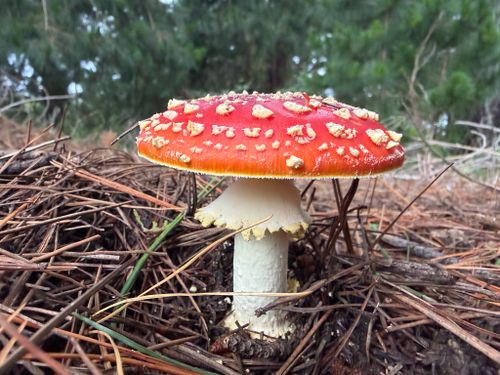
Amanita muscaria
o Cap red, fading to orange, with removable, white remnants of velum universale (volva)
o Gills crowded, free, white
o Stem with a hanging, white membranous ring
o Stem bulbous with concentrical rings of volval scales
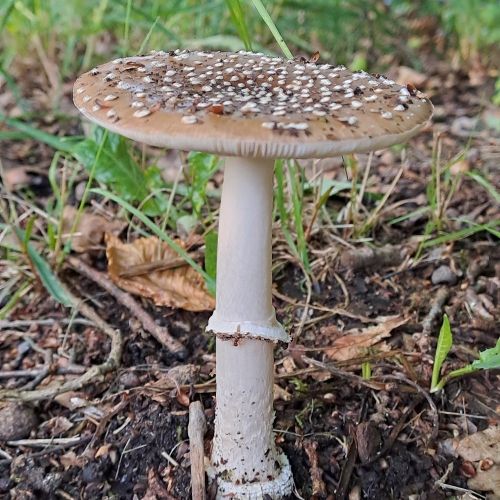
Amanita pantherina
o Cap pale grey to dark greyish brown, with removable white veil remnants, margin ridged
o Gills crowded, free, white
o Ring white, hanging, non-striate
o Stem base with a sharply delimited bulb; with concentrical rings of volval scales
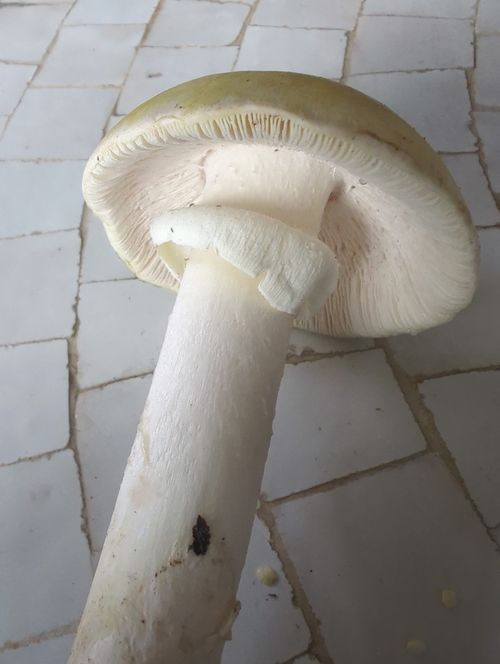
Amanita phalloides
o Cap olivaceous green, yellowish or brownish green, often fibrillose
o Gills white, crowded, and free
o Stem with a basal bulb and a white membranous volva; a hanging white membranous ring always present
o Flesh white watery, smells sweetish, taste pleasant
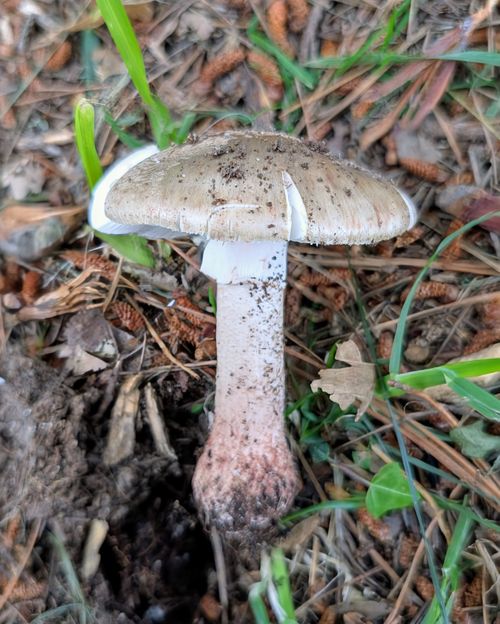
Amanita rubescens
o Cap pale yellowish red to reddish brown with darker, flat scales
o Gills crowded, free, white, reddening when bruised
o Stem bulbous with belts of veil remnants
o Ring white, striate
o Flesh reddening when bruised
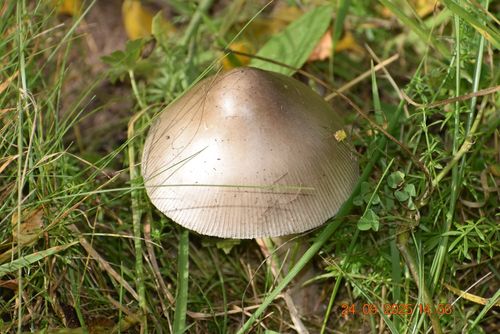
Amanita vaginata
o Cap grey to greyish brown with a ridged margin
o Stem hollow, with fine fibrils and scales
o Ringless
o Volva membranous, whitish to grey with some rust-coloured spots
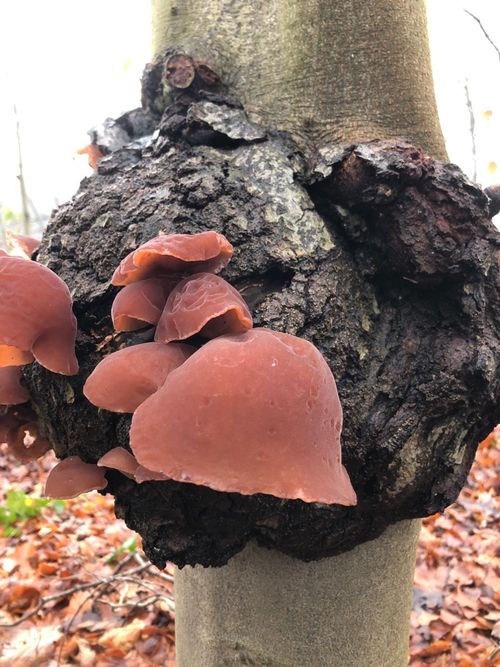
Auricularia auricula-judae
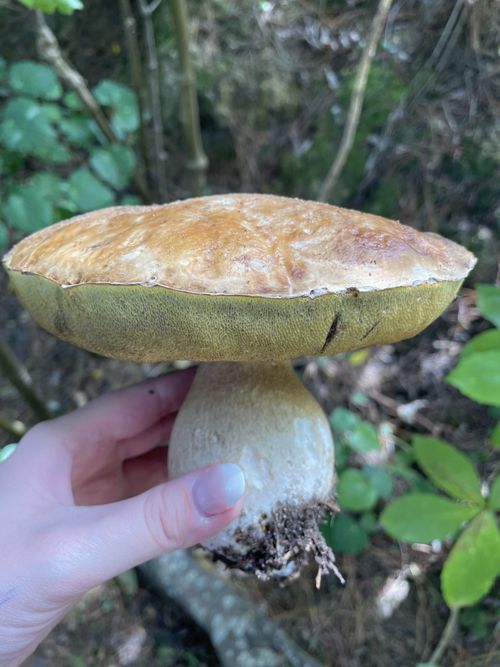
Boletus edulis
o White flesh, never changes colour
o Pores are primarily white, later olivaceous green
o Stem light brown with a white reticulate ornamentation
o Cap margin white
o Cap light brown to dark brown, sticky when moist
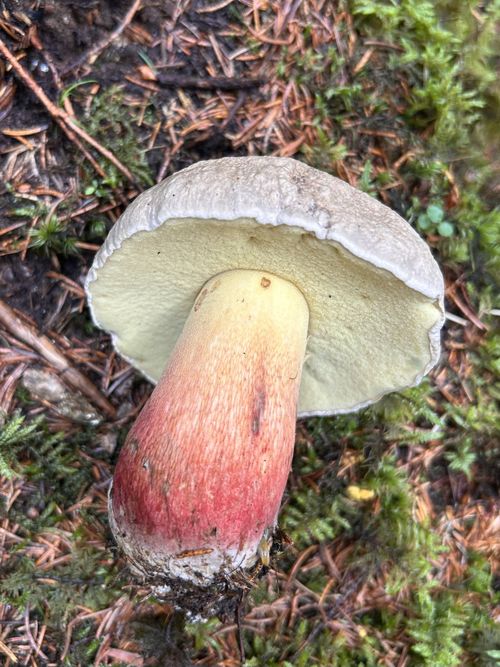
Caloboletus calopus
o Cap greyish brown
o Pores pale yellow, turning blue
o Stem reddish towards the base, reticulate
o Flesh bitter, turning blue
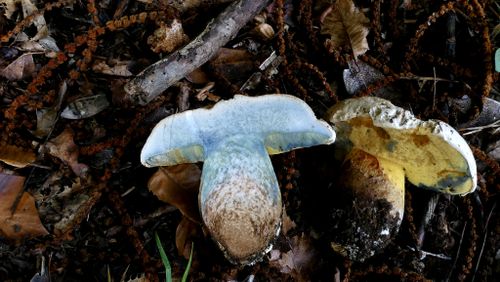
Caloboletus radicans
o Cap pale grey to brownish, felty
o Pores are pale yellow, turning blue
o Stem often rooting, lemon yellow
o Flesh turns blue when cut, bitter
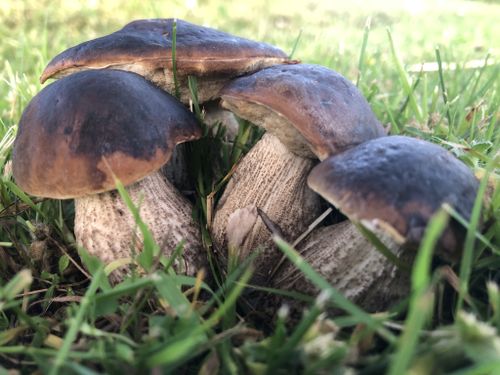
Leccinellum pseudoscabrum
o Cap greyish brown, staining black, slightly wrinkled, cracking up
o Pores are white to yellowish grey, black staining
o Stem with longitudinally arranged scales
o Flesh primarily turns reddish, later greyish violet, finally black
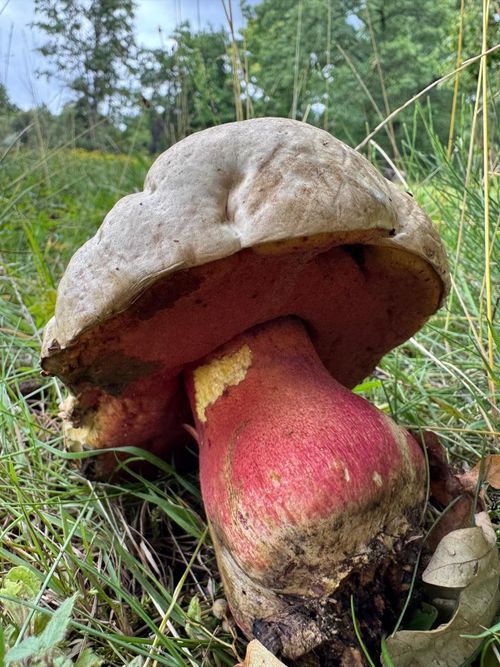
Rubroboletus satans
o Cap greyish yellow; felty
o Tubes are yellow with red pores turning blue when bruised
o Stem yellow upwards, reddish downwards, with a fine reticulum
o Flesh whitish, slightly blue staining
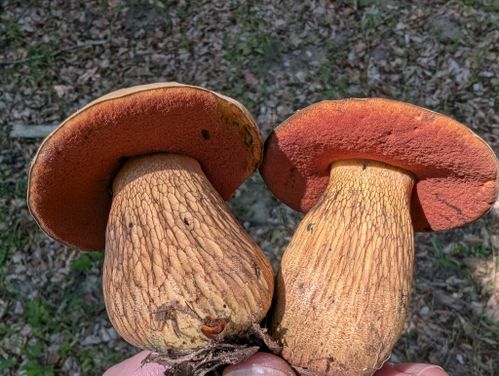
Suillellus luridus
o Cap orange brown to olivaceous brown, blue staining
o Tubes are yellow with orange red pores staining blue
o Stem orange red with a coarse reddish reticulum
o Flesh pale yellow, vinaceous at stem base, blue staining
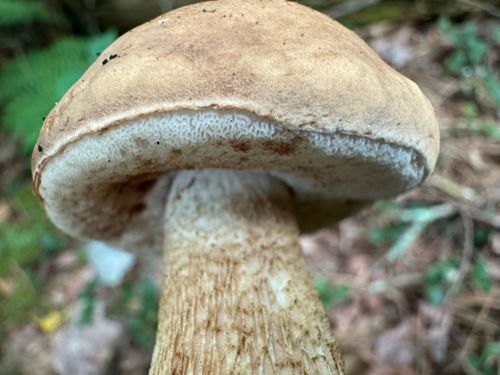
Tylopilus felleus
o Cap brown, matte
o Pores are adnexed, rose
o Stem with a darker, coarse, reticulate ornamentation
o Flesh white and bitter
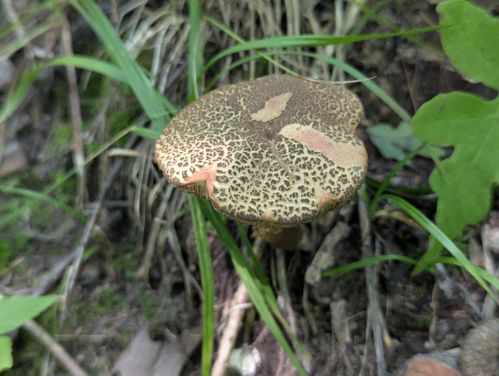
Xerocomellus chrysenteron
o Cap felty, cracking up into islands; pinkish reddish in the cracks
o Pores are wide
o Stem yellowish upwards and covered by reddish dots downwards
o Flesh yellowish and staining finely blue when cut
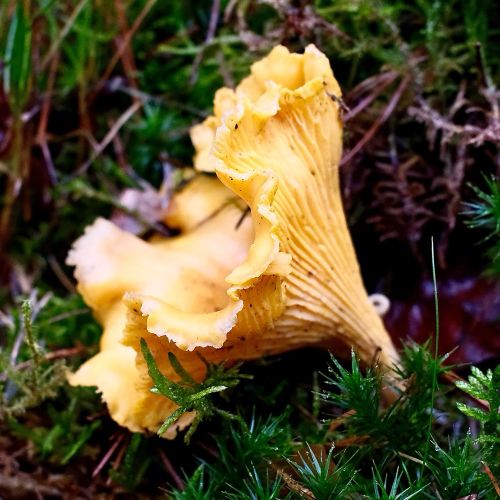
Cantharellus cibarius
o Yellow to yellow orange; no other colours
o With decurrent, bifurcate ribs
o Cap edge undulating, lobed
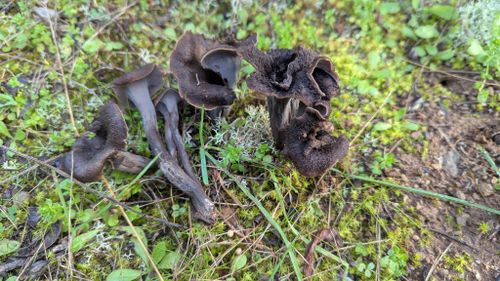
Craterellus cornucopioides
o Trumpet-shaped
o Trumpet is dark brown to blackish inside, grey outside
o On soil, in clusters
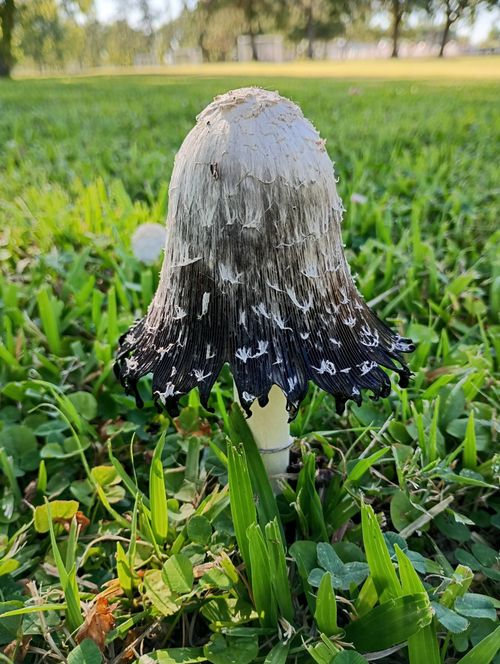
Coprinus comatus
o Cap white, cylindrical, conical with whitish to ochraceous brown, fibrillose scales
o Gills crowded, free, white, dissolves into a black inky mass
o Stem white, hollow with a white ring
o In grasslands
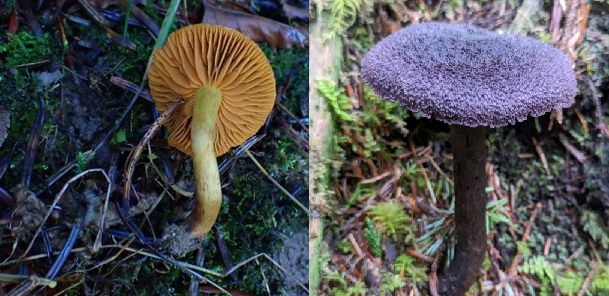
Cortinarius spp. (C. malicorius, C. violaceus)
o Exclusively in forests
o Fruiting almost always in autumn
o Young sporocarps always with a cortina, which later turns rusty brown from deposited spores
o Gills often crowded, adnate or adnexed
o Cap often varies a lot in colour: large ones are usually coloured, small ones often brown
o The most species-rich genus of pileate, stipitate fungi

Calocera viscosa
o Exclusively on buried coniferous wood
o Yellow to orange
o Very rubbery
o Sticky
o Two-to-four times branched; with bifurcated tips
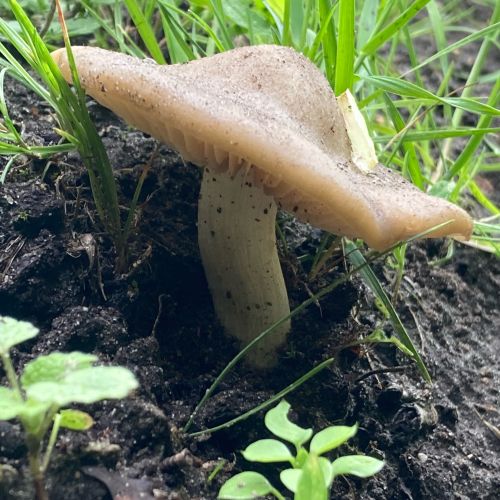
Entoloma clypeatum
o From April to June in Central Europe, under Rosaceae shrubs
o Cap conical, later applanate with umbo, greyish brown, radially fibrillose, pale grey
o Gills whitish when young later pinkish
o Smell and taste farinaceous to rancid
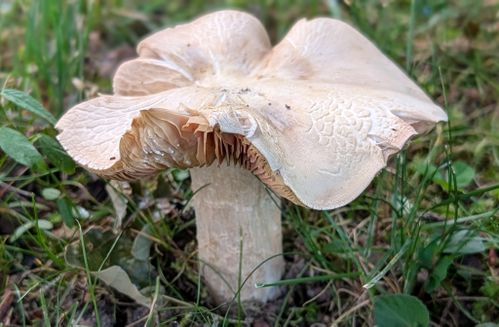
Entoloma sinuatum
o Stem and cap (5-20 cm) white, cream, pale grey
o Stem fleshy, stout; cap thin-fleshed
o Gills whitish when young, later yellowish, finally pink
o Smelling farinaceous or acidulous-nauseous
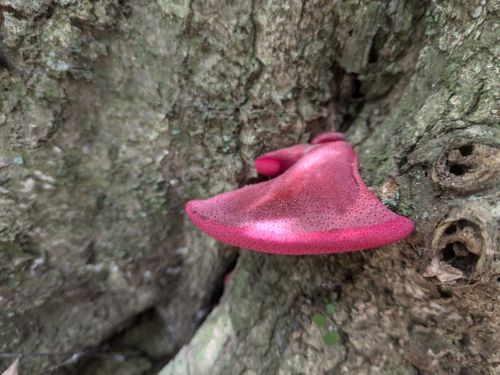
Fistulina hepatica
o On wood
o Soft
o Flesh pink to red
o Sticky cup surface when young; exudes a red juice
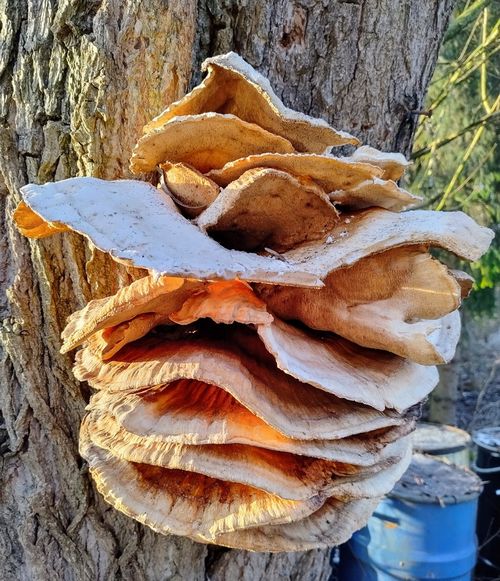
Laetiporus sulphureus
o On wood
o Yellow to orange
o Soft
o Always develop more than one cap (imbricate)
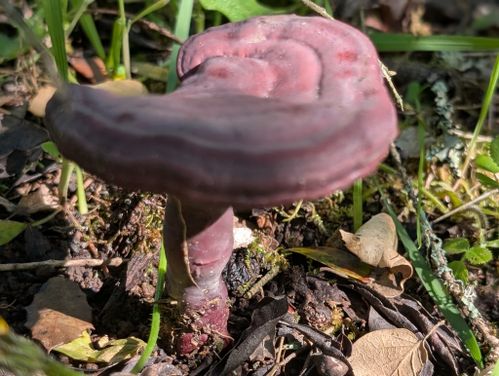
Ganoderma lucidum
o Growing from stumps
o Stipitate; stipe shiny reddish brown, lacquered
o Cap surface zonate with red brown colours in the centre, often yellowish white towards the edge, covered by a crust layer
o Annual, soft-fleshed
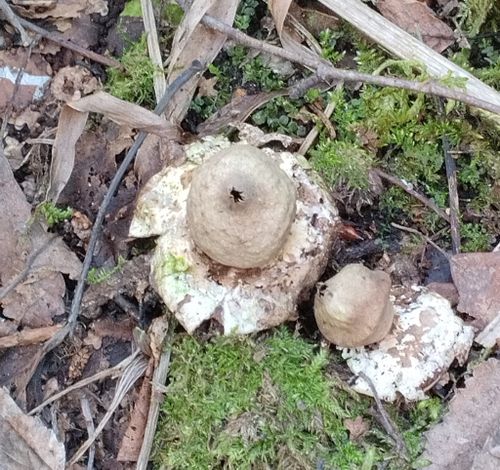
Geastrum fimbriatum
o Sporocarp whitish to beige
o Exoperidium cracks open into 5-10 recurving rays
o Peridium thin, smooth, angiocarpous with a fimbriate opening that is not within a well delimited zone
o In deciduous and coniferous forests, on soil
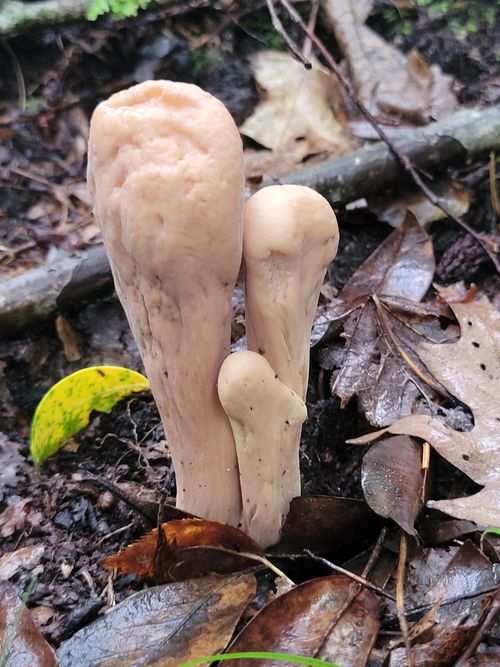
Clavariadelphus pistillaris
o On soil, non-branching, club shaped
o Yellow to brownish
o Rounded top
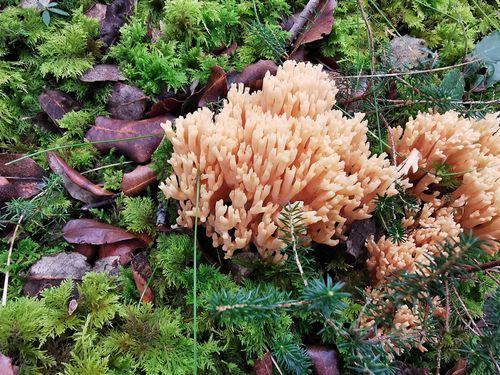
Ramaria flava
o Large to very large 15-25 cm
o Completely yellow branches
o Mainly under Fagus, on soil
o Never changes colour when cut
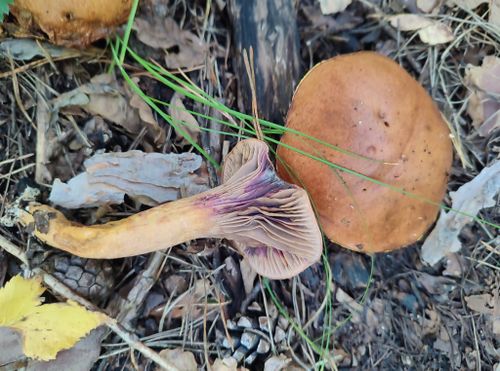
Chroogomphus rutilus
o Exclusively under Pinus spp.
o Cap vinaceous, orange rust to hazel, viscid, shiny
o Gills decurrent, distant, orange when young becoming purplish to blackish brown o Veil arachnoid, soon disappearing except for a slender ring zone
o Stem paler but concolorous with cap, yellow at the base
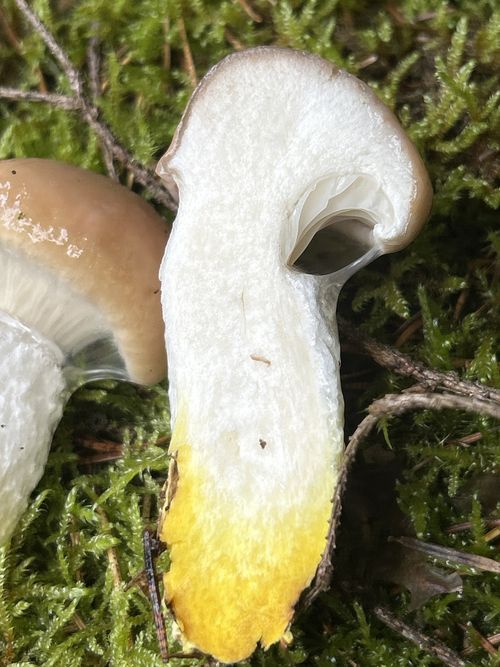
Gomphidius glutinosus
o Exclusively in coniferous forests
o Cap chocolate brown to greyish purple, sticky, viscid
o Gills deeply decurrent, distant, whitish when young, later greyish black
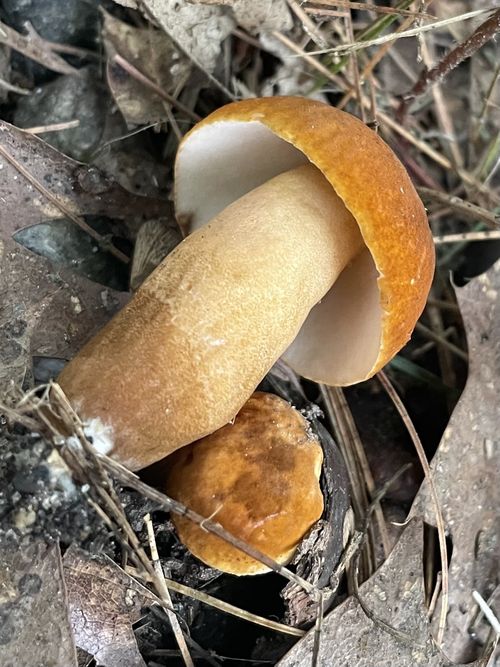
Gyroporus castaneus
o Cap cinnamon brown, felty
o Pores are whitish to cream, adnexed
o Stem concolorous with cap, chambered
o Flesh never changes colour
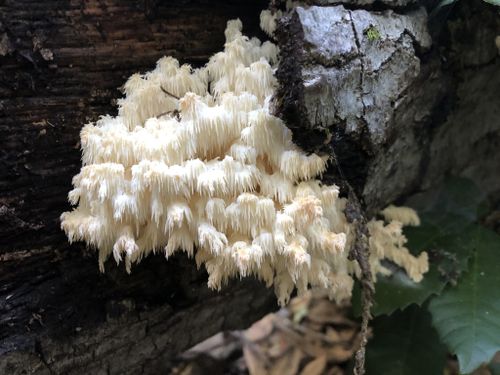
Hericium coralloides
o On wood
o Sporocarp highly branching and white with hanging spines
o On deciduous wood
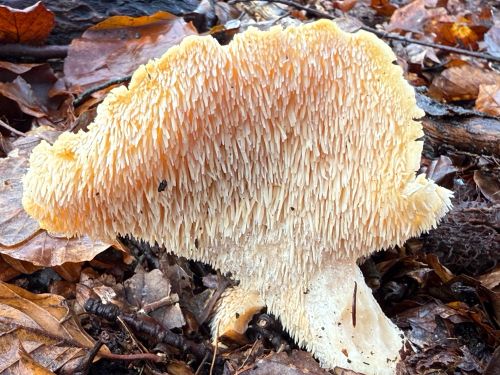
Hydnum repandum
o Has a spiny trama
o Cap surface cream-coloured, yellowish, ochraceous, matte
o Cap edge curved, lobed
o Cup diameter 5-20 cm
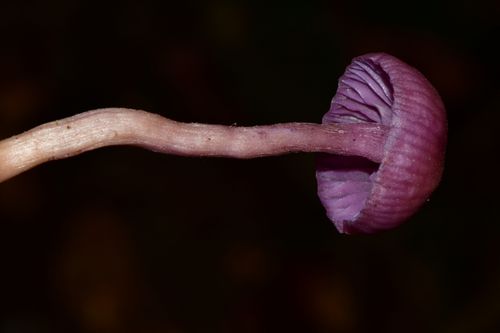
Laccaria amethistina
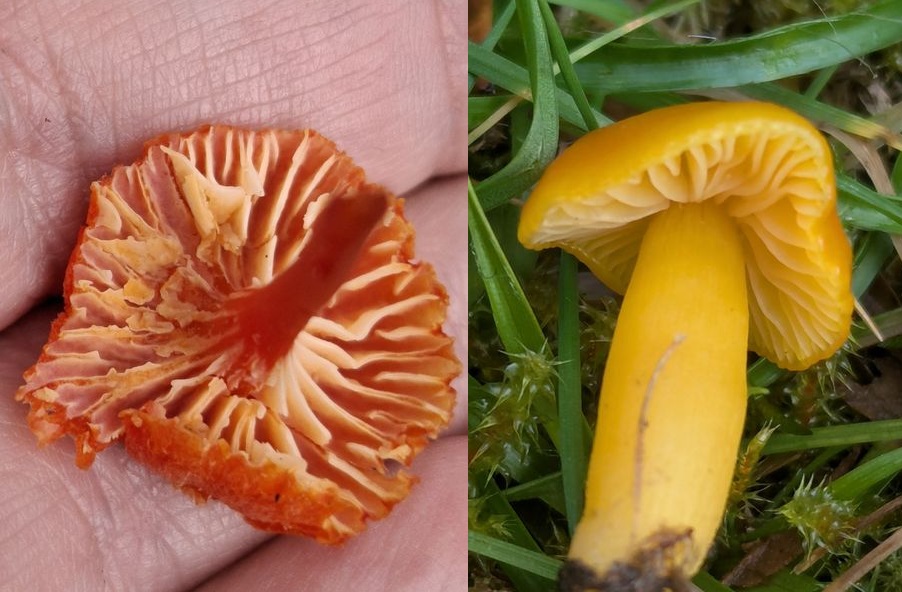
Hygrocybe spp. (H. lepida, H. ceracea)
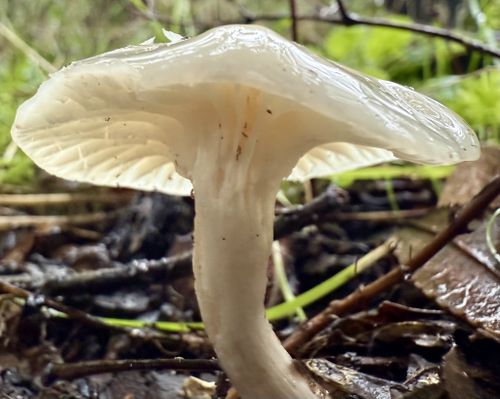
Hygrophorus eburneus
o Cap whitish to cream, umbonate even when old and applanate; slimy, viscid
o Gill distant, short decurrent, whitish
o Stem at top with white floccules, downwards tapering, smooth
o In deciduous forests
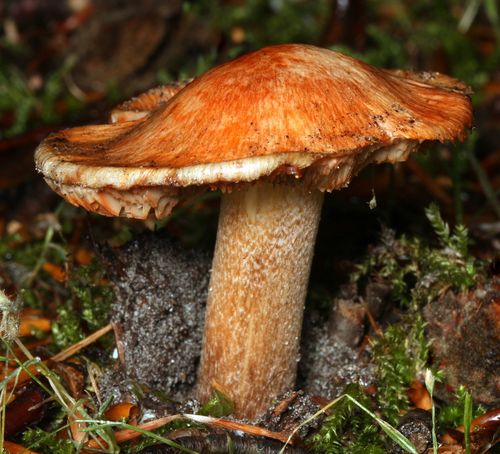
Inocybe erubescens
o Cap conical, umbonate, rimose, whitish when young, straw-coloured, becoming brick red, radially fibrillose
o Gills crowded, adnexed, first whitish with a reddish hue, later rusty olivaceous brown, reddening when bruised
o Stem whitish, fibrillose, reddening when touched
o Smells fruity
o From May to July in deciduous forests
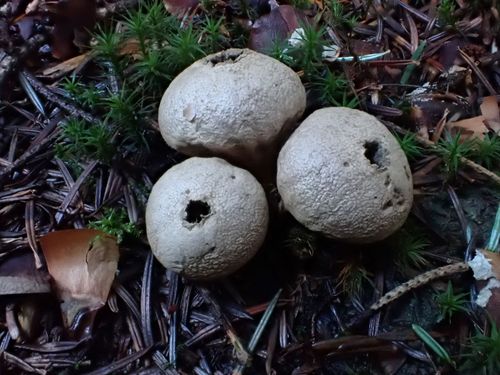
Lycoperdon perlatum
o Sporocarp pear-shaped (pyriform) with an apical umbo, stipe tapers towards the base
o Peridium covered by whitish cream, easily detachable pyramidal spines
o Flesh soft when young, white, later spongy, olivaceous brown
o On soil in deciduous and coniferous forests
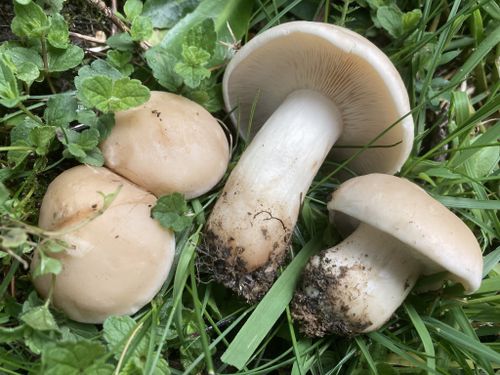
Calocybe gambosa
o Cap convex, cream coloured, greyish ochre
o Gills crowded, thin, emarginate
o Fleshy, flexible, strongly farinaceous
o Vernal; from April to early summer

Clitocybula platyphylla
o Cap whitish to greyish brown, radially fibrillose
o Gills whitish, distant, broad, flexible
o Stem base with white cords
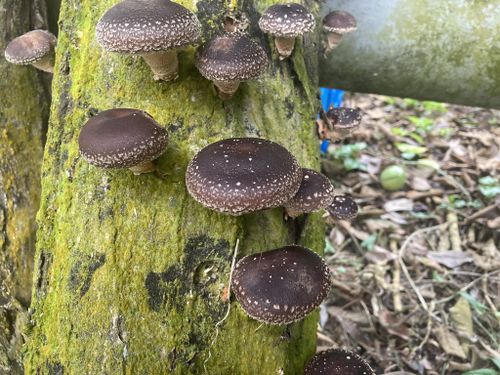
Lentinula edodes
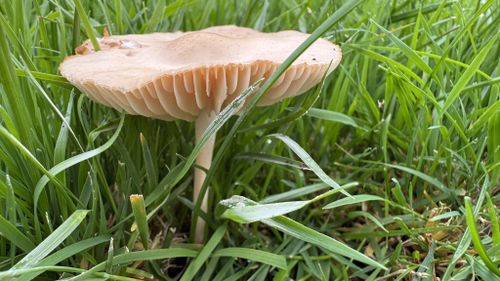
Merasmius oreades
o Cap ochraceous or reddish brown, drying pale with a broad umbo, margin finely ridged
o Gills adnate, medium-spaced to distant, broad
o Flesh fibrous in stem, smelling like bitter almonds or pleasantly spicy
o In grasslands
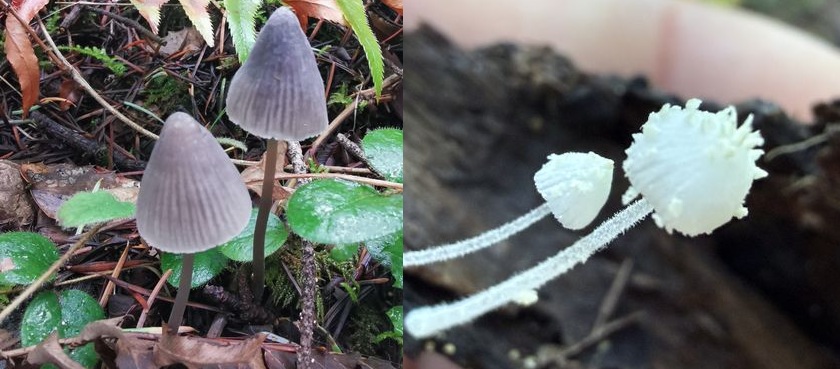
Mycena spp
o Cap conical, often translucently striate
o Stem often hollow, clustered
o Gills whitish
o On litter or deadwood
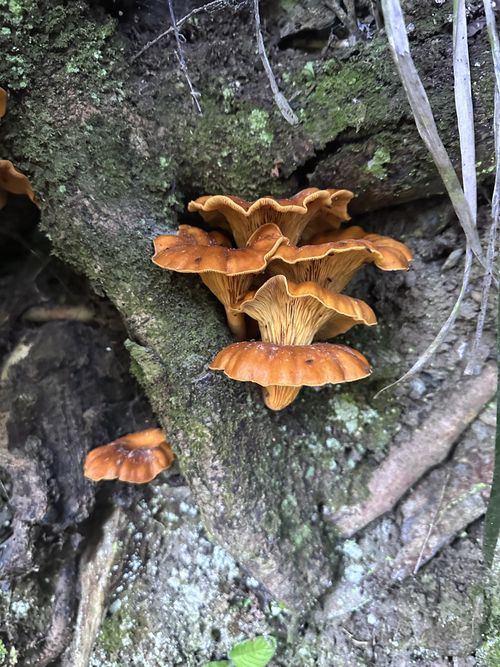
Omphalotus olearius
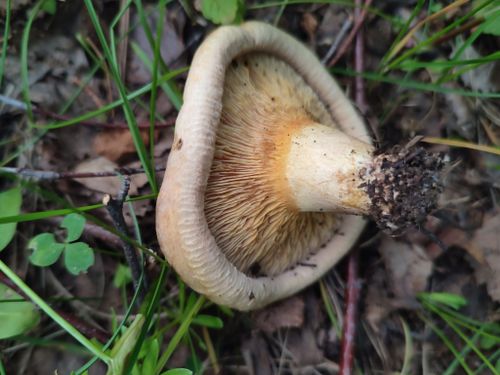
Paxillus involutus
o Cap cinnamon-brown with an in-rolled margin
o Gills ochraceous, turning brownish when bruised
o Gills can be easily loosened from the cap flesh
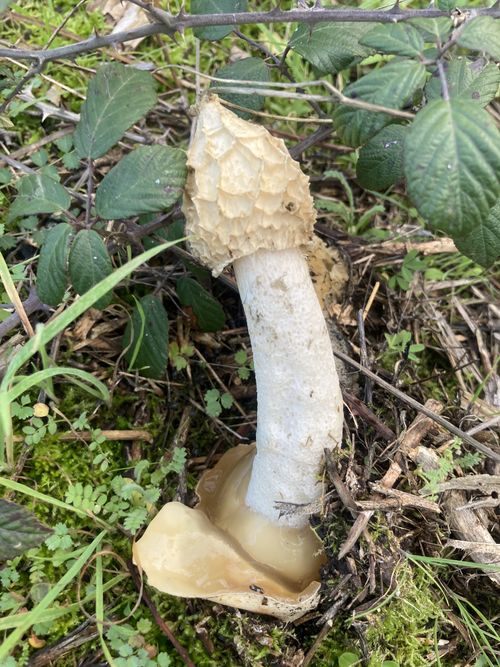
Phallus impudicus
o Its primordium, the “witch’s egg” is spherical, whitish to ochraceous, soft, 3-8 cm in diameter
o With white cords from base
o Raising in a few hours, the bell shaped, pitted head is covered by an oily, sweet smelling, olivaceous green nauseating slime
o Stem whitish, hollow, spongy, fragile
o The head is white under the olivaceous green slime
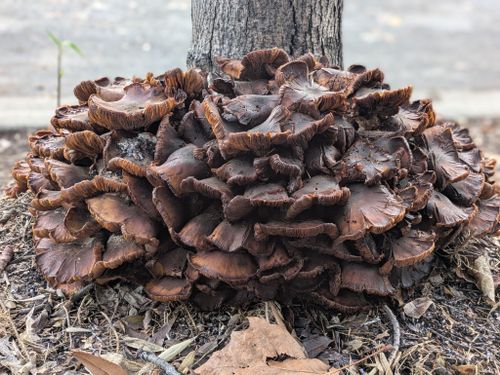
Armillaria mellea
o Cap yellow to yellowish brown with fine, darked scales
o Gills short decurrent, with rusty brown spots when old
o Stem clustered with a whitish to yellowish ring and fibrillose scale downwards
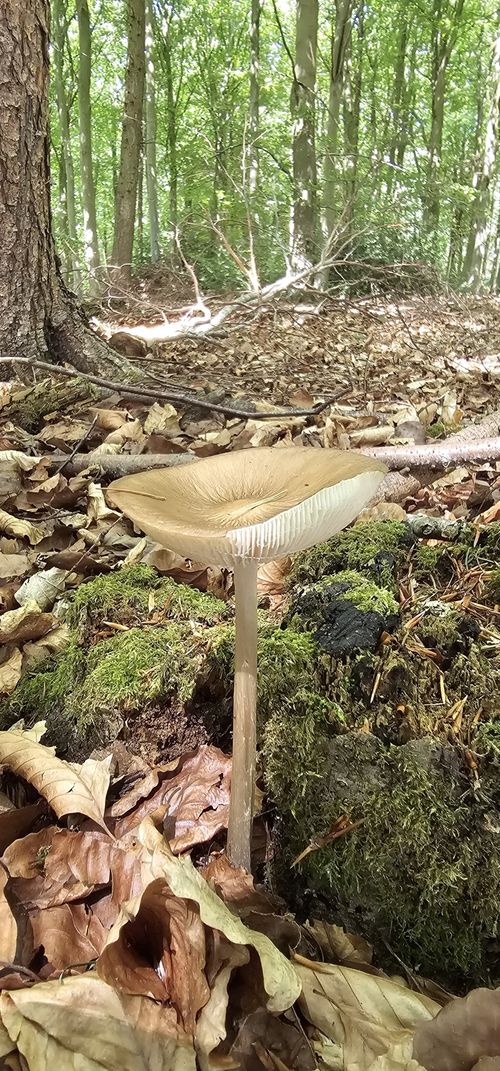
Hymenopellis radicata
o Cap umbonate, greyish yellow to dark brown, radially rugose-wrinkled
o Gills broad, adnate, white, distant
o Stem with a long pseudorhiza, lighter than cap
o Flesh flexible, rubbery
o On roots of deciduous trees
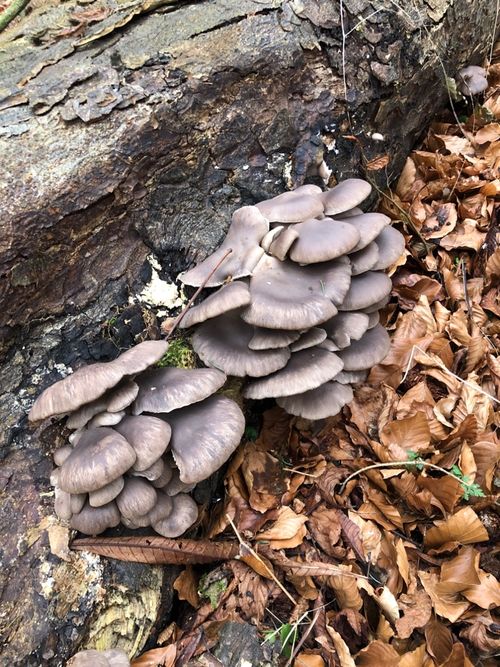
Pleurotus ostreatus
o Cap dark grey, greyish brown, darker in cold weather
o From October to December in Central Europe
o Gills white, deeply decurrent o Stem often connate
o On decaying deciduous wood

Pluteus cervinus
o Cap broadly umbonate, radially fibrillose, smooth, glossy, dark grey, brown to date brown
o Gills free, whitish later pinkish
o Stem cylindrical, whitish with longitudinal brown fibrils; easily removable from cap f lesh
o On decaying wood
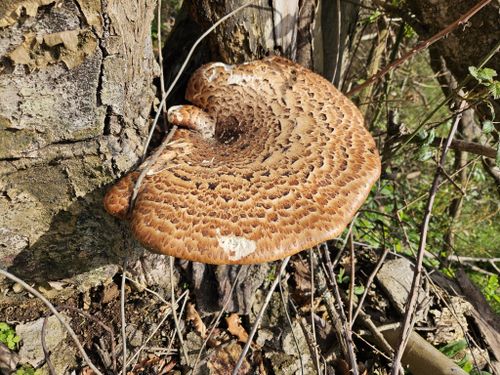
Cerioporus squamosus
o On wood
o Cap surface yellowish brown to cream with darker, concentrically arranged scales
o Pores are elongated, wide, cream-coloured
o Excentrically stipitate, blackish at the base, grouped
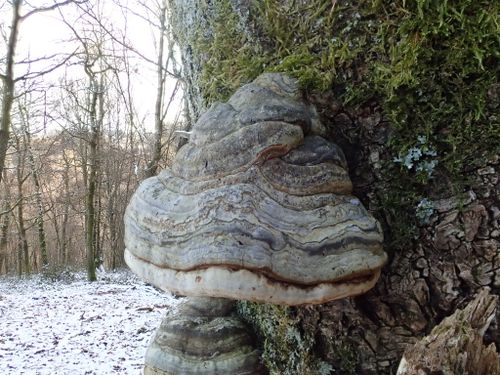
Fomes fomentarius
o On wood o Large to very large 10-50 cm
o Cap surface grey, distinctly zonate
o Hoof-shaped, thick-fleshed o Pores are white to light brown, multi-layered (perennial)
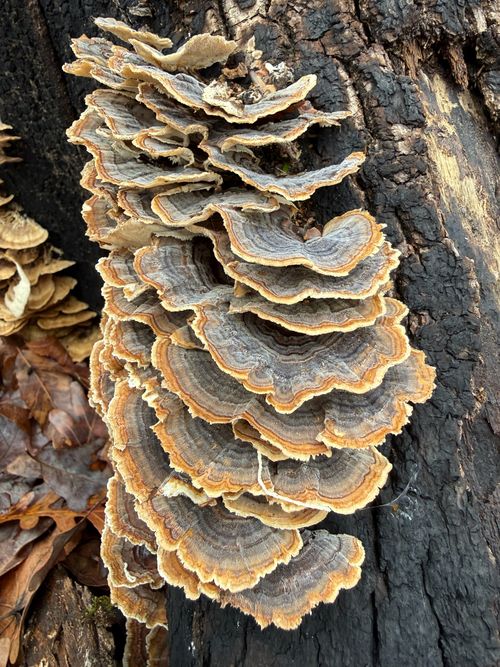
Trametes versicolor
o On wood
o Caps are confluent and develop imbricate formations
o Cap surface concentrically zonate with more than three different colours
o Pores are white
o Flesh is leathery, flexible, 1-3 mm thick
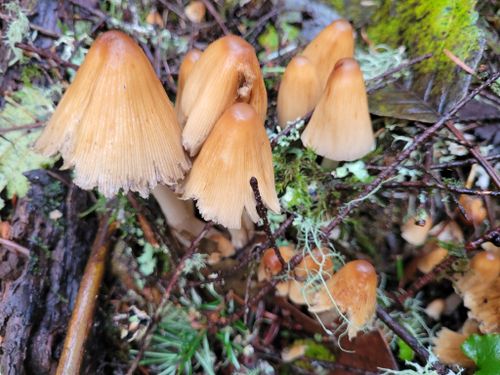
Coprinellus micaceus
o Cap ochraceous brown to rusty yellow, oval, radially ridged, covered by removable, glistening veil granules
o Gills, crowded, free, white dissolves into black inky mass
o In deciduous forests, gardens, on deadwood, or around deadwood units
o Clustered
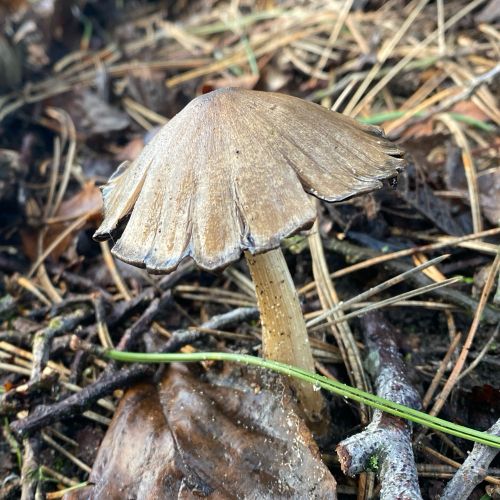
Coprinopsis atramentaria
o Cap grey to greyish brown, radially ridged, with removable, brownish scales
o Gills crowded, free, white, dissolves into a black inky mass
o In deciduous forests, gardens, on deadwood, or around deadwood units
o Clustered
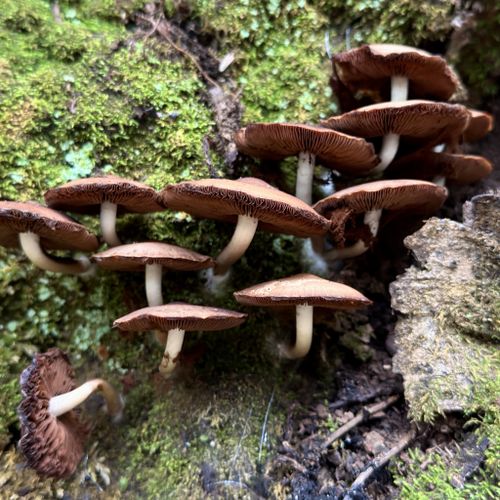
Psathyrella piluliformis
o Cap honey brown when dry, dark reddish brown when wet (hygrophanous), with remnants of partial veil on cap margin
o Gills adnate, crowded, pale brown when young, becoming dark brown o Stem clustered, white, pale
o Flesh fragile
o In deciduous forests, on deadwood
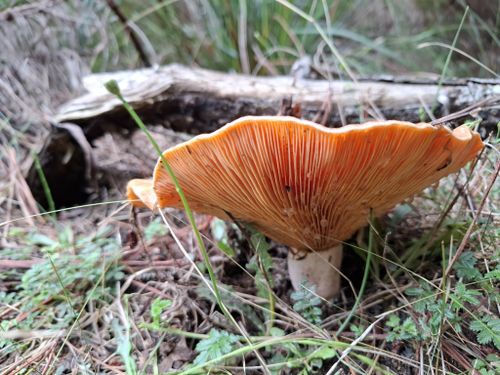
Lactarius deliciosus
o Cap ochraceous orange to orange red, turning green when touched, with a concentric zonation
o Gills orange-coloured, slightly decurrent, fragile, slowly staining green when bruised
o Stem concolorous with cap, with darker pits, becoming hollow with age
o Flesh releases orange milk, which turns greenish after 30 minutes
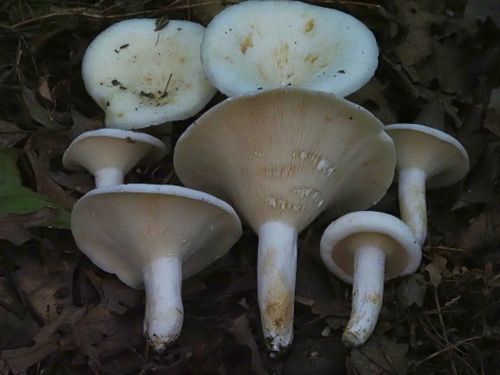
Lactifluus piperatus
o Cap whitish to ochre with light brownish spots, matte
o Gills whitish to cream, very crowded, thin
o Stem white
o Flesh fragile, milk white, unchanged when drying
o Tastes burning hot

Russula cyanoxantha
o Cap varies in colour: mixed green to violet, violet to blue, blue to rose
o Gills forking, flexible, white
o Stem cylindrical, white, tapering towards the base
o Flesh brittle, purple close under the cap surface
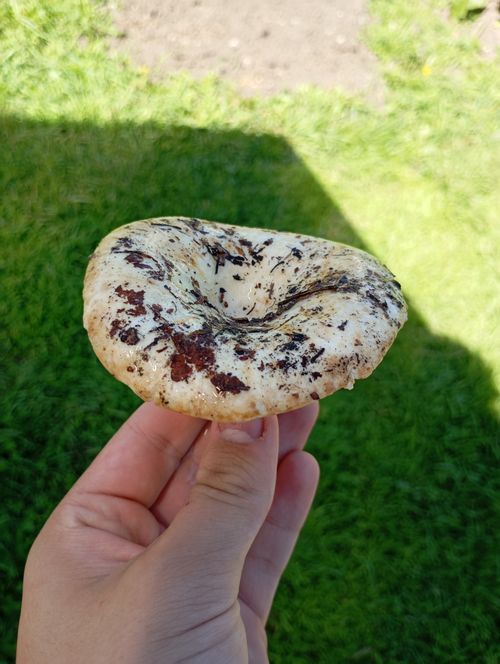
Russula delica
o Cap whitish, funnel-shaped, margin downcurved, surface with ochraceous spots, adheres soil and litter particles
o Gills whitish, lacks greenish or blueish colours, distant, thick, fragile
o Flesh very tough, smells fruity, then somewhat herring-like, tastes acrid with age
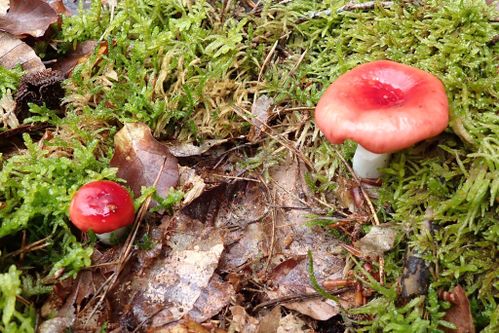
Russula emetica
o Cap red, fades to rose to whitish, sticky, lustrous, with easily removable skin
o Gills fragile, white
o Flesh brittle, soft, tastes burning hot
o In acidophilous deciduous and coniferous forests
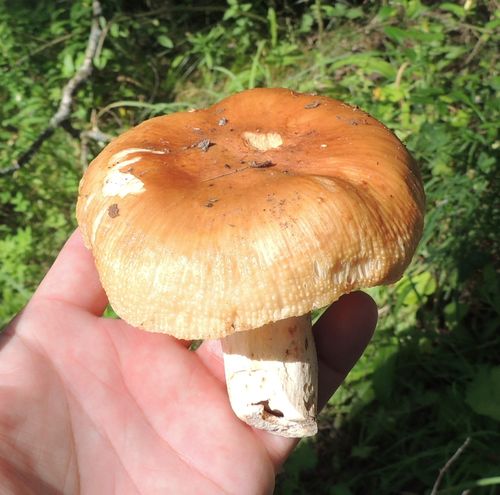
Russula foetens
o Cap dull brownish, ochre to honey, viscid to glutinous, at margin strongly tuberculate sulcate (with small wart-like processes and ridges)
o Gills crowded, dirty cream-coloured, becoming brown spotted, gill edge concolorous
o Stem multichambered, turning brownish when touched
o Smells strong, fetid, oily or rancid, tastes burning hot
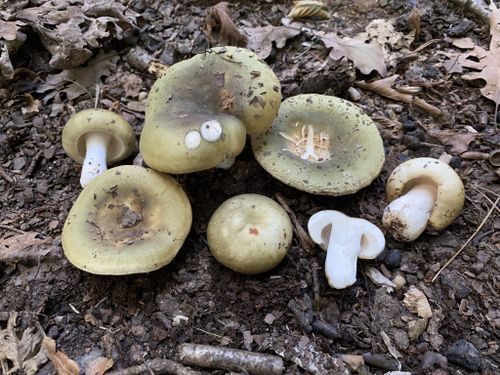
Russula heterophylla
o Cap green or yellowish green to brownish green, cap cuticle does not reach the margin of cap
o Gills whitish cream, fragile, often with rusty brown spots, forking
o Stem whitish, slightly wrinkled, tapering towards the base, with rusty brown spots
o Flesh brittle, tastes mild, like nut
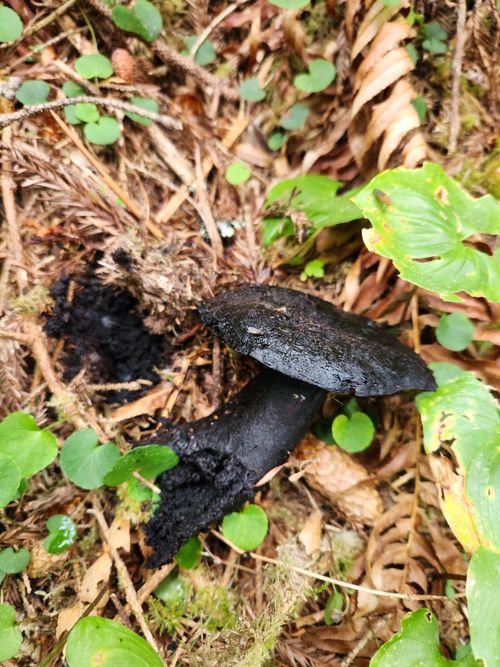
Russula nigricans
o Cap whitish when young, later greyish, brownish finally black
o Gills distant, thick, very fragile, blackening
o Stem greyish white, staining slowly reddish when touched, finally turns black
o Flesh very tough
o In deciduous and coniferous forests, on acidic soils
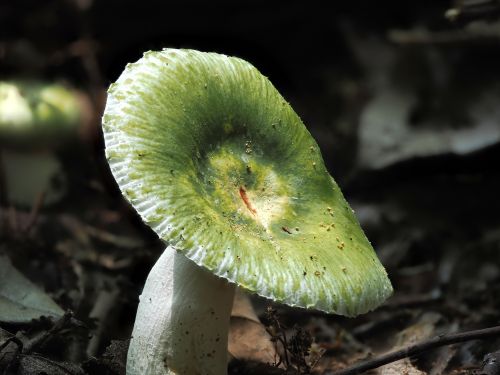
Russula virescens
o Cap greyish green when young, ochraceous with age, waxy, quickly cracks into squamules
o Gills crowded, whitish, fragile, adnate, with rusty brown spots
o Stem whitish, slightly wrinkled, tapering and becoming brownish towards the base
o Cap flesh brittle, stem tough
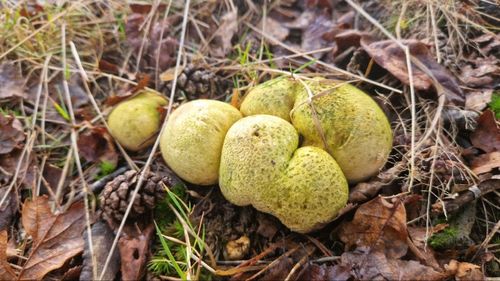
Scleroderma citrinum
o Sporocarp subglobose, flattened from above, with whitish to yellow basal cords
o Surface yellow, ochraceous to yellowish brown, warty or cracking up into islands
o Peridium thick and white insite, cleistocarpous
o Gleba first greyish rose, later purplish black o In acidophilous deciduous and coniferous forests
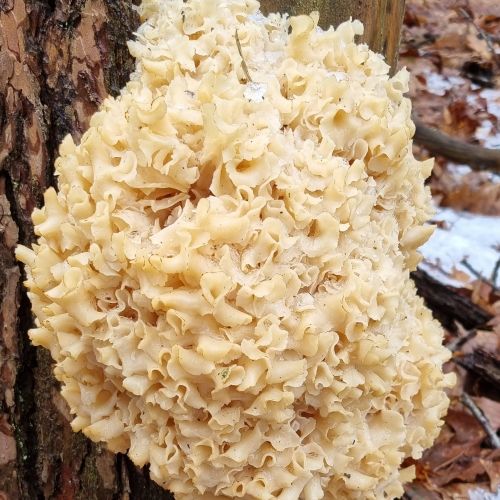
Sparassis crispa
o Highly branching, folded with curled, flat branch tips
o Ochraceous to yellowish brown
o At the base of living or dead conifers
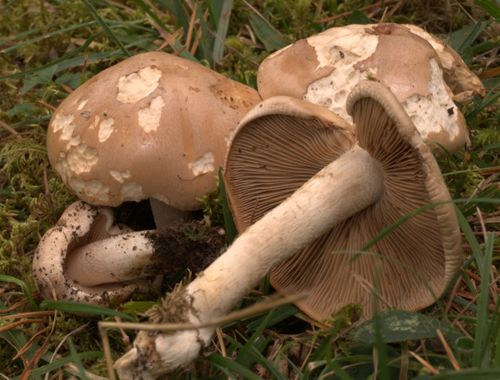
Hebeloma sinapizans
o Cap cinnamon-buff, paler towards the margin, slimy when wet, lustrous when dry
o Gills adnate, crowded, greyish brown, becoming cinnamon brown
o Stem hollow with a downwards-pointing tooth at the top, whitish, turning brownish towards the base, covered by floccose scale
o Smells like radish
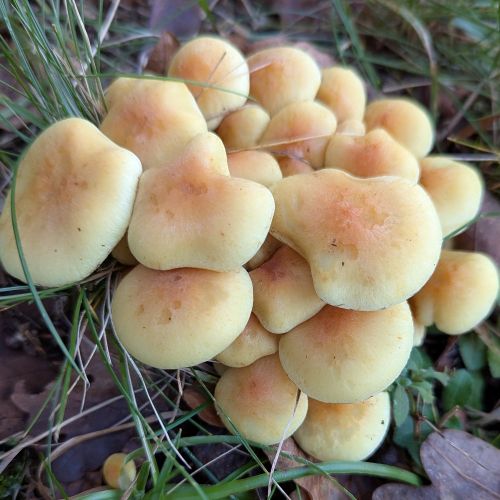
Hypholoma fasciculare
o Cap yellowish, orange brown at centre, mergin with dark remnants of veil
o Gills crowded, sulphur yellow with greenish tinge, stained dark brownish violet by the spores
o Stem fasciculate, yellow at the top, becoming rusty brown towards the base, with a thread-like ring zone
o Bitter
o In deciduous and coniferous forests, around stumps
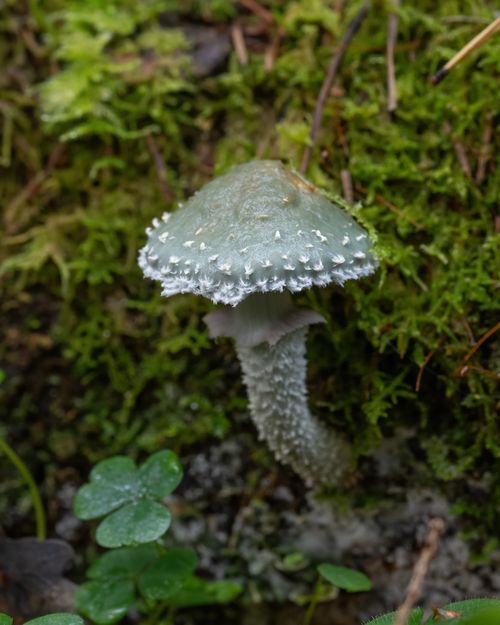
Stropharia aeruginosa
o Cap turquoise green when young, becoming cinnamon buff with age, slimy with whitish scales especially towards the margin
o Gills blueish green when young, later greyish brown with a fine violet hue
o Stem with a rather evident ring, whitish upwards fibrillose-scaly downwards
o On thick litter layers, forms whitish mycelial cords at stem base
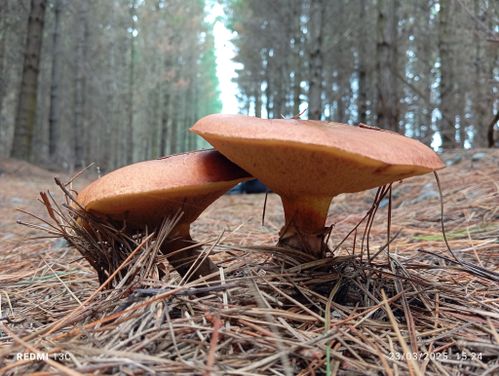
Suillus luteus
o Cap dark brown, viscid, sticky when moist
o Cap cuticle easily detachable
o Stem with a whitish-violet brown ring
o Exclusively under Pinus spp.
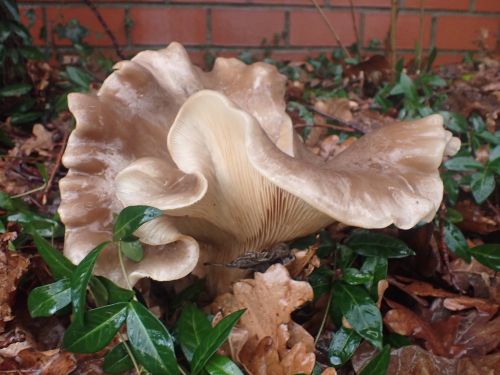
Clitocybe nebularis
o Cap grey, brownish grey, pruinose when young
o Gills can be easily loosened o Stem club-shaped, fibrillose
o Smell and taste sweet, aromatic
o In large fairy rings on thick layers of leaf-litter
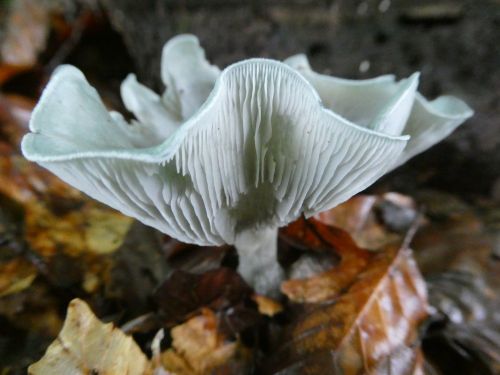
Clitocybe odora
o Cap pale greyish blue to greyish green
o Gills yellowish grey, somewhat decurrent
o Smells like aniseed
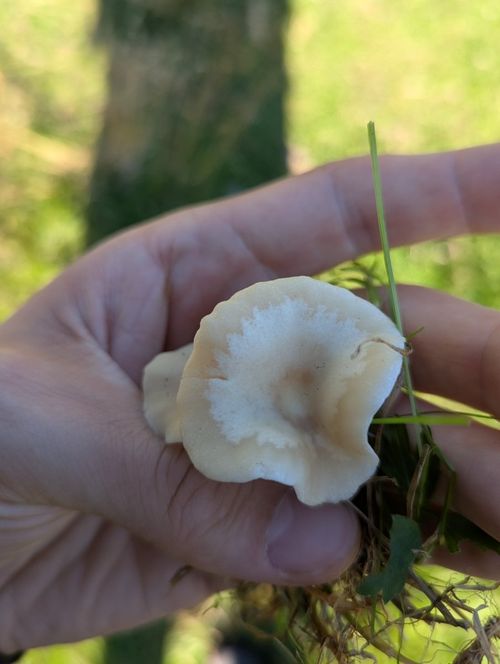
Clitocybe rivulosa
o Cap whitish, pruinose, pale; becoming greyish yellow
o Gills crowded, somewhat decurrent, whitish
o Odourless or with s
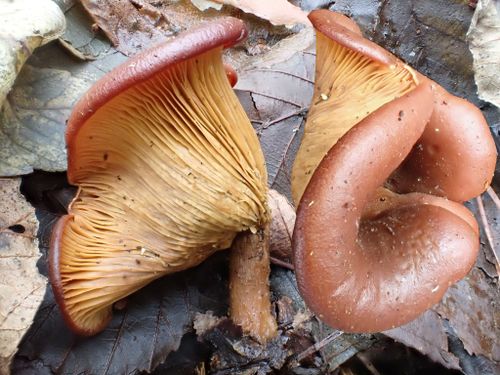
Paralepista flaccida
o Cap funnel-shaped, rusty yellow to orange brown, often with darker spots
o Gills crowded, decurrent, pale rusty yellow
o Stem widening towards the base, with white hyphal cords
o In large fairy rings on thick layers of leaf-litter
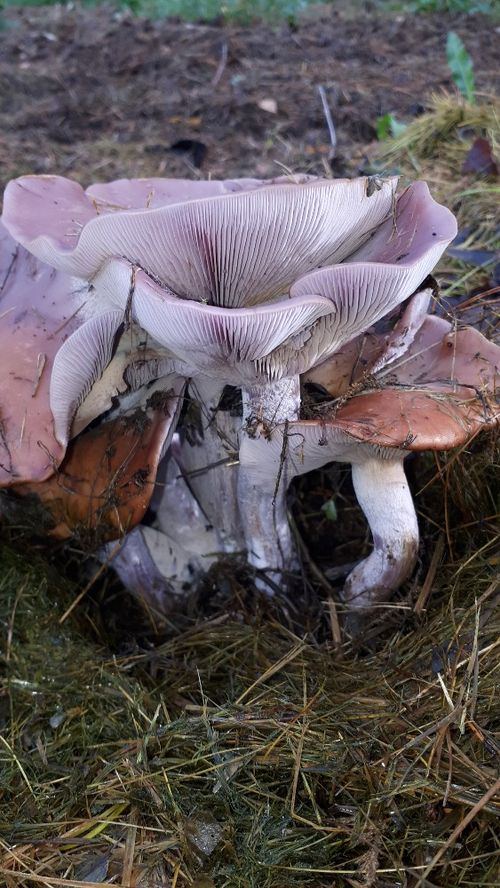
Lepista nuda
o Cap violet to brown
o Gills emarginate, violet
o Stem violet, with vivid lilac basal mycelium
o With pleasant taste and smell
o In fairy rings on thick leaf and needle debris
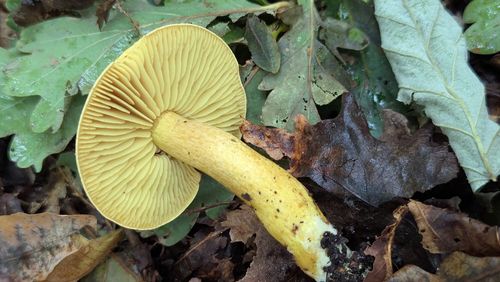
Tricholoma sulphureum
o Cap vivid sulphur yellow
o Gills sulphur yellow, emarginate
o Stem fibrillose, yellow
o Smells strong, gas-like; tastes unpleasant, rancid