Economics (Formulas)
 Call Kai
 Learn
Learn Practice Test
 Spaced Repetition
 Match
Match Flashcards
 Knowt Play
1/5

There's no tags or description
Looks like no tags are added yet.
Name | Mastery | Learn | Test | Matching | Spaced | Call with Kai | Chat |
|---|
No analytics yet
Send a link to your students to track their progress
6 Terms
Forward rate parity

Mark-to-Market Value of a Forward Contract
You are always in a position to make the LEAST spread. Pay attention to whether you are long or short a contract. Subtract the Fwd FX if you are long and Add it if you are shot and then take the current FX rates (that lead to lowest spread) * basis points for growth then discount back


mark-to-market value of the original forward contract
1. Identify the Original Forward Rate (F0)
Original Forward Rate (F0): 1.4301 EUR/CAD
Notional Amount: 1,000,000 CAD (Base currency)
2. Calculate the New Forward Rate (Ft)
Since the investor originally bought CAD (long CAD), closing out the position requires selling CAD (short CAD). You must take the bid side of the market for both the spot rate and the forward points:
Current Spot Bid: 1.4011
6-Month Forward Points (Bid): 46 points=10,00046=0.0046
Ft=Spot Bid+Forward Points=1.4011+0.0046=1.4057 EUR/CAD
3. Calculate the Future Cash Flow at Settlement
Subtract the original buy rate from the new sell rate, then multiply by the contract size:
Cash Flow at Settlement=(1.4057−1.4301)×1,000,000=−0.0244×1,000,000=−€24,400
4. Discount the Future Cash Flow to Present Value
Discount the settlement cash flow back 180 days (6 months) using the 180-day MRR for the price currency (EUR) at 2.5% annualized:
Present Value=1+(0.025×360180)−€24,400=1+0.0125−€24,400=1.0125−€24,400≈−€24,098.76
Rounded to the nearest euro, the mark-to-market value is EUR –24,099

aggregate value of the stocks
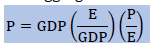
Growth rate in potential GDP
Long-term growth rate of labor force + Long-term growth
rate in labor productivity.
Capital deepening given Labour productivity growth and TFP growth
Country A’s labor productivity grew by 2.4% per year, of which 0.6% came from TFP growth and 1.8% from capital deepening (2.4% − 0.6% = 1.8%).