Chapter 2
 Call Kai
 Learn
Learn Practice Test
 Spaced Repetition
 Match
Match Flashcards
 Knowt Play
1/25

There's no tags or description
Looks like no tags are added yet.
Name | Mastery | Learn | Test | Matching | Spaced | Call with Kai | Chat |
|---|
No analytics yet
Send a link to your students to track their progress
26 Terms
6 steps in measuring external transactions (a)
Use source documents to identify accounts affected by an external transaction
Analyze the impact of the transaction on the accounting equation
Assess whether the transaction results in a debit or credit to account balances
6 steps in measuring external transactions (b)
Record the transaction in a journal using debts and credits
Post the transaction to the general ledger
Prepare a trial balance
Transaction #1 Issue Common Stock
Company receives 200k cash from investors who in turn become owners of company receiving shares of common stock

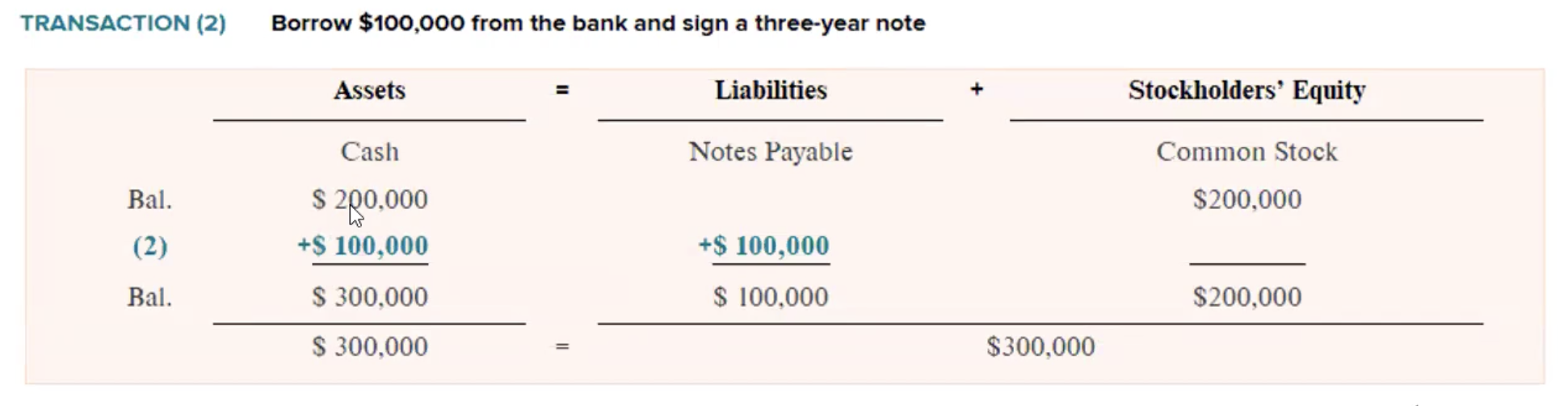
Transaction #2 Borrow cash from the bank
Eagle borrows 100k from bank
Signs a note to repay the loan amount in 3 years
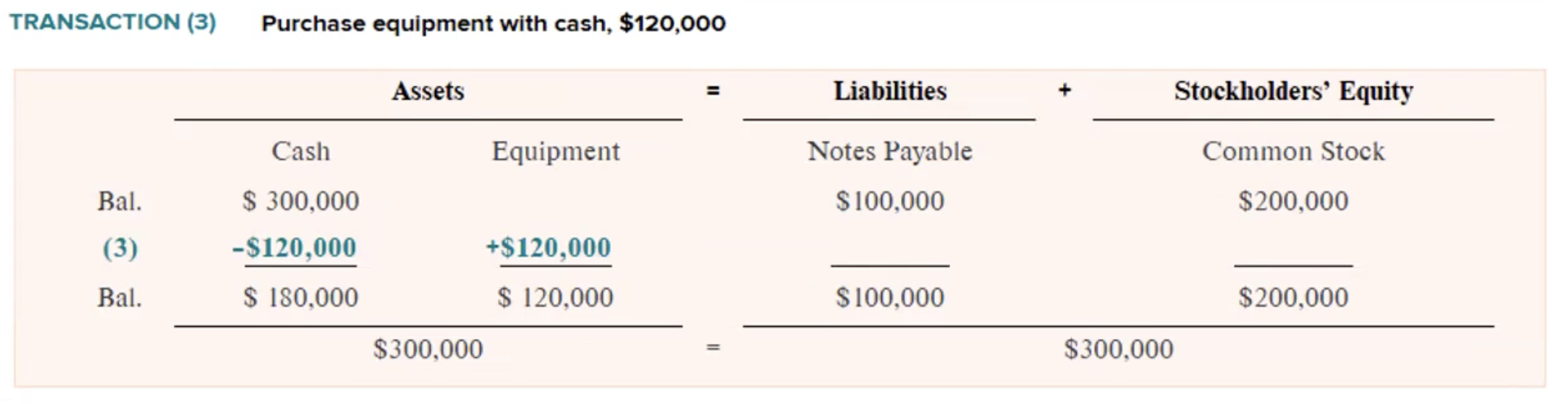
Transaction #3 Purchase Equipment
Eagle purchases 120k in equipment
Causes one asset (equipment) to increase and another asset (cash) to decrease
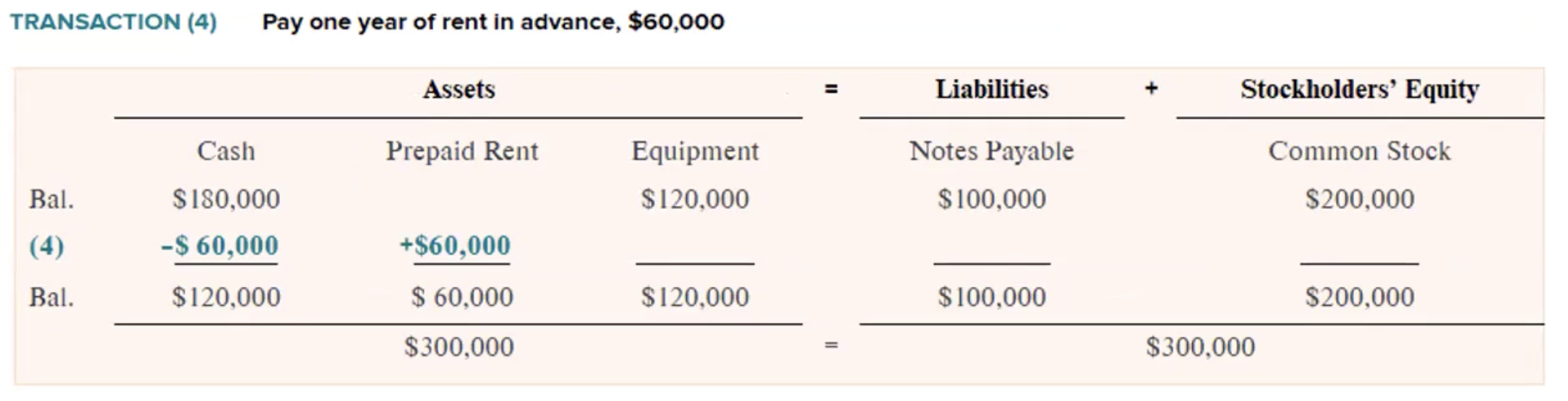
Transaction #4 Pay for rent in advance
Eagle pays 1 year of rent in advance, 60k (5k/month)
Bc rent paid is occupying space in future its listed as a resource (prepaid rent)
Asset cash decreases and asset prepaid rent increases
Types of prepaid things
prepaid insurance, prepaid advertising, prepaid rent and other prepaid services
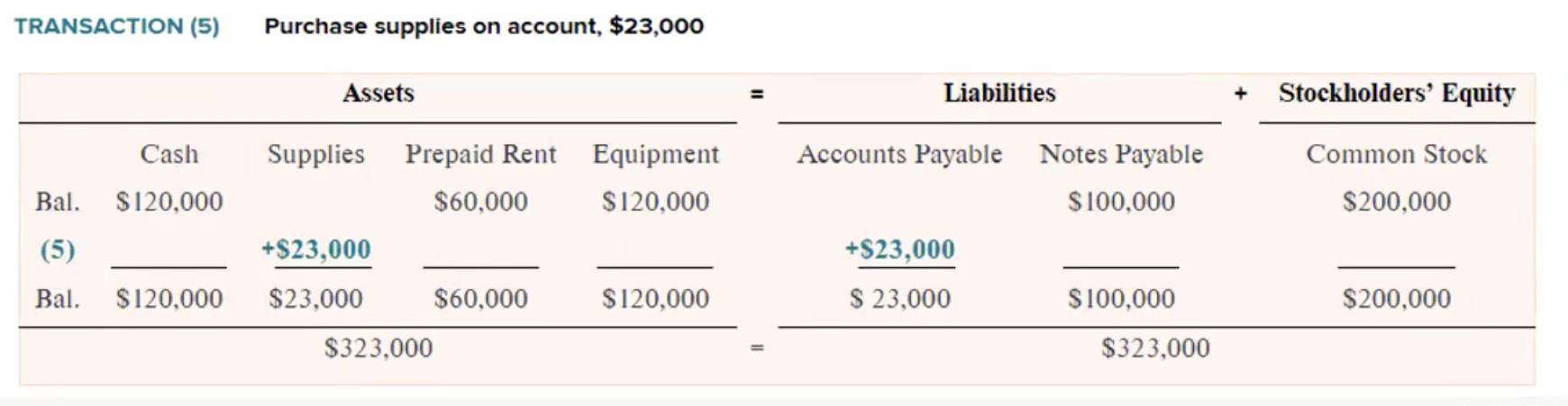
Transaction #5 Purchase supplies on account
Company purchases 23k of supplies on account
Supplies are an asset and the liability is accounts payable
On account
means that company does not pay cash immediately but promises to pay cash in the future
keeps record of companies u will may in future
is like paying w a credit card
Accounts payable vs Notes payable
accounts is paid in 30 days
notes payable may take more than 12 months to pay
Basic accounting equation and expanded accounting equation
If revenue goes up so does net income, then retained earnings, this makes SE go up
If expense goes up, net income, retained earnings, and SE go down
If dividends go up, retained earnings and SE goes down
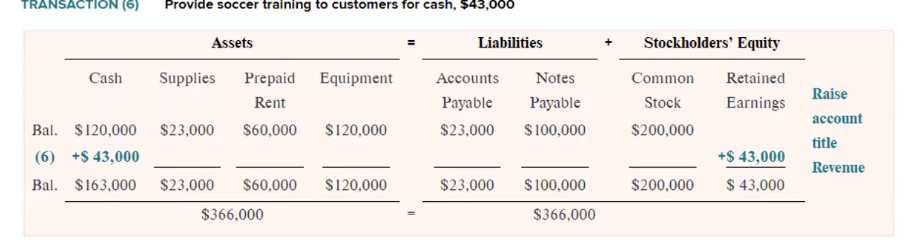
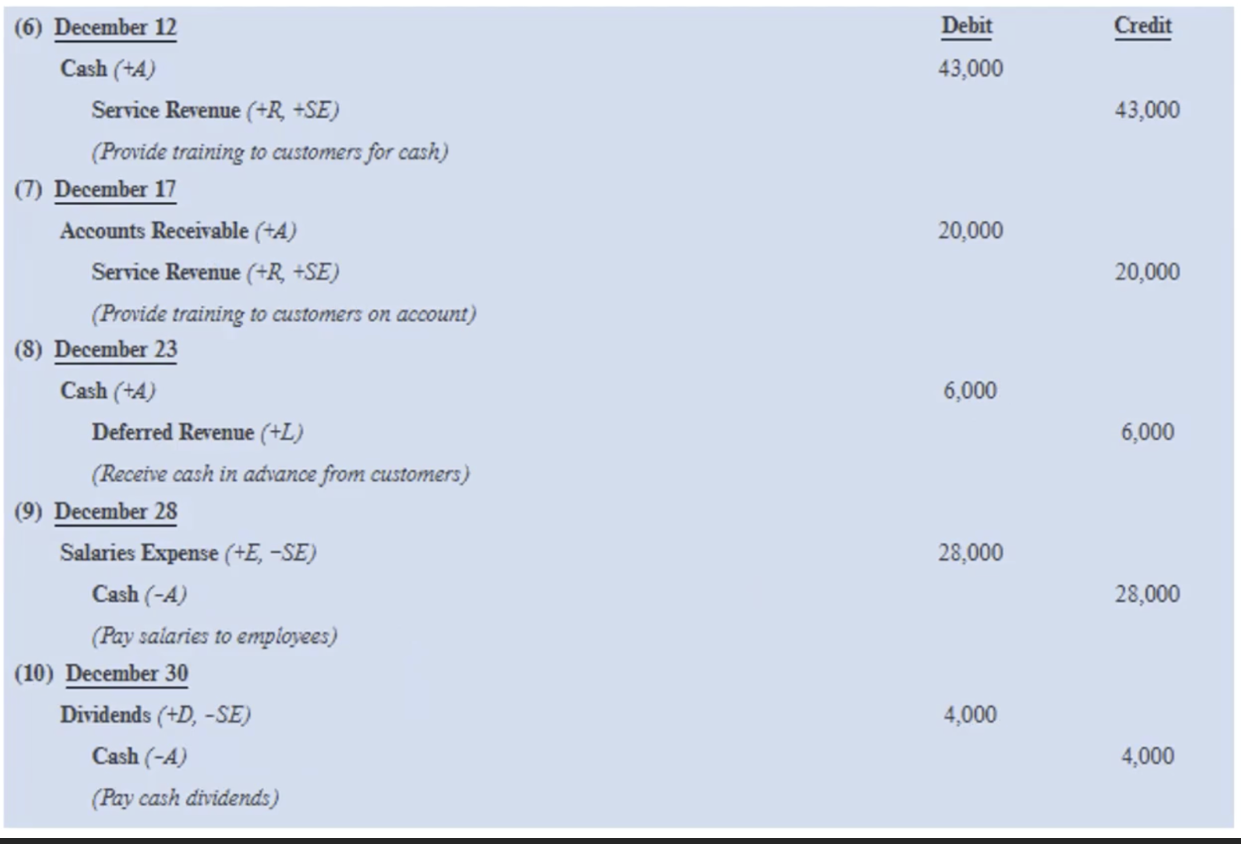
Transaction #6 Provide Services for Cash
Eagle provides 43k of services
Cash asset increases 43k and stockholders' equity increases 43k through 43k increase in retained earnings
Revenue recognition principle
companies recognize revenue at the time they provide goods and services to customers
Amount of revenue to recognize equals the amount of the company is entitled to receive from customers
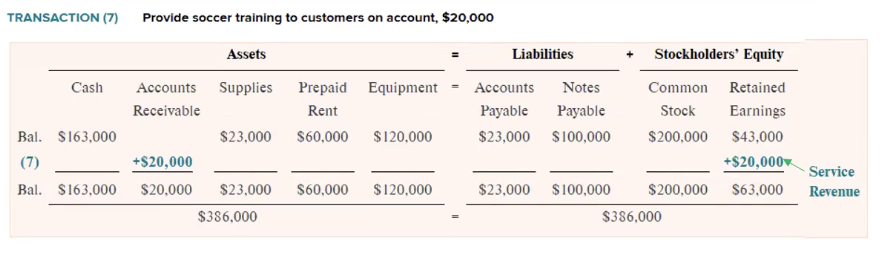
Transaction #7 Provide Services on Account
Customers receive services but don’t pay at time of service, instead pay 20k cash at some other point in time
20k increase in accounts receivable (assets) and 20k increase in stockholders' equity (retained earnings – listed as service revenue)
Transaction #8 Receive Cash In Advance From Customers
Receive 6k of cash from customers in advance for soccer training to be provided later
Receiving cash in advance causes asset (cash) and liability (referred revenue) to increase
Deferred revenue
eventually will be revenue but until service is provided it’s a liability
Transaction #9 Pay Salaries to Employees
Salary expense during current month is 28k
Asset (cash) decreases and stockholders' equity decreases (salary expense in retained earnings decreases)
Transaction #10 Paying Cash Dividends
Payment of 4k cash dividend to stockholders
4k cash is lost in assets and 4k is lost in stockholders' equity (retained earnings through dividends)
Effects of credit and debit on account balances (DEALOR)
What can be listed as Assets
Cash
Accounts Receivable
Supplies
Prepaid Rent
Equipment
What can be listed as Liabilities
Accounts Payable
Deferred Revenue
Notes Payable
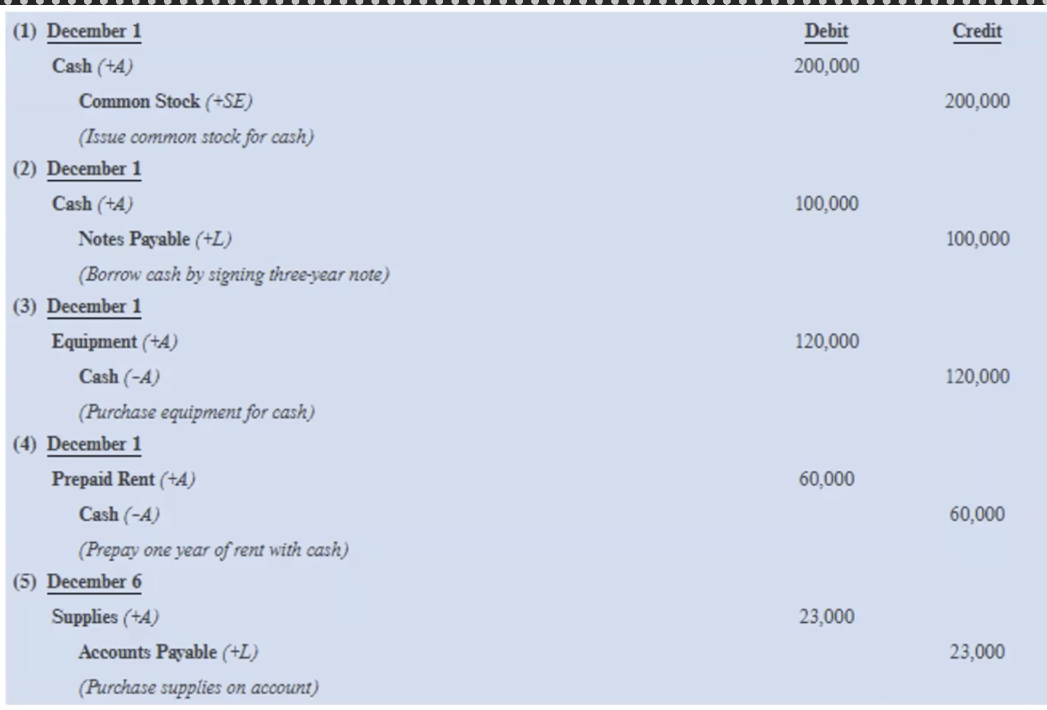
Format for recording transactions in a Journal

First 5 transactions in the Journal
Last 5 transactions in the Journal
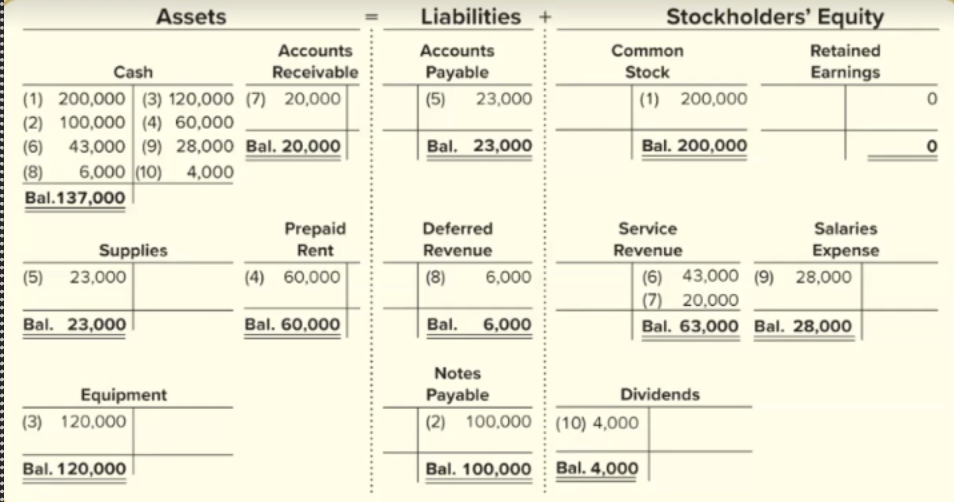
Posting to the General Ledger
One side is credit side and Debits on one side
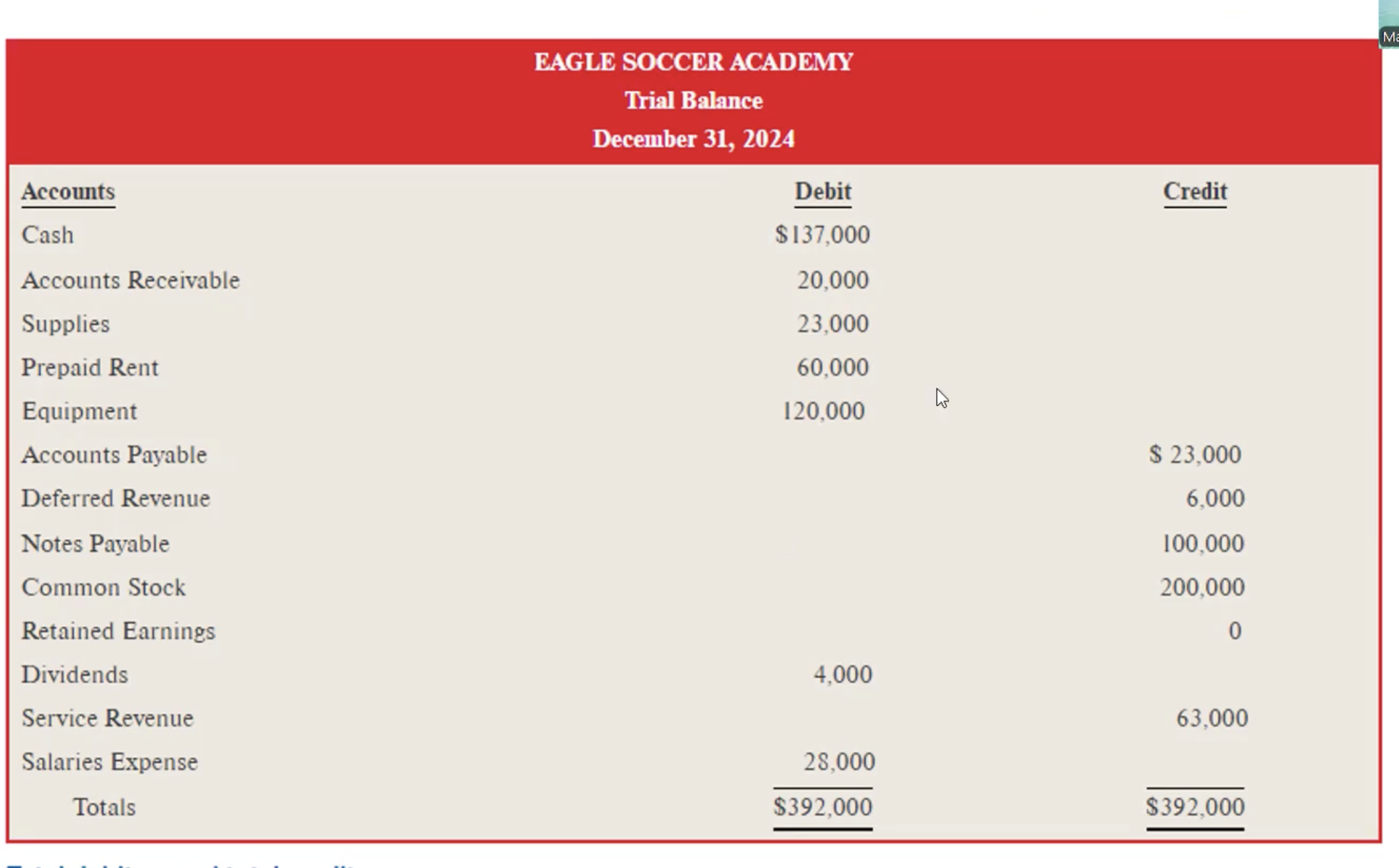
Trial balance
Splits up Debits and Credits