TEAS Science
 Call Kai
 Learn
Learn Practice Test
 Spaced Repetition
 Match
Match Flashcards
 Knowt Play
1/721

There's no tags or description
Looks like no tags are added yet.
Name | Mastery | Learn | Test | Matching | Spaced | Call with Kai | Chat |
|---|
No analytics yet
Send a link to your students to track their progress
722 Terms
standard anatomical position
feet facing forward and hip width apart, upright, arms at the side with palms facing forward

sagittal/lateral plane
divides vertically into right and left sections. runs parallel to the midline of the body

coronal/frontal plane
divides vertically into anterior and posterior sections. runs vertically at right angles through the midline of the body
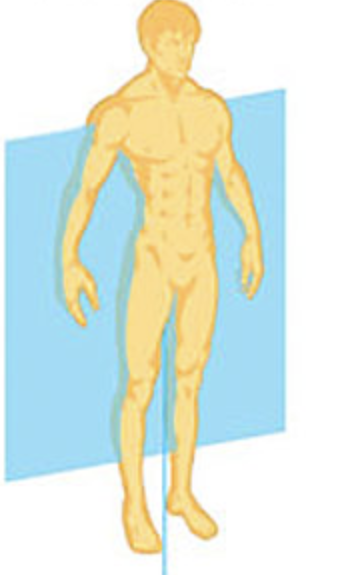
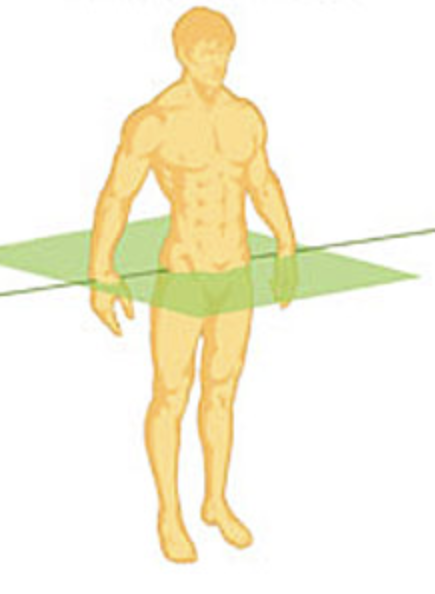
axial/transverse plane
divides horizontally into superior and inferior halves
medial
closer to the midline
lateral
farther from the midline
proximal
closer to the center of the body or POA
distal
farther from the center of the body or POA
anterior
front
posterior
back
cephalad/cephilic
towards the head
cranial
of the skull
caudad
towards the tail or posterior
caudal
of the hindquarters
superior
above/closer to the head
inferior
below/closer to the feet
right hypochondriac (what number and organs)
right kidney, liver, gallbladder, small intestine; 1
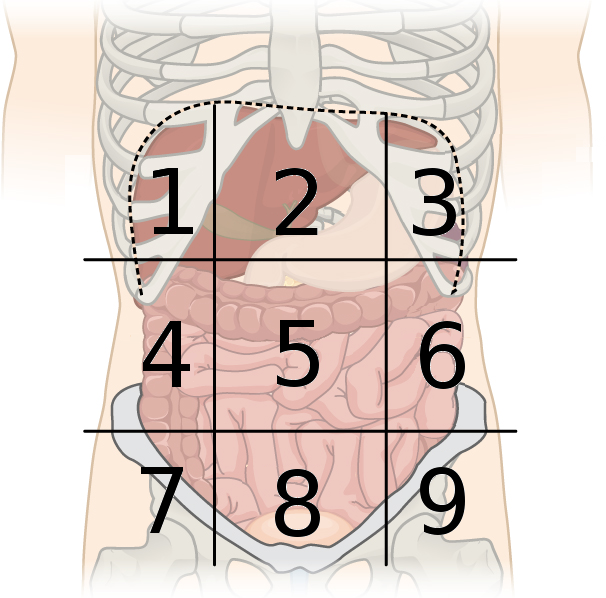
epigastric (what number and organs)
stomach, liver, adrenal glands, pancreas, spleen, small intestine; 2

left hypochondriac (what number and organs)
left kidney, spleen, pancreas, colon; 3
right lumbar (what number and organs)
ascending colon, liver, gallbladder; 4
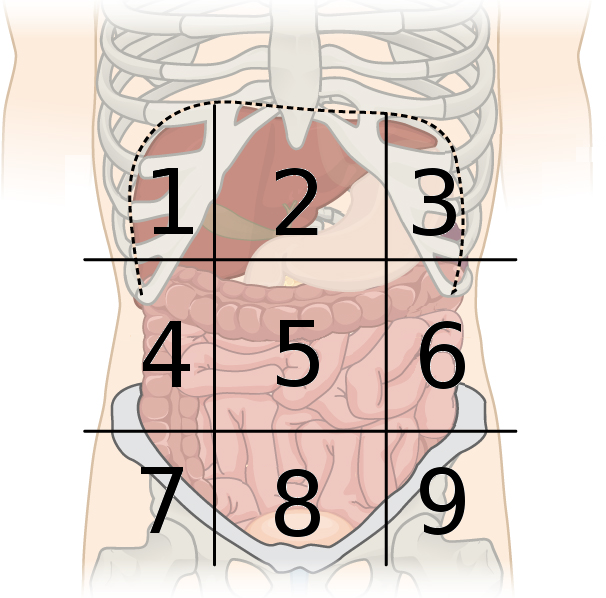
umbilical (what number and organs)
small intestine, duodenum, umbilicus; 5
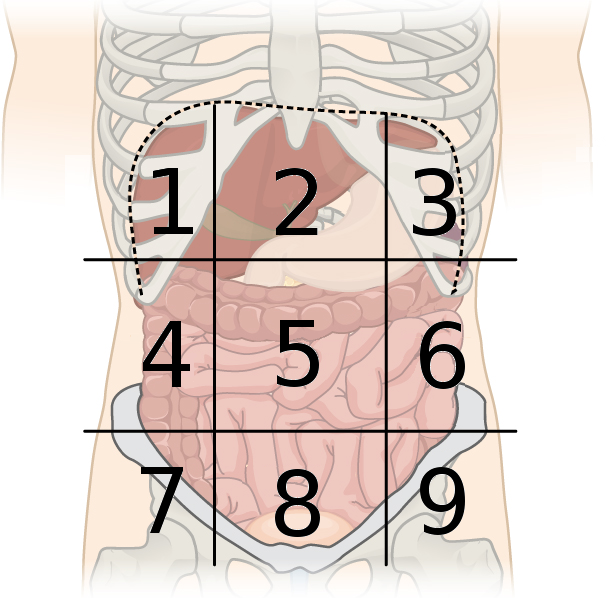
left lumbar (what number and organs)
descending colon, left kidney; 6
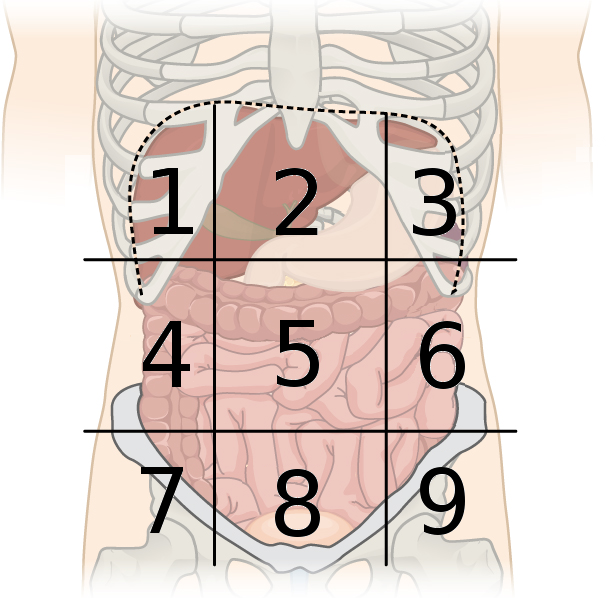
right iliac (what number and organs)
cecum, appendix; 7

hypogastric (what number and organs)
bladder, female reproductive organs, sigmoid colon; 8
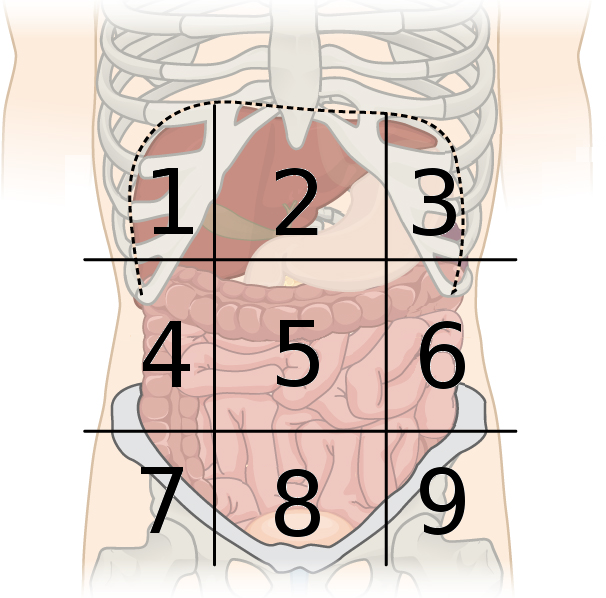
left iliac (what number and organs)
descending and sigmoid colon; 9

right upper quadrant (ruq)
duodenum, part of ascending and transverse colon, hepatic flexure, liver, gallbladder, pancreas (head), right kidney, right adrenal gland
right lower quadrant (rlq)
cecum, appendix, right ureter, right fallopian tube, right ovary
left upper quadrant (luq)
stomach, liver (left lobe), pancreas (body), left kidney, left adrenal gland, splenic flexure, spleen, part of transverse and descending colon
left lower quadrant (llq)
left ureter, left fallopian tube, left ovary, part of descencing and sigmoid colon
ventrical cavity includes:
located on the anterior aspect of the trunk and is comprised of the thoracic and abdominopelvic cavities separated by the diaphragm
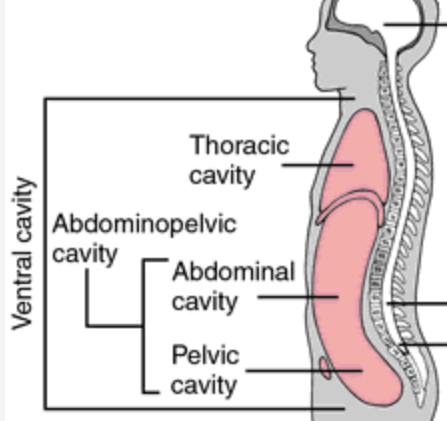
thoracic cavity
above diaphragm; contains lungs and the mediastinum
abdominopelvic cavity
below the diaphragm to pelvic floor; contains the upper abdominal cavity and the lower pelvic cavity (NOT PHYSICALLY SEPARATED).
mediastinum does what
separates throacic cavity into right and left compartmentcompartments
what lies in the mediastinum
heart, trachea, esophagus and thymus gland
what lies in the abdominal cavity
stomach, liver, gallbladder, spleen, kidneys, pancreas, large and small intestines
what lies in the pelvic cavity
*encased in pelvic bones*; internal reporductive organs, bladder, and the distal part of the colon
what does the partial layer line
cavity walls
what does the visceral layer line
organs
what does the serous membranes do
secrete serous fluid that separates the parietal and visceral layers
membrane lining the thoracic cavities
parietal pluera
what type of membrane lines the heart
pericardial
what type of membrane lines the abdominopelvic cavity
periotneal
dorsal cavity includes:
brain and spinal cord; comprised of brain; comprised of crain and vertebral cavitycranial
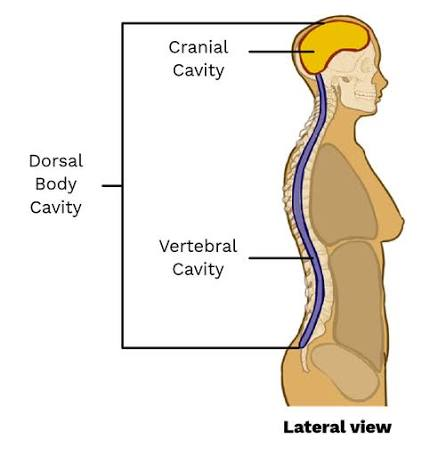
crainial cavity contains
*encased in crainial bones*; brain, 12 cranial nerves, pituatary gland
purpose of meninges
dura mater, arachnoid mater and pia mater; line the cranial cavity and surround the brain and spinal cord, contain CSF between arachnoid and pia mater in subarachnoid space
purpose of meninges and CSF
protect and cushion the dorsal cavity
pia mater (inner)
*vascularized*; adheres to the surface of the brain and spinal cord

arachnoid mater (middle)
contains coonnective tissue but NOT nerves of blood vessels

dura mater (outer)
*enervated and vascularized*; lies next to the bones and folds inwards in places in the cavity and separates the brain into different compartments

what are the two layers of the dura mater, and what do they do
endosteal layer: lines cranial bones; meningeal layer: lines the endosteal layer within the cranium and lines the veterbral cavity
vertebral cavity contains
vertebrae and spinal cord
meninges extend from what to what
crainal cavity to enclose the vertebral cavity
function of the respiratory system
move air in and out in order to facilitate the exchange of oxygen and carbon dioxide
respiratory system consists of
nasal passages, pharynx, larynx, trachea, bronchial tubes, lungs, and diaphragm
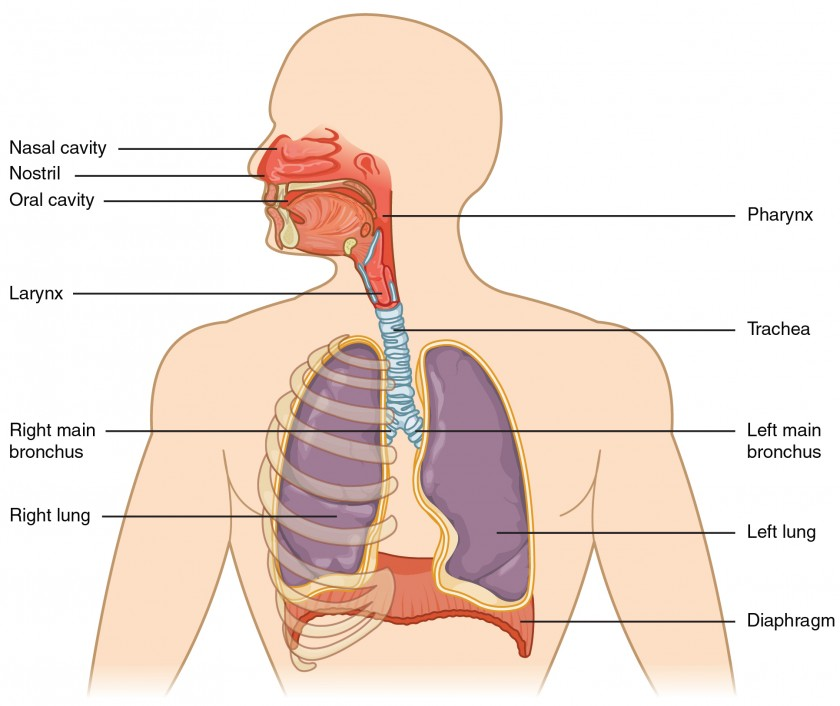
bronchial tube branch to ______
bronchioles to clusters of alveoli
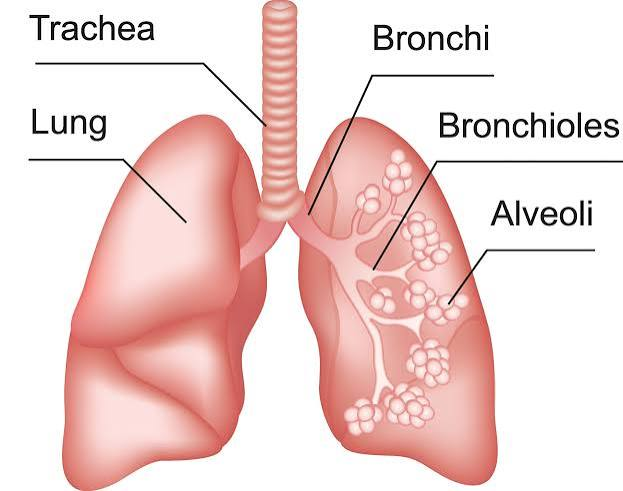
alveoli
tiny sacs inside the lungs where gas exchange takes place
in-depth process of breathing
diaphragm contracts → volume of the chest increases → reduces pressure of lungs → air is inhaled through nose or mouth → passes through pharynx, larynx, trachea, and bronchial tubes into the lungs → diaphragm relaxes → volume in chest decreases → air out of lungs
what happens in the conductive zone of the respiratory system
brings inhaled air to the respiratory zone
what happens in the respiratory zone of the respiratory system
gas exchange
where does gas exchange occur
respiratory zone
what organs/muscles are crucial for pulmonary ventilation (breathing)
diaphragm and intercostal muscles
external respiration
exchange between lungs and blood
internal respiration
exchange between blood and tissues
primary functions of respiratory system
breathing and gas exchange
secondary functions of the respiratory system
blood pH regulation, thermoregulation (body temp), odor detection, speech production, filtration of particulate matter, and protection against disease
what is gas exchange, and how does it work
loading of oxygen into pulmonary blood and the removal of carbon dioxide
inhaled air moves through the mouth/nose, through the pharynx, larynx, trachea, right and left bronchi, bronchioles, and alveoli.
→
in the alveoli, gases diffuse down their partial pressure gradients across the respiratory membrane.
→
oxygen diffuses into the blood, where it is delivered to tissues throughout the body and carbon dioxide diffuses out as a waste product
respiratory membrane
shared membrane between capillaries and alveoli in gas exchange
how does thermoregulation work
capillaries in the respiratory tract (nasal passages and trachea) constrict to conserve heat and dilate to release heat
how does the respiratory system protect against disease
immunoglobulin A (IgA) is produced in the mucosal lining and the antibodies it produces aids in immune defense by neutralizing pathogens
mast cells in the respiratory tract release inflammatory chemicals that increase blood flow and alert the immune system to a threat
large phagocytic cells, macrophages, protect the lungs by engulfing small cells and particulates
how does the respiratory system filter particulate matter
some particles are filtered by nostril hairs, others get caught in mucus. lysosomes in the mucus break down the debris, and the cilia that line the respiratory tract sweep it away
how many lobes does the right lung have
three
how many lobes does the left lung have
two
what are the right and left lung separated by
the mediastinum
what organ primarly occupies the thoracic cavity
the lungs
what lines the thoracici cavity
parietal pleura
what lines the surface of the lungs
visceral pleura
where does the trachea fork into the primary bronchi, which enter the left and right lungs
the hilum
bronchial tree
primary bronchi → secondary bronchi → tertiary bronchi → brochioles → terminal bronchioles → respiratory bronchioles → alveolar ducts → alveolar sacs → alveoli
combined surface area of the alveoli
70m²
the wall of each alveolus consist of ______
a single layer of squamous, epithelial cells, most of which are type one cells
what are type two cells and what do they do
cuboidal cells; secrete surfactant to prevent alveoli from collapsing
diaphragm
thin, dome shaped muscle that separates the abdominal cavity from the thoracic.
what is reponsible for changing the volume and pressure fo air in the lungs
the diaphragm, external and internal intercostal muscles of the rib cage
the mechanism of breathing follows ___
boyles law
boyles law
pressure and gas have an inverse relationship (temp must be constant)
inspiration and process
“breathing in”
diaphragm and external intercostals contract, the volume of the thoracic cavity increases, rib cage and sternum elevate and expand outwards
increase in volume decreases intrapleural pressure and air enters the lungs
inspiration is what kind of breathing? why?
negative pressure breathing
the pressure in the lungs is lower than atmospheric pressure (gases move down pressure gradient)
expiration and process
*passive*; relaxing the same muscles used in inhalation
volume of thoracic cavity decreases, intraplural pressure increases, air leaves the lungs
how can air be forcibly pushed out
contraction of the internal intercostals and abdominal muscles
main functions of the cardiovascular system
gas exchange, delivery of nutrients, ions, fluids and hormones, waste removal
the cardiovascular system contains
heart, blood, blood vessels
heart
pump that pushes blood through the arteries
arteries
blood vessels that carry blood AWAY from the heart
veins
blood vessels that carry blood TOWARDS the heart
where does the exchange of materials between blood and cells occur
capillaries
smallest to largest blood vessels
capillaries → veins → arteries
cellular respiration equation

what does the circulatory system transport and how
oxygen: moves down the partial pressure gradients from the air into the blood of the alveolar capillaries (most binds to hemoglobin in rbcs; some dissolves in blood); blood then carries the oxygen to the tissues
carbon dioxide: transported away from the tissues and diffuses out of the alveolar capillaries (most travel in the form of bicarbonate ions)
other metabolic waste: urea is filtered through the kidneys
digested nutrients: glucose, amino acids, and fats are circulated to target cells to be absorbed
hormones: absorbed the same way as above
lipid soluble molecules: require the use of a carrier protein to be transported
cardiovascular systems role in thermoregulation
helps maintain body temp by heat exchange on the surface of the skin as blood vessels constrict or dilate in response to brain signals
average temp of human body
98.6 F (optimal for metabolic processes and defense against pathogens)