Horticulture Science
 Call Kai
 Learn
Learn Practice Test
 Spaced Repetition
 Match
Match Flashcards
 Knowt Play
1/110

Earn XP
Description and Tags
Modules 1-4
Name | Mastery | Learn | Test | Matching | Spaced | Call with Kai | Chat |
|---|
No analytics yet
Send a link to your students to track their progress
111 Terms
Horticulture
The science, tech, business, art and hobby of producing fruits, nuts, vegetables and herbs for consumption and producing flowers, ornamental plants and grasses for aesthetic, landscaping and recreational use.
Not Horticulture
Forestry: The science and tech of culturing, utilizing and improving forest tree and their products like pulps, resins, oils, etc...

Agronomy
The science and tech of culturing, utilizing and improving field crops (grains, fibers, and forage crops)

Horticultural crops
Small acreage more intensively managed
Harvest is difficult
Post harvest storage is short term and difficult
Little to no processing for human consumption
Examples: Vegetables, fruits, nuts, herbs, ornamental, and bedding plants

Agronomic crops
Large scale production
Less intensively managed
Easily harvested
Post harvest storage is easy
Requires intensive processing for human consumption
(Wheat, corn, rice, sorghum, soybeans, hay, cotton, peanuts.)

Commercial Hort (Olericulture)
Planting, harvesting, storing, processing, and marketing of vegetables and culinary herbs.

Pomology
The planting, harvesting, storing, processing, and marketing of fruit and tree nut crops.

Viticulture
Science, production, and study of grapes.

Arboriculture
Cultivation, management, and study of trees, shrubs, vines and other perennial woody plants.
Floriculture
Cultivation of flowering and ornamental plants for gardens (annual and perennial bedding plants), homes (houseplants), and the floral industry (cut flowers and potted flowering plants).

Epiphytes
Herbaceous plants that grow on the branches of trees and shrubs. Modified aerial roots or leaf rosettes collect water. (orchids and bromeliads)

Annual plants
Complete their life cycle of germination, growth, flowering, seed production, and death in a single growing season.
Seed to seed.

Summer and winter annuals
Summer: Killed by the frost or prolonged cold temps
Winter: Are killed by heat in late spring/early summer.
Biennials
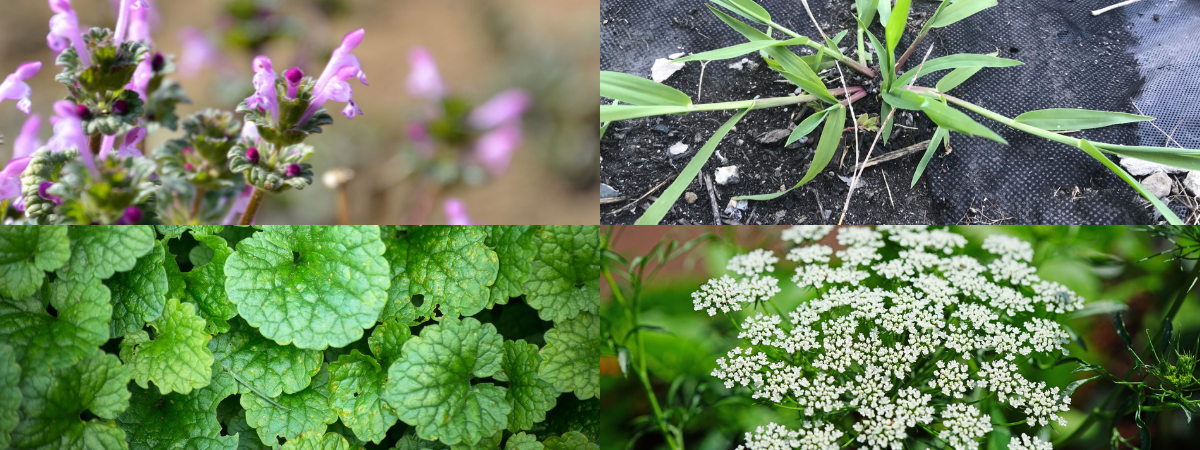
Completes life cycle in two growing seasons.
1st season: Basal leaves (rosettes)
2nd season: Stems flowers, fruits, and dies (Usually requires environmental condition to trigger flowering).

Perennials
Live for more than 2 growing seasons and potentially for many years. May be evergreen or go dormant in the winter or due to heat. Can regrow from a perennial root.

Woody Perennials
Shrubs, many stems arising at/close to the ground.
trees: Usually have a single defined main stem can be deciduous or evergreen.

Deciduous
A tree or shrub that sheds its leaves annually.

Tender Perennials
Not cold hardy but under optimal growing temps they can live for many years.

Nomenclature Rules
Binomial system: Every plant species is given a unique two-part name:
Genus name (capitalized, italicized)
Specific epithet (lowercase, italicized)
Example: Quercus alba (white oak)
Genus – Capitalized, italicized (or underlined in handwriting).
Specific epithet – Lowercase, italicized.
Authority – Optional abbreviation of the person(s) who first validly published the name (e.g., L. for Linnaeus)
Example: Rosa canina L.
Italicize both genus and species in print/digital text; underline in handwriting
Live to Plant
Live to Plant
+1
.
Do not bold or capitalize beyond the first letter of the genus.
Family names (e.g., Pinaceae) are not italicized and are capitalized only at the first letter
Variety Names
Given when the mutation occurs in nature.
var. is used and placed after the specific epithet
var. is not underlined or italicized
Capitalize the first letter of variety only if it is a proper noun and italicize
Ex: Sansevieria trifasciata (Italicized) var. Laurentii (Italicize)

Cultivar Names
Given when the mutation occurs is due to human influence.
cv. is used and placed after epithet
cv. is not underlined or italicized
cv. or in single quotes
Capitalize the cultivar name
Ex: Sansevieria trifasciata (Italicized) 'Golden Hahnii'

Thallophytes
Algae
Simplest plant along with Bryophytes
Not differentiated into roots stems or leaves
Lack of conducting tissues
No cuticle.

Bryophytes
Mosses and liverworts
May be divided into leaves and stems
Have a cuticle
Lack true roots and conductive tissue

Pteridophytes
Ferns
Reproduce by means of spores

Spermatophytes
Seed bearing plants
Have true roots, stems and leaves.
Gymnosperm
Conifers and gingko
Naked seed
Often narrow leaves

Angiosperm
Flowering plants
Covered seed
Most have broad leaves

Monocots
1 Cotyledon (Flower parts in multiples of 3s) Parallel venation

Dicot
2 Cotyledons
Flower parts in multiples of 5s Network venation

Choripetalae
Flower parts separate and not fuse together (Spirea's, magnolias roses)

Sympetalae
Flower parts are fused at base (Azaleas)

Cotyledons
First "leaves" produced by a germinating seed. Often contains a store of food (obtained from the endosperm) to help the seedling become established.

Cuticle (Leaf Structure)
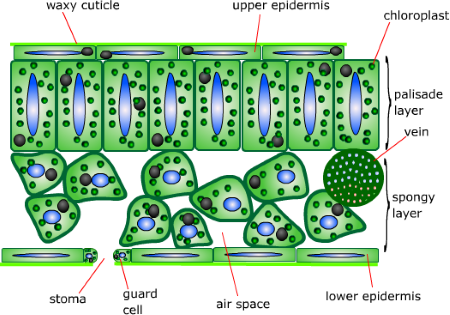
Outermost layer of both the upper and lower surfaces of the leaf. Clear and waxy to prevent against water loss.

Epidermis
One layer of cells that provides protection for the inner tissues. (cells are clear to allow light to reach photosynthetic tissues).
Stoma
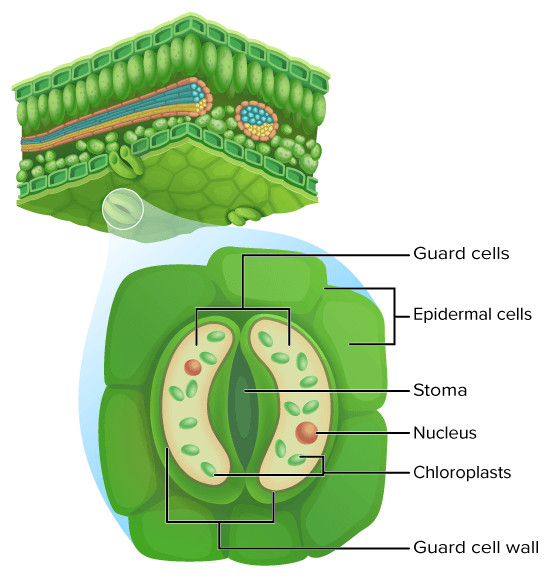
An open aperture in the epidermis surrounded by 2 guard cells. Plural: Stomata usually more frequent on the epidermis of lower leaf surface. water vapor also passes through this and if found on some herbaceous stems, fruits and petals.
Opened when guard cells are turgid and closed when guard cells are flaccid.
Stomata are designed for gas exchange. CO2 in and O2 out for photosynthesis
CO2 out and O2 in for respiration
H20 out during transpiration.

Palisade Parenchyma
Located directly below the upper epidermis. Number of rows of cells depends on the intensity of sunlight. Contains 70-80% of the chloroplasts in the leaf.
Monocots lack Palisade layer.

Spongy Mesophyll
Located next to the lower epidermis
Contains large air spaces
Specialized for gas exchange
Allows for flexibility of lamina when it moves in the wind.
Veins
Contain the vascular tissue that is continuous with that in the stem.
Xylem carries water and minerals UP
Phloem carries dissolved food throughout the plant.

Sun Grown Leaf
Shade Grown leaf
Thicker due to a thicker palisade layer
Thinner due to thinner palisade layer (larger in size and more pliable).
Simple Leaf
Blade of the leaf occurs as one unit

Tip
Terminal point on the leaf

Blade or Lamina
Flattened, green, expanded portion of a leaf.
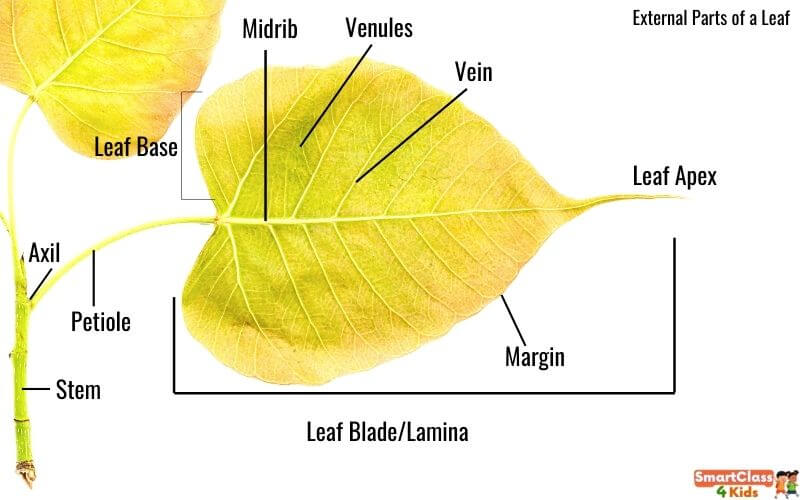
Margin
Edge of the leaf

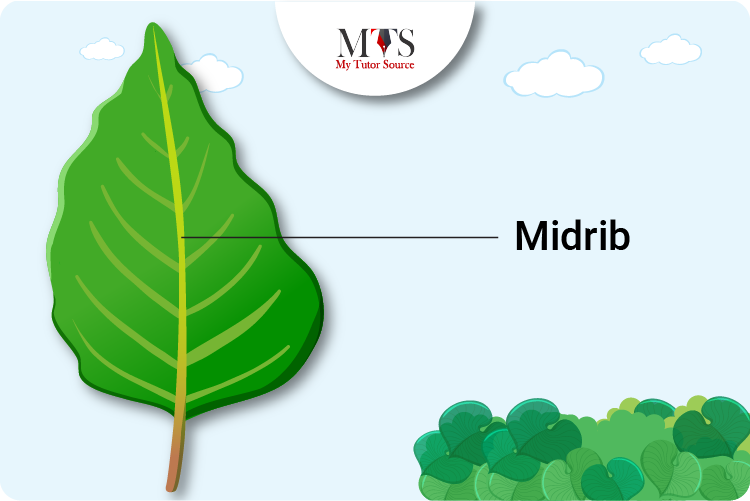
Midrib
The most prominent central vein in the leaf.
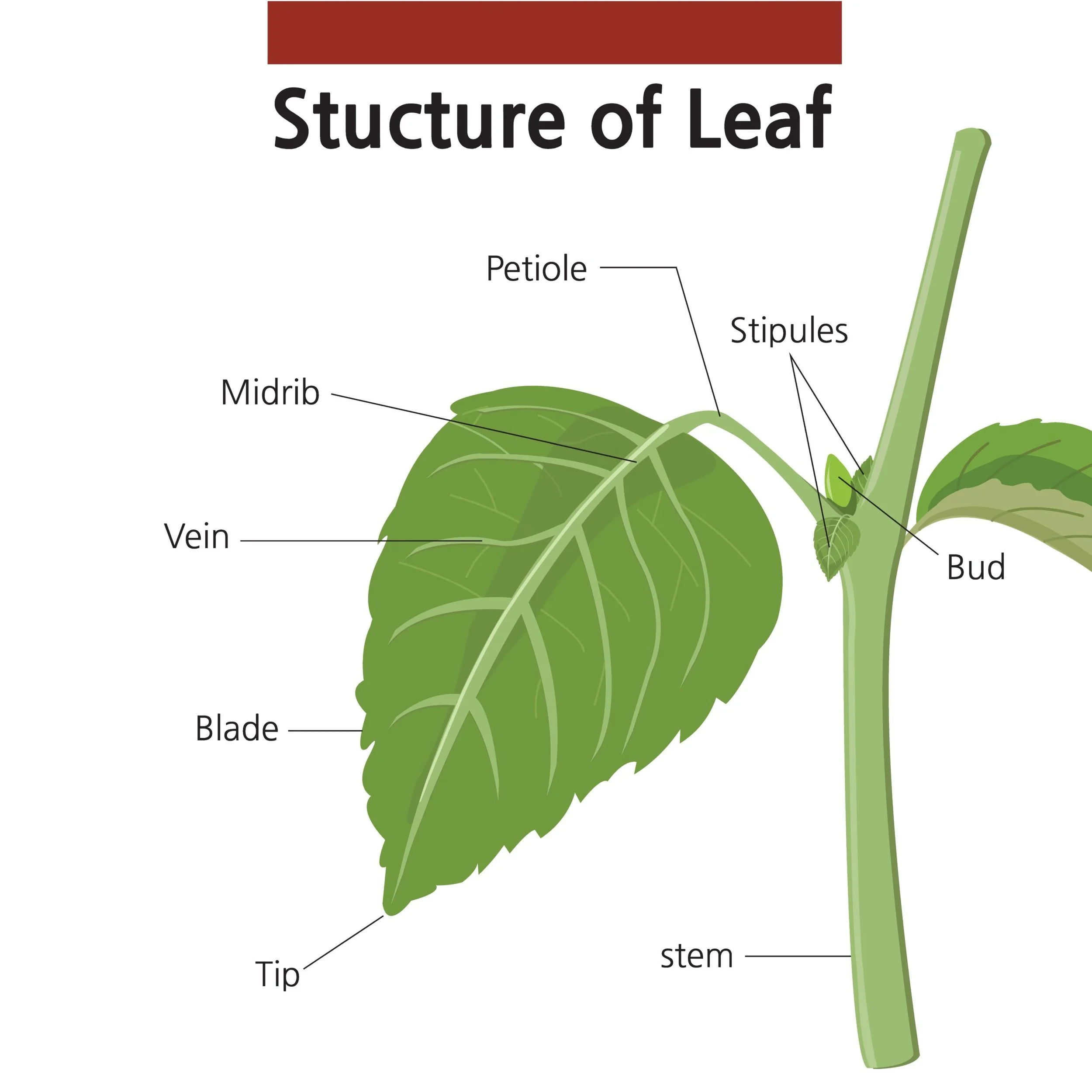
Lateral veins
Secondary veins in a leaf

Petiole
The leaf stalk (Monocots lack)

Stipules
Leaf-like appendages that the base of the petiole on some leaves.
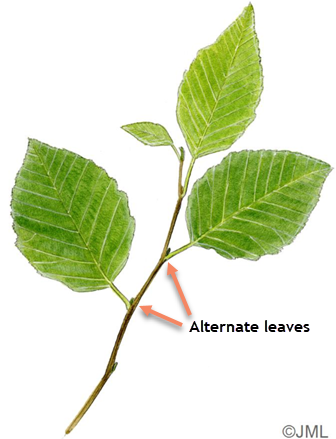
Alternate arrangement
One leaf is attached per node Left right etc. (Cascading)
Opposite Arrangement
Two leaves per node. Each pair is attached on opposite sides.

Whorled leaves
Three or more leaves grow from the same node forming a circular pattern.

Pinnate Venation
Feather like, net venation with lateral veins extending from a central middrip. (elm, oak, etc.)

Palmate venation
Finger like venation, multiple primary veins of roughly equal size emerge from a common point at the base of the leaf blade.

Parallel Venation
primary veins run parallel to each other along the length of the leaf, from the base to the apex, without forming a network. (Monocots)

Bud
An underdeveloped and unenlongated stem

Terminal bud
A bud at the tip of a stem responsible for the terminal growth.

Node
Part of the the marking the point of attachment of leaves, flowers, fruits, buds, and other stems.
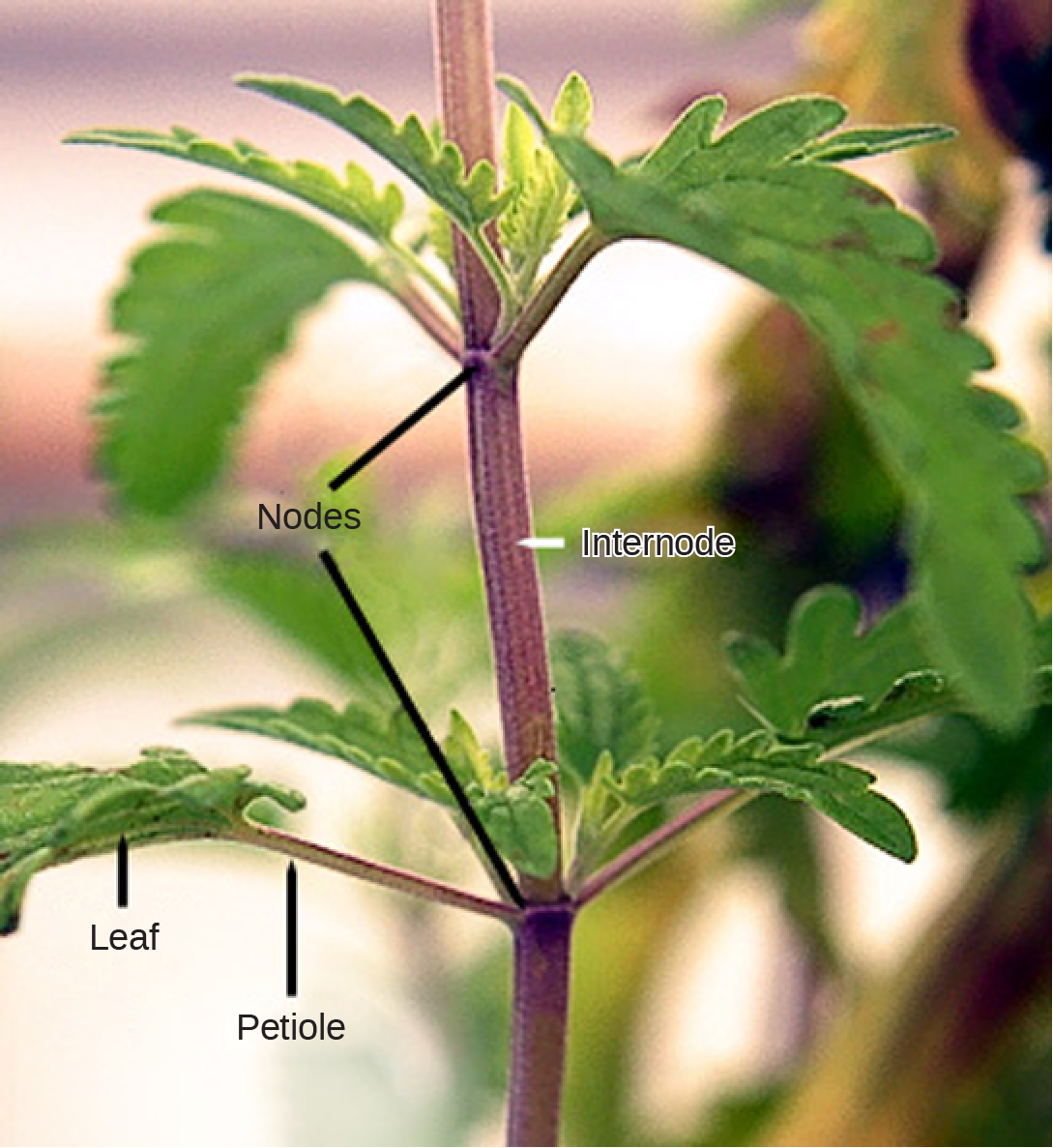
Internode
The part of the stem between nodes
Lenticel
Rough areas of stems composed of loosely packed cells extending from the cortex through the ruptured epidermis (Breathing pores)

Crowns
Compressed stem Leaf and flower buds occur on the crown

Stolons
Stems that grow horizontally above the ground

Spurs
Found on the branches of woody plants stems whose growth has been severely restricted due to shortened internodes (Can resume normal growth).
Rhizomes
Underground, horizontally growing stems (most monocots)

Corms
Underground structures that are compressed and thickened stems occur only in some monocots. Not true bulbs

Vascular bundles
xylem and phloem run the length of plants stem, from root to top of the plants.

Bulb
Short stem surrounded by modified leaves

Tuber
Thick, underground stem used to store carbohydrates (potato)

Dicot roots
Tap root system

Monocot roots
Fibrous root system

Embryonic Root or Radicle
When seeds germinate the embryonic root (radicle) begins.
Tap root system: Radicle forms as primary root then adds lateral roots.
Fibrous root system: A single radicle forms but in addition several other embryonic roots (senial roots) Form just above the radical.

Root Epidermis
Outermost single layer of cells that protect from diseases and absorbs water and nutrients.

Root Hairs
Tubular extensions of epidermal cells.

Root Anatomy: Monocot, Dicot, Or Gymnosperm root (primary Growth)
Vascular tissues occur in the center
Surrounded by two rings of cells (Pericycle and endodermis)
then Cortex and epidermis
Cell walls of endodermis that are perpendicular to root surface are sealed by a Supersized band called Casparian strip.
Root hairs are extensions of the epidermal cells.

Woody Dicot or Gymnosperm Root (Secondary Growth)
Looks like the stem secondary stem growth
Difference is there is primary xylem in the center.

Dicot Stem Anatomy

Monocot Stem Anatomy

What type of plant has Secondary Growth
Dicot

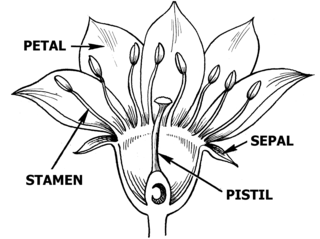
Pistil
The female reproductive parts of the flower, occupies the central position of the flower. (Consists of three parts) (Stigma, Style, Ovary)

Stigma
Pollen receptive part of the flower

Style
Slender Column of tissue that rises from the ovary

Ovary
Enlarged portion located at the base of the pistil that contains the ovules (immature seeds).

Stamen
Male reproductive parts of the flower
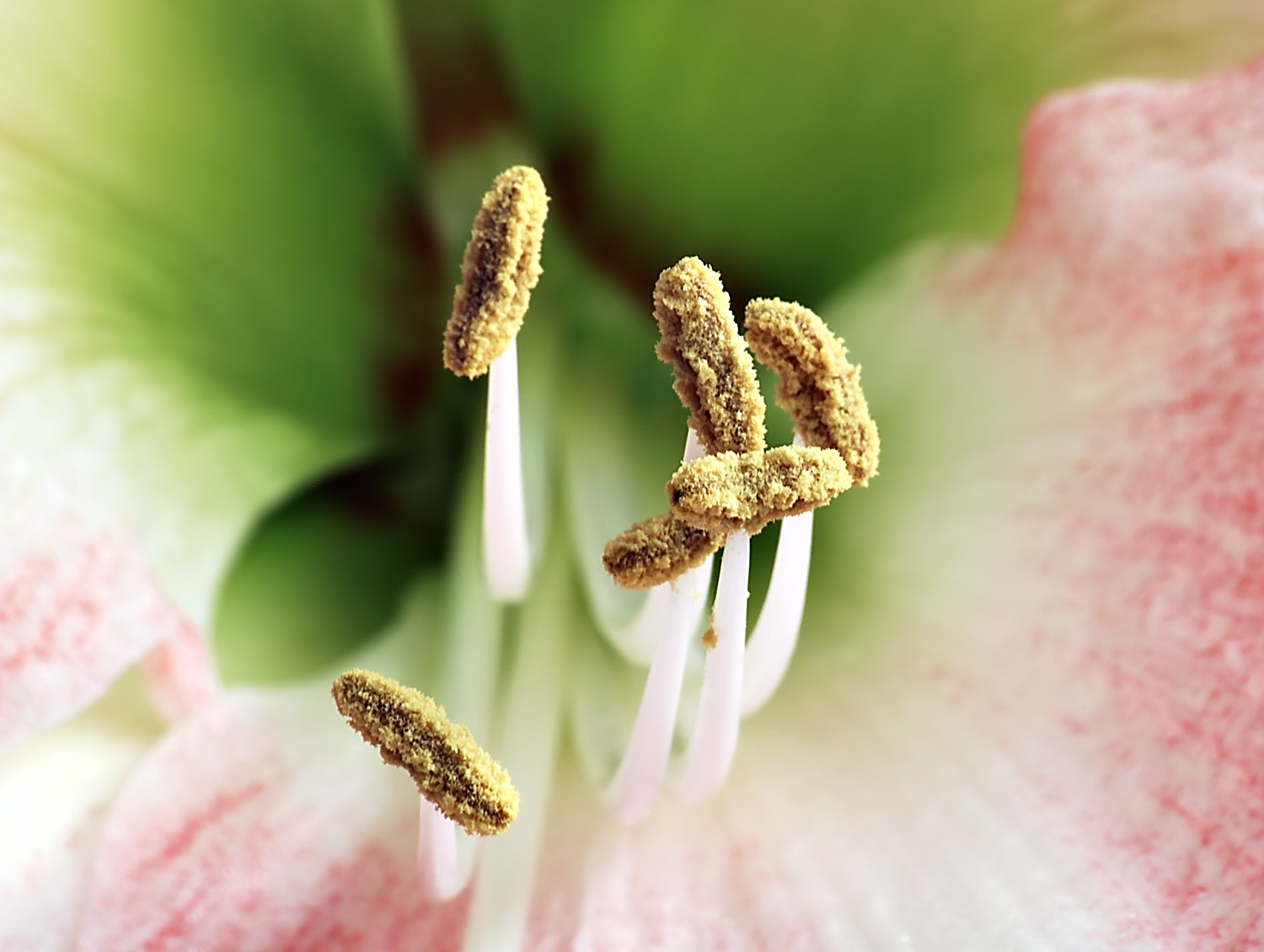
Filaments
The stalk of the stamen
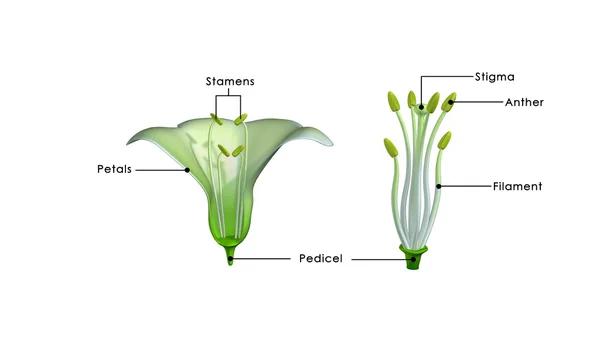
Anther
Portion of the stamen that bears pollen.

Corolla
The whorl of petals; usually thin, soft and colored to attract animals that help with pollination.

Calyx
The outer whorl of sepals; typically green (But can be petal like or petaloid n some species).
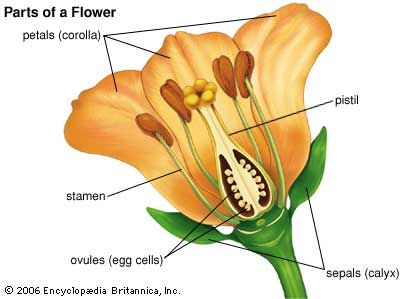
Perfect flower and Imperfect flower
Has both male (stamens) and Female (Pistils) regardless of the presence of absence of petals or sepals. Imperfect: Missing one type of sexual organ.

Complete Flower
A flower having sepals, petals, stamens, and pistils is complete. IF a flower is lacking one or more of these whorls, it is said to be incomplete.
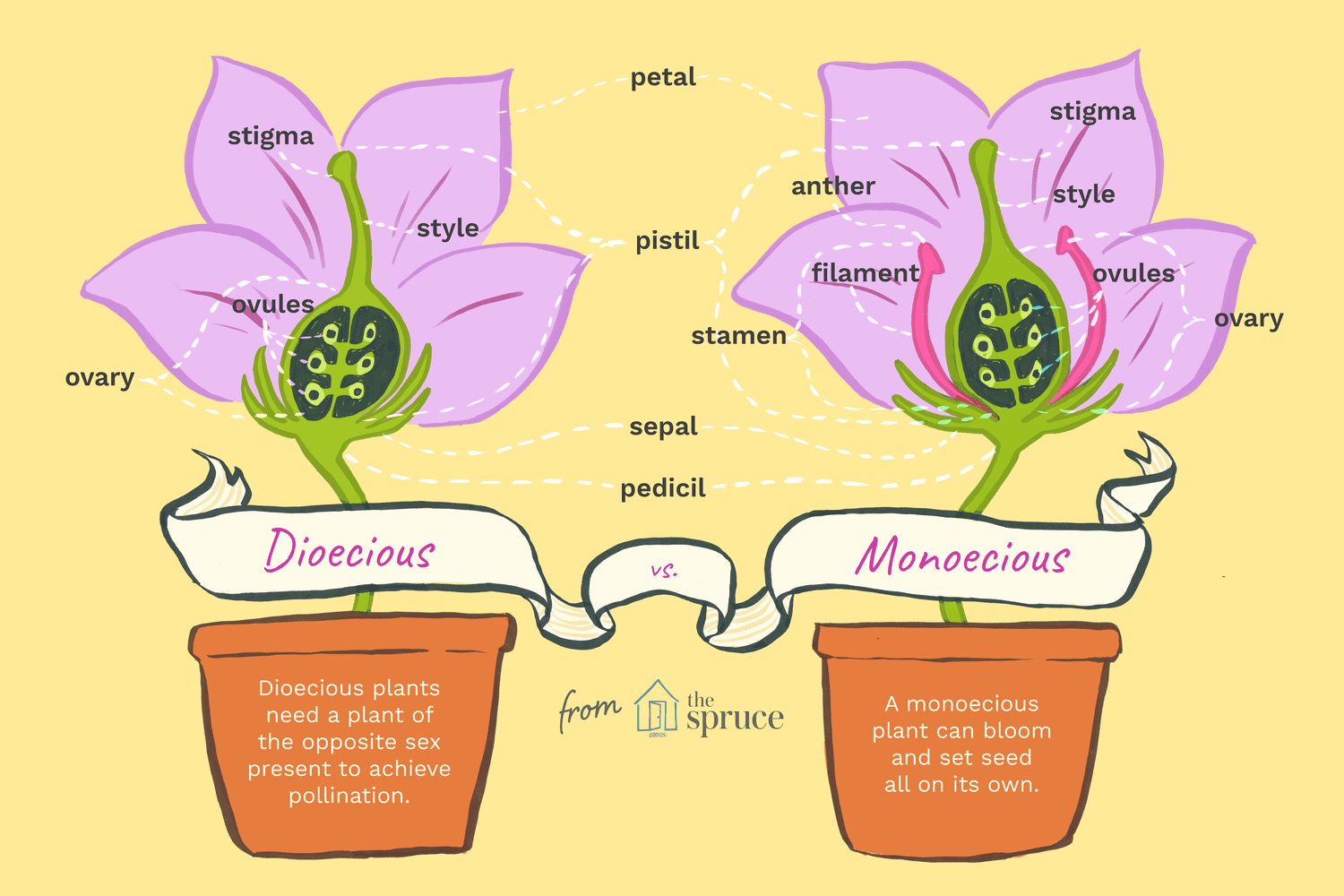
Monoecious
Both Staminate (male) and Pistillate (female) flowers occur on the same plant.

Dioecious
Staminate (male) and pistillate (female) flowers occur on separate plants.
Solitary flowers
Form singly on upright stems or stalks.

Inflorescence
Flower made up of several florets
Entire flower displays a unique pattern of smaller flowers branching from several smaller stems.
Vary from simple and easy to recognize
Usually optimize the plants pollen dispersal.

Spike Inflorescence
Often called spike flower or line flower.
Elongated inflorescence on the main stem where flowers are sessile.
Sessile means attached directly to the main stem without pedicels.

Raceme Inflorescence
Elongated inflorescence, like a spike, except the florets are not sessile.
Each floret has its own pedicel (lateral stem)
Pedicels are usually identical lengths and sometimes very short.

Panicle Inflorescence
lose irregularly branched flower cluster
Also called a compound raceme
Most have a central stem with pedicels that are also branched.

Corymb Inflorescence
Has main stem with a pedicel that comes from various alternate sides of the main stem.
Pedicels are of unequal length.
Flat top or slightly rounded shape.

Cyme Inflorescence
Inflorescence that is usually broad and often flat topped.
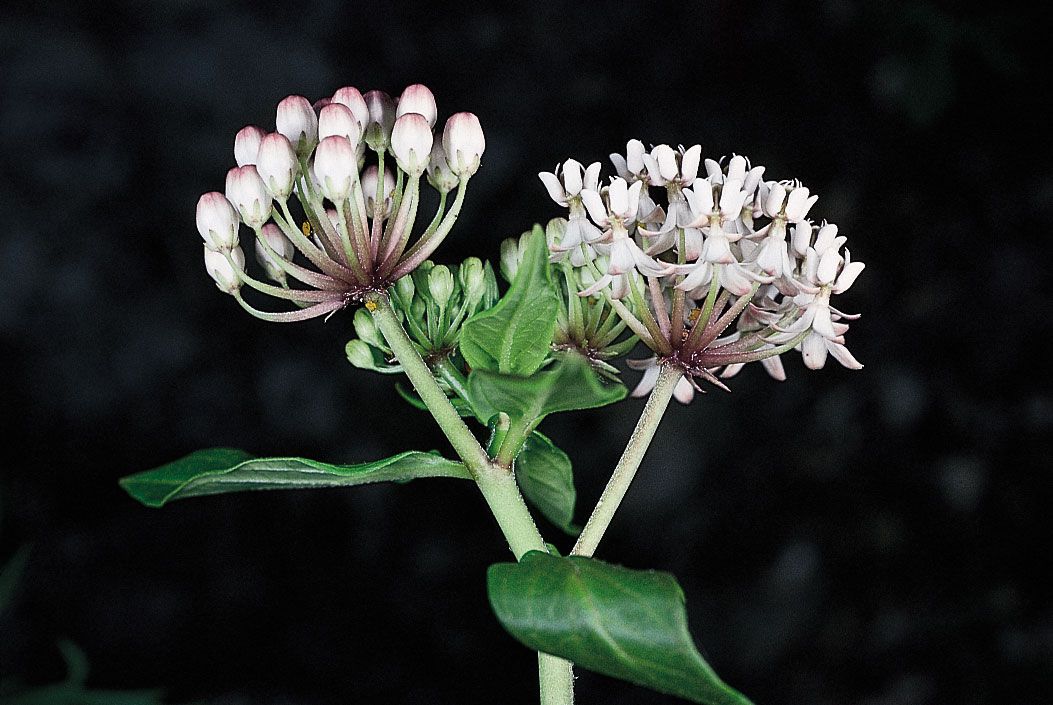
Umbel Inflorescence
Single pedicelled flowers all arising from the top of the main stem.
Structured like the ribs of an umbrella
Flat topped, rounded or globular.

Spadix Inflorescence
Thick and swollen spike of unstalked flowers.
Florets are often deeply and densely imbedded in a fleshy column.
Spathe Bract Surrounding the spadix that is usually arching and colored. (modified leaf)

Composite inflorescence
Also known as a head flower or capitulum- short, dense cluster of florets.
Florets are generally sessile in a rounded flat pattern.
Has two different types of florets.

Disc Florets
Tiny tubular florets
