enzyme inhibitors
 Call Kai
 Learn
Learn Practice Test
 Spaced Repetition
 Match
Match Flashcards
 Knowt Play
1/25

There's no tags or description
Looks like no tags are added yet.
Name | Mastery | Learn | Test | Matching | Spaced | Call with Kai | Chat |
|---|
No analytics yet
Send a link to your students to track their progress
26 Terms
what are the two main types of inhibitors?
irreversible
reversible
how do irreversible inhibitors work?
inhibitor deactivates enzyme by forming strong covalent bond
removes molecule from enzyme from availability
how do reversible inhibitors work?
inhibitor molecule binds non-covalently to an enzyme, temporarily stopping or slowing activity
what are the three main types of reversible inhibitor?
competitive
non-competitive
uncompetitive
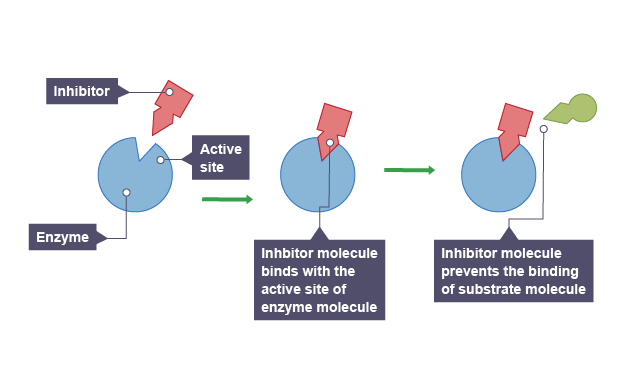
how do competitive inhibitors work?
competes with substrate for binding to active site
inhibitor resembles substrate in structure
EI complex is formed
reduces the amount of free enzyme for substrate binding
competitive inhibitor diagram
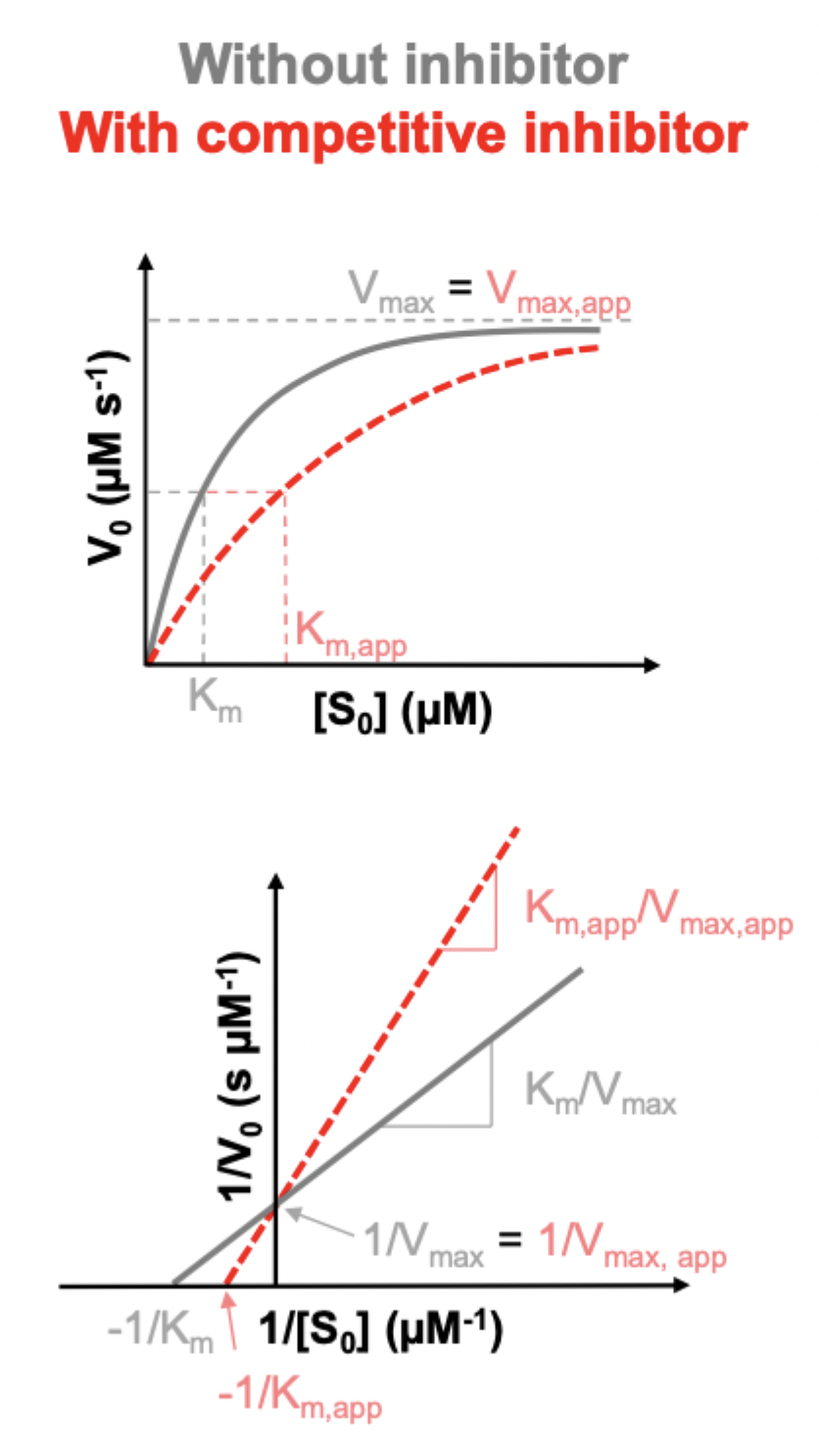
how does competitive inhibition impact Km and Vmax?
increases Km
more substrate is required in order to outcompete inhibitor
does not change Vmax
when does competitive inhibition have an effect?
when the substrate concentration is low
how can competitive inhibition be overcome?
increase substrate concentration (substrate is more likely to bind to the active site
direct plot and lineweaver burk plot of competitive inhibitor
what is an uncompetitive inhibitor?
bind to ES complex at location other than active site (only binds to ES complex)
binding site is only accessible after substrate binding
binding site can be on enzyme or substrate
what does uncompetitive inhibition do to the reactions occurring?
forms enzyme-substrate-inhibitor (ESI) complex
locks substrate in place, reducing the rate of product formation
reduces ES complex concentration so drives E+S —> ES reaction
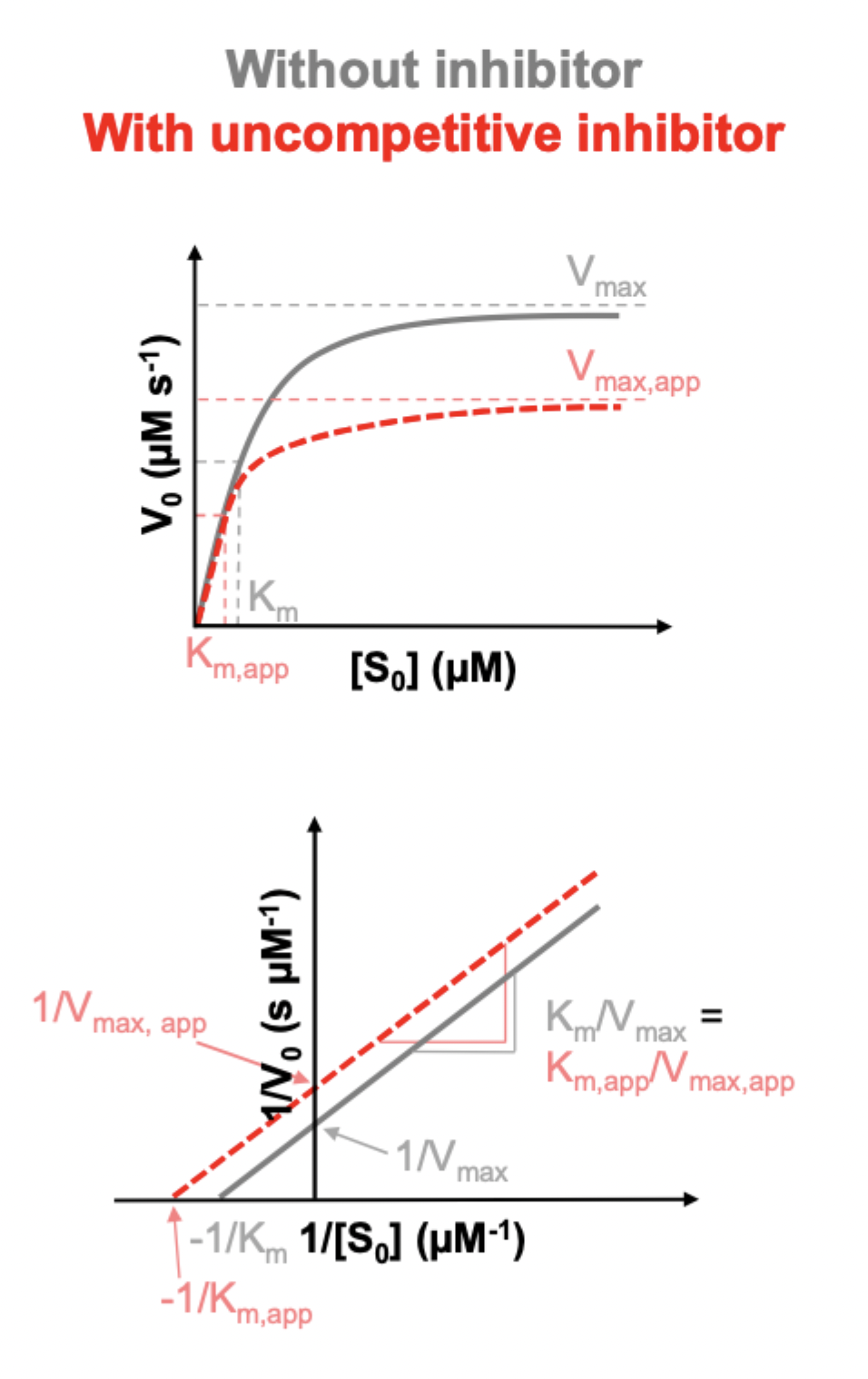
how does uncompetitive inhibition affect Km and Vmax?
Vmax decreases
substrate turnover decreases
ESI complex cannot form product
Km increases (higher affinity)
inhibitor removes ES complex, driving formation of more E+S —> ES (Le Chatelier’s principle)
therefore it appears as though enzyme has higher affinity for substrate
when is uncompetitive inhibition most effective?
when there is a high substrate concentration - increase the concentration of ES complexes
how can uncompetitive inhibition be overcome?
it can’t - increasing substrate concentration does not do anything
direct plot and lineweaver burk plot of uncompetitive inhibitor
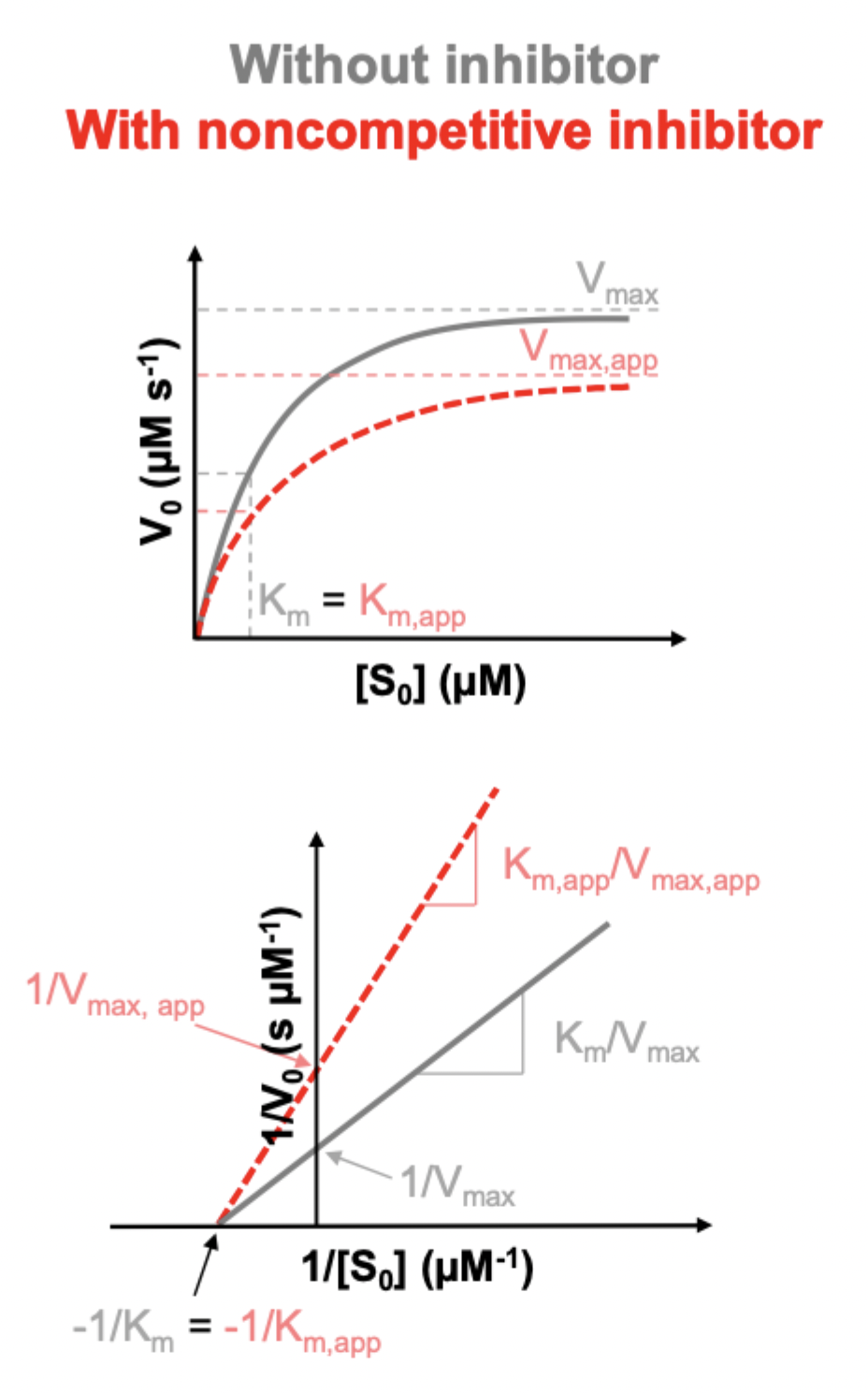
what is a non-competitive inhibitor?
binds to enzyme’s allosteric site
binds to enzyme or enzyme-substrate complex with the same affinity
how does a non-competitive inhibitor work
EI and ESI complexes formed
distortes the shape of the active site
reduces activity of enzyme and rate of reaction
when does non-competitive inhibition have an effect?
at low and high substrate concentrations
effects cannot be overcome by increasing substrate
how does non-competitive inhibition affect Vmax and Km?
Vmax decreases
dysfunctional enzymes decrease turnover of S —>P
Km stays the same
enzyme affinity for substrate is the same
direct plot and lineweaver burk plot of non-competitive inhibitor
examples of drugs that are competitive inhibitors
ibuprofen - inhibitor of cyclo-oxygenase (COX) 1 and 2 which are used for signalling/inflammation
statins - used to treat hypercholesterolemia. inhibits 3-hydroxy-3-methylglutaryl coenzme A reductase
examples of drugs that are non-competitive inhibitors
cyanide: inhibits cytochrome oxidase
heavy metals: bind to -SH groups and alter enzyme structure
examples of drugs that are uncompetitive inhibitors
very rare
examples of drugs that are irreversible inhibitors?
β lactam antibiotic penicillin: covalent inhibitor of penicillin binding proteins
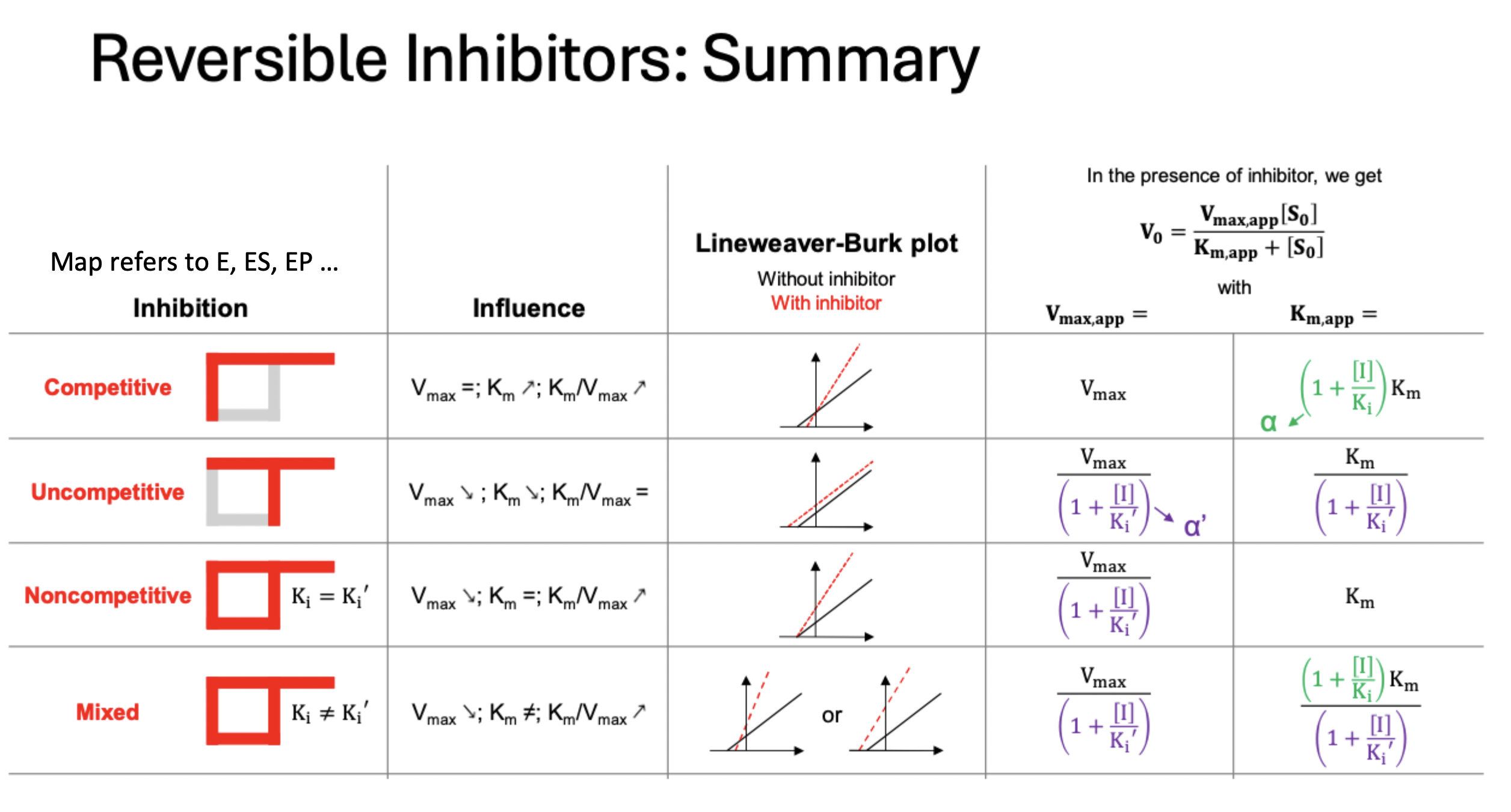
reversible inihibitors summary