Dental Instruments (Lab #1)
 Call Kai
 Learn
Learn Practice Test
 Spaced Repetition
 Match
Match Flashcards
 Knowt Play
1/31

There's no tags or description
Looks like no tags are added yet.
Name | Mastery | Learn | Test | Matching | Spaced | Call with Kai | Chat |
|---|
No analytics yet
Send a link to your students to track their progress
32 Terms
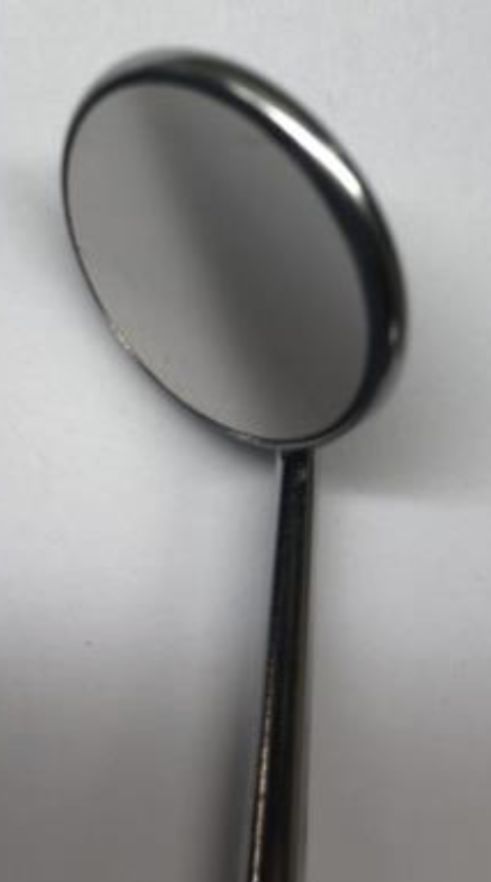
Mirror

Straight Sickle
Curved Sickle

Explorer

Probe (1mm & 3mm)

Hoe
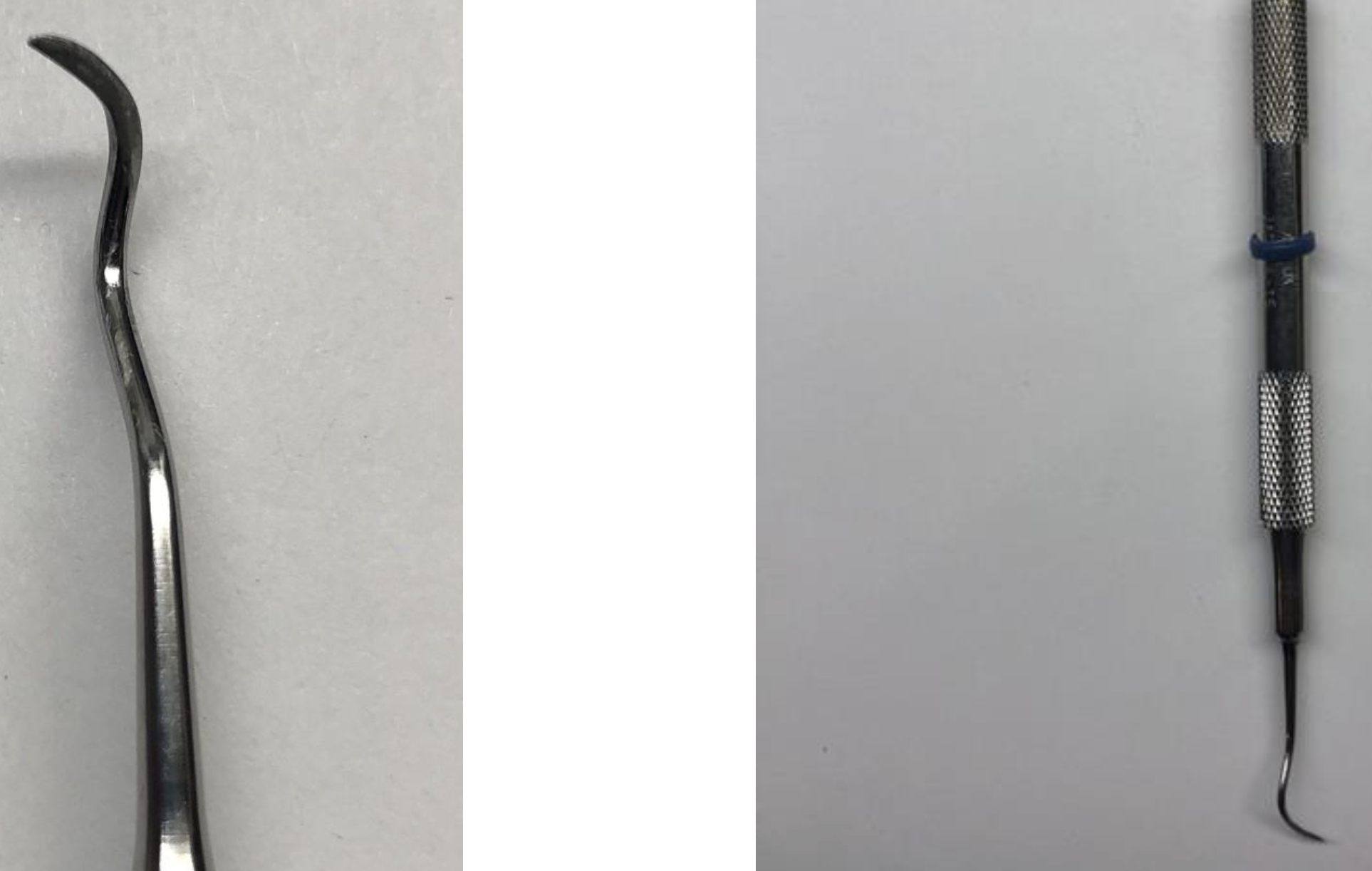
Taylor Scaler
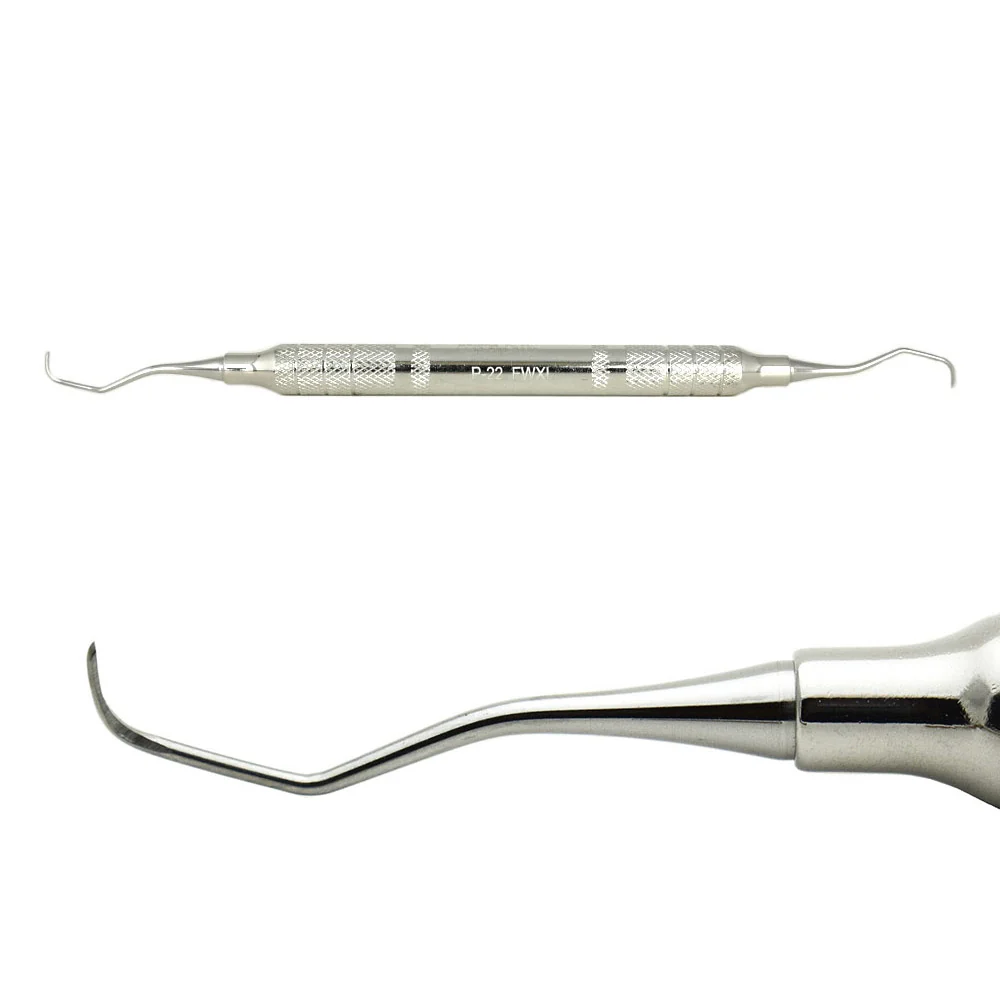
Gracey Curette
What is a scaler, the 3 types and its use?
→ instrument w 2 cutting edges which come to a sharp tip
Straight Sickle
Curved Sickle
Taylor Scaler
→ used supragingivally (bc of sharp tip) on the crown of the tooth
What is a curet, the 3 types and its use?
→ bends back towards instrument coming to a rounded/blunt toe
Universal (2 cutting edges w a 90 degree facial surface)
Gracey (1 cutting edge w a 60-70 degree facial surface)
→ used both subgingivally and supragingivally as well as for root planning
What is a probe?
→ dental ruler measuring the sulcus depth and attachment loss
Dogs: 0-3 normal
Cats: 0-1 normal
TEST QUESTION: T of F can a probe be used to measure anything in the oral cavity?
True
What is an explorer?
→ ids abnormalities in enamel
→ lets you know if any calculus was missed
Tip: looks like a record player needle, you can feel vibrations (= not clean)
What is a hoe?
→ used for supra gingival scaling ONLY
→ removes gross calculus
Note: common to a probe as it also removes calculus but are NOT commonly used anymore
What are the 3 things that make up an instrument?
Handle
Working End
Shank (attaches working end to the handle)

What does it mean to fulcrum?
→ “ancor” your pinky and ring finger on a tooth (ideally in the same quadrant)
→ avoids slippage that could cause damage to the oral cavity
How should instruments be held?
→ Held using a modified pen grasp
→ Rolled 180 degrees clockwise and counterclockwise
TEST QUESTION: T or F All strokes should be towards the gingiva
FALSE All stroked should be AWAY from the gingiva (gum line)
How do you care for normal use of instruments?
→ sharpen if needed and use gauze square to clean off end of instrument
What is regular and ultrasonic cleaning?
→ scrub instrument w Chlorhexidine solution (kills oral bacteria) and toothbrush
→ use ultrasonic cleaner the same as for sx instruments but NO milk (bc no hinges to lube)
Why do we sharpen instruments after cleaning?
→ to guarantees the sharpening stones will not become contaminated
→ remove oil and shavings after sharpening
What are the steps for cleaning instruments?
sharpen if needed
wipe off w gauze square
scrub w chlorhexidine solution and toothbrush
place in ultrasonic cleaner
sharpen
autolave
What are the 5 parts of a blade?
Tip
Back
Lateral Face
Face
Cutting Edge

Can you do a modified pen grasp?

What is a pull stroke directed coronal (towards the crown), w the cutting edge placed just below the calculus ledge called?
Vertical pull stroke
What is a pull stroke directed at a 45° angle to the long axis of the tooth called?
Oblique stroke
What is a pull stroke directed at a 90° angle to the long axis of the tooth; mainly used w the curet called?
Horizontal stroke
What questions should you ask yourself when wondering if an instrument needs to be sharpened?
Is this instrument “grabbing” correctly?
Do I have to apply more pressure than I should?
Is my patient reacting more than they should to this procedure?
Is this taking longer than it should?
TEST QUESTION: T or F light reflects from flat surfaces therefore sharp tool should not reflect light
TRUE
What is the use of sharpening stones?
→ to restore the cutting surface without changing the original shape
What are the key procedural differences between stationary stone/moving instrument and stationary instrument/moving stone sharpening?
→ Stationary stone / moving instrument:
Instrument moves heel → toe across the stone
Use a 100–110° angle between facial surface and stone
Arc motion for curved instruments; straight motion for straight instruments
40–45° angle for maintaining a rounded curet toe
→ Stationary instrument / moving stone:
Stone moves along the stationary instrument’s cutting edge
The stone is guided from heel → toe of the working end
The instrument’s cutting-edge angle is maintained while the stone moves along it
Note: teacher prefers moving instrument but in other class the answer for the best method of sharpening a stationary instrument moving stone
What is the purpose of an acrylic test stick?
→ To evaluate the sharpness of an instrument by testing whether the cutting edge produces a firm “bite” on the acrylic stick. The entire cutting surface should be tested
How long should you polish a tooth for?
MAX is 5 seconds bc friction builds up creating heat (don't wanna cook em) so polish each tooth 5 sec max, move on to let cool down then repeat