Chapter 3 - Prenatal Development
 Call Kai
 Learn
Learn Practice Test
 Spaced Repetition
 Match
Match Flashcards
 Knowt Play
1/61

There's no tags or description
Looks like no tags are added yet.
Name | Mastery | Learn | Test | Matching | Spaced | Call with Kai | Chat |
|---|
No analytics yet
Send a link to your students to track their progress
62 Terms
Germinal Period
period of prenatal development occurs in the first 2 weeks after conception
Germinal period growth
creation of the zygote
continued cell division
attachment of the zygote to the uterine wall
blastocyst
an inner mass of cells that develops into the embryo
trophoblast
the outer layer of cells that provides nutrition and support for the embryo
Course of prenatal development
1. single cell from overy is drawn into fallopian tubes at 9-16 days of the 28 day menstrual cycle
2. fertilization occurs in the upper third of the tube within 24 hours after ovulation
3. 24-30 hours after fetilization, the sperm and egg chromosome unite
4. first egg cell division
5. 26 hours 2 cells
6. 48 hours 4 cells
7. 3 days : small compact ball of 16-32 cells
8. 4 days hollow ball of 64-128 cells (blastocyst)
9. 4-5 days: inner mass forms, blastcyst still free
10. 6-7 blastocyst attaches to uterine wlal
11. 11-15 days blastcyst nvade into uterus wall and implant
embryonic period of prenatal development
occurs 2-8 weeks after conception
The rate of cell differentiation intensifies, and the mass of cells is now called embryo
embryo three layers
Endoderm - digestive and respiratory systems • Mesoderm - circulatory system, bones, muscles, digestive and reproductive systems
Ectoderm - nervous system and brain, sensory systems, and skin
Amnion
a sac that contains a clear fluid in which the developing embryo floats.
Umbilical cord
contains two arteries and one vein and connects the baby to the placenta.
Placenta
a disk-shaped group of tissues in which small blood vessels from the mother and the fetus intertwine but do not join.
Organogenesis
organ formation that takes place during the first 2 months of prenatal development.
The fetal period
- lasts about seven months, from 2 months after conception to birth
- the average American baby weighs 8 pounds and is about 20 inches long
- divided into trimesters (NOT the same as the germinal, embryonic, and fetal period)
Conception to 4 weeks
• Is less than 1/10 inch long
• Beginning development of spinal cord, nervous system, gastrointestinal system, heart, and lungs • Amniotic sac envelops the preliminary tissues of entire body
• Is called a "zygote"
At 8 weeks of prenatal development
Is just over 1 inch long
• Face is forming with rudimentary eyes, ears, mouth, and tooth buds
• Arms and legs are moving
• Brain is forming
• Fetal heartbeat is detectable with ultrasound
• Is called an "embryo"
at 12 weeks prenatal
• Is about 3 inches long and weighs about 1 ounce
• Can move arms, legs, fingers, and toes
• Fingerprints are present
• Can smile, frown, suck, and swallow
• Sex is distinguishable
• Can urinate
• Is called a "fetus"
second trimester 16 weeks
At 16 weeks
• Is about 6 inches long and weighs about 4 to 7 ounces
• Heartbeat is strong
• Skin is thin, transparent
• Downy hair (lanugo) covers body
• Fingernails and toenails are forming
• Has coordinated movements; is able to roll over in amniotic fluid
20 weeks
Is about 12 inches long and weighs close to 1 pound
• Heartbeat is audible with ordinary stethoscope • Sucks thumb
• Hiccups
• Hair, eyelashes, eyebrows are present
24 weeks
• Is about 14 inches long an weighs 1 to 1½ pounds
• Skin is wrinkled and covered with protective coating (vernix caseosa)
• Eyes are open
• Waste matter is collected in bowel • Has strong grip
28 weeks - third trimester
• Is about 16 inches long and weighs about 3 pounds
• Is adding body fat
• Is very active • Rudimentary breathing movements are present
At 36 to 38 weeks:
• Is 19 to 20 inches long and weighs 6 to 7 ½ pounds
• Skin is less wrinkled
• Vernix caseosa is thick
• Lanugo is mostly gone
• Is less active
• Is gaining immunities from mother
4 phases of brain development during prenatla period
neural tube - 3 weeks after conception
neurogenesis - 5 weeks after conception
neuronal migration - 6-24 weeks after conception
neural connectivity - 23 weeks after conception
neural tube
- The pear-shaped neural tube develops out of the ectoderm at about 18 to 24 days after conception
two birth defects related to the failure of the neural tube to close are
anencephaly and spina bifida
neurgenesis
s the massive proliferation of new immature neurons, beginning at about week 5 and continuing through the remainder of the prenatal period
neuronal migration
the process of cells moving outward from their point of origin to their appropriate locations takes place between 6 and 24 weeks
neural connectivity
at about the 23rd week, is when connections between neurons begin to occur
teratogen
any agent that can cause a birth defect or negatively alter cognitive and behavioral developmental outcomes.
teratology
the study of the cause of birth defects
severity of damage and type of birth defect depend on
* Dose • Genetic susceptibility • Time of exposure
negative effects of exposure during the fetal period include
• Stunted growth • Fetal brain development problems • Organ functioning problems

overview of prenatal development
1-2 week period of dividing zygote, implantation, and embryo (not susceptible to teratogens)
3-8 weeks ; embryonic period (organogensis peak) - VERY sensitive to teratogens
9-36 weeks - less sensitivity to teratogens but still sensitive
36 is full term
both prescription and nonprescription drugs can have effects on the fetus. prescription drugs that can function as teratogens include
• Antibiotics, such as streptomycin and tetracycline
• Some antidepressants
• Certain hormones, such as progestin and synthetic estrogen
• Accutane, an acne medication
Fetal alcohol spectrum disorder
are a cluster of abnormalities that appear in the offspring of some mothers who drink alcohol heavily during pregnancy
Effects include facial deformities, limb and heart defects, learning problems, and many other issues
Teratology and Hazards to Prenatal Development
nicotine, cocaine, marijuana, heroin, synthetic opioids
Environmental hazards to the embryo or fetus
radiation, toxic wastes, and other chemical pollutants
• Carbon monoxide • Mercury • Lead • Microplastics • Fertilizers and pesticides
Maternal diseases
• Rubella
• Syphilis
• Genital herpes
• HIV/AIDS
• Diabetes
Personal factors - teratology
• Maternal diet and nutrition, obesity, age
• Emotional states and stress
• Sperm abnormalities from lead or radiation exposure, which may lead to miscarriage or diseases
• Smoking during the mother's pregnancy
prenatal care
includes screening for manageable conditions and treatable diseases
centeringpregnancy
a relationship-centered program providing complete prenatal care in a group setting or group prenatal care
• Sessions emphasize empowering women to play an active role in experiencing a positive pregnancy
• Research shows positive outcomes for the fetus and child as well as the mother
first stage of birth
uterine contractions are 15 to 20 minutes apart and last up to 1 minute
• This is the longest stage, 6 to 12 hours
second stage of birth
the baby's head starts to move through the cervix and birth canal
• This takes 45 minutes to an hour and ends when the baby completely emerges from the mother's body
third stage of birth (afterbirth)
when the placenta, umbilical cord, and other membranes are detached and expelled, lasting only minutes
where do most births take place?
• In the United States, 98.5% of births take place in hospitals
• Of the 1.5% outside of hospitals, 63% are at home; 31% at birthing centers
doula
a caregiver who provides continuous physical, emotional, and educational support for the mother before, during, and after childbirth.
• Typically function as part of a "birthing team."
midwife
medical professional who provides clinical care during pregnancy, labor, and postpartum
Natural childbirth
attempts to reduce the mother's pain by decreasing her fear through information and instruction in relaxation techniques
lamaze method
• Includes a special breathing technique to control pushing in the final stages of labor, along with a more detailed anatomy and physiology course
childbirth medication
: Three basic kinds of drugs used for labor are analgesia, anesthesia, and oxytocin/Pitocin.
cesarean delivery
surgically removing the baby from the mother's uterus through an abdominal incision
• Indicated in cases of breech position, fetal distress, maternal vaginal bleeding, and a natural birth hindered by an epidural
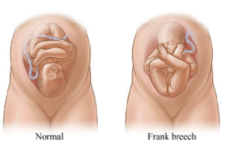
breech position
the baby's position in the uterus causes the buttocks to be the first part to emerge
apgar scale
a method for assessing the health of newborns at one and five minutes after birth
• Infant's heart rate
• Respiratory effort
• Muscle tone
• Body color
• Reflex irritability

Brazelton Neonatal Behavioral Assessment Scale (NBAS)
used in the first month of life to assess the newborn's neurological development, reflexes, and reactions to people and objects
Neonatal Intensive Care Unit Neurobehavioral Scale (NNNS)
assessment of the newborn's behavior, neurological and stress responses, and regulatory capacities
• Low birth weight infants
weigh less than 5 pounds 8 ounces • Very low birth weight: less than 3 pounds 4 ounces • Extremely low birth weight: less than 2 pounds 3 ounces
Preterm infants
—35 or fewer weeks after conception
small for date infants
infants with birth weights below normal considering the length of pregnancy
Preterm Stats
9.9% of U.S. infants were born preterm
Women who engage in physical activity have a decreased risk of preterm delivery & adolescents who give birth when their bodies have not fully matured
kangaroo care
skin-to-skin contact with the baby upright against the parent's bare chest
Long-term benefits: improved respiratory and cardiovascular functioning, sleep patterns, and cognitive development from 6 months to 10 years
Positive emotional and cognitive effects persist for over 20 years
Infant massage therapy associated with increased weight, reduced stress, and shorter hospital stays
postpartum period
the period after childbirth that lasts until the mother's body has completed its adjustment and has returned to a nearly prepregnant state
postpartum depression
condition experienced by women that have trouble coping with daily tasks during the postpartum period. • Feelings peak 3 to 5 days after giving birth and may come and go for several months; but the feelings usually subside within 1 to 2 weeks, even without treatment

bonding
: the formation of a connection, especially a physical bond between parents and their newborn shortly after birth.
rooming-in arrangement
the baby remains in the mother's room most of the time during its hospital stay