Exam 2: Hip Joint
 Call Kai
 Learn
Learn Practice Test
 Spaced Repetition
 Match
Match Flashcards
 Knowt Play
1/52

There's no tags or description
Looks like no tags are added yet.
Name | Mastery | Learn | Test | Matching | Spaced | Call with Kai | Chat |
|---|
No analytics yet
Send a link to your students to track their progress
53 Terms
Hip Joint Overview (type of joint, DoF, roles)
Triaxial ball and socket joint
Concave acetabulum
Convex femoral head
Degrees of Freedom (rotational)
3 DoF (flex/ext; ab/add; IR/ER) → Circumduction
Primary Role
Support weight of head, arms, and trunk in closed chain
Secondary Role
Position the foot in space during open chain activity
Acetabular Structure of Hip Joint
Acetabulum
ilium, ischium, pubis
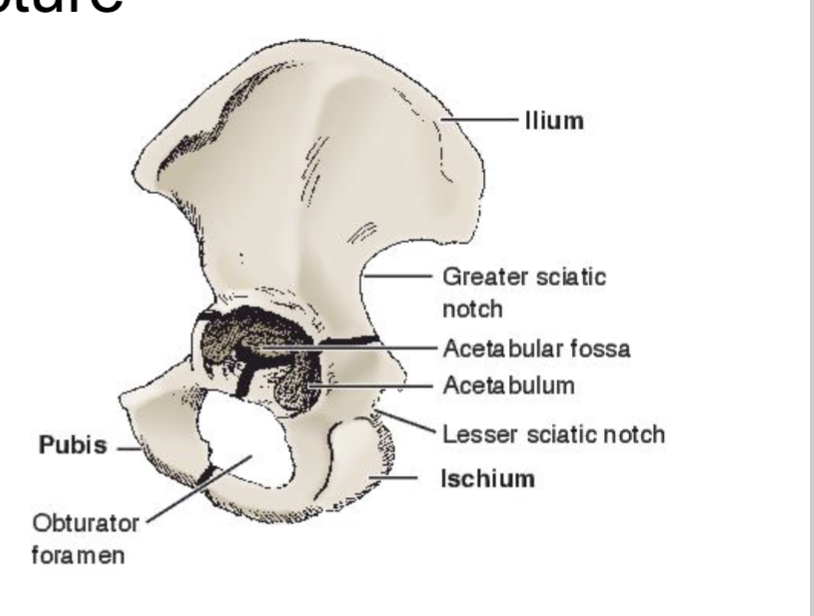
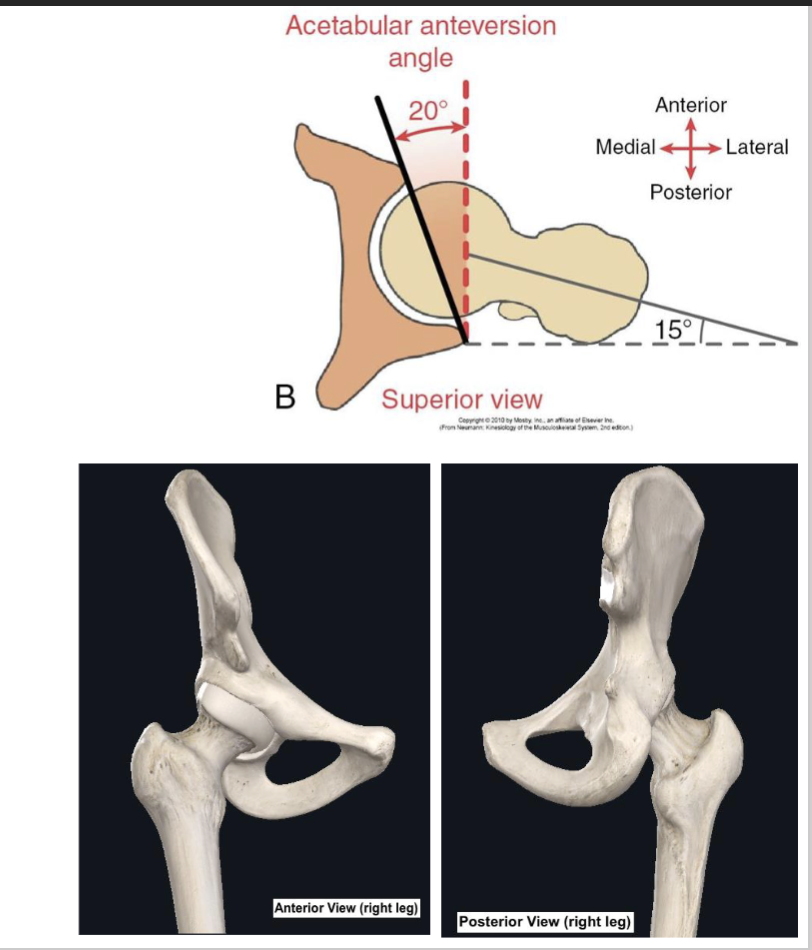
Acetabular Orientation
opens Lateral, Anteversion (faces anterior slightly), faces Inferior
There is more boney support in the back
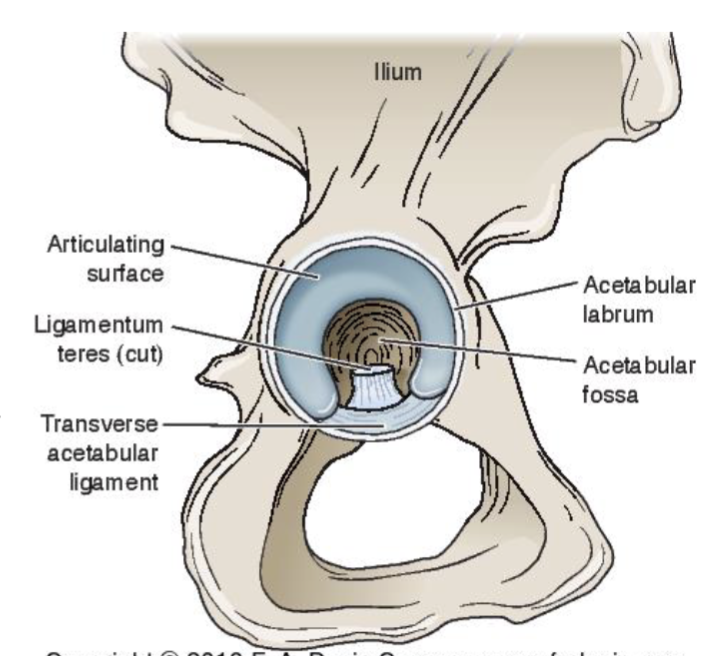
Acetabulum parts
Superior portion articulates with the femoral head
Lunate surface (horseshoe shaped)
Transverse acetabular ligament
supports blood vessels
Acetabular fossa
Non-articulating w/ femur → empty space = vacuum seal for hip stability
Acetabular labrum (content, fxn, role for the hip joint)
Fibrocartilagenous
Deepens the acetabulum and creates a vacuum seal inside the joint
role: helps w/ stability
fxn:
Proprioceptive fxn
Mechanoreceptors
aids in stability b/c stretch → gives message to CNS to reply w/ motor response
Nociceptors
Dissipation of WB’ing forces
deepens/increases Surface area → decreases stress
S = F/A
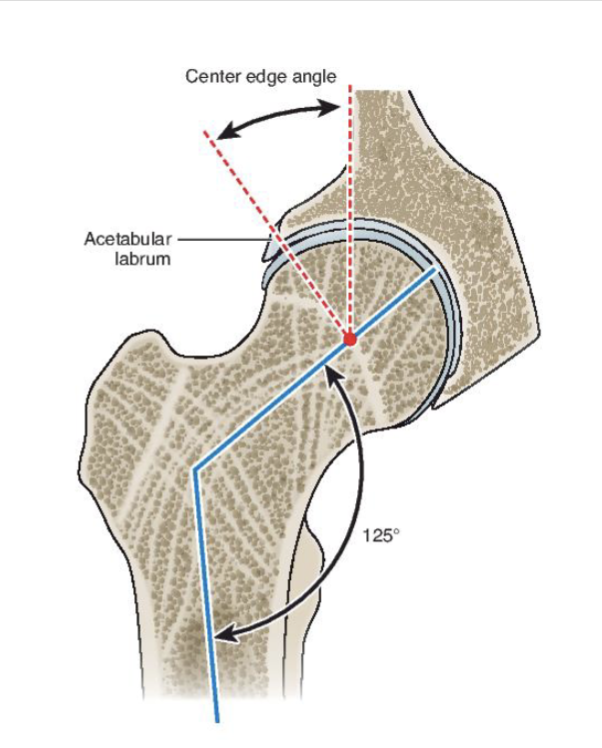
Acetabular depth
Depth: Center edge angle → Determines femoral head coverage
Dysplasia
Low coverage → shallow acetabulum/socket → High mob + Low stability
Coxa profunda
High coverage → too deep/overcovered → Low mob + High stab
Femur
Rounded head
2/3 sphere
Fovea (depression)
Ligamentum teres attachment site
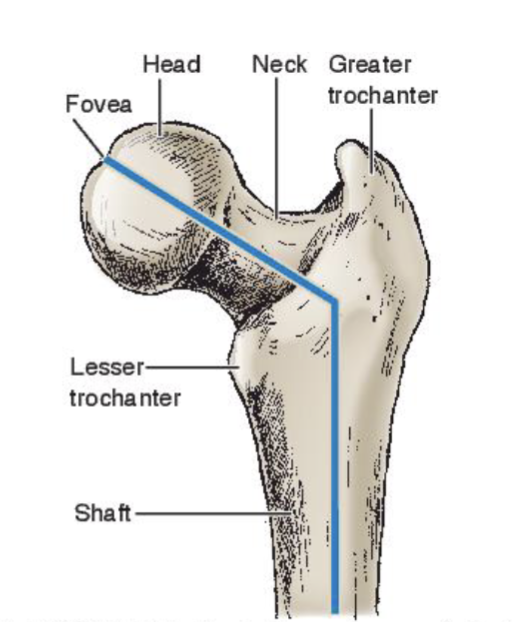
WBearing Adaptations
Femur neck: bending forces
greater trochanter → head (upper neck): tensile forces
bad for neck b/c bone is NOT good at handling tension
lesser trochanter → head (concave, lower neck): compressive forces
Adaptations:
vertical line = resist compressive forces
parallel component such as
horizontal line = resist horizontal forces
parallel component such as tendon, ligament, and glute med/abd resist
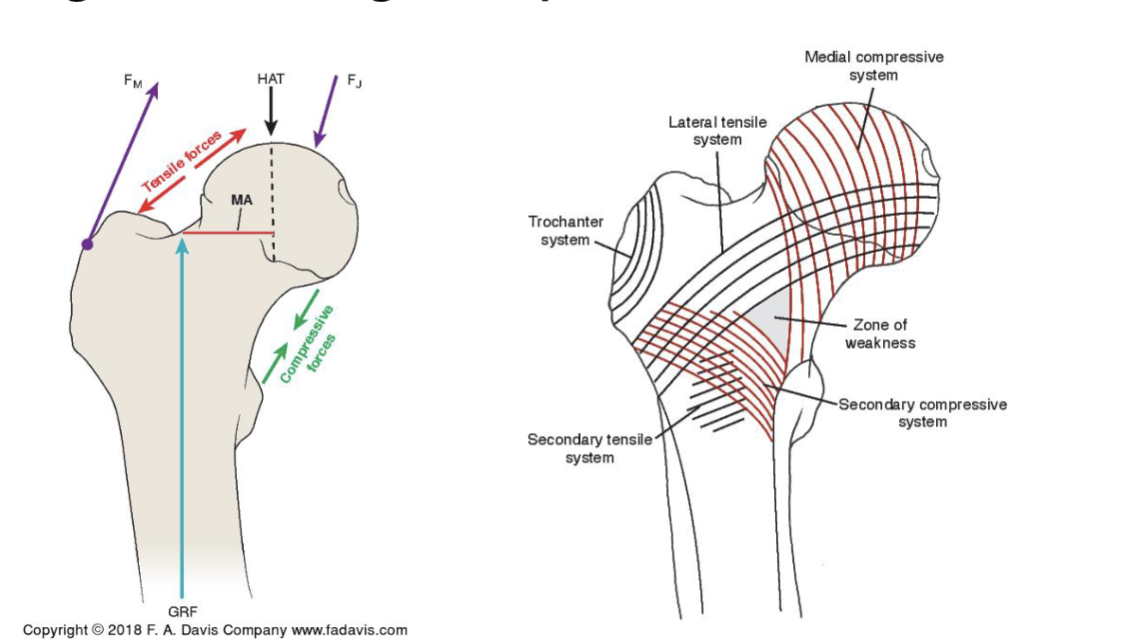
Someone w/ femoral neck stress fracture, which muscles to prioritize
prioritize hip abductor strength
Angle of Inclination
Def: Angle btw shaft & neck of femur
Coxa valga = angle in medial side increased
vertical btw shaft & neck (180 dg)
Coxa vara = angle in medial side reduced
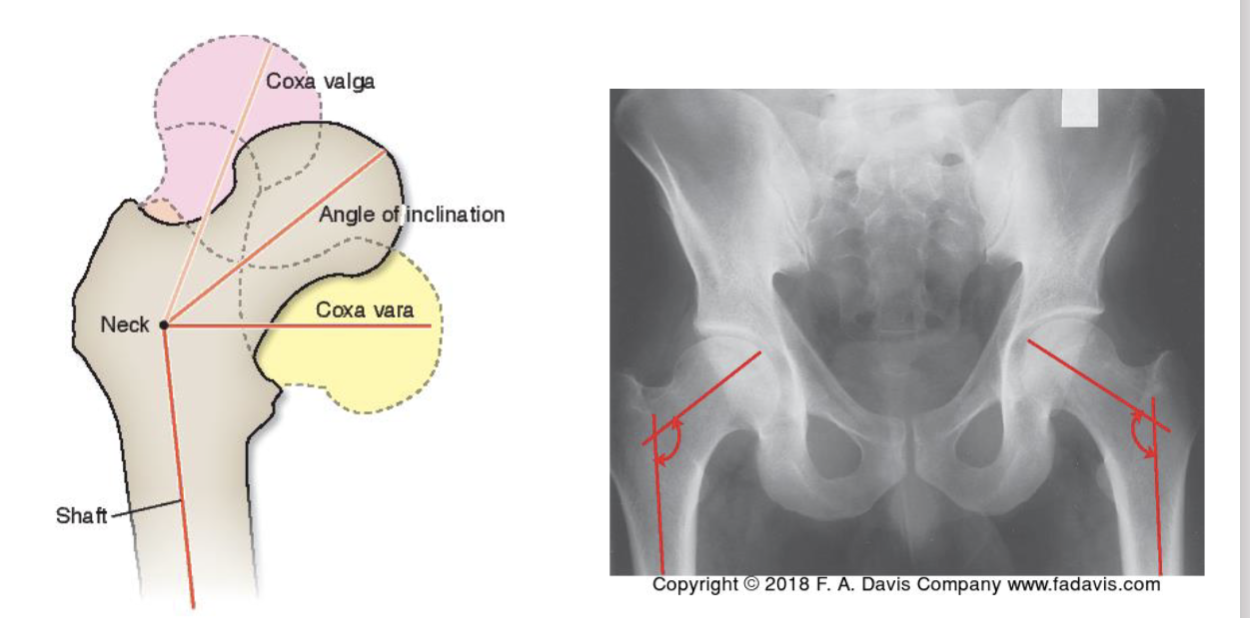
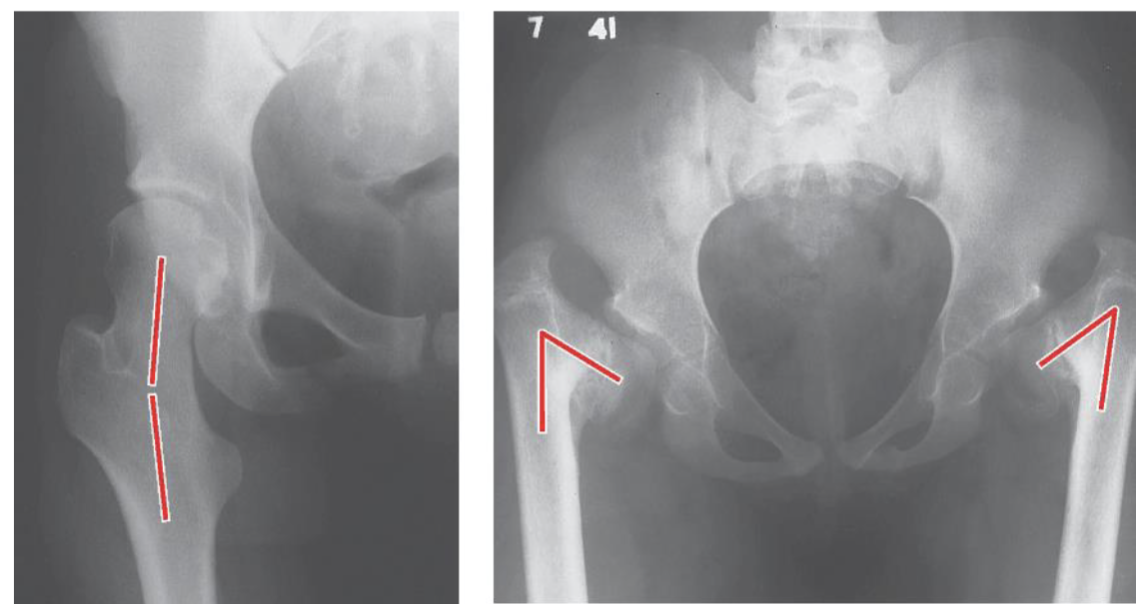
Which name the angles of inclination?
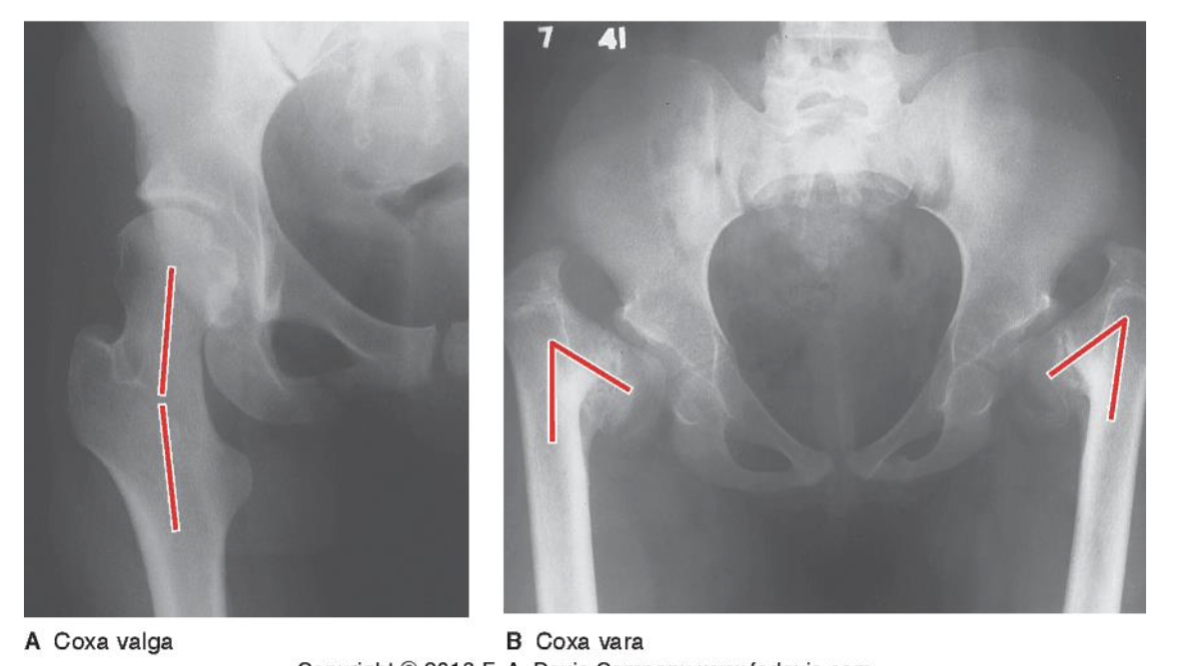
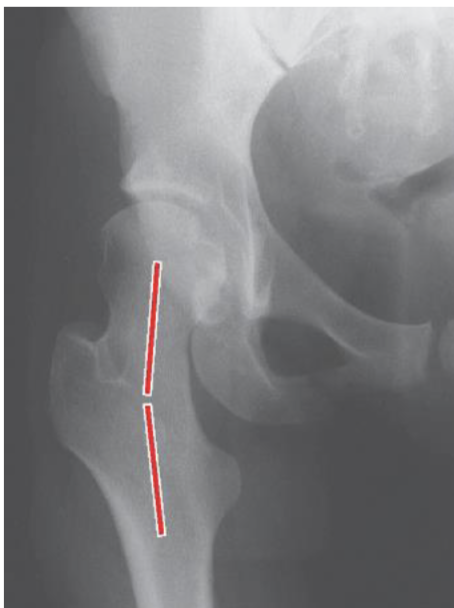
Coxa Valga (Femoral Head Coverage (Area), MA of Glut Med, Force Needed from Glut Med, Joint Stress, Bending Moments)
Femoral Head Coverage (Area)=
reduced → angle of inclination is high meaning less coverage
MA of Glut Med (to produce ABD)=
reduced → b/c typ angle of inclination pushes greater trochanter more laterally to increase MA
Force Needed from Glut Med=
increased → If no change in external forces, the internal force will need to be more to maintain equilibrium to compensate for small MA
Joint Stress=
increased → FHC (Area) reduced and Force increased
S = F/A
Bending Moments (@ femoral neck)=
decreased → femoral neck = more vertical meaning NO bending moments and would be more compressive forces
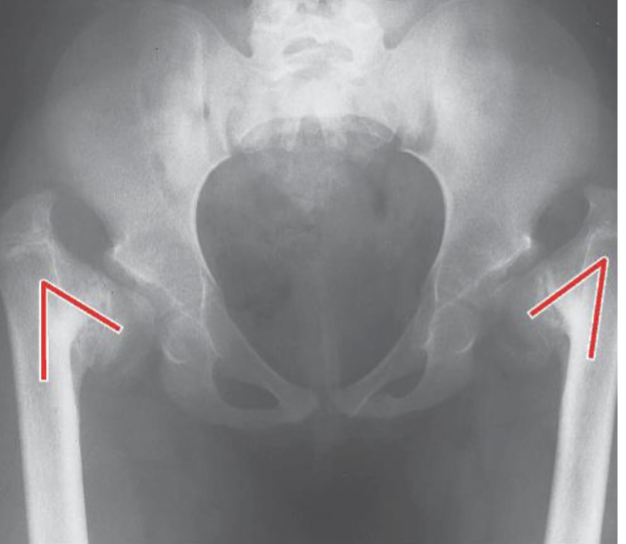
Coxa Vara (Femoral Head Coverage (Area), MA of Glut Med, Force Needed from Glut Med, Joint Stress, Bending Moments)
Femoral Head Coverage (Area)=
increased → angle of inclination is small meaning more coverage
MA of Glut Med (to produce ABD)=
increased → b/c greater trochanter is more lateral
Force Needed from Glut Med=
decreased→ If no change in external forces, the internal force will need to be less to maintain equilibrium to compensate for large MA
Joint Stress=
increased → FHC (Area) increased and Force reduced
S = F/A
Bending Moments (@ femoral neck)=
increased → femoral neck = horizontal meaning bending moments can act
Angle of Torsion (Normal, Anteversion, Retroversion)
Normal:
femoral condyles = horizontal & head of femur is NOT in same plane as condyles
Anteversion:
both femur + acetabulum have anteversion
Increased angle (off table + angle twd front)
Normal:
head + neck in plane w/ femoral condules
Reduced angle (twd table)
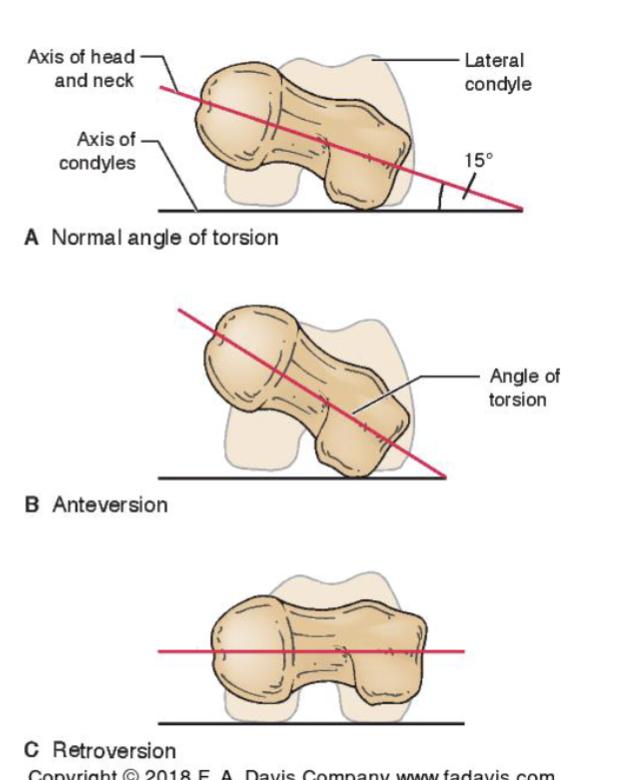
Femoral Anteversion (Femoral Head Coverage (Area), MA of Glut Med, Force Needed from Glut Med, Joint Stress, Bending Moments)
Femoral Head Coverage (Area)=
reduced
MA of Glut Med (to produce ABD)=
reduced
Force Needed from Glut Med=
increased
Joint Stress=
increased → FHC (Area) reduced and Force increased
S = F/A
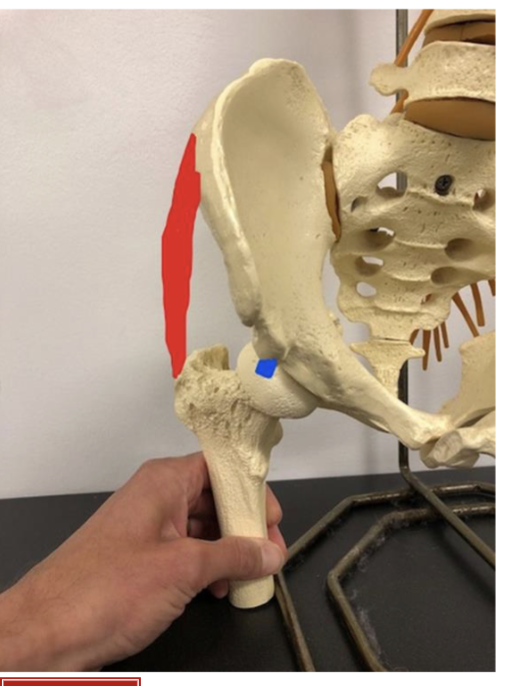
Femoral Retroversion (Femoral Head Coverage (Area), MA of Glut Med, Force Needed from Glut Med, Joint Stress, Bending Moments)
Femoral Head Coverage (Area)=
increased
MA of Glut Med (to produce ABD)=
increasd
Force Needed from Glut Med=
decreased
Joint Stress=
increased → FHC (Area) increased and Force reduced
S = F/A
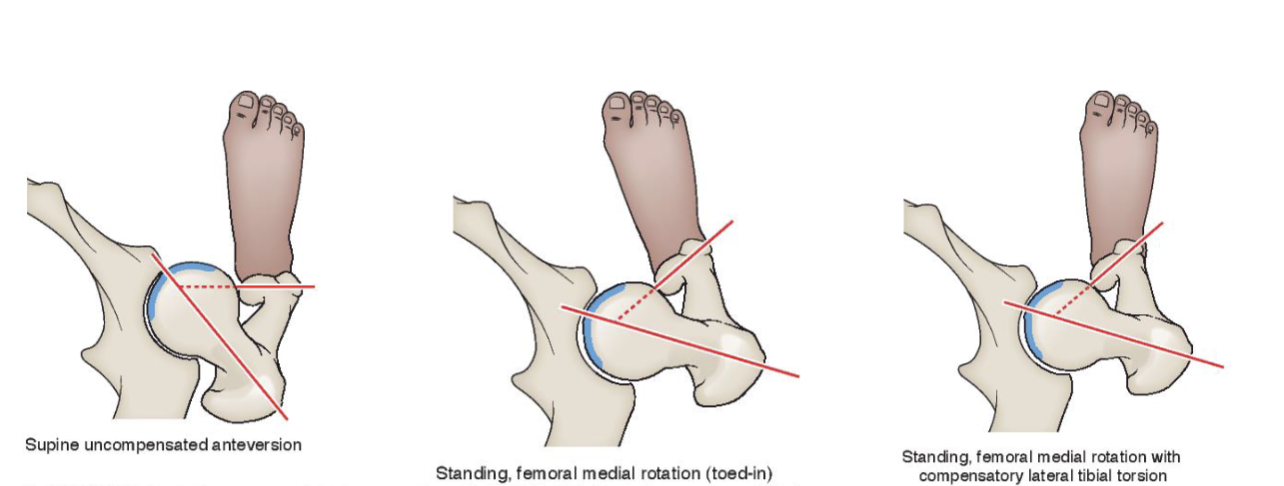
Angle of torsion
Supine uncompensated anteversion:
hyaline cartilage (blue) more exposed anteriorly
unstable in front of hip
Standing femoral medial rotation (toed-in):
to get less of blue to be exposed
IR of femur → decrease anteversion + more covered acetabulum
patellas will face medially
Standing femoral medial rotation w/ compensatory lateral tibial torsion:
overtime, there will be compensatory lat/ext torsion of tibia
allowing for feet to be pointed straight ahead
Is retroversion compensated?
No b/c hip is stable (more coverage of femoral head)
Joint Capsule
Very strong (stiff) - fibrous
Large contributor to stability
Attaches proximal to the periphery of the acetabulum (stops @ trochanters)
Covers the head and neck distally
Intracapsular: inside capsule (ex: labrum, synovial fluid)
Extracapsular: outside capsule (ex: trochanter)
Thickened anterior/superior
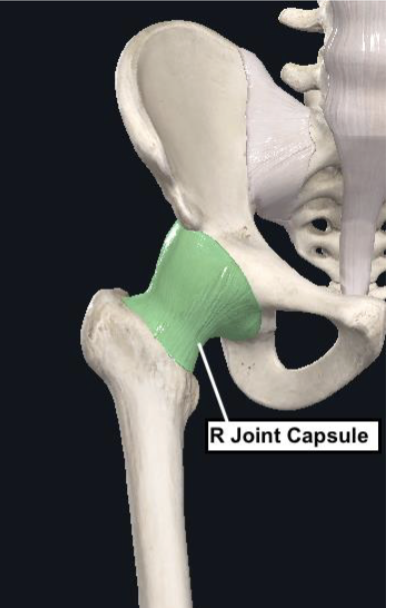
3 reasons why Joint Capsule is thickened anteriorly
1) acetabulum = anteverted
less bony coverage of fem head in front, meaning strong ligaments needed to support front
2) femur = typical anteverted
more exposed femur than back of hip joint → less bone stability
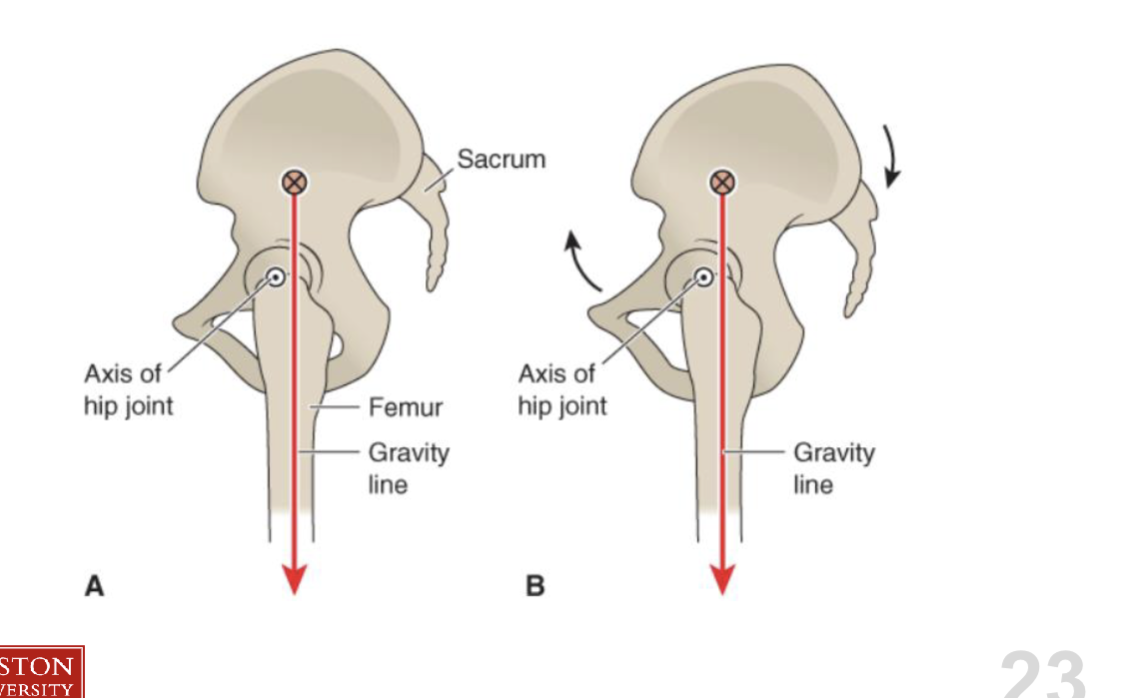
3) Kinetics of hip joint
line of gravity is posterior to axis of hip joint → wanting pelvis to rotate CW direction (post tilt/extension of hip)
Ant ligaments give tension to have internal flexion forces
Capsular ligaments
gives hip stability
extension of hip
makes ant + post ligaments taut/tight under tensile load to limit hip extension
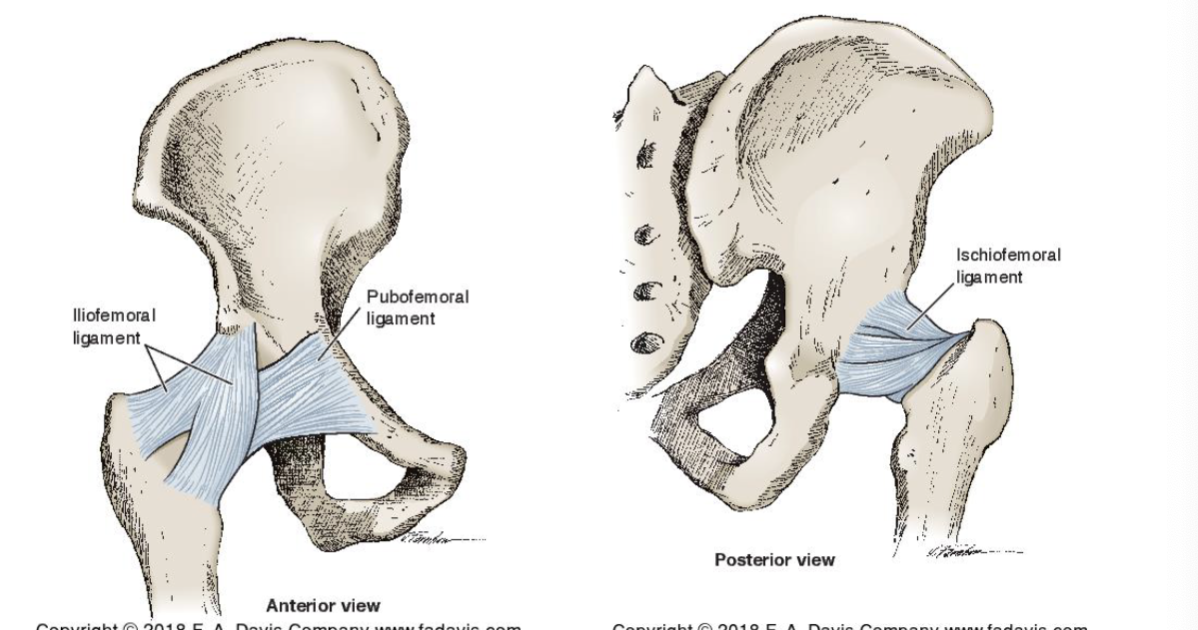
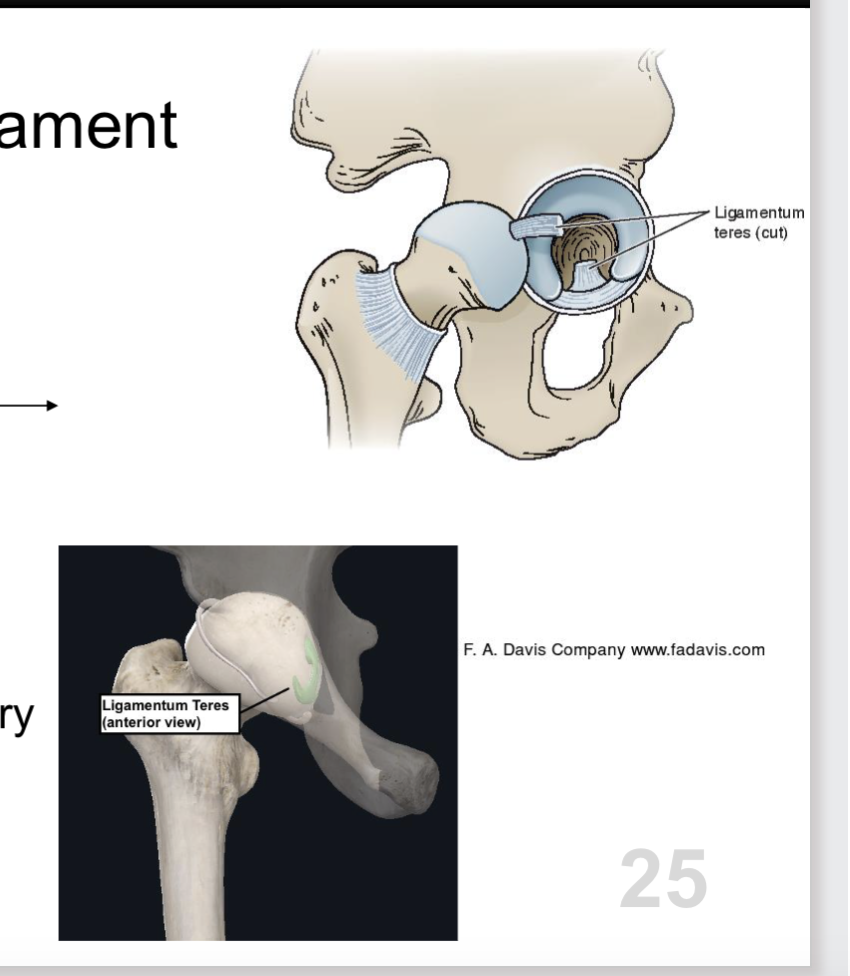
Accessory ligament
Ligamentum teres (head of femur)
Fovea of femur acetabular notch
some Source of stability
some Source of secondary blood supply
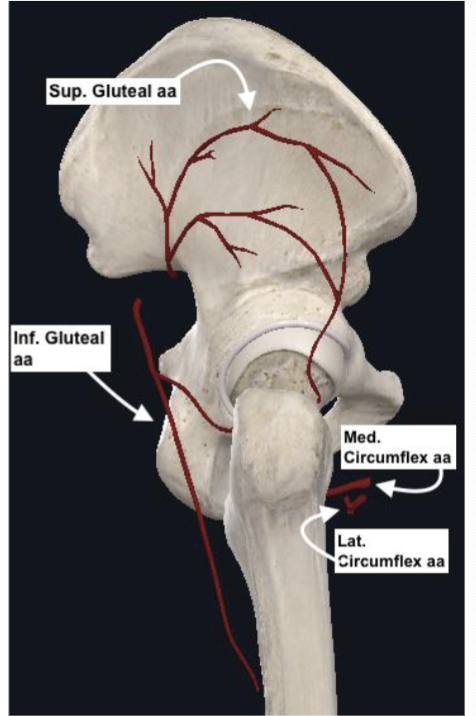
Blood Supply
Medial and lateral circumflex arteries
Deep femoral artery
Supply hip capsule distally/anteriorly
Superior and inferior gluteal arteries
Supply hip capsule proximally/posteriorly
Femoral head supplied by medial circumflex artery and vessels through the ligamentum teres
AVN
lack of blood supply to femoral head → decay of bone or become necrotic
Femur on Pelvis (Arthrokinematics)
Open chain: convex femur on concave acetabulum
end of bone furthest from joint = trochanter
Abd → lateral superior roll and inferior medial glide
IR → Anterior roll, Posterior glide
ER → Posterior roll, Anterior glide
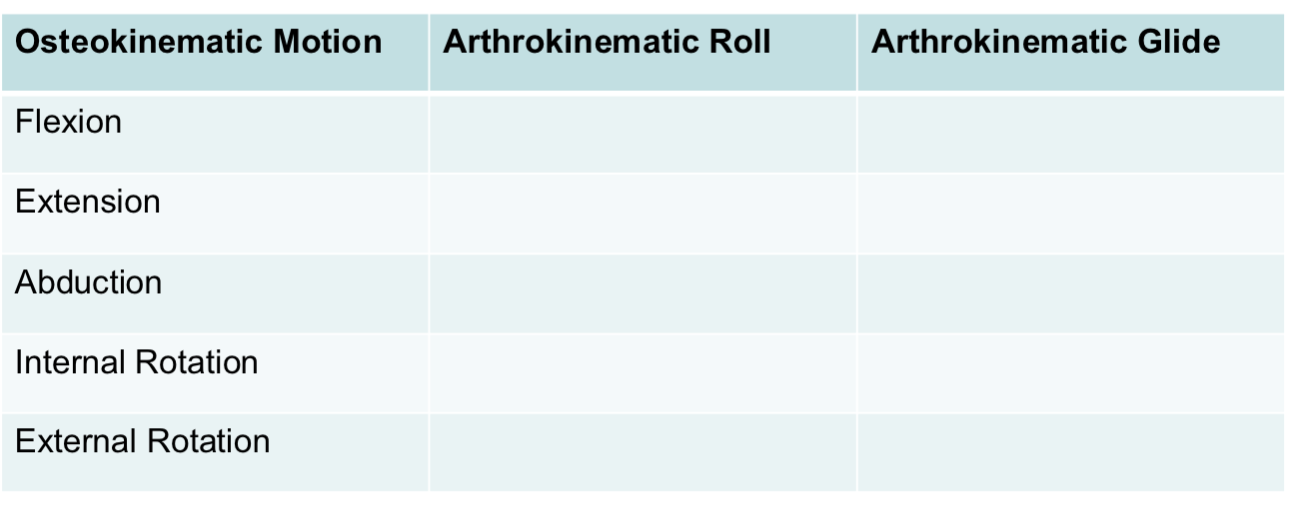
What is the influence of ROM of Femur on Pevis on ROM
Accessory glides:
occurs closer to axis of joint needed for ROM
without them → limited ROM
Muscles:
end feel hypothesizes it, but there’s joint play or muscle length for accessing
For Measuring Hip extension ROM and Rectus Femoris Muscle length
Hip ext ROM:
knee = extended
b/c NOT allow muscle length to limit amt of motion and reduce measurement → No passive insufficiency of RF
RF will be slacken (@ resting length w/ less tension)
Rectus Femoris Muscle length:
hip = extended and prone
then flex knee to see length → stretching RF on both ends
For Measuring Hip flexion ROM and Hamstring flexion ROM
Hip flex ROM:
knee = flexed & supine
b/c NOT allow hamstings length to be lengthened more than needed → No passive insufficiency of hamstrings
knee flexed → gives slack @ knee & you have slack to take up across hip
Hamstring flexion ROM:
knee = extended & hip = flexed
to have passive insufficiency
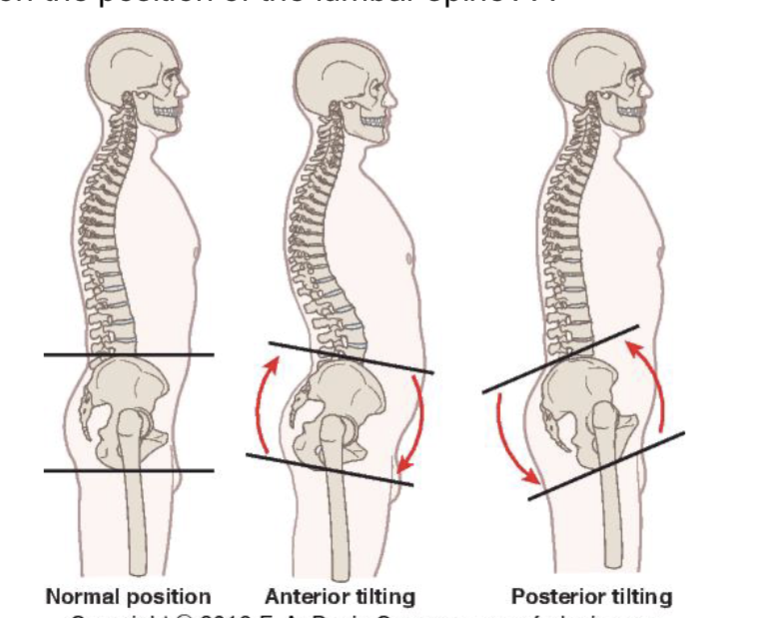
Pelvis on Femur motion (ANT + POST pelvic tilt)
Anterior pelvic Tilt:
ASIS moved anterior and inferior
Movements of APT:
hip flexion → ANT part of femur gets close to ASIS
lumbar extension
Posterior pelvic Tilt:
ASIS moved posterior and superior
Movements of APT:
hip extension → ischial tuberosity gets closer to POST part of femur
lumbar flexion
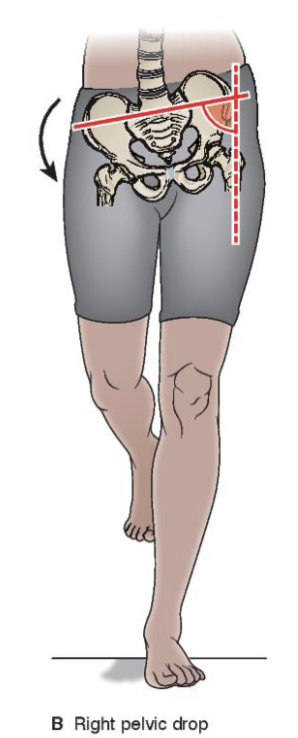
Hip Drop (explain movement at pelvis, lumbar spine, contralateral hip joint)
Standing on left leg (Single left limb stance)
Movement pelvis:
right pelvic/hip drop (b/cend furthest from axis of rotation drops)
Movement left hip joint:
left hip joint ADDucts
brings midline to femur
Movement lumbar spine:
left lateral lumbar flexion
Hip Hike (explain movement at pelvis, lumbar spine, hip joint)
Standing on left leg (Single left limb stance)
Movement pelvis:
right pelvic/hip hike
Movement left hip joint:
left hip joint ABDucts
Movement lumbar spine:
left lateral lumbar extension
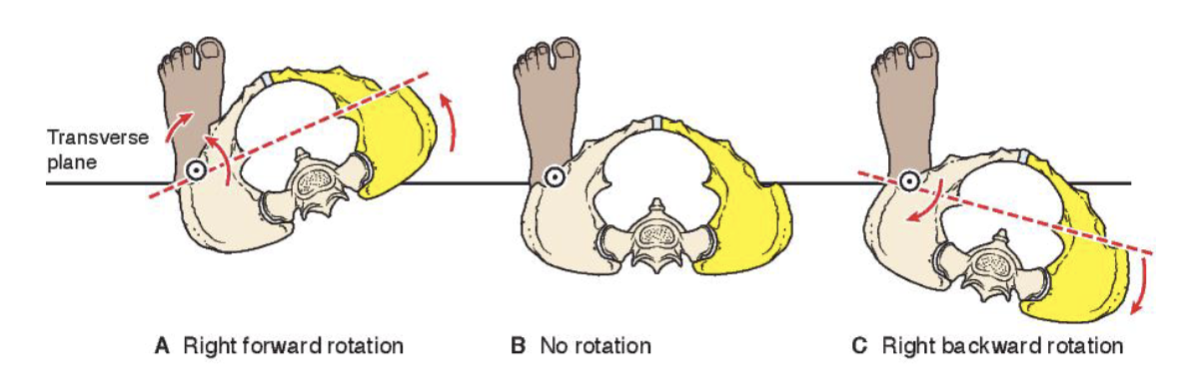
Forward/Backward Rotation
Right forward rotation:
Stand on left leg
Swing right side of pelvis forward
Movement of lumbar spine: Right rotation
Movement of left hip joint: Internal rotation
Right backward rotation:
Stand on left leg
Swing right side of pelvis backward
Movement of lumbar spine: left rotation
Movement of left hip joint: External rotation
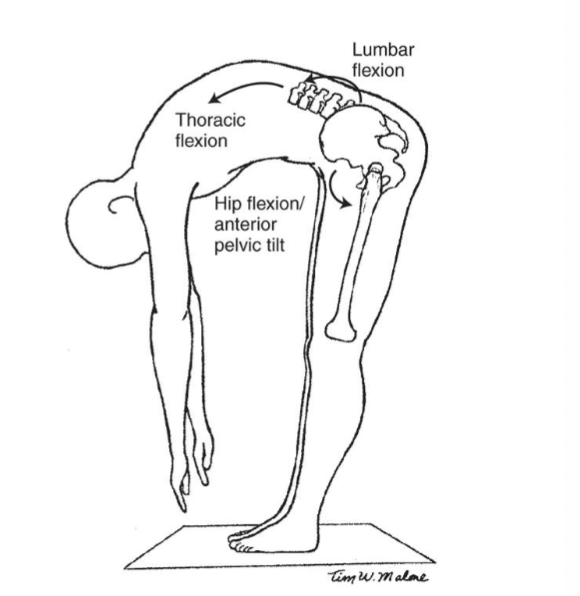
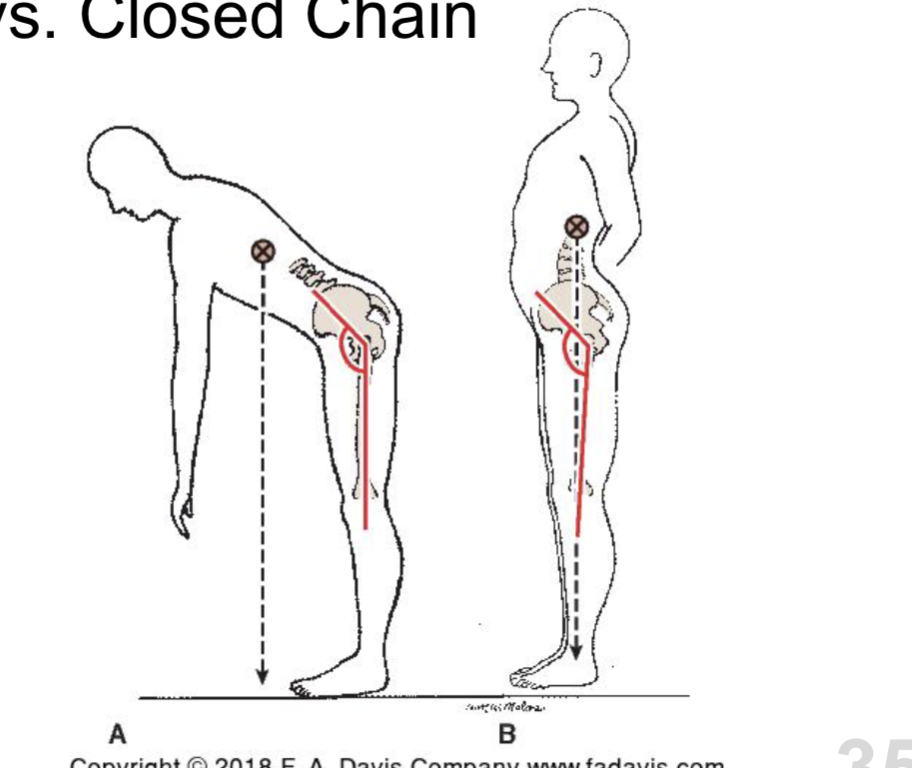
Open vs Closed Chain
Open chain: pelvis muscles & trunk goes with it
Closed chain: pelvis moves but everything above pelvis is still
Combo of Spinal flexion + Anterior pelvic tilt
Pelvis anteriorly tilts but trunk goes with it
trunk flexion
Open vs Closed Chain walking
Open chain walking:
tight hip flexors → pelvis moves → anterior pelvic tilt
Closed chain walking:
b/c of tight hip flexors → we can walk like B → what we look like
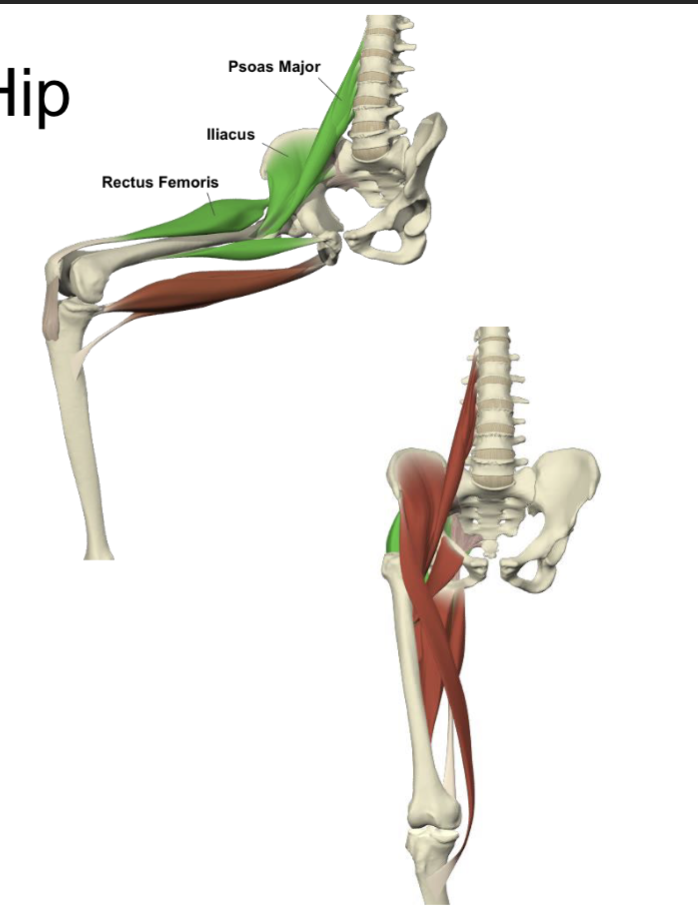
Hip flexors
iliacus + psoas major (main hip flexors)
main hip flexors
Rectus Femoris (2-joint muscles → gets actively insufficient)
Sartorius
TFL/ITB (offsets tensile loads on shaft)
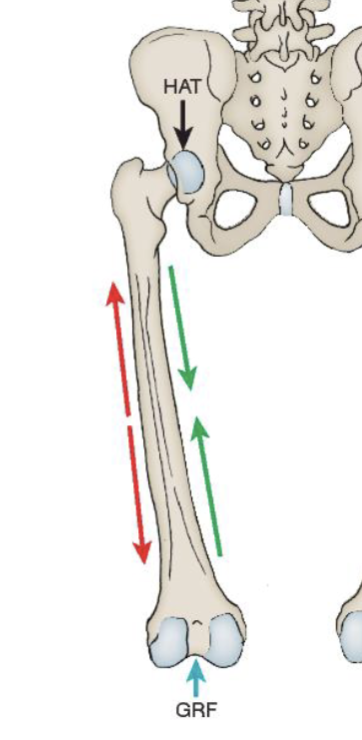
Femur
slightly bowed
Lateral convex → tensile forces
Medial concave → compressive forces
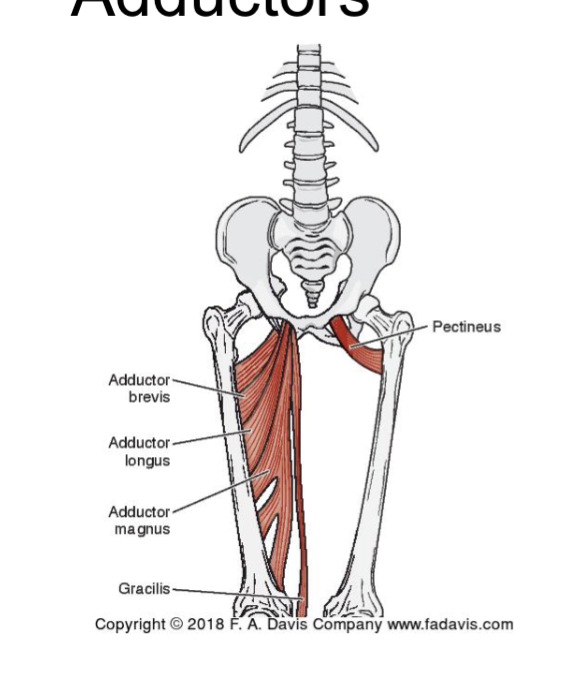
Hip adductor muscles
Adductor brevis
Adductor longus
Pectineus
Adductor magnus
Gracilis
Hip Extensors
Gluteus Maximus (primary extensor)
Max MA @ 0 dg (neutral hip) → Most mech advantage
Peak torque @ 70 dg (hip flexion) → Most active tension + Peak force production
Hamstrings
2 joint muscle → torque based on position of knee
knee flexed to 90 dg → try extend hip → hamstring becomes actively insufficient b/c it shortens @ both hip + knee
Gluteus Medius
specifically Posterior fibers
Piriformis
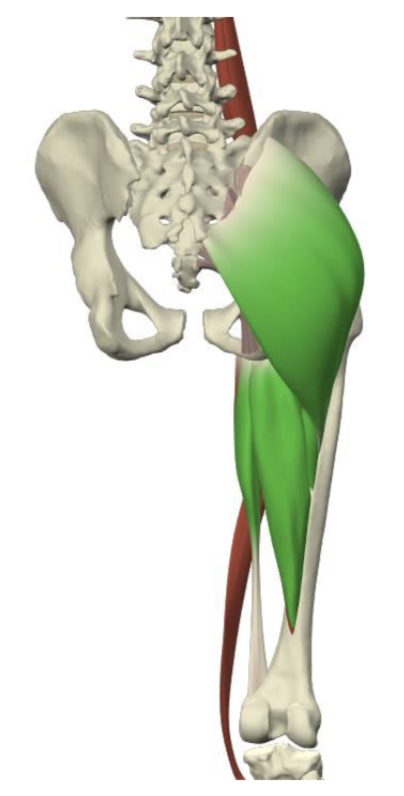
Hip Abductors
Gluteus Medius
Gluteus Minimus
deep → closer to axis of rotation → less for mob but more for compression & stabilizing joint + femoral head
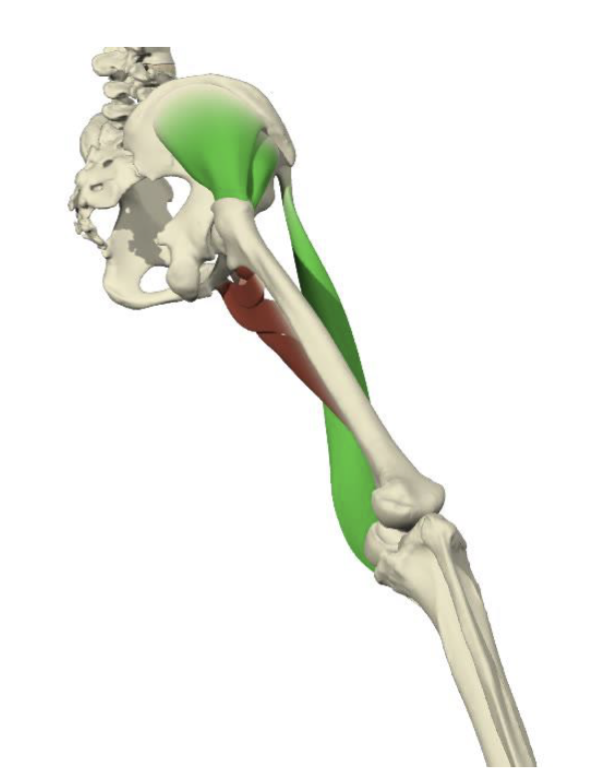
External Rotators
Obturator Internus
Obturator Externus
Gemellus Superior
Gemellus Inferior
Quadratus Femoris
Piriformis
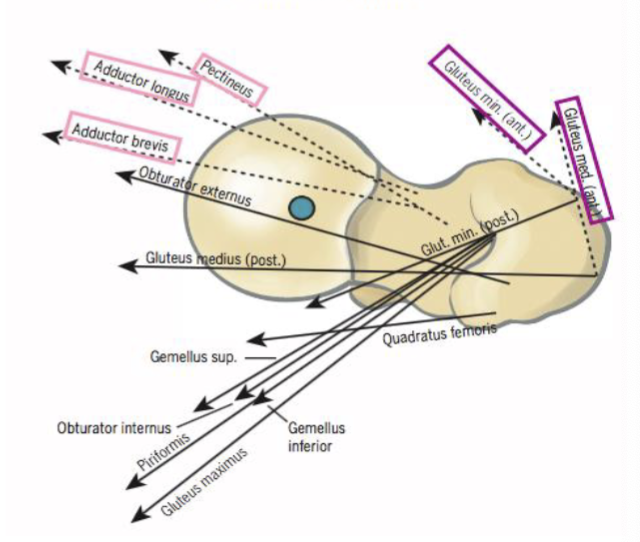
Vectors = perpendicular to shaft of femur
good @ ER & perpendicular to treatment plane (concave of acetabulum)
makes good @ compression and stability
Internal Rotators
Depends on position of hip
Gluteus Medius (anterior fibers)
Gluteus Minimus
TFL
Adductors
Posterior to blue dot (hip joint axis) = ER of hip
Anterior to blue dot (hip joint axis) = IR of hip
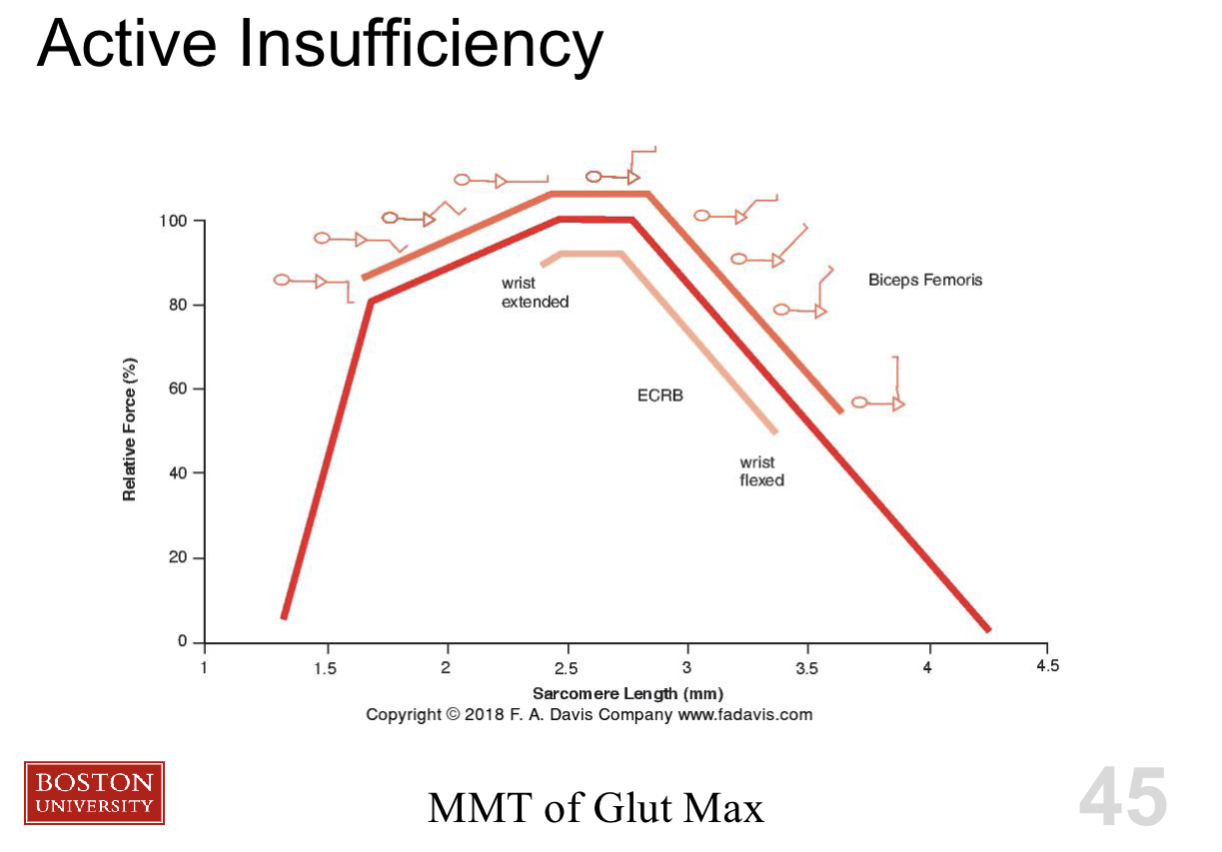
Active Insufficiency of Gluteus Max
fully shortened (knee flexed + hip extended) → Low force
peak → neither extreme
fully lengthened (hip + knee flexed) → Low force
Muscles pull on both attachment sites when they contract.
They move the end that’s easier to move —→ Crunches example
1) hip flexor muscles (iliopsoas + Rectus femoris) produces hip flexion via moving femur
2) after time, you get tired due to a lot of force needed to be made to move legs
Anterior pelvis tilt occurs since its easier → back arches
3) Rectus Abdominus stops anterior pelvic tilt, so when you contract hip flexors they move femur
Active Insufficiency
2 choices for explaining diff in hip flexion:
Active Insufficiency with Rectus femoris
Passive Insufficiency with hamstrings
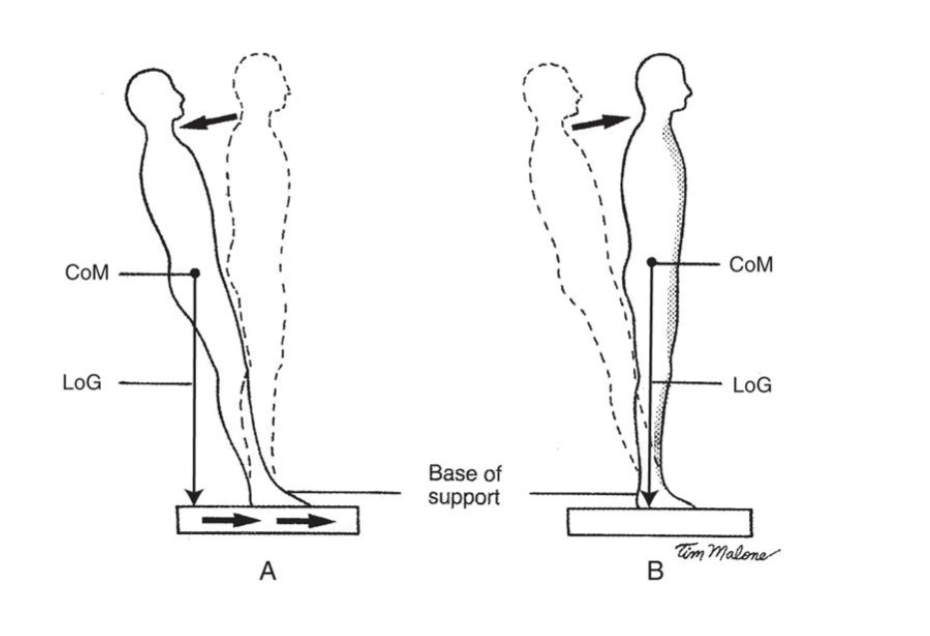
Postural Control ( if lean back or standing on something moving forward
COM will move back then BoS goes fwd
this increased external moment of hip extension
to maintain COM with in BoS, we need to create internal moment into hip flexion (which come from capsular ligaments or hip flexors)
lean too back we need to move pelvis fwd to get COM fwd or take a step fwd to increase BoS
Hip strategies used for larger deviations of COM
Ankle strategies used for smaller deviations of COM
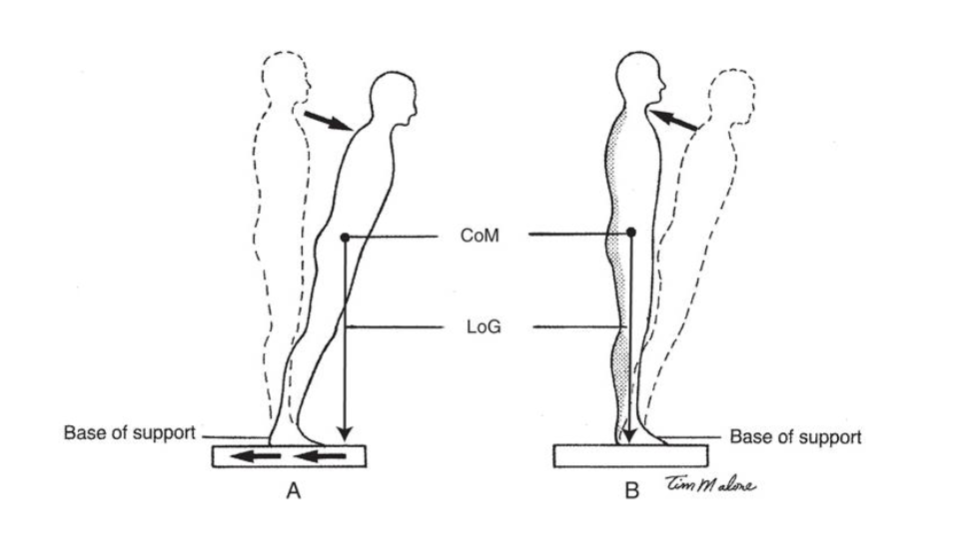
Postural Control (If lean fwd)
gravity wants to flex hip so you need to use hip extensors
COM goes too fwd, muscles can NOT handle it, so you have to take step back to be within BoS
Bilateral Stance
LoG falls posterior to axis of flex/ext of the hip
Tend to rest in hip ext
Need for muscle force:
Not in sagittal plane bc of capsule ligaments helping out
larger moments require muscle force
Equal external torques L and R
Need for muscle force?": in frontal plane → moment on each hip joint
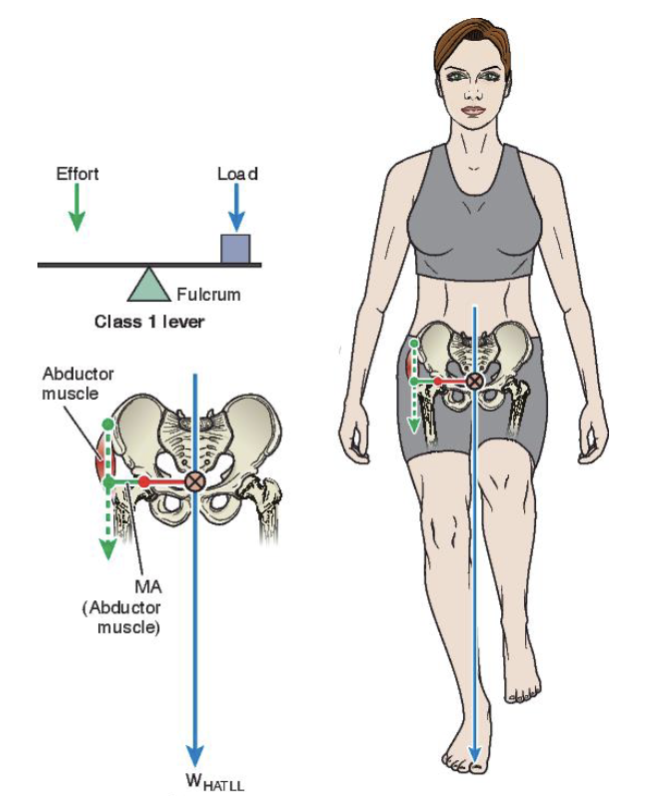
Unilateral Stance
Additive torques on the opposite side of the pelvis
▪ Gravity
▪ Contralateral limb
pick up 1 leg → external force weight of head, arms, trunk & wight of leg picked up
external moment is into left hip drop + right hip ADD
Internal moment is ABD (gluteus medius)
Increased force from hip abd to maintain equilibrium
MA of external moment larger than internal moment, meaning need a lot of gluteus medius to prevent pelvis drop due to internal moment being small
Joint reaction force
▪ 2-3x body weight
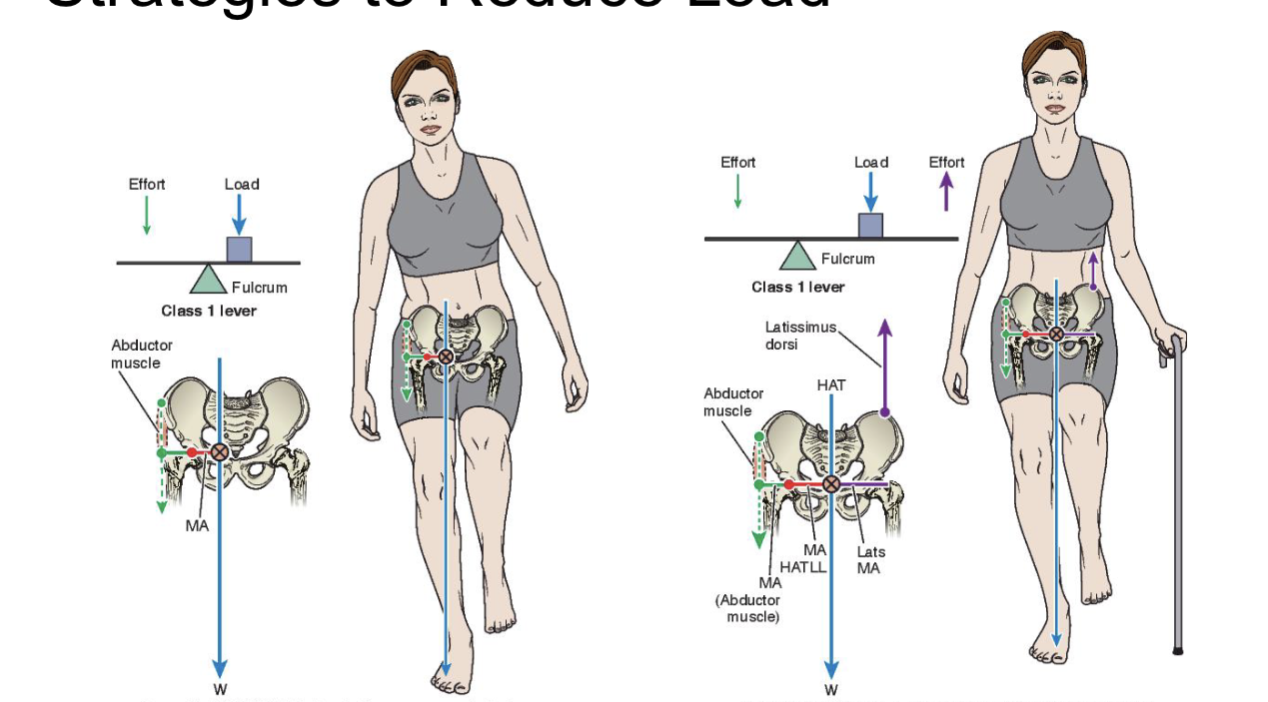
Strategies to Reduce Load
Having bag in left hand
work harder working on left hand b/c increase external moment size
right hand magnitude of force increases but external moment arm is brought closer to hip joint axis
need less hip abductor forces
Cane = helps w/ BoS and balance out frontal plane moments
pushing down on cane uses lateral trunk muscles that elevate pelvis
if left side hurts, want cane to be in right hand
b/c if in left single limb stance, you have increased BoS and if you are contracting lateral trunk muscles that attach to your pelvis and can lift it. —> you want to lift right side
For someone withn osteoarthritis
when having problem w/ right leg put bag on shoulder of Right leg
this allows for bringing mass closer to axis of rotation, requiring stronger (left) side to work more
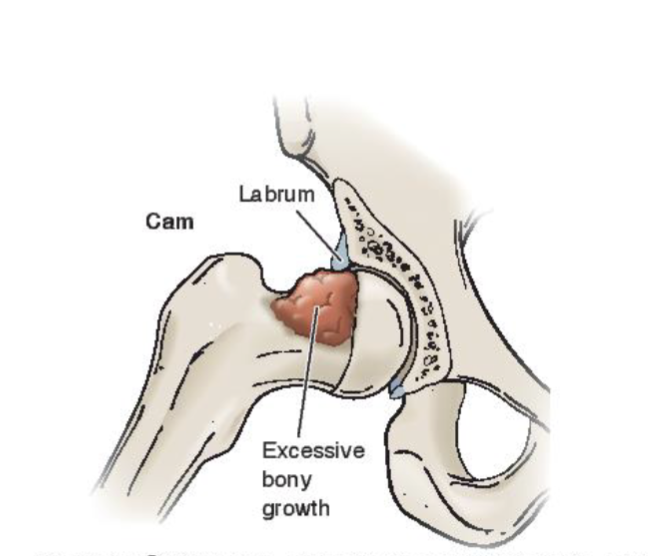
FAI (Femeroacetabular Impingement)
Cam Impingement
Femur side abnormality
Labral tearing
Articular cartilage degeneration
Vulnerable in flex or
abd
Pincer Impingement
Acetabulum side
Labral degeneration/calcification
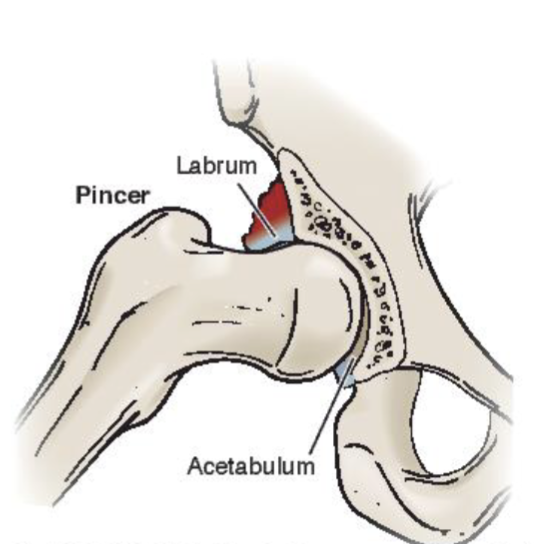
Labral Pathology
FAI
Micro vs. Macro trauma
Posterior dislocation
Stability role
Who picks up the slack if others aren’t
doing their job
Anatomical abnormalities
Over coverage/under coverage of
femoral headCoxa vara
Osteoarthritis
FAI
Labral tears
Instability
No link between running and OA
▪ YAY!!!
▪ Need ideal amounts of activity for joint
health
Fractures causes
Trauma
Osteoporosis/penia
Gait speed???
Fast gait speed → land fwd → wrist fracture
Slow gait speed → land on buttock → hip fracture
High mortality rate in the elderly