biology - plants, animals and fungi
 Call Kai
 Learn
 Practice Test
 Spaced Repetition
 Match
 Flashcards
 Knowt Play
1/42

There's no tags or description
Looks like no tags are added yet.
43 Terms
prokaryotic and eukaryotic cells
What are eukaryotic cells?
Cells with a nucleus like plant and animal cells.
What are prokaryotic cells?
Cells without a nucleus like bacteria.
Compare prokaryotic and eukaryotic cells.
Prokaryotic - Cells without a nucleus and membrane bound organelles like bacteria. They are smaller, simpler and unicellular.
Eukaryotic - Cells with a nucleus and membrane bound organelles like animals. They are larger, more complex and multicellular.
Are prokaryotes smaller or bigger than eukaryotes?
Smaller.
Are eukaryotes more complex or simpler than prokaryotes?
More complex.
Are animal cells eukaryotic or prokaryotic?
Eukaryotic.
Are plant cells eukaryotic or prokaryotic?
Eukaryotic
Are animals uni or multicellular?
Multicellular.
Are plants uni or multicellular?
Multicellular.
Name one subcellular structure where genes are found within the eukaryotic cells.
Nucleus.
organelles in plants
List the 8 organelles found in a plant cell.
Cell Membrane.
Cytoplasm.
Nucleus.
Mitochondria.
Ribosomes.
Cell wall.
Chloroplasts.
Permanent vacuole.
Which 3 organelles does a plant cell have that an animal cell doesn’t?
Cell wall.
Chloroplasts.
Permanent vacuole.
Plant cells have chloroplast, cell membrane, mitochondria and cytoplasm. Which of these subcellular structures does a an animal cell not contain?
chloroplasts.
What is the function of the cell wall?
provides structure and protection
What does the chloroplast contain?
Chlorophyll.
Name the part of a plant cell that gives the cell support and protection.
cell wall.
What is the function of the chloroplasts?
Site of photosynthesis and contains chlorophyll (green pigment) to absorb light energy for photosynthesis to take place.
What is the function of the cell membrane?
Controls what enters and exits the cell.
What is the function of the permanent vacuole?
stores cell sap and keeps the cell turgid
What is the cell wall made out of in plant cells?
Cellulose.
Why do plant roots not require chloroplasts?
They are underground and as cells cannot photosynthesise without sunlight (which they don’t recieve) so therefore do not require chloroplasts.
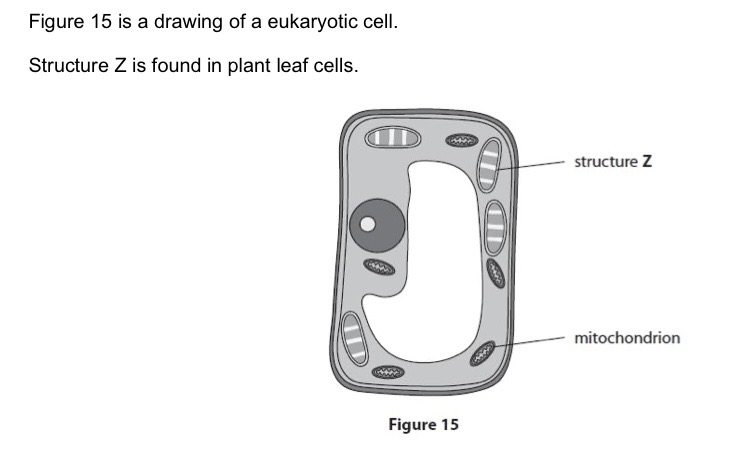
Which structure is labelled Z?
Chloroplasts.
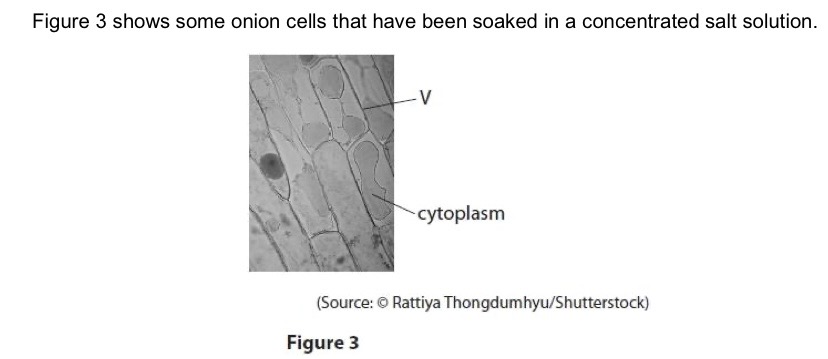
Name the structure labelled V.
Cell wall.
organelles in animal cells
List the 5 organelles found in an animal cell.
Cell Membrane.
Nucleus.
Ribosomes.
Mitochondria.
Cytoplasm.
What is the function of the nucleus?
Controls the activities of the cell + stores DNA (genetic information).
What is the function of the mitochondria?
Site of aerobic respiration to release energy to the cell.
What is the function of the ribosomes?
Site of protein synthesis.
What is the function of the cytoplasm?
Jelly like substance where chemical reactions take place + holds other organelles in place.
Name the subcellular structure involved in the translation of genetic material in protein synthesis.
Ribosome.
Name the subcellular structure that controls which substances leave the cell.
Cell membrane.
plants vs animals
plant vs animal organelles
they both have a nucleus, mitochondria, ribosomes,cell membrane and cytoplasm
plant cells have chloroplasts, a cell wall and a permanent sap vacuole, animal cells don’t
animals can’t do photosynthesis because they don’t have chloroplasts
What is the difference between a cell membrane and cell wall?
Cell membrane - Controls what enters and exits the cell.
Cell wall - Made out of cellulose to support and strengthen the cell.
fungi cells
are fungi unicellular or multicellular?
both - yeast is unicellular but mushrooms are multicellular
what is the cell wall made of in fungi?
chitin
what are fungi’s bodies organised into?
a mycelium, made from thread-like structures called hyphae, which contain many nuclei
why do hyphae have many nuclei
often it is more efficient for the hyphae to share resources, so the cell wall disintegrates, meaning that organelles like nuclei, mitochondrion and ribosomes can be shared between that hyphae cells. this helps strengthen the fungal network
how do fungi feed?
becuase they don’t have chloroplasts, they cannot photosynthesize. instead, they use saprotrophic nutrition: extracellular excretion of digestive organisms onto dead organic matter to break it down to absorb nutrients
how do fungi store carbohydrates?
glycogen (like animals)