Embryonic Development Diagram | Quizlet
 Call Kai
 Learn
Learn Practice Test
 Spaced Repetition
 Match
Match Flashcards
 Knowt Play
1/99

There's no tags or description
Looks like no tags are added yet.
Name | Mastery | Learn | Test | Matching | Spaced | Call with Kai | Chat |
|---|
No analytics yet
Send a link to your students to track their progress
100 Terms
What are the 4 stages of animal embryo growth and development?
1. gametogenesis (sperm/egg formation)
2. embryonic development (fertilization of egg until birth
3. reproductive maturity (puberty)
4. aging process to death
What are the 2 stages of development in mammals?
1. embryonic development
2. fetal development
What is an embryo that resembles the human infant form?
fetus
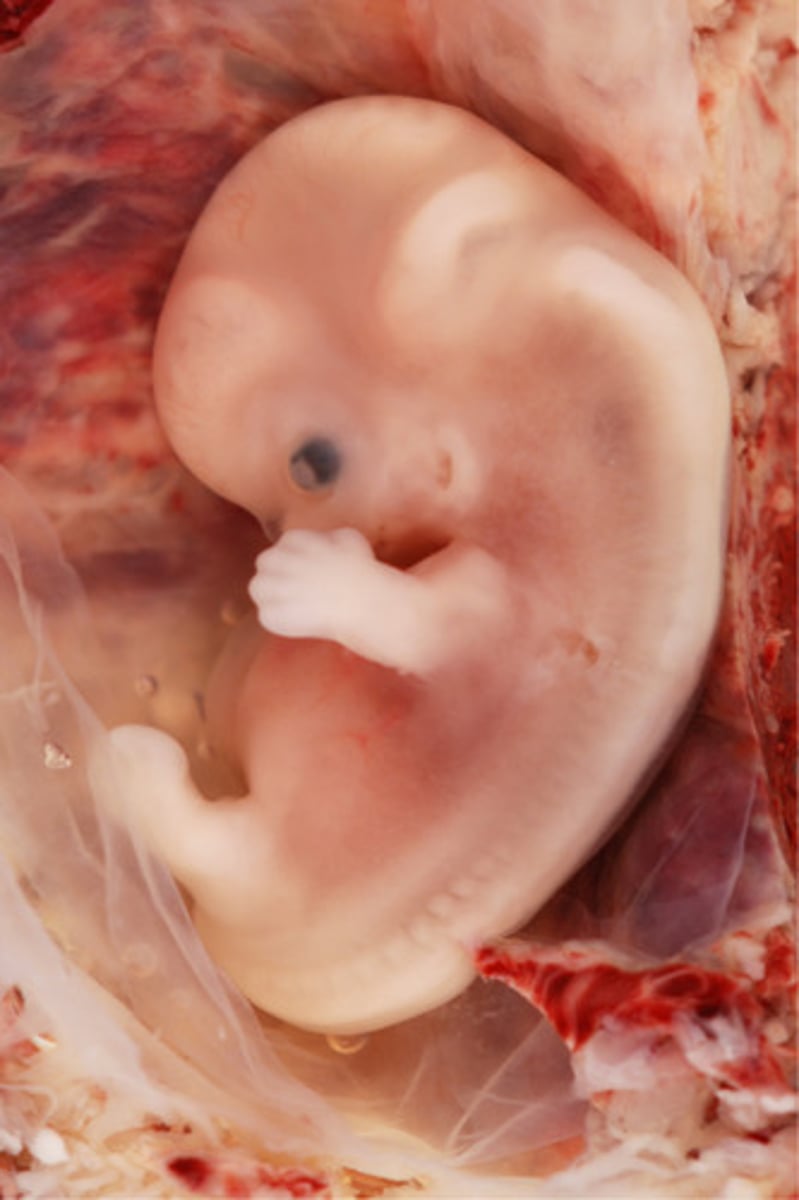
When is an embryo called a fetus in humans?
about 8 weeks
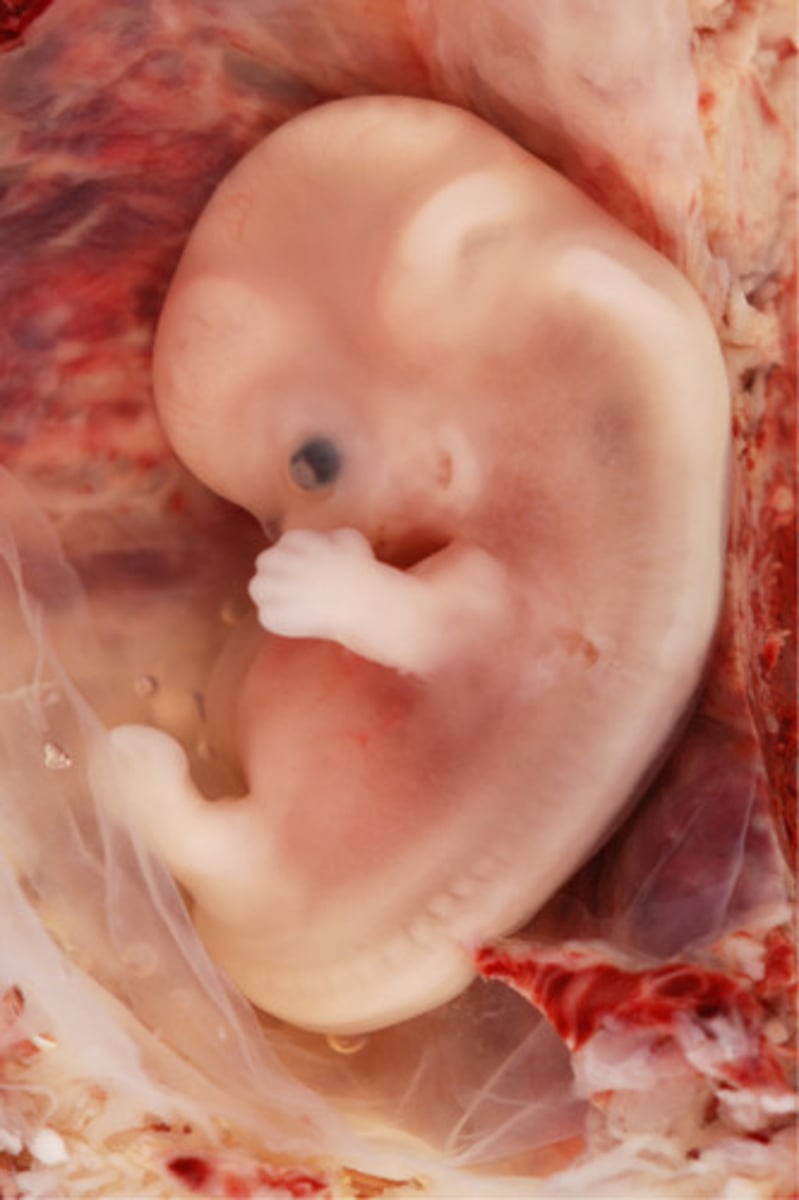
What is it called when the sperm penetrates the plasma membrane of the secondary oocyte?
fertilization
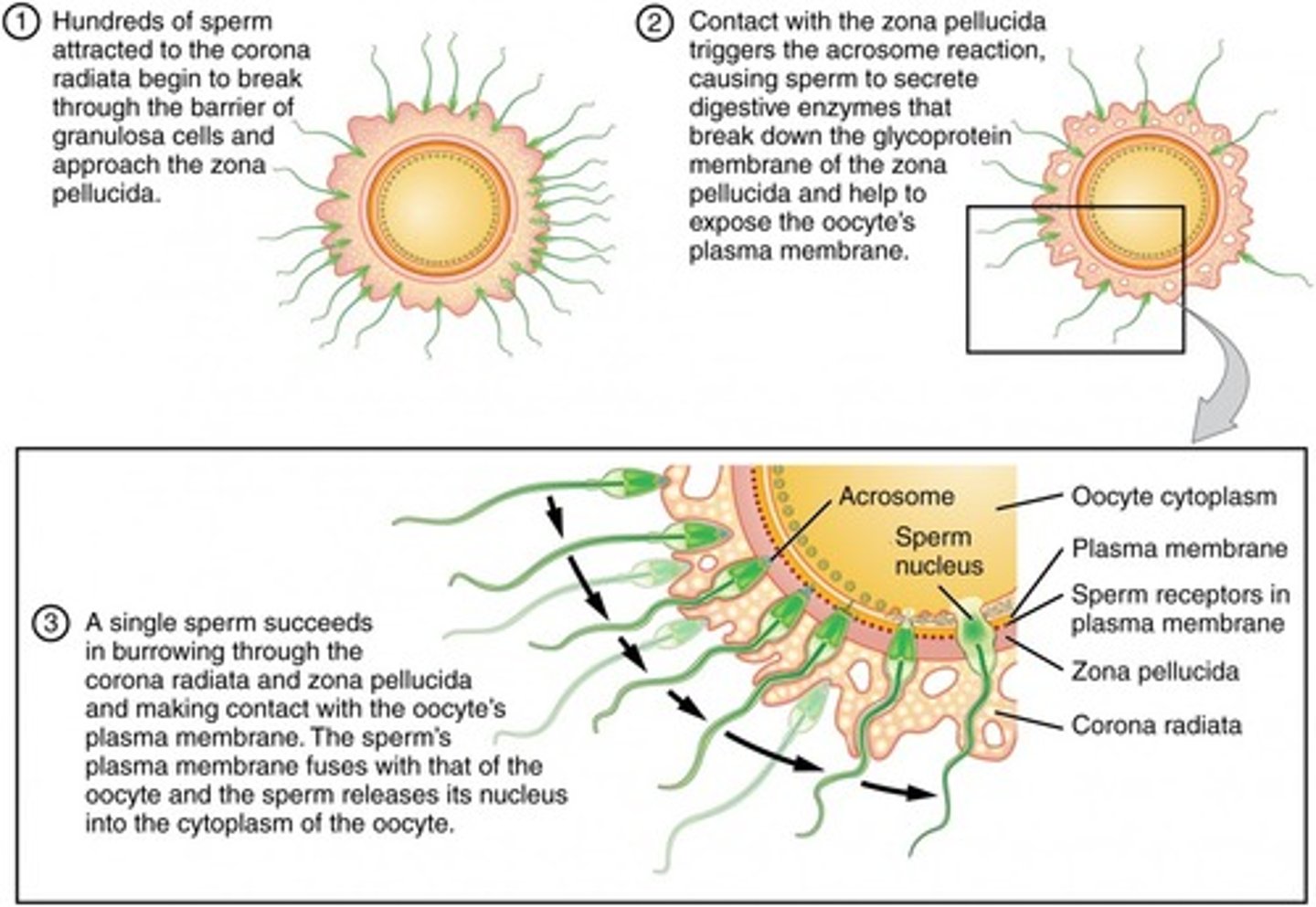
What is it called when the sperm secretes proteins that bind to receptors on the oocyte before penetrating?
recognition
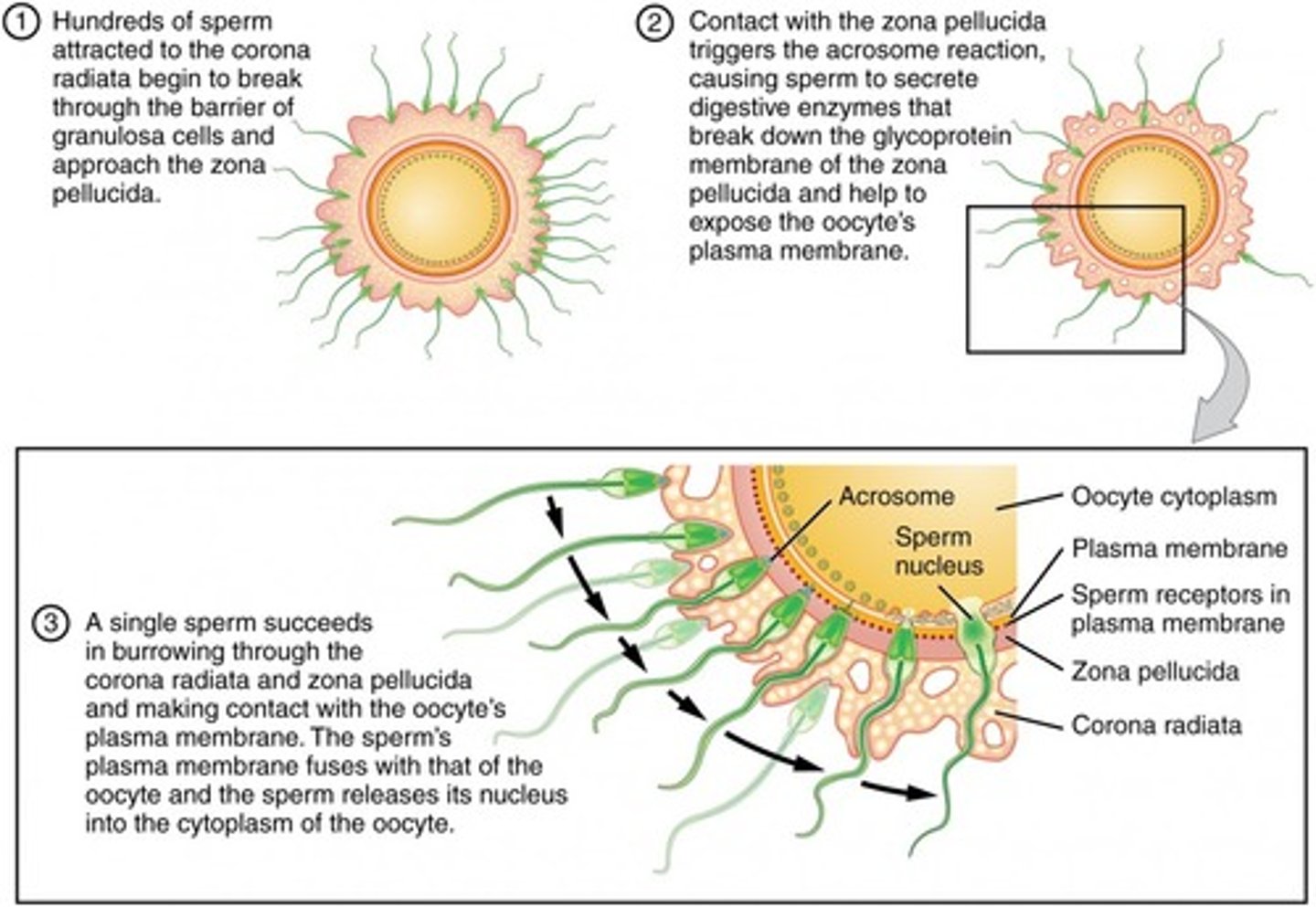
Where are the protein receptors located on an oocyte?
glycoprotein layer surrounding the plasma membrane
(Note: echinoderm)
What is the glycoprotein layer around the oocyte called in humans?
zona pellucida
(Note: ensures same
species fertilization)
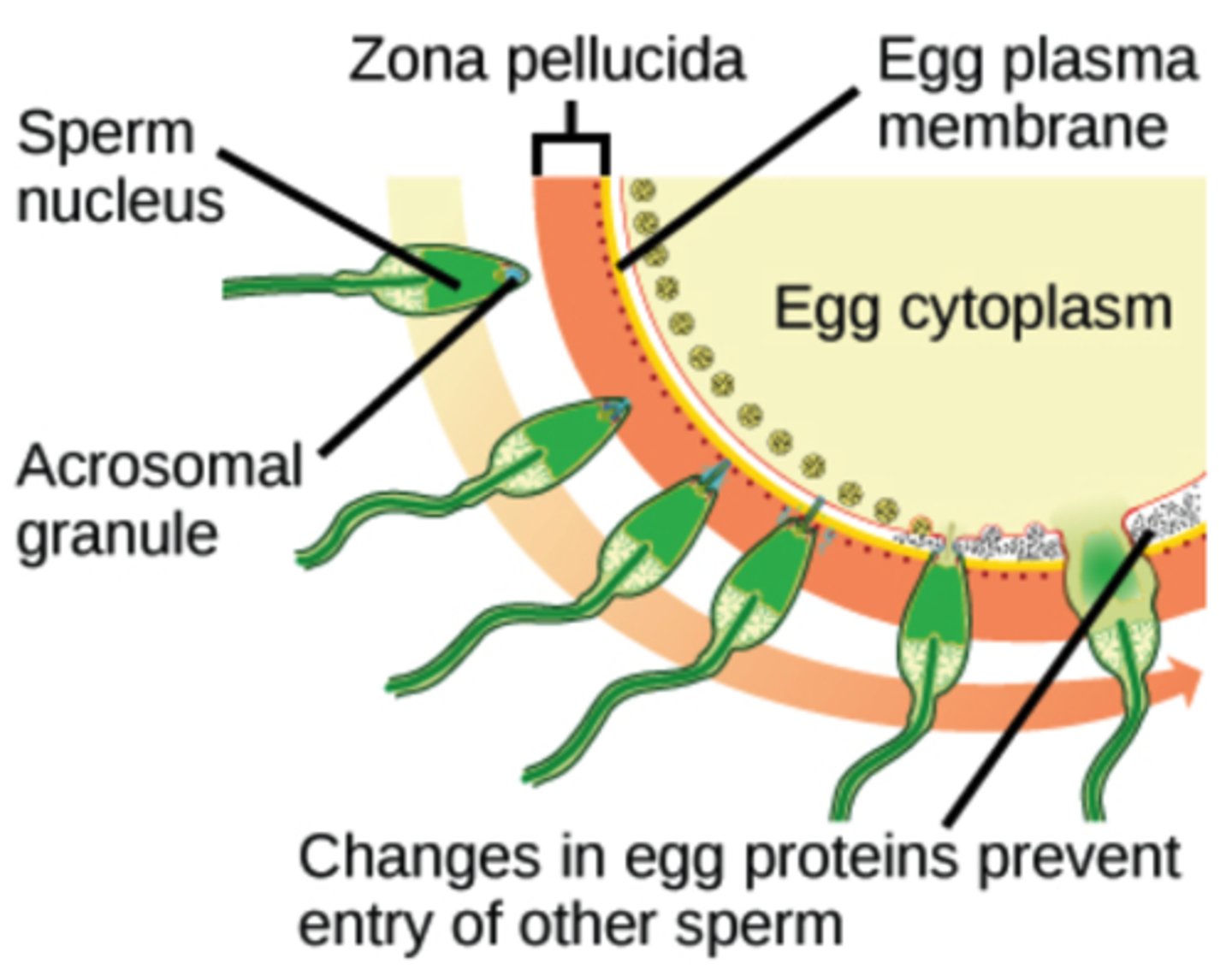
In which oocytes does the zona pellucida first appear?
unilaminar oocytes
What cells secrete the zona pellucida?
oocyte and granulosa cells
Which hormone stimulates granulosa cells to mature and secrete the zona pellucida?
FSH
What reaction is initiated when the zona pellucida binds sperm?
acrosomal reaction
(Note: binding of
ZP3 receptors)
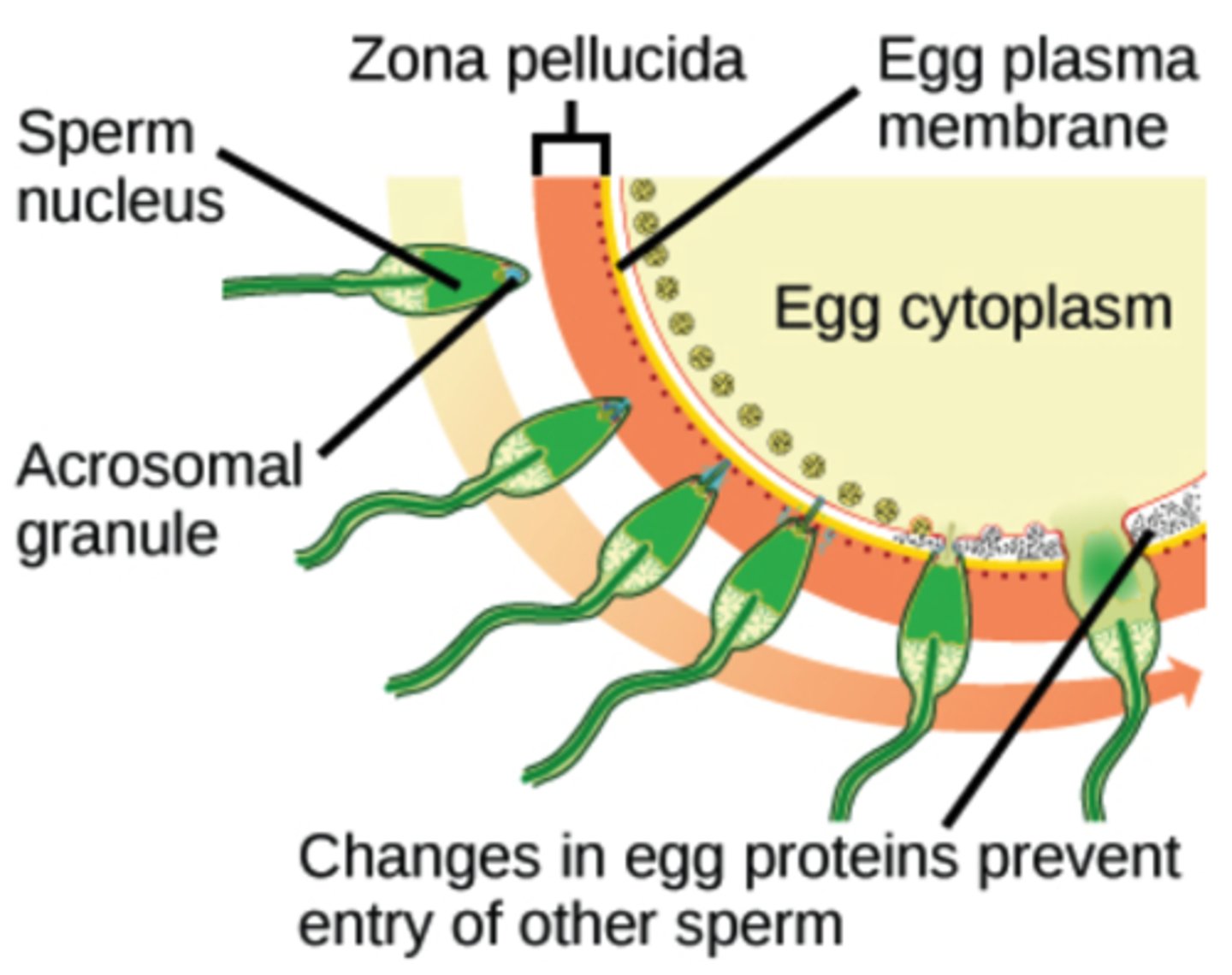
What events occur in sperm when the acrosomal reaction is initiated?
sperm releases its
acrosome contents
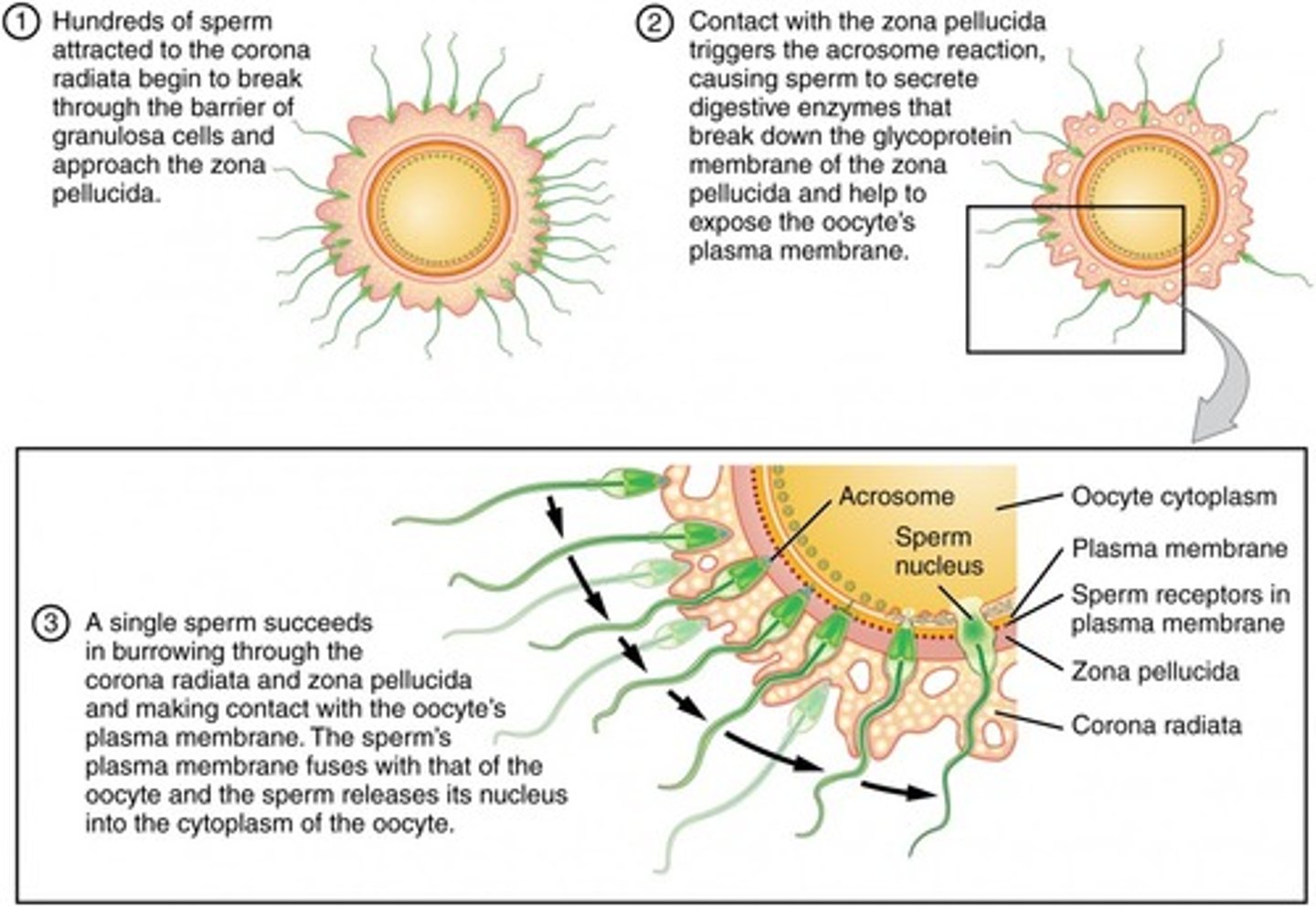
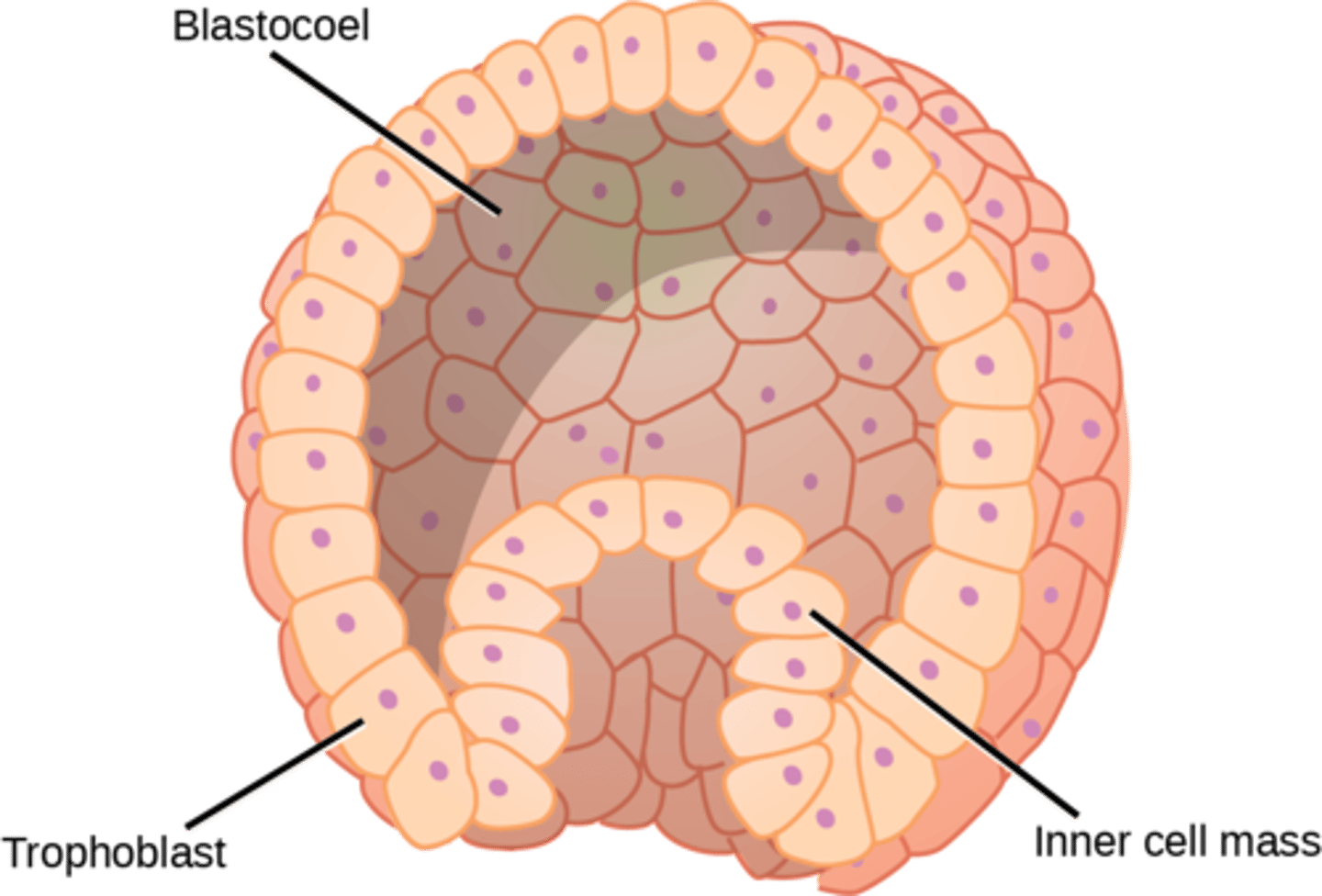
What is the term describing when the zona pellucida degenerates and is replaced by the underlying later of trophoblastic cells?
zona hatching
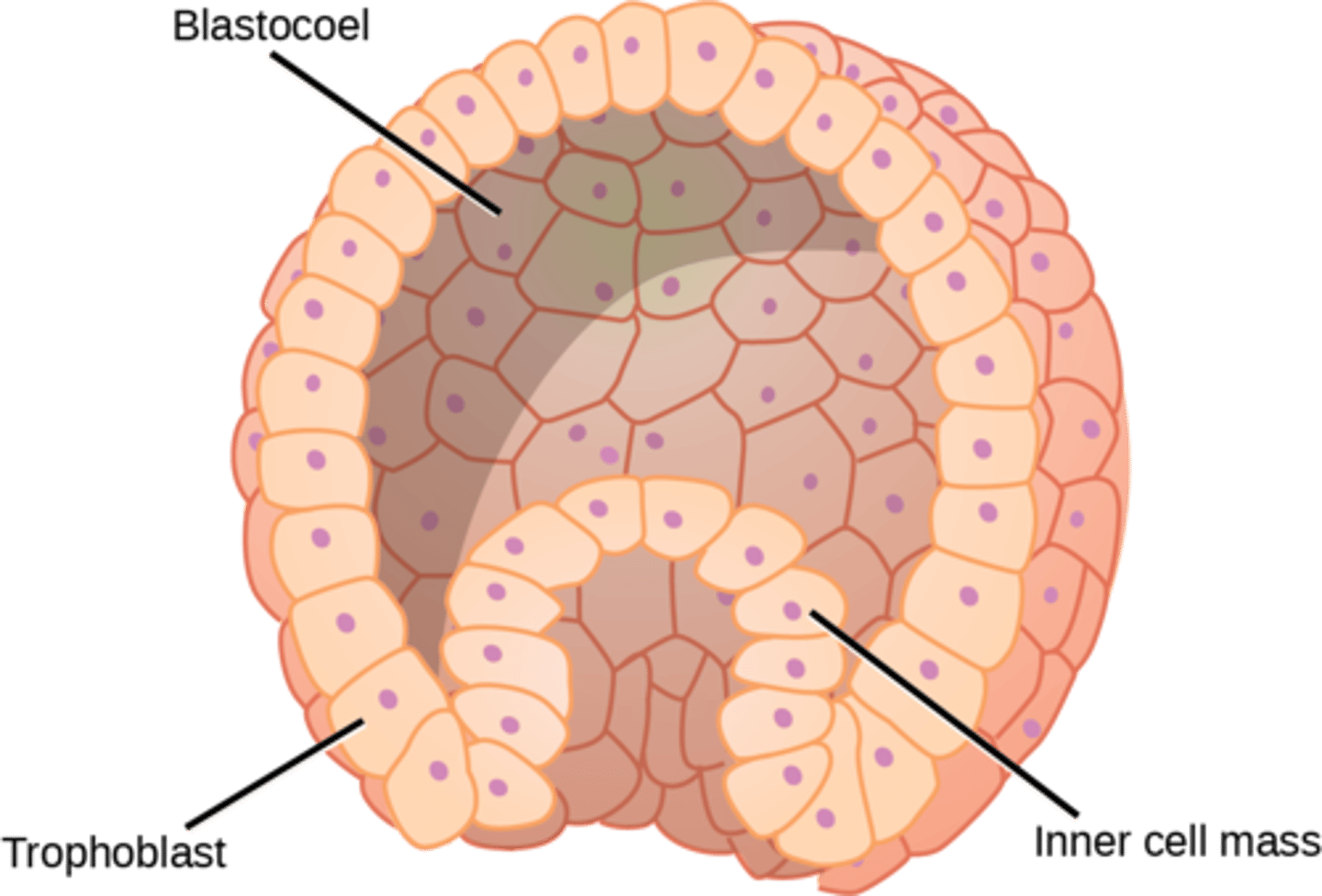
What reproductive unit undergoes zona hatching?
blastocyst
Why does zona hatching occur?
so blastocyst can
implant in the uterus
(Note: 5 days after
fertilization)
What events in sperm must occur before fertilization?
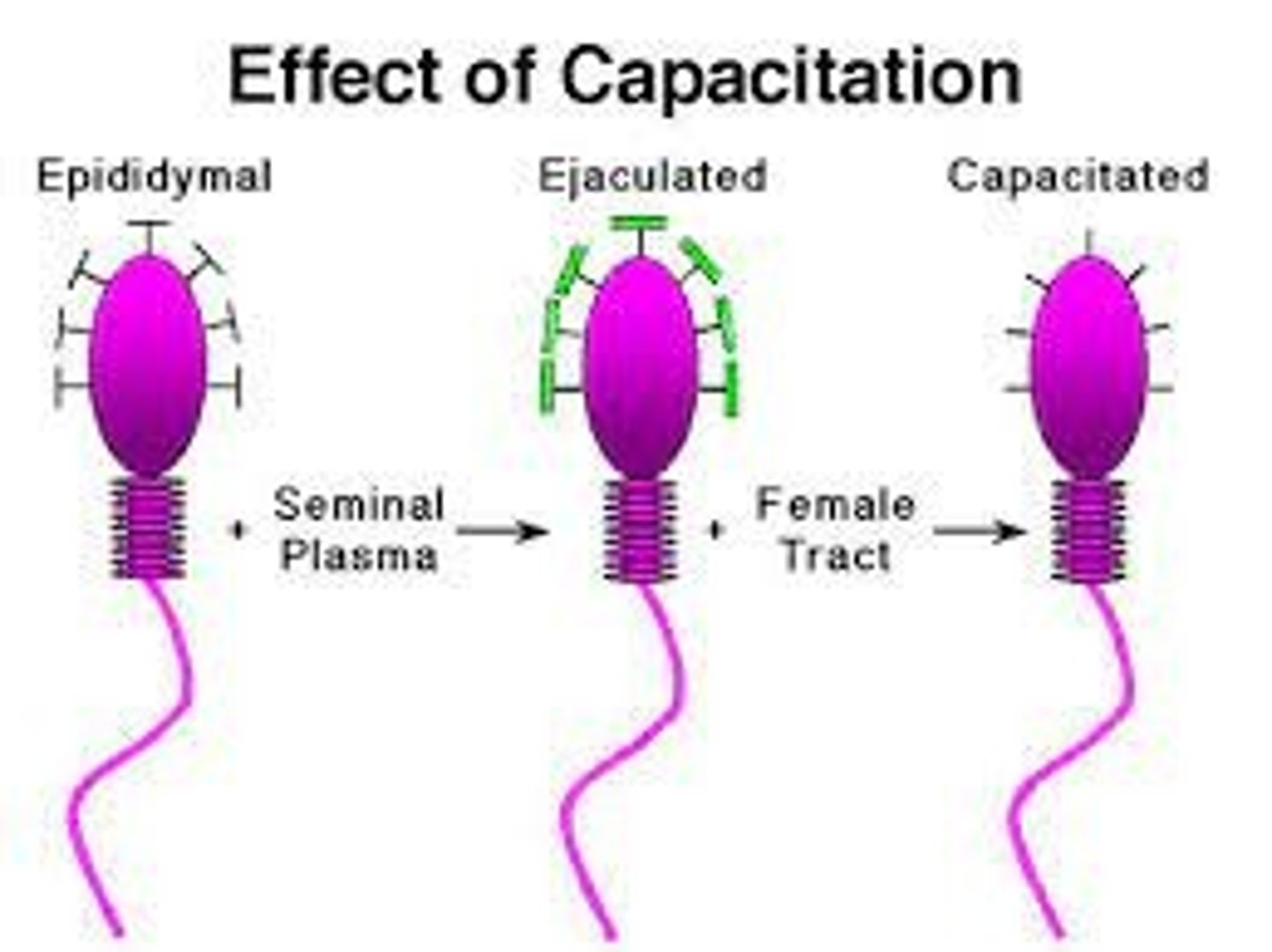
1. capacitation
2. acrosomal reaction
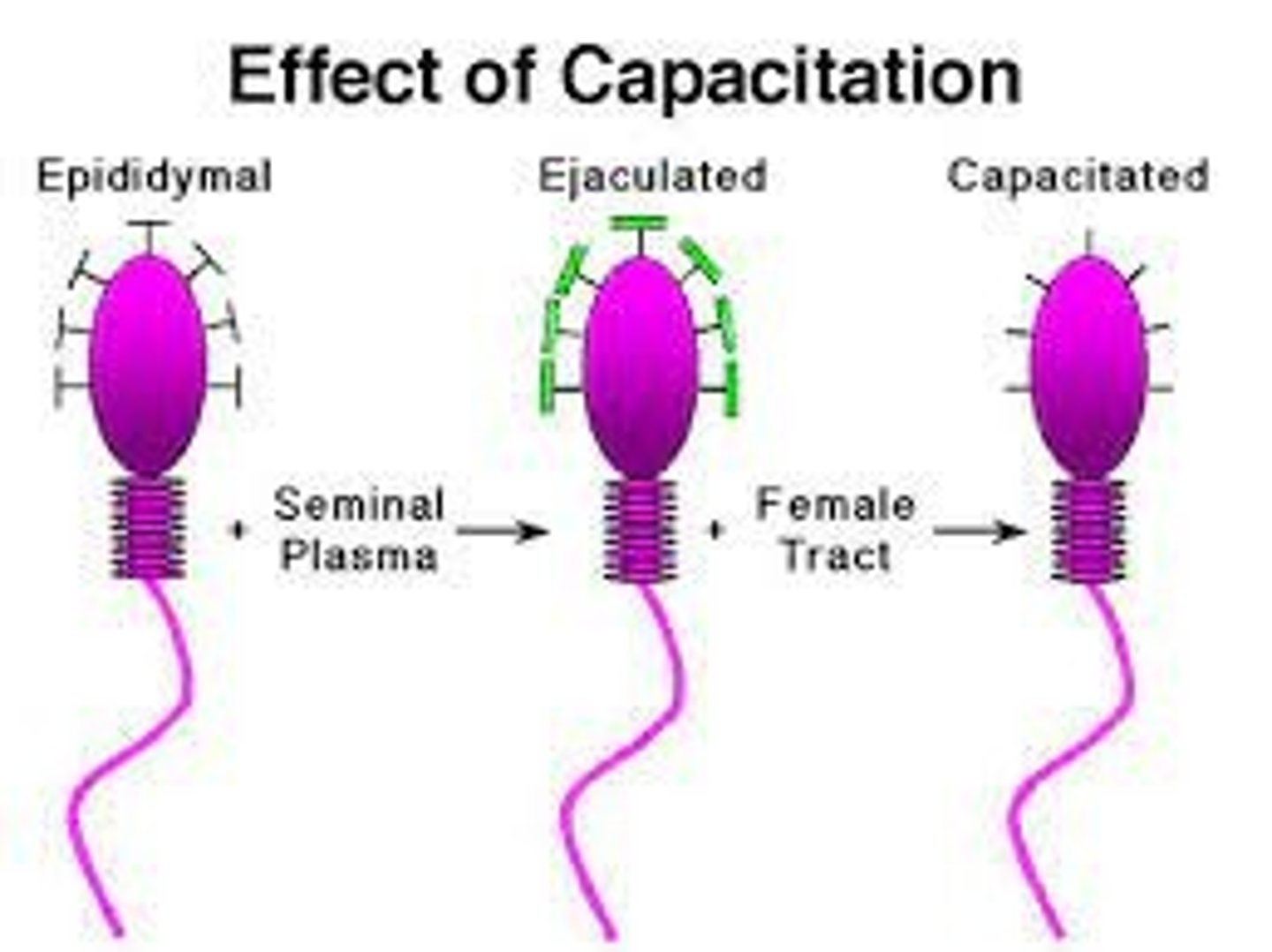
In capacitation, secretions from which structures destabilize the plasma membrane surrounding the head of the sperm?
uterine wall and uterine tube
What effects does capacitation have on sperm?
1. make sperm head more fluid
2. prepare sperm for fertilization
3. make sperm hyperactive
What layer of granulosa cells must the sperm pass through to reach the zona pellucida?
corona radiata
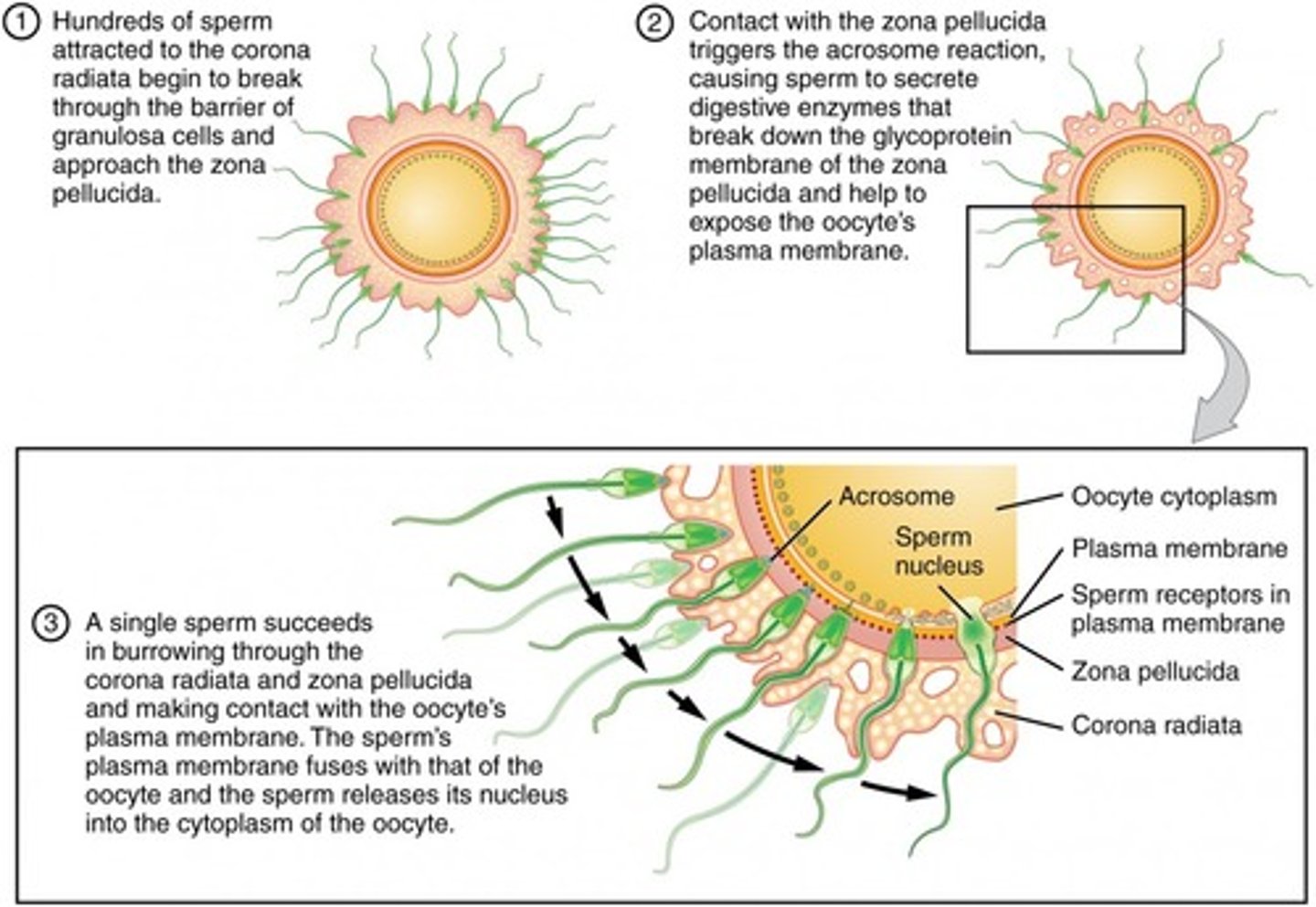
Which receptors in the zona pellucida bind to head proteins on the sperm?
ZP3
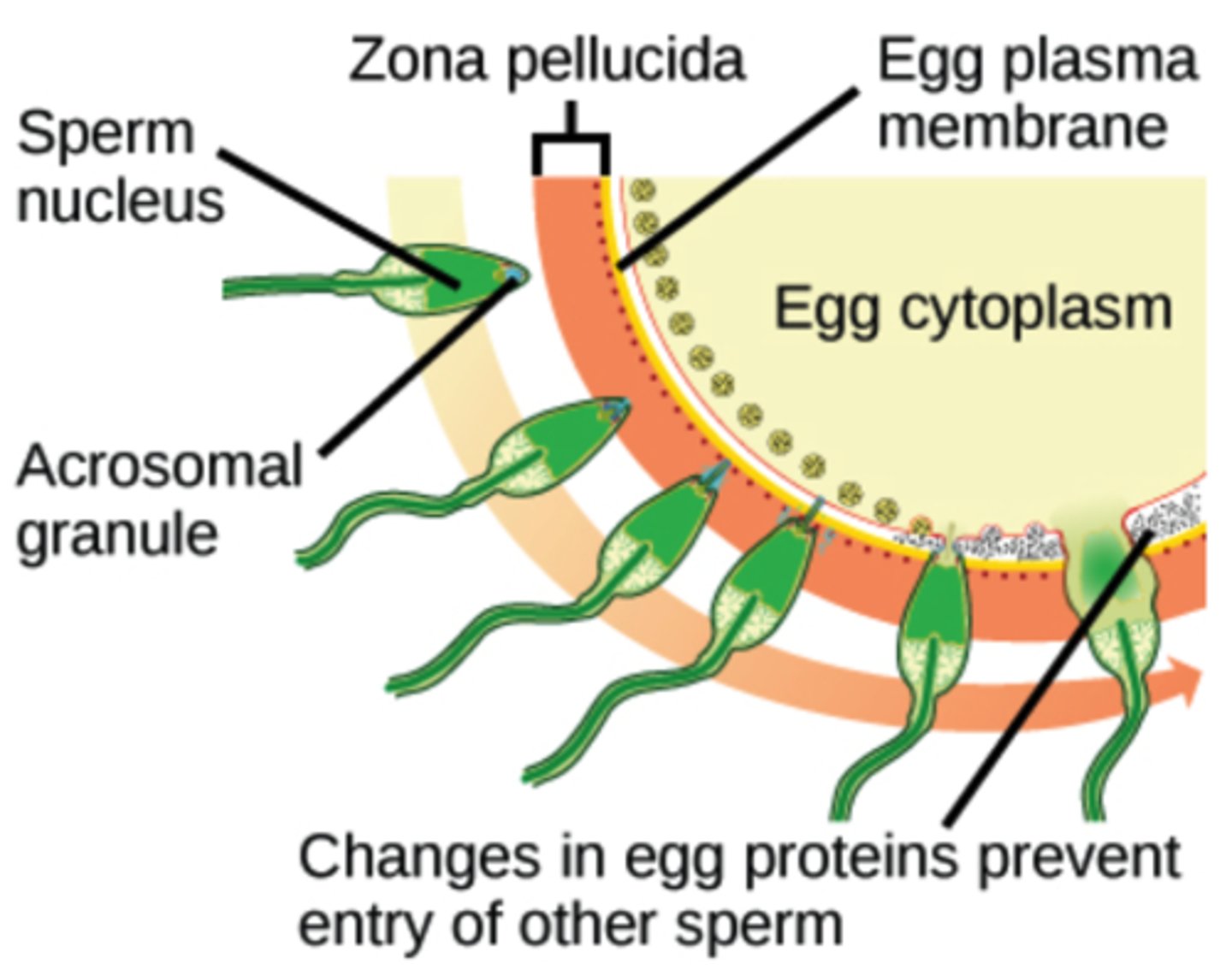
What proteins released by the sperm help digest a path through the zona pellucida?
enzymes
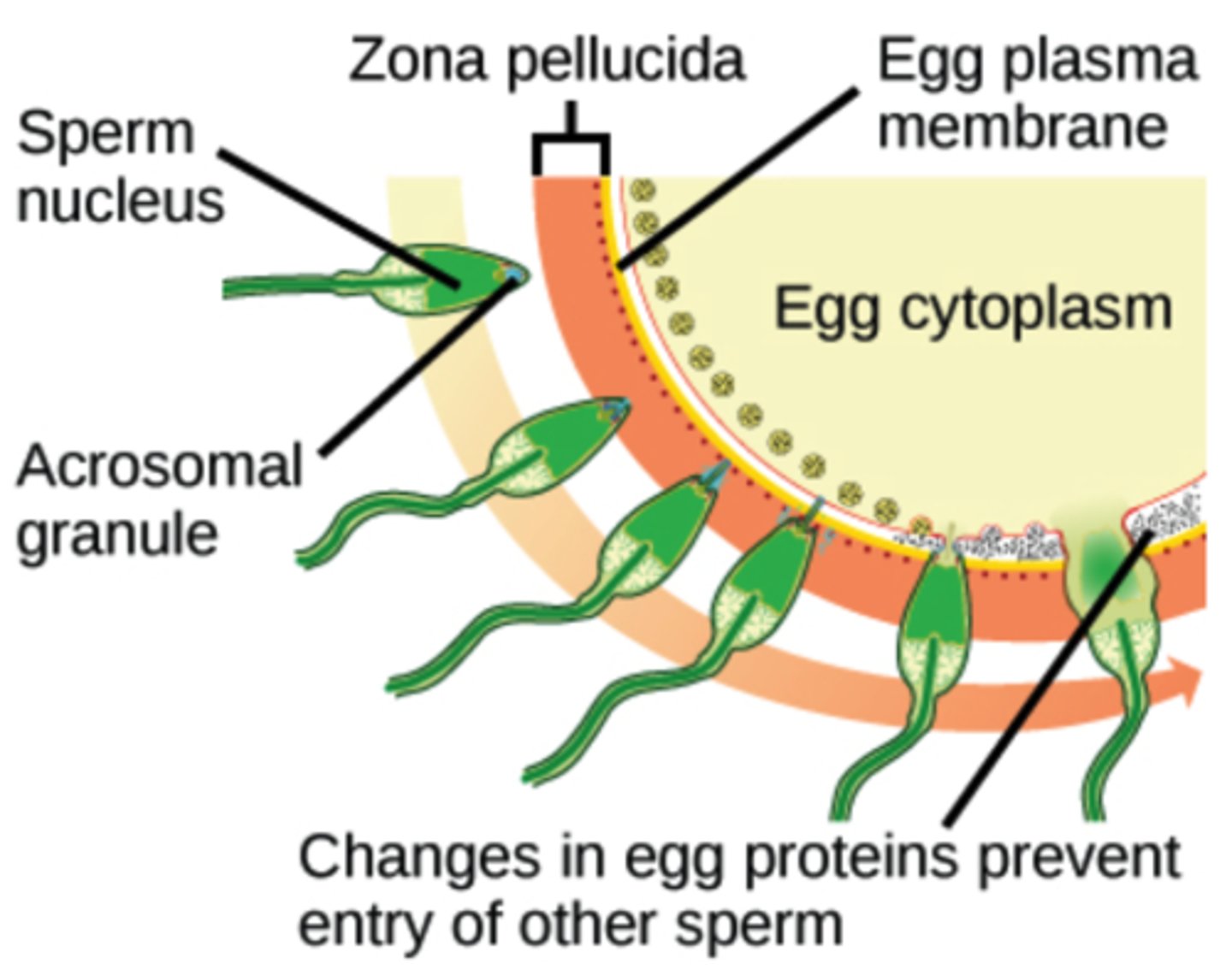
After the sperm passes through the zona pellucida, which layer does it enter?
perivitelline space
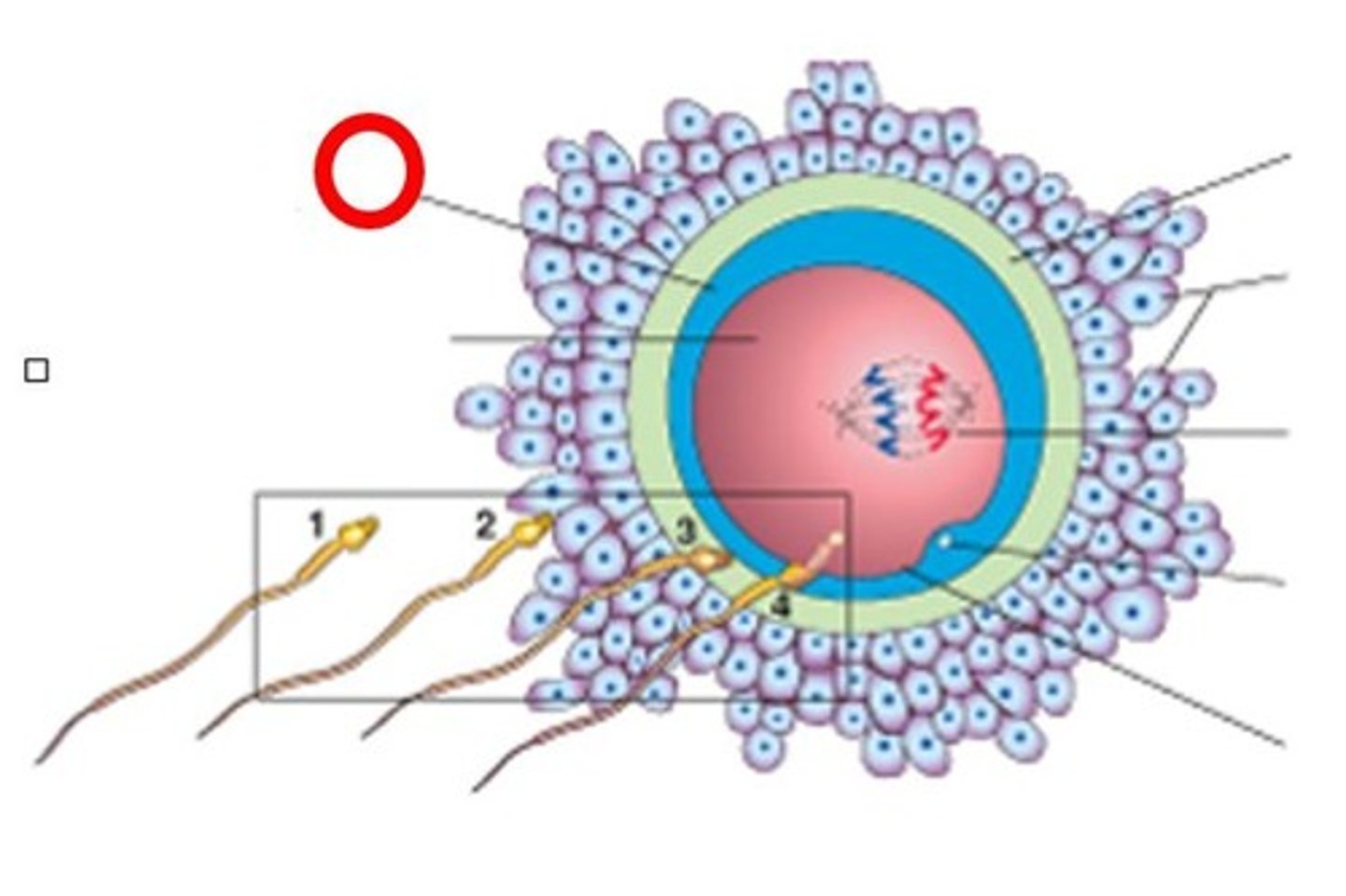
In between which layers of the egg is the perivitelline space located?
zona pellucida and
plasma membrane of
the secondary oocyte
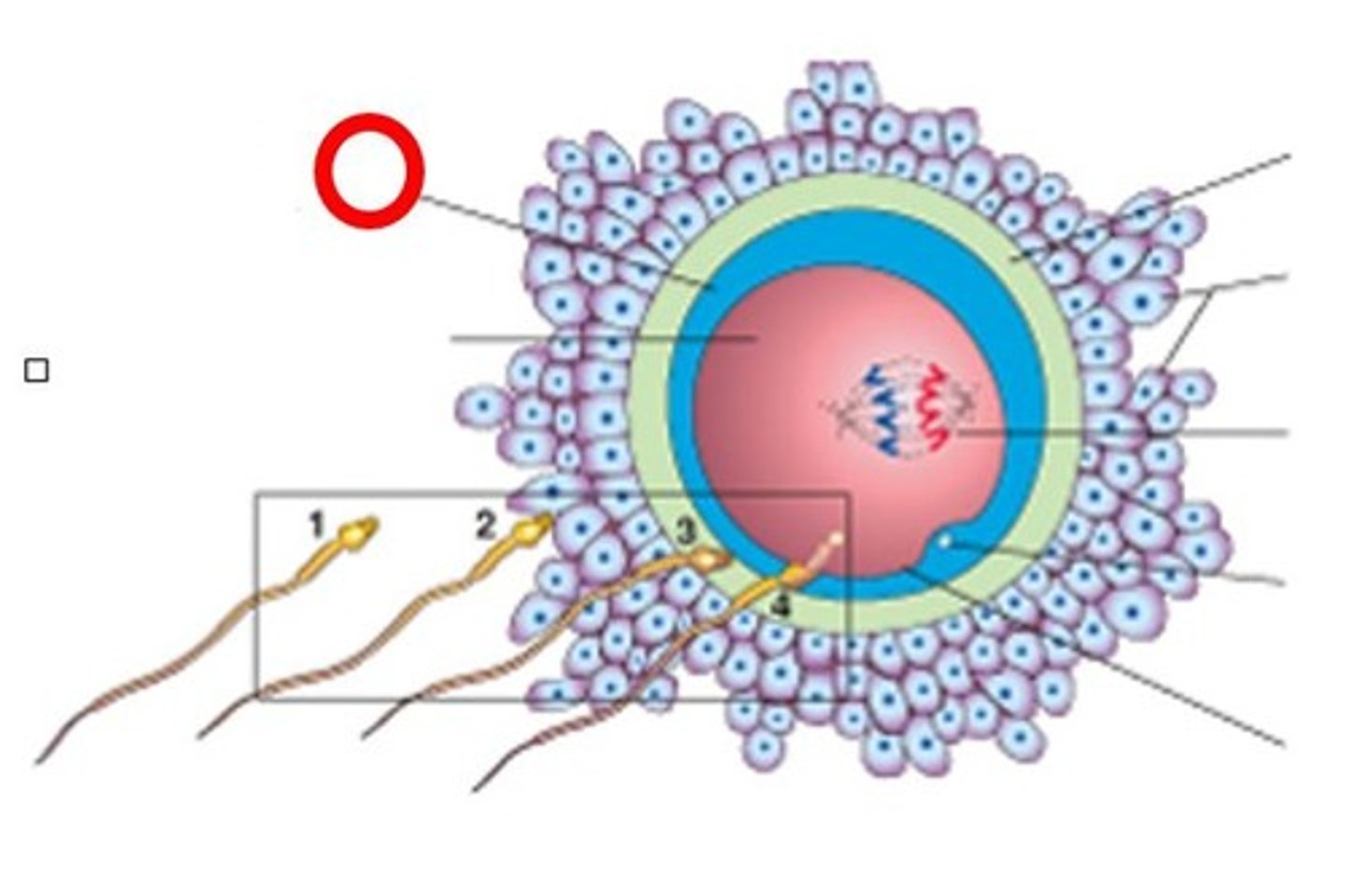
Which membrane does the sperm fuse with?
oocyte's plasma membrane
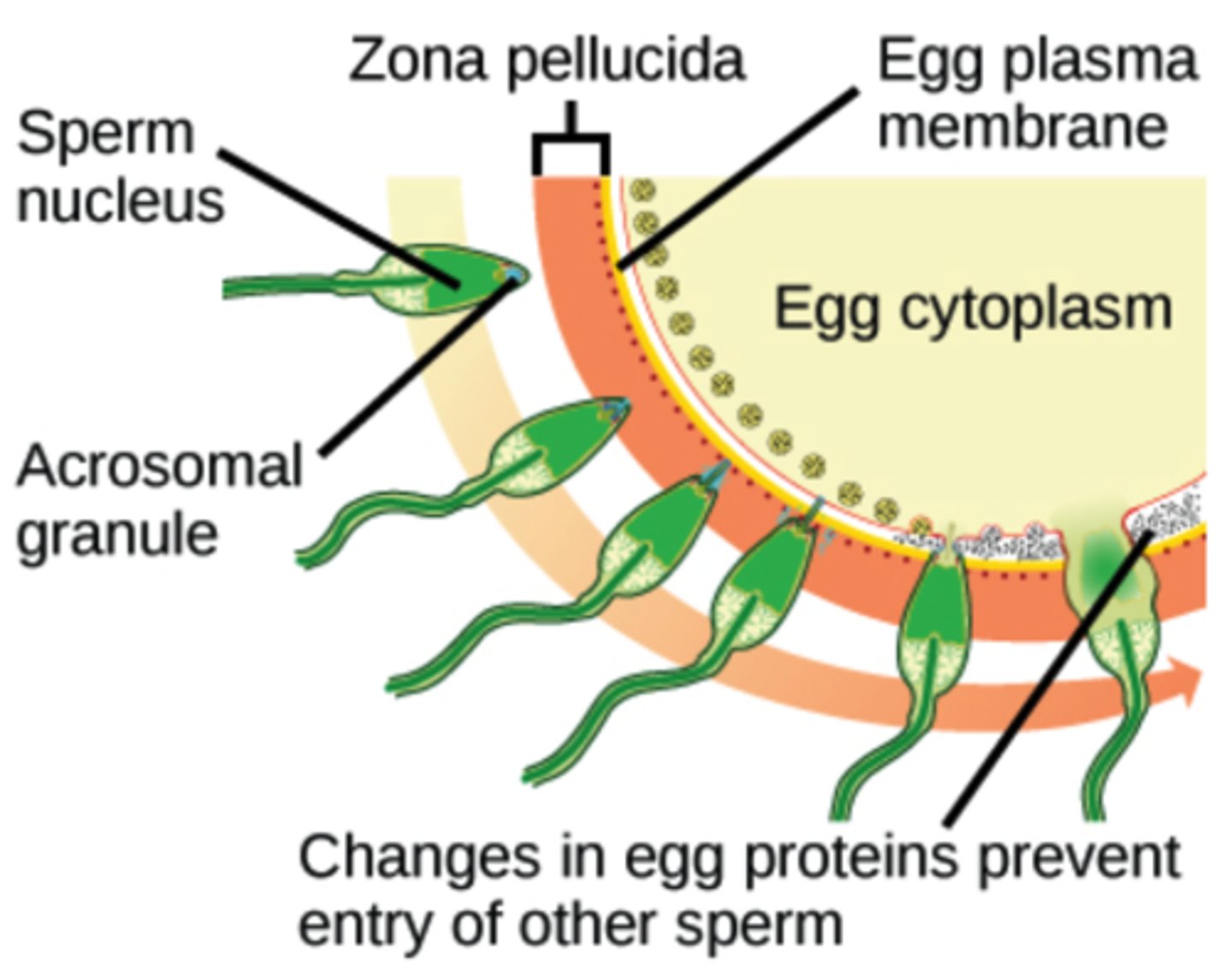
What are the steps of the slow block to polyspermy?
1. depolarization causes
the release of intracellular calcium
2. cortical granules beneath
oocyte membrane release
contents outward
3. ZP3 receptors inactivate
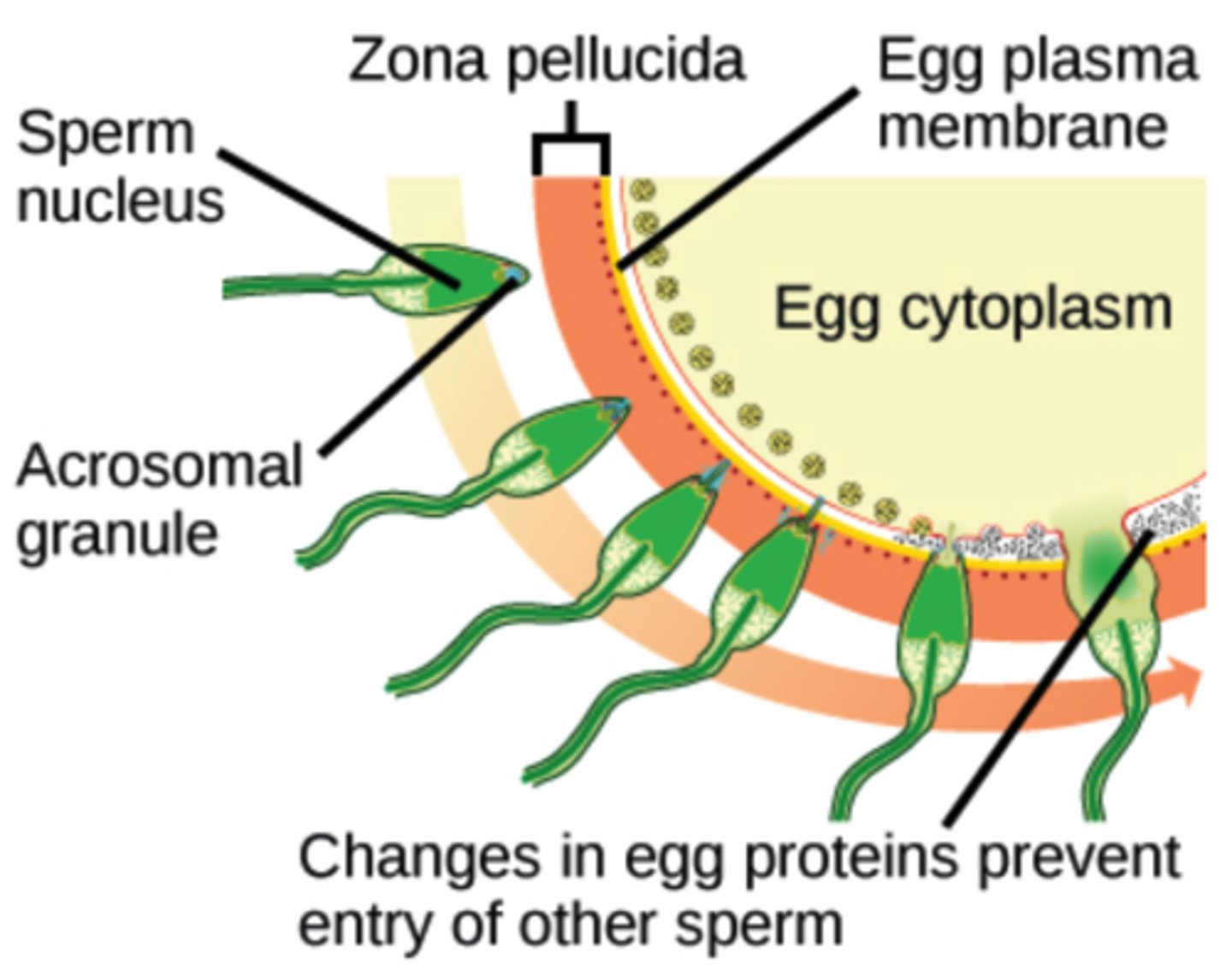
What is the fast block to polyspermy?
fusion depolarizes
the oocyte membrane,
preventing other sperm
from binding
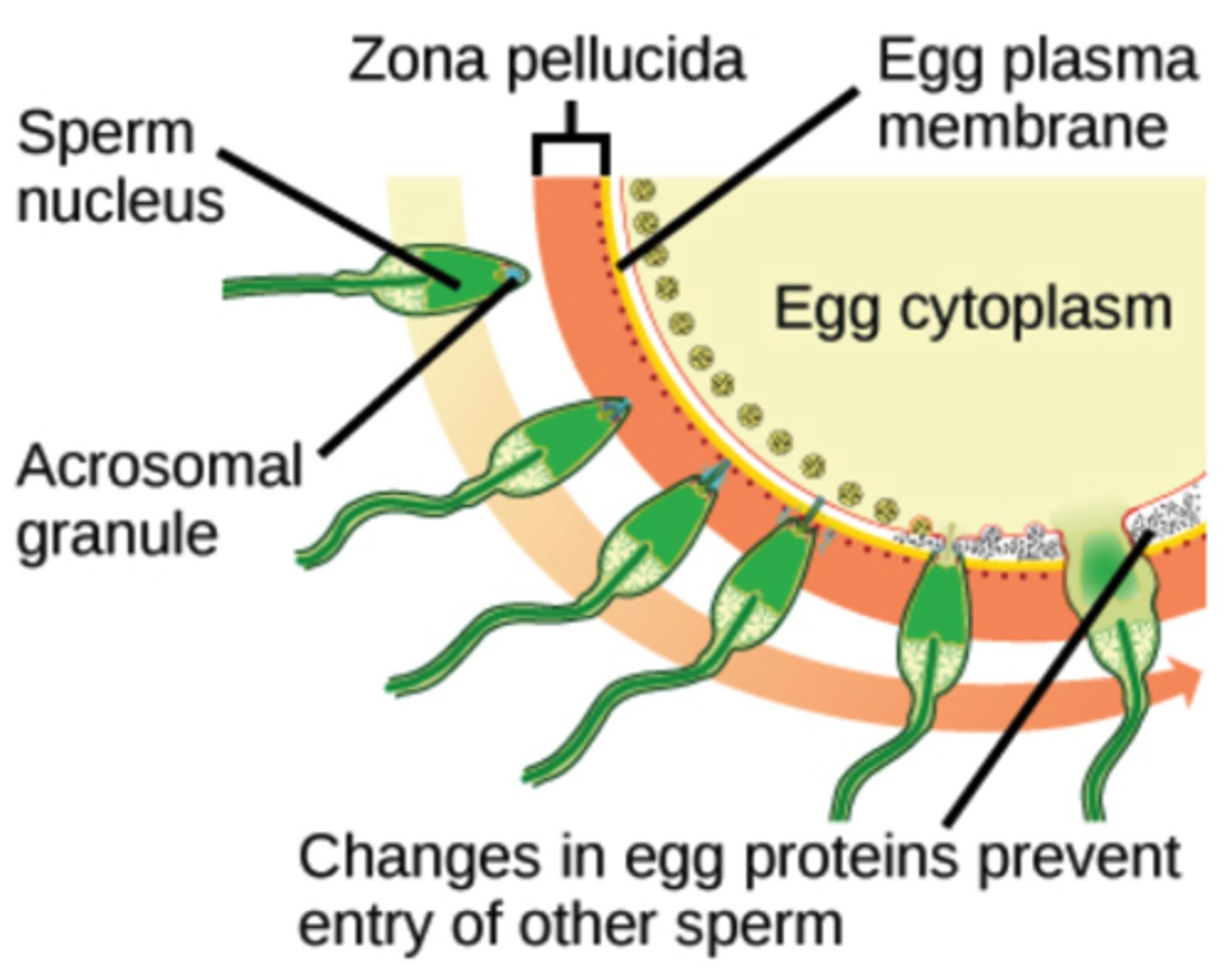
How is the zona pellucida used as a wildlife population control?
injected into the bloodstream of another species, causing sterility through antibody immune response
In non-mammals, especially in species with external fertilization, which structure prevents cross-breeding between species?
zona pellucida
In which environment is external fertilization common?
aquatic
(Note: frogs/amphibians)
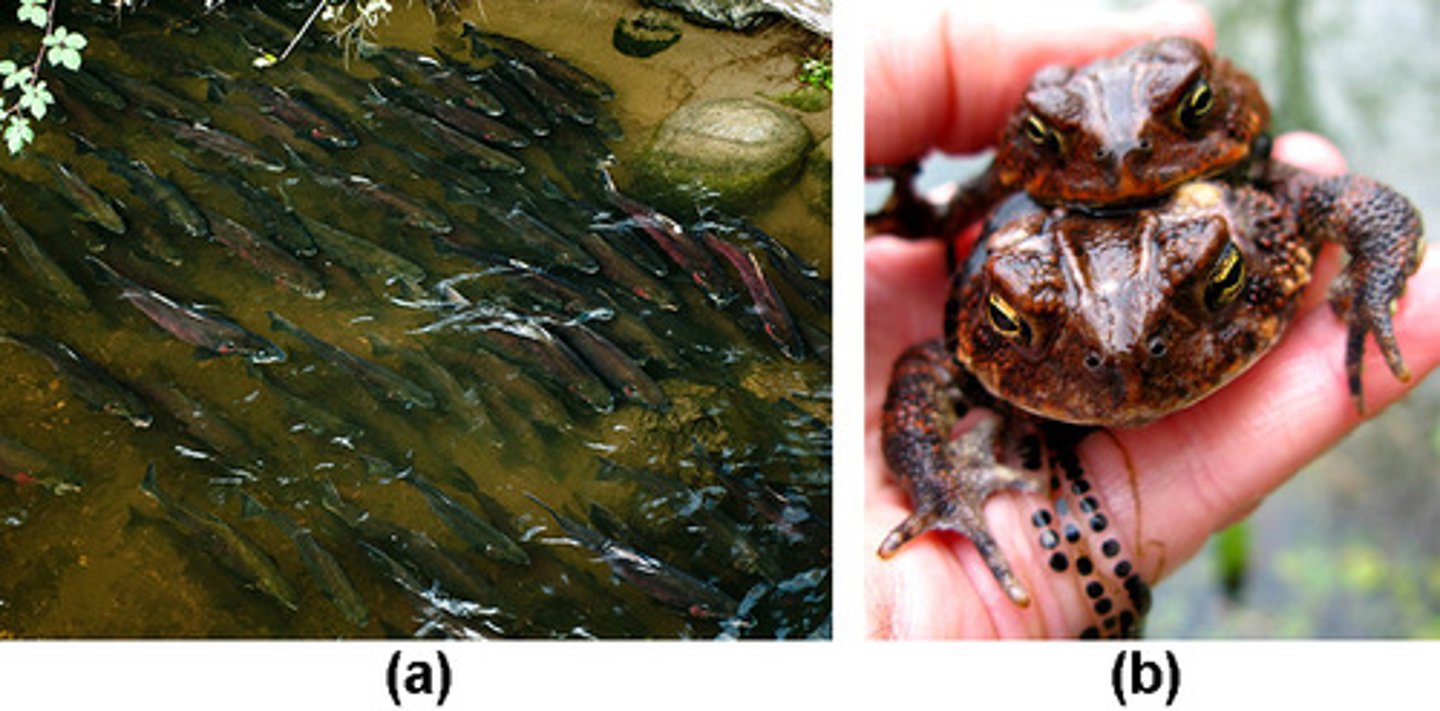
In which environment is internal fertilization common?
terrestrial
(Note: vertebrates)
What organelle enters the oocyte after the sperm and oocyte plasma membranes fuse?
sperm nucleus
(Note: called penetration)
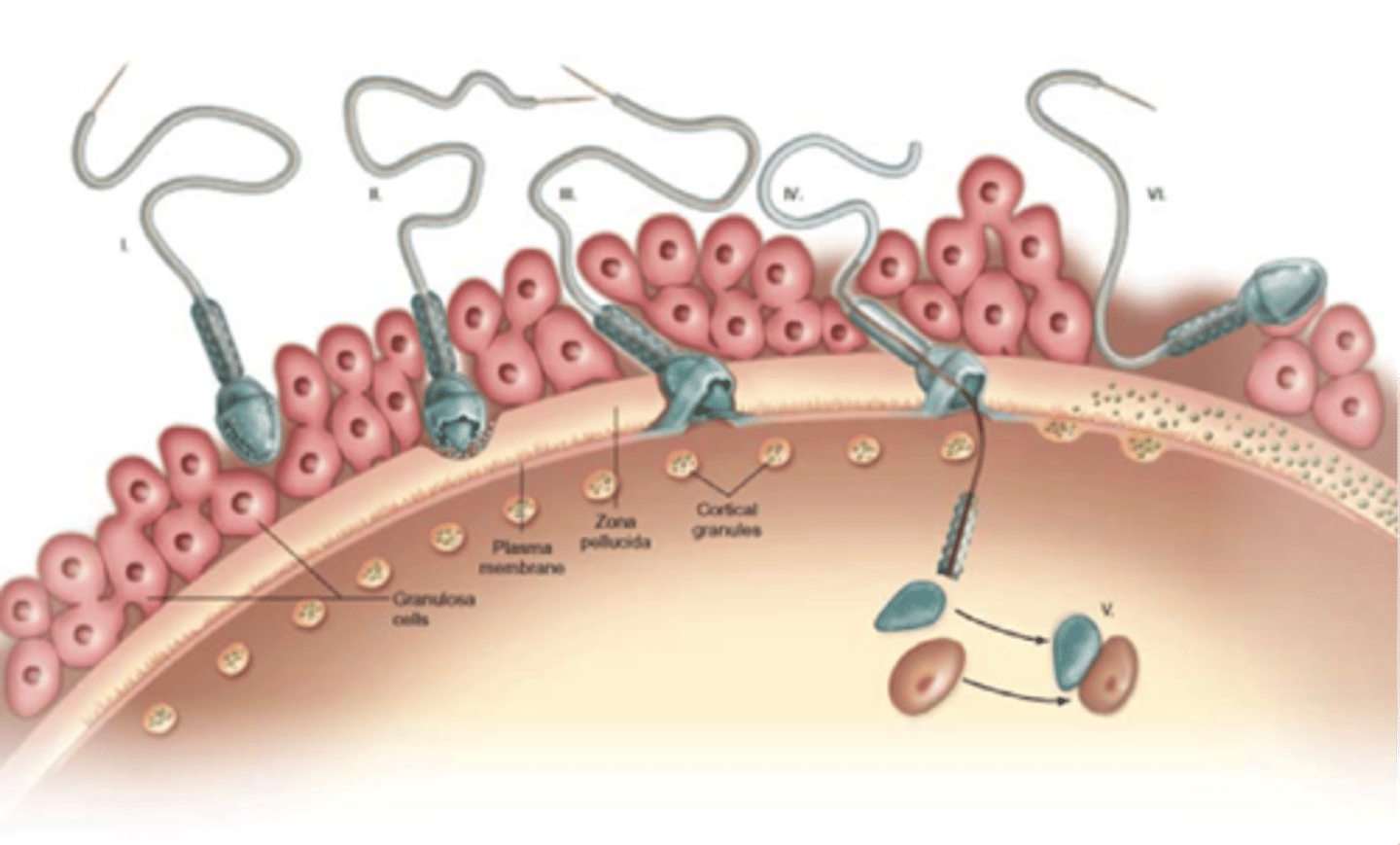
What membrane forms as a result of the slow block to polyspermy?
fertilization membrane
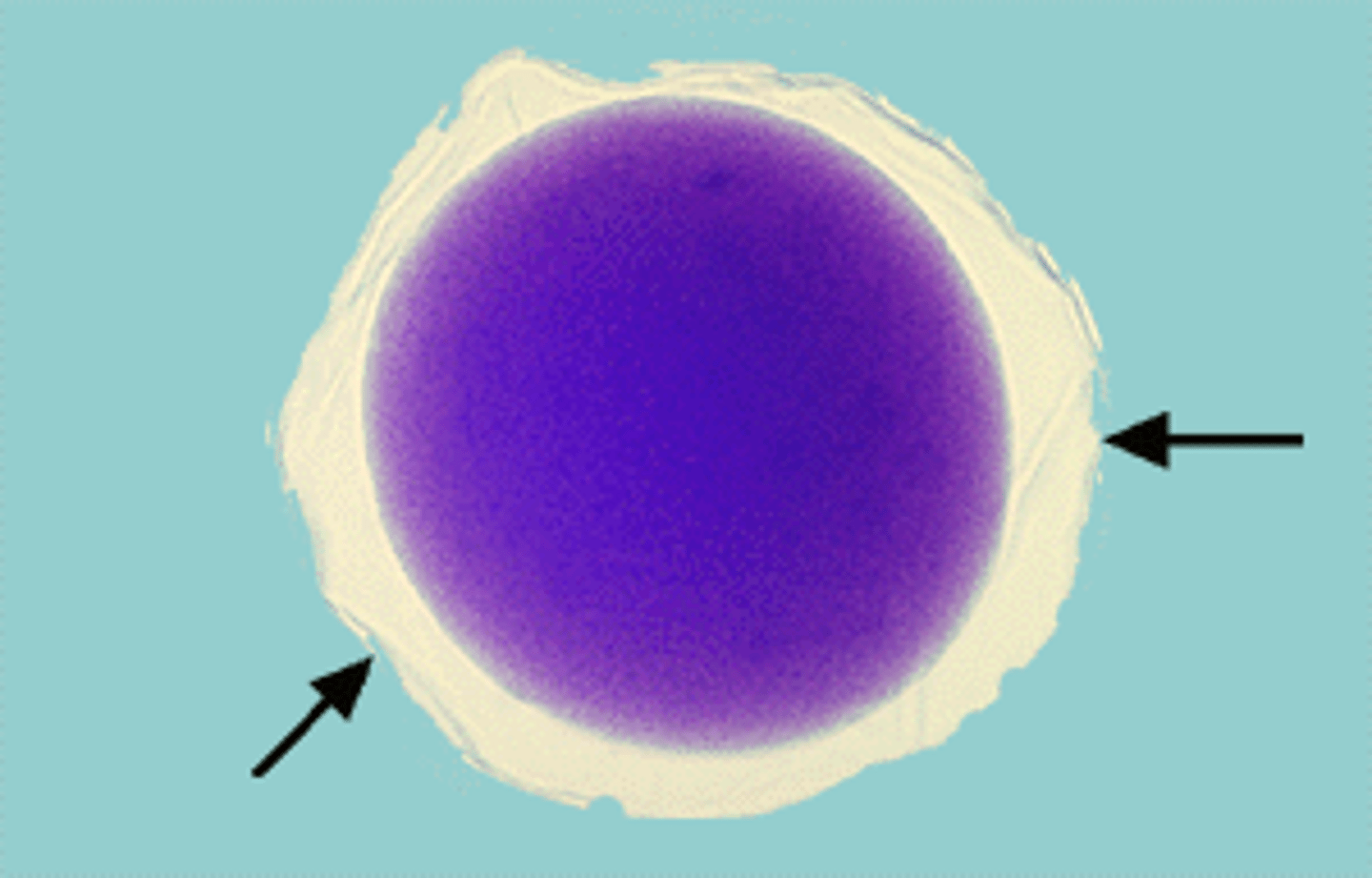
What action triggers meiosis II to complete in secondary oocyte?
sperm penetration
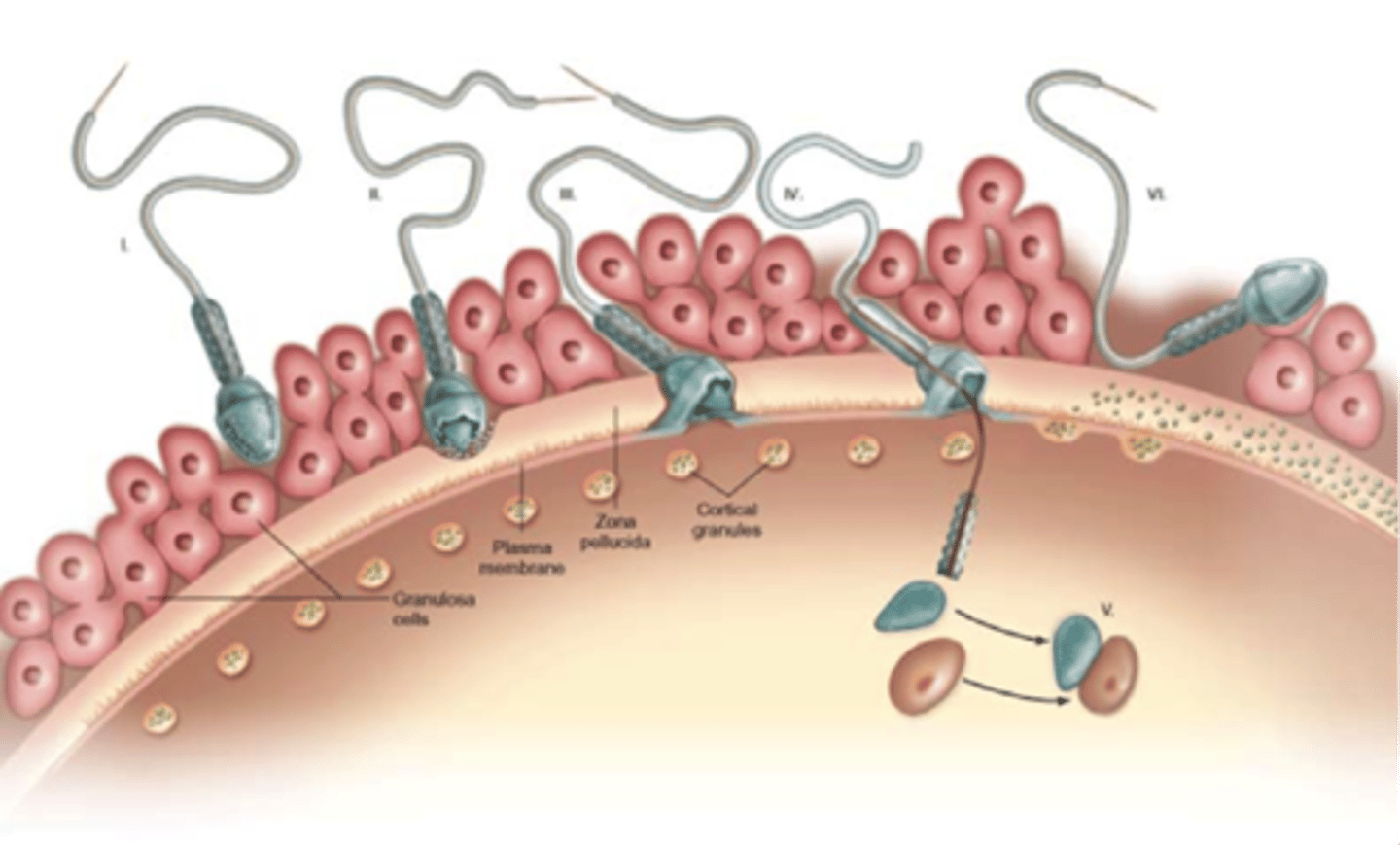
What reproductive units result after the completion of meiosis II by the secondary oocyte?
ovum and a second polar body
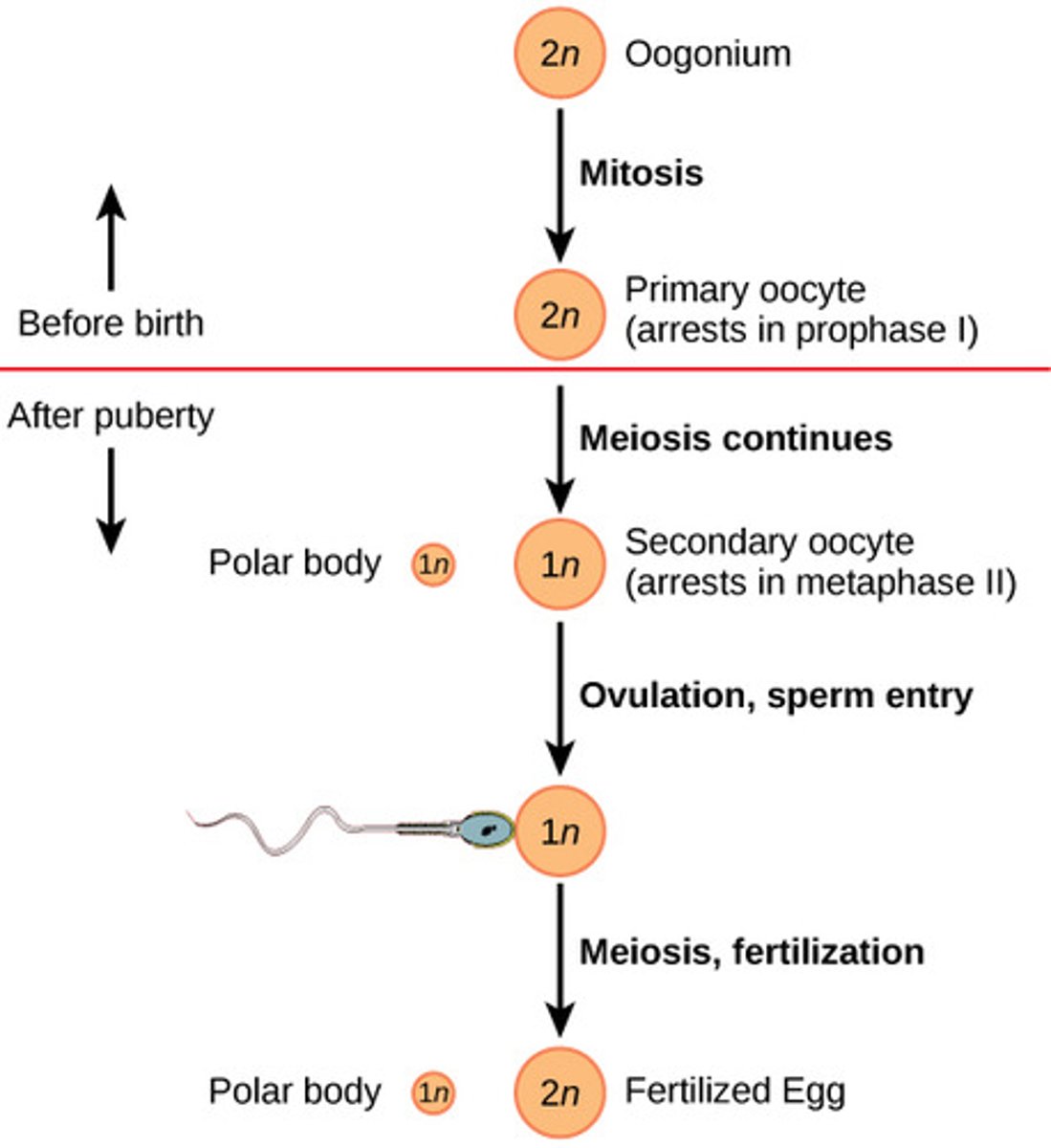
How is the second polar body removed?
discharged through the plasma membrane
What reproductive unit forms as a result of the sperm and ovum nuclei's fusion?
diploid zygote
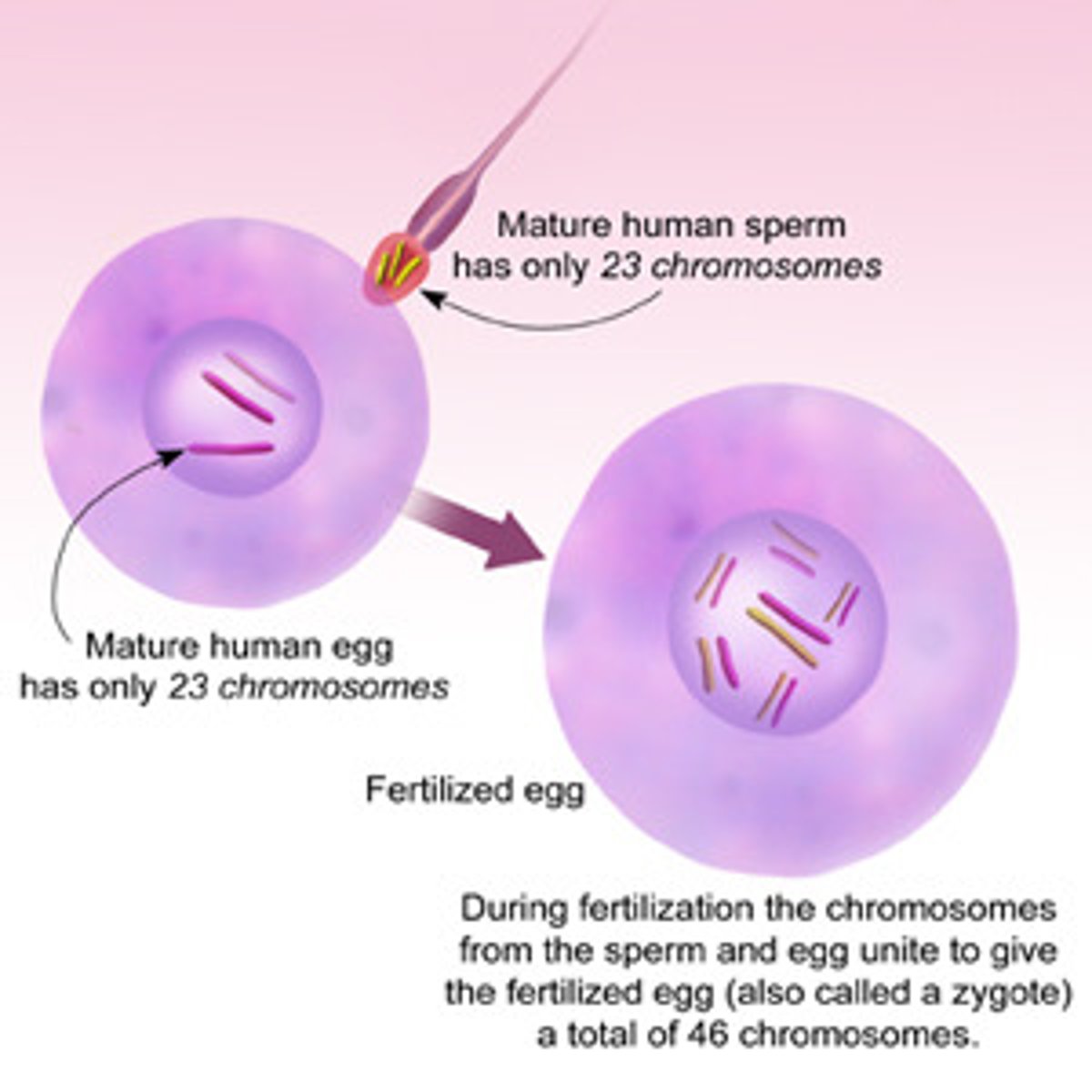
What actions is the formation of the diploid zygote associated with?
sharp increase in protein synthesis and metabolic activity
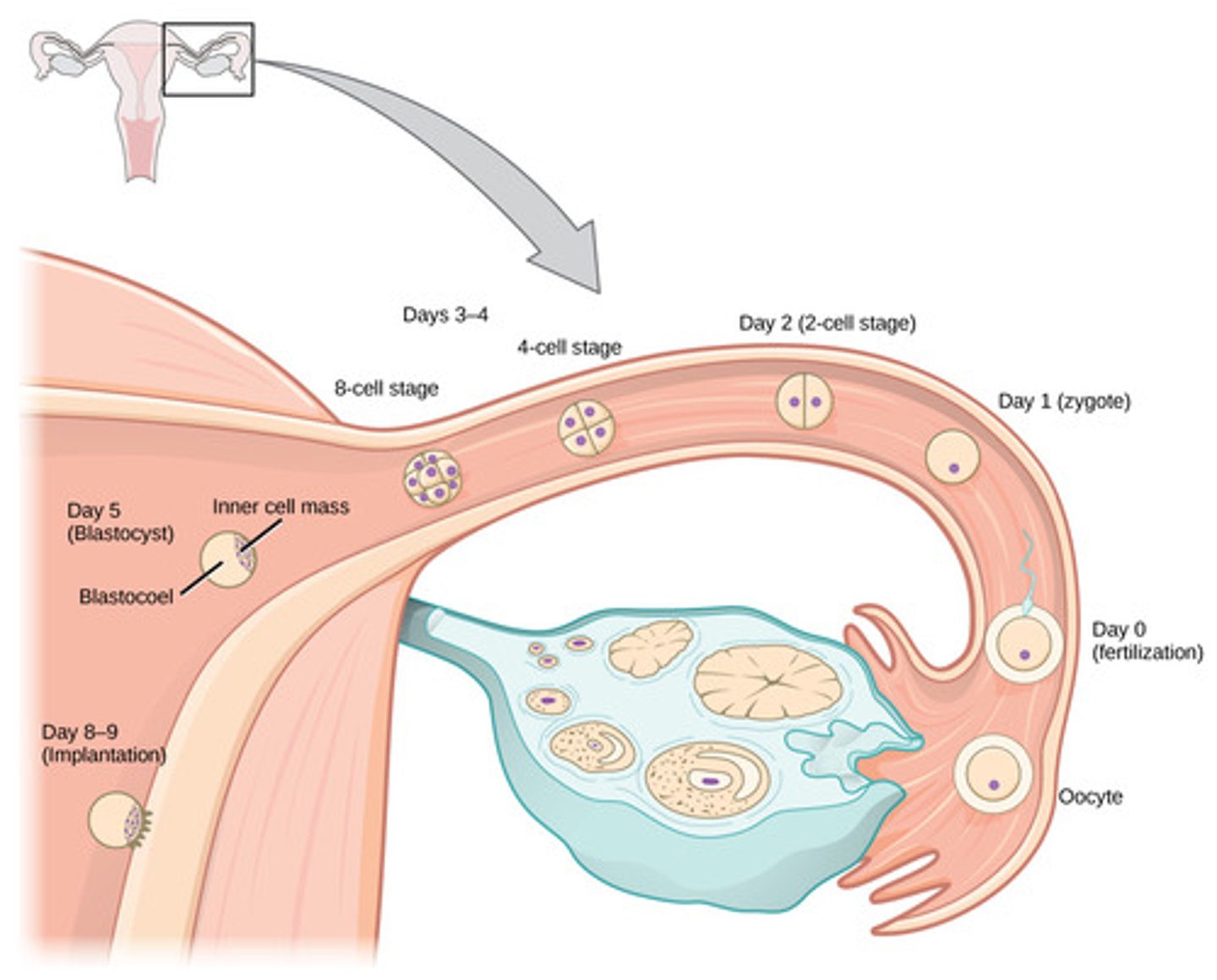
Where does fertilization take place?
oviduct
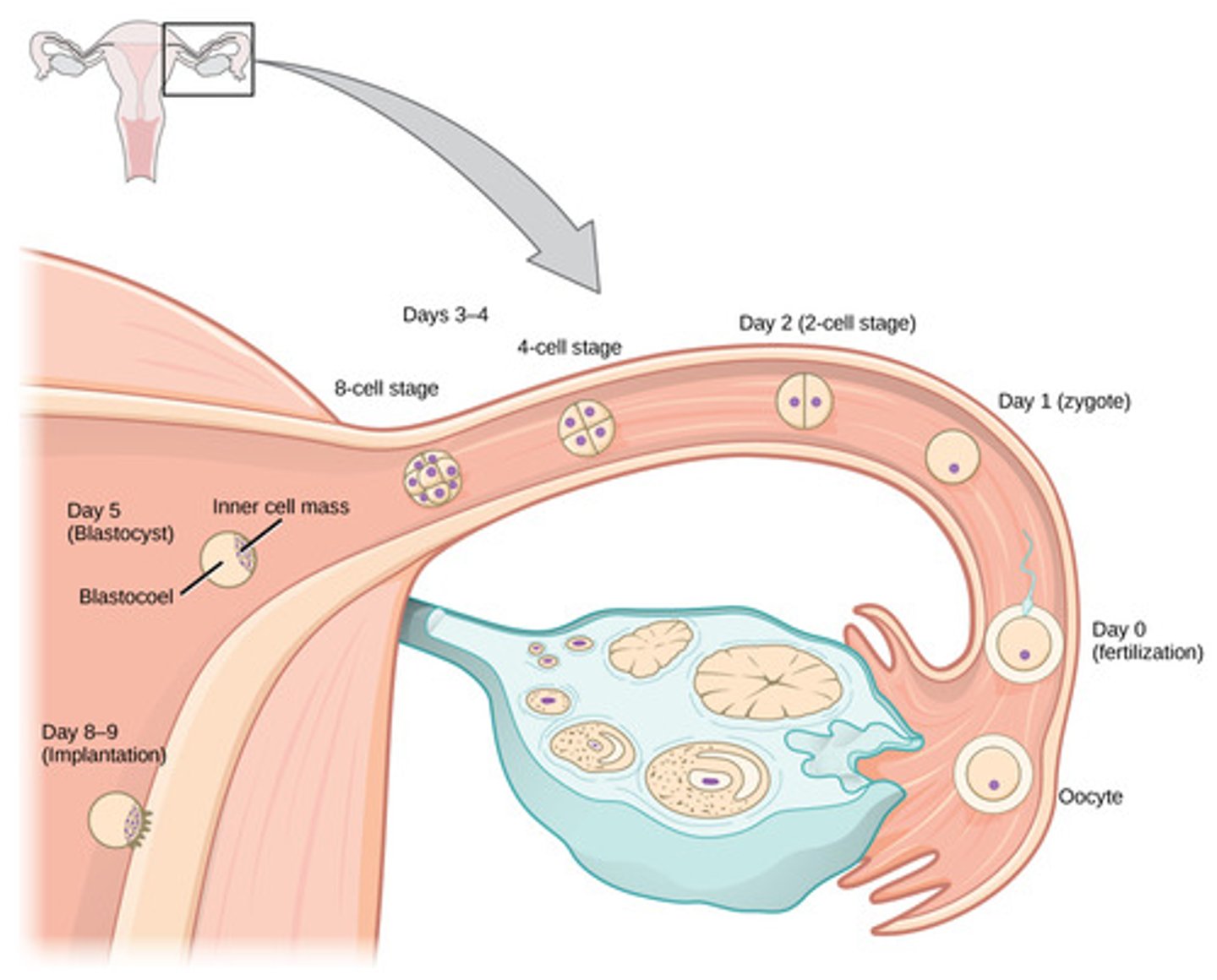
Where does embryo cleavage take place?
in the oviduct
as the embryo
is swept through
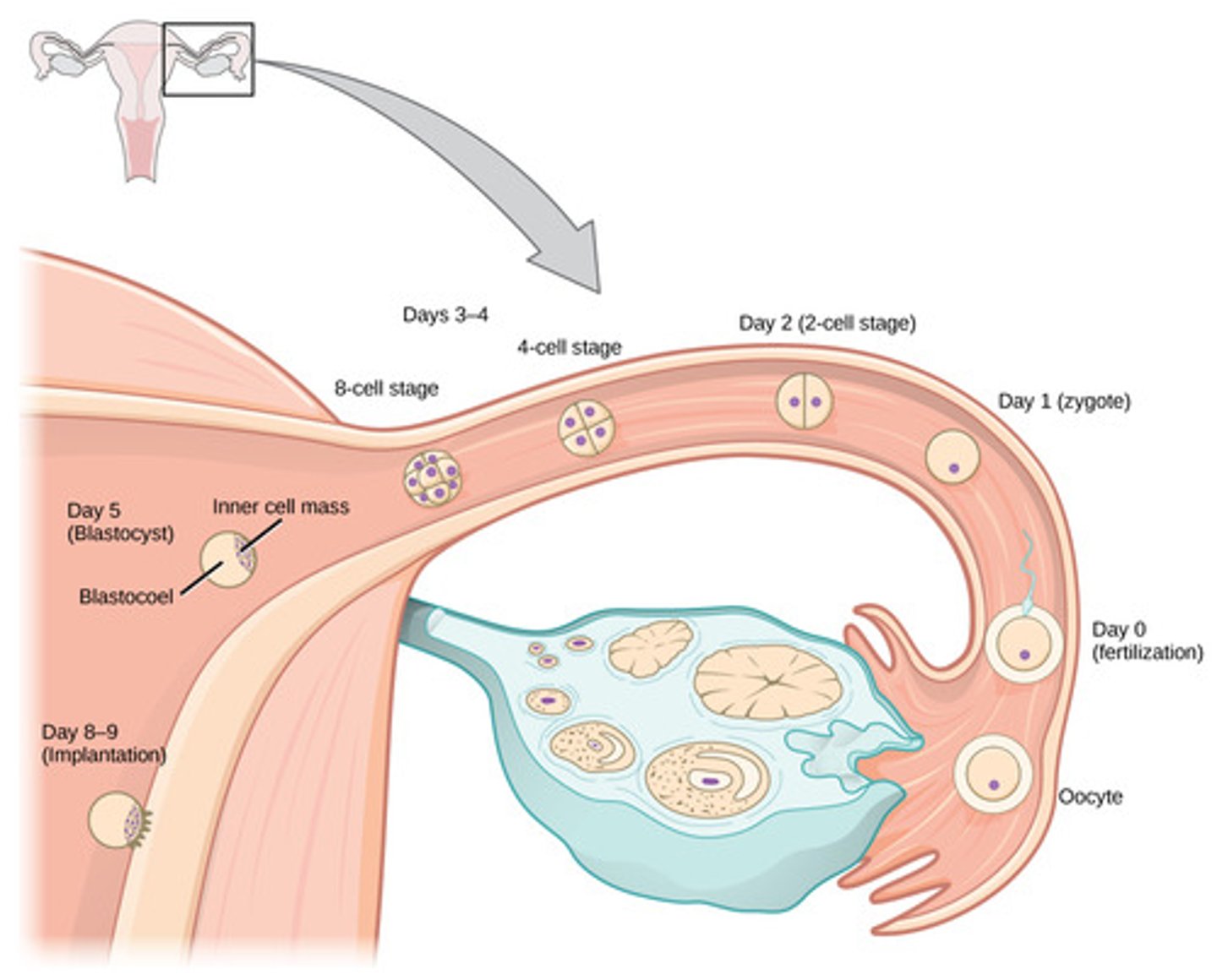
At what stage is the embryo when it enters the uterus for implantation?
blastula
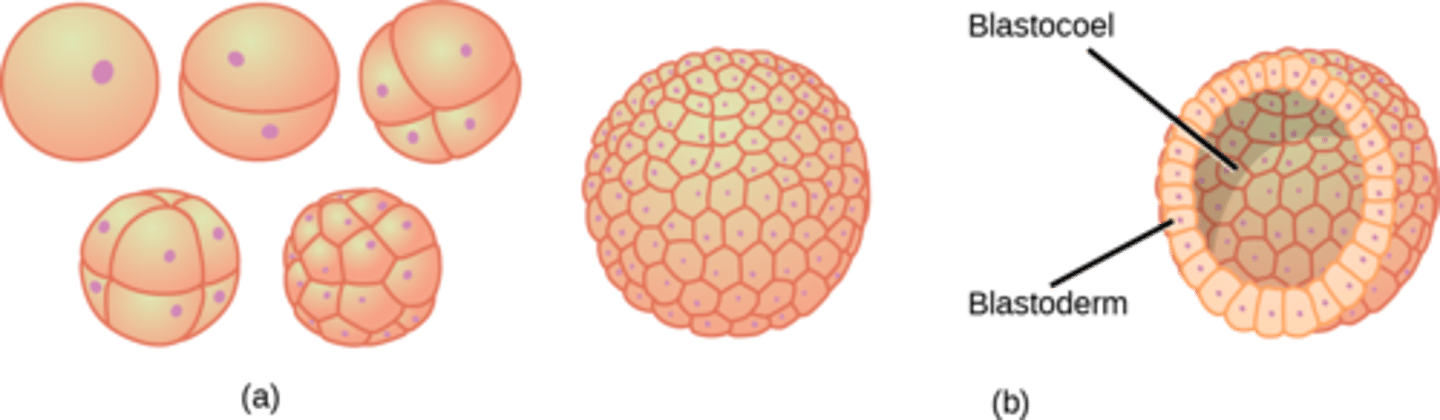
Which stage in embryonic development involves rapid cell division of the zygote without cell growth
cleavage
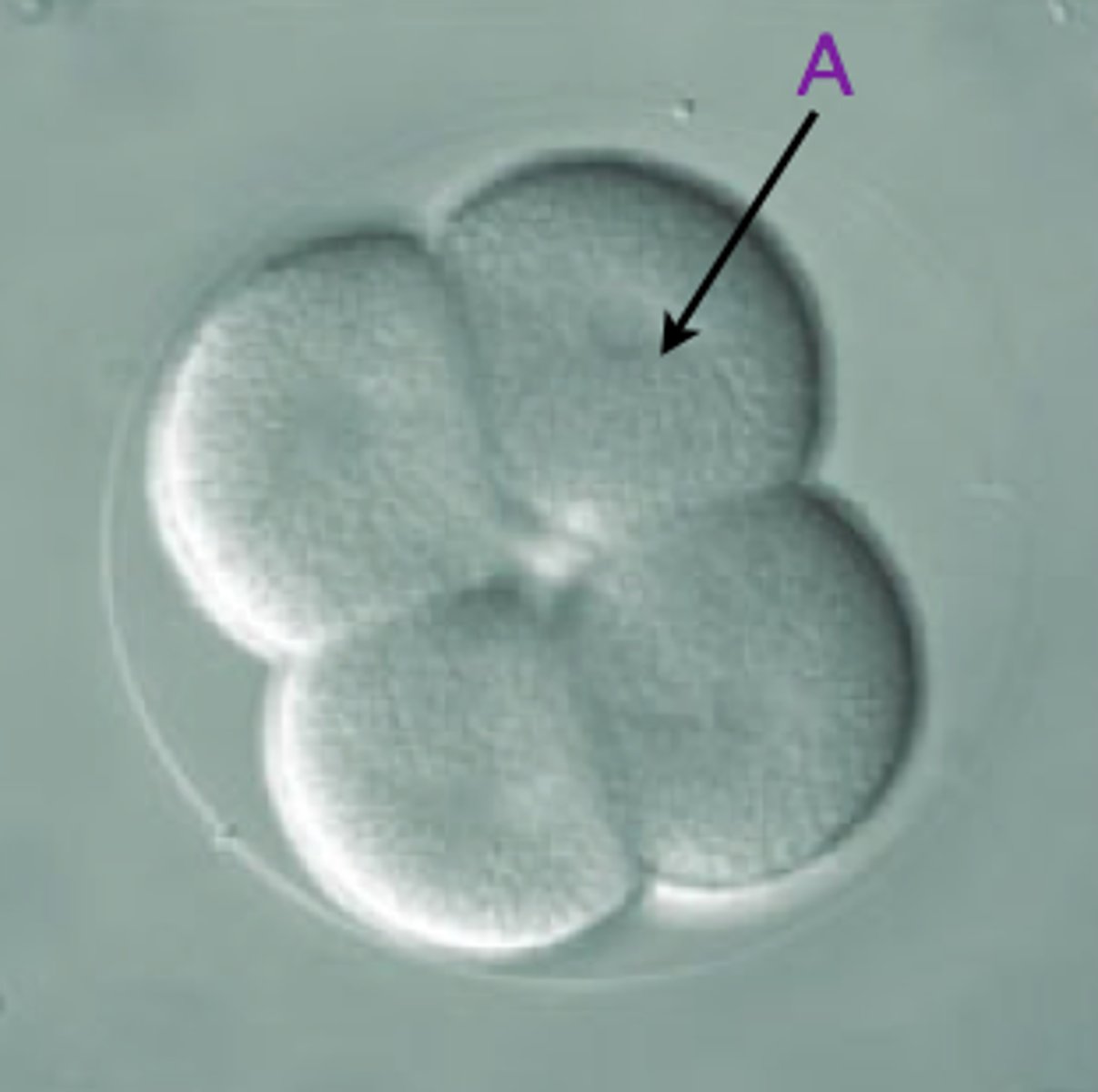
What is each cell during cleavage
blastomere
(Note: less cytoplasm than original zygote)
What substance causes the transition from fertilization to cleavage?
mitosis promoting factor
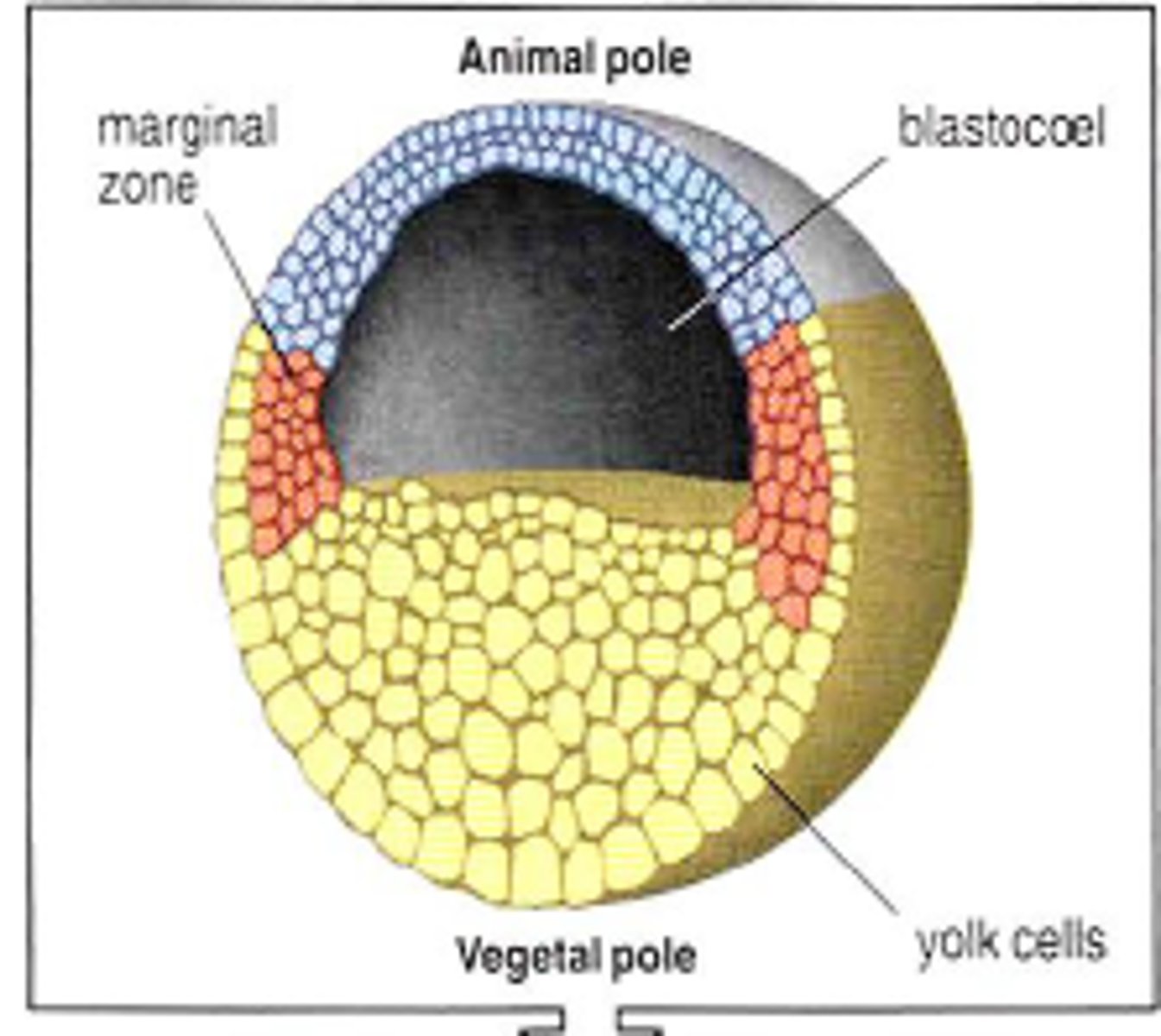
What is the upper pole of an embryo called?
animal pole
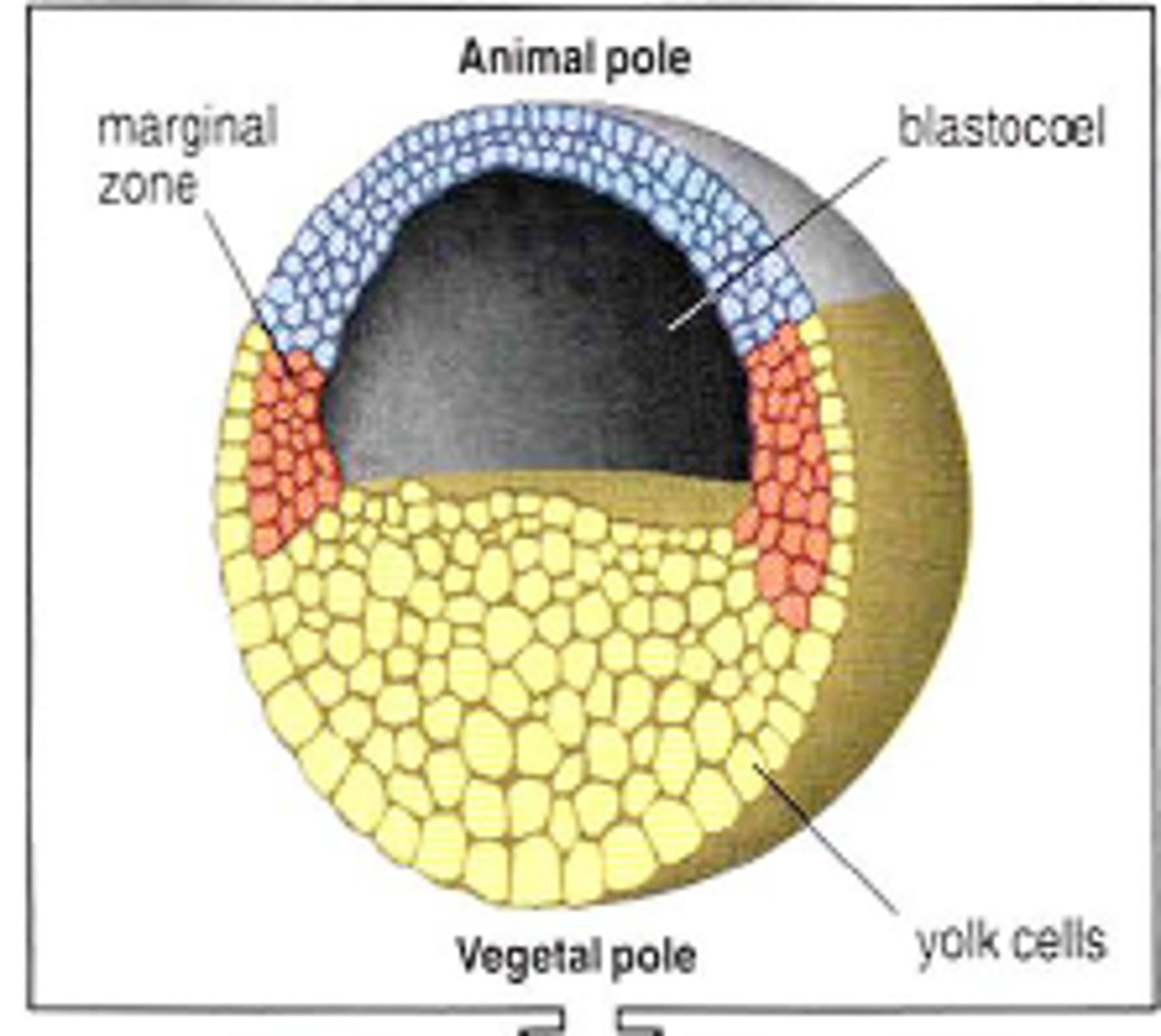
What is the lower pole of an embryo called?
vegetal pole
The location of yolk material in an embryo depends on what factor?
species
In general which embryo pole differentiates into extra-embryonic membranes that protect and nourish the embryo?
vegetal
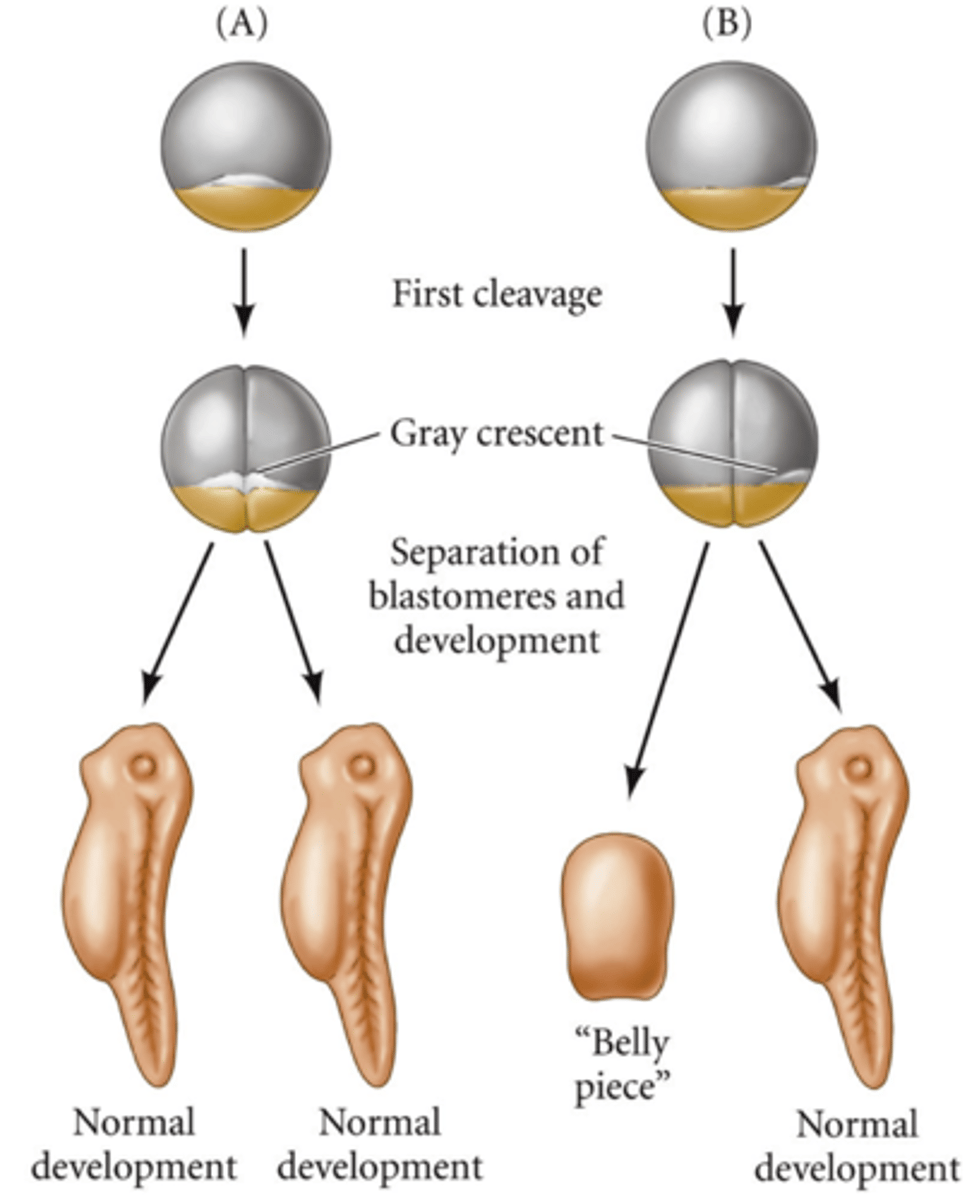
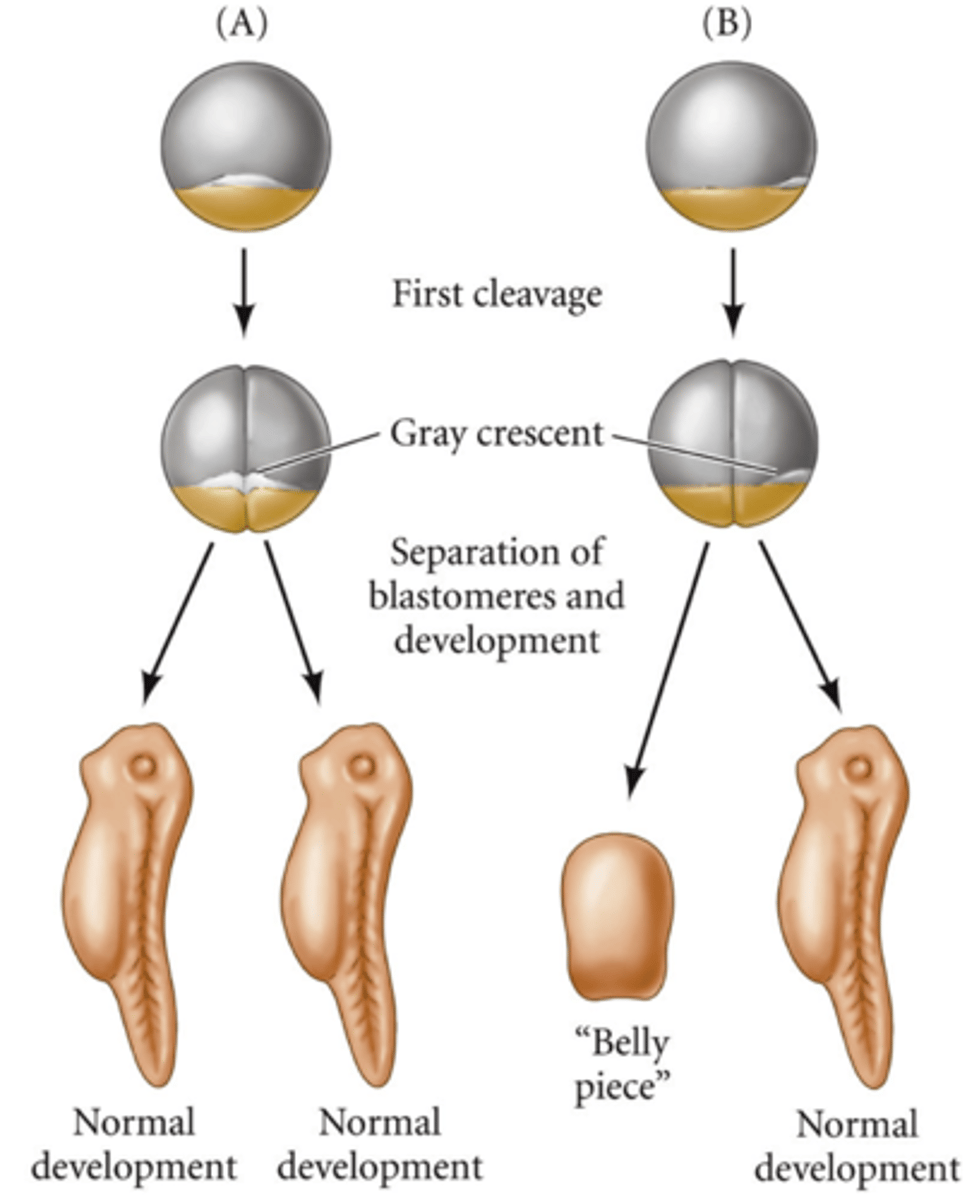
What is the region of non-pigmented cytoplasm formed at the opposite side of sperm entry in frogs called?
gray crescent
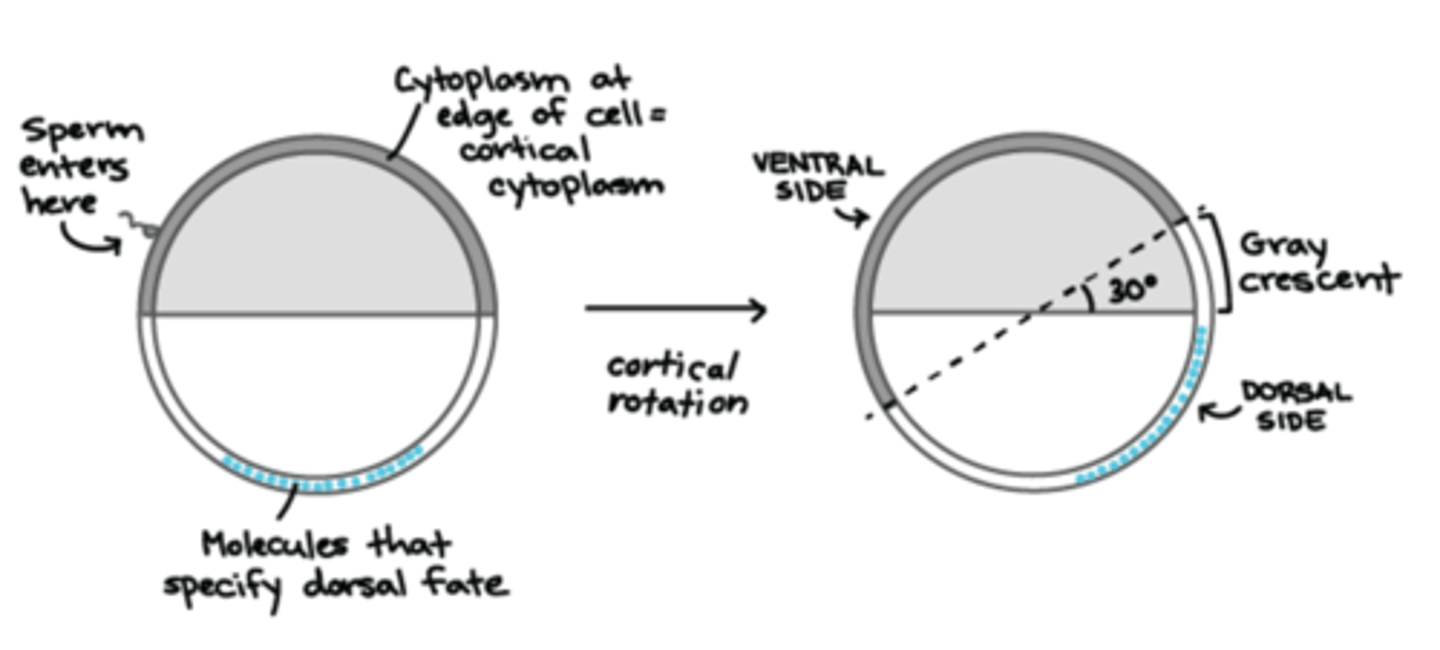
For which side of the organism is the gray crescent a marker?
dorsal side
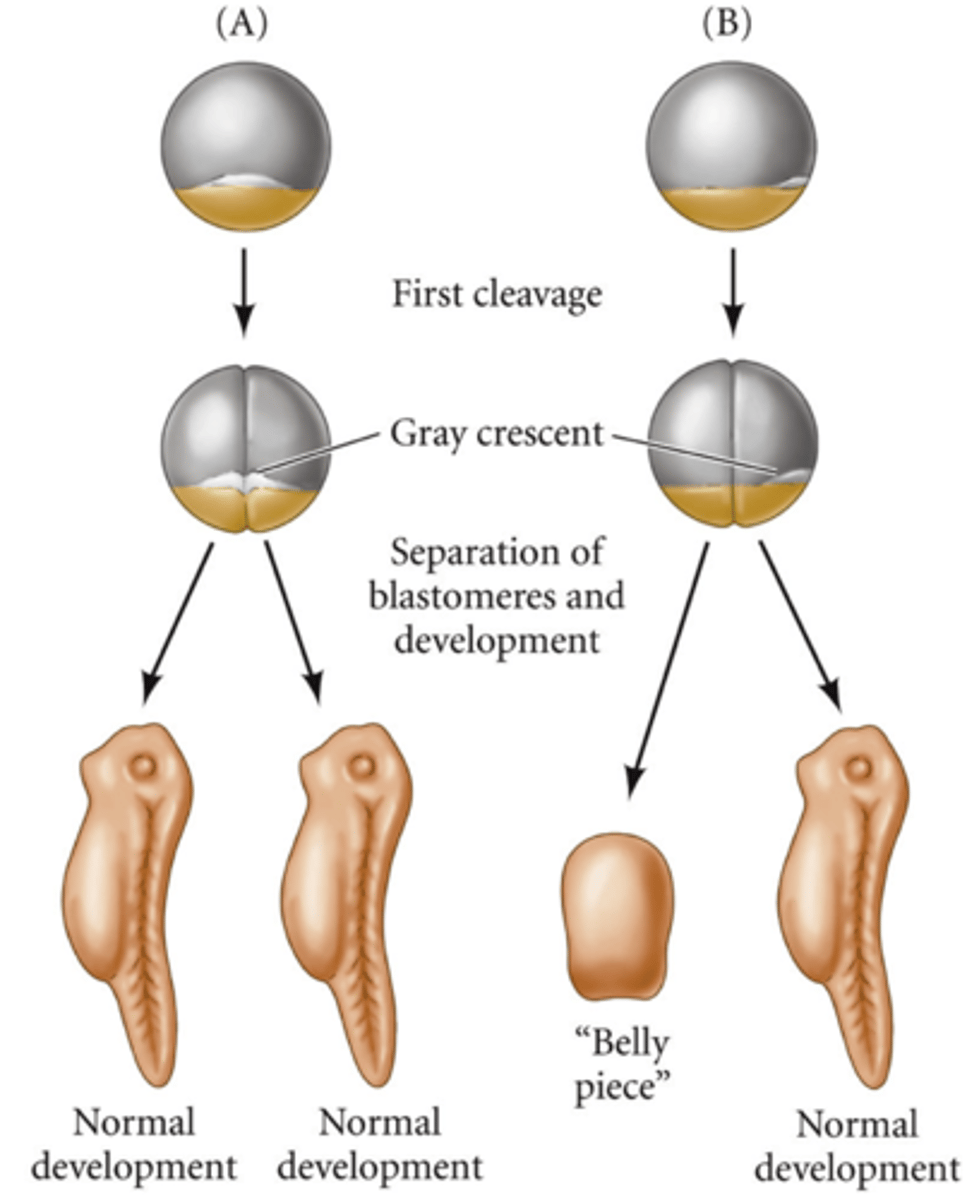
The dorsal side of a frog in early embryonic development is always bisected by what division?
first cleavage plane
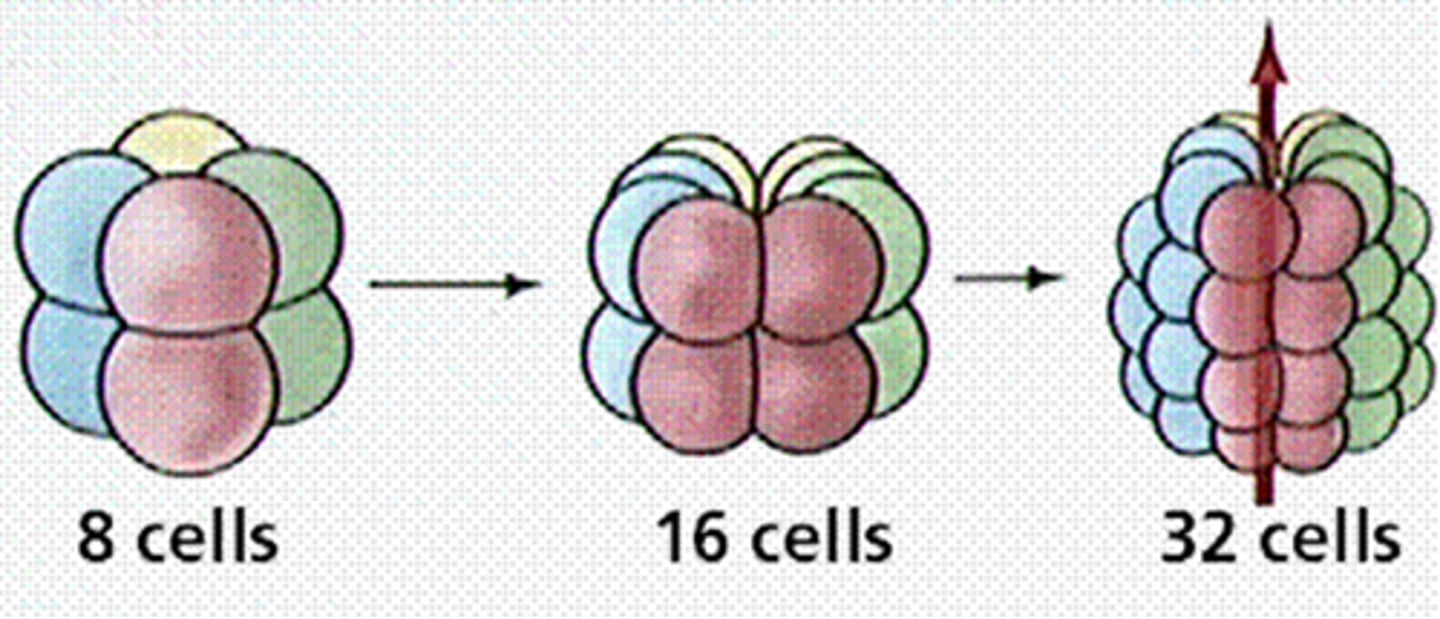
What does it mean that early cleavages are polar?
they divide the egg into segments that stretch from pole to pole
In frogs, which embryo pole is horizontal cleavage closest to?
animal pole
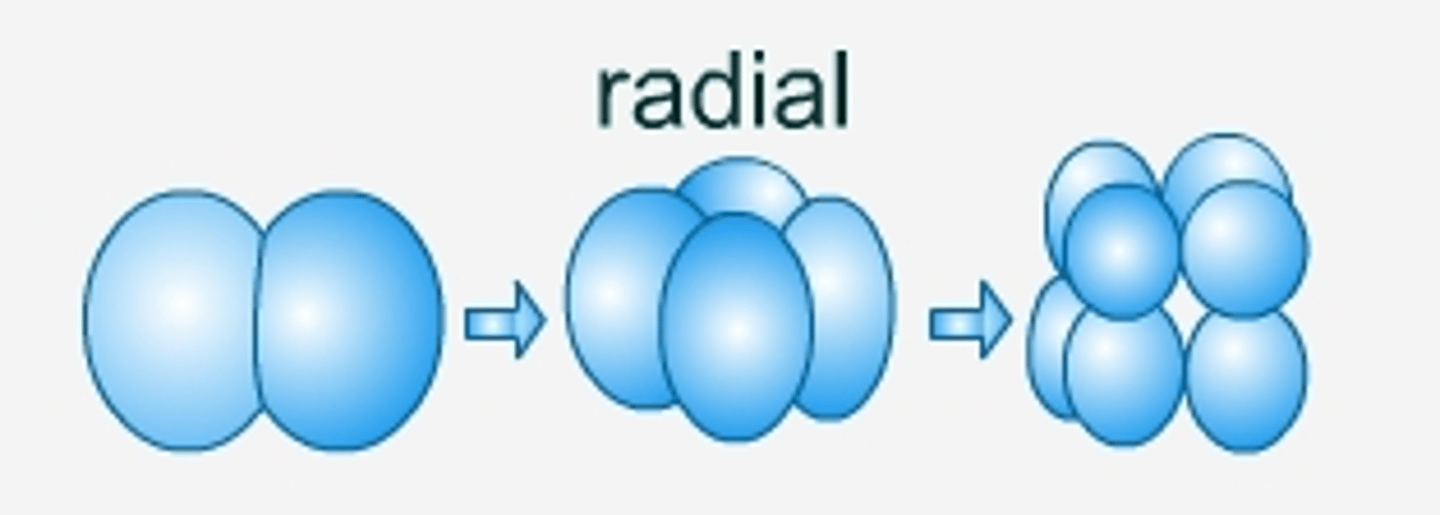
Radial cleavage occurs in which organisms?
deuterostomes
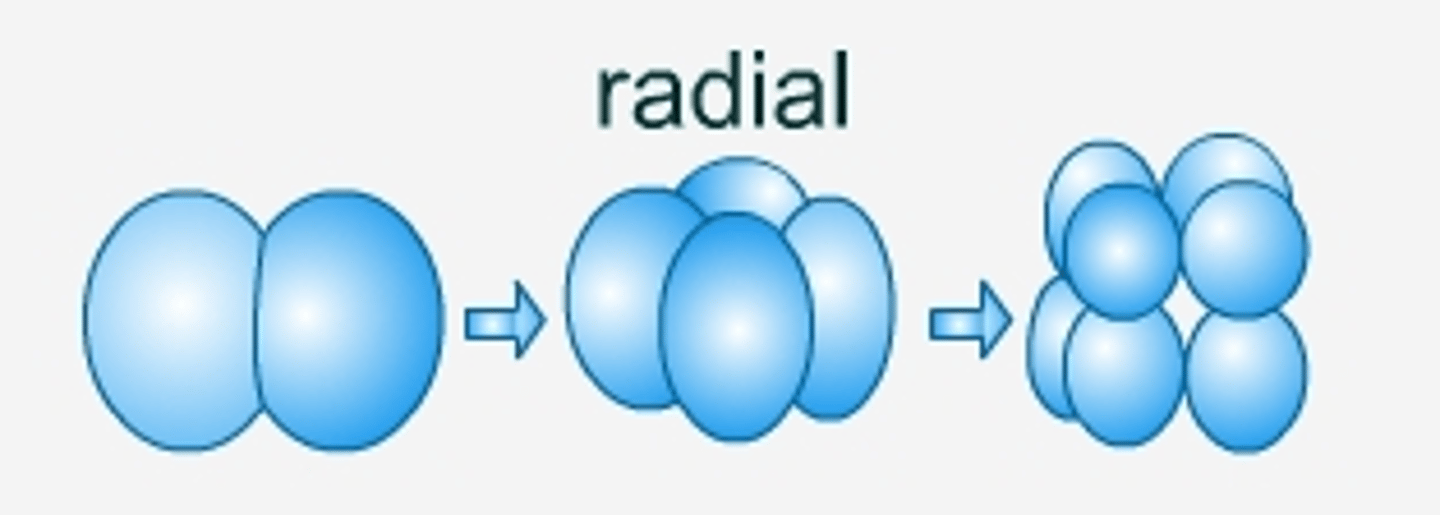
Radial cleavage forms which type of cells?
indeterminate cells
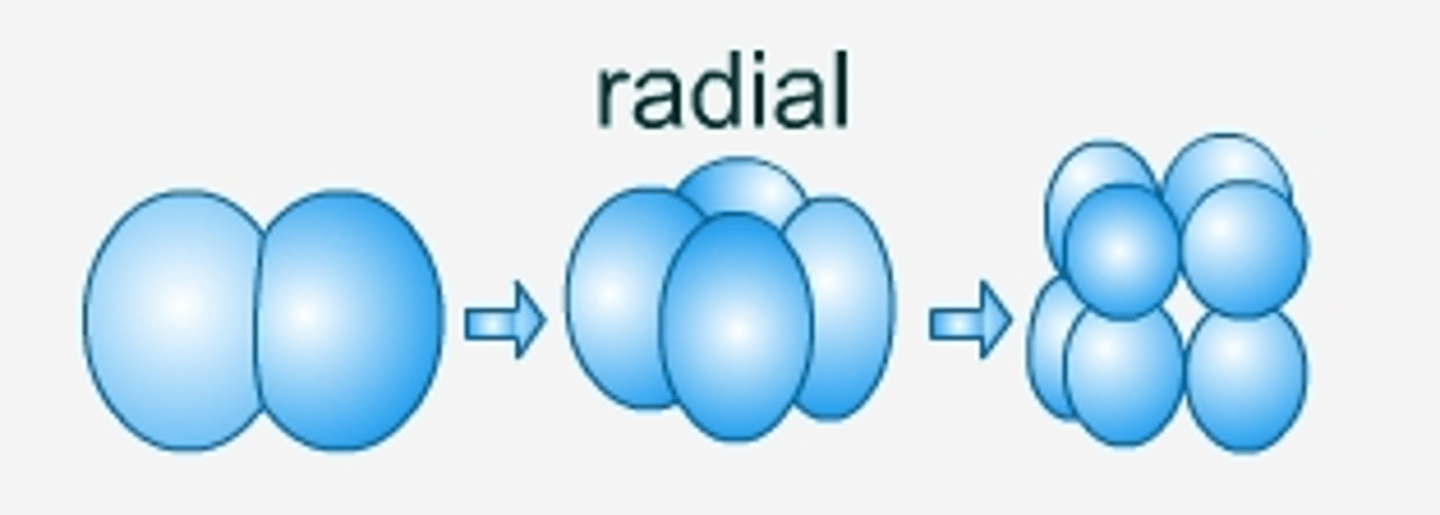
How are the indeterminate cells aligned after radial cleavage?
aligned directly
above and below
each other
Spiral cleavage occurs in which organisms?
protostomes
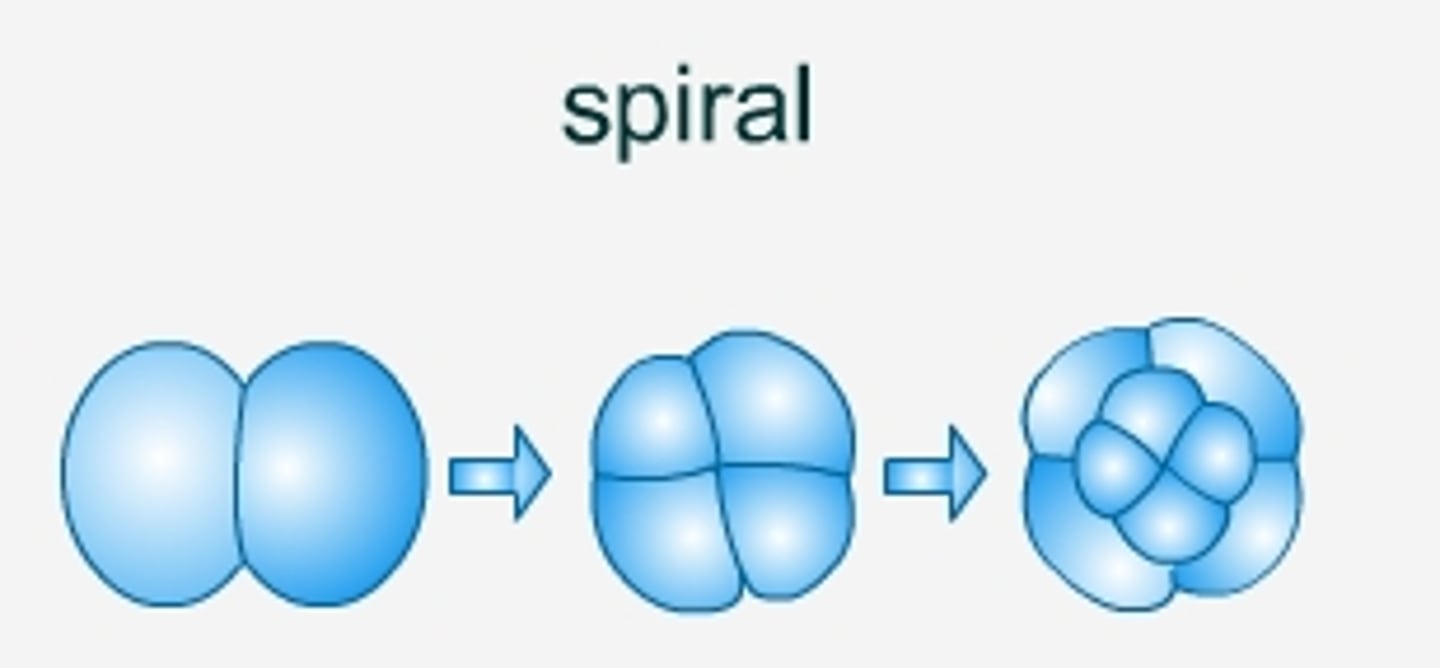
Spiral cleavage forms which type of cells?
determinate cells
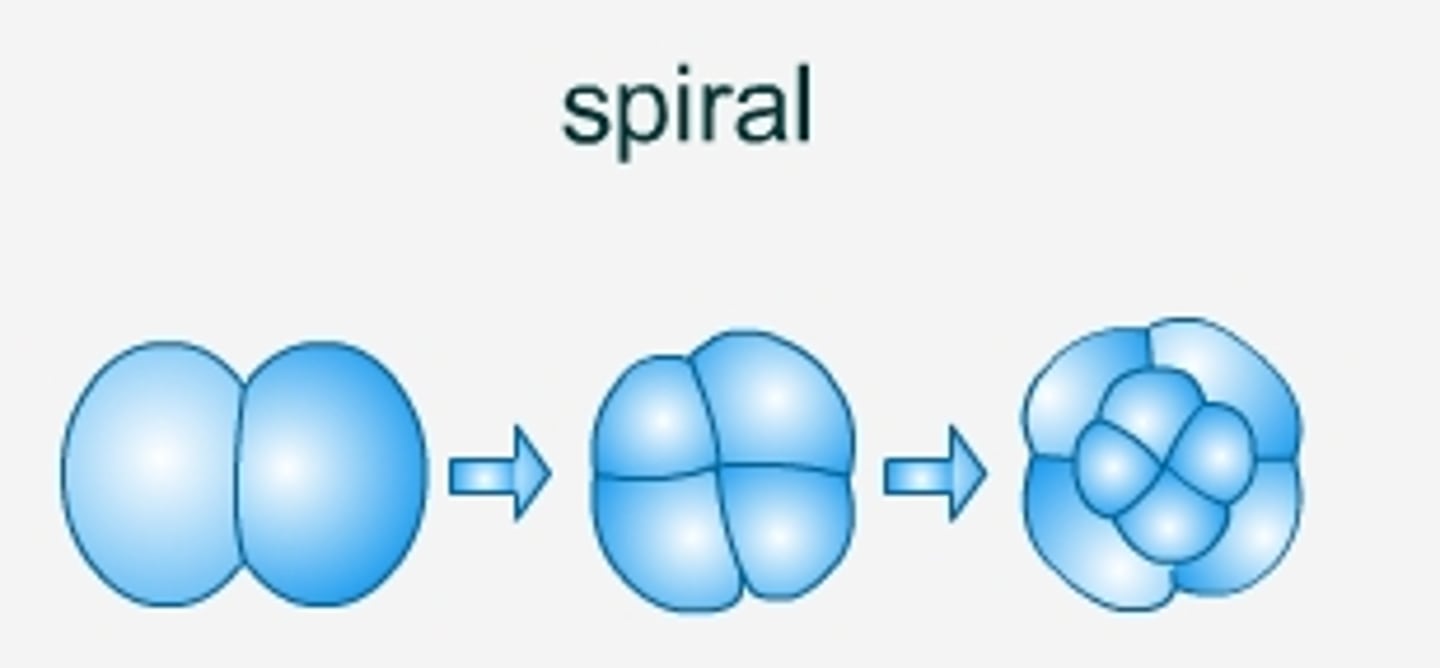
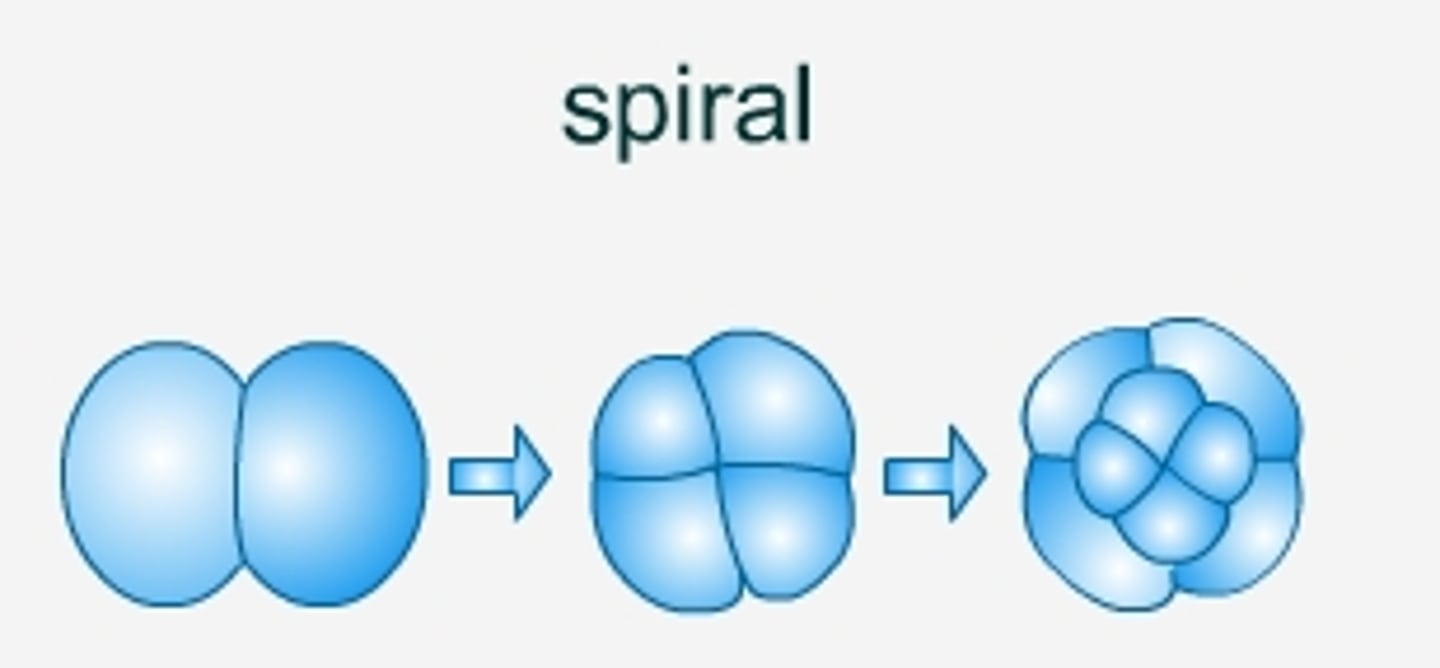
How are the determinate cells aligned after spiral cleavage?
cells formed on
top are shifted
relative to those below
What structure does the first opening form in protostomes?
mouth
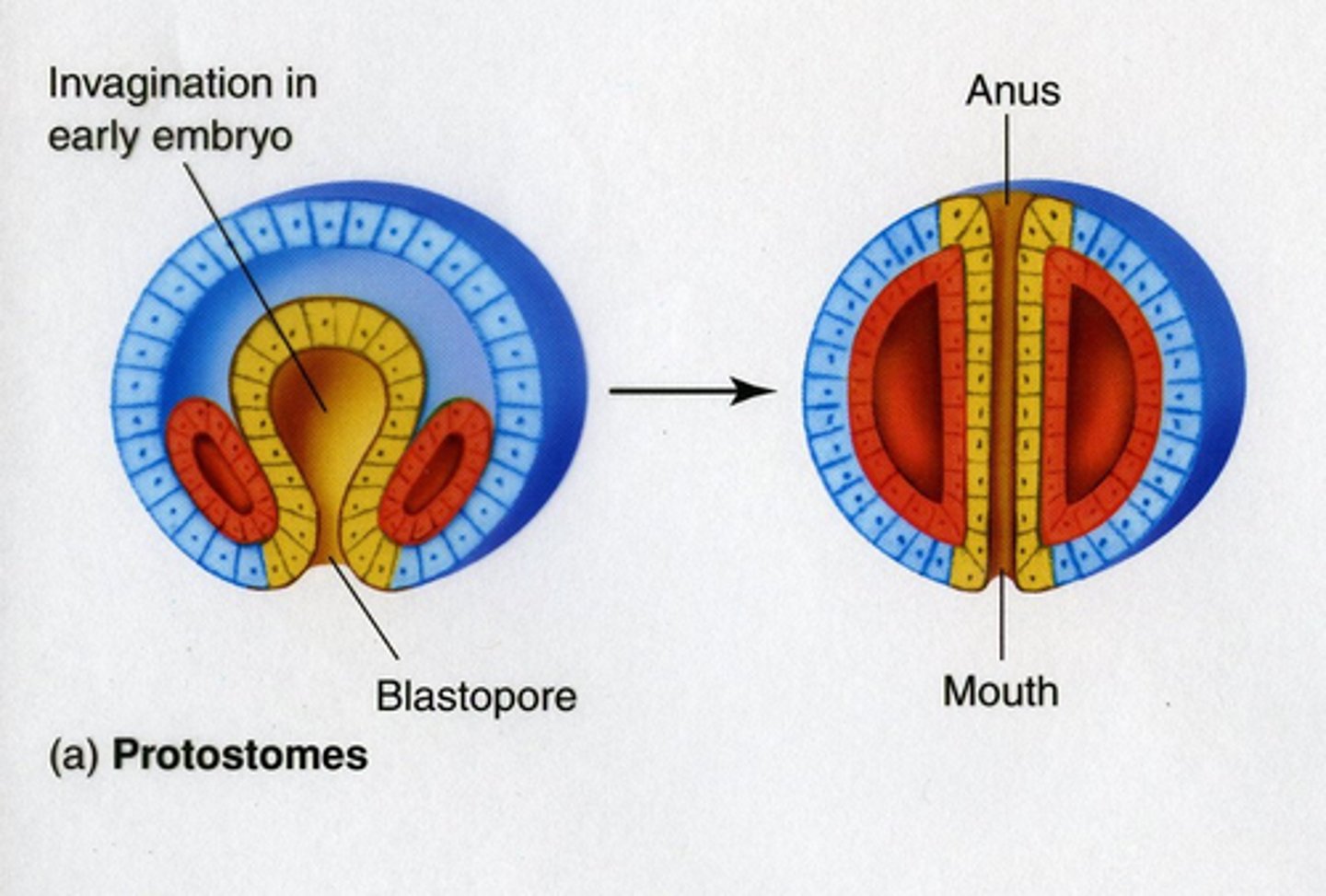
What structure does the first opening form in deuterostomes?
anus
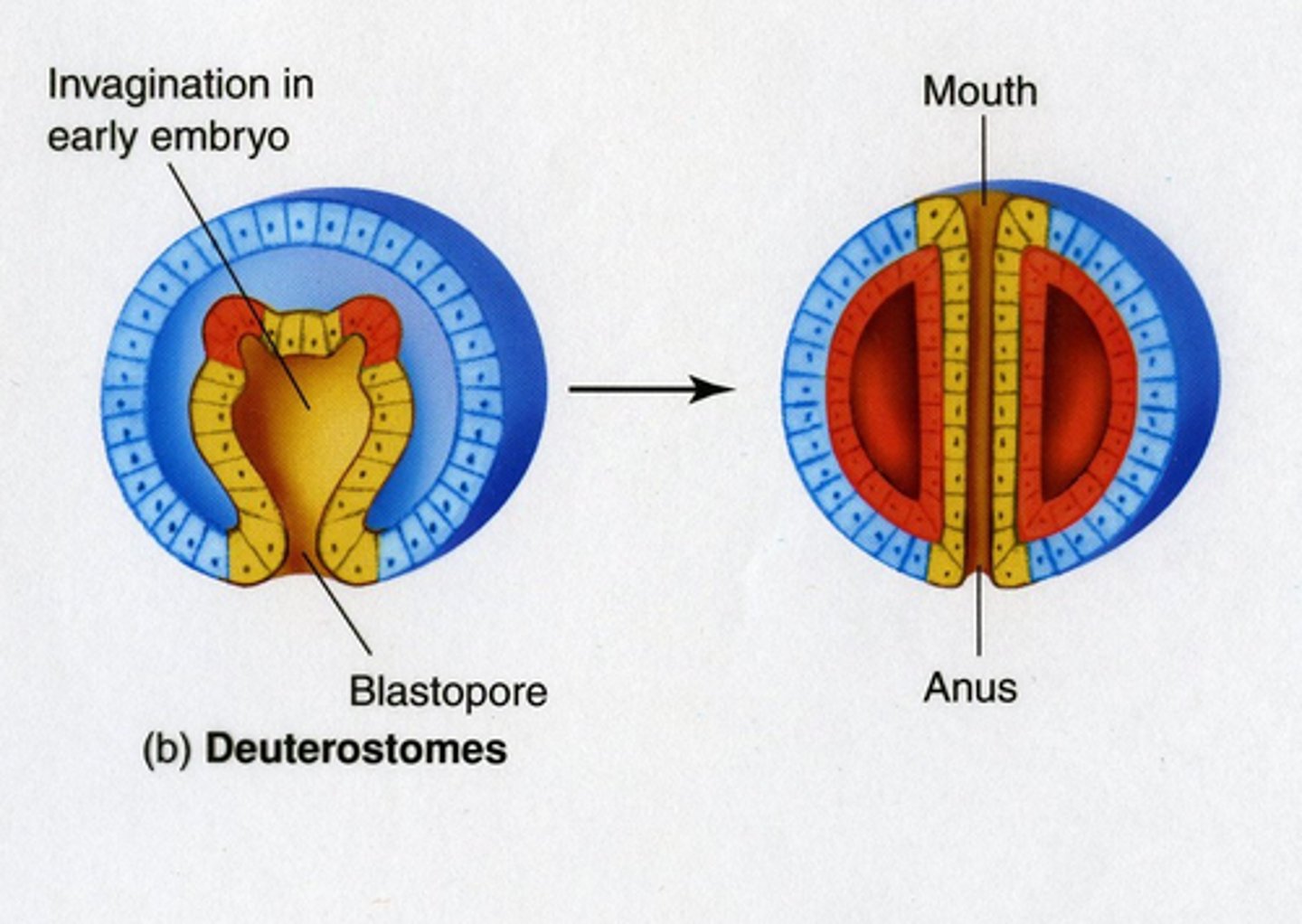
In which type of cleavage can blastomeres individually complete normal development if separated?
indeterminate
In which type of cleavage do blastomeres fail to individually complete normal development if separated?
determinate cleavage
(Note: each is differentiated into part of the embryo)
Which type of cleavage is complete and passes all the way through the zygote?
holoblastic cleavage
In which organisms does holoblastic cleavage occur?
most vertebrate ancestors and descendants
Which type of cleavage is only partial?
meroblastic cleavage
In which organisms does meroblastic cleavage occur?
1. birds
2. reptiles
3. fish
4. monotremes
5. mollusks
What reproductive unit forms from the successive cleavage that results in a solid ball of ~8 cells?
morula
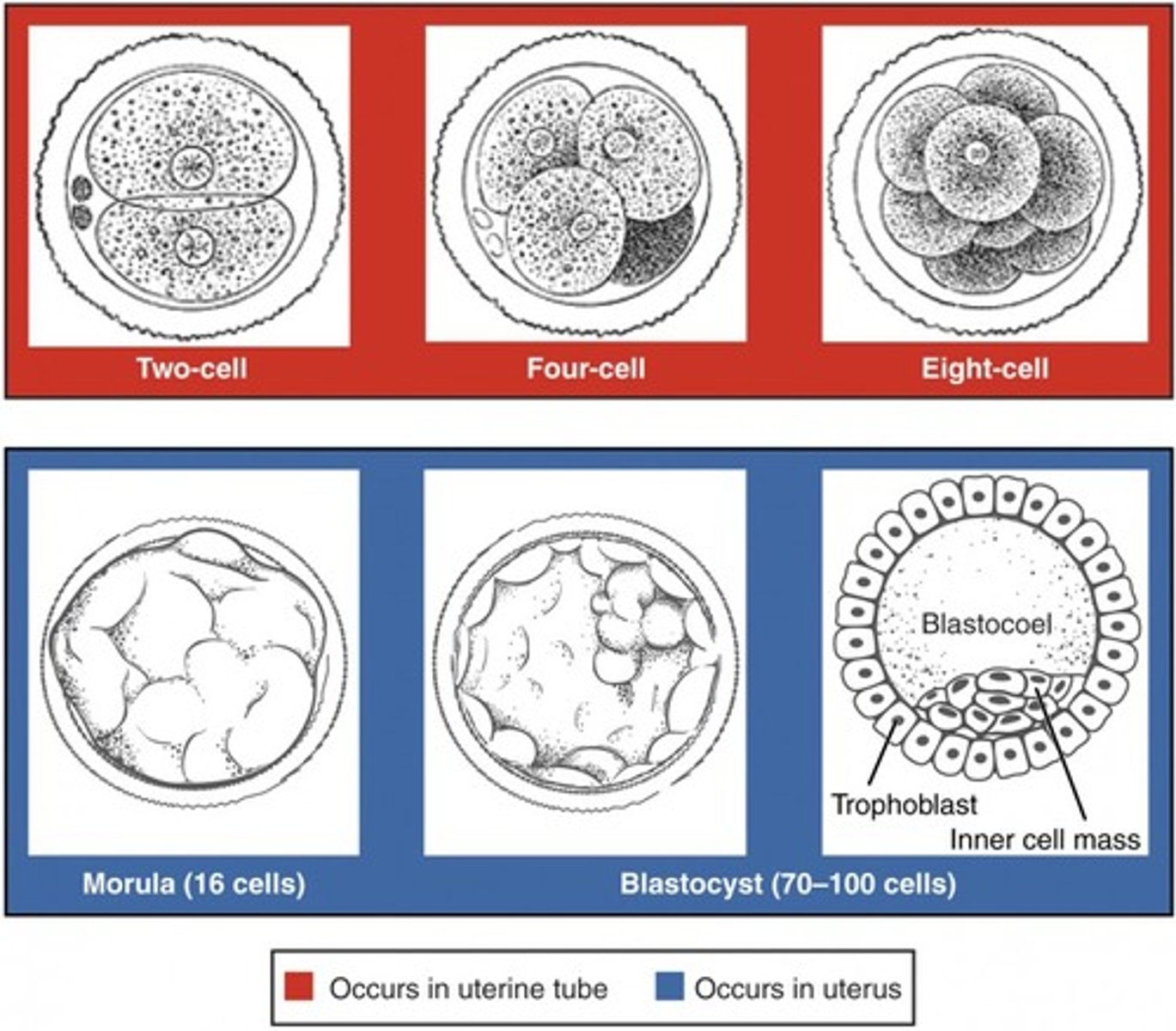
What term describes the ability of the first cells of the morula to give rise to any cell type?
totipotent
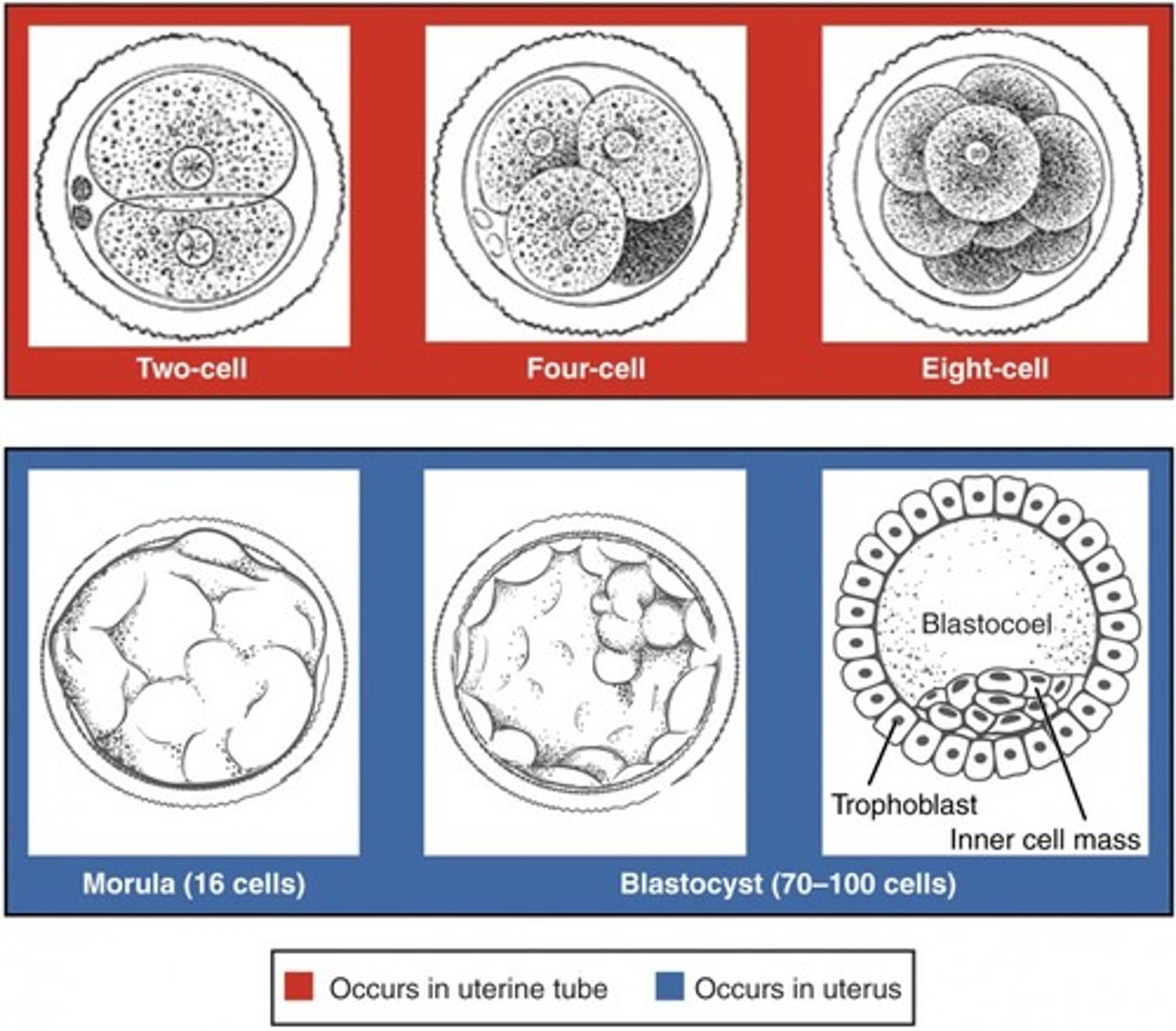
What reproductive unit forms when cell division continues, liquid fills the morula, and cells are pushed outward?
blastula
(Note: circular
cavity surrounded by
a single layer of cells)
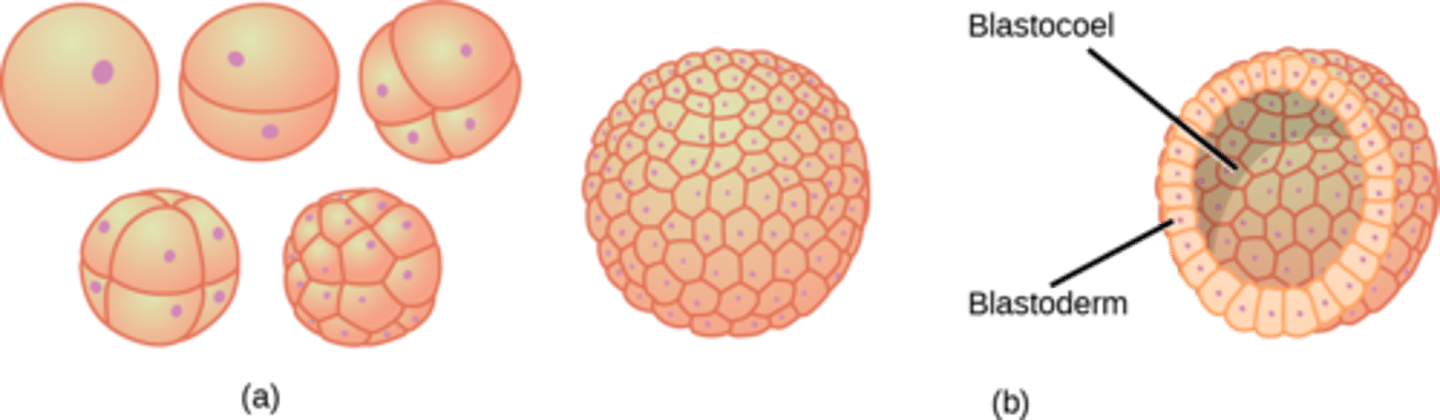
What is the fluid filled cavity of the blastula?
blastocoel
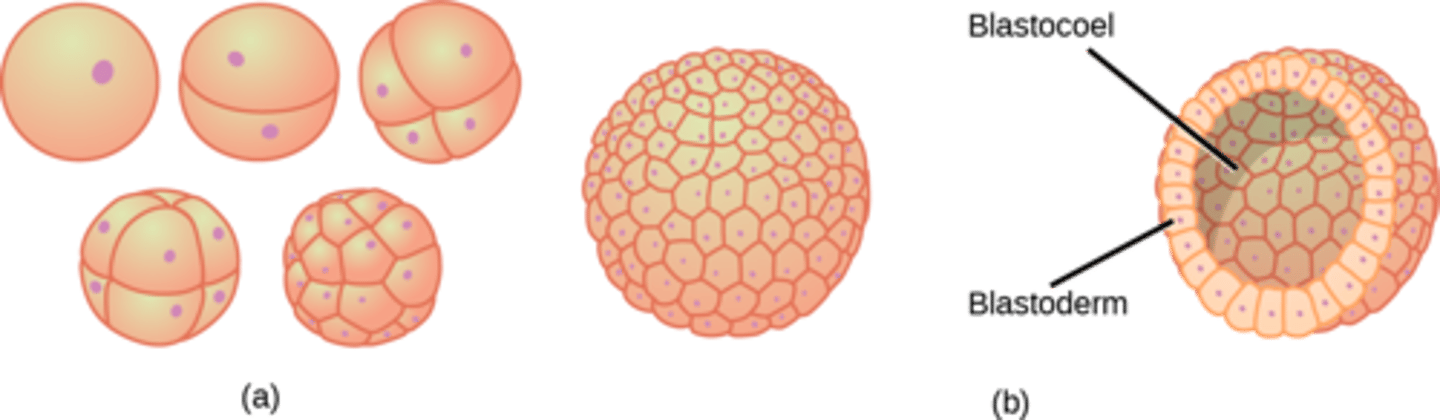
Approximately how many cells are present at the blastula stage?
~128 cells
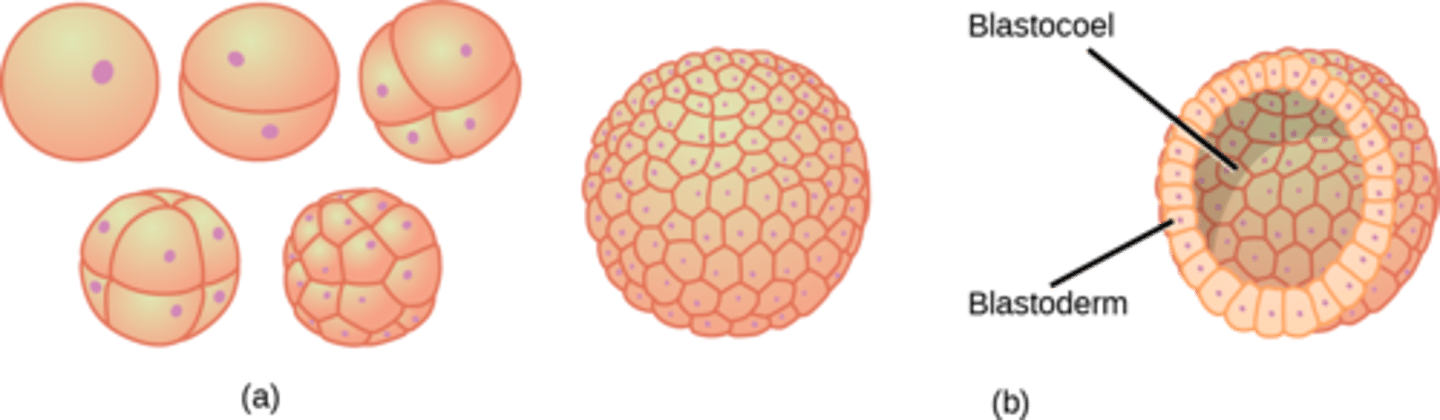
In humans, what is the blastula called when it implants into the endometrium?
blastocyst
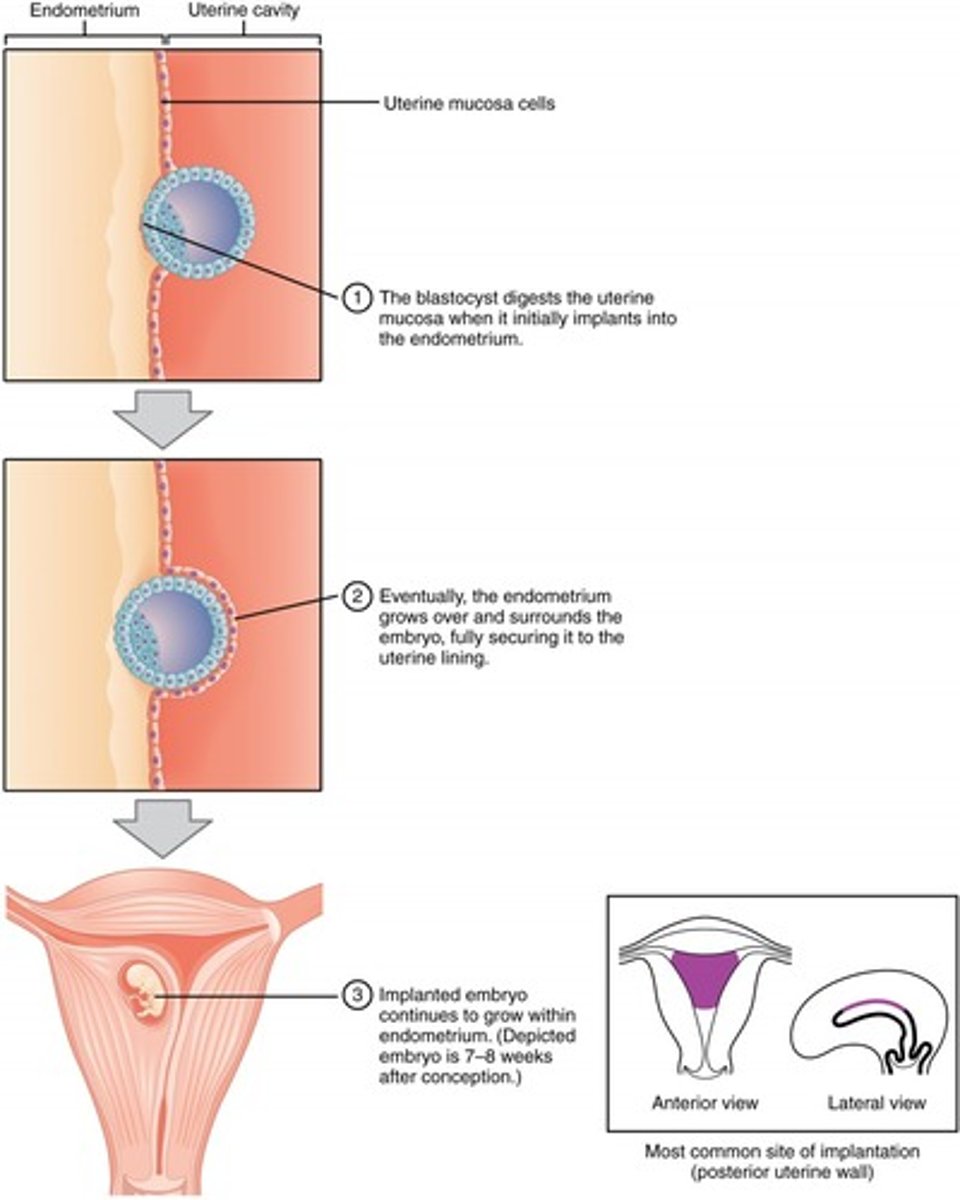
A blastocyst contains what structure in its interior?
inner cell mass
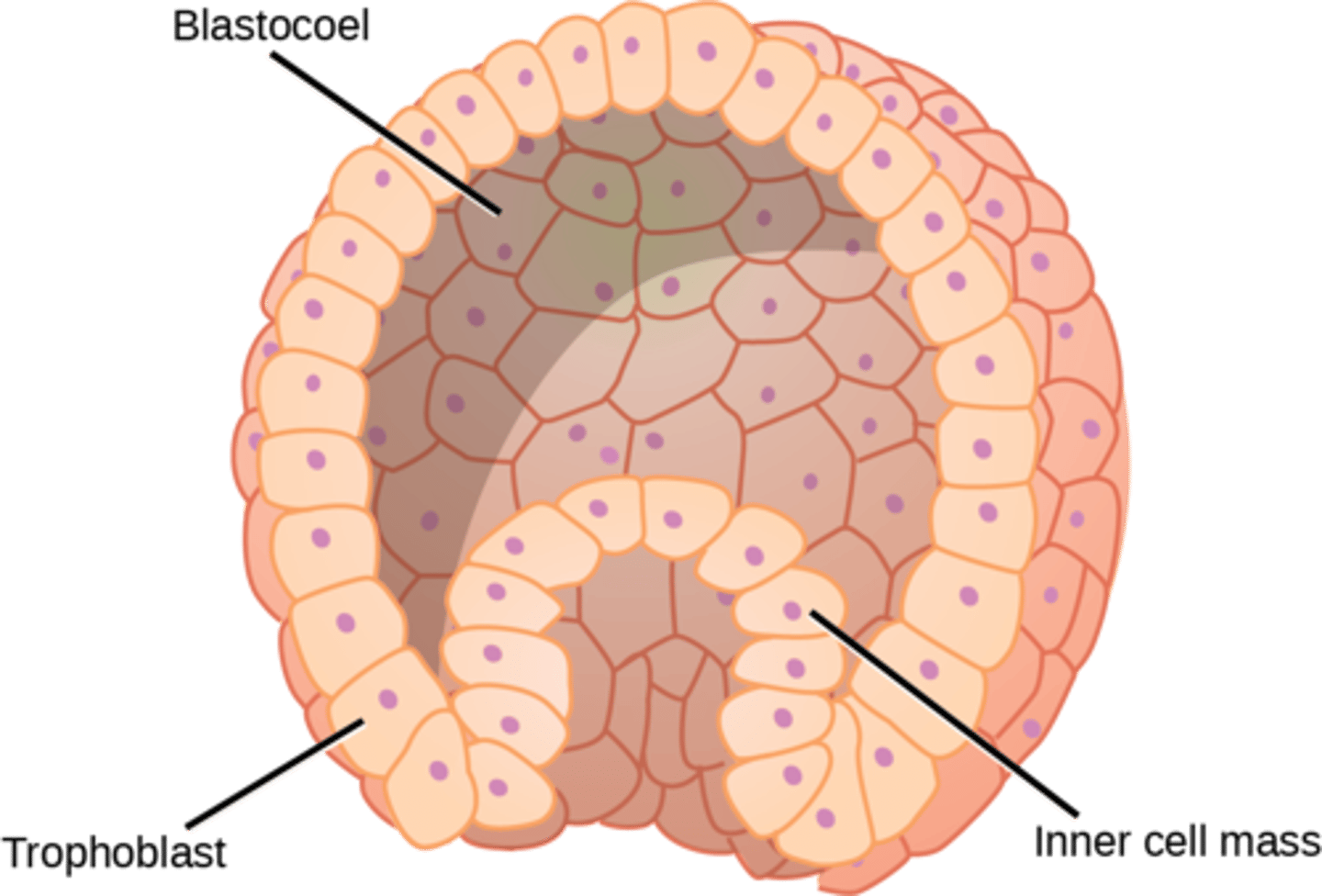
How does the frog blastula differ from the blastula of a sea urchin?
frog has a built up vegetal hemisphere
What term describes the ability of the blastula's cells to develop into any cell type but not a complete organism?
pluripotent
What reproductive unit is formed by the invagination of a group of cells into the blastula?
gastrula
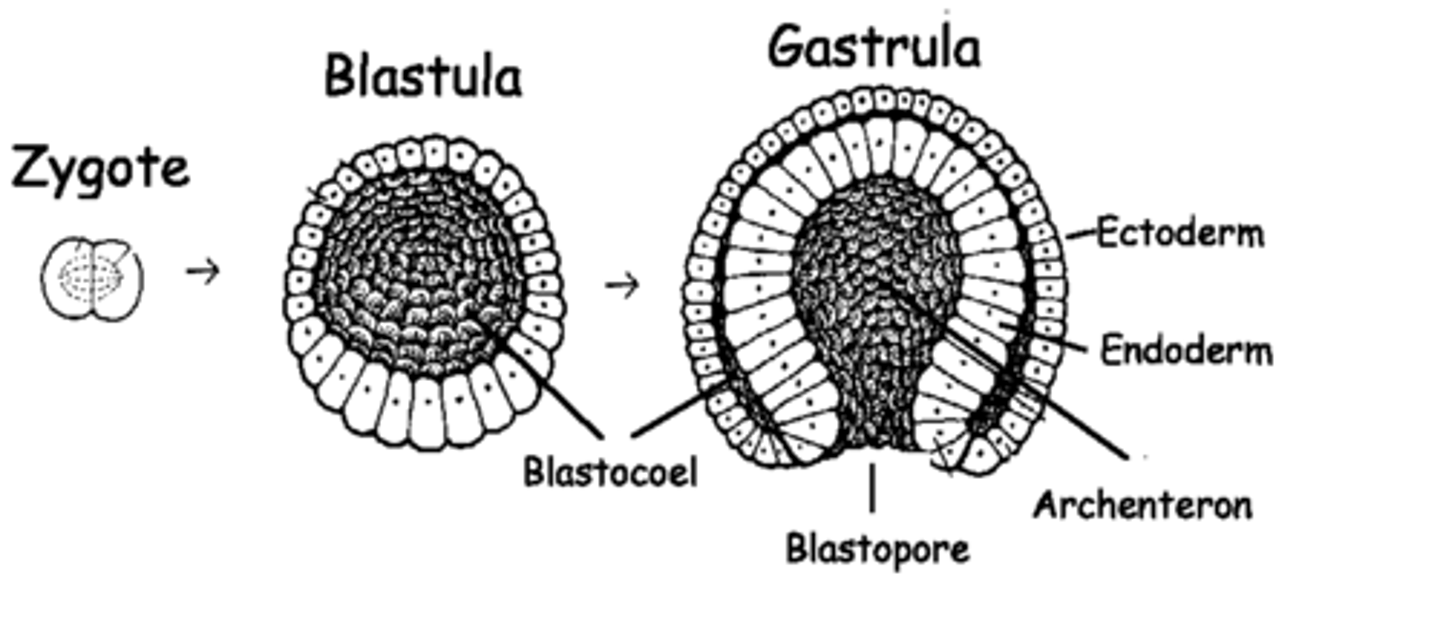
What is the structure of the gastrula?
1. 2 layered embryo
2. opening from the
outside to a center cavity
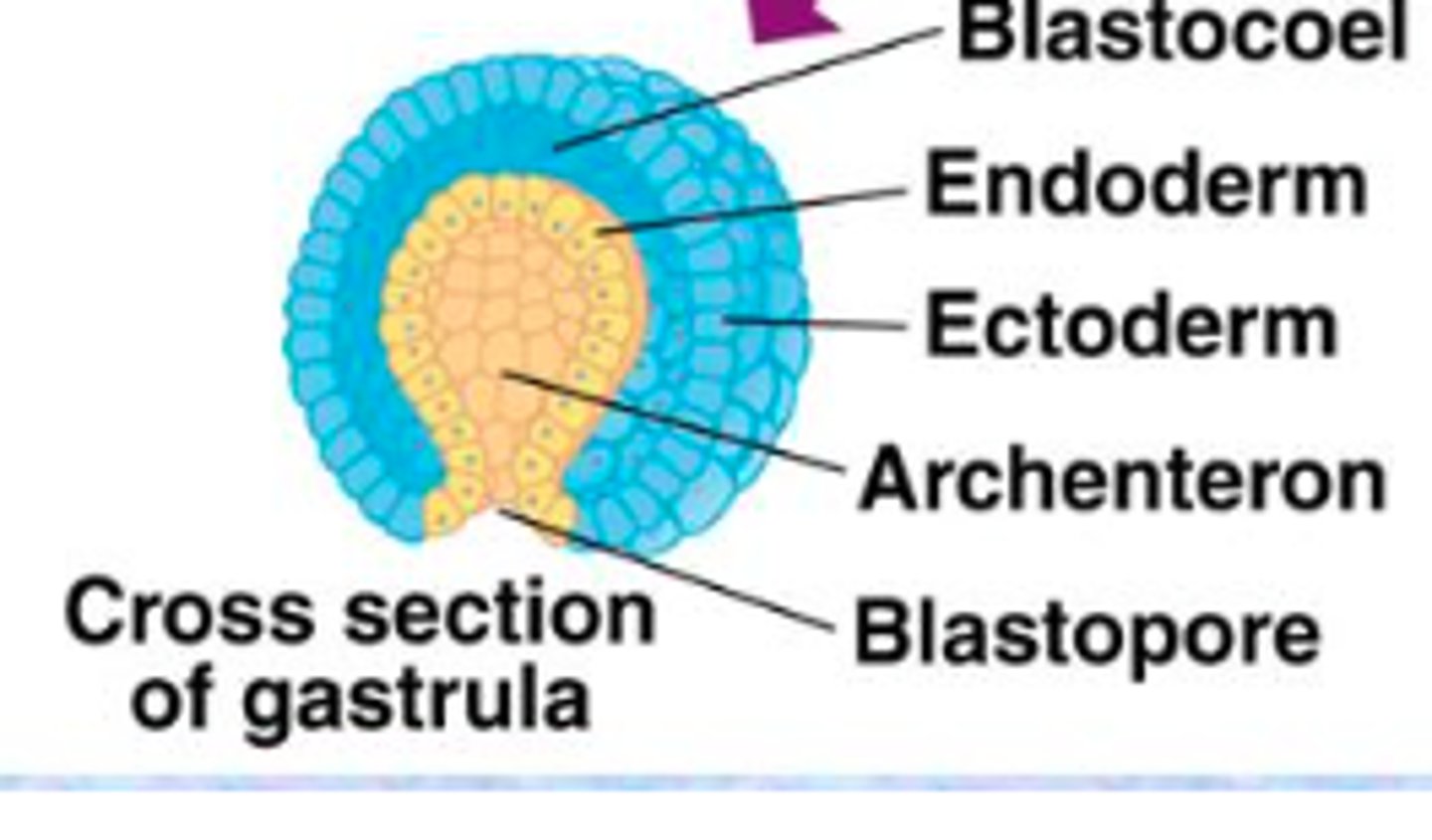
Approximately when does the gastrula form post fertilization?
~14 days
Which structure's contractions cause the invagination of the blastula?
actin filaments
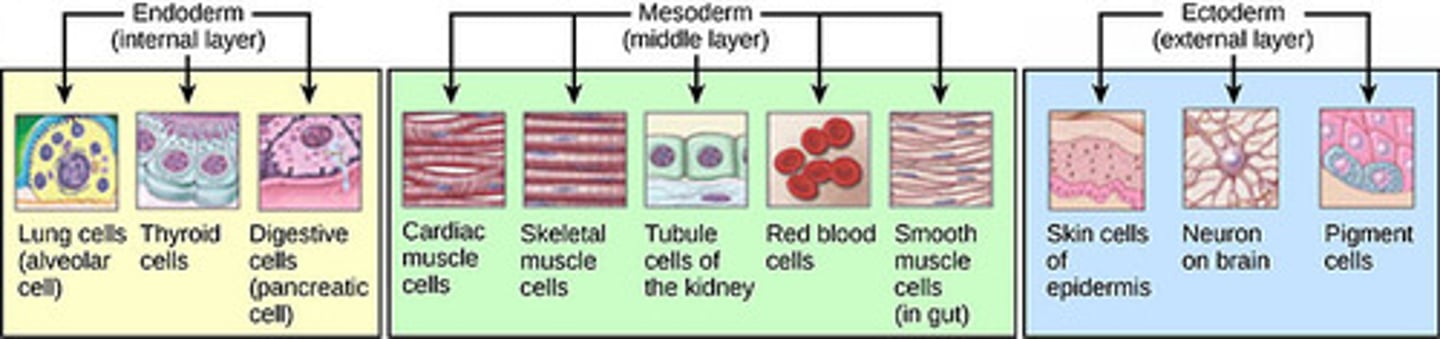
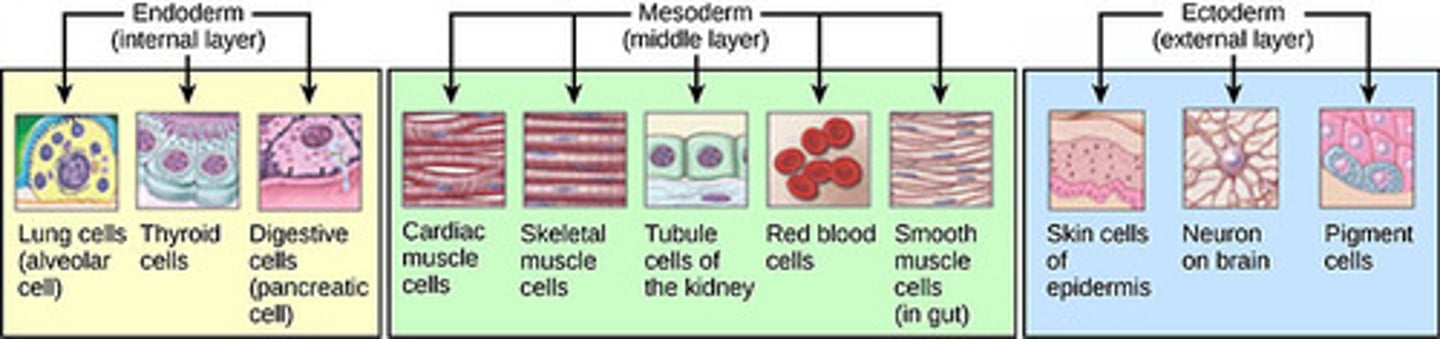
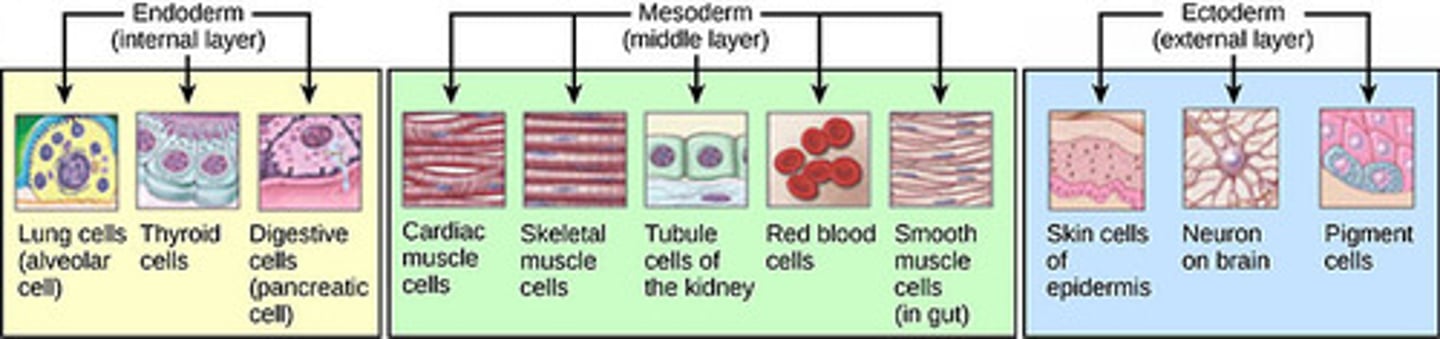
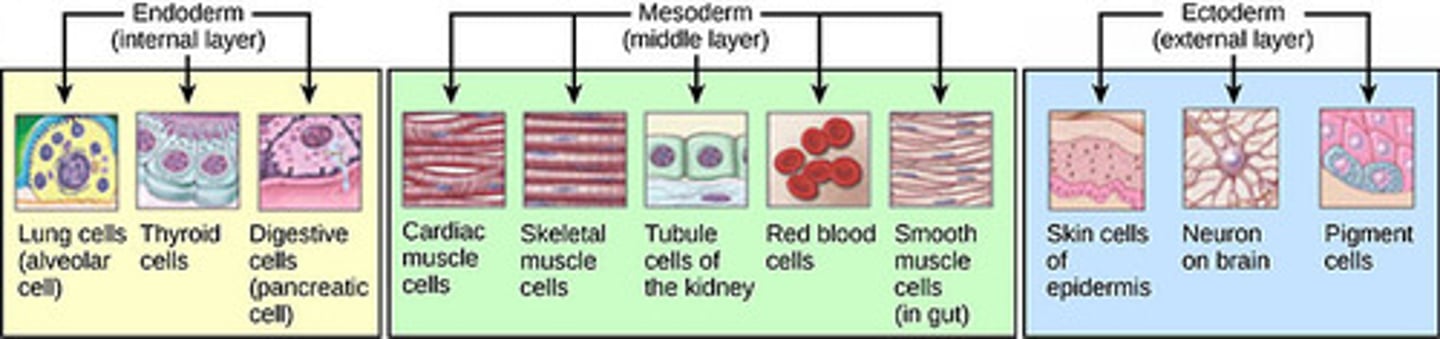
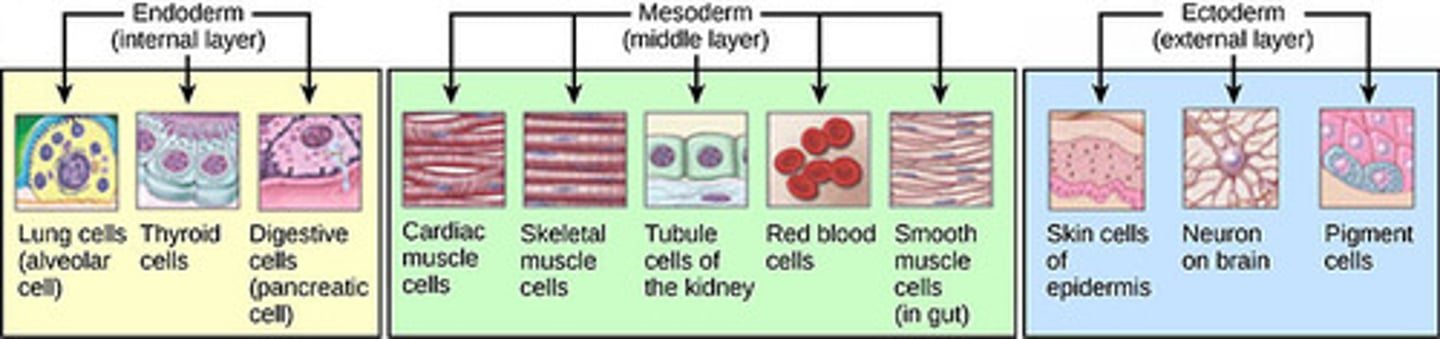
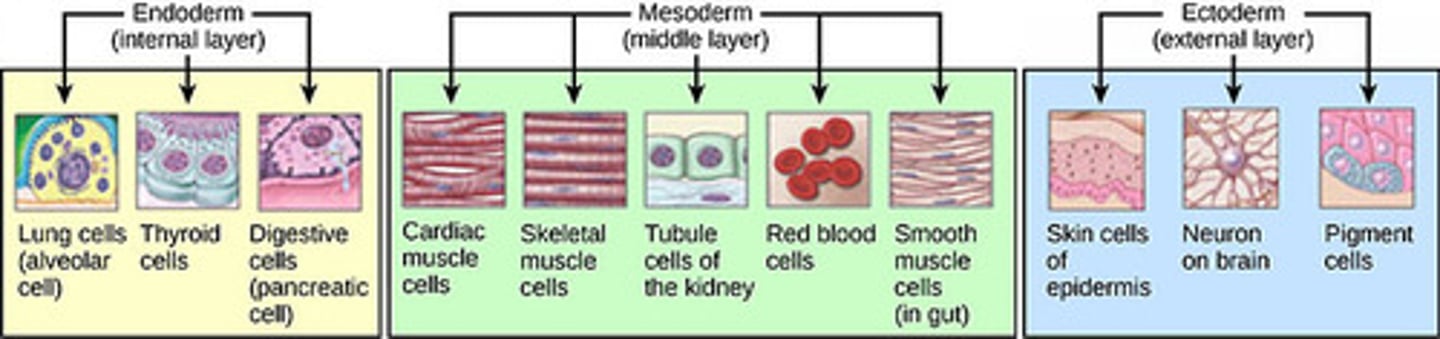
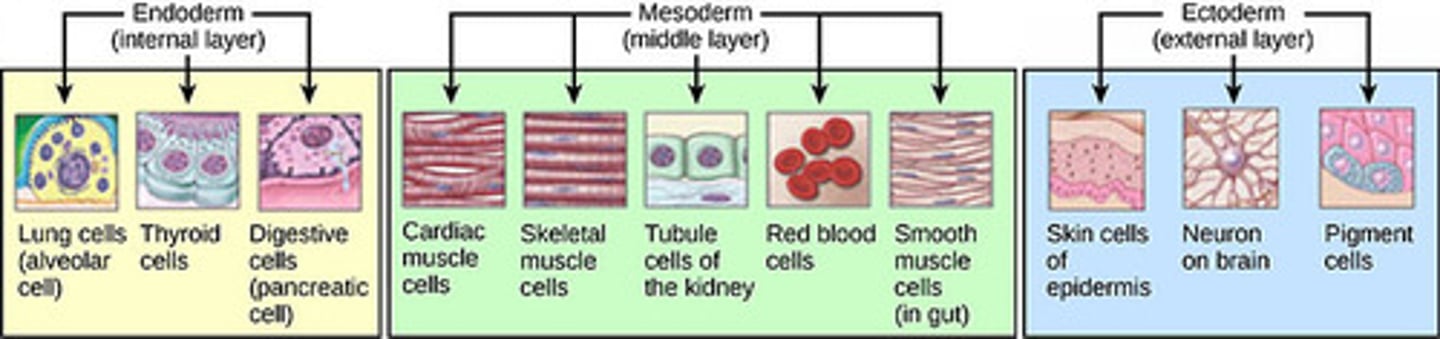
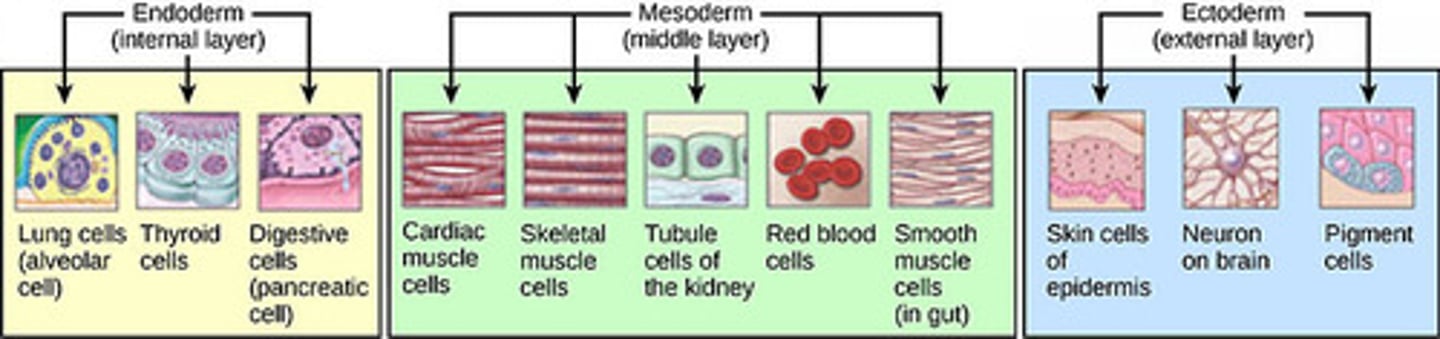
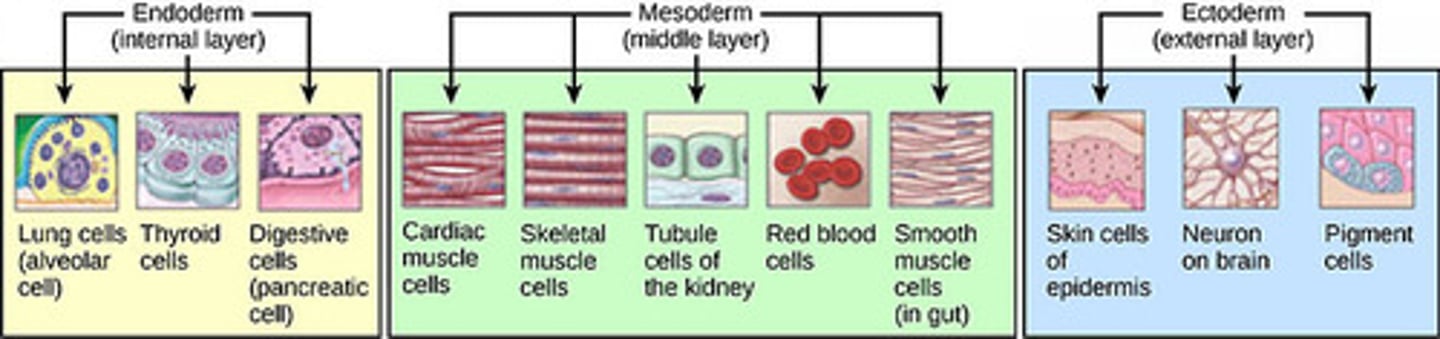
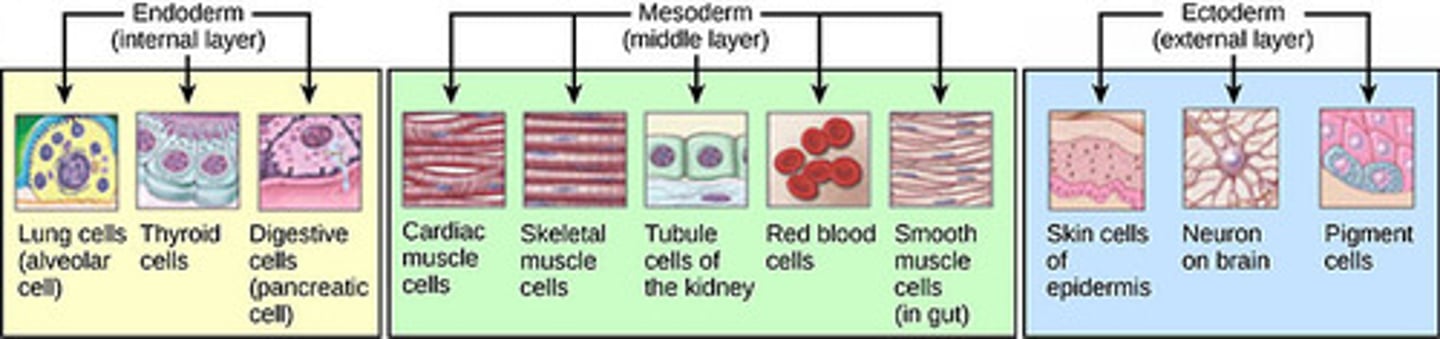
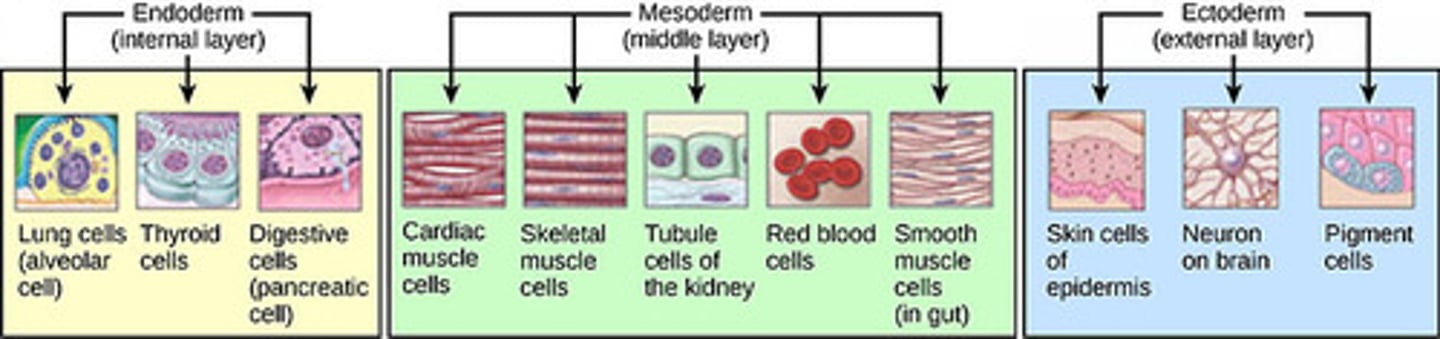
What are the 3 germ layers of the gastrula?
1. ectoderm
2. mesoderm
3. endoderm
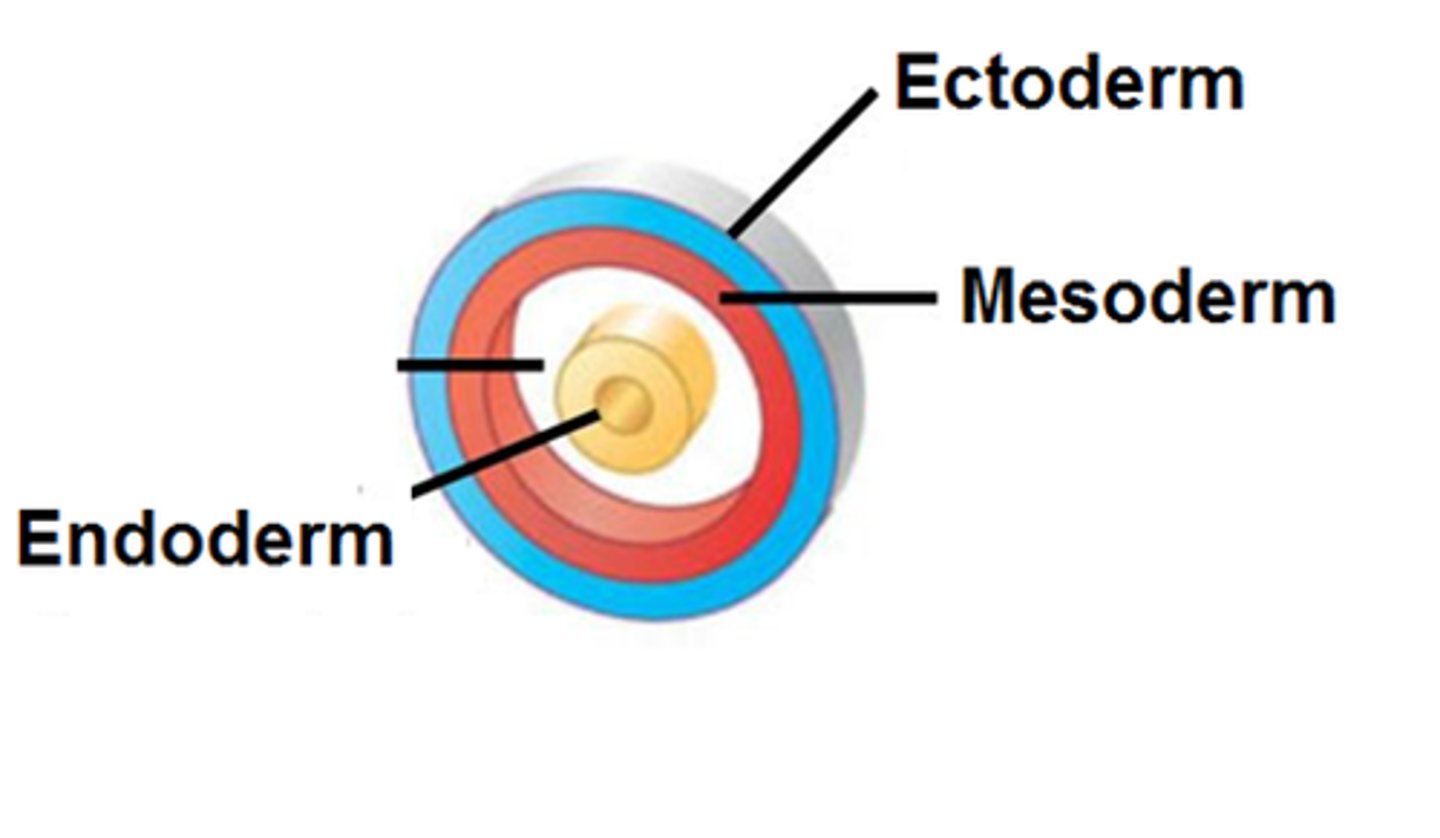
Which germ layer gives rise to the nervous system (brain and
spinal cord)?
ectoderm
Which germ layer gives rise to the integument (epidermis, hair,
epithelium of nose, mouth, and anal canal)?
ectoderm
Which germ layer gives rise to the sensory structures (lens of
eye, retina)?
ectoderm
Which germ layer gives rise to the neural tube?
ectoderm
Which germ layer gives rise to the teeth, jaws, and bones of
face and skull?
ectoderm
(Note: via neural crest cells)
Which germ layer gives rise to the adrenal medulla?
ectoderm
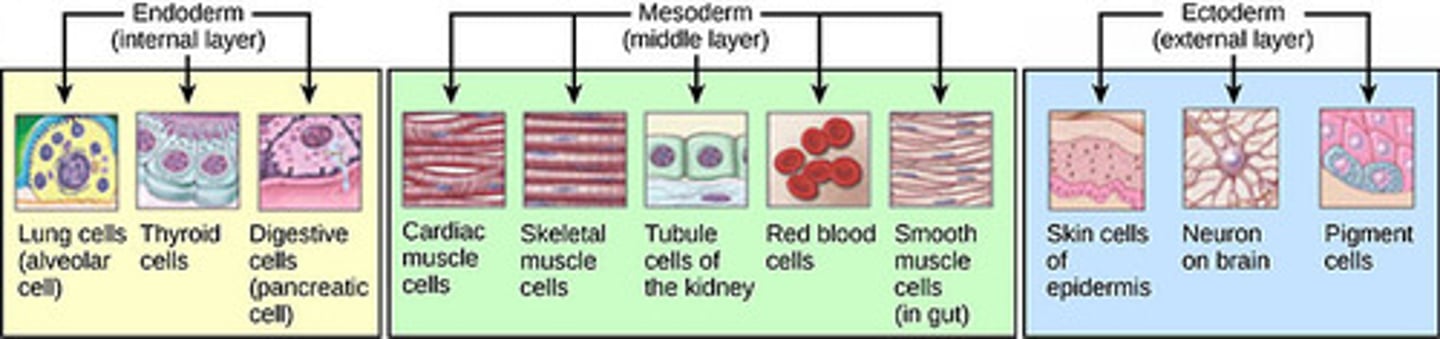
Which germ layer gives rise to the musculoskeletal system?
mesoderm
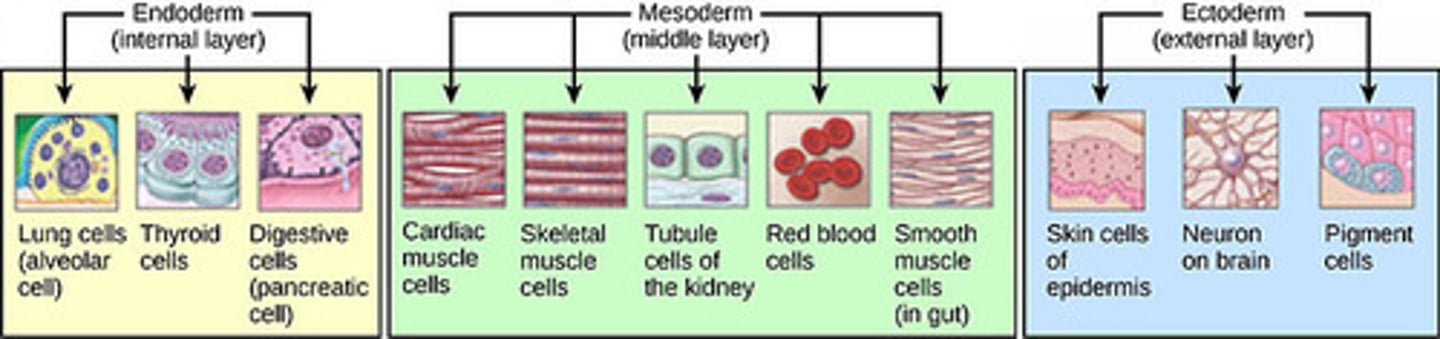
Which germ layer gives rise to the circulatory/lymphatic system?
mesoderm
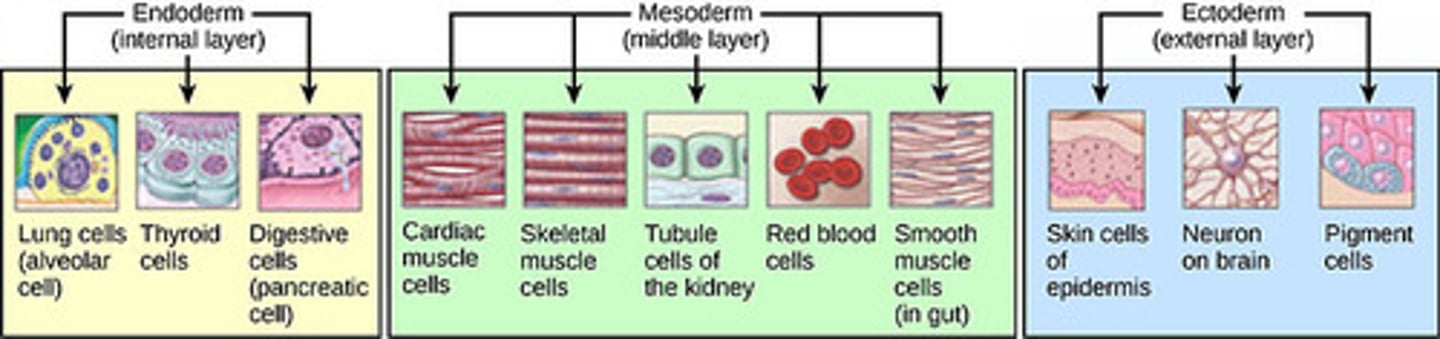
Which germ layer gives rise to the excretory system?
mesoderm
Which germ layer gives rise to the gonads?
mesoderm
Which germ layer gives rise to the connective tissue?
mesoderm
Which germ layer gives rise to portions of the digestive and respiratory system?
mesoderm
Which germ layer gives rise to the somites?
mesoderm
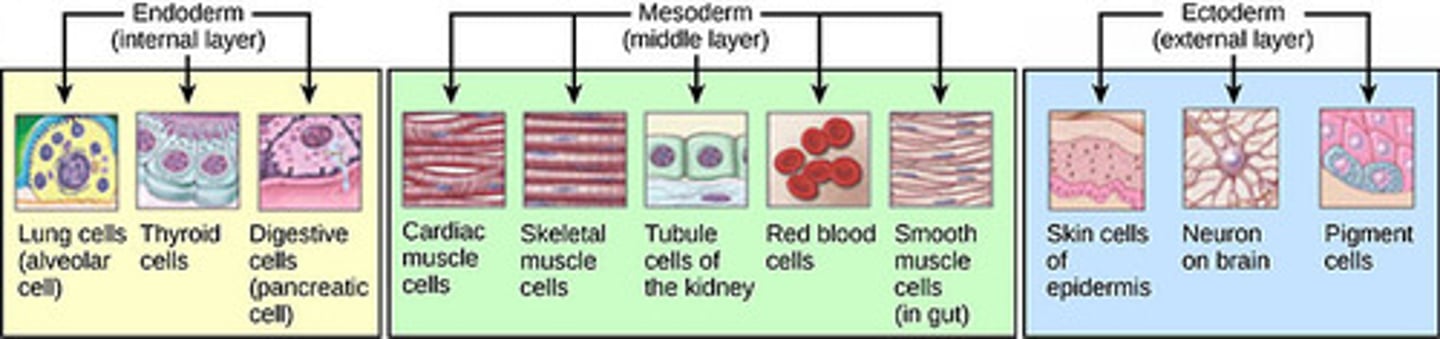
Which germ layer gives rise to the kidneys?
mesoderm
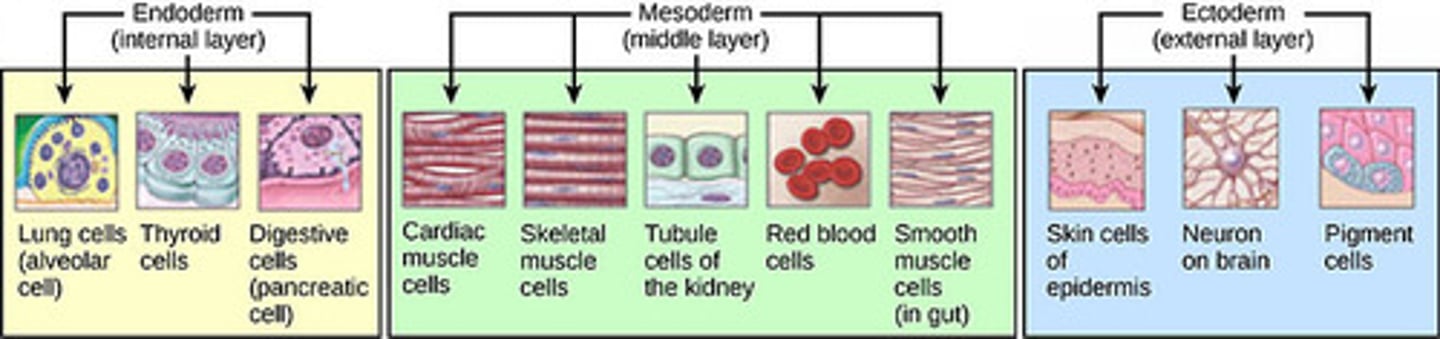
Which germ layer gives rise to the dermis of the skin?
mesoderm
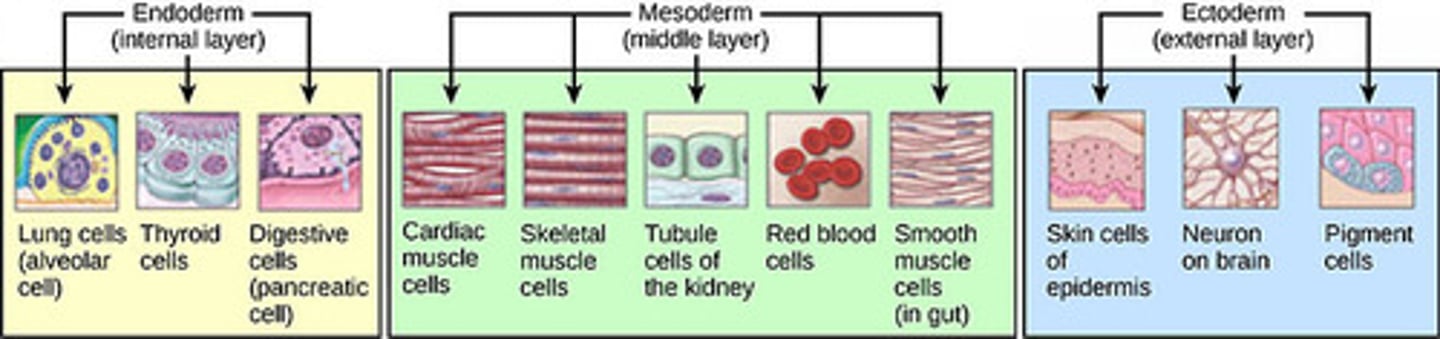
Which germ layer gives rise to the adrenal cortex?
mesoderm
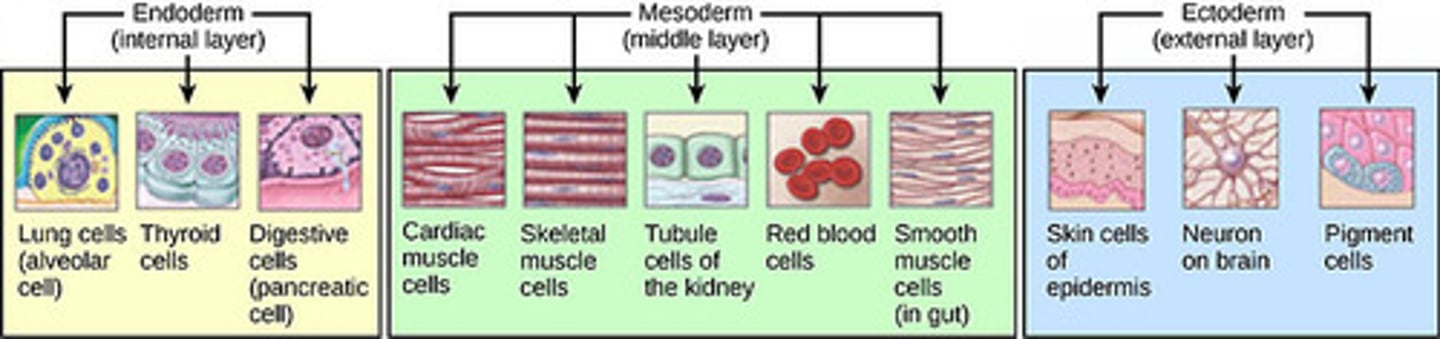
Which germ layer gives rise to the epithelial lining of digestive and respiratory tract?
endoderm
Which germ layer gives rise to the parts of the liver?
endoderm
Which germ layer gives rise to the pancreas?
endoderm