Ocean Sciences Volunteering marine animals to remember
 Call Kai
 Learn
Learn Practice Test
 Spaced Repetition
 Match
Match Flashcards
 Knowt Play
1/18

There's no tags or description
Looks like no tags are added yet.
Name | Mastery | Learn | Test | Matching | Spaced | Call with Kai | Chat |
|---|
No analytics yet
Send a link to your students to track their progress
19 Terms
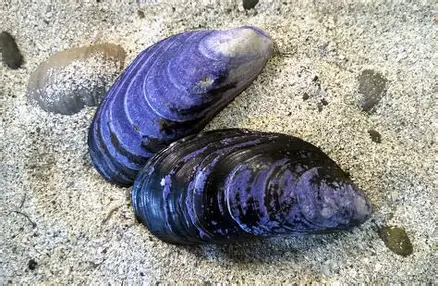
Blue Mussel
Adults usually measure 2 to 4 inches, but can grow up to 8 inches.
They attach to hard surfaces using byssal threads, strong protein fibers secreted from a gland in their foot
Blue mussels inhabit temperate to polar waters across both the North Atlantic and North Pacific
Blue mussels are filter feeders
Blue mussels have separate sexes and reproduce by releasing sperm and eggs into the water
Each female can produce 50 to 200 million eggs per spawning event (not all survive)
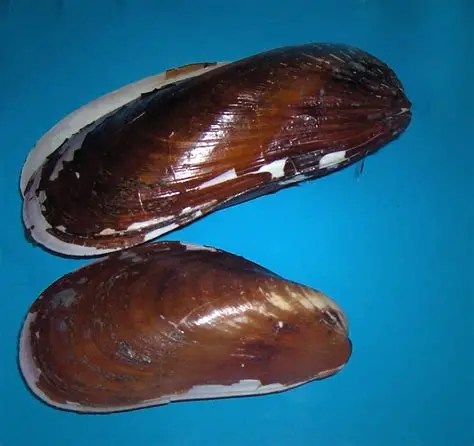
Horse Mussel
Horse mussels live partly buried in sediment or attached to rocks, from shallow waters down to 280 m in Scotland and up to 50 m in New Zealand
Horse mussels are dioecious broadcast spawners, releasing eggs and sperm into the water
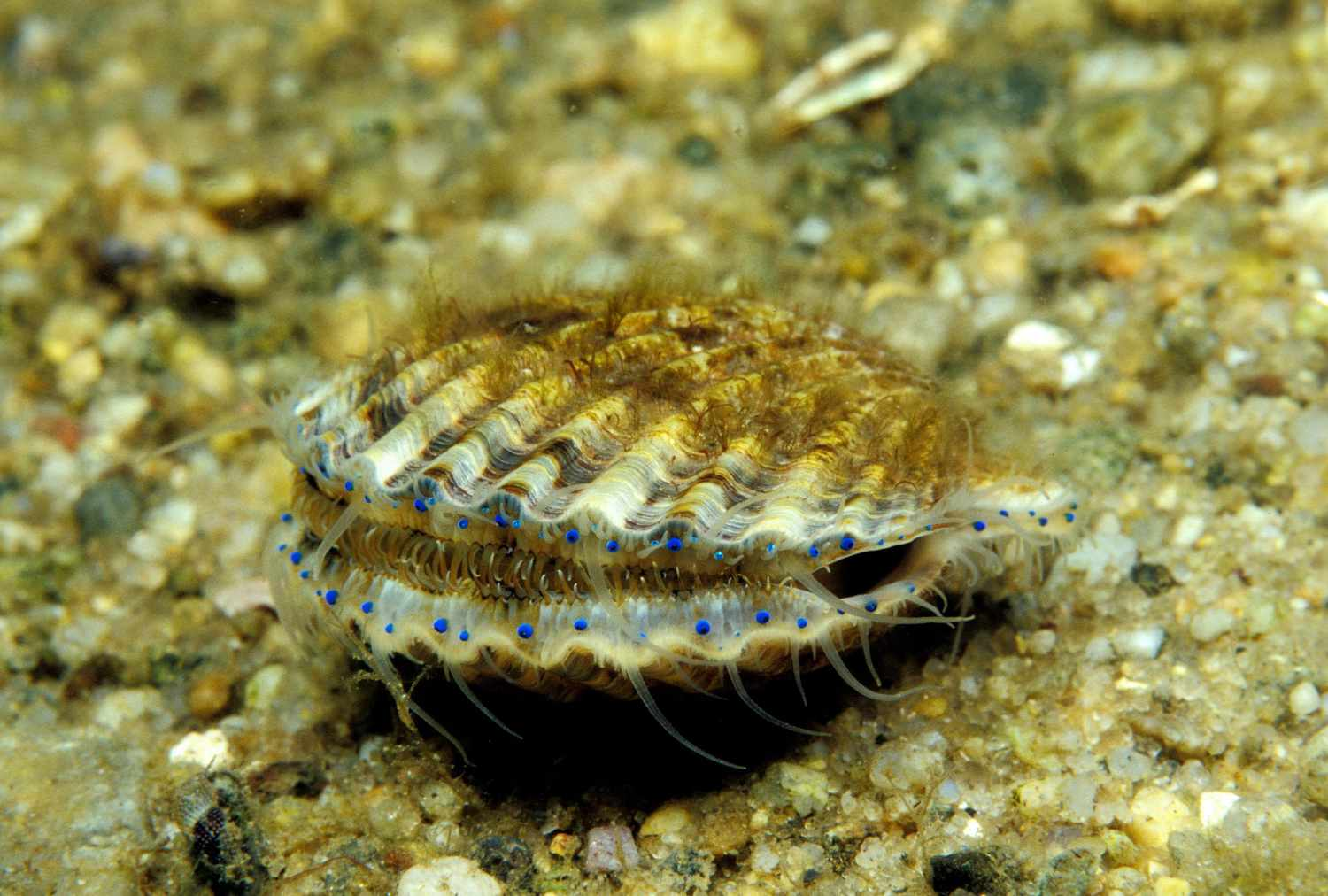
Sea Scallop
Unlike many bivalves, scallops are capable of swimming by rapidly clapping their shells together, which ejects water and propels them in a zigzag pattern to escape predators
most species prefer warmer, shallow waters
filter feeders, drawing water into their mantle cavity and filtering out phytoplankton and organic particles using their gills .
Most species are hermaphroditic,
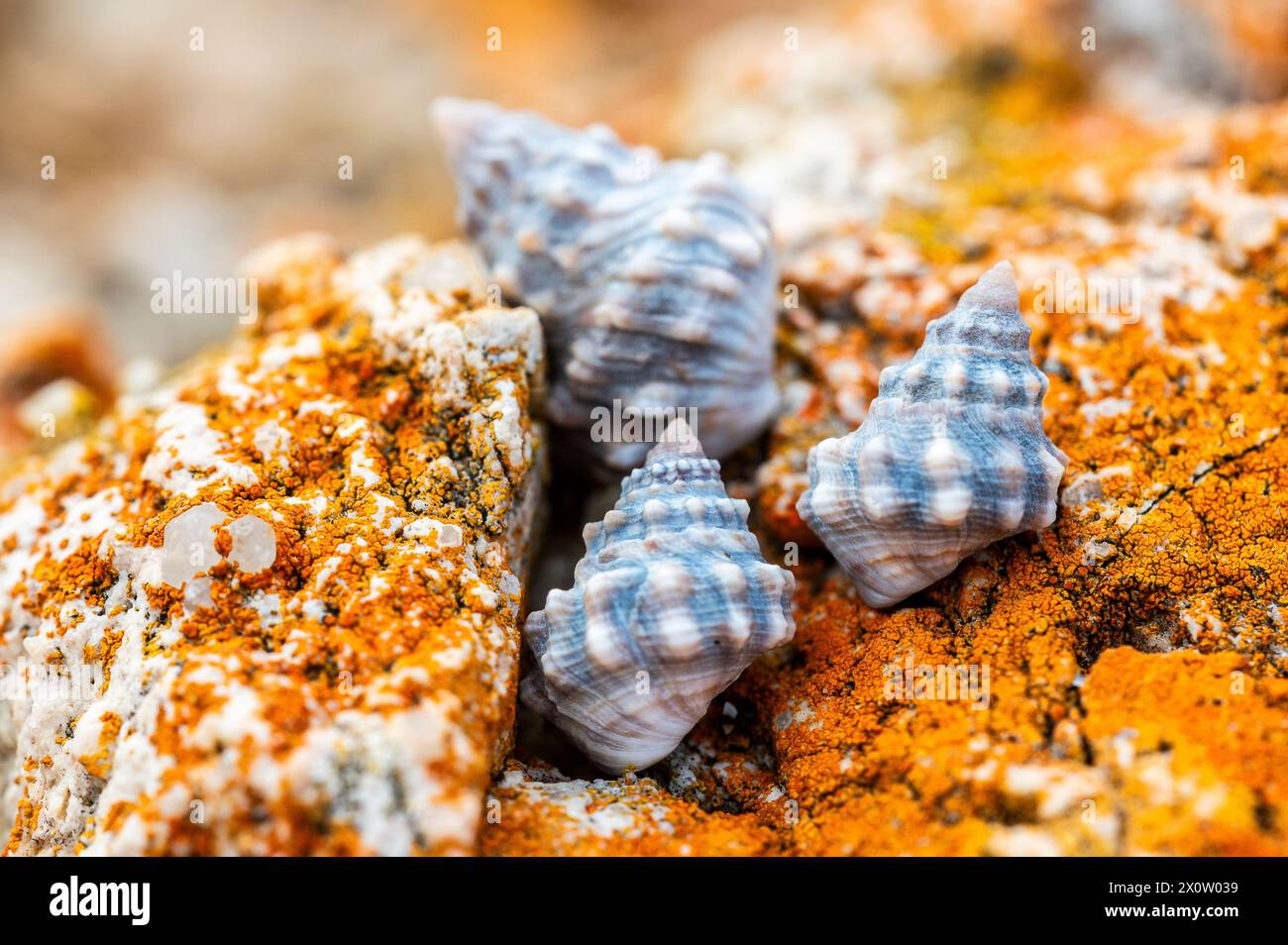
periwinkle
Periwinkles are commonly found on rocky shores, stones, pilings, and occasionally mud flats, primarily in the higher and middle intertidal zones
Periwinkles are mainly herbivorous, feeding on algae by scraping it with their radula, a tongue-like structure with tiny teeth
they may also consume small invertebrates such as barnacle larvae
releases embryos in transparent, saucer-shaped egg cases, which develop into free-swimming veliger larvae
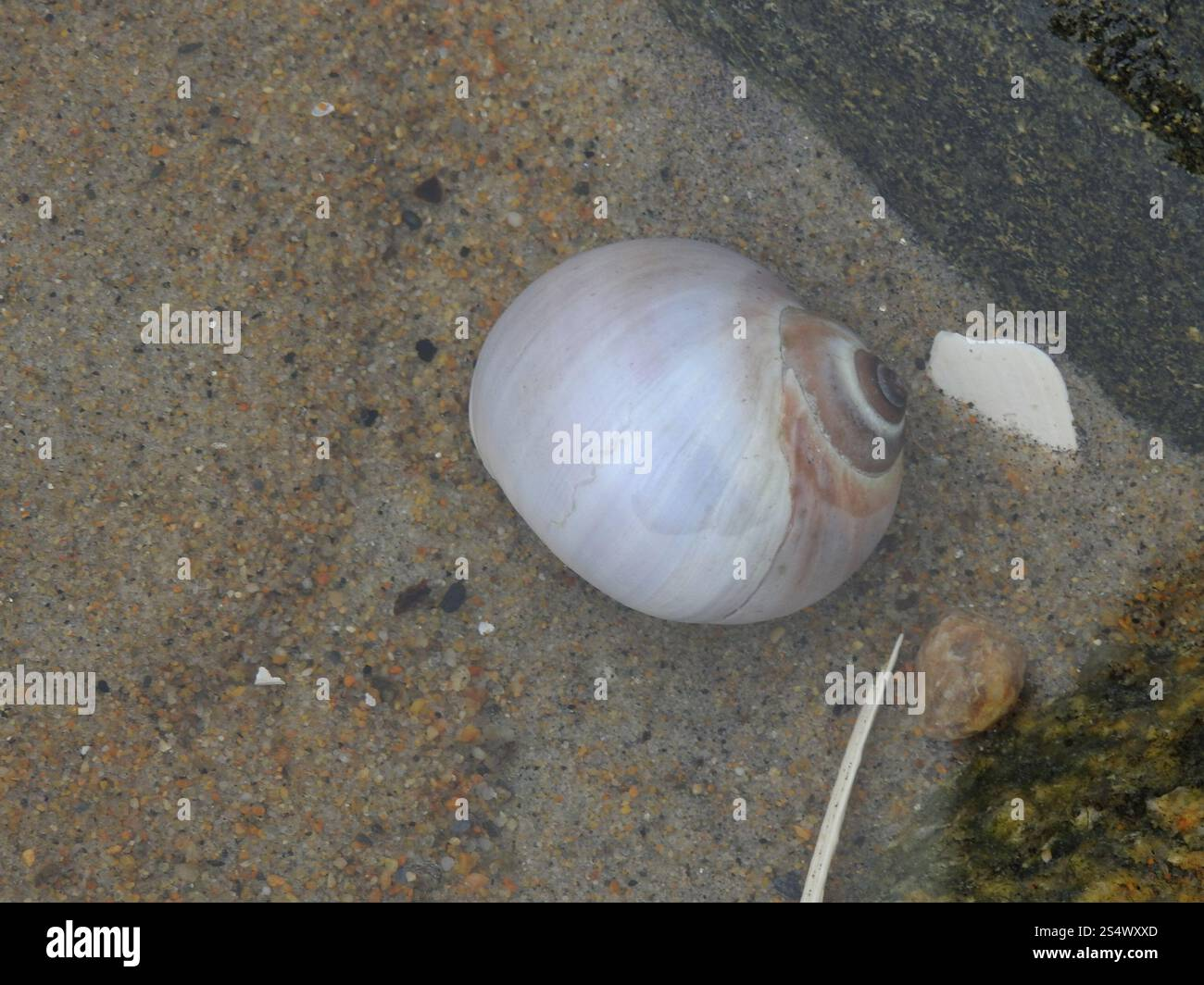
Northern Moon Snail
has been recorded at depths up to 435 meters (1,427 ft)
Northern moon snails are voracious predators of clams and other snails. They use their powerful foot to plow under the sand in search of prey. Once a mollusk is located, the snail drills a neat, countersunk hole into the shell using its radula, secretes digestive enzymes, and consumes the liquefied contents
Females lay eggs in a unique structure called a sand collar.
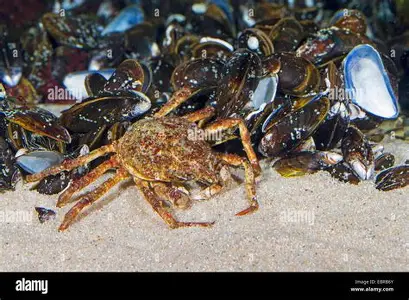
Hermit Crab
Hermit crabs inhabit diverse environments, including sandy or muddy marine bottoms, coral reefs, tide pools, and deep-sea habitats.
Hermit crabs are social and often live in groups of hundreds,
Hermit crabs reproduce sexually, with females carrying eggs on abdominal pleopods until hatching.

spider crab
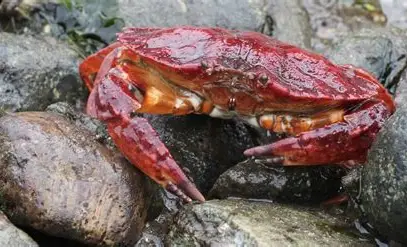
Rock Crab
Prefer sand, gravel, rock, and kelp‑associated habitats depending on species.
Omnivorous, feeding on various invertebrates and scavenging.
Females lay 125,000–500,000 eggs.
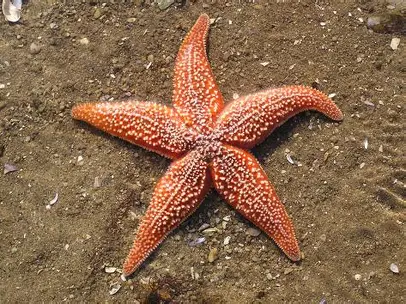
common sea star
Common sea stars inhabit rocky shores, jetties, pilings, sandy bottoms, seagrass beds, and intertidal zones.
he common sea star is an opportunistic predator, feeding mainly on bivalve mollusks (mussels, clams, oysters), snails, barnacles, and other benthic invertebrates
Females can release up to 2.5 million eggs, which develop into free-swimming larvae.
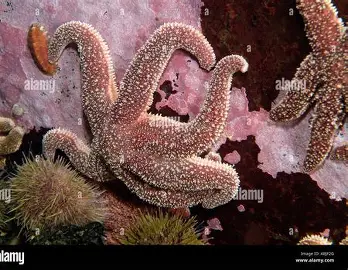
polar sea star
Adaptability: Polar sea stars can thrive in extreme cold, with some species living in temperatures as low as -20°C (-4°F) and depths of up to 20,530 feet (9,000 meters).6
Habitat: They inhabit various marine environments, including polar seas, rocky shores, sea grass, kelp beds, and coral reefs.
6
Diet: Polar sea stars are opportunistic feeders, primarily consuming benthic invertebrates and can also eat fish, sharks, manta rays, and other sea stars.
6
Reproduction: They can reproduce sexually and asexually, with some species capable of regrowing lost or damaged limbs
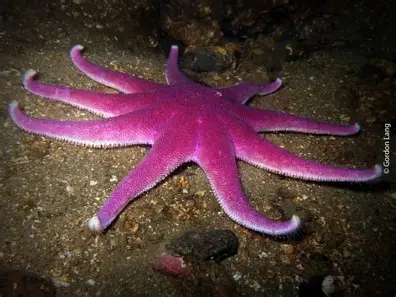
purple sunstar
e purple sun star occurs in the northeastern Atlantic Ocean and the North Sea at depths to 450 m (1,480 ft). Its typical habitats are muddy sand, gravel, or rocky areas with deposited sediment. It is found in both sheltered and fairly exposed locations.
spiny sunstar
Pisaster brevispinus —at 65 cm (26 inches) one of the world’s largest sea stars—inhabits the western coast of North America; it preys on other echinoderms known as sand dollars, which burrow to escape it.
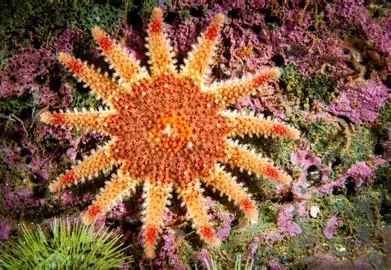
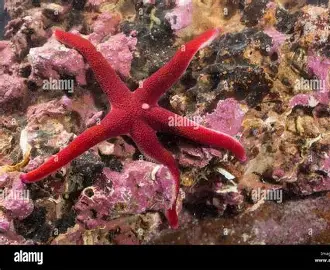
Blood Sea Star
Henricia leviuscula inhabits the intertidal and subtidal zones along the Pacific coast from Alaska to Baja California, including parts of Mexico and Japan. It prefers protected rocky areas, crevices, tide pools, and caves, often under rocks or on surfaces rich in sponges and bryozoans. They can be found from the low-tide line down to 400 meters (1,312 feet) deep
omnivorous feeding primarily on sponges and bryozoans
dioecious, with separate sexes. Reproduction varies: smaller females may brood their eggs in pouches near the mouth, while larger females release eggs into the water.
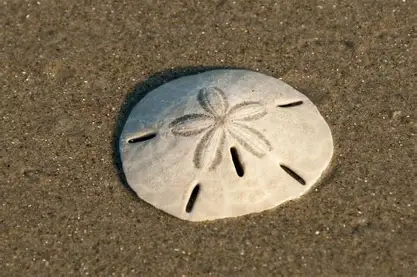
Sand Dollar
hey are closely related to sea urchins and starfish and are found in shallow coastal waters worldwide, typically at depths of 3 to 40 meters (10 to 130 feet)
filter feeders, consuming plankton, algae, detritus, and tiny invertebrates such as crustacean larvae and copepods.
Sand dollars move primarily using their tube feet and spines. They burrow into sand for protection and to avoid predators, and their spines also help in feeding and sediment aeration, contributing to nutrient recycling in coastal ecosystems
Sand dollars reproduce sexually, releasing eggs and sperm into the water
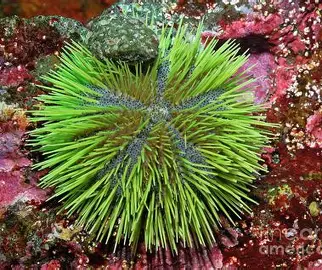
Green Sea Urchin
They inhabit rocky or gravelly substrates from the intertidal zone down to depths of over 1,000 meters, preferring areas with moderate wave action
Green sea urchins are primarily herbivorous, feeding on kelp, algae, and other seaweeds, though they may scavenge on small invertebrates
Green sea urchins have separate male and female individuals
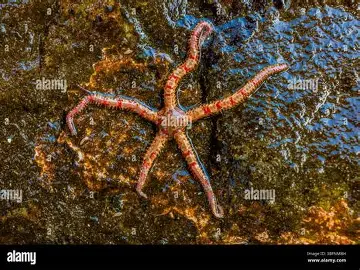
Daisy Brittle Star
It typically resides on rocky substrates, kelp holdfasts, and crevices, often hiding inside shells or hollows Depth range spans from the lower intertidal zone to nearly 2000 meters
Sexes are separate, and spawning usually occurs at the end of summer, though timing can vary by region
Orange Footed Sea-Cucumber
It inhabits rocky and cobble substrates from the low intertidal zone to depths over 300 meters, with highest densities typically between 30 and 60 meters
Unlike most sea cucumbers that are deposit feeders, the orange-footed sea cucumber is a suspension feeder. It extends its mucus-covered tentacles into the water column to capture plankton and detritus, retracting each tentacle individually into its mouth to consume trapped particles
The species has separate sexes, with females having tube-shaped gonopores and males heart-shaped gonopores located under the crown of oral tentacles
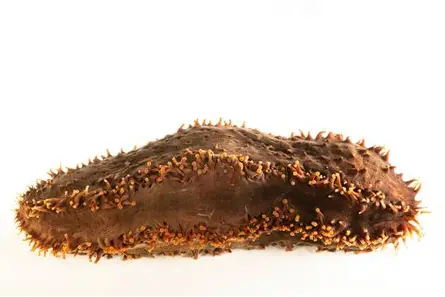
Scarlet Sea Cucumber
Reproduction: Broods large eggs on its dorsal surface.
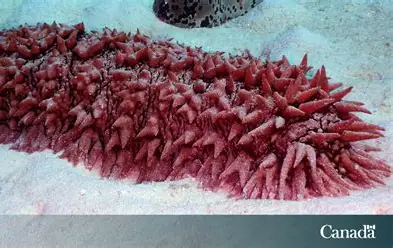
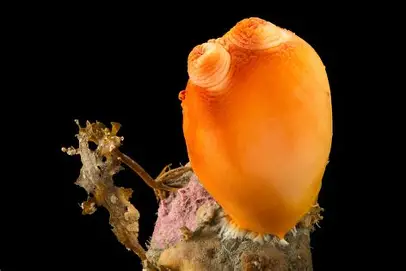
sea peach
Habitat: Sea peaches are found in the northern Pacific Ocean, ranging from the Arctic Sea to Puget Sound, and are most common in the Bering Sea at depths of 40 to 100 meters.
2
Feeding Habits: They are filter feeders, drawing water in through their incurrent siphon and filtering out food particles, then releasing the water through their excurrent siphon.
2
Predators: Sea peaches are preyed upon by various predators, including crabs, sea stars, and bottom-dwelling fish.
2